


Off-Season Upgrade Projects for Your Outboard
- Engine Trim and Setup
- Jack Plates: Height and Setback Adjustments
- Propeller Selection and Testing
- Hull Condition: Checking for Hook and Rocker
- Weight and Speed Impact
- Lower Unit Oil Changes
- Water Pump Impeller Replacement
- Fuel and Oil Quality
- Spark Plug Inspection
- Corrosion Prevention in Saltwater
- Reading the Roostertail and Water Spray
- Sourcing Parts for Older or Discontinued Models
- Manual vs. Hydraulic Jack Plates: Practical Differences
- Community Resources and Forums
The boating season winds down, but the work doesn't. Off-season is when I tackle the upgrades that actually matter—things that improve performance, prevent failures, and save money before the water warms up again.
Engine Trim and Setup 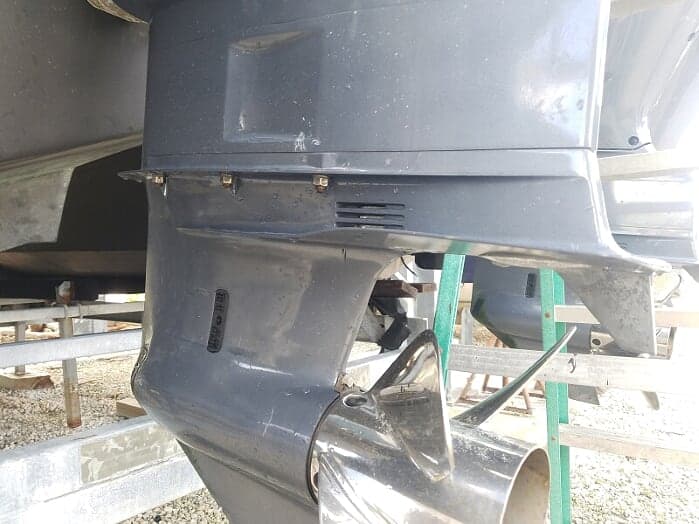
Trim angle directly affects fuel consumption and speed. Most people think trim is just about lifting the bow, but it's more specific than that. The most efficient setup has the lower unit pointed straight aft or with a slight downward angle, especially at cruise speeds. This keeps the prop pushing water directly behind the boat instead of wasting energy trying to lift it.
Aggressive positive trim—angling the engine heavily upward beyond about 3 degrees—hurts fuel economy and stresses the powerhead. When the prop starts ventilating because the trim is too high, the engine works harder and burns more fuel. The sweet spot is when the hull rides level or slightly bow-down at cruise, with the prop fully submerged and the gearcase creating minimal drag. Optimizing your trim angle is covered in our guide on Proper Trim Technique for Maximum Speed and Stability.
Jack Plates: Height and Setback Adjustments
A jack plate lets you raise the outboard to reduce gearcase drag, which is significant at speed. When the motor sits too low, the entire lower unit acts like a brake. Lifting it higher—up to the point where the prop starts to ventilate—can add 2-4 mph on many hulls.
Hydraulic jack plates from manufacturers like CMC Marine or Bob's Machine Shop give you on-the-fly adjustability. CMC units offer faster lift speeds, while Bob's models are known for heavier-duty construction and more setback options. Manual plates work fine if you're willing to set the height once and leave it, and they cost less. For more details on installation and benefits, see our post on Installing a Jack Plate: Benefits for Shallow Water Boating.
Jack plates help most on shallow-running hulls like bass boats or flats skiffs. Deep-V center consoles see less benefit because they already carry the engine higher. Raising the motor too high causes the prop to suck air, leading to chine walking—a side-to-side skipping at speed that's hard to control.
Propeller Selection and Testing
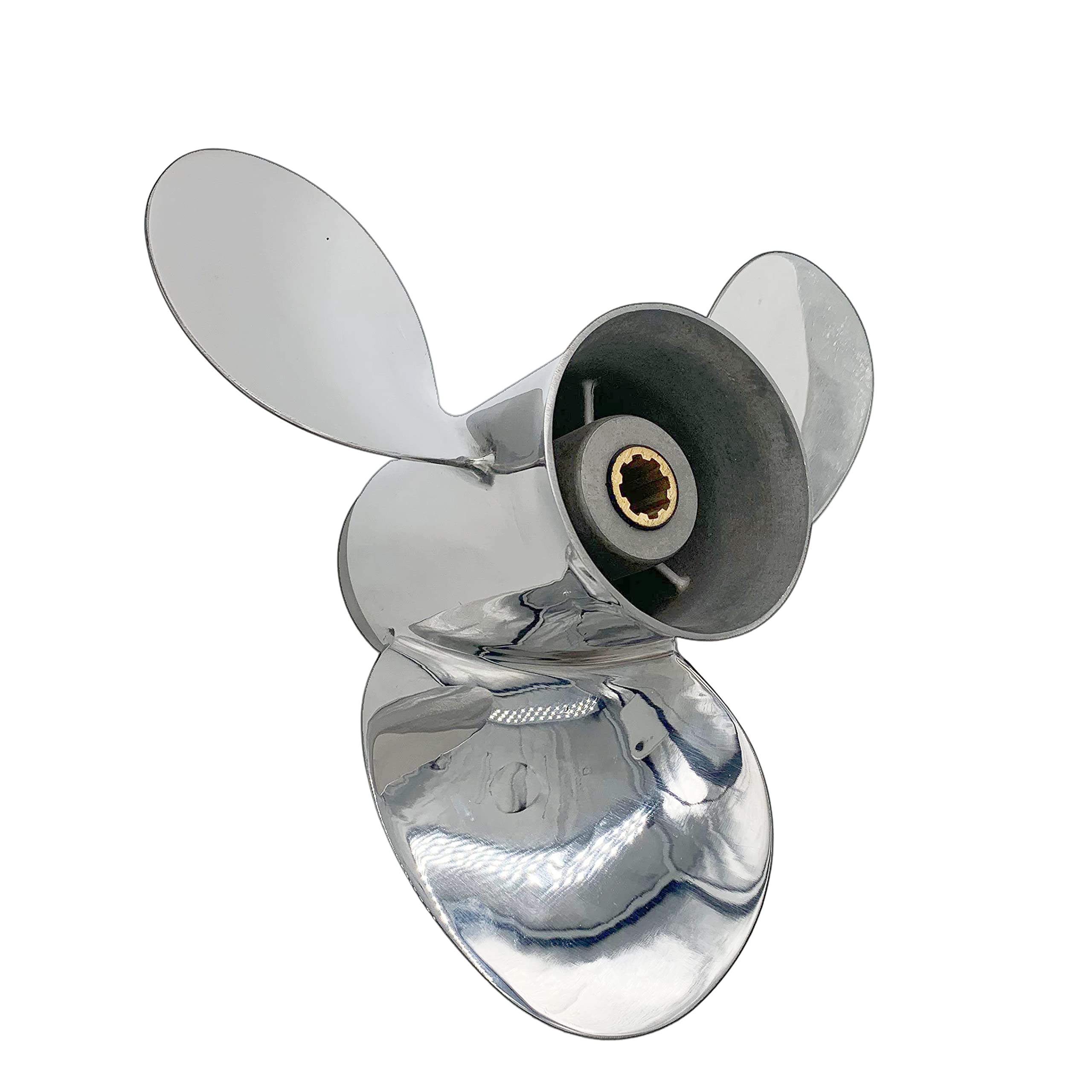
There's no single "best" propeller for any boat. It depends on hull shape, weight, engine torque curve, and how you use it. I've seen race teams running Mercury Racing engines switch to a 5-blade stainless Mercury Maximus and pick up 3 mph at top end while also getting better bite in rough water. But that same prop might bog down a heavier cruising boat.
Testing props takes time. Start with the manufacturer's recommendation, then adjust pitch up or down based on how the engine revs. If the motor over-revs past the rated WOT range, add pitch. If it lugs and won't reach the range, drop pitch. A good starting point is to aim for the middle of the rated WOT RPM band with your normal load aboard. Learn more about propeller choices in Proper Propeller Selection for Better Fuel Economy.
Stainless steel props are more efficient than aluminum because the blades flex less under load, but they're also unforgiving if you hit something. For most recreational boats, a quality 3-blade stainless offers the best balance of cost and performance. 4-blade and 5-blade props improve low-end thrust and hole shot, which helps on heavier boats or when pulling skiers. For insights on blade count and thrust, see 3-Blade vs. 4-Blade Prop: Which Gives Better Thrust?.
Hull Condition: Checking for Hook and Rocker

The hull itself creates or kills speed. If the bottom has "hook" (a concave curve near the transom) or "rocker" (a convex upward curve), it adds drag and makes the engine work harder.
Check this with a long straight edge—an 8-foot aluminum level works—and a flashlight. Lay the straight edge along the keel line from the transom forward. Shine the light under it. If you see a gap of light at the transom with the straight edge touching forward, that's hook. If the gap is in the middle with contact at both ends, that's rocker.
Hook is harder to fix because it usually means the hull has sagged or been damaged. Rocker can sometimes be adjusted with trim tabs or by shifting weight, but severe cases need professional hull work. Even a quarter-inch of hook can cost 2-3 mph at top speed and make the boat porpoise.
Weight and Speed Impact
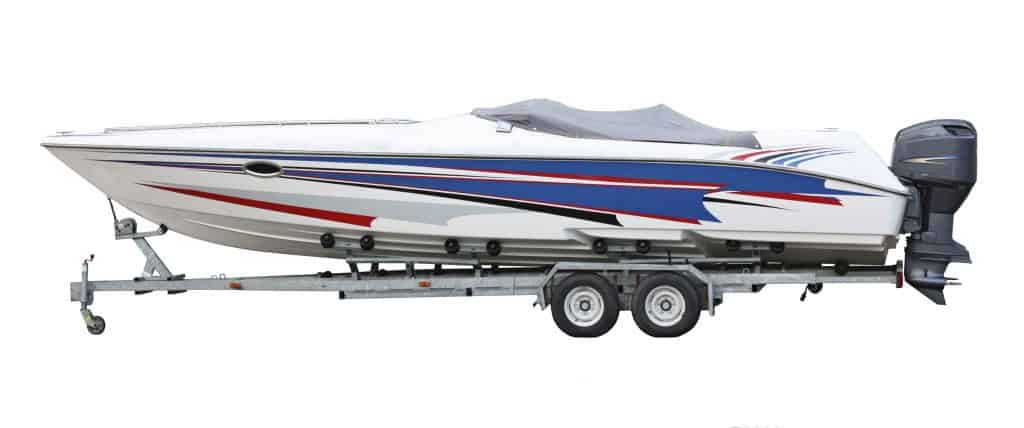
Every 100 pounds of extra gear costs speed. On a 150 HP setup, we've measured roughly 1.2 mph loss per 100 pounds over baseline. Here's the pattern:
| Engine HP | Speed Loss per 100 lbs |
|---|---|
| 90-115 | ~1.5 mph |
| 150-175 | ~1.2 mph |
| 200-250 | ~0.9 mph |
| 300+ | ~0.6 mph |
Lighter boats feel the impact more. Strip out gear you don't need for each trip. That includes extra anchors, full livewells when you're not fishing, and tools that can stay in the truck. For tips on managing load and balance, check out Weight Distribution for Speed: Balancing Your Boat.
Lower Unit Oil Changes
Change your lower unit gear oil at least once a year, more often if you run in shallow water or hit bottom. The oil protects the gears and bearings, and it shows you if there's a problem.
Pull the drain plug first, then the vent plug. If the oil comes out milky or has a metallic sheen, you have water intrusion from a failed seal. If it smells burnt instead of the normal gear oil smell, the gears are overheating or wearing. Check the magnetic drain plug for metal shavings—fine dust is normal, but chunks or filings mean the gears are chewing themselves up.
Water in the gear oil is a winter killer. If it freezes, it expands and can crack the gearcase casting. That repair costs more than a repower in some cases. Fix seal leaks before storage.
Refill from the bottom drain hole until oil flows out the top vent hole. This pushes air out as you fill. Install the top plug first while oil is still flowing, then the bottom plug. Use the manufacturer's spec oil—most call for 80W-90 or a synthetic equivalent. For older OMC or Mercury units, some techs prefer straight 90-weight in warm climates. For detailed maintenance steps, visit Maintaining Your Outboard’s Gearcase: Mercury vs. Yamaha.
Water Pump Impeller Replacement

Replace the impeller every two years minimum, or annually if you run in sandy or silty water. Impellers are rubber, and they crack at the base of the vanes over time even if they look okay on the outside. A failed impeller means no cooling water, which overheats the engine in minutes.
When you pull the old impeller, check if it's taken a "set"—meaning the vanes are permanently bent in the direction of rotation. That's normal, but if the vanes are cracked, missing chunks, or brittle, you waited too long. Also inspect the impeller housing for scoring or grooves. A damaged housing chews up new impellers quickly.
Install the new impeller with marine grease on the vanes to help it prime on the first start. Some techs use dish soap, but grease stays in place longer during storage. Make sure the drive key is aligned—if it's off by even one tooth, the impeller won't pump efficiently. For a step-by-step guide, see How to Replace a Mercury Outboard Water Pump Impeller or check out our Evinrude Water Pump Impeller Kit collection for quality parts.
Fuel and Oil Quality
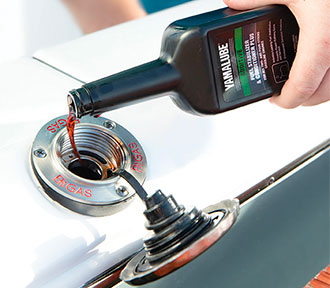
Use fresh fuel. Ethanol fuel starts breaking down and absorbing water after about three months, faster in warm weather. For off-season storage, add a marine fuel stabilizer like Star Tron or Yamaha Fuel Stabilizer & Conditioner Plus. Run the engine for 10-15 minutes after adding stabilizer so it circulates through the fuel system, including the VST (vapor separator tank) on DFI engines. Replace the fuel/water separator filter at the same time—it's cheap insurance against a clogged injector or carburetor. For tips on fuel filters and pumps, browse our Fuel Filter collection and Fuel Pump collection.
For two-stroke engines, use a quality TCW3-rated oil. Synthetic blends burn cleaner and reduce carbon buildup, which helps with plug fouling and exhaust port clogging. For modern four-strokes, follow the manufacturer's viscosity spec—usually 10W-30 or 10W-40 for marine use. Change the oil and filter every 100 hours or annually, whichever comes first. Oil left sitting in the crankcase over winter absorbs moisture and forms acids that corrode bearings.
Direct Fuel Injection (DFI) two-strokes like older Evinrude E-TEC or OptiMax engines require specific DFI-rated oil. Don't substitute regular TCW3 oil in these engines—the injectors are calibrated for the thinner DFI formula, and using the wrong oil can clog the injectors or cause lean running.
Spark Plug Inspection
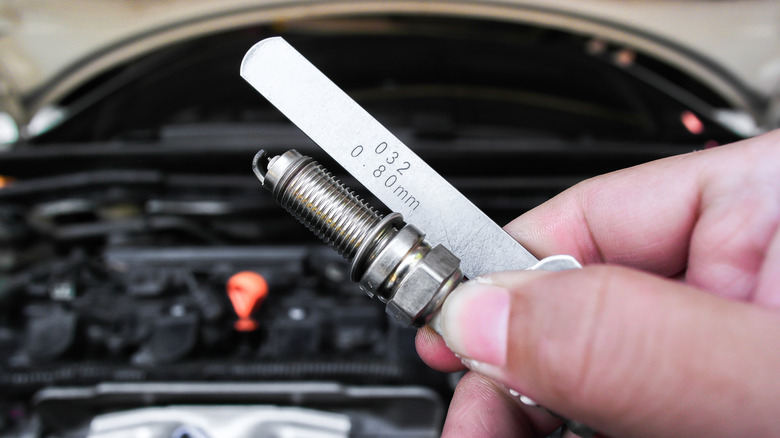
Pull the spark plugs and read them. They'll tell you what's happening inside the combustion chamber. A healthy plug has a light tan or coffee-colored electrode with no deposits. If the electrode is black and sooty, the engine is running rich—check for a stuck choke, clogged air filter, or wrong fuel mixture on a two-stroke. If the electrode is white or blistered, the engine is running lean, which causes overheating and can burn a piston. Check for air leaks in the intake or a clogged fuel filter.
Oil-fouled plugs (wet and black) mean oil is getting into the cylinder, either from worn rings, a failing oil control system on a four-stroke, or too much two-stroke oil in the mix. Replace fouled plugs with new ones gapped to spec—usually 0.035" to 0.040" depending on the engine. Use a feeler gauge, not the pre-gap from the box, because the gap can shift during shipping. For upgrading spark plugs, see High-Performance Spark Plugs: Do They Make a Difference?.
Corrosion Prevention in Saltwater

Saltwater accelerates corrosion. After every saltwater run, flush the engine with fresh water using the flush port or muffs. Let it run for 10 minutes to push salt out of the cooling passages. For engines that sit in the water on a lift, lowering them into fresh water for a few hours helps leach salt from the lower unit and cooling system. See why a Daily Engine Flush for Saltwater Boats is a Good Habit.
Sacrificial anodes—zincs, aluminum, or magnesium depending on your water type—protect metal components by corroding first. In saltwater, use zinc anodes. In freshwater, use magnesium. In brackish water, use aluminum. Check the anodes every few months and replace them when they're 50% dissolved. If they're not corroding at all, you have a poor electrical ground or they're not making contact with the metal they're supposed to protect.
Grease the prop shaft every time you pull the prop. This keeps the shaft from seizing to the hub from galvanic corrosion, especially on stainless props mounted on aluminum gearcases. Apply marine-grade waterproof grease—not general-purpose grease—because it resists washing out. Explore more in Best Marine Greases and Lubes for Your Outboard.
Reading the Roostertail and Water Spray

The spray pattern off the back of the motor—the roostertail—shows you how efficiently the boat is running. A tight, consistent roostertail that trails straight back usually means the setup is good. If the tail is tall and fluffy, the motor might be too deep or the prop is slipping. If it's almost nonexistent or sporadic, the motor might be too high and the prop is ventilating.
Excessive spray off the hull, especially from the chines, means drag. This happens when the hull is running bow-high and plowing water instead of riding on top of it. Adjust trim or shift weight forward to level the hull. On some boats, a small amount of positive trim improves speed, but too much creates more drag than it reduces. For detailed trimming strategies, see Trimming Your Outboard for Optimal Fuel Consumption and Trimming for Rough Water vs. Calm Water.
Sourcing Parts for Older or Discontinued Models
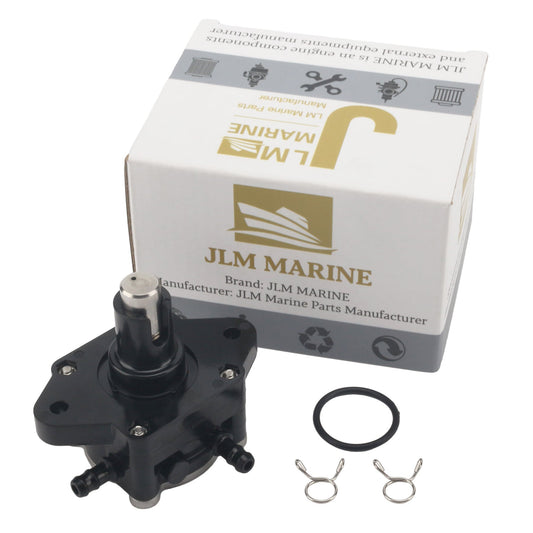

Finding parts for older engines can be frustrating when OEM suppliers discontinue inventory. I worked with a boat owner in Australia who needed a fuel pump for a discontinued 1996 Johnson 150. The OEM dealer wanted four weeks and a high price for a special order. We identified the part number, confirmed we had a compatible aftermarket unit in stock, and shipped it within two days. It arrived in 10 days total, and he had the engine running the same weekend. That kind of downtime costs money if you're running a charter or just trying to enjoy your season.
For discontinued parts, cross-reference the OEM part number using online databases or contact a supplier who keeps deep inventory. Some aftermarket manufacturers produce parts for older engines using the same tooling or specs as the original factory. These parts—especially from suppliers like JLM Marine—are often made in the same factories that produced OEM components, just without the OEM markup. Quality ranges widely in the aftermarket, so avoid the cheapest no-name parts. Look for suppliers who list specific fit applications and offer return policies. Use our main site, JLM Marine hub, to explore all available parts and get expert support.
Manual vs. Hydraulic Jack Plates: Practical Differences
Manual jack plates require you to loosen bolts, adjust the height, and re-tighten before you launch. This works fine if you fish the same water depth and load the boat the same way every trip. The adjustment takes about 10 minutes with a socket set, and you're locked in until you do it again. Manual plates are lighter and have fewer parts to fail.
Hydraulic plates let you adjust on the water with a switch at the helm. If you run skinny water in the morning and then head offshore in the afternoon, you can raise the motor for the flats and drop it back down for rougher water. The downside is added weight, higher cost, and the potential for hydraulic leaks or electrical failures. I've seen hydraulic rams seize after a few years in saltwater if they're not flushed and maintained.
For most recreational users, a manual plate is enough. If you're running a technical boat in changing conditions, hydraulic is worth the investment.
Community Resources and Forums
The Hull Truth forum has threads on nearly every engine problem you'll run into. Search for your specific engine model and symptom—there's usually a solved discussion with photos and part numbers. Mercury Racing publishes setup guides and propeller recommendations for performance applications that apply even to non-racing engines. Bob's Machine Shop and CMC Marine both have tech support lines where you can describe your hull and get jack plate recommendations based on actual installs they've done.
Talk to other boat owners at the ramp or the marina. Most are willing to share what worked or didn't work on their setup. I've learned more from 10-minute conversations at the dock than from some factory manuals.
If you need help identifying a part, email your engine's serial number and a photo of the component to a knowledgeable supplier. Most can cross-reference it or find an equivalent. At JLM Marine, customers send us engine details through our "Find My Part" page, and we match them with the correct components from our inventory, whether it's current or discontinued.
Daily Maintenance Tip: After every run, especially in saltwater, flush your engine with fresh water for at least 10 minutes. It's the single best thing you can do to prevent corrosion and extend the life of your cooling system. For more on preventing corrosion, review Anti-Corrosion Tips for Winter Storage (Saltwater Boats).