




High-Performance Spark Plugs: Do They Make a Difference?
- How Spark Plugs Actually Work
- Copper, Platinum, and Iridium: What You're Actually Buying
- Real Performance Gains
- Where Performance Plugs Fall Short
- Picking the Right Plug for Your Application
- Installation Tips
- Troubleshooting After Installation
- High-Performance Plug Checklist
- When to Stick with OEM
- Frequently Asked Questions

I swap out spark plugs every week in the shop. Customers ask if those expensive iridium or platinum plugs are worth it, or if they're just paying for marketing. After twenty years turning wrenches, here's what actually happens when you upgrade.
Performance spark plugs use better materials—platinum, iridium, sometimes even exotic electrode designs. They're engineered to create a stronger, more consistent spark than standard copper plugs. The question is whether that translates to real gains you can feel or measure, or if it's just theoretical improvement that disappears in the real world.
How Spark Plugs Actually Work

A spark plug creates a precisely timed electrical arc across a gap. That arc ignites the compressed air-fuel mixture in the combustion chamber. The timing, strength, and consistency of that spark directly affect how completely the fuel burns.
The plug has a few critical parts: the terminal where the coil wire connects, a ceramic insulator to contain high voltage, a threaded metal shell that grounds to the cylinder head, and the electrodes at the tip that form the spark gap. Everything depends on that gap—too wide and the coil struggles to fire it, too narrow and combustion suffers.
Performance plugs improve this process through advanced electrode materials and designs. Pulstar developed plugs with embedded capacitors that generate low-temperature plasma. Users reported noticeable torque improvements and better throttle response. Bobby Unser dyno-tested them on his S10 V6 and picked up 10 horsepower. Lou Camilli, Pulstar's President, documented customer results ranging from 1-10% torque gains depending on the engine, with one case hitting 15 extra horsepower.
Most dyno tests show modest gains—typically 2-5% over worn OEM plugs. The improvements show up strongest in modified engines or when you're replacing degraded standard plugs. Stock engines with fresh OEM plugs? The difference shrinks to 1-2% or less.
Copper, Platinum, and Iridium: What You're Actually Buying
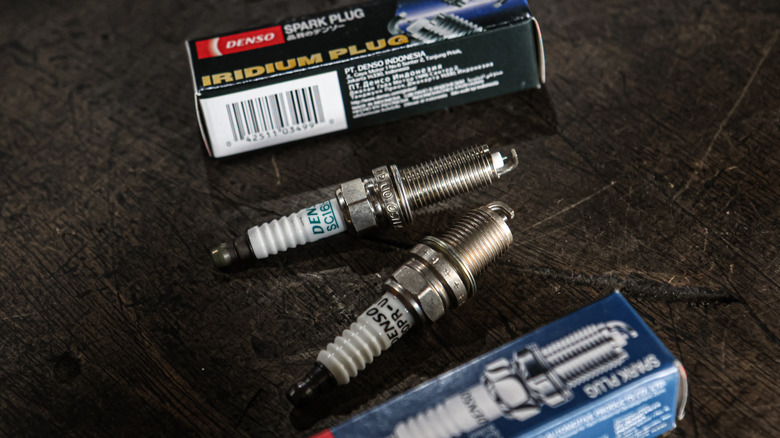
The electrode material determines how the plug performs and how long it lasts.
Copper Plugs
Copper conducts electricity better than any other common spark plug material. This means a strong, consistent spark, which is why racing applications still use copper. In a real-world dyno test with Accel copper plugs on a modified vehicle, the lower resistance delivered clear torque gains. At higher RPMs, the improved conductivity eliminated spark delivery issues visible in the dyno runs. At $20 per plug, they're the budget option.
The problem is lifespan. Copper wears fast—you're replacing them every 20,000-30,000 miles. For a race motor that gets torn down regularly, that's fine. For a daily driver, it's a pain.
Platinum Plugs
Platinum is harder than copper and resists erosion far better. A platinum plug has a small platinum disc welded to the center electrode, sometimes to the ground electrode too. This pushes service intervals to 60,000-100,000 miles. The spark stays more consistent as the plug ages, reducing misfires in high-mileage applications.
You'll also see "double platinum" plugs with platinum on both electrodes. These are designed for waste-spark ignition systems where the plug fires on both the compression and exhaust strokes. Single platinum works for most coil-on-plug setups.
Iridium Plugs
Iridium is harder and more durable than platinum. This allows manufacturers to use a much finer center electrode—sometimes 0.4mm or thinner. A finer electrode requires less voltage to jump the gap, which means a stronger spark even under high cylinder pressure.
Jerry Reeves, Director of Engineering for Autolite, explained that the precious metal center electrode doesn't change the heat range or affect pre-ignition. What it does is resist wear. Iridium plugs handle long-duration camshafts better because the fine wire can still ignite diluted mixtures with high exhaust gas recirculation.
Mike Burchi, Senior Product Manager at NGK, noted that modern engines see ignition voltages over 40,000 volts due to high boost, high EGR, and lean air-fuel ratios. Iridium plugs handle this with high dielectric strength and robust construction. Many OEM applications now spec 100,000-mile service intervals, which only iridium can reliably meet.
The cost is higher—sometimes three to four times a copper plug. But over 100,000 miles, you're replacing copper plugs four times versus one iridium swap. The math works out if you keep the vehicle.
| Spark Plug Type | Conductivity | Lifespan | Cost | Best Use |
|---|---|---|---|---|
| Copper | Excellent | 20,000-30,000 miles | Low | Racing, modified engines, frequent rebuilds |
| Platinum | Good | 60,000-100,000 miles | Medium | OEM replacement, daily drivers |
| Iridium | Very Good | 80,000-120,000 miles | High | High-performance, turbocharged, long service intervals |
Real Performance Gains
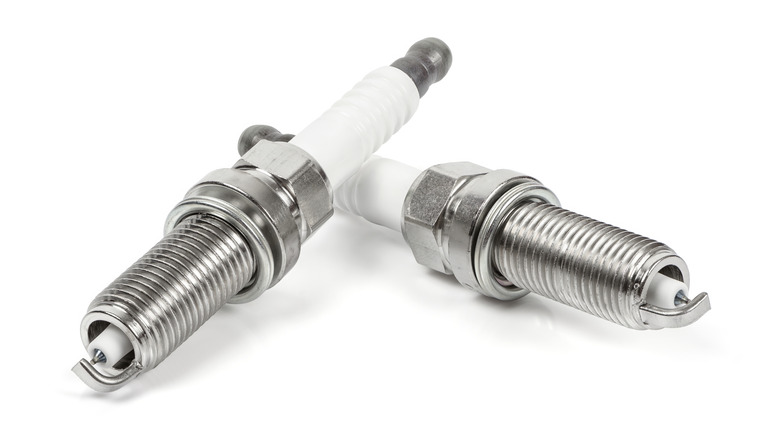
When performance plugs work, the benefits are measurable but not dramatic.
Dyno testing consistently shows 2-5% horsepower gains and improved throttle response when upgrading from worn OEM plugs. The gain comes from more complete combustion. Fuel that would've gone out the tailpipe unburned now contributes to power.
Throttle response improves because the spark is more reliable under varying loads. When you mash the pedal and cylinder pressure spikes, a worn plug might hesitate. A fresh iridium plug fires consistently.
Fuel economy sees 2-4% improvement in typical cases. Fleet studies documented up to 20% MPG gains—one test showed 23.4 MPG jumping to 28.1 MPG—but those were severely degraded plugs being replaced. Real-world data shows 12-15% highway MPG improvements when replacing high-mileage plugs. Over 100,000 miles, that can save $200-500 in fuel costs.
In modified engines, the gains are more pronounced. If you've added a turbo, increased compression, or installed a performance camshaft, the ignition system works harder. A performance plug handles that stress better than a standard plug.
Where Performance Plugs Fall Short
Cost is the obvious issue. A set of iridium plugs for a four-cylinder runs $50-$100 more than copper. If your engine is stock and your current plugs are fine, that money might be better spent elsewhere.
Compatibility is critical. Don Brown, Chief Race Engineer at E3 Spark Plugs, explained that heat range is determined by cylinder temperature. As compression ratio increases, cylinder temps rise, and you need a colder heat range to pull more heat out. This prevents detonation.
If you install a plug that's too cold for your application, it won't reach the temperature needed to burn off carbon deposits. You'll get fouling and misfires. Too hot and you risk pre-ignition—the fuel ignites before the spark fires, causing severe engine damage.
Heat range numbering systems vary by manufacturer. NGK uses a different scale than Bosch or Autolite. A "6" in one brand doesn't equal a "6" in another. You need to cross-reference correctly or you'll have problems.
Physical fitment also matters. Thread reach (how far the plug extends into the combustion chamber), thread diameter (14mm vs. 12mm), hex size (for your spark plug socket), and seat type (gasket vs. tapered) all have to match. Using the wrong physical size can cause catastrophic failure—either the plug bottoms out and gets crushed, or it doesn't seat and blows out under pressure.
Expert analysis confirms that performance plugs offer minimal standalone power gains without other modifications like tuning. If your engine is stock and you're not chasing every tenth of a horsepower, OEM-spec plugs do the job fine.
Picking the Right Plug for Your Application

Start with your OEM recommendation. The manufacturer spent millions in development to determine the exact plug spec—heat range, gap, reach, material—that balances performance, emissions, and durability for your specific engine. For most drivers, an OEM plug or a quality aftermarket equivalent with identical specs is the right call.
Check your owner's manual or the underhood emissions sticker for the OEM part number. You can cross-reference that to find equivalent aftermarket options.
If you've modified the engine, your needs change. Turbocharged engines run hotter and see higher cylinder pressures, so you typically need a colder heat range. Jason Sauriol, Engineering Manager at NGK, noted that racing plugs sacrifice plug life and low-speed efficiency for maximum performance under extreme conditions. A colder plug dissipates heat faster, preventing detonation under boost.
For naturally aspirated builds with increased compression or aggressive camshafts, you also need to adjust. A cam with lots of overlap increases exhaust dilution in the combustion chamber. Jerry Reeves explained that fine-wire iridium plugs handle this better because the small electrode can still ignite a diluted mixture.
Your driving style plays a role too. Short trips and city stop-and-go driving mean the engine never fully heats up, which can cause carbon buildup. A plug that runs slightly hotter (within OEM specs) can help with self-cleaning. Long highway runs or track time create sustained high loads, where a colder plug prevents overheating.
Decision Tree:
- Stock engine, normal driving, low annual mileage (<10,000 miles/year): Stick with OEM-spec platinum plugs.
- Stock engine, high annual mileage (>15,000 miles/year): Iridium for extended service life.
- Turbocharged or supercharged engine: Iridium, one step colder heat range than stock.
- Modified naturally aspirated (high compression, performance cam): Iridium, consult tuner for heat range.
- Race or track-only engine: Copper, adjusted heat range based on testing, frequent replacement.
High-mileage vehicle owners replacing worn plugs will see the biggest improvements—restoration of lost power and throttle response. That's different from expecting a big horsepower bump on a fresh engine.
Installation Tips

Even the best plug fails if you install it wrong.
Anti-Seize and Modern Coatings: Older advice said to always use anti-seize on spark plug threads to prevent seizing in aluminum heads. That's outdated. Most modern plugs have a trivalent plating or coating that serves the same purpose. NGK and Denso both warn against adding anti-seize to their coated plugs because it changes the friction coefficient and can lead to over-tightening, even when using a torque wrench. If your plugs have a silver or black anti-corrosion coating, skip the anti-seize. If they're plain steel threads going into aluminum, a small dab on the threads (not near the tip) is fine.
Thread the Plug by Hand: Start threading the plug by hand. You should feel it turn smoothly and seat easily. If you feel resistance or cross-threading, back it out and start over. Cross-threading a spark plug hole in an aluminum head is an expensive mistake—you're looking at a Helicoil insert at minimum, maybe a new cylinder head.
Torque to Spec: Use a torque wrench. Over-tightening crushes the gasket or stretches the threads. Under-tightening causes leaks and poor heat transfer. The plug won't cool properly and will fail early. OEM specs are usually 15-20 ft-lbs for tapered seat plugs and 18-22 ft-lbs for gasket seat plugs, but verify your specific application.
When you tighten a gasket-type plug correctly, you'll feel the crush washer compress, then resistance increases suddenly. That's the washer doing its job. Don't keep cranking—use the torque wrench.
Check the Gap: Even new plugs can have incorrect gaps from shipping damage. Use a wire-type feeler gauge to check the gap. For iridium plugs with delicate fine-wire electrodes, never use a coin-style gap tool—you'll break the center electrode. Only adjust the ground electrode if needed, and do it gently.
Replacement Intervals:
- Copper: Inspect every 20,000 miles, replace by 30,000 miles.
- Platinum: Replace at 60,000-100,000 miles.
- Iridium: Replace at 80,000-120,000 miles.
If you notice rough idle, hesitation, or reduced fuel economy, pull the plugs early. A visual inspection tells you a lot. Black, sooty deposits mean the engine is running rich. White or blistered electrodes mean it's too lean or the plug is too hot. Oily residue points to oil consumption issues. Normal wear shows light tan or gray deposits.
Troubleshooting After Installation
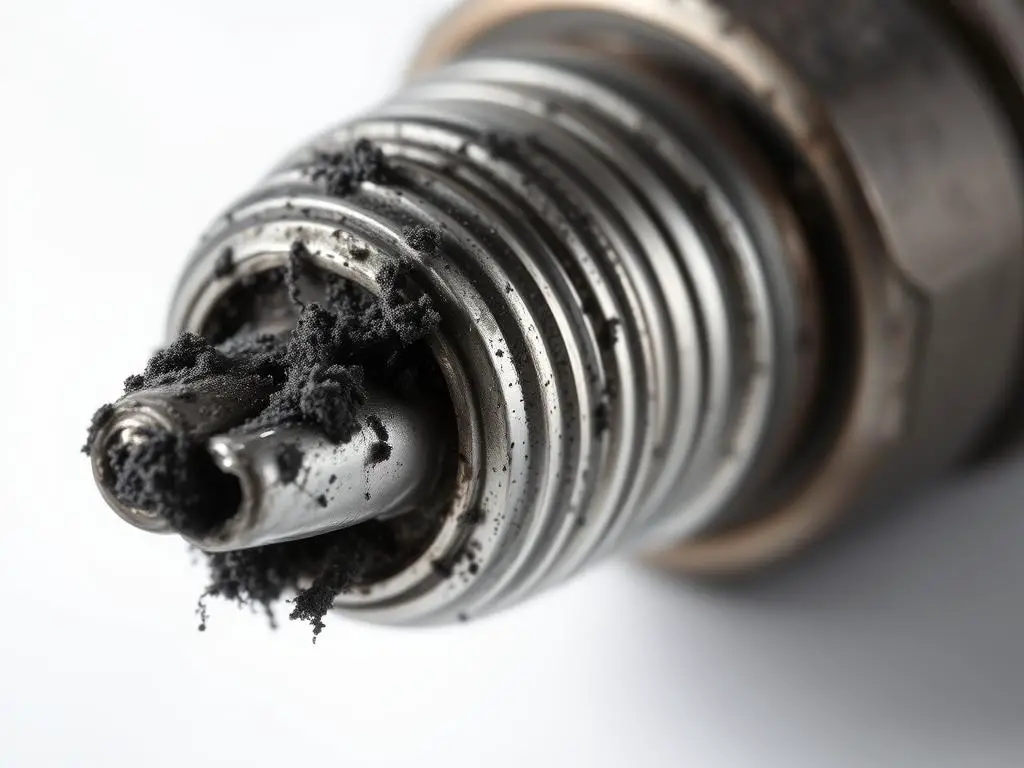
If you install new plugs and the engine runs worse, you've got a problem.
Plug Too Cold (Fouling): Symptoms: Rough idle, black smoke, hesitation at low RPM. The plug tip will be wet or covered in black carbon. Cause: The plug isn't reaching the temperature needed to burn off deposits. Fix: Go one step hotter in heat range, or let the engine run harder for longer periods to clean it out.
Plug Too Hot (Detonation): Symptoms: Pinging or knocking under load, loss of power, possible engine damage. The plug tip will be white, blistered, or have melted electrodes. Cause: The plug can't dissipate heat fast enough. Fix: Go one step colder immediately. Continuing to run risks severe engine damage—cracked pistons, blown head gaskets, or worse.
Gap Too Wide: Symptoms: Misfires under load, especially at high RPM or under boost. Cause: The ignition coil can't generate enough voltage to jump the gap consistently. Fix: Reduce the gap to OEM spec.
Gap Too Narrow: Symptoms: Weak spark, reduced power, incomplete combustion. Fix: Widen the gap to OEM spec.
High-Performance Plug Checklist

- Check your owner's manual for OEM plug part number and spec.
- Assess your modifications: Stock engine = OEM spec. Modified = consult a tuner.
- Choose material based on use: Copper for racing, platinum for daily driving, iridium for performance or longevity.
- Verify heat range: Match OEM unless you have a specific reason (boost, compression) to change.
- Confirm physical fitment: Thread size, reach, hex size, seat type.
- Check the gap with a wire gauge before installation.
- Install without anti-seize if plugs have a protective coating.
- Torque to spec using a torque wrench.
- Test drive and monitor for any signs of misfire or detonation.
When to Stick with OEM

If you drive a stock vehicle for commuting, OEM plugs or their direct equivalents make the most sense. The performance difference between a fresh OEM plug and a premium aftermarket plug is minimal in a stock application. Save your money for maintenance items that have bigger impacts—oil changes, air filters, tire pressure.
For modified engines, high-mileage trucks, or performance vehicles, the upgrade pays off. The improved durability, consistent spark, and efficiency gains justify the cost.
Non-OEM parts vary widely in quality. Some factories that manufacture for OEM brands use excess capacity to produce aftermarket parts. These can be just as good as OEM at a lower price. Other cheap plugs use inferior materials and poor quality control. Know your supplier.
Explore high-quality marine engine parts and accessories including spark plugs and more at the JLM Marine homepage.
Frequently Asked Questions
Are performance spark plugs worth the cost?
For modified engines or drivers who want optimized fuel efficiency and throttle response, yes. For stock daily drivers with fresh OEM plugs, the gains are small and may not justify the extra expense.
How often should I replace performance spark plugs?
Copper: every 20,000-30,000 miles. Platinum: 60,000-100,000 miles. Iridium: 80,000-120,000 miles. Check the manufacturer's recommendation and inspect early if you notice performance changes.
Can I use iridium plugs in a turbocharged engine?
Yes. Iridium plugs handle high heat and pressure well, making them a good choice for turbo applications. Use the correct heat range for your boost level—typically one step colder than the naturally aspirated spec.
What's the difference between copper, platinum, and iridium spark plugs?
Copper conducts electricity best but wears quickly. Platinum lasts longer than copper with good performance. Iridium is the most durable, allows finer electrodes, requires less voltage, and lasts the longest. Choose based on your application and replacement interval preference.
Will upgrading spark plugs improve my car's fuel economy?
Replacing worn plugs with performance plugs can improve fuel economy by 2-4% due to better combustion. If your current plugs are severely degraded, gains can be higher. In a stock engine with fresh OEM plugs, the improvement is minimal.
Always verify your spark plug gap before installation. Even new plugs get knocked out of spec during shipping. Use a wire-type feeler gauge—never a coin-style tool on iridium plugs—and adjust the ground electrode carefully if needed. For quality parts and support, consider browsing JLM Marine's extensive collections of marine engine components.
About JLM Marine
Founded in 2002, JLM Marine has established itself as a dedicated manufacturer of high-quality marine parts, based in China. Our commitment to excellence in manufacturing has earned us the trust of top marine brands globally.
As a direct supplier, we bypass intermediaries, which allows us to offer competitive prices without compromising on quality. This approach not only supports cost-efficiency but also ensures that our customers receive the best value directly from the source.
We are excited to expand our reach through retail channels, bringing our expertise and commitment to quality directly to boat owners and enthusiasts worldwide.
Electric Parts on Sale
- $21.50
- $21.50
- Unit price
- per

- $19.00
$15.00- $19.00
- Unit price
- per

- $16.19
$19.00- $16.19
- Unit price
- per
- $34.99
- $34.99
- Unit price
- per

- $16.00
$12.00- $16.00
- Unit price
- per
- $17.50
- $17.50
- Unit price
- per

- $21.99
$26.00- $21.99
- Unit price
- per

- $42.49
$50.00- $42.49
- Unit price
- per

- $22.35
$26.00- $22.35
- Unit price
- per
- $37.04
- $37.04
- Unit price
- per

- $59.60
$71.00- $59.60
- Unit price
- per

- $26.99
$32.00- $26.99
- Unit price
- per

- $46.08
- $46.08
- Unit price
- per

- $28.99
- $28.99
- Unit price
- per

- $48.99
$58.00- $48.99
- Unit price
- per

- $25.99
$31.00- $25.99
- Unit price
- per

- $39.99
$47.00- $39.99
- Unit price
- per
- $23.98
- $23.98
- Unit price
- per
- $21.99
- $21.99
- Unit price
- per
- $25.99
- $25.99
- Unit price
- per