

How to Paint an Outboard Lower Unit: Complete DIY Repair Guide
Quick Answer: How do you paint an outboard lower unit?
To paint an outboard lower unit, first sandblast the surface to bare aluminum. Repair chipped edges with TIG welding and fill corrosion pits with a two-part marine metal epoxy. Sand the epoxy flush with 400-grit paper. Clean with acetone, mask off internal components and anode mounts, then apply three light coats of aluminum-etching primer followed by multiple light coats of color-matched marine enamel.
I've spent countless hours in the workshop restoring old outboards, and if there's one thing I've learned, it's that the lower unit takes an absolute beating. Whether you're running a classic Johnson/Evinrude or a modern Mercury, the gearcase is constantly subjected to a harsh mix of sand, silt, and rocks. Over time, this abrasive environment strips away the factory paint and leaves the aluminum vulnerable to deep pitting and corrosion.
Recently, I tackled a badly pitted lower unit restoration. I want to share my exact process, the mistakes I made, and the techniques that actually work. If you're looking to give your outboard a factory-fresh look while protecting it from future damage, this guide will walk you through it step-by-step.
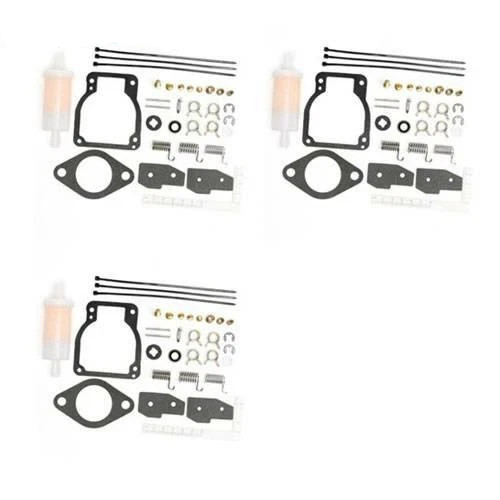
🔧 Prepping for a Rebuild? Don't Reuse Old Seals!
If you're pulling your lower unit apart for paint, it's the perfect time to replace your aging seals and prevent water intrusion into your gearcase.
Shop Lower Unit Seal Kits Now →
Why Do Outboard Lower Units Get So Pitted?
Before we dive into the repair, it helps to understand what we're fixing. When I got this particular lower unit back from the sandblaster (who used macadamia nut shells—a great, gentle media for aluminum), the damage was obvious.

A freshly sandblasted lower unit reveals the true extent of the pitting and corrosion.
Interestingly, if you look closely at the trailing edges of the gearcase, they are often perfectly smooth. The severe pitting is almost entirely concentrated on the leading edge. This tells us that a lot of what we call "corrosion" is actually straight physical abrasion from traveling through sandy or silty water at high speeds. Once the protective paint is blasted away by sand, the bare aluminum oxidizes rapidly.

Deep craters on the leading edge require proper epoxy filling, not just primer.
How to Repair Structural Damage on a Lower Unit
Before you even think about paint or filler, you need to address the structural integrity of the casing. On my project, the leading edge had a significant chunk missing, and the thin cavitation plate was wavy and bent.
TIG Welding Chipped Edges
If you have chunks missing from the skeg or leading edge, the best fix is adding new metal. I used a TIG welder set to a reasonably low amperage to avoid blowing through the cast aluminum. The goal here isn't to make it pretty right away; you just want to build up enough filler metal so it extends past the original curve of the casing.

Once the weld cooled, I grabbed my angle grinder with a flap disc. A flap disc is incredibly aggressive, so you have to be careful, but it gives you excellent control for rough-shaping the contours. I took off the bulk of the weld with the grinder and then switched to a hand file to dial in that perfect torpedo shape.


Straightening Bent Aluminum
For the wavy, bent sections of the casing, I did a bit of an experiment. I wasn't sure if I should heat the aluminum first or hammer it cold. I clamped the lower unit to my steel welding bench and tried hitting the worst bend cold with a ball-peen hammer.

To my surprise, it bent back incredibly easily without cracking. Cast aluminum can be brittle, but in this case, cold hammering worked perfectly to straighten the edge. Just remember to wear ear protection—metal on metal is loud!
What is the Best Filler for Outboard Lower Unit Pitting?
With the metal straight, it was time to fill the craters. Do not use standard automotive body filler (Bondo) on a lower unit. It absorbs water and will eventually fail. You need a two-part metal epoxy.
I used a standard two-part metal epoxy I had in the shop. If you're buying fresh materials, products like Marine-Tex or JB Weld Marine are excellent choices for this specific job.
Prep and Application
First, wipe the entire unit down with acetone to remove any oils from your hands or the grinding process.

Mix your epoxy 1:1. The trick to filling deep divots is to ensure you don't trap air underneath. Use a flexible metal applicator blade (the cheap ones from auto parts stores work great) and firmly press the epoxy down into the holes.


I skimmed the worst areas and let it cure completely. Looking back, I probably applied it a bit too thick, which just meant more sanding later.
Sanding the Epoxy Flush
Once the epoxy is rock hard, you have to sand it back. I started with the flap disc on the grinder to carefully knock down the high spots, then switched to 400-grit sandpaper by hand.

Crucial Tip: You are sanding until you see bright bare metal everywhere. You do not want a continuous layer of epoxy over the whole unit. The epoxy should only remain inside the low points and pits.
If you want a true showroom finish, you'll likely find that after the first sanding, some holes aren't completely filled. You would need to apply a second (or even third) skim coat of epoxy, let it dry, and sand again. For this project, I did one solid coat, which vastly improved the surface, even if it wasn't 100% flawless.
⚙️ While You Have the Lower Unit Off...
There is no better time to service your cooling system than when the lower unit is already removed for painting. Don't wait for your engine to overheat on the water.
JLM Marine offers OEM-quality parts direct from the factory with free worldwide shipping.
How to Prime an Aluminum Lower Unit
Preparation is 90% of a good paint job. Before spraying, you must mask off critical areas.
- Stuff a clean rag into the gearbox opening to protect the internal seals and bearing carrier from overspray.
- Use blue masking tape to cover any threaded sections.
- Most importantly: Mask off the mounting area for your sacrificial zinc anode. The anode must sit against bare metal to maintain electrical continuity and protect your engine from galvanic corrosion. If you paint over the mount, your anode becomes useless!

For primer, I used a high-quality etching primer surfacer. If you want the absolute best durability, buy a two-part epoxy primer specifically designed for marine aluminum.
Hang the unit up and apply the primer. The golden rule of spray painting applies here: multiple light coats are better than one heavy coat. Start spraying before you hit the metal, sweep across at a distance of about 15cm (6 inches), and stop spraying after you pass the edge. I put down three light coats, waiting about 15 minutes between each.


After the primer dried, I noticed a few minor dimples, so I gave the whole thing a very light wet-sand with 800-grit paper to smooth it out before the topcoat.
Applying the Final Marine Topcoat
Matching outboard paint can be tricky. Manufacturers change shades over the years. For example, Yamaha and Suzuki have very specific metallic flakes, while Evinrude used one white from 1972-1981, changed it for the 80s, and changed it again in the 90s.
I highly recommend doing a test spray on a piece of cardboard if you are choosing between an OEM paint and an aftermarket brand. In my case, the colors were identical, but the OEM spray can had a much nicer nozzle pattern.

When applying the white topcoat, patience is key. During the first two coats, you will still clearly see the grey primer showing through. Do not panic and spray heavier—you will cause runs. Just keep applying light, even coats.

The Finished Result
After the final coat dried, the transformation was incredible. I removed the masking tape, temporarily installed a new black water intake grille for contrast, and stepped back to admire the work.

The final result: a massive improvement over the pitted, sandblasted starting point.
Is it absolutely perfect? No. If I had spent another two days doing multiple epoxy skim coats and using a proper random orbital sander with a foam pad, it would be flawless. But for a weekend DIY project that cost about $80 total ($40 for blasting, $40 for paint and primer), it's a massive win.
Ready to Reassemble Your Outboard?
Don't put old, worn-out parts back into your freshly painted lower unit. JLM Marine manufactures premium OEM-quality replacement parts at factory-direct prices.
Need more maintenance tips? Check out our Outboard 101 Blog for more DIY guides.