


Inspecting Prop and Skeg After a Long Season

You just pulled your boat out after months of running it hard. Now you need to look at the propeller and skeg before you put it away or run it again. Both take constant punishment from rocks, sandbars, docks, logs, and just normal wear. A bent prop blade throws off your balance, makes the engine work harder, burns more fuel, and can crack seals or bearings if you ignore it long enough. A damaged skeg messes with your steering and leaves your lower unit exposed to the next hit.
Most prop and skeg damage comes from hitting something solid – submerged rocks, logs, shallow sandbars, or a dock corner you didn't see. Saltwater corrosion and fishing line wrapped around the shaft add up over a season too. Pull the prop off and check it now, because waiting until spring means you're in line behind everyone else at the shop.
Pulling the Prop for Inspection

Remove the propeller completely. You can't inspect it properly while it's still on the shaft. Clear the prop shaft of any fishing line, weeds, or growth first – use a wire brush if you need to. Once the prop is off, check the shaft itself for scratches, corrosion, or bent sections. Spin the prop hub by hand and feel for roughness or play.
Inspect every blade. Use a straight edge across the blade tips to measure the distance from each tip to a fixed point on the hub. If the measurements differ, you've got a bent blade. Look for nicks, dents, rolled edges, burrs, cracks, or pitting. Even small dings on the leading edge cause cavitation and kill your efficiency.
Check the rubber hub inside the prop. If it's spun, you'll see the inner hub out of alignment with the outer prop body, or black rubber dust around the hub. A spun hub makes the engine rev but the boat won't accelerate right. You'll need to rebush the hub or replace the prop.
Pull out the thrust washers and any spacers. They should sit flat with no cuts, deep scratches, or distortion. If they're chewed up, the prop wasn't seated right or you hit something hard enough to compress them.
Inspecting the Skeg

The skeg is that vertical fin under your lower unit. It protects the prop and keeps the boat tracking straight. Check it for cracks, bends, chunks missing, or deep gouges. Run your hand along the edges – you'll feel damage you might not see under dirt or growth.
Clean the skeg with a wire brush or sandpaper to remove marine growth, rust, or peeling paint. Once it's clean, you can see if the aluminum or steel is cracked or if a corner is bent back. A bent skeg pulls the boat to one side and makes the prop sit at the wrong angle, which causes vibration and uneven thrust.
If the skeg tip is just slightly bent, you can sometimes straighten it carefully with a soft-faced hammer or a block of wood and a regular hammer. Don't go wild – aluminum work-hardens and can crack if you bend it back and forth. For anything more than a slight bend, take it to a shop.
Check for black paint transfer or scrape marks – that tells you exactly where you hit something, even if you don't remember it happening. A lot of skeg damage comes from reversing into a dock piling or a rock you didn't see in murky water.
Common Prop Damage and Repair
Minor nicks and dings on the blade edges can be filed smooth and the blade reshaped to the original profile. Shops use specialized grinding tools and then rebalance the prop to ISO 484/2 standards so it doesn't vibrate. We fix props like this all the time – a blade with a small ding is not a throwaway part.
Bent blades need straightening. The shop heats the blade (if it's aluminum) or uses hydraulic presses and blocks to carefully bend it back to the correct pitch and shape. After straightening, the prop goes on a balancing machine. If the balance is off by even a few grams, you'll feel it as vibration at speed.
Severe damage – multiple blades bent, cracks in the blade roots, or more than 10% of the material missing – usually means replacement. Welding on new material is possible for stainless props, but the heat affects the metal's temper and the repair cost often gets close to a new prop. Aluminum props can be welded too, but you need someone who knows TIG welding for marine aluminum alloys or the weld will corrode fast.
A spun hub is a common problem that doesn't look like damage from the outside. The rubber bushing inside the hub slips, so the prop spins on the shaft but doesn't grip. You can have the hub rebushed at a prop shop, or replace the whole prop if the hub is badly damaged. If you're running in shallow, rocky water, keep a spare prop on the boat. We sent a kit to a guy in Florida last week who snapped two blades on a sandbar – he had a spare aluminum prop and swapped it himself at the ramp. For guidance on keeping spare parts handy and handling prop-related issues, see our detailed advice on spare prop and shear pins.
Skeg Repair Method
For a slightly bent skeg, straightening is the usual fix. Use a soft hammer or a block and tap it back into alignment, checking with a straight edge as you go. If the skeg is cast aluminum, be careful – it's brittle and can crack if you force it.
Small chips or gouges can be filled with marine-grade epoxy. Rough up the area first with sandpaper, clean it with acetone, then apply the epoxy and sand it smooth once it cures. This works for cosmetic damage or minor edges, but don't rely on epoxy for structural repairs.
For a broken-off skeg tip or a large missing section, welding is the reliable fix. Aluminum skegs need TIG welding with the right filler rod (usually 5356 alloy). The welder has to control heat carefully or the thin casting will warp or crack from thermal stress. Stainless steel skegs are easier to weld but less common. After welding, grind the weld smooth and paint it to prevent corrosion.
If the skeg is too far gone, you can replace it. Some lower units have bolt-on skegs, but most are cast as part of the gearcase, so replacement means pulling the lower unit and either welding on a new skeg casting or installing a bolt-on stainless steel replacement skeg. A stainless replacement is tougher than the original aluminum, but it adds weight and changes the sacrificial anode setup slightly.
Skeg guards are an option if you run in shallow or rocky areas often. They bolt onto the skeg and take the hit instead of the skeg itself. The downside is they add a bit of drag – maybe 1-2% – and if they're not installed perfectly flush, they can cause turbulence. We've seen guys who fish the flats install them as cheap insurance.
When to Repair vs. Replace the Prop
If the damage is minor – one or two small nicks, a slight bend in one blade, or a ding on the edge – repair it. Straightening and balancing usually costs $100 to $200, way cheaper than a new prop. Most aluminum props in the $150-$300 range can be repaired multiple times before the blades get too thin.
If you have multiple blades bent severely, cracks at the blade root, or a chunk of a blade missing, replacement is usually smarter. A prop shop can weld and rebuild a stainless prop, but the labor cost can hit $300-$500, and at that point you're close to the price of a new stainless prop. For aluminum props, once you're missing more than 10% of a blade or you have cracks, just replace it.
Stainless props are more expensive but tougher. If you hit something hard, a stainless prop is more likely to damage your lower unit because it doesn't give. Aluminum props bend or break, which absorbs some of the impact and protects the gears and prop shaft. If you run in areas with submerged hazards, stick with aluminum and keep a spare.
Check the cost of a quality aftermarket prop before you commit to an expensive repair. OEM props are reliable, sure, but you're paying a premium for the brand name on the box. This is why we like the JLM props – you get the same factory-spec fit and material quality without the dealership markup. The pitch, diameter, and cup are machined to the same tolerances, and they balance clean right out of the box. For quality replacement parts and accessories, visit our boat accessories collection.
When to Repair vs. Replace the Skeg

A bent skeg that can be straightened is almost always worth fixing. Straightening is cheap and fast, sometimes same-day if the shop isn't busy. If the bend is severe or the skeg has a crack running from the bend, welding is the next step.
If more than a third of the skeg is broken off, or if the skeg has multiple cracks, replacement is usually the better call. Welding on that much new material takes time, and the heat can warp the gearcase if the welder isn't careful. A bolt-on stainless replacement skeg runs $150-$300 depending on the lower unit, and it goes on in an hour.
For minor cosmetic damage – a chip on the trailing edge or a scrape that doesn't affect the structure – you can leave it alone or fill it with epoxy. It won't hurt performance, and the skeg is designed to be a sacrificial part anyway. Its job is to take the hit so your prop and lower unit don't.
What Else to Check While the Prop Is Off
Inspect the prop shaft seal. If it's leaking, you'll see oil or grease around the shaft or water intrusion in the lower unit. A damaged seal lets water into the gearcase and destroys the gears. If the seal looks cracked, dried out, or weeping, replace it now before you put the prop back on.
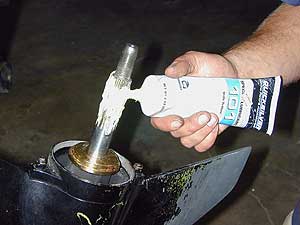
Check the splines on the prop shaft. They should be clean and sharp, not rounded off or corroded. If the splines are worn, the prop won't seat properly and can slip under load. Clean the splines with a wire brush and coat them with waterproof marine grease before you reinstall the prop. We use a lithium-based marine grease – it doesn't wash out and it keeps the prop from seizing on the shaft over the winter. Learn more about the importance of best marine greases and lubes for your outboard to protect these critical components.
Look at the prop nut and cotter pin or locking tab. If the nut is dinged up or the threads are chewed, replace it. A prop coming off at speed is dangerous and expensive. The cotter pin should be new every time – don't reuse a bent one.
Check the anode (zinc or aluminum depending on your water). If it's more than 50% corroded, replace it. The anode protects your lower unit from galvanic corrosion, especially in saltwater. A worn-out anode means your gearcase is corroding instead.
Turnaround Time and Costs

A simple prop repair – straightening one blade and rebalancing – usually takes 3 to 7 days if you drop it off at a prop shop. More complex jobs, like welding or rebushing a hub, can take up to two weeks. If you're shipping the prop to a specialist, add another week for transit each way.
Skeg repairs are often faster. A straightening job can be done in a day if the shop has time. Welding a broken skeg tip might take a few days, depending on the welder's schedule and whether the lower unit needs to come off. A full skeg replacement or a bolt-on guard install is usually a one-day job.
Cost for prop straightening runs $100-$200. Welding a stainless blade or rebushing a hub can cost $200-$400. Skeg straightening is cheap, often under $100. Welding a skeg tip costs $150-$300 depending on how much material needs to be added. A bolt-on stainless skeg guard costs $150-$250 installed.
If you're shipping the prop, factor in $30-$50 each way for shipping, depending on size and speed. If the prop shop finds secondary damage – a bent prop shaft, a cracked hub, or a damaged seal – the estimate will go up. A good shop will call you before doing extra work.
Don't wait until spring to get this done. By March, every prop shop in the northern states is backed up with people who didn't check their gear over the winter. We ship JLM parts worldwide year-round, and we've gotten props to guys in Australia in under a week when they needed them before a tournament. Do the inspection now and order parts early if you need them. For a thorough annual prep routine, see our end-of-season outboard maintenance checklist.
Comparing Repair Estimates
Get at least two quotes if the damage is significant. Ask what's included – is it just labor, or are parts like thrust washers, a new hub, or a skeg guard factored in? Ask about the warranty. A reputable shop will guarantee their work, usually 90 days to a year on repairs like a straightened blade or a welded skeg.
Ask how they balance the prop. A shop that uses a static bubble balancer is fine for rough work, but a dynamic spin balancer gives better results and eliminates vibration. Ask if they measure and restore the original pitch after a repair – a bent blade loses pitch, and just straightening it without checking pitch means you'll lose top speed or acceleration.
Check their reputation. Do they specialize in your engine brand or prop type? A shop that works on a lot of Yamaha or Mercury outboards will have the right tooling and experience. Look for online reviews or ask at your local marina who they use.
If you're comparing OEM parts to aftermarket, understand that not all aftermarket is junk. Cheap no-name parts from random online sellers are usually garbage – the rubber is too hard, the fit is sloppy, and you'll be tearing the lower unit off again in six months. Quality aftermarket from manufacturers like JLM is different. We use the same alloys and machining tolerances as OEM, sometimes even the same factories that produce OEM parts in their excess capacity. You get the fit and performance you need without paying double for a logo. Learn more about OEM vs. aftermarket outboard parts for in-depth guidance.
Testing After Repairs
Once the prop and skeg are repaired and reinstalled, test the boat in open water. Start at low speed and work up gradually. Feel for vibration through the steering wheel or the hull. If you feel a buzz or shake that wasn't there before, shut down and check the prop installation – the prop nut might not be tight, or the prop wasn't balanced correctly.
Check your top speed and acceleration. If you're not hitting the RPM range you expect at wide-open throttle, the prop pitch might be off or a blade might still have a slight bend. A prop that lost pitch will rev higher but push less, giving you lower top speed.
Check steering response. If the boat pulls to one side or feels unstable in a turn, the skeg might still be bent or the prop blades aren't symmetric. Shut down and inspect again.
Watch the engine temperature and the telltale pee stream. If the repair involved removing the lower unit or disturbing the water pump, make sure the cooling system is working right. The stream should be strong and steady at all speeds. For tips on cooling system care, see our cooling system parts collection.
Grease your prop shaft splines with waterproof marine grease every time you pull the prop, and it won't seize on the shaft next season.
For more comprehensive resources and parts for your boat, visit our JLM Marine hub.