


5-Minute Outboard Check: Quick Safety Steps Before You Go

If your outboard dies halfway across the lake or won't start at the ramp, it's usually something you could've caught in five minutes at the dock. Machinery failure caused 291 boating accidents in 2023—that's the fifth-leading factor, with 9 deaths and 80 injuries. Most of it comes down to skipped checks.
I'm not talking about a full service. This is a quick run-through before you untie: fuel, cooling, prop, kill switch, safety gear. Takes five minutes. Prevents hours of trouble. For full maintenance advice, consider checking our Outboard Maintenance Checklist to keep your engine in top shape.
Why Bother With Pre-Departure Checks

In 2023, there were 3,844 recreational boating accidents in the US. 564 people died. 2,126 got injured. A chunk of that—especially the machinery failures and the operator-inattention cases—comes from stuff you can spot before you leave the dock, according to the US Coast Guard's 2023 Recreational Boating Statistics.
As the skipper, you're responsible for the boat and everyone on it. If the motor quits because you didn't check the fuel bulb or the cooling stream, that's on you. The USCG Auxiliary offers free vessel safety checks—they'll catch basic issues and verify your gear is up to code. But between those annual inspections, you need to do this yourself every time you launch.
Checking Safety Gear and Fuel Levels
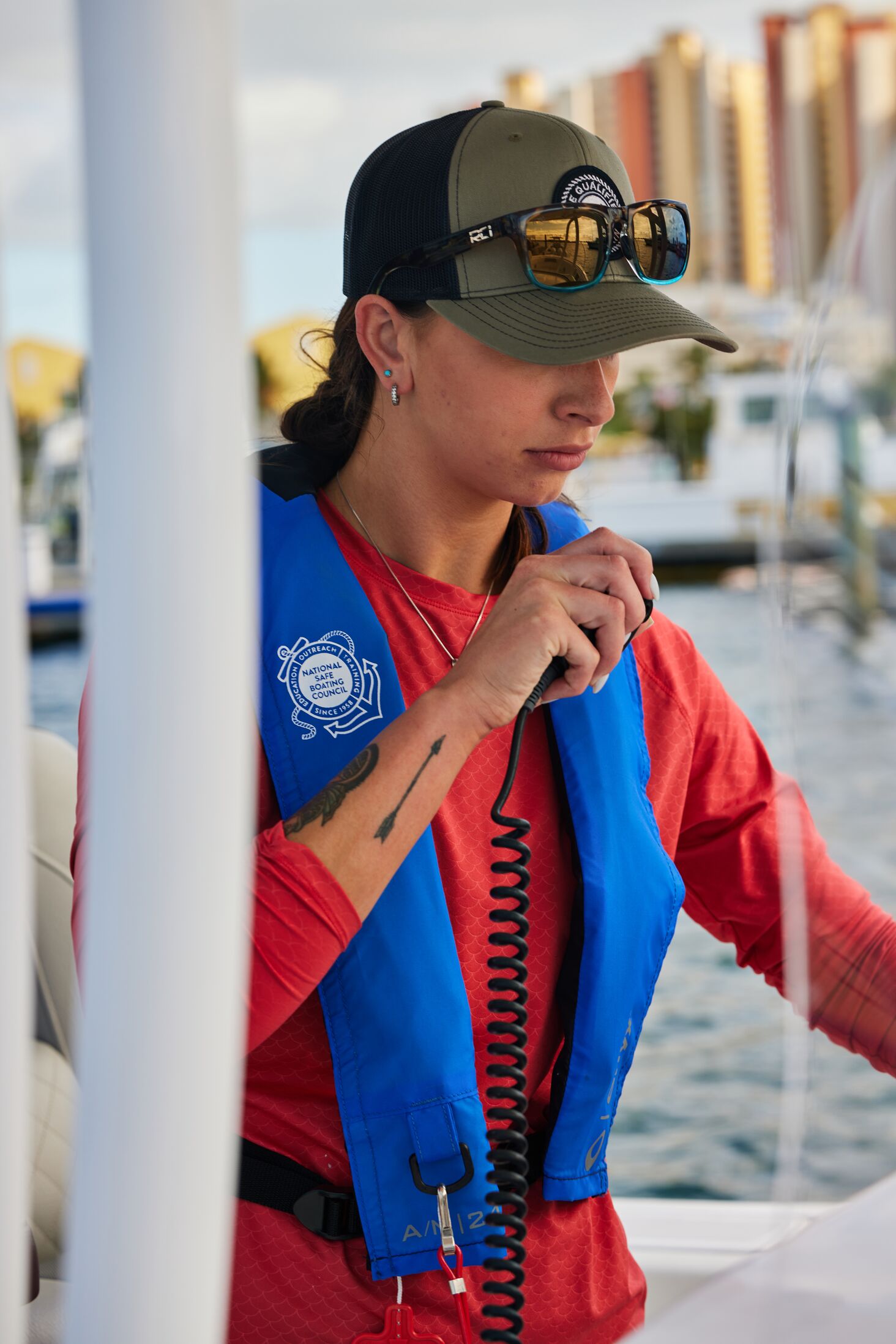
Start with the required gear. You need one Coast Guard-approved life jacket per person, in good shape—check the straps and zippers. You need a throwable Type IV device. Fire extinguisher has to be charged and accessible. Visual distress signals can't be expired. Sound device—horn or whistle—needs to work. This isn't optional equipment. It's federal law, and it's what keeps people alive when things go sideways.
Fuel: Use the 1/3 rule. One-third of your tank to get out, one-third to get back, one-third reserve. If you're running a portable tank, make sure the vent screw is open—a closed vent will starve the motor. On permanent tanks, check the vent fitting for blockages. Squeeze the primer bulb. It should get firm and stay firm. If it stays squishy, you've got a leak or a failing check valve somewhere in the line. Look at the fuel lines under the cowling for cracks, especially near clamps and bends where the rubber flexes. Sniff the bilge. If you smell gas fumes, don't start the motor—find the leak first. For more on fuel system maintenance, our guide on Spotting Outboard Fuel Leaks and Fixing Them Safely is an essential read.
Wind and current burn more fuel than you think. That 1/3 reserve isn't padding; it's necessary if you're fighting a headwind on the way back or bucking an outgoing tide.
Executing the 5-Minute Motor Inspection
Kill switch first. Clip the lanyard to your belt or PFD. Then—and most people skip this—start the motor and pull the lanyard while it's idling to verify it actually cuts the ignition. I've seen corroded contacts that don't break the circuit. If the motor keeps running when you yank the cord, fix it before you go. Understanding the kill switch is critical; see our detailed post on Understanding the Kill Switch: Why Your Engine Won’t Start for more info.
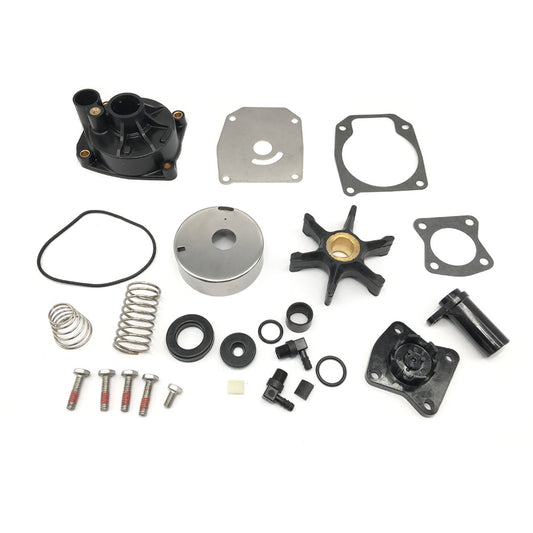
Cooling system. Lower the motor, start it in neutral (on muffs or in the water—never dry-start; you'll cook the impeller in seconds). Watch the tell-tale. You want a strong, steady stream of water coming out of the pee hole within 10 to 15 seconds. If it's a weak dribble or nothing, shut down immediately. Usually means the impeller is shot or the outlet is clogged—bugs love to nest in there. A weak stream at idle that improves when you throttle up can also mean a failing impeller; the vanes are cracked and only pump well at higher RPM. Either way, don't ignore it. Overheating will seize the powerhead, and that's a multi-thousand-dollar mistake. For detailed steps, see our guide on How to Replace a Mercury Outboard Water Pump Impeller.
Listen. A smooth idle is what you're after. A rhythmic ticking or tapping might point to valve or lifter issues on a four-stroke. A deep clunk or grinding from the lower unit usually means gear damage—pull the leg and inspect before you go. Any new vibration or rattling that wasn't there last trip deserves attention. Our post on Grinding Noise in the Lower Unit: Signs of Gearbox Trouble provides excellent tips.
Prop and lower unit. Tilt the motor up. Spin the prop by hand. It should turn smoothly with slight resistance from the gears. Check the prop itself for bent blades, nicks, or wrapped fishing line behind the hub—line can overheat the hub and cause a spun prop. On smaller motors with shear pins, make sure the pin is intact. On larger units, check that the prop nut is tight and the cotter pin or lock tab is in place. Wiggle the prop shaft side-to-side. A little play is normal; a lot of slop means worn seals or bearings, and that'll let water into the gearcase. If you see milky oil dripping from the drain screw or around the prop shaft seal, you've got water contamination—don't run it. That's how lower units seize. Learn more about propeller issues in our blog on Sheared Propeller Pin? How to Replace It On the Water.
Battery and electrical. On four-strokes, check the oil level on the dipstick—top off if it's low. Battery terminals should be clean and tight; corrosion kills voltage. Turn the key to accessories and verify your navigation lights work—running lights, stern light, anchor light. If you've got trim/tilt, cycle it a few times. Steering should be smooth with no binding.
Oil on two-strokes. If you're running a two-stroke with an oil injection system, check the reservoir level. Don't assume it's fine because it was full last week—injection pumps can fail, and running lean will score the cylinders. For troubleshooting, see our Two-Stroke Oil Injection Troubleshooting Guide.
Applying the Take 5 Hazard Check Before Launch
The Take 5 is borrowed from industrial safety, but it works perfectly at the ramp. It's a mental checklist to ID risks before you commit.
Stop. Pause before you turn the key or untie. Don't rush.
Look. Scan the water around you. Floating logs? Debris? Shallow spots you didn't notice? Check the weather—is there a squall building to the west? Look at other boats. Are they struggling with wind or current? Is the ramp area crowded?
Assess. Based on what you see, what can go wrong? Is the tide dropping fast and you might ground on the way back? Is the wind picking up and your anchor might drag? Is your fuel enough given the conditions?
Control. What can you do to manage the risk? Delay departure until the squall passes. Chart a different route to avoid the shallows. Call someone with your float plan. Add an extra anchor.
Monitor. Once you're underway, keep observing. Conditions change. Your boat's performance can change. If the tell-tale stream weakens an hour in, head back—don't push it.
Common hazards people miss: submerged pilings near old docks, floating nets or crab pots, sudden afternoon thunderstorms in summer, strong tidal currents near inlets, and other boat traffic in narrow channels. The Take 5 forces you to think about these instead of just firing up and going. For more on this safety approach, see our blog on Take 5 Safety Checklists and Templates.
Using Digital Tools for Safety Logs
You don't need paper. A phone app can store your checklists, sync across devices, and attach photos. If you operate multiple boats—or if you're a charter or rental outfit—digital tools make it easier to track inspections and prove compliance. Platforms like SafetyCulture offer customizable templates, including Take 5 forms, that log time-stamps and GPS coordinates. For a single recreational boat, a simple note app or photo log works fine. The key is consistency—do the same checks in the same order every time, and log anything abnormal.
Post-Launch and Ongoing Safety Habits
Your responsibility doesn't stop at the dock. Establish the routine so it's automatic: before you touch the ignition, you've already done the visual walk-around, the bulb squeeze, the kill-switch test. Make it a ritual.
After any service or repair—oil change, impeller swap, gearcase reseal—do a full inspection before the first launch. Mechanics make mistakes. Bolts get left finger-tight. Hose clamps get forgotten. Double-check the work. For detailed maintenance steps, our Annual Inspection Checklist: What to Check Each Spring is a helpful resource.
If you're not comfortable with the conditions or the boat's performance, don't go. Period. Better to scrub the trip than to call the Coast Guard three miles offshore because you ignored a sputtering idle or a weak pee stream.
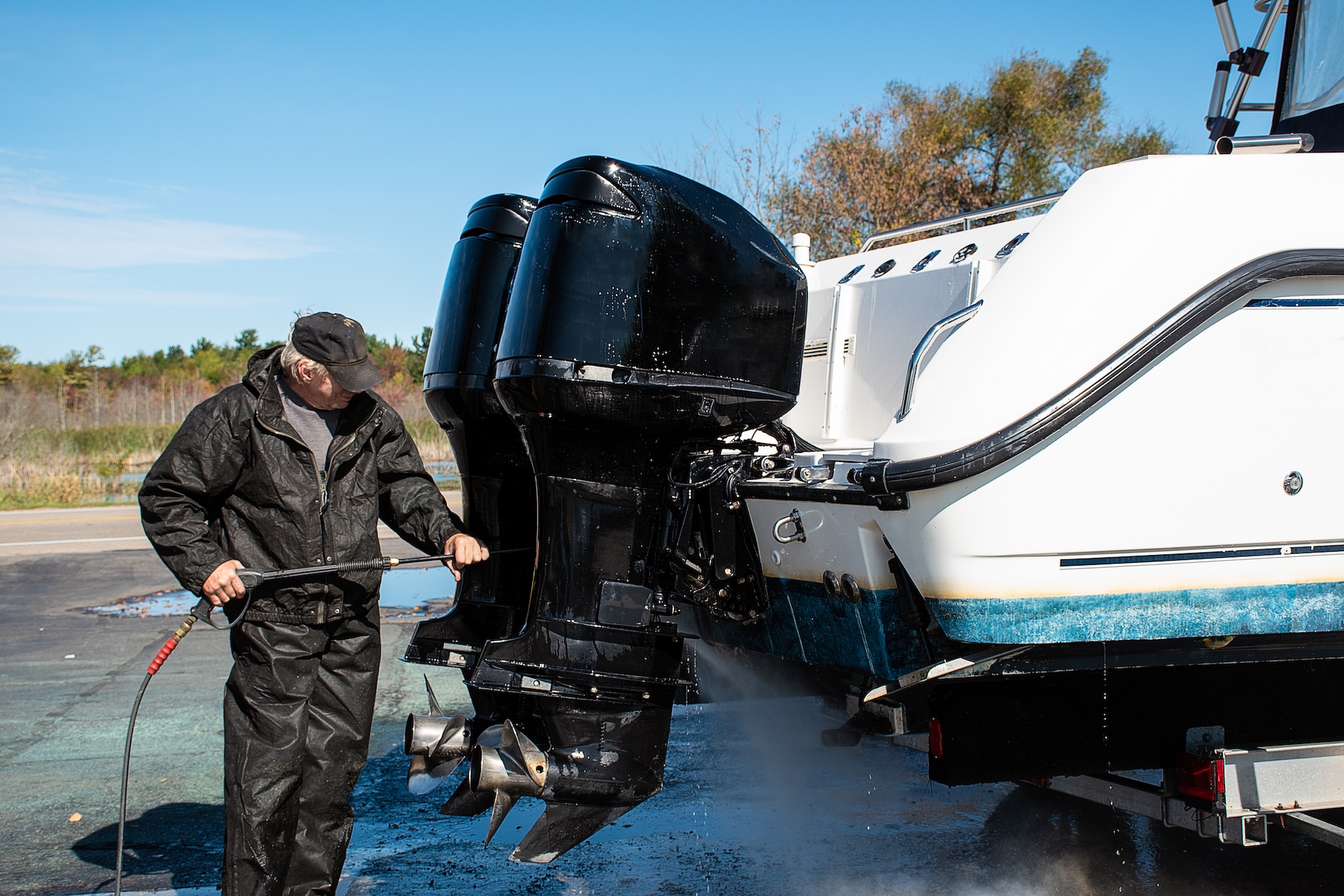
Pro tip: After every ride, flush your outboard with fresh water using a flush attachment or muffs. Run it for five minutes. It prevents salt and debris from caking up the cooling passages, and it'll keep that tell-tale flowing strong next season. Our blog on the Daily Engine Flush for Saltwater Boats: A Good Habit explains why this is so important.
FAQ
What should I include in a boating pre-departure checklist?
You need to verify all Coast Guard-required safety equipment: one approved life jacket per person in good condition, a throwable Type IV device, charged fire extinguisher, unexpired visual distress signals, and a sound device like a horn. For the motor, squeeze the primer bulb until it's firm, check fuel lines for cracks, inspect the prop for damage or fishing line, confirm the kill switch lanyard cuts ignition when pulled, and verify a strong cooling water stream from the tell-tale during a brief warm-up. Check oil level on four-strokes, oil reservoir on two-stroke injection systems, battery terminals for corrosion, and bilge for fuel fumes. Use the 1/3 fuel rule: one-third out, one-third back, one-third reserve.
How often should I perform outboard motor safety checks?
Before every single use. This isn't annual maintenance—it's a pre-launch ritual. Major service intervals depend on your engine manufacturer's schedule (hours or calendar), but these five-minute checks happen every time you launch. Issues develop between trips: fuel lines crack from sun exposure, impellers degrade from sitting, battery terminals corrode, props pick up fishing line. If you trailer the boat, remove the transom saver or travel strut before starting—it's a critical step people forget.
What is a Take 5 safety checklist and how does it apply to boating?
The Take 5 is a hazard-assessment tool: Stop (pause before acting), Look (observe surroundings for hazards like debris, weather, traffic), Assess (evaluate the risks you identified), Control (take steps to mitigate those risks, like delaying departure or changing your route), and Monitor (stay vigilant during the trip for changing conditions). In boating, it shifts your mindset from "start the motor and go" to "what can go wrong, and how do I prevent it?" It addresses operator inattention and environmental hazards—two of the top accident factors according to USCG data.
Can I use a digital app for logging boating safety inspections?
Yes. Digital checklists sync across devices, allow photo attachments to document issues, store inspection history, and provide time-stamped records for compliance. This is useful for multi-boat operations, charters, or marinas. For a single recreational boat, a phone note or photo log is enough—just be consistent. The goal is a repeatable process, not fancy software.
What are the most common hazards to look for before boating?
Environmental: floating debris (logs, nets, plastic), shallow areas not marked on charts, sudden weather changes (squalls, wind shifts), strong tidal currents near inlets. Equipment: cracked fuel lines, weak primer bulb, corroded battery terminals, damaged prop, fishing line wrapped behind the prop hub, milky gearcase oil indicating water intrusion, weak or absent tell-tale stream indicating impeller failure. Operational: heavy boat traffic in narrow channels, inexperienced crew, inadequate fuel for conditions, no float plan filed. The 2023 USCG statistics show operator inattention (586 accidents), improper lookout (421 accidents), and machinery failure (291 accidents) as top factors—all addressable through pre-launch checks and situational awareness.
Sources:
- US Coast Guard, Recreational Boating Statistics 2023, https://uscgboating.org/library/accident-statistics/Recreational-Boating-Statistics-2023-Ch2.pdf
- BOATERexam.com, Pre-Departure Boating Safety Checklist, https://www.boaterexam.com/boating-resources/pre-departure-boating-safety-checklist/
- USCG Auxiliary, Vessel Safety Check Program, https://cgaux.org/vsc/
- SafetyCulture, Take 5 Safety Checklists and Templates, https://safetyculture.com/
- Outboard Manuals, Outboard Safety Checklist, https://outboardmanuals.net/outboard-safety-checklist/
- PW Marina, Top 5 Boating Safety Checks Every Owner Should Do, https://www.pwmarina.com/blog/top-5-boating-safety-checks-every-owner-should-do
- New Zealand Coastguard, The Essential 10-Point Outboard Engine Checklist, https://www.coastguard.nz/boating-essentials/safety-on-the-water/safety-articles/the-essential-10-point-outboard-engine-checklis
- JLM Marine Hub, your go-to source for premium marine parts and info: JLM Marine
About JLM Marine
Founded in 2002, JLM Marine has established itself as a dedicated manufacturer of high-quality marine parts, based in China. Our commitment to excellence in manufacturing has earned us the trust of top marine brands globally.
As a direct supplier, we bypass intermediaries, which allows us to offer competitive prices without compromising on quality. This approach not only supports cost-efficiency but also ensures that our customers receive the best value directly from the source.
We are excited to expand our reach through retail channels, bringing our expertise and commitment to quality directly to boat owners and enthusiasts worldwide.
Water Pump Repair Kits on Sale
- $49.50
$35.00- $49.50
- Unit price
- per
- $27.80
$27.00- $27.80
- Unit price
- per
- $27.80
$23.00- $27.80
- Unit price
- per

- $27.99
$33.00- $27.99
- Unit price
- per

- $89.00
$103.00- $89.00
- Unit price
- per
- $57.50
$59.00- $57.50
- Unit price
- per
- $39.89
$45.00- $39.89
- Unit price
- per

- $35.00
$42.00- $35.00
- Unit price
- per
- $55.50
- $55.50
- Unit price
- per
- $49.50
$45.00- $49.50
- Unit price
- per

- $32.50
$33.00- $32.50
- Unit price
- per

- $32.50
$35.00- $32.50
- Unit price
- per

- $54.00
$55.00- $54.00
- Unit price
- per

- $49.99
$59.00- $49.99
- Unit price
- per

- $35.98
$43.00- $35.98
- Unit price
- per

- $57.80
$66.00- $57.80
- Unit price
- per

- $41.80
- $41.80
- Unit price
- per
- $27.80
- $27.80
- Unit price
- per

- $62.80
- $62.80
- Unit price
- per

- $32.80
$23.00- $32.80
- Unit price
- per