


Are Aftermarket Impellers Reliable?
- What Separates a Good Impeller from a Bad One
- Spotting Impeller Failure Before It Kills Your Engine
- Aftermarket Failures: What Actually Happens
- OEM: What You're Paying For
- When Aftermarket Makes Sense—and When It Doesn't
- How Diesel Inboards and Outboards Differ
- Replacing Your Impeller: The Right Way
- Impeller "Set" and Storage
- Maintenance Schedule and Winterizing
- What We Stock at JLM Marine
- Price Reality: OEM vs Quality Aftermarket
- Real-World Failures vs. Success Stories
- What to Look for in Packaging
- The Bottom Line

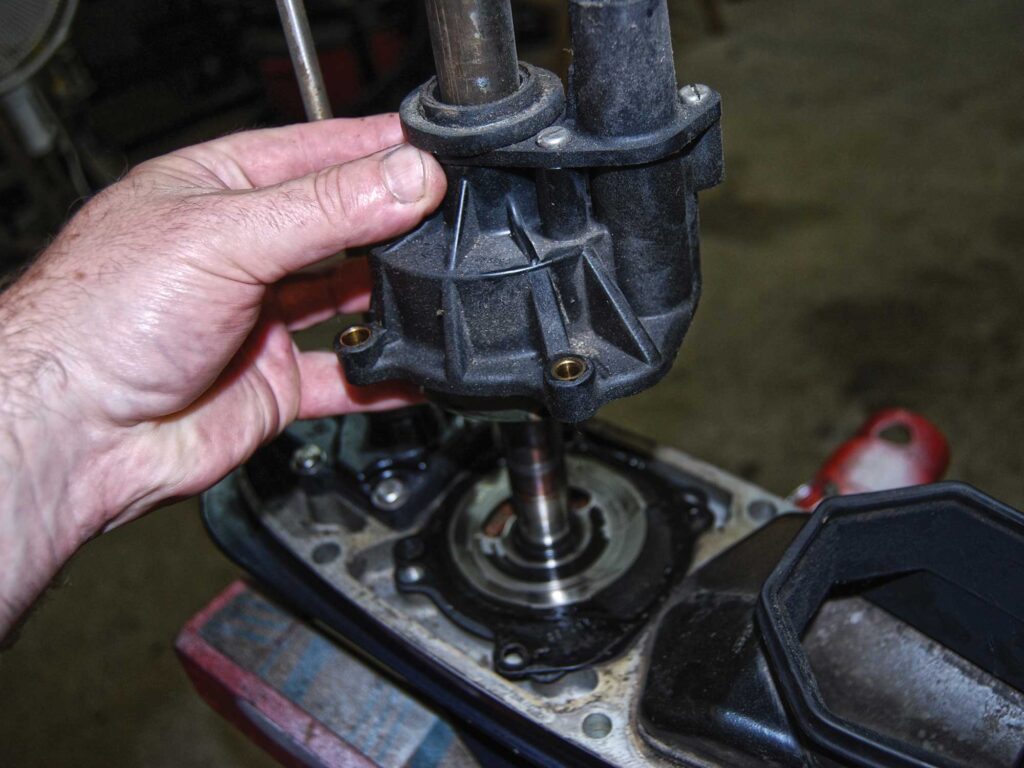
I've replaced hundreds of water pump impellers in my 20 years wrenching on outboards. The question we get asked most at the shop is simple: can I save money with an aftermarket impeller, or am I asking for trouble? The answer isn't one-size-fits-all. Some aftermarket parts work great. Some will leave you stranded.
What Separates a Good Impeller from a Bad One

Material quality makes or breaks an impeller. The rubber compound has to flex thousands of times per minute without tearing, resist heat spikes over 180°F, and handle chemical exposure if you run in saltwater. According to Marine Equipment Trade Association testing, neoprene compounds resist saltwater degradation better than standard natural rubber.
Cheap aftermarket impellers usually fail because the rubber is wrong. Either it's too hard and won't seal properly, or it's too soft and tears within a season. I've pulled apart failed impellers that had visible flashing on the seams—rough edges where the mold halves met—and vanes that felt brittle to the touch. High-quality aftermarket manufacturers use proprietary blends, often neoprene-based, that match or beat OEM specs without the dealer markup.
Here's what Mercury Marine's Technical Service Department found: roughly 70% of catastrophic engine failures tie back to cooling system problems, and impeller failure is the biggest single cause.
Spotting Impeller Failure Before It Kills Your Engine
You don't need to tear down the lower unit to know your impeller is dying. Watch for these symptoms:
- Weak pee stream at idle that improves with throttle – This tells you the vanes are losing flexibility or a few are already torn.
- No pee stream at all – Pull the impeller immediately. You're maybe one ride away from overheating.
- Overheating alarm – If the alarm trips, shut down. Don't "test" it by running longer.
- Rough idle or steam from the exhaust – Means the cooling passages aren't getting enough flow.
One thing to know: the pee stream only shows that the water pump is moving some water. On certain newer engines, the tell-tale (pee stream) taps off before the thermostat housing. You can have a healthy stream and still have a clogged cooling block downstream. Don't trust the stream alone if you're seeing temperature spikes. For more on diagnosing overheating, refer to Outboard Overheating 101: Quick Checks to Prevent Damage.
Aftermarket Failures: What Actually Happens

Generic aftermarket impellers fail in predictable ways. On forums like iboats.com, MerCruiser owners report that discount aftermarket kits—especially certain Sierra models—use rubber that wears faster than OEM. The cost savings disappear when you're swapping it again in six months.
Jet boat owners on jetboaters.net and themalibucrew.com describe blade cracking and catastrophic shredding under 50 hours of use. High-RPM applications—like jet drives—expose weak materials fast. If the impeller can't handle flex cycles at 5,000+ RPM, the vanes develop hairline cracks. Those cracks don't heal. Eventually the vane tears off, the pump loses prime, the engine overheats, and you're looking at a scored cylinder head.
One composite impeller failure case in a US industrial fan showed how heat deflection beyond design limits caused catastrophic adhesion failure after only 200 hours. Marine impellers face similar thermal stress, especially in saltwater where temps can swing 100°F between idle and wide-open throttle.
On the flip side, some sailboat owners on Sailboat Owners Forums report success with aftermarket Johnson impellers in Yanmar and Westerbeke diesel auxiliaries, matching OEM lifespan. The difference? They bought from established brands with material specs, not random eBay no-names. JLM Marine proudly stocks Johnson Water Pump Impeller Kits that meet strict quality standards.
OEM: What You're Paying For

OEM impellers are engineered to the exact tolerances of your engine's pump housing. The keyway lines up, the vane count matches the designed flow rate, and the rubber compound is tested for your operating range. When you buy OEM, you also protect your warranty. If you've got a newer engine and the cooling system fails, having used aftermarket parts can void coverage. That's not always enforced, but it's a risk.
Under the Magnuson-Moss Warranty Act, a manufacturer can't void your entire warranty just because you used a non-OEM part—but they can deny a claim if that specific part caused the failure. If your cheap impeller grenades and takes out the water pump housing, you're paying for both the housing and the labor.
OEM is the safe bet if you don't want to gamble. Professional marine techs, like those featured in this water pump replacement guide, recommend OEM-spec parts and always inspecting the housing and wear ring for scoring before installing a new impeller. You can also find OEM-quality impellers like the Mercury Water Pump Impeller available at JLM Marine.
When Aftermarket Makes Sense—and When It Doesn't

Not all aftermarket is junk. Some factories that produce OEM impellers also run aftermarket lines using the same equipment and materials. You're just not paying for the brand sticker.
Go OEM if:
- Your engine is under warranty
- You run a high-performance or commercial application (high RPM, heavy hours)
- You can't afford downtime or a tow bill
Go quality aftermarket if:
- You're maintaining a recreational outboard or diesel auxiliary with moderate use
- You can verify material specs (look for neoprene or specific durometer ratings on the packaging)
- The brand has a track record (we stock certain lines at JLM because they pass our shop standards)
Avoid cheap aftermarket if:
- The packaging doesn't list material type or country of origin
- It's significantly cheaper than other aftermarket options (if everyone else is $30 and this one's $10, there's a reason)
- You see flashing, rough edges, or inconsistent vane thickness
Find our entire selection of reliable Cooling System parts that include OEM and quality aftermarket impellers.
How Diesel Inboards and Outboards Differ
Diesel inboard auxiliaries (common on sailboats) run lower RPM but longer hours. The impeller sees steady, predictable stress. A quality aftermarket part works fine here because the flex cycles are consistent and heat buildup is gradual.
Outboards, especially two-strokes and high-output four-strokes, hit 6,000 RPM regularly. The impeller flexes faster, heats faster, and any weakness shows up quick. Stick closer to OEM or proven high-performance aftermarket on these engines.
Replacing Your Impeller: The Right Way
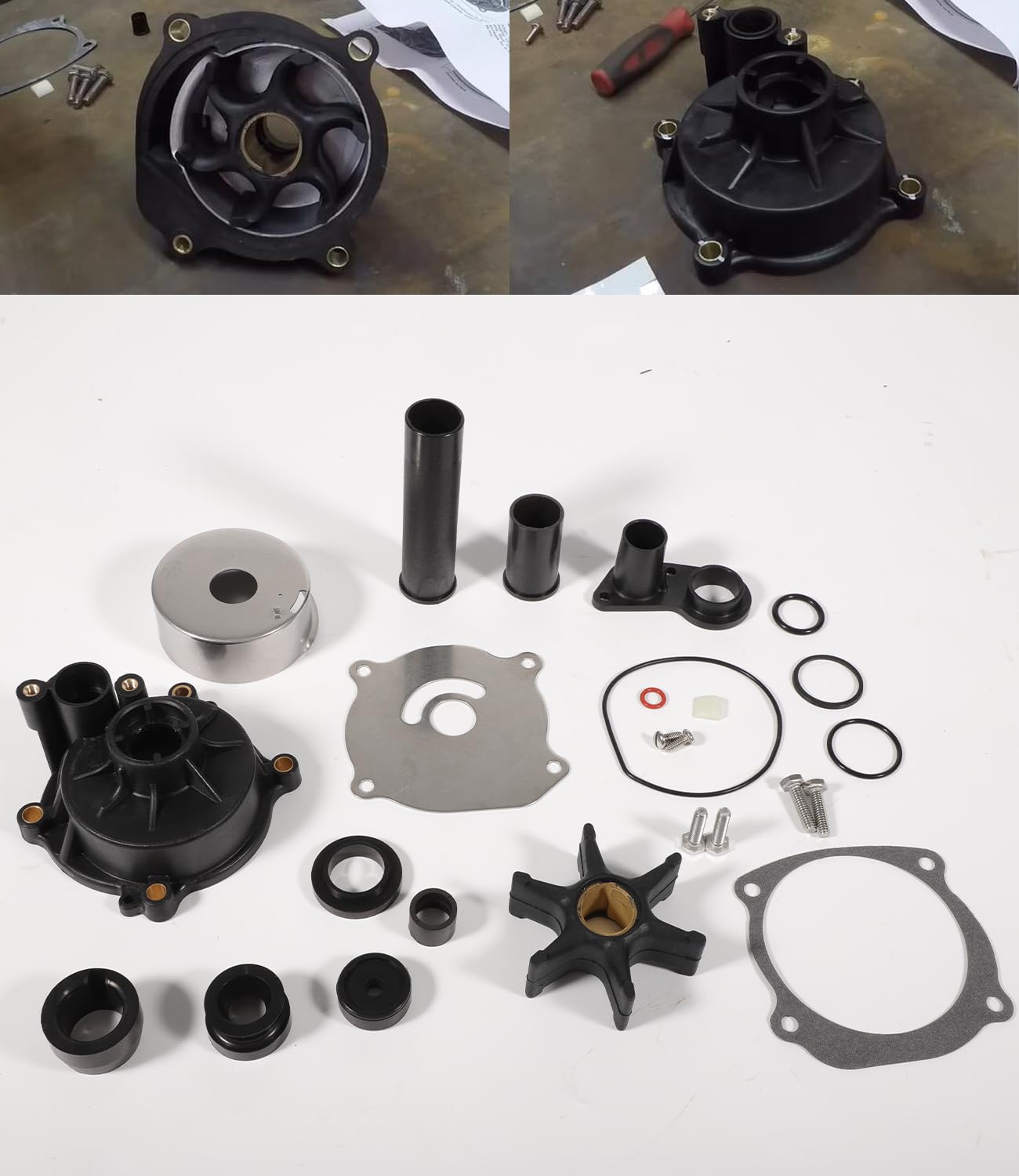
Swapping an impeller isn't complicated, but shortcuts cause problems. According to the Marine Mechanics Institute, about 30% of DIY cooling repairs lead to secondary issues—usually from skipping inspection steps or improper reassembly.
Tools you'll need:
- Socket set (sizes vary by engine—usually 10mm, 12mm, and 14mm)
- Impeller puller or needle-nose pliers
- Flathead screwdriver
- Torque wrench
Steps:
- Remove the lower unit or pump housing cover. On most outboards, this means pulling 4–6 bolts. Some inboards have a front-access plate.
- Extract the old impeller. If it's stuck, use an impeller puller. Don't pry with a screwdriver—you'll gouge the housing.
- Inspect the housing and wear ring. Run your finger inside. If you feel grooves deep enough to catch a fingernail, replace the housing or wear plate. A damaged housing will chew up even a new impeller in weeks.
- Lubricate the new impeller. Use water or a water-based marine lubricant. Do not use petroleum jelly, Vaseline, or standard grease—these break down rubber over time.
- Install the impeller with vanes oriented correctly. Most impellers have a rotation direction molded on the hub. Vanes should curve against the direction of rotation.
- Check the shaft key or splines. Make sure they're not worn or damaged.
- Reassemble and torque bolts to spec. Over-torquing warps the housing; under-torquing causes leaks.
- Prime and test. Run the engine on a hose or in a tank. Verify a strong, steady pee stream within 15 seconds.
If the engine runs dry for even 15 seconds, the impeller can burn. The vanes heat up, lose flexibility, and take a permanent set (they stay bent). Once that happens, the pump loses efficiency and you're back to square one.
For a detailed walk-through of replacing your impeller, check out our guide on How to Replace a Mercury Outboard Water Pump Impeller.
Impeller "Set" and Storage
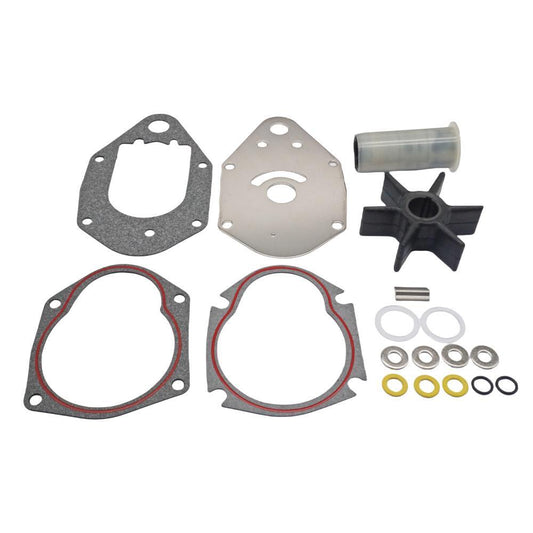
Impellers sitting idle for months can develop a set—the vanes stay curved in one position. When you fire up the engine, those vanes don't flex properly and can tear on the first run. If you're winterizing, some techs recommend pulling the impeller and storing it flat, or rotating the driveshaft a quarter-turn every few weeks to keep the vanes from staying in one position.
Maintenance Schedule and Winterizing
For saltwater or high-hour use, replace your impeller every 100 hours or once a year, whichever comes first. Freshwater recreational boaters can sometimes stretch to two years, but it's not worth the risk. A $40 impeller is cheaper than a $3,000 powerhead.
Winterizing matters. If you're in a freeze zone, drain the entire cooling system and flush with RV antifreeze rated for marine use. Water left in the pump housing can freeze, cracking the housing or locking the impeller to the shaft. Come spring, the engine turns over but the impeller is glued in place by ice damage—it tears instantly on startup.
We cover some related maintenance tips in our blog on Thermostat Maintenance: Keeping Your Outboard Running Cool.
What We Stock at JLM Marine

We get asked why we don't carry every aftermarket brand. Simple: we've seen too many failures. At JLM Marine, we stock aftermarket impellers from manufacturers that provide material certifications and have a proven track record in our shop and with our customers worldwide. We're not paying for the OEM sticker, but we're also not gambling on no-name rubber that fails in a season.
If you're local and uncomfortable doing the swap yourself, schedule a cooling system audit. We'll inspect the housing, check the thermostat, and verify flow rates—it's faster than dealing with an overheat on the water.
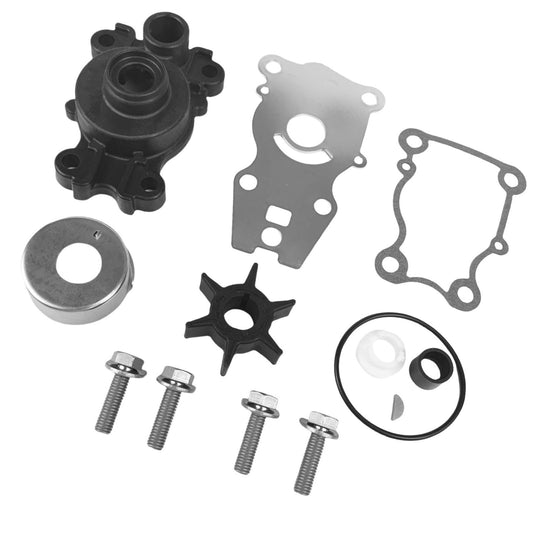
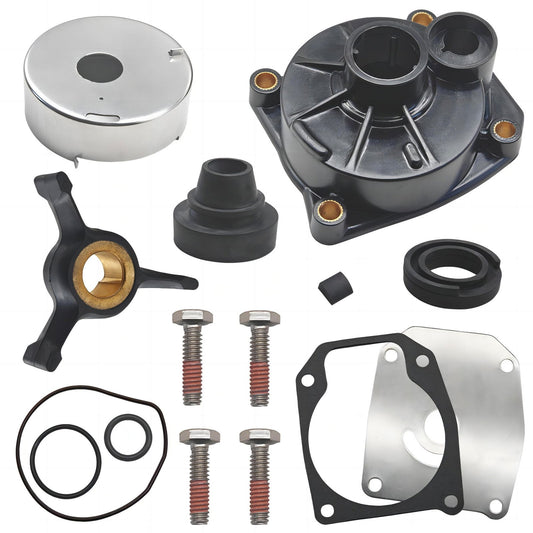
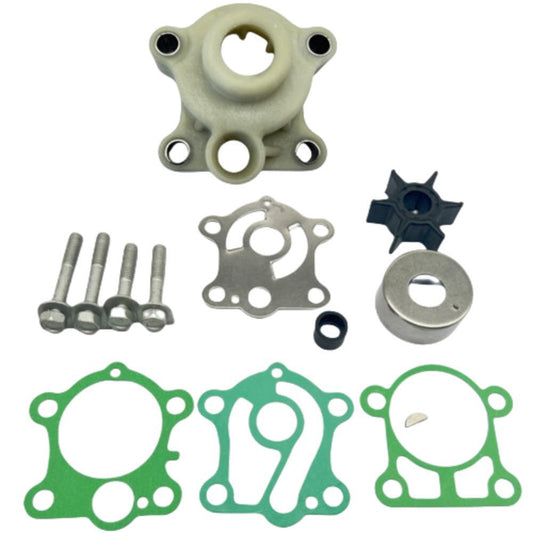
Explore our full range of Water Pump Impellers and related kits available to suit many brands and models.
Price Reality: OEM vs Quality Aftermarket
On forums like Sailboat Owners, users report finding aftermarket kits for $17 versus OEM kits at $44—about 60% savings. That's real money, especially if you run multiple engines or replace annually.
But here's the catch: a $10 impeller from a random seller is not the same as a $30 impeller from an established aftermarket manufacturer. The $10 part uses hard, recycled rubber with poor dimensional tolerance. The $30 part often comes from the same factory that makes OEM, just sold under a different label.
Real-World Failures vs. Success Stories
In a US fertilizer plant case, multistage pump impellers repeatedly failed from discharge recirculation at low flow. An aftermarket service rerated the impellers, restoring reliability. That shows aftermarket engineering can exceed OEM when done right.
But for every success, there's a warning. TDIClub users reported issues with certain aftermarket water pumps (Laso, Graf) where impellers came loose or incompatible metals caused accelerated wear. They went back to OEM-equivalent parts.
What to Look for in Packaging
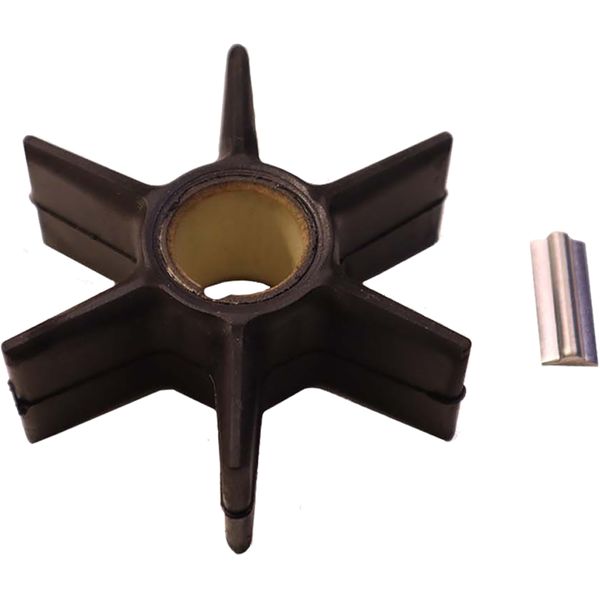
High-quality aftermarket impellers come with:
- Material type listed (neoprene, nitrile, etc.)
- Durometer rating (hardness—typically 50–70 Shore A for marine use)
- Crisp vane edges with no flashing or mold marks
- Country of origin and batch number
If the packaging is a plain plastic bag with no specs, pass.
The Bottom Line
Are aftermarket impellers reliable? Some are. Some aren't. The ones that fail do so because of inferior rubber, poor tolerances, or designs that don't account for heat and flex cycles. The ones that succeed come from manufacturers who treat the part as seriously as OEM does.
At JLM, we've shipped kits worldwide—from Australia to the Great Lakes—and the feedback loop is clear: quality aftermarket matches OEM performance at a better price. Cheap aftermarket fails fast and costs more in the long run.
If you're chasing the lowest price, you're rolling dice with your engine. If you're chasing value—proven materials, correct fit, reliable performance—then a good aftermarket option makes sense.
After every saltwater run, flush your raw water cooling system with fresh water for at least five minutes. It's the single best thing you can do to prevent mineral buildup and corrosion that kills impellers, housings, and thermostats before their time.
For more marine parts and expert advice, browse JLM Marine's full site at https://jlmmarine.com/.
About JLM Marine
Founded in 2002, JLM Marine has established itself as a dedicated manufacturer of high-quality marine parts, based in China. Our commitment to excellence in manufacturing has earned us the trust of top marine brands globally.
As a direct supplier, we bypass intermediaries, which allows us to offer competitive prices without compromising on quality. This approach not only supports cost-efficiency but also ensures that our customers receive the best value directly from the source.
We are excited to expand our reach through retail channels, bringing our expertise and commitment to quality directly to boat owners and enthusiasts worldwide.
Water Pump Repair Kits on Sale
- $49.50
$35.00- $49.50
- Unit price
- per
- $27.80
$27.00- $27.80
- Unit price
- per
- $27.80
$23.00- $27.80
- Unit price
- per

- $27.99
$33.00- $27.99
- Unit price
- per

- $89.00
$103.00- $89.00
- Unit price
- per
- $57.50
$59.00- $57.50
- Unit price
- per
- $39.89
$45.00- $39.89
- Unit price
- per

- $35.00
$42.00- $35.00
- Unit price
- per
- $55.50
- $55.50
- Unit price
- per
- $49.50
$45.00- $49.50
- Unit price
- per

- $32.50
$33.00- $32.50
- Unit price
- per

- $32.50
$35.00- $32.50
- Unit price
- per

- $54.00
$55.00- $54.00
- Unit price
- per

- $49.99
$59.00- $49.99
- Unit price
- per

- $35.98
$43.00- $35.98
- Unit price
- per

- $57.80
$66.00- $57.80
- Unit price
- per

- $41.80
- $41.80
- Unit price
- per
- $27.80
- $27.80
- Unit price
- per

- $62.80
- $62.80
- Unit price
- per

- $32.80
$23.00- $32.80
- Unit price
- per