


Yamaha 200 ProV Spark Plugs: BR8HS-10 vs. BR9HS-10 & Manual Discrepancies
- The Core Difference: Heat Range
- What the Documentation Actually Says
- Real-World Performance: What Happens When You Run the Wrong Plug
- How to Verify the Correct Plug for Your Specific Engine
- Documented Switching: What Owners Report
- Diagnosing a Fouled Plug on the Water
- Where to Source the Correct Plug Without Overpaying
- Installation Specs You Need
- When to Replace Spark Plugs on a 200 ProV
- OEM vs. Non-OEM: What You're Actually Paying For
- Typical RPM Ranges and Plug Selection

I've spent 20 years pulling plugs out of Yamaha outboards, and the BR8HS-10 versus BR9HS-10 confusion comes up constantly. You check your motor sticker, it says one thing. You look at an online parts fiche, it says another. Your manual might list something different entirely. This isn't just annoying—it wastes your time and money if you order the wrong set.
The Core Difference: Heat Range

The numbers aren't random. In NGK's scale, a lower number means a hotter plug, and a higher number means a colder plug. That "8" versus "9" matters more than you'd think for a two-stroke outboard.
BR8HS-10 is the hotter plug. The tip self-cleans better because it runs at a higher temperature. For most 200 ProV applications—especially if you spend time trolling, idling at the dock, or running at lower RPMs—this plug resists carbon fouling. I've watched guys pull BR8HS-10 plugs after a full season and they're still clean. The 1.0 mm gap stays consistent, and you're not constantly wire-brushing deposits off the electrode.
BR9HS-10 is colder. It dissipates heat faster, which theoretically helps in very high-compression or sustained wide-open-throttle conditions. But in a standard 200 ProV setup, this colder plug loads up with carbon. You'll see black, sooty deposits on the insulator. At idle, the engine might stumble or miss. Give it throttle and it clears up for a bit, but the problem comes back. That's classic cold-plug fouling.
Both plugs share the same 1.0 mm gap spec and thread size, so they physically fit. The issue is how they perform once they're firing.
What the Documentation Actually Says
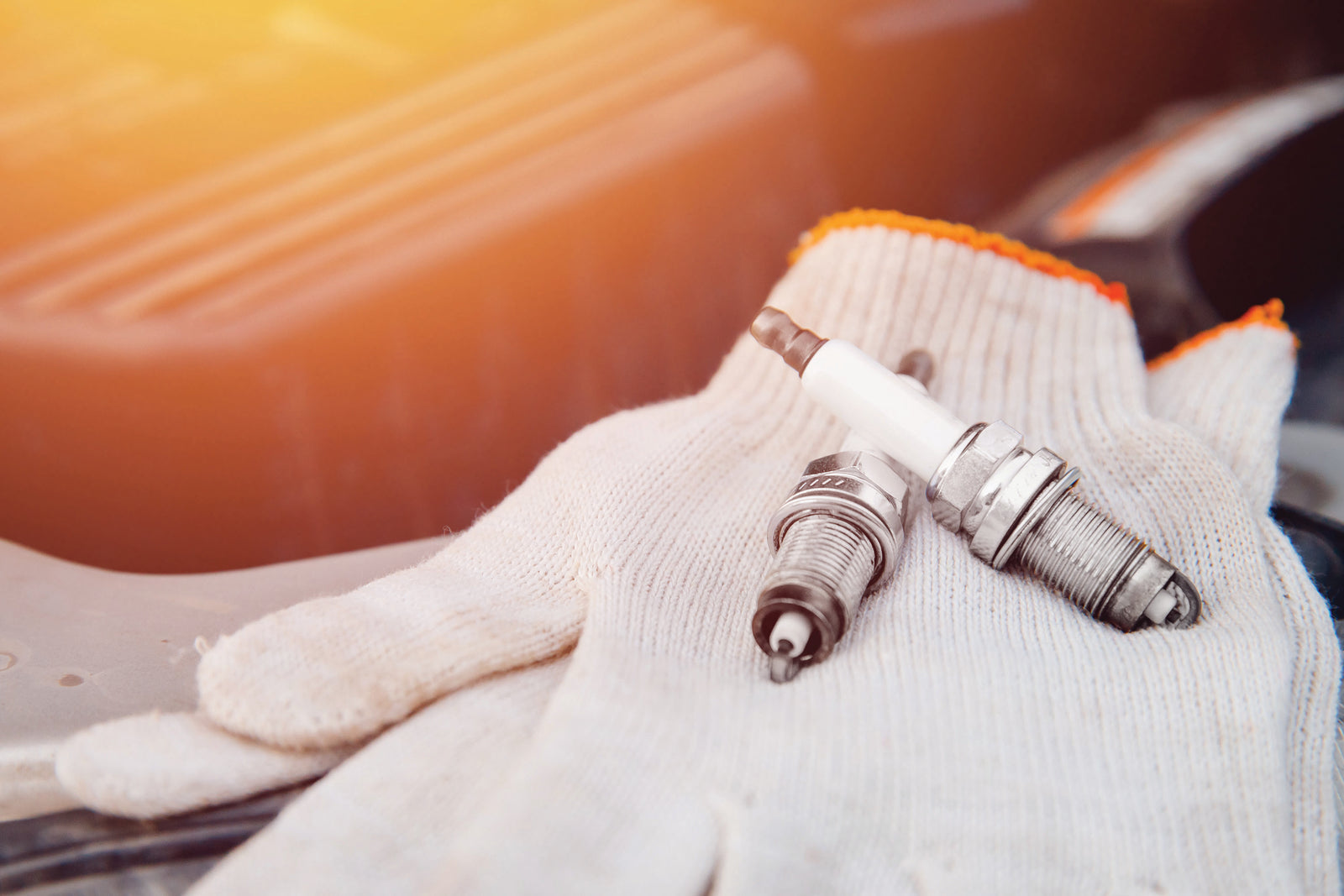
For US-market Yamaha 200 ProV models—particularly the P200 and SX200 V6 2.6L engines from 1999 to 2005—the NGK cross-reference charts consistently list BR8HS-10 as the correct plug. Earlier 1991-1995 ProV 200 models also specify BR8HS-10 in most service documentation.
But here's where it gets messy. Some owner's manuals for related engines—like the 1999 VMax 225 OX66—list BR9HS-10 on the engine decal and in one version of the manual, while parts diagrams and updated bulletins call for BR8HS-10. I've seen this firsthand: a customer brings in their motor, the sticker under the cowling says BR9HS-10, but when we pull up the parts lookup on Yamaha's official cross-reference, it shows BR8HS-10. Different manuals for the same engine year sometimes conflict.
This isn't just a forum rumor. One BBCBoards thread documents a 1999 VMax 225 owner finding BR8HS-10 recommended online while his manual and sticker specified BR9HS-10. Another discussion shows two separate Yamaha manuals for the same model listing different plugs. Yamaha likely issued technical service bulletins updating the plug spec, but not every manual revision captured it.
For the 200 ProV specifically, the weight of evidence points to BR8HS-10 as the correct plug across most years. If your sticker says BR9HS-10, it's worth double-checking with a Yamaha dealer or pulling up the most current parts diagram for your exact serial number. For detailed parts verification, consulting the Yamaha Outboard Parts Diagrams & Catalog can be incredibly helpful.
Real-World Performance: What Happens When You Run the Wrong Plug
I've rebuilt enough engines to tell you the symptoms aren't subtle.
Fouled plugs are the first sign. If you're pulling plugs every few weeks because they're black and crusty, you're running too cold a plug for your operating conditions. The BR9HS-10 doesn't stay hot enough to burn off deposits during low-speed trolling or short trips. You'll spend more time cleaning plugs than fishing.
Rough idle and stumbling come next. The engine will lope unevenly at idle, sometimes missing a cylinder entirely. You might see water spitting irregularly from the telltale. Rev it up to 2,000 RPM and it smooths out temporarily, but drop back to neutral and the problem returns. That's incomplete combustion from a fouled plug.
Hesitation under load shows up when you're trying to get on plane. You hit the throttle, the engine hesitates for a second or two, then catches. In one documented case on a 2000 Grady-White with a Yamaha 200 HP two-stroke (similar to the ProV), a mechanic installed BR7HS-10 plugs—meant for a 150 HP engine—and the owner reported hesitation at speed and in rough water. The manual specified BR8HS-10. After correcting the plugs, the hesitation disappeared.
Increased fuel consumption happens because the engine compensates for weak combustion by dumping more fuel. You're not getting complete burns in the cylinder, so efficiency drops. Your fuel gauge moves faster than it should for the same running time.
On the flip side, running a plug that's too hot for extreme high-RPM use can cause pre-ignition or electrode erosion, but that's rare in typical 200 ProV applications. The bigger risk is running too cold and fouling constantly. For broader engine troubleshooting that may complement plug issues, refer to our guide on Outboard Bogging Down? Troubleshooting Low Power, RPM Fluctuations & Fuel Issues.
How to Verify the Correct Plug for Your Specific Engine

Don't trust any single source—not even this article. Cross-reference multiple points.
Start with your engine's serial number. Look it up in Yamaha's official parts catalog or contact a Yamaha dealer directly. The serial number ties you to the exact production run and any mid-year spec changes. Generic model-year charts don't always capture running changes. For help, our Yamaha Outboard Serial Number Guide (2025) is an excellent resource.
Check your motor's decal under the cowling. It should list the plug spec. If it says BR9HS-10 but you're seeing BR8HS-10 recommended everywhere else, note the discrepancy and dig deeper.
Compare against consolidated NGK cross-reference charts. Sites like Marine Engine and NGK NTK's official part finder aggregate data across model years. For the 200 ProV, these charts overwhelmingly point to BR8HS-10.
Ask for the latest technical service bulletin. Yamaha occasionally issues updates—like bulletin O2000-015A, which revised heat range and gap specs for certain engines. Your dealer can pull these up by VIN. An old owner's manual might not reflect a bulletin from five years later.
If the data still conflicts, default to the hotter plug (BR8HS-10) unless you're running sustained WOT in hot climates. Fouling from a too-cold plug is far more common than damage from a slightly hotter plug in normal use.
Documented Switching: What Owners Report
Multiple ProV and VMax 200 owners switched from BR9HS-10 to BR8HS-10 and logged their results. One wrote: "Go with the 8's…. They are a lil' hotter and dont foul out. Thats what I run and they last and last. Been doing it for years." Another noted: "I switched from the 9's to the 8's last spring and haven't had any issues. They do seem to go longer before fouling out."
A 1992 ProV 200 case involved persistent fouled plugs. The owner cross-checked service bulletins and confirmed BR8HS-10 was spec. After switching, fouling stopped.
On a 2001 Yamaha 250 HP OX66, the owner questioned whether BR8HS-10 could replace the manual-spec BR9HS-10. Forum responses confirmed the hotter plug wouldn't harm the engine and would likely reduce fouling. No one reported damage from running the 8 instead of the 9.
This tracks with what I see in the shop. The BR8HS-10 handles varied RPM ranges better for recreational use. You're not running a drag boat; you're cruising, trolling, and occasionally opening it up. The hotter plug adapts to that mix without loading up.
Diagnosing a Fouled Plug on the Water
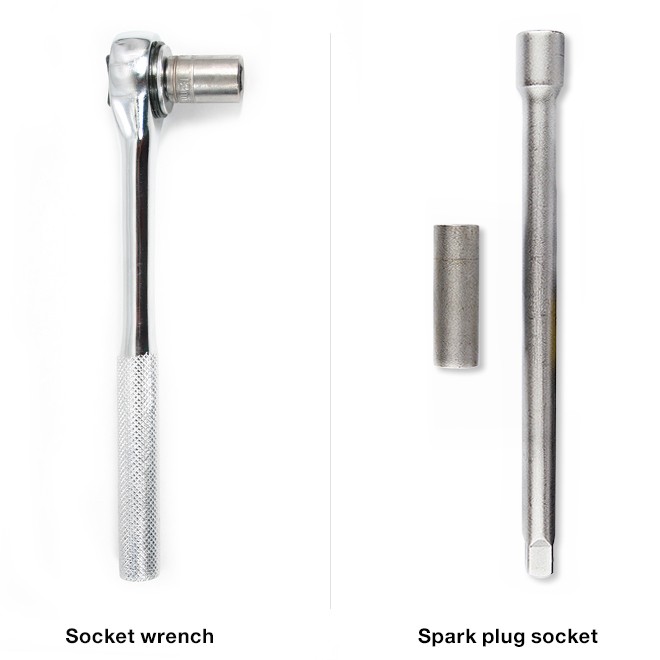
If you're offshore and suspect a plug problem, here's how to confirm it without a full toolbox.
Pull the spark plug wire off one cylinder at a time while the engine idles. If RPM doesn't change when you pull a specific wire, that cylinder isn't firing. Mark it.
Inspect the plug. A healthy plug has a light tan or gray insulator tip. Black, sooty deposits mean it's running too cold or rich. Wet, oily residue points to a different issue—likely oil control or fuel mixture—but dry black carbon is classic cold-plug fouling.
Check the gap with a feeler gauge. It should be exactly 1.0 mm (0.04 inches) for both BR8HS-10 and BR9HS-10. If the gap has widened beyond 1.1 mm, the plug is worn and needs replacement regardless of the number.
Swap the suspect plug with a known-good spare. If the problem follows the plug (not the cylinder), you've confirmed it. If the problem stays with the cylinder, you're looking at ignition coil, wiring, or compression issues.
Where to Source the Correct Plug Without Overpaying
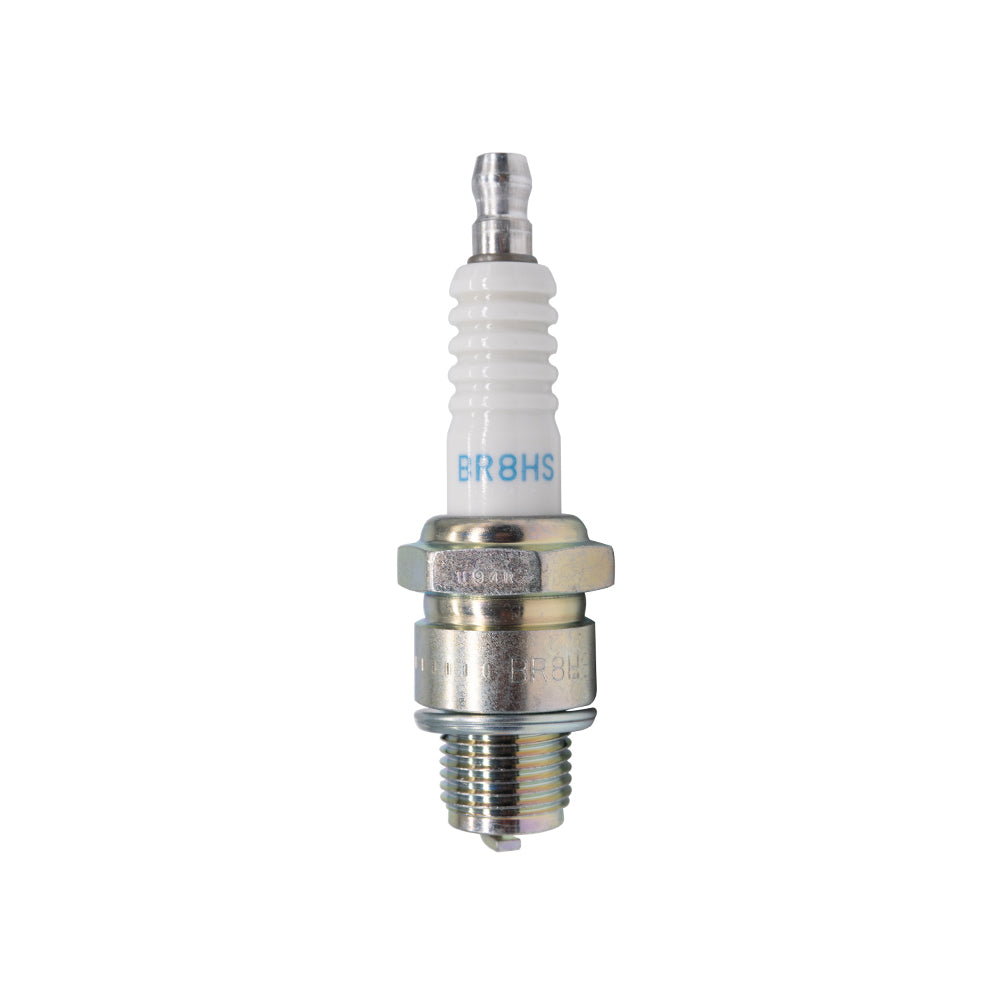
OEM Yamaha-branded plugs are reliable, but you're paying for the logo. A Yamaha dealer might charge $12-$15 per plug. For a six-cylinder 200 ProV, that's $90 just for plugs.
NGK BR8HS-10 plugs bought directly—whether through a bulk marine supplier or a reputable aftermarket parts distributor—run $6-$8 each. You're getting the exact same plug that Yamaha boxes and marks up. NGK manufactures for dozens of OEMs; the part is identical.
Avoid the $3 no-name knock-offs on auction sites. I've seen those fail out of the box—wrong heat range despite the label, inconsistent gaps, and insulators that crack after a few heat cycles. You'll spend more time troubleshooting than you save.
At JLM Marine, we stock NGK plugs direct from the factory. Same manufacturing line that supplies OEM packaging, but without the dealer markup. We gap-check every plug before it ships, and we match the spec to your engine serial number if you send it to us. We've shipped plugs to over 100 countries, and we've never had a comeback on a plug that didn't fit or perform as spec'd. For reliable sourcing and advice on OEM vs. aftermarket parts, see our detailed discussion on OEM vs. Aftermarket Outboard Parts: What’s the Difference?.
For a 1992-2005 Yamaha 200 ProV, we confirm BR8HS-10 as the go-to plug across all typical operating conditions. If you're running a highly modified engine with significantly higher compression, let us know and we'll walk through whether a colder plug makes sense. But for stock setups, the BR8HS-10 is the answer.
Installation Specs You Need
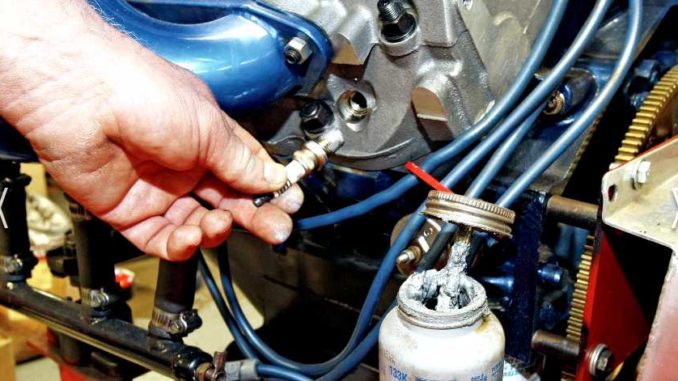
When you install these plugs, torque matters. Over-torque and you'll strip the threads in the aluminum head. Under-torque and you'll get blow-by, which kills the plug and fouls the cylinder.
Torque spec for NGK BR8HS-10 and BR9HS-10 in Yamaha two-stroke heads: 18-21 ft-lbs (25-30 Nm). Use a torque wrench. A quarter-turn past snug is not good enough on these engines.
Apply a thin coat of anti-seize to the threads. Not on the electrode, just the threads. This prevents the plug from cold-welding into the head after a season in saltwater. Yamaha's service manual for the P200 recommends this specifically for marine applications.
Hand-thread the plug at least three full turns before using a wrench. If it binds early, you've cross-threaded it. Back it out and start over. A cross-threaded plug can ruin a head, and that's a $400 repair on top of your time.
When to Replace Spark Plugs on a 200 ProV

Yamaha's official service interval for spark plugs on two-stroke outboards is every 100 hours or annually, whichever comes first. In saltwater or if you do a lot of trolling, cut that to 75 hours.
Even if the plug looks okay, carbon builds up on the electrode over time and widens the gap. Once the gap exceeds 1.1 mm, you're losing spark intensity and combustion efficiency. A $50 set of plugs every season is cheaper than the fuel you waste running worn plugs.
If you pull a plug and see electrode erosion—rounded or pitted tips—replace the full set. Don't mix old and new plugs across cylinders. The uneven firing can throw off your ignition timing and create a vibration you'll feel through the whole boat.
OEM vs. Non-OEM: What You're Actually Paying For

Yamaha doesn't manufacture spark plugs. They contract NGK, Champion, or Denso depending on the model and year. The plug you buy in a Yamaha-branded box is physically identical to the NGK-branded plug with the same part number. The only difference is the packaging and the price.
Non-OEM quality varies. Some aftermarket suppliers source from the same NGK factories that produce OEM runs, using excess manufacturing capacity. These plugs meet the same tolerances and material specs. Others cut corners—softer alloys, inconsistent gaps, inferior insulators. The $3 plug is not the same as the $7 plug, even if the part number looks similar.
At JLM Marine, we source from factories that also produce for OEM contracts. We verify every batch against NGK's published specs for heat range, gap, and insulator resistance. You're getting factory-grade quality without the OEM markup. We've been in this business long enough to know that a failed plug in the middle of a trip costs you more than the $5 you saved buying junk.
Typical RPM Ranges and Plug Selection
For a Yamaha 200 ProV running typical recreational patterns:
- Trolling (600-1,200 RPM): BR8HS-10 resists fouling. BR9HS-10 will load up with carbon.
- Cruising (3,000-4,000 RPM): Either plug works, but BR8HS-10 stays cleaner if you alternate between cruising and trolling.
- Wide-open throttle (5,000-5,500 RPM): Both plugs handle this fine. BR9HS-10 might show slightly less electrode erosion in sustained WOT, but the difference is minimal for weekend use.
If you spend over 50% of your time trolling or at low RPM, BR8HS-10 is the clear choice. If you're running WOT for hours at a time in hot climates (Gulf Coast summer, for example), BR9HS-10 could theoretically help, but I've never seen a BR8HS-10 cause pre-ignition damage in a stock 200 ProV under those conditions.
When in doubt, run the hotter plug. Fouling is a far more common problem than overheating the electrode.
For additional resources on keeping your outboard running smoothly and accessing quality parts, visit JLM Marine's main site.
Daily maintenance tip: After every saltwater run, pull one plug from a different cylinder each time and inspect it. Rotate through all six over the season. You'll catch fouling or gap issues before they strand you offshore. For tips on routine maintenance practices, see our Mid-Season Maintenance: Keeping Your Outboard in Top Shape.