


Mercury Outboard Winter Storage Tips (Avoid Freeze Damage)
- Why Freeze Damage Happens Even in Warm Climates
- Tools and Supplies You Actually Need
- Fuel System: Stop Varnish Before It Starts
- Engine Oil and Filter: Remove the Acids
- Fogging: Protect the Cylinders
- Gearcase: Check for Water Intrusion
- Corrosion Protection and Anodes
- Battery: Prevent Sulfation and Freezing
- Storage Position: Trim Down to Drain
- Common Winter Storage Mistakes
- Professional Winterization: When to Pay a Shop
- Spring Startup After Storage
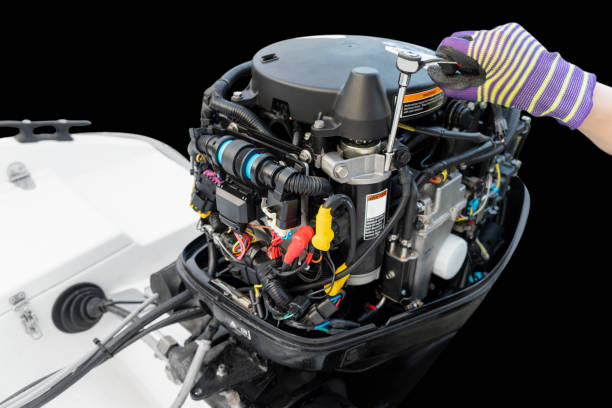
I've been wrenching on outboards for 20 years at JLM Marine, and I'll tell you straight—skip winterization and you're gambling with a $5,000 to $24,000 repair bill. Water freezes, expands about 9%, and hits 30,000–43,000 PSI. That pressure cracks engine blocks, splits gearcase housings, and destroys water pump parts.
Why Freeze Damage Happens Even in Warm Climates

Most boaters think winterizing is only for Minnesota or Michigan. Wrong. BoatUS claims data shows California leads all states in freeze-related damage. Why? Boats stored outdoors in mild climates get hit by surprise cold snaps with water still trapped inside. Texas ranks #1 in winterizing claims, followed by New York, New Jersey, Maryland, and Virginia. Even Mississippi, Georgia, and North Carolina make the top ten.
When temperatures drop, any water left in your cooling passages, powerhead, or lower unit turns to ice. That ice expands and the force doesn't care if you're in Florida or Wisconsin. A cracked block costs the same everywhere.
The fix is simple: drain every drop of water, protect internal parts, and stabilize your fuel. Do it right and your Mercury fires up clean next spring.
Tools and Supplies You Actually Need
Use marine-grade products. Automotive oil and cheap aftermarket parts will cost you later. Here's what to have ready:
Fluids:
- Marine engine oil (not automotive—marine oil has corrosion inhibitors)
- New oil filter
- Marine gearcase lubricant (check your manual for the exact spec)
- Fuel stabilizer (Mercury Quickstor works if you're running a Mercury engine)
- Fogging oil
- Marine-grade grease
Hardware:
- Spark plugs (if yours are worn)
- Anti-seize compound for plug threads
- Sacrificial anodes (if current ones are 50%+ consumed)
Tools:
- Fresh water flush muffs (the kind that clamp onto the lower unit intakes—don't use duct tape to seal them, it fails)
- Socket set, wrenches, screwdrivers, pliers
- Oil filter wrench
- Drain pan
- Grease gun
- Corrosion spray like Mercury Corrosion Guard
Your owner's manual. Mercury specifies oil weight, gear lube type, and fill capacities by model and year. Generic advice doesn't cut it if your engine needs 10W-30 and you dump in 20W-50.
Fuel System: Stop Varnish Before It Starts

Old fuel breaks down. Ethanol blends absorb water, separate into layers (phase separation), and leave gummy varnish in injectors and carburetors. Fix it now or you'll be tearing apart the fuel system in April.
Add Stabilizer to Fresh Fuel
Top off your tank with fresh fuel. Use ethanol-free if you can find it (REC-90 or similar). Add stabilizer—1 ounce per gallon is standard. Mercury Quickstor is tested for Mercury engines, but any quality marine stabilizer beats nothing. For best results, you can browse our selection of fuel stabilizers to ensure your fuel system is protected.
Run the Engine
Connect your flush muffs and run the engine for 10–15 minutes. The stabilized fuel needs to move through the entire system: fuel lines, pump, injectors, carbs. If you just pour stabilizer in the tank and walk away, untreated fuel sits in the lines and engine all winter.
Tank Storage
If you're pulling a portable tank, fill it nearly full. Less air space = less condensation. Store it somewhere temperature-stable if possible. Learn more about portable tanks and their pros and cons in our detailed guide on Portable Fuel Tank vs. Built-in Tank: Pros and Cons.
Engine Oil and Filter: Remove the Acids
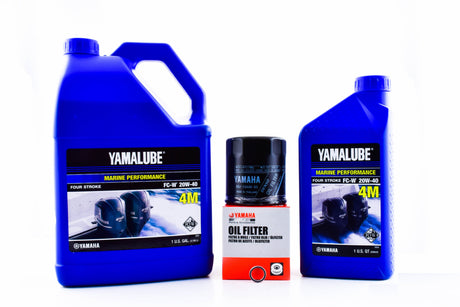
Old oil sitting in your crankcase all winter is corrosive. Even if you haven't hit 100 hours, change it if it's been a year. Acids and contaminants in used oil eat at internal parts during storage.
Use Marine Oil
Always marine-grade. It's formulated for high heat and saltwater environments, with additives automotive oil doesn't have. We stock factory-spec kits at JLM that meet OEM requirements without the dealership markup. Using car oil here is asking for trouble. Learn why using automotive parts in your boat engine can be risky and what marine-grade parts you should use.
Post-Change Check
After the change, run the engine briefly to fill the new filter and circulate fresh oil. Shut it down, check the level, and look for leaks at the filter and drain plug.
Fogging: Protect the Cylinders
Fogging coats pistons, cylinder walls, and valves with oil to prevent rust on bare metal during storage.
How to Fog Different Engines
For carbureted engines, spray fogging oil directly into the carburetor throats while the engine runs. You'll see thick white smoke. Keep spraying until the engine bogs down or stalls from the oil.
For 4-stroke EFI engines, remove the spark plugs and spray fogging oil directly into each cylinder, then turn the engine over by hand a few times to spread it. Do not spray oil into the intake on modern EFI models—it can foul MAP sensors or throttle body components.
For 2-stroke DFI engines, follow your manual. Some use DFI-specific oil; others fog through the intake with caution.
Spark Plug Swap
Plugs out anyway? Inspect them. Worn electrode, heavy carbon, or cracked porcelain means replace them. Put a thin coat of anti-seize on the threads before installing new ones. Don't gap them if they're pre-gapped, but verify the spec in your manual if you're unsure. Check out our selection of high-performance spark plugs to keep your engine firing strong.
Gearcase: Check for Water Intrusion
Water in your lower unit will freeze and crack the housing. This is non-negotiable.
Drain and Inspect
Pull the bottom drain plug first, then the top vent plug. Let the old lube drain into a pan. Watch it closely. Clean amber or dark brown is normal. Milky, white, or foamy means water got in—probably through a worn seal. If you see water, you've got a seal problem that needs fixing before next season.
Refill Correctly
Use the marine gear lube specified in your manual. Fill from the bottom hole. Pump new lube in until clean fluid comes out the top vent hole. Here's the trick: rotate the prop shaft slightly a few times while filling. This releases trapped air bubbles. If you don't, you'll underfill and risk damaging the gears.
Replace the top plug first, then the bottom drain plug. Torque them to spec.
Prop and Shaft Maintenance
Pull the prop. Clear fishing line, weeds, or debris wrapped around the shaft—it cuts into seals over time. Inspect the rubber seal behind the thrust washer for nicks or melted line embedded in it.
Grease the prop shaft threads and reinstall the prop. Torque the prop nut correctly (often around 55 ft-lbs for many models, but check your manual). For detailed instructions, see our step-by-step guide on How to Replace a Mercury Outboard Water Pump Impeller.
Corrosion Protection and Anodes
External metal corrodes even out of the water. Salt residue, humidity, and temperature swings all contribute.
Spray Exposed Metal
Apply corrosion inhibitor to external parts, especially around pivot points, electrical connections, and unpainted surfaces. Mercury Corrosion Guard or equivalent.
Anode Replacement
Check sacrificial anodes. If any anode is 50% consumed or more, replace it. These corrode instead of your engine's metal parts.
Different anodes for different water: use zinc or aluminum anodes in saltwater, magnesium in freshwater. If you stored in saltwater and you're launching into freshwater next season (or vice versa), now's the time to swap the anode type. We keep genuine Mercury anodes in stock because they're sized and alloyed correctly for each engine.
Battery: Prevent Sulfation and Freezing
A dead battery ruins your first day out. A discharged battery also freezes at a much higher temperature than a fully charged one—chemistry matters here.
For Lead-Acid Batteries
Check electrolyte levels in each cell. Top off with distilled water only (never tap water—minerals damage the plates). Charge the battery fully. A fully charged lead-acid battery won't freeze until temps drop well below what a discharged one can handle.
Disconnect the cables (negative terminal first). Store the battery on a maintainer or trickle charger designed for marine batteries. Keep it in a cool, dry spot away from heat sources.
Storage Position: Trim Down to Drain

Mercury outboards self-drain when stored vertically (trimmed/tilted down). This is one of the most critical steps.
Why Vertical Matters
As outboard expert Charles Plueddeman explains: "When you park the boat for the winter keep the motor trimmed or tilted down, especially if it's outdoors. This will allow all of the water to drain out of the motor's cooling system. If it's tilted up some water may remain in the motor, where it can freeze and cause a cracked block or a ruined water pump housing."
He adds: "Even if you think the motor is fully drained, if you store it outdoors and tilted up, rain or snow could enter the exhaust passages through the prop hub, freeze there, and crack something."
Store it trimmed down. Even indoors. Don't tilt it up to save space.
The Plastic Wrap Myth
Do not wrap your lower unit or gearcase in plastic. It traps condensation inside, which accelerates corrosion and can freeze. A sealed, humid environment is worse than exposure to dry air.
Rodent Deterrents That Actually Work
Rodents love engine compartments for winter nesting. Dryer sheets and mothballs? Mostly useless. A determined mouse ignores them.
Better options: stuff stainless steel wool loosely into exhaust ports (easy to pull out later). Use commercial marine rodent repellents with strong essential oils like peppermint or predator scent. Some boaters report success with ultrasonic repellers, but results vary.
Do not seal up every opening with plastic or tape—it traps moisture. The goal is deterrence, not a hermetic seal.
Common Winter Storage Mistakes
Myth: Household Products Work as Rodent Repellent
Mothballs and dryer sheets leave residues and rarely stop rodents. Use products designed for marine environments or physical barriers like steel wool.
Myth: A Bilge Light Keeps Things Warm
Leaving a bulb on in the bilge is a fire hazard if fuel vapors are present. If you need heat, use a thermostatically controlled marine-safe heater with proper ventilation. For most engines, proper draining and protection work better than trying to heat the whole compartment.
Myth: You Can Skip Winterization in Mild Climates
Texas leads winterization claims. Virginia's in the top five. Unexpected freezes hit everywhere. One cold night with trapped water and you're done.
Professional Winterization: When to Pay a Shop

DIY saves money and builds your skills. But if you're tight on time, uncomfortable with gearcase service, or your engine is under warranty requiring dealer records, professional service makes sense.
Dealers have diagnostic tools to pull fault codes, check fuel pressure, and spot issues you might miss. They bundle tasks efficiently. If you're on the fence, pay for pro winterization this year and watch what they do. Next year, tackle it yourself with the parts we ship worldwide from JLM. For more DIY tips, check out our guide on Winterizing Kits vs. DIY Supplies: What Do You Really Need?.
Spring Startup After Storage

You've made it through winter. Now bring your Mercury back to life carefully.
Pre-Start Checks
Reconnect the fully charged battery (positive first, then negative). If you removed the prop, reinstall and torque it. Check engine oil level, power steering fluid (if equipped), and gear lube level. Top off the fuel tank with fresh gas.
First Ignition
Hook up flush muffs or put the lower unit in a test tank. Turn the key. It might crank a few times before it fires—stabilized fuel needs to reach the engine. Let it idle and warm up. Watch the telltale "pee stream" to confirm water flow through the cooling system.
Listen and Watch for Problems
Run it at varying RPMs. Signs of winter damage:
Overheating: Thermostat stuck, impeller damaged, or blockage in cooling passages.
Knocking or grinding: Internal damage from freezing or corrosion.
Rough idle or misfires: Fouled plugs from fogging oil (normal for the first few minutes), or fuel system varnish if you skipped stabilizer.
Leaks: Oil, gear lube, or fuel leaking means a seal or gasket failed during storage.
If you spot any of these, shut it down and investigate. Fixing a small issue now beats a breakdown on the water.
Pro tip: Flush your outboard with fresh water after every single use, whether it's June or November. It clears salt and debris, prevents buildup in cooling passages, and makes winterization easier. Corrosion happens year-round, not just in storage. Explore our wide range of cooling system parts to maintain optimal engine temperature and longevity.
Also, for premium and OEM parts for your Mercury outboard, remember that JLM Marine offers Mercury parts direct from the factory, ensuring quality and unbeatable prices.
For all your boating needs and more expert advice, visit the JLM Marine main HUB.