





Johnson/Evinrude Outboards: Off-Season Maintenance Tips
Fuel System Prep for Storage
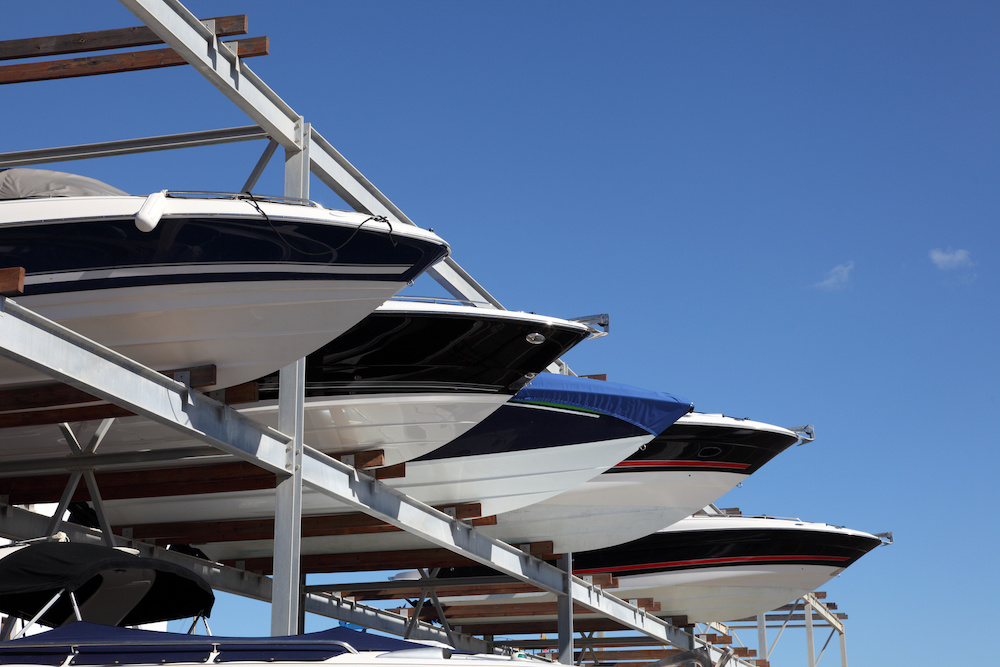
Your fuel system is where most winter problems start. Ethanol fuel degrades fast, and phase separation can clog carbs by spring. I've torn apart dozens of carburetors that sat with stale fuel all winter—not something you want to deal with.
Add stabilizer and run it through. Pour a marine-specific fuel stabilizer (look for polyether amine on the label) into your tank at the manufacturer's ratio. Don't eyeball it. Run the engine for 10-15 minutes on muffs or in a test tank. This pushes stabilized fuel through the lines, fuel pump, carburetors, and the VST if you've got a fuel-injected model. The goal is to coat every internal surface and push out the old stuff.
The storage mix. For extra insurance, especially on two-strokes, mix up a dedicated storage fuel batch: 5 gallons of fuel, 2 quarts of fogging oil, 2.5 oz of stabilizer, and 1 pint of two-stroke oil. Connect a small auxiliary tank with this mix and run the engine off it for the last 10 minutes of the season. The engine will pull this heavy mix through the entire fuel system and into the cylinders. We've had customers run this routine for decades—original carb gaskets still intact after 28 years of storage cycles. That kind of longevity doesn't happen by accident. For help repairing carburetors after winter issues, check our detailed Johnson Carburetor Repair Kit collection.
Drain the carbs if you skip stabilizer. If you're not stabilizing, at least loosen the carburetor drain screws and let the fuel bowls empty completely. Varnish smells like old shellac and it'll lock up your needle and seat. For parts and kits, see the Evinrude Carburetor Repair Kit collection.
Flushing and Fogging the Powerhead
Salt and debris sitting in your cooling passages over winter will corrode the block. Fresh water flush is mandatory.
Flush thoroughly. Attach flushing muffs to the lower unit water intakes or submerge the gear case in a test barrel. Run the engine for 10-15 minutes at idle. Watch the tell-tale stream—it should be strong and steady. Weak flow means your impeller is shot or your passages are already clogged; fix that before storage, not after. On newer E-TEC models with a built-in flush port, hook up a garden hose and follow the manual's flush procedure instead of using muffs. For replacement impellers and repair kits, browse the Johnson Water Pump Impeller Kit collection to ensure your cooling system keeps running smoothly.
Fog the cylinders. With the engine running at idle, spray fogging oil directly into each carburetor throat or throttle body until the engine loads up and dies from the oil. Alternatively, pull the spark plugs, spray about 1 teaspoon of fogging oil into each cylinder, and hand-turn the flywheel a few revolutions to spread the oil over the piston crowns and cylinder walls. Do not use the starter to crank it. Turning it by hand distributes the oil without risking hydraulic lock. This coating prevents rust and corrosion on bare metal surfaces that would otherwise oxidize in humid storage. The oil burns off as blue smoke on the first spring startup—that's normal.
For carbureted two-strokes, fogging is critical. Salt residue and moisture will pit the cylinders if you skip this.
Lower Unit Service

The lower unit lives underwater. Water intrusion through worn seals will destroy your gears.
Change the gear lube annually. Remove the top vent screw first, then the bottom drain plug. Let the old lube drain into a pan. If it's milky, foamy, or has a gray sheen, water got past your seals. That means your prop shaft seal, drive shaft seal, or shift shaft seal is compromised. Don't just top it off—address the seal failure or you'll grenade the gears. Refill from the bottom drain hole using a gear lube pump until fresh oil exits the top vent, then reinstall the vent screw first, then the drain plug. This purges air pockets. Use OMC/BRP spec gear oil or a quality equivalent—not automotive gear oil. See our Johnson Outboard Motor Parts collection for quality seals, gaskets, and gear oil supplies.
Grease all fittings. Hit the tilt tube pivot points, steering arm pivots, and the propeller shaft. Pull the prop and pack the shaft splines with marine-grade waterproof grease. Johnson/Evinrude factory spec is often Triple-Guard or equivalent moly grease. While the prop is off, check behind the thrust washer for fishing line. Line cuts into the prop shaft seal during operation and lets water into the lower unit during storage. I've seen a single loop of 20-lb test destroy a $300 seal job.
Use a big flathead screwdriver for the lower unit plugs—these are large slotted screws that strip if you use an undersized driver. If the heads are chewed up, replace the screws now.
Battery Storage and Engine Position
Dead batteries and freeze-cracked blocks are both preventable.
Remove and maintain the battery. Disconnect the cables, clean both the battery terminals and the engine-side cable ends with a wire brush. Corrosion on the engine side is just as common as on the battery side. Apply dielectric grease to the terminals. Store the battery indoors in a cool, dry spot on a trickle charger or battery maintainer. A frozen battery is garbage. Periodic charging prevents sulfation, which kills lead-acid batteries during long sits.
Store the engine tilted down or vertical. This is critical in freezing climates. Water trapped in the exhaust passages, cooling jackets, or the lower unit will freeze, expand, and crack the block or the gear case. Store the outboard fully vertical (if trailering or racked) or tilted down if it's staying on the boat. If the engine is on the boat and the boat is on a trailer, tilt the trailer tongue up slightly to help water drain out of the powerhead and exhaust. Never store it fully trimmed up unless you've completely drained the cooling system and exhaust.
A cracked block isn't a $50 fix—it's a $1,500+ replacement or a parts motor.
Model-Specific Notes
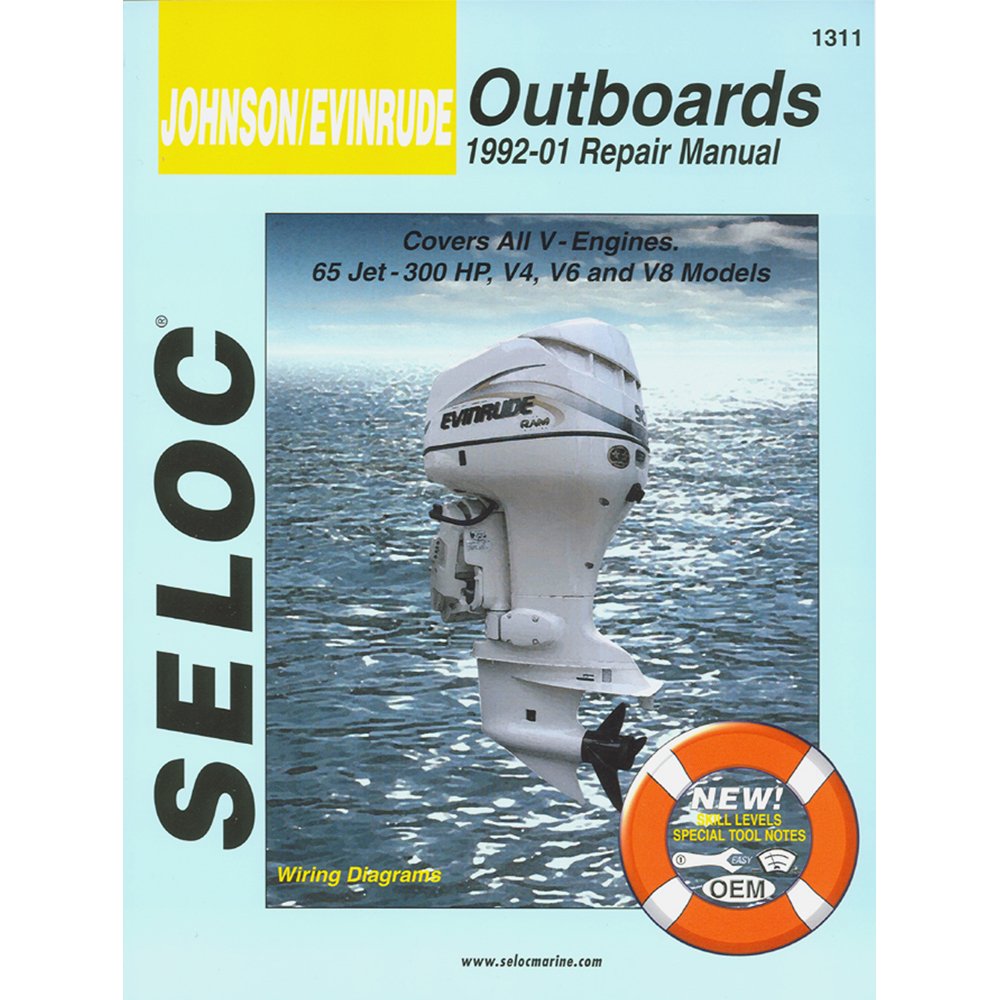
Johnson and Evinrude covered a huge range of engines. Carbureted two-strokes, oil-injected VRO models, and the later E-TEC direct-injection motors all need slightly different attention.
Carbureted two-strokes (most pre-2000 models): Follow the full fuel stabilization, fogging, and storage mix process. The carbs are the weak link—varnish will lock them solid.
E-TEC models (2003-2020): These motors have an auto-winterization mode built into the ECU. Run the winterization program via the key switch or the diagnostic software. The system will fog the cylinders and purge the fuel system automatically. You still need to change the lower unit oil, grease fittings, and handle the battery.
VRO oil-injected motors: The oil injection system needs to stay primed. Some mechanics disable VRO and pre-mix for storage to avoid a stuck oil pump in spring. If you're keeping VRO active, run the storage mix through it.
Check the model tag on your engine's mounting bracket or the transom clamp. It'll have the year, HP, and model code. Cross-reference this with the BRP service manual archive or a factory CD-ROM to confirm specific oil capacities, plug torques, and winterization steps for your exact motor. For general parts and expert support, visit the JLM Marine homepage.
Tools and Supplies You'll Need
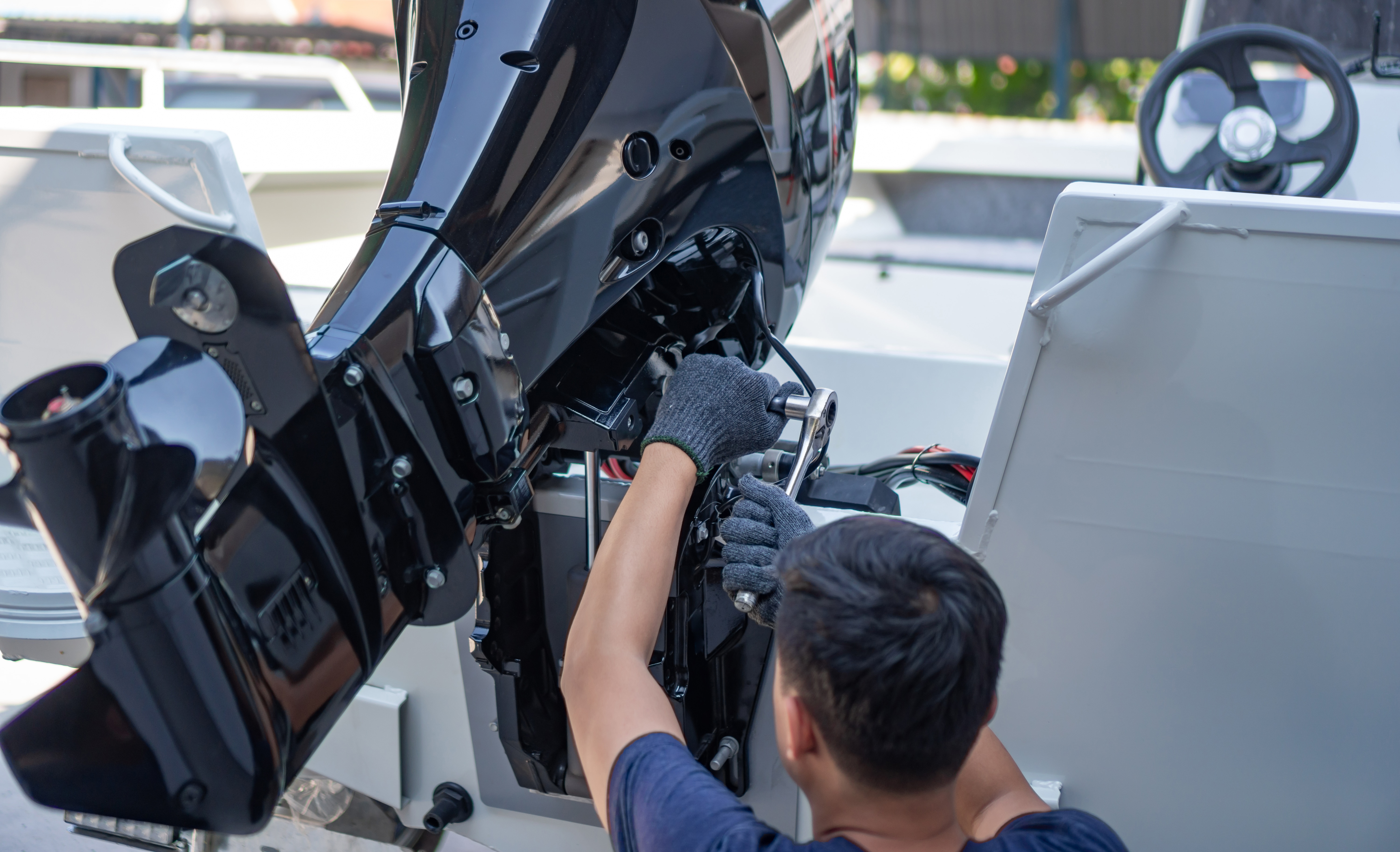
Gather these before you start so you're not running to the parts store mid-job:
- Marine fuel stabilizer (8-16 oz depending on tank size)
- Fogging oil (aerosol can, 12-16 oz)
- Gear lube pump
- Marine gear oil (usually 1-2 quarts per lower unit)
- Waterproof marine grease (cartridge or tub)
- Grease gun
- Spark plug socket (5/8" or 13/16" depending on model)
- Large flathead screwdriver for lower unit plugs
- Drain pan (at least 1 quart capacity)
- Flushing muffs or hose adapter (if your model has a flush port)
- Wire brush
- Dielectric grease
- Battery trickle charger
- Clean rags
If you're doing the spark plugs, torque them back in at 18-20 ft-lbs for most Johnson/Evinrude models. Over-torquing cracks the porcelain; under-torquing causes a vacuum leak.
What Not to Do
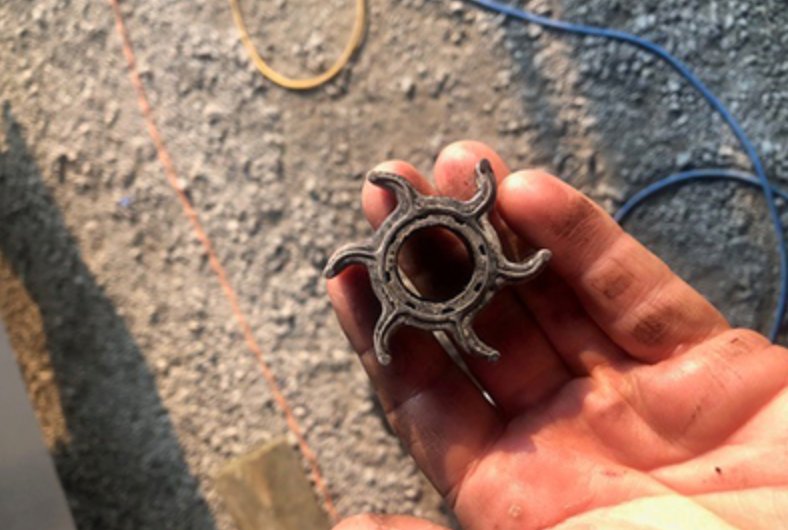
Don't dry-start the engine. Running it without water circulation, even for a few seconds "just to see if it runs," will overheat the impeller and score the pump housing. If you need to test it, use muffs or a barrel.
Don't store a half-full fuel tank. Either drain it completely or fill it to the brim with stabilized fuel. A half-full tank allows condensation, which separates ethanol fuel into layers. The water-ethanol layer sinks and gets sucked into your carbs first.
Don't leave the prop on if you're storing in a public area. Theft aside, removing it gives you a reason to inspect and grease the shaft.
Saltwater vs. Freshwater Differences

If you run in saltwater, double the flush time. Salt crystals bond to aluminum and cause galvanic corrosion. After the fresh water flush, some mechanics run a vinegar solution or Salt Away through the system for 5 minutes, then flush again with straight fresh water. The mild acid dissolves salt deposits in tight passages.
Freshwater-only users can skip the vinegar step, but you still need to flush. Zebra mussels, silt, and algae will clog your cooling passages just as effectively as salt.
FAQ
What's the most common failure from skipped winterization?
Clogged carburetors from varnish and freeze-cracked blocks. Both are expensive and avoidable.
Can I use automotive fuel stabilizer?
You can, but marine formulas include corrosion inhibitors for aluminum and brass that automotive versions skip. Spend the extra $3.
Do I still need to fog if I use ethanol-free fuel?
Yes. Fogging protects against moisture and air, not just bad fuel. Even ethanol-free gas won't stop rust in a humid garage.
How do I know if my gear lube is bad?
Milky, foamy, or gray lube means water intrusion. Metallic flakes or a burnt smell means gear damage. Clear, amber, or slightly darkened lube is fine but should still be changed annually.
How long does stabilizer last in stored fuel?
Most marine stabilizers are good for 12-24 months. If your motor sits longer than one winter, drain the tank and refill with fresh fuel in spring before the first run.
My motor is an E-TEC—do I follow the same steps?
No. E-TECs have an auto-winterization program. You still service the lower unit, battery, and external grease points, but the ECU handles fuel and fogging. Read your owner's manual or the sticker on the cowl for the procedure.
Where do I dispose of old gear oil?
Most auto parts stores, marinas, and municipal hazardous waste facilities accept used gear oil for free. Don't dump it.
Parts Quality: OEM vs Aftermarket


You'll need to buy gear lube, fogging oil, impellers, and maybe seals. Here's the reality: OEM parts from a dealer are solid, but you're paying 30-50% more for the logo on the box. Cheap no-name aftermarket parts—especially impellers and gaskets—are a gamble. The rubber is often too hard, the tolerances are off, and you'll be back in there next season.
The smart move is a reputable aftermarket supplier that sources from the same factories that make OEM parts. JLM Marine is one example—factory-spec quality, direct shipping worldwide, and you're not paying dealer markup. We've installed their kits in dozens of motors and the fitment and materials match OEM. You'll get the same service life without burning unnecessary cash. Browse the JLM Marine homepage to find quality OEM-equivalent parts at great prices.
Always verify the part number against your engine's model tag before ordering. A wrong impeller or seal will leak, and you won't know until you're back on the water.
One Last Tip


Spray the entire external powerhead and lower unit with WD-40, Corrosion-X, or a dedicated marine rust inhibitor before you cover it. This displaces moisture on all the external metal—brackets, bolts, and the paint. It takes 5 minutes and prevents surface rust that makes everything harder to disassemble in spring. For recommended lubricants and rust inhibitors, explore our Boat Accessories collection.