




Carb Rebuild Kit vs. New Carburetor: Cost-Benefit Analysis
- Marine Carb Costs: What You're Actually Paying
- The Hidden Rebuild Costs
- When Marine Carbs Can't Be Saved
- The Safety Factor: Why Marine Is Different
- Downtime Math: How Much Is Your Season Worth?
- Decision Matrix: Rebuild or Replace?
- OEM vs. Aftermarket Carburetors
- Real-World Example: Yamaha 25 HP 4-Stroke
- Tools You Actually Need for a Carb Rebuild
- Diagnosing Before You Buy Anything
- Warranty and Long-Term Cost
- Multi-Carb Engines: Special Considerations
- When Availability Forces Your Hand
- What We Recommend

Your outboard's sputtering or dying under load, and you've traced it to the carb. Now you're staring at two options: a rebuild kit for under a hundred bucks, or a new carburetor that'll cost you anywhere from $150 to $800 depending on the model. Which route saves you money and gets you back on the water faster?
After 20 years of tearing apart everything from Johnson 9.9s to Mercury Verados, I've rebuilt hundreds of marine carburetors and swapped just as many. The answer isn't simple—it depends on what's actually wrong with your carb, how much shop time you've got, and whether you're dealing with an old 2-stroke or a newer 4-stroke setup.
Marine Carb Costs: What You're Actually Paying
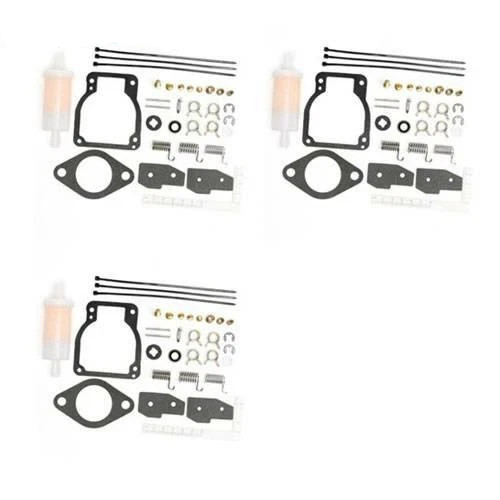
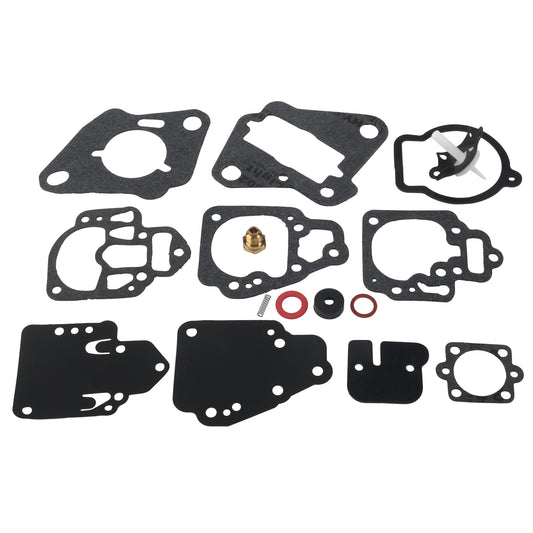
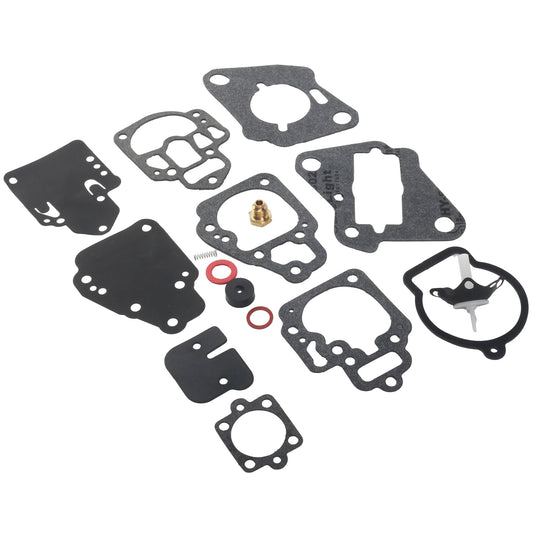
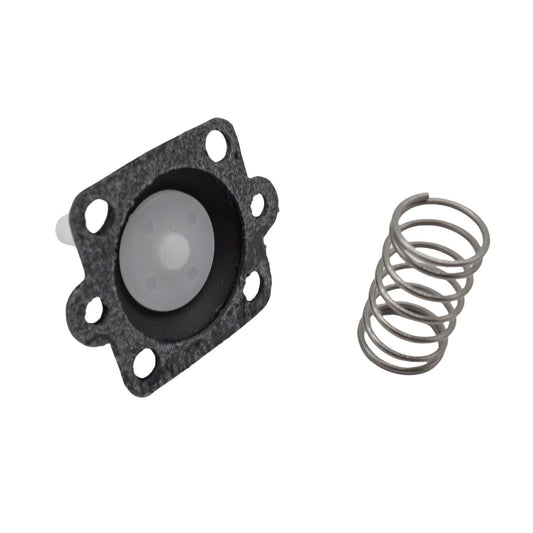
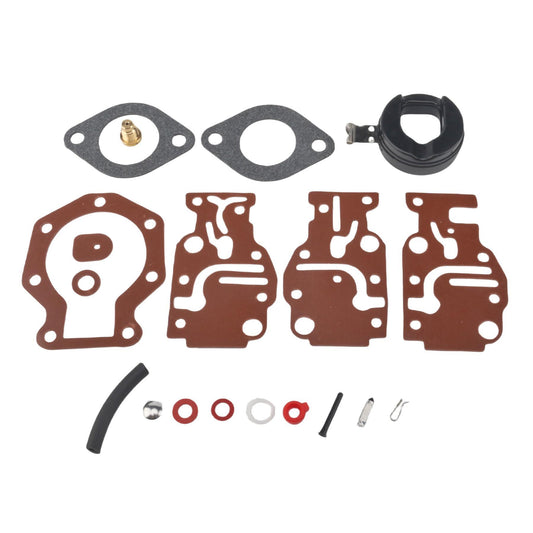
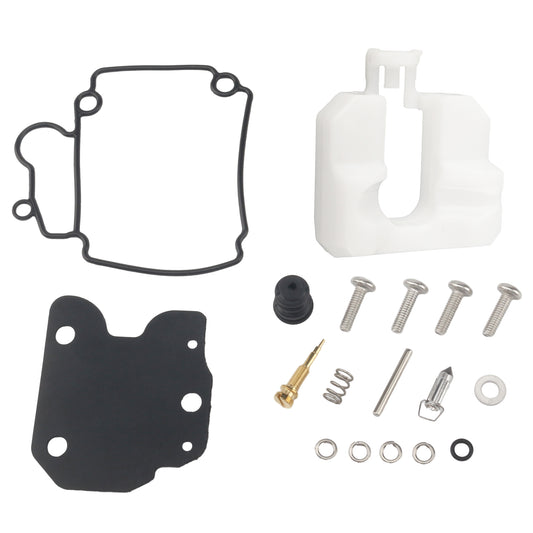
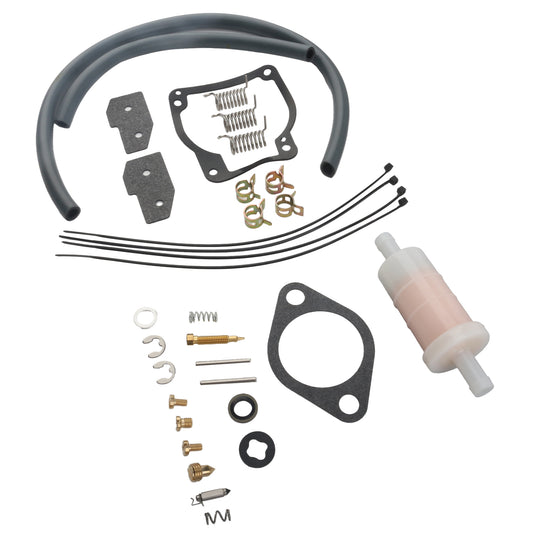
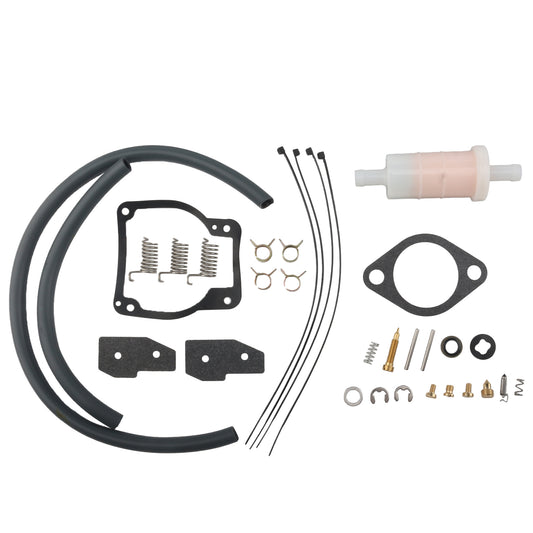
Rebuild kits for most outboards run $50 to $120. A quality kit includes all the consumables: gaskets, O-rings, needle valve and seat, float (sometimes), and jets if you're lucky. For a single-carb setup like a Tohatsu 9.8 or Yamaha F25, you're looking at around $60 for a good kit. You can find these essential parts in our Carburetor Repair Kit collection for manufacturer-direct pricing.
New carburetors are a different story. A replacement carb for a small 2-stroke (5-15 HP) starts around $120 for aftermarket, $300+ for OEM. Mid-range 4-strokes (25-60 HP) push $400-$700 per carb OEM, and if you've got a multi-carb V6, you're into four figures fast. A single OEM Yamaha carburetor assembly for an F150 runs close to $650 from the dealer. Browse our Carburetor collection to compare available options and prices.
Here's the kicker: that rebuild kit only saves you money if the carb body is still good. If the housing is corroded, the throttle shaft is sloppy, or the internal passages are clogged with varnish you can't remove, you'll waste $60 and still end up buying new.
The Hidden Rebuild Costs
The kit price is just the start. You'll need:
- Carb cleaner or dip ($15-$30 for a gallon of Berryman's Chem-Dip)
- Compressed air (shop compressor or canned air, $8-$20)
- Ultrasonic cleaner (optional but useful, $60-$150 if you don't have one)
- Rebuild time: 3-6 hours for a single carb if you know what you're doing, double that if it's your first time
If you don't own an ultrasonic cleaner and you're only doing this once, the math starts tilting toward replacement. You can hand-clean with carb spray and a wire set, but getting those tiny idle jets completely clear is harder without ultrasonic agitation.
Then there's tuning. A rebuilt carb needs float height set to spec (usually 14-16mm depending on model), idle mixture screws dialed in, and linkage sync checked if it's a multi-carb rig. You can't do that on a bench—you need the engine running under load on the water. If you set it wrong, you're pulling it apart again.
When Marine Carbs Can't Be Saved
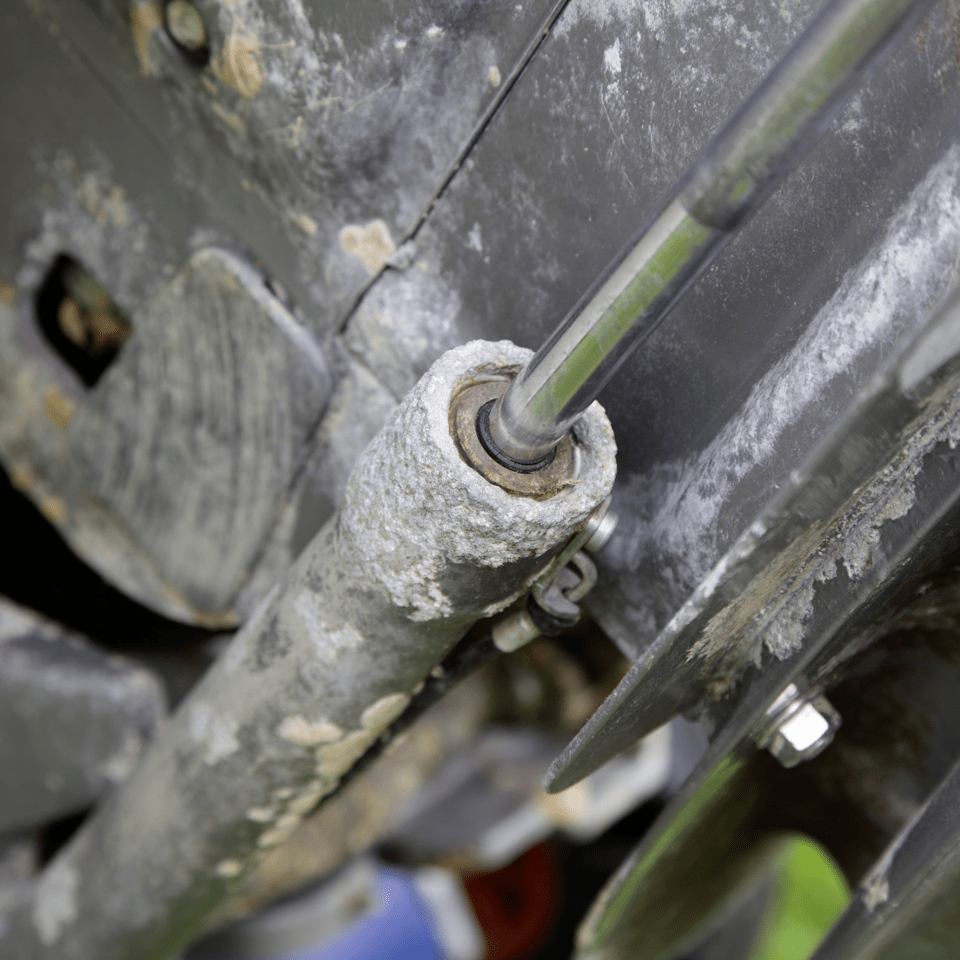
Saltwater and ethanol fuel destroy carburetors in ways that kits can't fix. I see this constantly:
White powdery oxidation in the venturi or throttle bore. That's aluminum corrosion from galvanic reaction. A kit won't touch that. The body is done.
Worn throttle shaft bushings. If you can wiggle the throttle shaft side-to-side more than a hair, air's leaking past it. The carb will never idle right. Some carbs have replaceable bushings; most outboard carbs don't. That's a new carb. For example, typical issues with the Yamaha Carburetor lineup may require replacement rather than rebuild when throttle shaft wear is evident.
Stripped mounting threads or cracked housings. Common on older Suzuki and Mercury carbs. A Helicoil might save stripped threads, but a cracked housing means you're done.
Severe varnish buildup in passages you can't reach. If the carb sat for years with ethanol fuel, the internal galleries can be clogged solid. I've soaked carbs in dip for a week and still couldn't clear them. At that point, you're wasting time.
The Safety Factor: Why Marine Is Different
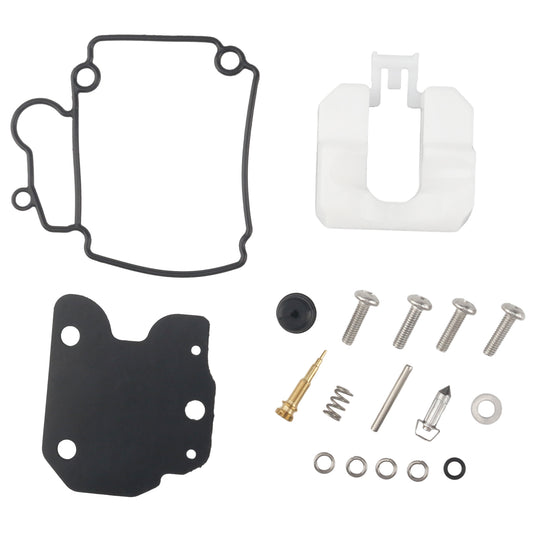
On a car or tractor, if your rebuild fails, you coast to the shoulder. On a boat, a failed carburetor leaves you drifting in current or wind, potentially into rocks, pilings, or shipping lanes. I've towed in three boats this season alone because a DIY carb rebuild didn't hold up under load—one guy cleared the main jet but missed a clogged pilot jet, so the engine died every time he throttled down near the dock.
This is the "safety tax" of marine engines. A new carburetor is factory-tested and comes with a warranty. If it fails in the first season, you get a replacement. A DIY rebuild has no safety net. If you screw up the float height and it floods, you're dealing with a potential fire hazard from raw gas in the bilge.
For coastal or offshore use, I lean toward new carbs unless I'm 100% confident in the rebuild. For lake and river runners who stay close to the ramp, a rebuild is less risky.
Downtime Math: How Much Is Your Season Worth?
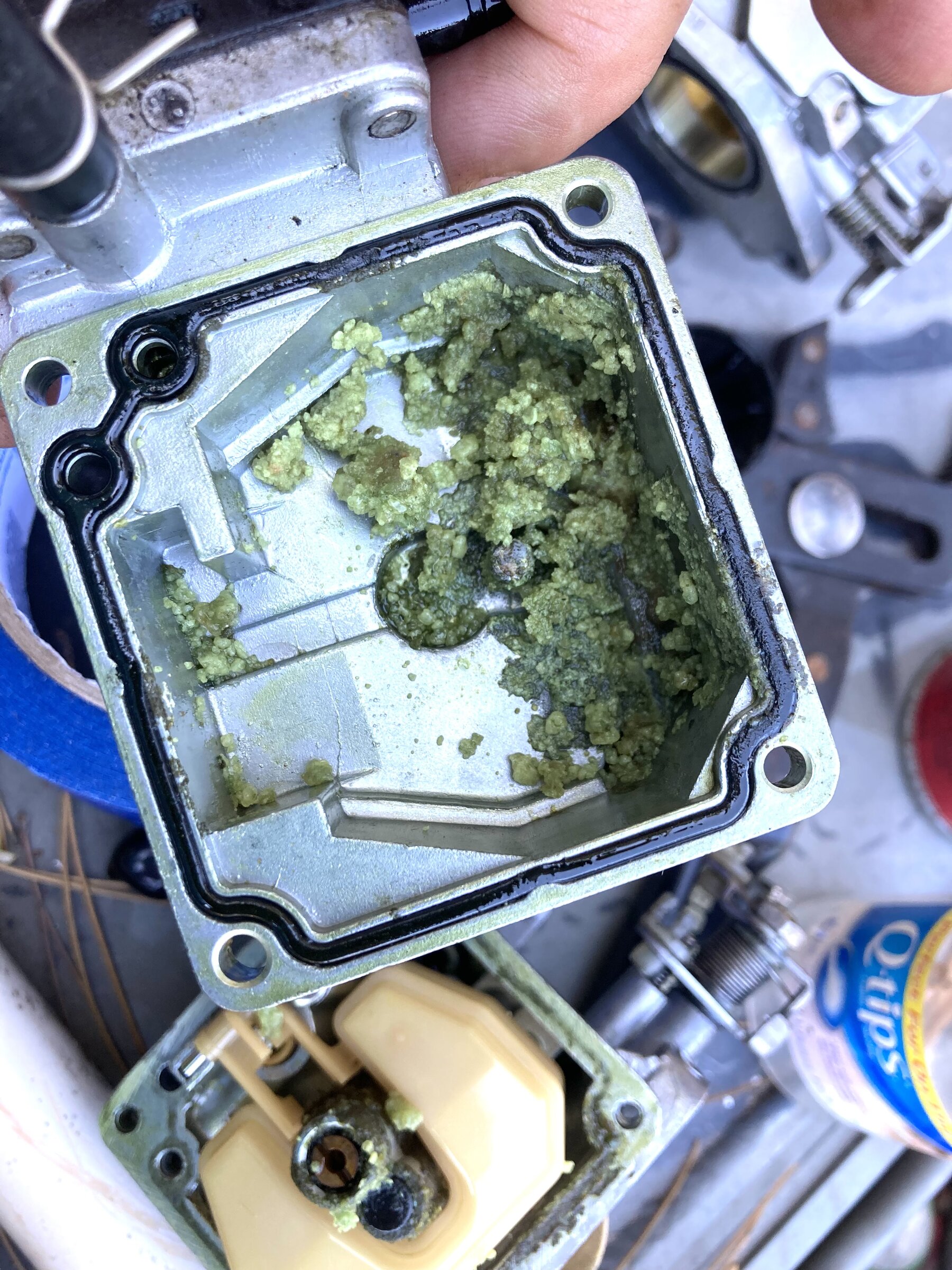
You've got maybe 16 good weekends in a northern summer. If you spend two weekends diagnosing, ordering a kit, rebuilding, and tuning, and it still doesn't run right, you've burned 12.5% of your season to save $200. If you're seasonal, that $200 savings isn't worth missing three trips.
Compare that to ordering a new carb, bolting it on, and running the next weekend. For a guy with limited free time, the labor cost—even unpaid DIY labor—tips the scale toward replacement.
Decision Matrix: Rebuild or Replace?
Go with a rebuild kit if:
- The carb body is clean with no corrosion, cracks, or worn shafts
- You've rebuilt carbs before or you're comfortable with small-engine work
- The issue is clearly a failed gasket, stuck float, or worn needle valve (symptoms: leaking fuel from overflow, rough idle that clears up with choke, or flooding)
- You have the tools (carb cleaner, compressed air, rebuild manual or diagram)
- It's a rare or discontinued engine where new carbs are $500+ or unavailable
- You're running a 2-stroke where carbs are simpler (fewer circuits, easier to clean). Check out guides like our Yamaha Outboard Carburetor Rebuild Tutorial for step-by-step help.
Go with a new carburetor if:
- There's visible corrosion, throttle shaft play, or damaged threads
- You don't have carb rebuild experience and don't want to learn on a $4,000 outboard
- The engine's been sitting for years with old gas and the carb is varnished solid
- It's a multi-carb setup (2, 3, or 6 carbs) where you'd need to rebuild all of them for proper sync—buying new ensures matched units
- You need the boat running this weekend and can't afford trial-and-error
- It's a 4-stroke with complex carb circuits and emissions tuning
Special case—Mikuni and Keihin 2-strokes: These are dead simple. If the body's good, a $50 kit and an afternoon will fix 90% of issues. I've rebuilt 40-year-old Mikuni carbs on Johnson 15s that run like new.
Special case—4-stroke multi-carb (Yamaha F150, Mercury 90 4-stroke): Don't mess around. If one carb's bad, they're all tired. Buy a matched set of new or remanufactured units. Mixing a rebuilt carb with old ones creates sync and fuel distribution problems you'll chase all season.
OEM vs. Aftermarket Carburetors
When you buy new, you've got OEM or aftermarket.
OEM (Yamaha, Mercury, Suzuki branded): You're paying $400-$700 for a carb that's guaranteed to fit and perform exactly like the original. It'll last 10+ years if you maintain it. The downside is pure cost—you're funding the dealer network and brand markup.
Cheap aftermarket (no-name $80 units on Amazon): Avoid these for outboards. The castings are often off-spec, the needle valves stick, and the gaskets leak within a season. I've seen these fail out of the box. It's not worth the headache.
Quality aftermarket (JLM Marine, Sierra, Mallory): This is the sweet spot. These are often made in the same factories that supply OEM brands, just without the logo. You get OEM-level quality at 30-50% less cost. A JLM carburetor for a Yamaha F25 runs around $280 versus $450 OEM, and it'll bolt on and perform identically because it's built to the same spec. Shop our Carburetor collection for these quality aftermarket options.
We ship factory-direct, so you're not paying distributor and dealer margins. The quality control is the same—same float heights, same jetting, same materials—but the price is what the part actually costs to make, not what the market will bear.
Real-World Example: Yamaha 25 HP 4-Stroke

Last month, a customer in British Columbia sent photos of his F25 carb. Symptoms: hard starting, idle hunts between 800-1400 RPM, hesitation off idle. He pulled the bowl and found white crust on the main jet and corrosion around the pilot circuit.
Rebuild option: $65 kit, assuming he could clear the corrosion. Risk: if the pilot passages won't clear, he's still stuck. Time: 4-6 hours plus tuning.
New OEM: $485 from Yamaha dealer, plus $120 labor if he didn't install it himself.
JLM replacement: $295 shipped to his door in Canada within a week. He bolted it on, synced the linkage, and was running that weekend.
He saved $190 versus OEM and avoided the risk of a failed rebuild. That's the calculation you're making.
Tools You Actually Need for a Carb Rebuild
If you're going the rebuild route, here's what you need on the bench:
- Carb-specific rebuild manual or exploded diagram (often free as a PDF from manufacturer service manuals)
- Needle-nose pliers and small screwdrivers (JIS screwdrivers for Japanese carbs—Phillips will strip the heads)
- Carb cleaner spray (Berryman's B12 or equivalent)
- Thin wire or carb cleaning wires (don't use drill bits—you'll enlarge the jets)
- Compressed air
- Digital caliper (to check float height, usually 14-16mm spec)
- Clean workspace and parts tray (you will lose the tiny O-rings otherwise)
Optional but helpful: ultrasonic cleaner with Simple Green or dedicated carb solution. This clears internal passages you can't reach with spray and wire.
Diagnosing Before You Buy Anything
Before you spend money on a kit or a new carb, confirm the carburetor is actually the problem.
Check first:
- Fuel filter and water separator. If these are clogged, you'll get identical symptoms to a bad carb. Swap them first ($20-$40). You can browse our Fuel Filter collection for OEM-quality options.
- Fuel lines. Old lines collapse internally under suction. Squeeze them—if they're stiff or cracked, replace them before touching the carb.
- Spark and compression. A weak ignition coil or low compression will mimic a lean condition. Rule these out.
Specific carb symptoms:
- Leaking fuel from the carb overflow tube when the engine's off: Stuck or worn float needle. Rebuild will likely fix this.
- Engine floods, won't start, smells like raw gas: Float level too high or needle not seating. Rebuild or replacement.
- Rough idle, smooths out at higher RPM: Pilot circuit clogged or idle mixture screw off. Rebuild can fix if passages are cleanable.
- Hesitation or bogging under acceleration: Main jet partially clogged or accelerator pump diaphragm failed. Rebuild kit includes the diaphragm.
- Won't idle at all, dies unless you hold throttle open: Pilot jet completely clogged, or air leak at throttle shaft. Clogged jet = rebuild; worn shaft = new carb.
Our Outboard Bogging Down? Troubleshooting Low Power, RPM Fluctuations & Fuel Issues guide helps further with these symptoms.
Warranty and Long-Term Cost
New carburetors typically carry a 1-year warranty (OEM and quality aftermarket like JLM). If it fails, you get a replacement. That's peace of mind, especially if you're not confident in your diagnosis.
Rebuild kits have no warranty on the outcome. The parts themselves might be warranted (gaskets, needle valve), but if the carb doesn't run right after you rebuild it, you own the problem. If you missed a clogged passage or set the float wrong, you're tearing it down again on your dime.
Over 5-10 years, a properly rebuilt carb will last as long as new if the rebuild was done right and the fuel system is maintained (fresh fuel, inline filter, stabilizer in off-season). The risk is in that "if."
Multi-Carb Engines: Special Considerations
If you've got a V4 or V6 outboard with 4 or 6 carburetors, the economics shift hard toward replacement.
Why? Carbs on multi-cylinder engines must be synchronized. That means matched float levels, matched jetting, and matched linkage. If you rebuild one carb and leave the others old, you'll get uneven fuel distribution. Cylinder 1 runs rich, cylinder 4 runs lean, and you'll foul plugs or burn a piston.
You'd need to rebuild all the carbs as a set. For a V6, that's 6 rebuild kits at $60-$80 each ($360-$480 in parts alone), plus 12-20 hours of labor. At that point, a set of remanufactured or new carbs (often sold as a matched set for $800-$1,200) makes more sense. You get consistent jetting, factory sync, and a warranty.
I've seen guys try to rebuild one carb on a 150 HP V6 and chase a weird idle surge for weeks. Don't do this. Either rebuild all of them or replace all of them.
When Availability Forces Your Hand

For some older outboards—discontinued Nissan, old Force, late-'80s Mariners—new OEM carbs don't exist. Your only options are:
- Rebuild the original (often the only choice)
- Hunt for NOS (new old stock) parts on eBay or specialty suppliers (expensive, uncertain)
- Adapt a carb from a similar model (requires jetting changes, not always feasible)
We stock a wide range of aftermarket carbs for discontinued models. Last year we shipped a carburetor to a mechanic in Australia for a 1992 Mariner 25 HP that Mariner no longer supports. He'd been searching for six months. We had it in stock, shipped it in five days, and saved him from pulling the engine.
For vintage and orphaned engines, rebuilding is often your only option unless you get lucky with aftermarket availability.
What We Recommend
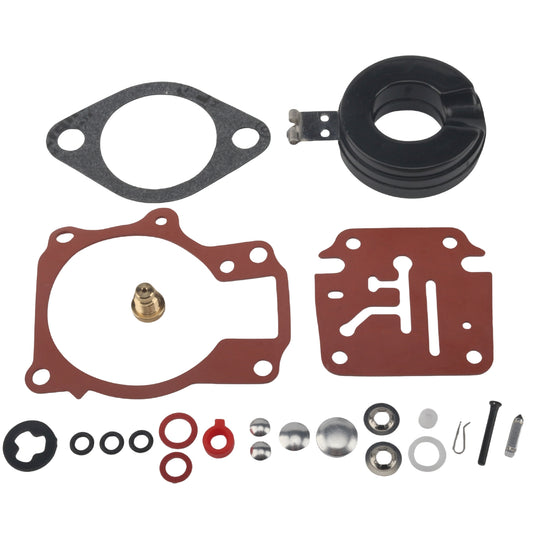
If the carb body is solid and you've got the skills, rebuild it. You'll save $200-$500 and learn something. Use a quality kit—cheap kits have undersized gaskets and hard O-rings that leak.
If there's visible damage, you don't have the tools or time, or it's a multi-carb engine, buy new. Go with quality aftermarket (JLM, Sierra) if you want OEM performance without the dealer markup. The part will fit, it'll run, and you'll be on the water in a weekend instead of a month.
Don't cheap out on a $70 no-name carburetor from a random online seller. The casting quality is garbage, the float needle sticks, and you'll be pulling it off again next season. It's not worth it.
Keep your fuel system clean. Run a 10-micron inline filter between the tank and carb, use ethanol-free gas if you can get it, and add stabilizer every fill-up if the boat sits more than two weeks between runs. Browse our Fuel & Induction collection to find quality fuel filters and components for maintaining a clean system.
For more marine parts and accessories, explore the full range at the JLM Marine main site.
For Outboard Owners:
To assist you in maintaining and repairing your marine engines, we hope the following resources may be of use:
-
Carburetors from JLM Marine
-
Carburetor Rebuild Kits from JLM Marine
About JLM Marine
Founded in 2002, JLM Marine has established itself as a dedicated manufacturer of high-quality marine parts, based in China. Our commitment to excellence in manufacturing has earned us the trust of top marine brands globally.
As a direct supplier, we bypass intermediaries, which allows us to offer competitive prices without compromising on quality. This approach not only supports cost-efficiency but also ensures that our customers receive the best value directly from the source.
We are excited to expand our reach through retail channels, bringing our expertise and commitment to quality directly to boat owners and enthusiasts worldwide.
Carburetor Repair Kits on Sale
- $46.00
$55.00- $46.00
- Unit price
- per
- $30.50
$29.00- $30.50
- Unit price
- per
- $30.50
$59.00- $30.50
- Unit price
- per

- $22.50
$23.00- $22.50
- Unit price
- per

- $22.50
$20.00- $22.50
- Unit price
- per
- $22.50
$22.50- $22.50
- Unit price
- per


- $21.99
$24.00- $21.99
- Unit price
- per
- $22.50
$32.00- $22.50
- Unit price
- per
- $22.50
- $22.50
- Unit price
- per
- $22.50
- $22.50
- Unit price
- per

- $22.50
$23.00- $22.50
- Unit price
- per

- $22.50
- $22.50
- Unit price
- per
- $25.50
$30.00- $25.50
- Unit price
- per

- $24.50
- $24.50
- Unit price
- per

- $26.50
$23.00- $26.50
- Unit price
- per

- $22.50
- $22.50
- Unit price
- per
- $20.72
- $20.72
- Unit price
- per

- $26.50
- $26.50
- Unit price
- per
- $23.50
$23.00- $23.50
- Unit price
- per
- $30.50
- $30.50
- Unit price
- per