


Evinrude 200XP Water Leak Near Air Intake: Troubleshooting & Fixing Carburetor Ingestion
If water's getting near your Evinrude 200XP air intake and into the carbs, you've got a problem that'll wreck your weekend fast. We see this on these carbureted V6 engines from the late '80s and early '90s—water finds its way past seals, through cowling drains, or straight into the fuel. It causes rough running, kills power, and if you ignore it, you're looking at hydrolock damage that'll bend connecting rods. Here's how to track it down and fix it.
Components That Let Water Into the Air Intake Area on 1970s-1990s Evinrude Engines
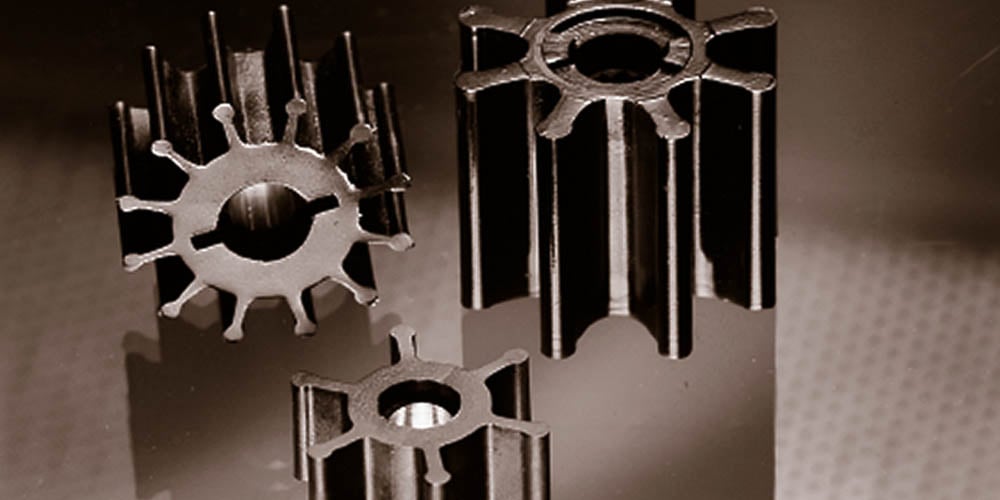
Water doesn't usually spray directly into the intake—it sneaks in through failed components or poor drainage.
Air Silencer and Cowling Issues
The air silencer is the plastic housing over the six carbs. Its gaskets seal it against water intrusion. When those gaskets crack or harden after decades, water pools inside the silencer. Hit rough water or tilt the motor wrong, and that water dumps straight into the carb throats. We've seen cowling drain plugs missing or blocked, letting rainwater collect and splash into the intake during operation. On a 1987 200XP we worked on last season, the owner had a cracked cowling that funneled spray directly onto the air silencer—simple fix, but it caused weeks of headaches before he found it.
The gasket material on these older models (Evinrude part families for 1988-1991 200XP models) tends to get brittle—when you press it with your fingers, it'll leave black residue and feel stiff instead of pliable. That's your cue to replace it before it fails completely.
Fuel Tank and Fuel Line Contamination
Water contamination in outboard fuel systems is a major issue across US marine operations. When water gets into the fuel tank or lines, symptoms mimic air intake problems—rough running, power loss, especially after you switch tanks. You might see spark plugs that look steam-cleaned with zero carbon buildup, which means you've been combusting water. Check your fuel-water separator bowl; if there's a visible water layer sitting under the fuel, that's your smoking gun.
On the 200XP specifically, we've tracked cases where fuel leaked from carburetor throats after running, pointing to overflow issues or bad needle valves. One owner installed new carb kits and reported the engine stalling 10-20 seconds after key-off—classic sign of fuel delivery contamination working its way through the system.
Lower Unit and Cooling System Seals
Water can enter from the lower unit if prop shaft seals or the gearcase gasket fail. It's rare, but when the lower unit seal lets water migrate upward through the driveshaft housing, it can pressurize into areas near the powerhead. More common: a failed water pump impeller or cracked intake hose in the cooling system diverts water where it shouldn't go. We always check the tell-tale stream—if it's weak or inconsistent, the pump might be bypassing water into the exhaust housing or up toward the intake manifold area through failed gaskets.
The mechanical path: compromised lower unit seal → water pressure in driveshaft housing → failed exhaust cover gasket → water vapor/spray near powerhead → intake area. It's a chain reaction you catch by inspecting each seal point systematically.
Symptoms of Water Ingestion
You'll notice an odd smell that isn't straight gasoline. Unburned fuel might drip from the carbs. The engine runs rough at idle—maybe a rhythmic hesitation rather than a chaotic sputter—and can stall unexpectedly, sometimes right after you turn the key off. Pull the spark plugs: if they're abnormally clean with no carbon, water's been combusting in the cylinders. A water layer in your fuel-water separator bowl is the most direct evidence you've got fuel contamination feeding the problem.
Hydrolock Risks
Water doesn't compress like air and fuel vapor. If enough water enters a cylinder during the compression stroke, the piston can't complete its travel. The connecting rod bends or snaps. We've pulled apart 200XP powerheads where the owner kept cranking after ingesting water—rod through the block, total loss. It's not a maybe; it's a when.
Troubleshooting and Repairing the Leak

Start with the simplest, most probable causes and work toward the complex stuff. You'll need basic hand tools, but here's the specific list.
Essential Tools and Materials for Diagnosis
Required tools:
- 7/16" and 1/2" sockets for cowling bolts and carb mounting nuts
- Combination wrenches (3/8" through 9/16")
- Flathead and Phillips screwdrivers (standard and stubby sizes for tight carb areas)
- Needle-nose pliers
- Carb cleaner spray (CRC or equivalent for leak detection)
- Fire extinguisher (5-lb minimum, kept within arm's reach)
Materials:
- Fuel-water separator drain container (1-gallon minimum)
- Replacement fuel filter element (10-micron rating)
- Isopropyl alcohol (12-16 oz per 10 gallons of fuel for trace water removal)
- Carburetor rebuild kits (six needed for V6—specify 1988-1991 200XP) from the Evinrude Carburetor Repair Kit collection
- Air silencer gasket set
- Marine-grade sealant (Yamabond or equivalent for gasket surfaces)
You'll also want the Evinrude 200XP Service Manual (publication number 507754 for 1988-1991 models) for torque specs and synchronization procedures.
Time estimate: Basic diagnosis, 1-2 hours. Full carb rebuild and reseal, 6-8 hours for an intermediate DIYer.
Step 1: Safety First – Shutting Down Fuel
Engine must be cold. Disconnect the battery negative terminal to kill all electrical. Close the fuel shut-off valve at the tank or inline valve. Disconnect the main fuel line at the engine's fuel pump inlet—have a container ready because residual fuel will spill. If you're pulling carbs off, expect fuel in the float bowls. Keep that fire extinguisher close and work in open air or with strong ventilation.
Step 2: Inspecting the Air Silencer and Cowling
Remove the cowling (usually four 1/2" bolts). Look at the air silencer housing. Run your hands along the gasket edges—if the rubber feels brittle and leaves black streaks on your fingers, it's done. Check inside the silencer for standing water. If there's water, trace where it came from: blocked drain plug in the cowling, cracked plastic air snorkel, or failed gasket.
We sent an air silencer gasket kit to a guy in New Zealand last month with this exact issue on a '89 200XP—his cowling drain was plugged with mud dauber nests, letting rainwater pool and overflow into the intake. Cleaned the drain, replaced the gasket, problem solved. The gasket itself is straightforward: pull the old one, clean the mating surface with carb cleaner, lay the new one dry (no sealant unless the manual specifies), and torque the silencer cover bolts to 60-80 in-lbs evenly in a cross pattern.
Step 3: Checking for Fuel System Contamination
Find your fuel-water separator—it's a clear bowl, usually mounted near the fuel pump. Place a container underneath and open the drain valve at the bottom. If you see water (it'll settle below the fuel as a distinct layer), drain until only clean fuel flows.
Critical: Replace the fuel filter element itself from the Evinrude Fuel Filter collection—don't reuse it. Water and sediment cling to the media and will re-contaminate the system. For the 200XP, a 10-micron spin-on filter or a Racor-style separator works well.
If you drained more than a cup of water, the main tank is compromised. For minor contamination, add 12-16 ounces of isopropyl alcohol to 10 gallons of fresh fuel to disperse the remaining moisture so it burns off. For heavy contamination (separator bowl half-full or more), you need to pump out the tank—use a weighted hose down to the tank bottom and siphon or hire a tank cleaning service.
Inspect the fuel cap O-ring every season. If it's cracked or hard, it's letting washdown water into the tank.
Step 4: Examining and Rebuilding Carburetors for Water
If water made it into the carbs, you're rebuilding all six. This is an intermediate-to-advanced job on a V6.
Disassembly: Pull each carb (note the linkage positions—take photos). Remove the float bowl screws and drain any remaining fuel. If it's milky or you see water beads, you've confirmed ingestion. Remove the floats, main jets, idle jets, and needle valves. Check the float weight—if it's fuel-soaked or corroded, it won't shut off fuel properly, leading to overflow that pulls in contaminated fuel.
Cleaning: Soak all metal parts in carb cleaner for 30 minutes. Blow out all passages with compressed air—pay attention to the idle and main jet passages, as water leaves mineral deposits that clog them. Do not use wire to clean jets; you'll enlarge the orifice and lean out the mixture.
Rebuild kits: Cheap kits are a false economy. The rubber diaphragms will be too stiff, the needle valves won't seal, and you'll be back in here next month. We recommend kits that meet OEM specifications—you get the correct durometer rubber, brass that fits the seat properly, and gaskets that actually seal. We've shipped these worldwide; the quality difference is obvious when you handle the parts. A good rebuild kit for the 200XP runs about $25-35 per carb; buying six sets might seem like a hit, but it's cheaper than one ruined weekend or a dealer rebuild at $150 per carb. Find the correct 200XP rebuild kits in the Evinrude Carburetor Repair Kit collection.
V6 linkage complexity: The six carbs share a common throttle and choke linkage. When you reassemble, all six throttle plates must open in sync. If you're not confident setting this up, this specific step is worth outsourcing to a mechanic experienced with Evinrude V6 linkage. A misadjusted linkage will cause uneven fuel delivery and can lead to one cylinder running lean and seizing.
Step 5: Post-Repair Testing and Idle Adjustment
Reinstall everything. Connect the fuel system and prime it—watch for leaks at every connection. Run the engine in a test barrel or on muffs (never dry).
Success criteria:
- Engine idles smoothly at 700-750 RPM (check your manual for the exact spec)
- Tell-tale stream is strong and consistent
- No visible moisture in the separator bowl after 30 minutes of running
- Spark plugs show light tan color after a test run (indicates proper combustion)
Synchronize the carbs: with the engine idling, listen to each cylinder. Use a carb sync tool or a length of hose as a stethoscope against each carb throat—they should all sound identical in pitch. Adjust the idle mixture screws (usually 1.5 turns out from lightly seated as a baseline) until you get the highest stable idle, then back off 1/8 turn.
Check for vacuum leaks by spraying carb cleaner around the intake manifold gaskets while the engine idles. If RPM changes, you've got a leak—reseal that gasket.
Common mistakes to avoid:
- Over-tightening the plastic air silencer cover (it'll crack—use 60-80 in-lbs max)
- Forgetting to reconnect the primer bulb line to the air silencer (creates a vacuum leak)
- Running the engine without confirming tell-tale flow (you'll cook the impeller in under a minute)
For a related process on carb repair on similar engines, check out our detailed Yamaha Outboard Carburetor Rebuild Tutorial.
Maintenance to Prevent Future Issues

Regular Inspections
Check your fuel-water separator monthly during the season, weekly if you're in a humid or rainy region. Look at fuel lines for cracks—the rubber hardens after 5-10 years and will split under pressure. Inspect the air silencer gasket and any hoses around the intake every spring before you launch. A quick visual check takes five minutes and catches problems before they strand you.
Smart Storage Habits: Carburetor Draining Procedure
When you store the boat for winter, drain the carbs to prevent varnish buildup and water accumulation. On the 200XP, each carb has a drain screw on the bottom of the float bowl (small flathead, usually 1/4" wide). Place a container under each carb, open the drain screws one at a time, and let the fuel drain completely. Leave the screws open during storage, then close and torque to 15-20 in-lbs before the next season.
Fill your fuel tank completely before long-term storage—this minimizes air space and reduces condensation inside the tank. Add a quality fuel stabilizer (follow the bottle instructions, usually 1 oz per gallon).
Fuel Choices Matter
Non-ethanol (E0) fuel is your best option. Ethanol-blended gasoline actively attracts water molecules and causes phase separation—the ethanol and water layer out at the bottom of your tank, creating a concentrated water pocket that feeds straight into your fuel pickup. This is especially destructive in aluminum carb bowls on older engines like the 200XP, where the water accelerates corrosion and clogs jets with white aluminum oxide.
If E0 isn't available in your region, use the highest-octane E10 you can find and add a ethanol treatment additive like Star Tron or Sta-Bil Marine (follow the dosage on the bottle). It won't eliminate the problem, but it'll slow it down.
For more on fuel quality and its impact, see our Fuel Quality Matters: Choosing the Right Octane for Your Outboard blog.
When to Call in the Pros

Signs You Need Professional Help
If you've replaced the air silencer gasket, drained the fuel system, rebuilt the carbs, and you're still seeing water ingestion or persistent fuel leaks, stop. Chasing an elusive problem without the right diagnostic tools or experience turns a $200 fix into a $2,000 disaster. Internal engine noises—knocking, grinding, or a metallic rattle—after suspected water ingestion means you might already have hydrolock damage. Don't crank it again; tow it to a shop.
If the V6 carb linkage intimidates you or you don't have a sync tool, that's also a valid reason to outsource. A misadjusted linkage can cause one cylinder to run lean and seize the piston, which is a $1,500+ powerhead repair.
Finding the Right Mechanic
Look for a mechanic with specific experience on carbureted 2-stroke outboards, ideally someone who's worked on Evinrude V6 engines from the '80s and '90s. Not all marine techs know these older motors—many shops focus on modern 4-strokes with fuel injection. Ask at your local marina for recommendations. Independent shops that specialize in vintage outboard restoration or have a reputation for "they can fix anything" are your best bet. Avoid big dealerships unless they have a dedicated vintage tech; the newer guys often don't have the hands-on knowledge for these carbureted setups.
Pro tip: After every outing, flush your 200XP with fresh water using muffs for at least 10 minutes. It clears salt, sand, and debris from the cooling system and prevents mineral buildup that can crack gaskets or divert water into places it shouldn't be. For guidance on maintaining your cooling system, see the Cooling System collection for OEM parts.
For further information and to shop all your parts needs, visit our main hub at JLM Marine: Direct from Factory Boat Parts | Free Worldwide Shipping.