


Tiller Handle vs. Remote Steering: Which Suits Your Boat?
- Tiller Handle Steering: When Direct Control Wins
- Remote Steering Systems: Comfort and Control at Speed
- Matching Steering to Boat Size and Engine HP
- Real Scenarios: Tiller and Remote in Action
- Tiller to Remote Conversion: Is It Worth It?
- Hydraulic Steering: When Cables Aren't Enough
- Maintenance Tips for Both Systems
- Quick Decision Workflow
- Sources

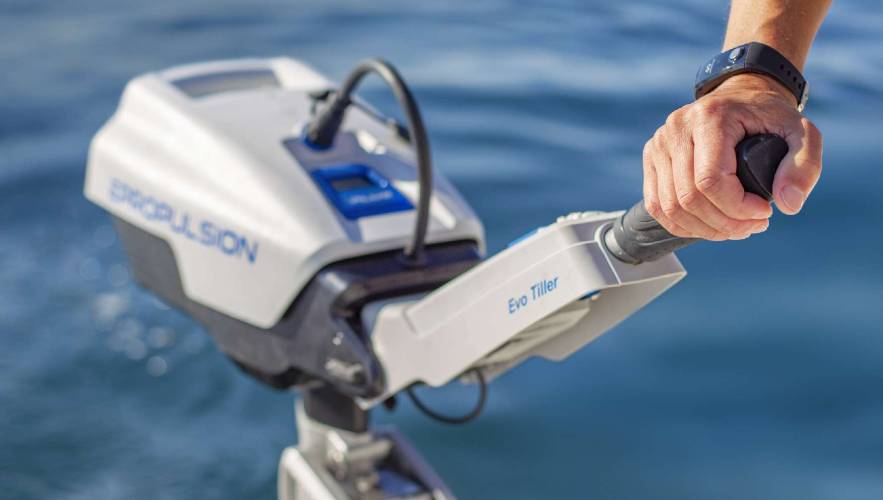
I've been wrenching on outboards for two decades, and the tiller-versus-remote question comes up constantly. Skip the philosophy—this choice boils down to boat size, engine horsepower, and what you actually do on the water.
Tiller Handle Steering: When Direct Control Wins
Tiller handles work best on boats under 16-18 feet with engines below 115 HP, particularly in the 2.5-25 HP range that powers most portable outboards in the US. You grab the arm, push or pull, and the boat responds instantly. No cables, no slop, no delay.
The killer advantage is deck space. When your helm is bolted to the transom, the entire bow stays open. For anglers working small jon boats or aluminum hulls, that matters—you can cast from any angle without a console blocking your line. Colorado guide Dan Swanson puts it bluntly: backtrolling with a tiller offers "better boat control than any other method" when you're following a drop-off or contour line for walleye.
Cost is the other win. No wheel, no cables, no console—just the motor and a fuel tank. You save upfront and avoid the maintenance headaches of corroded steering cables or leaking hydraulic lines. For those looking for quality parts to maintain or upgrade their tiller setups, sourcing factory boat parts from JLM Marine is a reliable way to ensure quality and fit.
Where Tiller Falls Short
Long days at speed will wreck your shoulder. The constant physical input—shifting weight, fighting prop torque, adjusting trim—gets old fast. Tiller steering is unquestionably more tiring than a wheel and separate throttle lever, especially once you pass 40 HP. Above 115 HP, tiller becomes impractical; the torque load is just too much.
Comfort suffers too. You're stuck at the stern, weight distribution isn't ideal, and forward visibility can be sketchy in chop. If you fish protected lakes solo, fine. If you're running a family around or hitting open water, it's not the setup.
Remote Steering Systems: Comfort and Control at Speed
Remote steering—wheel, console, cables or hydraulics—dominates boats over 16-18 feet and anything above 40-60 HP. The ergonomics are night-and-day better for cruising, and the dedicated helm station keeps gauges, electronics, and throttle controls within easy reach.
Steering wheels offer better leverage in rough seas or high winds, where a tiller would yank around unpredictably. You sit forward, weight is balanced, and you see what's ahead instead of craning around a windscreen. For families or anyone pulling tubes, this isn't optional—it's safer.
Hydraulic steering is mandatory for engines over 150 HP. Cable systems max out around 115-150 HP depending on friction and geometry; beyond that, hydraulic assist handles the steering load without cooking your arms.
North America holds 46-58% of the global marine steering and autopilot market, driven heavily by recreational runabouts, pontoons, and center consoles where remote steering is standard. The US boat steering market hit about $675 million in 2022, with hydraulic systems comprising 58% of autopilot installations.
Downsides: Cost and Space
A basic remote steering kit runs $800 and up, not counting console fabrication or installation labor. Hydraulic systems push that higher. You also lose deck space—a center console eats roughly 3x3 feet, a side console blocks one gunwale.
Maintenance isn't terrible but it's real. Steering cables corrode, especially in saltwater. Hydraulic fluid needs checking, seals can weep, and helm pumps occasionally seize. None of it is catastrophic, but it's more to track than a tiller pivot point. Maintenance parts for steering cables and hydraulic systems can be sourced from trusted suppliers like JLM Marine providing OEM-quality components.
Matching Steering to Boat Size and Engine HP
General rule: boats under 16 feet with engines under 40-60 HP lean tiller. Boats over 18 feet or anything above 60-115 HP lean remote. There's overlap in the 16-18 foot / 40-115 HP range where use case decides.
Fishing vs. Cruising: The Real Divider
If you fish more than 50% of the time, particularly in tight cover or shallow water, tiller boats are the most versatile platform for inland US waters. The open layout, instant response, and ability to work the boat from the stern while casting beats a console setup. Backtrolling, drift-fishing, or spot-locking over structure all favor the direct feedback of a tiller.
If your trips involve family, watersports, long runs, or choppy conditions, remote steering wins. The comfort gap widens fast once you're above 20 mph or running for more than an hour. Console boats above 4.5 meters with a proper helm position just feel more stable and less fatiguing.
| Factor | Tiller Handle | Remote Steering |
|---|---|---|
| Best Boat Length | <16-18 ft | >16-18 ft |
| Best Engine Range | 2.5-115 HP (ideal <40 HP) | >40-60 HP, required >150 HP |
| Typical US Use | Jon boats, small fishing hulls, tenders | Runabouts, pontoons, center consoles, family cruisers |
| Cost | Lower; no console or cables | Higher; $800+ for kit, more for hydraulics |
| Deck Space | Maximum; helm on motor | Reduced by console footprint |
| Control Feel | Direct, instant at low speeds; tiring at high speeds | Stable at speed; less feedback |
| Comfort | Stern position, physical effort | Forward helm, ergonomic, less fatiguing |
| Maintenance | Minimal; grease pivot, check linkage | Cables corrode; hydraulics need fluid checks |
Real Scenarios: Tiller and Remote in Action 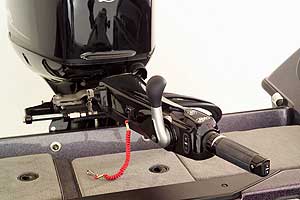
I've seen both systems work and fail depending on the boat and owner.
Small-boat angler: A guy running a 14-foot Lund tiller with a 25 HP Yamaha on inland Minnesota lakes. He fishes walleye, backtrolls tight to breaklines, and needs to adjust position constantly. Tiller is perfect—he sits stern-corner, one hand on the tiller, rod in the other, and makes micro-corrections without thinking. The open bow lets his buddy fish comfortably up front. Boat cost less, trailer setup is simple, and the motor pops off for garage storage. That setup maximizes usable deck space and keeps his overhead low.
Family cruiser: A 22-foot center console with a 150 HP four-stroke and hydraulic steering. Owner runs Lake Michigan for perch, takes the family to sandbars, and occasionally pulls tubes. The helm station has a windscreen, nav electronics, trim tabs, and comfortable seating. Forward visibility is critical in traffic, and the hydraulic steering handles chop without punishing his wrists. He paid more upfront and loses some deck space to the console, but the comfort and safety trade-off is worth it for his use.
DIY conversion: I helped a buddy convert a 16-foot tiller jon boat to remote steering using an aftermarket cable kit. He wanted to age into the boat—his shoulder couldn't handle tiller anymore. We mounted a basic side console, ran cables through the splash well, and rigged a B&M throttle. Total cost around $900 in parts and a weekend of work. It's not factory-pretty, but it drives fine and extended the boat's usability for him. For parts like cables and throttles in such conversions, sourcing from reputable suppliers such as JLM Marine's collections can ensure compatibility and durability.
Tiller to Remote Conversion: Is It Worth It?
Converting tiller to remote is a common upgrade, especially on older hulls. Basic cable kits start around $800-1000, hydraulic kits push $1500-2500 depending on HP. Labor varies—if you're handy, it's a weekend project. If you pay a shop, expect 8-12 hours at their rate.
What you need:
- Steering wheel and helm
- Steering cable (length depends on boat; measure transom to helm station)
- Cable bezel and tilt tube for the motor
- Remote throttle/shift control (B&M, Morse, Teleflex common brands)
- Console or side-mount panel (can fabricate or buy)
- Rigging: cables, clamps, fasteners
Key considerations:
- Ensure your outboard has a tilt tube mount for the cable attachment. Most modern outboards do; older motors may need an adapter kit or aren't compatible.
- Hull layout matters. Side consoles work on narrower hulls; center consoles need width and structural support.
- Cable routing should avoid sharp bends (max ~90 degrees) and protect against chafe.
- Non-OEM cables vary wildly in quality. Cheap cables bind, corrode faster, and sometimes don't fit the helm or motor attachment points properly. JLM Marine offers factory-spec cables at a better price than OEM without the dealer markup—same tolerances, same materials, just no brand tax.
When to skip it: If your boat is under 14 feet and you primarily fish, the conversion often isn't worth it. You lose deck space, add weight, and kill resale value to the tiller crowd. If the boat is structurally sound, over 16 feet, and you want comfort for longer runs, the upgrade makes sense.
Hydraulic Steering: When Cables Aren't Enough
Hydraulic steering uses a helm pump and fluid-filled lines to move the outboard. It's smoother, requires less effort, and eliminates cable friction and binding. Mandatory for engines over 150 HP, often recommended above 115 HP depending on boat speed and steering load.
Advantages:
- Minimal steering effort even with high-HP motors
- No cable stretch or corrosion issues
- Smoother feel, especially in following seas or at high speed
- Compatible with autopilot systems
Downsides:
- Higher cost ($1200-3000+ for kits)
- Fluid leaks can happen at helm pump, cylinder, or hose fittings
- Requires occasional bleeding if air gets in the system
- Heavier than cable systems
Maintenance: Check fluid level at the helm reservoir every season. Look for leaks at the helm pump, cylinder on the motor, and hose connections. If steering feels stiff or inconsistent, air in the system is likely—bleed it using the manufacturer's procedure (usually involves turning the wheel lock-to-lock with the bleeder valve cracked). Quality matters here: cheap hydraulic kits can have poor seals that weep fluid. JLM's hydraulic components match OEM specs without the dealer upcharge, and we've shipped them worldwide to guys who need reliable parts fast. You can find these in the JLM Marine hydraulic steering parts collection.
Maintenance Tips for Both Systems
Tiller:
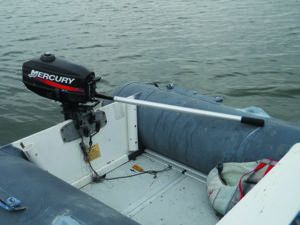
- Grease the tilt/swivel pivot points every 50 hours or seasonally.
- Check the throttle friction knob—if it's loose, the arm drifts. Tighten or replace the friction spring.
- Inspect the shift/throttle cables where they attach to the carb and lower unit. Corrosion or fraying means replace before they snap.
- If the tiller arm jerks hard to one side at idle (prop torque), adjust your engine height or add a hydrofoil to balance thrust. Suitable hydrofoil parts are available from JLM Marine's hydrofoil stabilizer collection.
Cable steering:
- Inspect cables annually for corrosion, kinks, or fraying. Pull the cable ends at the helm and motor—if you see rust or broken strands, replace it.
- Grease the tilt tube and cable ends where they attach to the motor. Dry cables bind and wear fast.
- Check helm tightness—if the wheel free-spins or feels loose, the cable may be stretched or the helm nut backed off.
- Symptom: steering binds when turning hard to one side but not the other. Likely a sharp bend in the cable routing or a damaged tube. Re-route or replace.
Hydraulic steering:
- Check fluid level in the helm reservoir every 50-100 hours. Top off with manufacturer-specified fluid (usually ATF or specific hydraulic fluid).
- Inspect hoses and fittings for leaks, especially at the cylinder and helm pump.
- If steering feels spongy or inconsistent, bleed the system to remove air.
- Symptom: steering is stiff in one direction, easy in the other. Could be low fluid or air in the lines. Bleed and refill.
Quick Decision Workflow
Start here:
- Is your boat over 18 feet or engine over 115 HP? → Remote steering (likely hydraulic above 150 HP).
- Is your boat under 16 feet, engine under 40 HP, and you fish more than cruise? → Tiller handle.
- Is your boat 16-18 feet, 40-115 HP? → Depends:
- Fish-focused, inland waters, solo or two-person: Tiller.
- Family use, longer runs, rough water, or comfort priority: Remote.
If you're unsure, consider how much time you spend at speed above 20 mph. If it's over half your trips, remote will save your shoulders. If most of your time is slow trolling, drifting, or working tight structure, tiller's direct feedback is worth the trade-off.
For all your parts needs to maintain or upgrade your marine steering and control systems, check out JLM Marine's direct factory boat parts shop to get OEM-quality components shipped worldwide.
Sources
- RJ Nautical: What Is a Tiller Outboard Motor
- First Class Sailing: Tiller vs. Steering Wheel
- Fish Explorer: Tiller Boat Control Blog
- Total Fisherman: Tiller vs. Steering Wheel Part 2
- Boatsales Australia: Tiller Steering or Forward Controls
- Strategic Market Research: Marine Autopilot System Market
- Mordor Intelligence: Marine Steering Systems Market
- ePropulsion: Outboard Steering Blog
- Yamaha Outboards: Tiller vs. Remote Steering
Pro tip: After every trip, rinse your tiller pivot and shift linkage with fresh water if you run saltwater or brackish rivers. Corrosion locks up that swivel fast, and you'll be fighting the arm instead of steering the boat. Takes 30 seconds, saves you a torn-down lower unit to free a seized tilt tube. For expert maintenance tips on outboard systems including gearcase lubrication and tilt mechanism care, consider reviewing detailed guides available at JLM Marine blog.
Hi—I’m Jim Walker
I grew up in a Florida boatyard, earning pocket money (and a few scars) by rebuilding outboard carbs before I could drive. That hands-on habit carried me through a Ph.D. in mechanical engineering, where I studied how salt water quietly murders metal.
I spent ten years designing cooling systems for high-horsepower outboards, then joined JLM Marine as CTO. We bench-test every new part in the lab, but I still bolt early prototypes onto my own 23-foot skiff for a weekend shake-down— nothing beats real wake and spray for finding weak spots.
Here on the blog I share the fixes and shortcuts I’ve learned so your engine—and your day on the water—run smooth.

Для владельцев лодок:
Мы надеемся, что следующие ресурсы окажутся полезными для вас в обслуживании и ремонте ваших судовых двигателей:
- Руководство по серийным номерам Mercury
- Руководства пользователя от Mercury
- Официальное руководство по номерам моделей в формате PDF от BRP
- Руководство по серийным номерам Johnson
-
Аксессуары для лодок от JLM Marine
О компании JLM Marine
Основанная в 2002 году, компания JLM Marine зарекомендовала себя как специализированный производитель высококачественных морских деталей, базирующийся в Китае. Наша приверженность совершенству в производстве заслужила нам доверие ведущих мировых морских брендов.
Как прямой поставщик, мы обходим посредников, что позволяет нам предлагать конкурентоспособные цены без ущерба качеству. Такой подход не только поддерживает экономическую эффективность, но и гарантирует, что наши клиенты получают наилучшую ценность напрямую от источника.
Мы рады расширить свое присутствие через розничные каналы, предлагая наш опыт и приверженность качеству непосредственно владельцам и любителям лодок по всему миру.
Распродажа лодочных аксессуаров
- $54.00
- $54.00
- Unit price
- per
- $38.50
- $38.50
- Unit price
- per
- From $39.13
$45.50- From $39.13
- Unit price
- per
- $53.50
- $53.50
- Unit price
- per
- From $54.00
- From $54.00
- Unit price
- per
- $34.50
- $34.50
- Unit price
- per

- $34.50
- $34.50
- Unit price
- per


- $54.00
- $54.00
- Unit price
- per

- $54.00
- $54.00
- Unit price
- per
- $23.50
- $23.50
- Unit price
- per
-
Red
-
Blue
- $45.00
- $45.00
- Unit price
- per
- $32.00
- $32.00
- Unit price
- per
- $40.00
- $40.00
- Unit price
- per
- $22.80
- $22.80
- Unit price
- per
-
Red
-
Blue

- $31.50
- $31.50
- Unit price
- per
- $22.80
- $22.80
- Unit price
- per
-
Red
-
Blue


- $59.00
- $59.00
- Unit price
- per

- $54.00
- $54.00
- Unit price
- per

- $22.80
$27.00- $22.80
- Unit price
- per

- $32.00
- $32.00
- Unit price
- per