


Proper Trim Technique for Maximum Speed and Stability
- Getting Your Boat on Plane
- Running in Chop and Waves
- Quantitative Trim Data
- Troubleshooting Common Trim Problems
- Advanced Techniques for Performance Boats
- Trim Tabs vs Engine Trim
- Sailboat Trim for Speed and Stability
- Outboard-Specific Trim Notes
- Real-World Performance Gains
- Why Trim Matters More Than You Think
- Daily Maintenance Tip
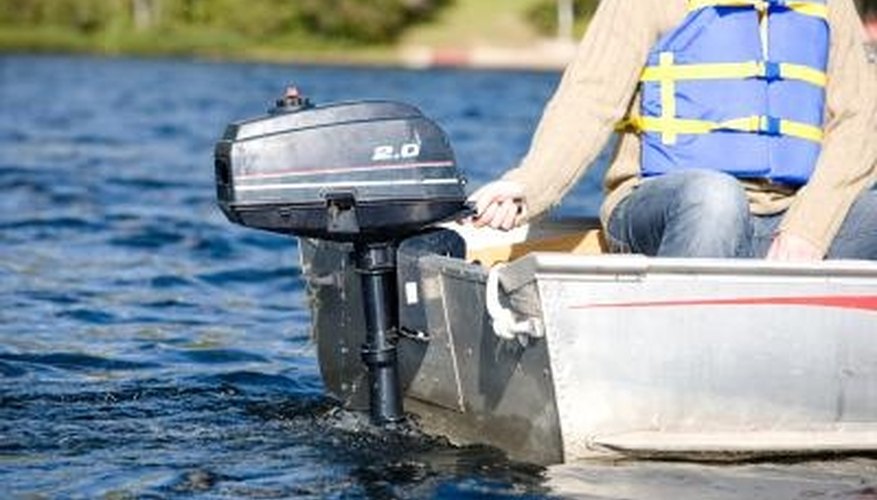
After twenty years turning wrenches on outboards, I can tell you that most speed and handling problems come down to trim. Not the engine, not the prop—just improper trim angle. When a boat won't get on plane or an engine's screaming but you're getting no extra speed, nine times out of ten it's trim. Same goes for stability. If you're fighting the wheel or porpoising across the bay, you need to adjust your trim, not replace parts.
This applies whether you're running a bass boat on a Texas lake or a center console off the Carolina coast. The principles stay the same: optimize hull angle, reduce drag, keep the ride stable. Let me walk you through how to actually do it.
Getting Your Boat on Plane

Most operators trim wrong from the start. Here's the sequence that works.
Start with the engine trimmed all the way down. Full negative trim. This keeps the prop deep for maximum bite. Throttle up smoothly to about three-quarter throttle. As the boat accelerates and the bow starts to lift, begin trimming the engine out in small increments—one or two clicks at a time on the trim switch.
Watch your tachometer and speedometer simultaneously. When you hit the right trim angle, RPMs will stabilize and speed will peak. You'll feel it too—the hull rides smoother and the engine sounds less labored. If you trim too far out, the prop starts to ventilate. You'll hear the engine rev suddenly and speed drops off. When that happens, trim back down one click.
The goal is to get about one-third of the bow out of the water at cruising speed. Not half, not level—one-third. This minimizes wetted surface (drag) while keeping enough hull in contact with the water for directional stability. In calm conditions, you can trim higher. In chop, trim lower for control.
A correctly sized automatic trim system can deploy in as little as 1.5 seconds, which matters on small fast boats that react quickly to conditions according to Motor Boat & Yachting. But most recreational setups use manual electric trim, which requires you to learn the feel.
Fixing List and Torque Steer
If your boat pulls to one side or lists when you're on plane, that's usually prop torque or uneven weight distribution. Don't fight it with the wheel—use trim tabs.
Lower the tab on the side that's rising. If the starboard side is high, drop the starboard tab. Start with small adjustments, maybe a quarter deployment, and run for thirty seconds to see the effect. Trim tabs take a moment to work because they redirect water flow under the hull.
You can also shift weight. Move coolers, fuel tanks, or passengers to the low side. But tabs give you the fine control you need without rearranging gear every trip.
One operator I know added trim tabs to his 19-foot Ranger and picked up 5 mph top speed just by leveling the hull and reducing the drag from that list. The engine didn't change. The prop didn't change. Just proper trim technique.
If you're interested in leveling your hull and reducing drag with effective gear, check out our Boat Accessories collection for quality trim tabs and related parts.
Running in Chop and Waves
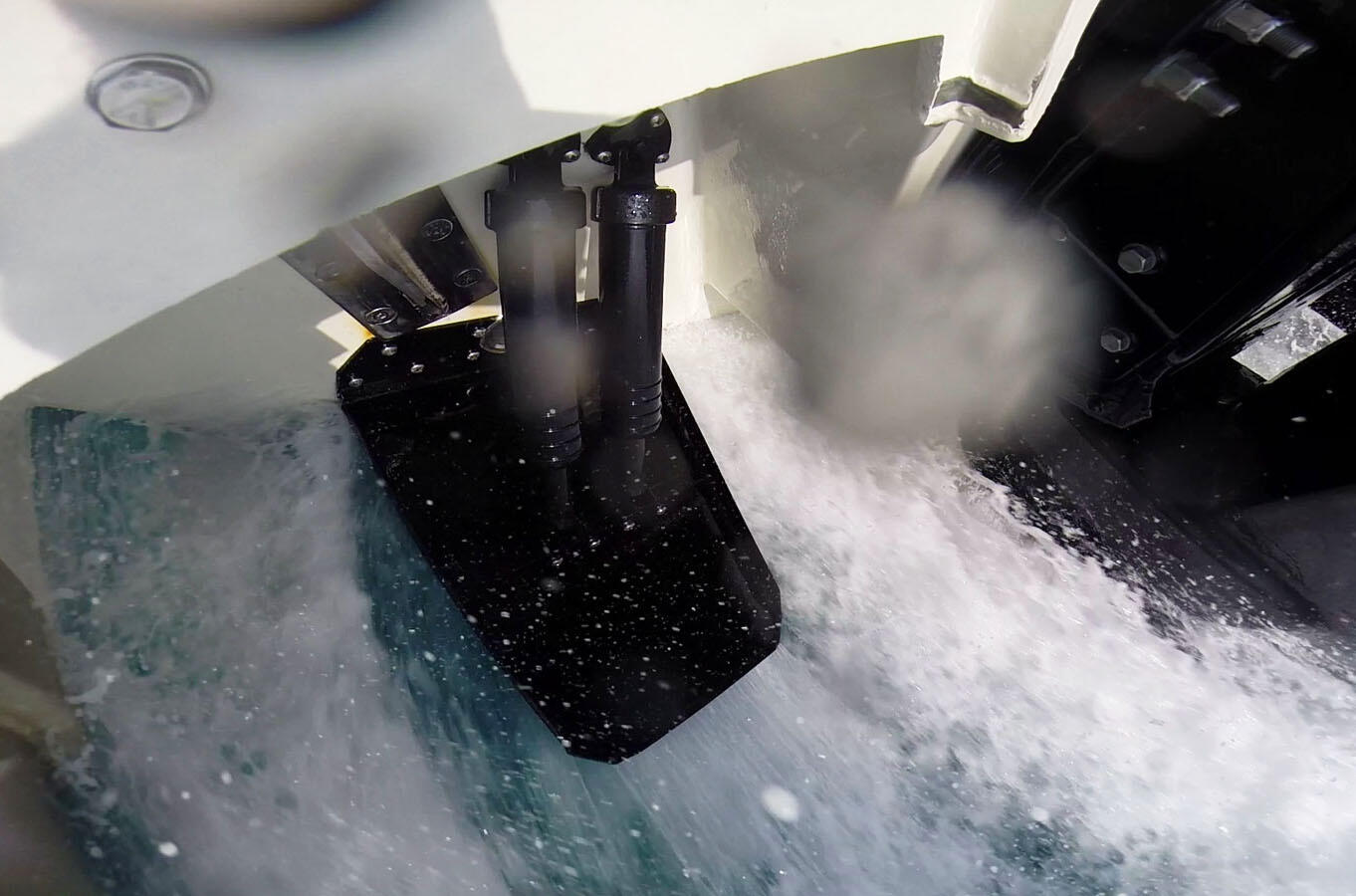
This is where most people get it backwards. In rough water, you need to trim down, not up.
When you're trimmed high and hit chop, the bow slams hard and the ride gets brutal. By trimming the engine down, you extend the running surface of the hull forward, which keeps more hull in the water and softens the impact. The boat cuts through waves instead of pounding over them.
Use tabs down as well. Deploy both tabs equally in head seas to lengthen the effective waterline. In beam seas, drop the windward tab to keep that side planted.
Speed will drop compared to calm water, but that's physics. Trying to maintain the same trim angle in waves just beats the hull and passengers. Trim for comfort and control, accept the speed loss.
If you're running inlet passes or following seas, trim neutral or slightly down. A stern-heavy attitude in following seas can let the boat broach—swing sideways uncontrollably. Keeping the bow down gives the rudder authority.
Quantitative Trim Data
Research on planing hulls shows optimal trim angles of 2 to 2.5 degrees minimize resistance across most speeds, according to published hydrodynamic studies. Deviations of even 5 to 10 centimeters off optimal can spike fuel consumption significantly.
For example, at 35 knots, a planing boat trimmed to 2.24 degrees achieves a resistance-to-weight ratio of 0.072. Trim that same hull to 5 degrees and resistance jumps. The USCG has tested this on patrol boats with similar results—trim matters more than most operators realize.
On larger vessels, the impact is even more dramatic. A 36,000 DWT bulk carrier operating under optimum trim for four months saved 5.9% fuel, equating to 323 tonnes annually and $162,000 in cost savings, per XShip case study data. Container feeder ships running around 22 knots see up to 5% fuel savings with proper trim, about 35 barrels per day saved according to Cadence CFD analysis.
For recreational boats, that translates to longer range and lower fuel bills. A 5% improvement on a 100-gallon offshore trip saves five gallons. Over a season, that adds up.
If you want tips on optimizing fuel use for your outboard motor with proper trim, see our detailed guide on Trimming Your Outboard for Optimal Fuel Consumption.
Troubleshooting Common Trim Problems

Porpoising
This is when the bow starts bouncing rhythmically at speed. It's usually caused by too much positive trim—the bow is too high and the hull is skipping. Trim the engine down two or three clicks. If that doesn't fix it, check your load distribution. Too much weight aft will cause the same issue even with correct trim angle.
Prop Ventilation
The engine revs suddenly, you hear a high-pitched whine, and speed drops. The prop is sucking air instead of gripping water. Trim down immediately. If it keeps happening even when trimmed properly, inspect the prop for damage or check the engine mounting height. An engine mounted too high will ventilate constantly no matter how you trim.
For guidance on recognizing signs of prop issues like ventilation and how to fix related problems, see our article on Propeller Slip or Engine Issue? When Your Boat Can’t Reach Speed.
Bow Plow
The opposite of porpoising. The bow stays buried and the boat feels sluggish. You're trimmed too far down or running too slow for the hull to plane properly. Trim up and add throttle. If the boat still won't lift, you may be overloaded or have a fouled hull.
Steering Torque
Excessive pull to one side at speed. As mentioned earlier, this is prop torque. Most single-engine boats pull slightly to port due to prop rotation. Trim tabs correct this, but if you don't have tabs, a small trim adjustment can help. Trim the engine slightly toward the direction of the pull (counterintuitive, but it works by changing thrust angle). Or just learn to hold a bit of opposite wheel—it's not ideal but it's free.
Advanced Techniques for Performance Boats
On bass boats and flats skimmers, you're chasing every tenth of a mile per hour. Here's what the tournament guys do.
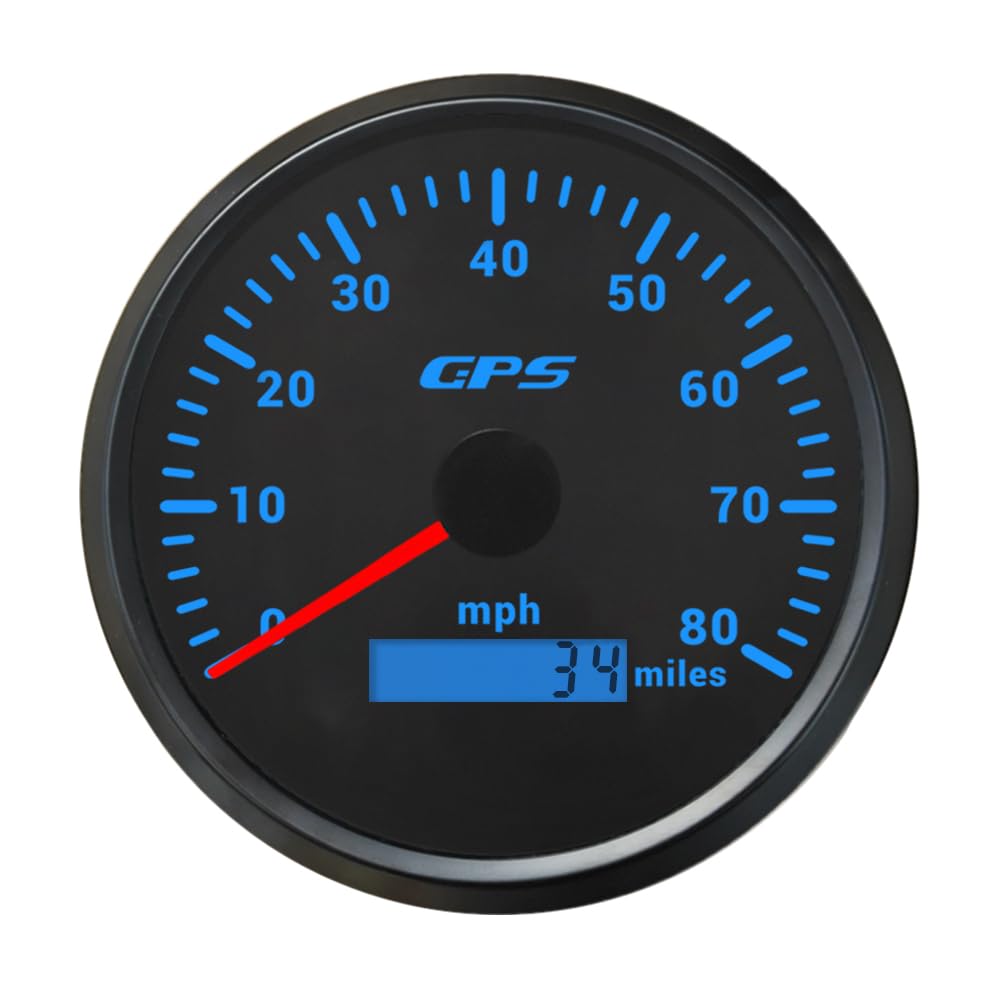
Run a GPS and tachometer simultaneously. Find your engine's peak torque RPM from the manufacturer's specs. For most modern outboards, that's around 5,000 to 5,500 RPM. Adjust your trim so you're running at or slightly above peak torque. This gives you maximum thrust efficiency.
Mark your optimal trim position with a paint pen on the trim gauge. Conditions change, but having a reference point saves time. I've seen guys tape small marks on the gauge for calm water, light chop, and heavy chop.
Weight distribution is critical on light hulls. A 200-pound operator sitting aft versus forward can change optimal trim by several degrees. Keep heavy items like batteries and fuel tanks as close to the center of gravity as possible. Move lighter gear to balance.
If you're interested in performance modifications that affect trim, consider our Installing a Jack Plate: Benefits for Shallow Water Boating for optimizing engine height and trim.
Some high-performance hulls benefit from hydraulic jack plates in addition to trim. A jack plate adjusts engine mounting height, which changes how the prop interacts with the hull and water surface. Combined with trim, you can fine-tune down to fractions of a degree. But that's overkill for most recreational use.
Trim Tabs vs Engine Trim
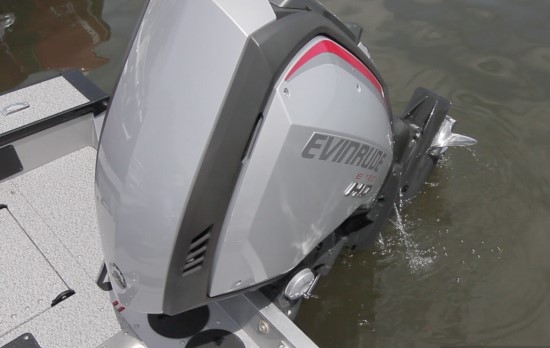
Beginners often ask if they need both. Engine trim adjusts the angle of the outdrive or outboard, changing thrust direction and hull attitude. Trim tabs are small hydrofoils on the transom that adjust the hull's running angle by redirecting water flow.
Use engine trim first for getting on plane and setting your cruising attitude. Use tabs to fine-tune list, porpoising, and stability. Tabs don't replace engine trim—they supplement it.
On single-engine boats, tabs are optional but helpful. On twin-engine boats, tabs are almost mandatory because engine torque and thrust asymmetry is harder to manage with throttle alone. On boats over 25 feet, I recommend tabs for anyone running offshore or in rough conditions.
Quality tabs like Bennett or Lenco are worth the money. Cheap aftermarket tabs often have weak actuators that fail in saltwater. We've pulled dozens of failed no-name tabs. The labor to replace them costs more than buying good ones in the first place.
If you want to explore options and parts related to trim systems and tabs, visit our Boat Accessories collection for trusted marine hardware.
Sailboat Trim for Speed and Stability
Sailboat trim is a different animal but follows similar logic: optimize angle of attack, minimize drag, balance forces. The last three inches of mainsheet adjustment can make or break your speed, according to US Sailing coaching resources.
Upwind, sheet sails until luff telltales flow evenly. In puffs, ease slightly to accelerate without excessive heel. Heel beyond 15 to 20 degrees increases drag and reduces pointing ability. Use traveler and backstay to control twist and keep the boom near centerline.
Off-wind, ease sheets until the luff starts to bubble, then retrim just enough to stop the bubble. Use the vang to control leech twist and maintain speed without weather helm. In waves, deeper twisted sail shapes help acceleration and widen the speed groove, per US Sailing wave sailing guides.
Jon Emmett, a professional sailing coach, puts it plainly: "Minimal corrective steering is nearly always fast. The rudder is acting as a brake, so if you need to constantly pull it (weather helm) or push it (leeward helm), you are effectively sailing with the brake slightly on," as noted in Sailing Today.
Pip Hare adds that upwind performance is "all about equilibrium; the relationship between the helm, the trim of the sails and the boat's angle of heel must be carefully balanced," from Yachting World.
Trim telltales are your guide. Top, middle, and bottom should break simultaneously. If the top breaks first, move the jib car forward. If the bottom breaks first, move it aft.
Outboard-Specific Trim Notes
Modern outboards (Yamaha, Mercury, Suzuki, Honda) have power trim as standard. Older two-strokes and smaller four-strokes often use manual tilt pins with 3 to 5 positions. If you're running a manual tilt engine, you lose the fine adjustment capability, but the principles are identical.
Set the pin in the middle position for normal cruising. Move to the highest hole (most trimmed out) for calm water and top speed. Move to the lowest hole (most trimmed in) for rough water or heavy loads.
Check your tilt tube and pivot bolts regularly. A loose or corroded tilt system will let the engine move under load, which throws off your trim and can damage the transom. We've seen engines drop off transoms because the tilt pin sheared due to corrosion. That's a $10,000 mistake.
For hydraulic trim systems, bleed the system annually and check fluid level. Air in the lines causes spongy trim response, and low fluid can burn out the pump. The pump is a $400 part. The fluid check takes two minutes.
For maintenance tips on keeping your cooling and trim systems in top shape, see our collections of Cooling System parts and Water Pump Impeller Kits to maintain engine temperature and performance.
Real-World Performance Gains
I mentioned the Ranger that gained 5 mph with tabs. We've also seen a 21-foot center console running a Yamaha 150 pick up 3 mph and drop 200 RPM at cruise just by adjusting trim and cleaning the hull. The operator had been running trimmed too low for two seasons, pushing extra water and wasting fuel.
Another case: a flats boat that wouldn't plane with two people and a load of gear. Owner thought he needed a bigger engine. Turns out the engine was mounted a half-inch too low, causing the prop to plow water instead of lifting the hull. We shimmed the jack plate up, adjusted trim, and the boat planed fine with the existing 90 HP.
Rob Holland, a 9-time US National Aerobatic Champion, uses a similar principle for aircraft: he trims his plane for hands-off vertical flight at a specific speed, which eliminates control input during rolls and maneuvers, according to IAC articles. Same concept—set the baseline trim to optimize control authority and reduce workload.
Why Trim Matters More Than You Think

A properly trimmed boat runs cooler because the engine isn't laboring. It produces less spray, which improves visibility and keeps passengers dry. It reduces fatigue because you're not fighting the wheel or getting pounded by chop. And it's safer—Motor Boat & Yachting notes that correct trim can sometimes be life-saving by improving handling in critical situations.
On larger commercial vessels, the environmental impact is significant. Ship trim optimization reduces fuel consumption, which directly lowers CO2 emissions and helps meet International Maritime Organization (IMO) standards, per Numeca CFD case studies. Recreational boaters aren't subject to IMO regulations, but the same physics apply. Less fuel burned means lower cost and cleaner exhaust.
For more information on how to enhance overall marine engine and boat performance, visit the main JLM Marine hub.
Daily Maintenance Tip
After every trip, flush your outboard with fresh water for at least ten minutes. This prevents salt and debris from building up in the cooling passages. A clean cooling system maintains consistent engine temperature, which affects how the engine performs under load and how it responds to trim adjustments. Overheating engines lose power and can seize, which makes trim technique irrelevant if the engine won't run properly in the first place.
For detailed guidance on cooling system maintenance and impeller replacement, see our step-by-step How to Replace a Mercury Outboard Water Pump Impeller tutorial.
This post now includes internal links to relevant collections and blog content on trim tabs, fuel efficiency, propeller issues, jack plates, and maintenance, enhancing navigation and user value. It also links back to the main JLM Marine hub as requested.