



Is Premium Gas Worth It for Your Outboard?
- What Octane Your Engine Actually Needs
- The Money You're Wasting
- Why Premium Can Actually Hurt Performance
- Understanding "Recommended" vs. "Required" Octane
- The Ethanol Question
- What About Detergents and "Top Tier" Fuel?
- What Mercury and Yamaha Actually Say
- International Octane Ratings: AKI vs. RON
- Mixing Octane Ratings in Your Tank
- What Knocking Actually Sounds Like in an Outboard
- What to Do If You Accidentally Use Premium
- The Direct-from-Factory Difference
- Real Scenario: Fuel Choice and Carbon Buildup
- Why Marinas Push Premium (And Why You Don't Need It)
- The Fuel System Components That Actually Matter
- OEM vs. Non-OEM Fuel System Parts
- What Happens If You Run Too Low an Octane
- Final Word on Premium Fuel for Outboards

What Octane Your Engine Actually Needs
Most outboards run on 87 octane. Check your manual. If it says 87, that's what you use. Premium won't make it faster, won't make it last longer, and won't burn cleaner. The octane number measures knock resistance, not fuel quality. Your standard 90 HP Yamaha or Mercury four-stroke is designed around 87-octane combustion timing. Feeding it 93 just burns money.
I've torn down hundreds of outboards over twenty years. The ones running 87 in good condition look identical inside to the ones someone dumped premium into. Carbon buildup, valve condition, piston wear—fuel octane doesn't change any of it when you're within spec.
When You Actually Need Higher Octane
High-compression engines—Mercury Racing 450R, supercharged Yamahas, some V MAX SHO models—those need premium. Their compression ratios create knock risk that 87 can't handle. If your manual says "requires 91 minimum," that's a hard requirement, not a suggestion.
Modified engines with aftermarket heads or timing changes might need it too. But stock recreational outboards from 2.5 HP to 300 HP? 87 octane.
The Money You're Wasting

Premium costs 50 to 85 cents more per gallon than regular. National averages put regular around $3.07 and premium at $3.90. Fill a 15-gallon tank, you're paying an extra $12.75 for zero benefit. Do that twice a month through a six-month season, you've thrown away $153. That's a water pump kit, a thermostat, and a fuel filter you didn't buy because you were feeding your engine fuel it doesn't use.
A 250 HP outboard burns roughly 25 gallons per hour at wide-open throttle, whether it's 87 or 93 in the tank. The fuel consumption formula is about 10% of rated horsepower in gallons per hour. Octane doesn't change that math.
Quick Cost Calculator
Run 50 hours per season at half throttle (12.5 gph for that 250 HP), you'll burn 625 gallons. Premium's extra 80 cents per gallon costs you $500 per season. Run 100 hours, double it. That's real money for imaginary performance.
Why Premium Can Actually Hurt Performance

Jamie from The Marine Doctor explains it clearly: "If you've got a poor ignition system or low compression, you can actually run into worse issues running that premium fuel because it's harder to ignite than regular fuel is." I've seen this in the shop. A Suzuki 115 came in running rough. Owner had been using 93 octane for two years. Spark plugs were fouling because the higher-octane fuel wasn't burning completely at his typical low-RPM trolling speeds. Switched him to 87, problem disappeared.
Higher octane fuel resists ignition. That's the point—it prevents premature detonation in high-compression engines. But in a standard-compression outboard, especially one with weak spark from old coils or worn plugs, that resistance slows combustion. You get incomplete burns, carbon buildup, and fuel waste.
The Combustion Speed Problem
87 octane ignites fast and burns completely in the combustion chamber designed for it. 93 octane in the same chamber burns slower. If your ignition timing is set for 87, that slower burn can push combustion into the exhaust stroke, wasting energy and potentially increasing carbon deposits on exhaust valves. The NREL tested this in a 300-hour endurance run and found temperature issues with improper fuel formulations.
Understanding "Recommended" vs. "Required" Octane
Your manual might say "87 octane recommended" or "91 octane required." There's a legal difference. "Recommended" means the engine will run fine on lower octane but might perform slightly better on higher under extreme conditions. "Required" means you risk engine damage from knocking if you go lower.
Most outboard manuals say "87 minimum" or "87 recommended." That's your answer. Use 87.
Some high-performance manuals say "91 required." That's also your answer. Use 91.
If you're unsure, email us your engine serial number. We'll pull the factory spec and tell you exactly what it needs. For example, our Yamaha Outboard Serial Number Guide (2025) helps you locate your serial number to verify engine specs.
The Ethanol Question
E10 (10% ethanol) is acceptable for most modern outboards. The problem isn't octane, it's water absorption. Ethanol is hygroscopic—it pulls moisture out of the air. Leave E10 sitting in your tank for six weeks, the ethanol can absorb enough water to cause phase separation. The ethanol-water mix drops to the bottom of the tank, and you're trying to start your engine on a slug of corrosive garbage.
Ethanol-free fuel solves this. It typically comes in 89 or 91 octane, but the benefit isn't the octane—it's the stability. If you store your boat for months between trips, ethanol-free is worth the cost. Not because of octane, but because it won't turn into phase-separated sludge.
Phase Separation Timeline
In typical marine conditions (humid, warm), E10 fuel starts breaking down in 30 to 45 days. By 60 days, you're risking separation. By 90 days, it's almost guaranteed. Ethanol-free fuel can sit for 6 months with a stabilizer and still fire up clean.
If you're running your boat every two weeks, E10 is fine. If you're a weekend-warrior who skips a month here and there, consider ethanol-free or add a quality fuel stabilizer every fill-up.
What About Detergents and "Top Tier" Fuel?
Premium fuel sometimes has better detergent packages. But most modern outboards handle standard fuel detergency just fine. If you're worried about injector cleanliness, buy a bottle of marine fuel system cleaner twice a season and run it through a tank of 87 octane. You'll spend $20 instead of $500 and get the same result.
"Top Tier" gasoline (a certification for detergent content) is available in regular 87 octane at many stations. You're not choosing between octane and detergents—you can get both in regular fuel.
What Mercury and Yamaha Actually Say
Ken Evans from Mercury Marine states: "using RON 98 premium is a waste of money in engines designed for standard unleaded." RON 98 is roughly equivalent to 93 AKI (the rating used in the U.S.). He's talking about standard outboards, not the Racing series.
Yamaha's manuals for the F-Series (F25 through F150) specify 87 octane minimum. The V MAX SHO series specifies 89 octane minimum. If you've got a V MAX and you're running 87, you're risking knock. If you've got an F115 and you're running 93, you're wasting money.
We see this constantly—people assume "better fuel" equals "better engine life." It doesn't. Matching the spec equals better engine life. Overspending on octane you don't need just means you have less budget for the maintenance that actually matters: oil changes, gear lube, zinc anodes, impeller replacements.
International Octane Ratings: AKI vs. RON
If you're outside the U.S., your pump shows RON (Research Octane Number) instead of AKI (Anti-Knock Index). U.S. pumps average the RON and MON ratings to get AKI. RON 91 in Europe is roughly equivalent to 87 AKI in the U.S. RON 95 is about 91 AKI. RON 98 is about 93 AKI.
We ship parts to over 100 countries. If you're in Australia and your manual says "91 RON minimum," that's equivalent to 87 AKI. Don't buy 98 RON thinking you need premium—you're already there at 91.
Mixing Octane Ratings in Your Tank
If you accidentally fill up with 93 and want to switch back to 87, it's safe to mix them. You'll end up with something in between—probably 89 or 90 octane depending on how much of each you have. The engine won't care. Just burn through that tank and go back to 87 on the next fill.
Don't overthink it. Octane isn't a precision formula. Your engine will handle anything from 87 to 93 without damage if it's designed for 87. It just won't run any better on the high end.
What Knocking Actually Sounds Like in an Outboard
Knocking (pre-ignition or detonation) sounds like a metallic rattling or pinging under load, usually at higher RPMs. In a car, you hear it clearly from the cabin. In an outboard, it's harder to detect because of the water noise and exhaust. You might hear a faint ticking or rattling when you hammer the throttle from a stop.
If you hear that, check three things first:
- Spark plug condition—worn or wrong-heat-range plugs can cause detonation
- Carbon buildup on the piston crown—old two-strokes with heavy carbon can raise compression enough to knock
- Fuel octane—if you've been running 87 and your manual requires 91, this is your problem
Most of the time, it's not fuel. It's a maintenance issue masquerading as a fuel issue.
What to Do If You Accidentally Use Premium
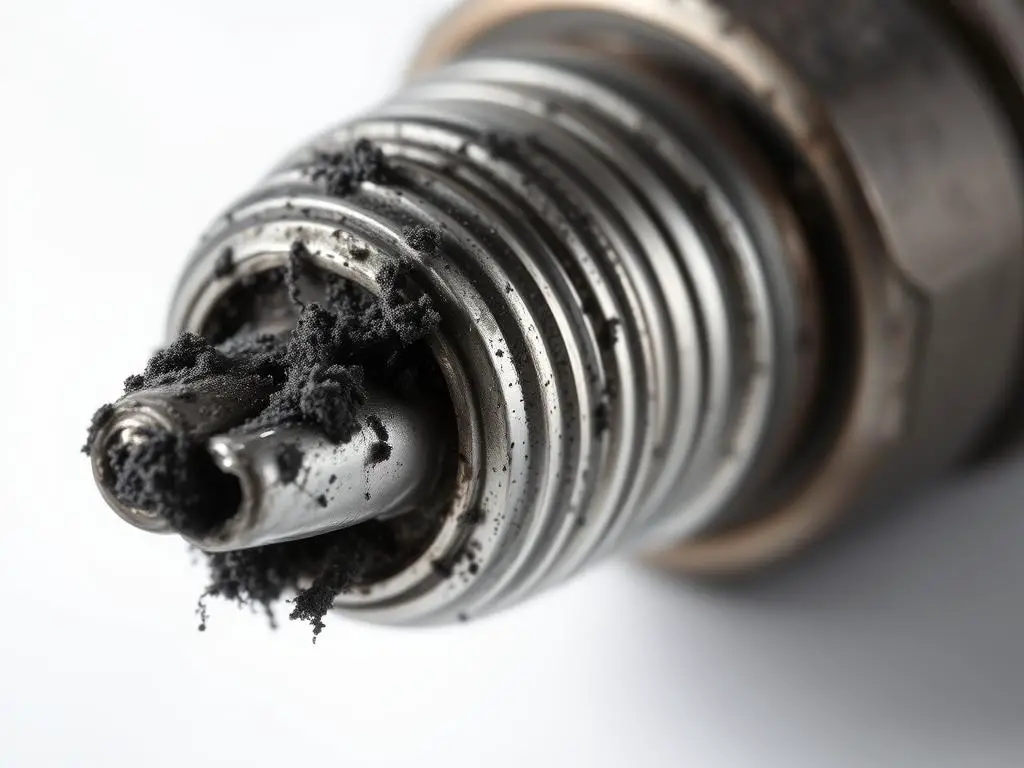
Nothing. Run the tank out. Your engine won't suffer. Your wallet already did, but the motor doesn't care. Premium in a standard outboard just means you paid more for fuel that burned the same way regular would have.
If you're paranoid, check your spark plugs after that tank. They should look light tan to gray, slightly dry. If they're black and sooty, you might have a rich condition unrelated to octane. If they're white and chalky, you might have a lean condition, also unrelated to octane. Normal combustion looks the same on 87 or 93.
The Direct-from-Factory Difference
We stock fuel system parts for every major outboard brand—filters, fuel pumps, injectors, carb kits. When someone calls asking if premium fuel will fix a rough idle, the answer is almost always "no, you need a fuel filter or a carb cleaning." Fuel octane doesn't fix mechanical problems.
We ship these parts at direct-from-factory pricing because we manufacture for OEM brands and use the same tooling for our branded parts. You're getting OEM-spec components without the dealership markup. Whether it's an OEM Yamaha fuel filter or a JLM fuel filter made in the same factory, the part does the same job. The octane you're pumping doesn't matter if the filter is clogged or the fuel pump diaphragm is cracked.
Real Scenario: Fuel Choice and Carbon Buildup

A customer in New Zealand bought a used Suzuki DF140 that had been run exclusively on 98 RON (equivalent to 93 AKI) by the previous owner. He brought it to a local shop for a 100-hour service. Mechanic pulled the heads and found moderate carbon buildup on the intake valves, slightly more than expected for the hours.
Why? The DF140 is designed for 91 RON (87 AKI). The higher-octane fuel burned slightly slower in the combustion chamber, and at the owner's typical cruising RPM (around 3500), combustion wasn't completing before the exhaust valve opened. Unburnt fuel residue contributed to valve deposits.
Switched to 91 RON, ran a tank of fuel system cleaner, and the next service showed cleaner valves. Not a dramatic difference, but proof that more octane isn't always better.
Why Marinas Push Premium (And Why You Don't Need It)

Marinas stock 89 and 93 octane because some customers will pay for it. It's a profit margin decision. Premium fuel costs them slightly more wholesale, but they can charge significantly more retail. A customer who believes "premium equals better" is a customer who'll pay an extra dollar per gallon without questioning it.
That doesn't mean you need it. It means the marina is running a business. Your job is to know what your engine actually requires and buy that.
If the marina only stocks 89 or 91 and your engine needs 87, using 89 once won't hurt anything. Just don't make it a habit if you don't have to.
The Fuel System Components That Actually Matter
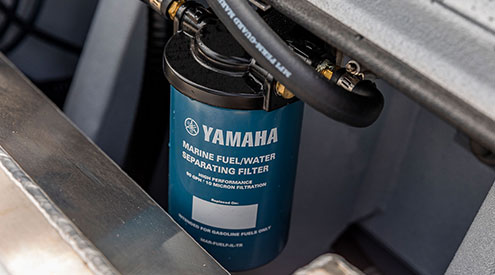
Instead of spending $500 per season on unnecessary octane, spend $50 on the maintenance that prevents fuel system failures:
Fuel filter: Replace it every 100 hours or annually, whichever comes first. A clogged filter starves the engine and causes rough running that no amount of premium fuel will fix. Check our fuel filter selection for options.
Water separator: Drain it after every trip in saltwater or after every few trips in freshwater. Water in fuel causes more problems than octane choice ever will.
Fuel lines: Inspect them annually for cracks, hardening, or bulges, especially if you're running E10. Ethanol eats older rubber fuel lines from the inside out. We see failures around the 5-year mark on non-ethanol-resistant lines.
Fuel pump diaphragm (if applicable): Two-strokes and some four-strokes use a diaphragm-style fuel pump. Ethanol can harden the diaphragm. If your engine cranks but won't start and you're getting no fuel to the carbs or VST, check the pump diaphragm before you blame the fuel octane. Browse our fuel pump kits for replacements.
These are the components that determine whether your engine runs well. Octane is just the number on the pump.
OEM vs. Non-OEM Fuel System Parts
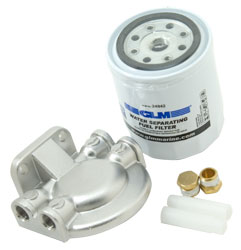
OEM fuel filters and pumps are good parts. They're also marked up 200% to 300% at the dealership. A Yamaha OEM fuel filter might cost $35. A quality non-OEM filter that meets the same spec costs $12.
Some non-OEM parts are junk—wrong thread pitch, poor filter media, plastic housings that crack. But reputable manufacturers like JLM Marine produce parts in the same factories that make OEM components, using the same materials and tolerances. The difference is the box and the price.
We're not asking you to gamble on your fuel system. We're offering you the same part the OEM sells, minus the branding tax. If you're skeptical, buy one of each and compare them side by side. The non-OEM part from a quality supplier will match in every dimension, material, and fitment.
What Happens If You Run Too Low an Octane

If your manual requires 91 and you run 87, you risk knocking under load. Knocking means the fuel-air mixture is igniting before the spark plug fires, usually due to hot spots in the combustion chamber or compression pressure. Sustained knocking can damage pistons, rings, and cylinder walls.
You'll hear it as a rattling or pinging, especially under hard acceleration or at high RPM. If you hear that, back off the throttle immediately and get higher-octane fuel at the next stop.
But again, most outboards don't require premium. If your manual says 87, you're not at risk running 87. You're just at risk of wasting money if you run 93.
Final Word on Premium Fuel for Outboards
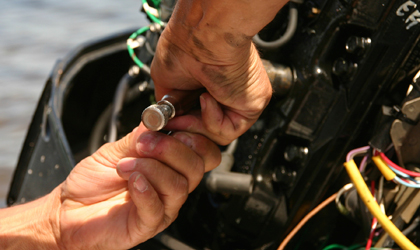
For 95% of outboards, premium gas is a waste of money. Use the octane your manual specifies. If it says 87, buy 87. If it says 91, buy 91. Don't guess. Don't assume higher is better. Match the spec.
Your engine will run the same, last the same, and perform the same on the correct octane, whether that's regular or premium. The only difference is your fuel bill.
If you've been running premium in a standard outboard for years, you didn't hurt anything. You just spent money you didn't need to. Switch to 87 on the next fill and put the savings toward maintenance that actually matters like water pump replacement, fuel filters, or oil changes.
Daily Maintenance Tip
After every trip, check your fuel vent to make sure it's not clogged with dirt or salt. A blocked vent creates a vacuum in the tank that starves the fuel pump, and you'll spend hours troubleshooting a fuel delivery issue that has nothing to do with octane or filters. Takes five seconds to check, saves hours of frustration.
Sources:
- https://www.saltwatersportsman.com/boats/boat-maintenance/all-about-outboard-gasoline/
- https://www.boatingworld.com/question-answer/is-it-necessary-to-use-premium-gasoline-in-a-4-stroke-outboard-engine/
- https://ezfl.com/choosing-the-best-fuel-for-your-boat-what-type-of-fuel-do-boats-use/
- https://jlmmarine.com/blogs/outboard-101/fuel-quality-matters-choosing-the-right-octane-for-your-outboard
- https://boatingmag.com/boats/choosing-the-right-octane-for-your-engine/
- https://www.kbb.com/car-advice/should-you-use-premium-gas/
- https://newsroom.aaa.com/2017/12/dont-fueled-premium-not-always-worth-price/
- https://www.marineenginedigest.com/specialreports/fuelflowchart.htm
- https://www.youtube.com/watch?v=ccHUc3beCfA
- https://www.tradeaboat.com.au/news-reviews/9377-fuel-still-ain-t-fuel
- https://boostane.com/blogs/resources/boat-fuel-guide
- https://docs.nrel.gov/docs/fy12osti/52909.pdf
- https://www.consumerreports.org/cars/fuel-economy-efficiency/why-you-might-not-actually-need-premium-gas-a6382185831/
- https://www.insurancejournal.com/news/midwest/2006/05/16/68401.htm
For more on getting the right parts and maintenance supplies, visit the JLM Marine homepage.
Hi—I’m Jim Walker
I grew up in a Florida boatyard, earning pocket money (and a few scars) by rebuilding outboard carbs before I could drive. That hands-on habit carried me through a Ph.D. in mechanical engineering, where I studied how salt water quietly murders metal.
I spent ten years designing cooling systems for high-horsepower outboards, then joined JLM Marine as CTO. We bench-test every new part in the lab, but I still bolt early prototypes onto my own 23-foot skiff for a weekend shake-down— nothing beats real wake and spray for finding weak spots.
Here on the blog I share the fixes and shortcuts I’ve learned so your engine—and your day on the water—run smooth.

Для владельцев лодок:
Мы надеемся, что следующие ресурсы окажутся полезными для вас в обслуживании и ремонте ваших судовых двигателей:
- Руководство по серийным номерам Mercury
- Руководства пользователя от Mercury
- Официальное руководство по номерам моделей в формате PDF от BRP
- Руководство по серийным номерам Johnson
-
Аксессуары для лодок от JLM Marine
О компании JLM Marine
Основанная в 2002 году, компания JLM Marine зарекомендовала себя как специализированный производитель высококачественных морских деталей, базирующийся в Китае. Наша приверженность совершенству в производстве заслужила нам доверие ведущих мировых морских брендов.
Как прямой поставщик, мы обходим посредников, что позволяет нам предлагать конкурентоспособные цены без ущерба качеству. Такой подход не только поддерживает экономическую эффективность, но и гарантирует, что наши клиенты получают наилучшую ценность напрямую от источника.
Мы рады расширить свое присутствие через розничные каналы, предлагая наш опыт и приверженность качеству непосредственно владельцам и любителям лодок по всему миру.
Распродажа лодочных аксессуаров
- $37.99
$45.99- $37.99
- Unit price
- per
- $34.99
- $34.99
- Unit price
- per
- $128.99
- $128.99
- Unit price
- per

- $25.30
$30.00- $25.30
- Unit price
- per


- $34.99
$41.99- $34.99
- Unit price
- per

- $32.50
$31.00- $32.50
- Unit price
- per

- $139.99
- $139.99
- Unit price
- per


- $45.00
- $45.00
- Unit price
- per

- $28.50
$29.00- $28.50
- Unit price
- per

- $159.99
- $159.99
- Unit price
- per


- $105.00
- $105.00
- Unit price
- per


- $34.99
$41.99- $34.99
- Unit price
- per


- From $68.00
- From $68.00
- Unit price
- per


- $34.99
$41.99- $34.99
- Unit price
- per

- $59.95
$71.00- $59.95
- Unit price
- per

- $59.99
$71.00- $59.99
- Unit price
- per


- $34.99
$41.99- $34.99
- Unit price
- per

- $65.50
$78.00- $65.50
- Unit price
- per

- $67.00
$65.00- $67.00
- Unit price
- per

- $19.99
- $19.99
- Unit price
- per