


Engine Mods for Shallow Water Performance (Tunnel Hulls, etc.)
Look, if you're running tunnel hulls in skinny water, you already know the drill. The boat's half the equation. The real work is in how you set up the motor and what you bolt onto it. I've been wrenching on outboards for two decades, and the same questions come up every time someone buys a tunnel hull: "How high can I jack it?" "Do I need a wing plate?" "Will my prop work?"
Let me walk you through the mods that actually matter.
Jack Plates: The Foundation
Jack plates are non-negotiable if you're serious about shallow water. They let you raise the outboard 6 to 12 inches, which cuts draft and gets the prop up where the tunnel feeds it water. Without a jack plate, you're leaving performance on the table.
Hydraulic models from Bob's Machine or Atlas are the standard. You can adjust height on the fly—motor up for skinny runs, motor down for a clean holeshot. The issue is your engine needs a low-water pickup to handle the raised position. Stock cooling intakes sit too low. If you jack the motor without a low-water pickup, you'll overheat at idle. I've seen guys cook thermostats this way more times than I can count. For detailed steps on replacing a thermostat, you might want to check out our guide on How to Replace the Thermostat on Your Yamaha F225, F250, or F300 4.2L V6 Outboard Motor.
Install a pressure gauge on the dash. When you're jacked up and the gauge drops, you're starving the pump. Lower the motor or you're buying parts.
Trim tabs work with jack plates, not against them. During acceleration, drop the tabs to lift the stern and get on plane fast. Jack plate up. Once you're running, reverse it—tabs up, plate stays where it is. Overdo the tabs and you'll plow the bow. Sportfishing Magazine covers the setup sequence in detail if you need a reference.
Cavitation Plates and Wings

Tunnel hulls move water differently. The channel under the boat funnels flow to the prop, but if the setup's wrong, you get ventilation—prop spins in air instead of water. A cavitation plate or wing fixes that.
The Shaw Wing is common. It mounts under the anti-cavitation plate and redirects tunnel water to the blades. You'll notice cleaner bites in turns and better lift in 6 to 8 inches of water. The downside is minor drag at higher speeds, but it's not enough to hurt top end on most rigs.
If you're running a pod or setback bracket to create a pseudo-tunnel on a jon boat, a wing plate is almost required. Without it, the prop chews air every time you lean into a turn.
Propeller Selection

Standard three-blade props don't cut it on tunnel hulls. You need more blade area to grab water when the motor's jacked high. Four- to six-blade props from companies like Holeshot are built for this.
The extra blades help with holeshots—getting on plane in 3 to 4 seconds instead of 6 or 7. They also handle the thin water column better. I've seen boats plane in 3 to 4 inches with the motor jacked all the way up, running a six-blade and a jack plate. That's with a tunnel hull feeding the prop, obviously. A flat-bottom boat won't do that.
You'll lose a little top speed compared to a three-blade, maybe 2 to 3 MPH, but the tradeoff is worth it if you're idling through oyster beds or sand flats.
Pitch matters. If you're running a 90 HP jet in a tunnel, a 13- or 15-pitch prop keeps RPMs in the sweet spot—around 5500 to 5800 RPM at wide-open throttle. Too much pitch and you bog. Not enough and you scream the engine without speed to show for it. For more insights on prop characteristics, see our article on Comparing Propeller Pitches: Finding the Best Pitch for Your Boat.
Tunnel Tabs and Performance Gains
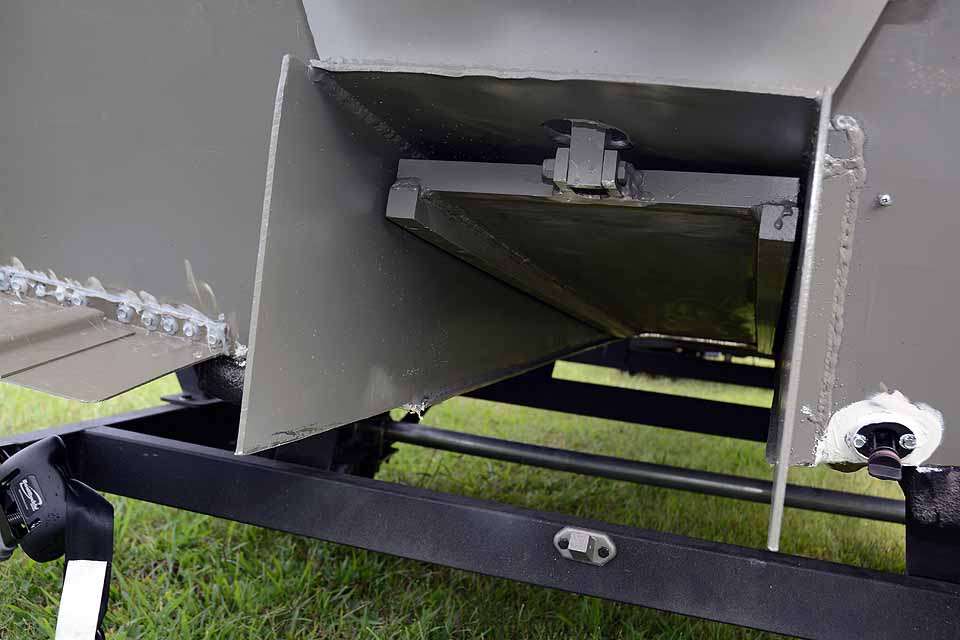
If your boat has a factory tunnel, consider adding tunnel tabs. These are deployable plates that close off the tunnel when you're running in deeper water. Open tunnel plus deep water equals drag and chatter. The tunnel's pulling air when it doesn't need to.
Shallow Sport's "Tunnel Tab" system is a good example. Deploy the tab and you gain around 6 MPH at cruise and nearly double your fuel economy. Testing on a 24-foot Mod V showed mileage going from 1.9 MPG to 3.6 MPG at 35 MPH in deeper water. The tab seals the tunnel, cutting resistance. Video demonstration here.
When you hit the shallows, retract the tab. The tunnel opens back up and feeds the prop. It's a simple add-on that makes the boat more versatile.
Jet Drives vs. Props in Tunnels
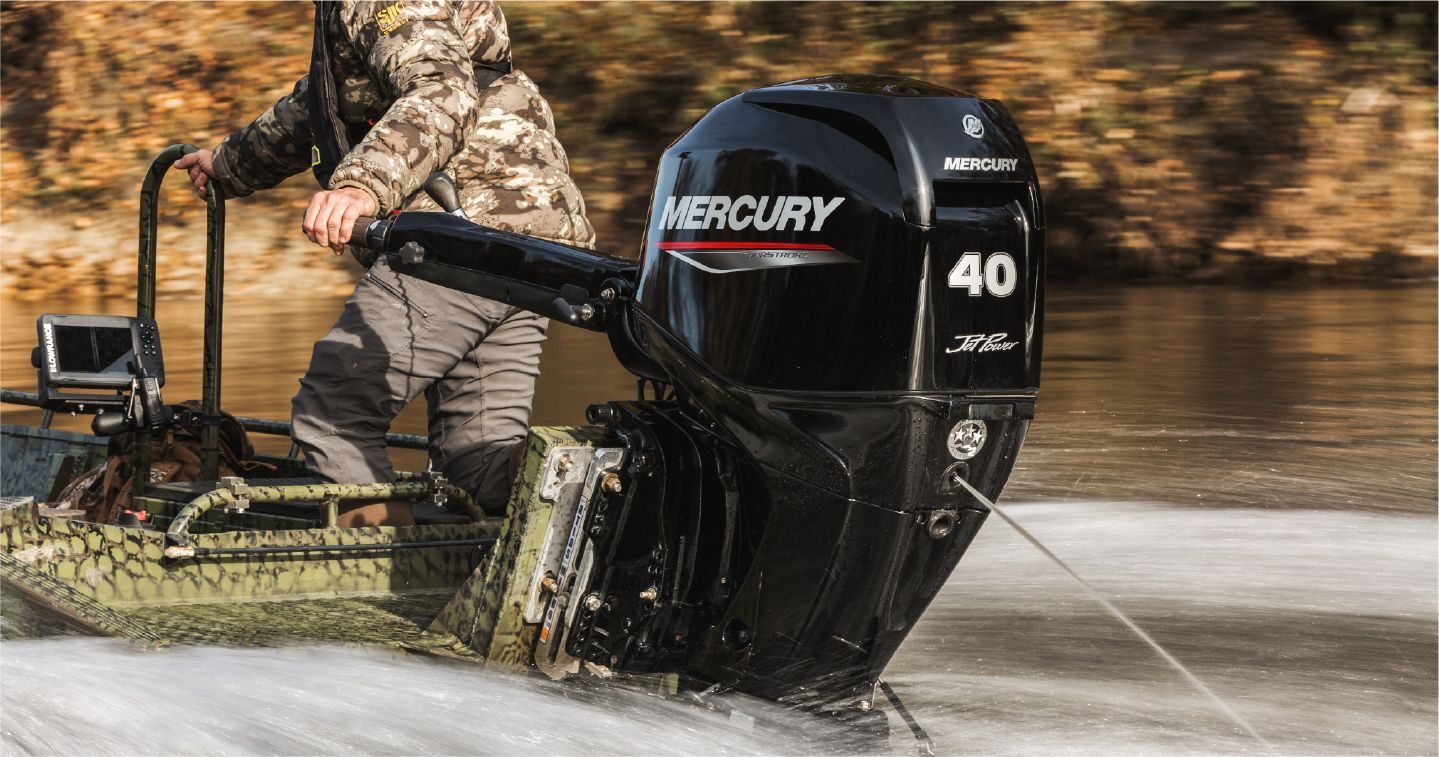
Jets get brought up a lot. They're good for ultra-shallow water—guys run them in 2 inches via ground effect if the hull's set up right. The intake sits inside the tunnel, protected from strikes.
The problem is thrust. A jet outboard loses about 30% efficiency compared to a prop. A 90 HP jet puts out roughly 60 to 65 HP worth of thrust. Top speed drops, fuel burn goes up. I tested a 16-foot tunnel jon with a Mercury 90/65 jet and it topped out at 32 MPH. Swap in a prop setup and that same hull would hit 40 to 42 MPH.
Jets shine in rocky rivers or grass-choked backwaters where a prop would get destroyed. For open flats or bays, a prop with a jack plate is the better call.
If you go jet, install a grate over the intake. Sticks and weeds will jam the impeller otherwise. I've pulled apart jet pumps clogged with hydrilla more times than I care to remember.
Low-Water Pickups and Cooling Mods
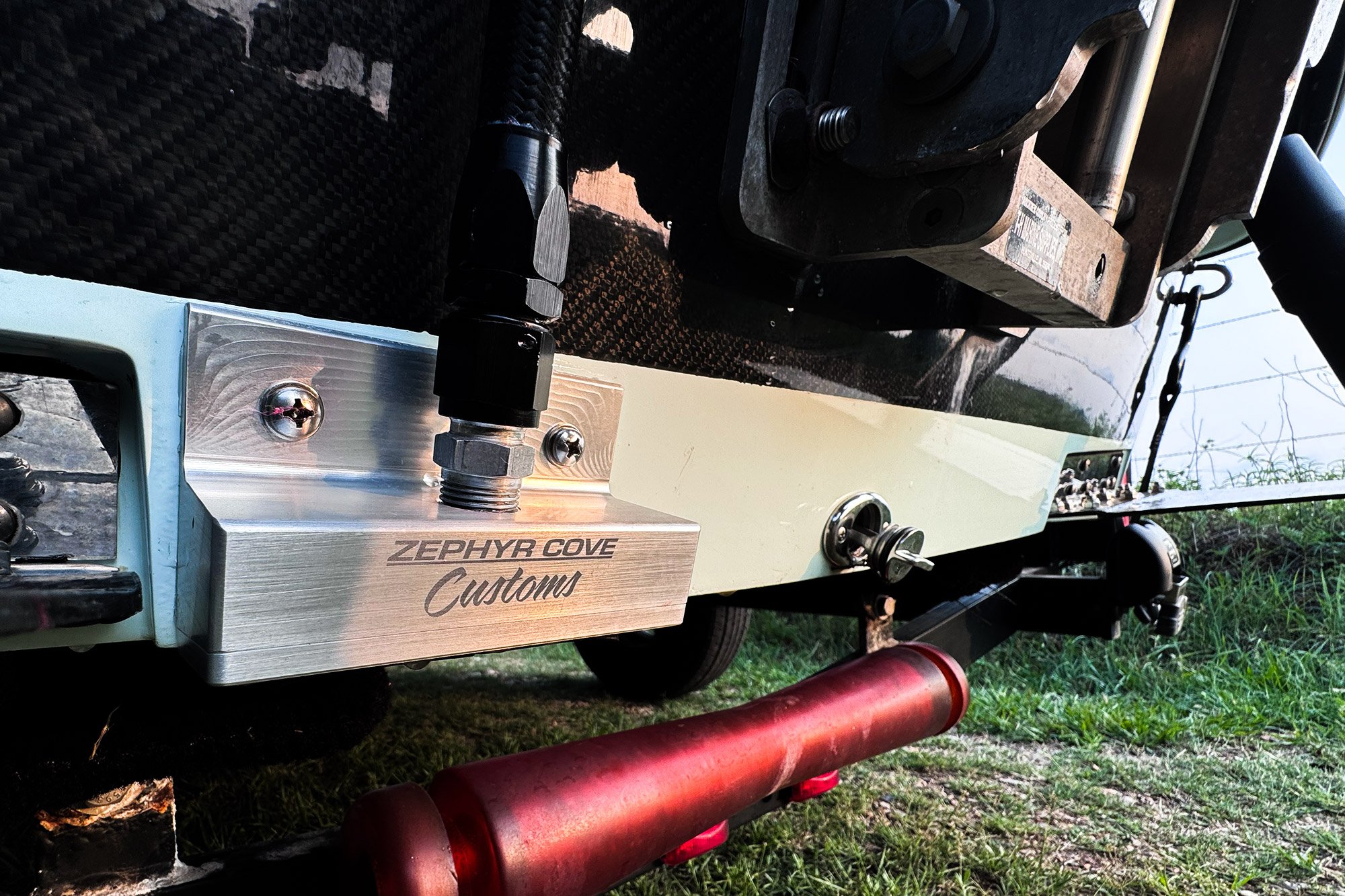
Standard outboards pull cooling water from an intake near the gear case. Jack the motor up and that intake rises above the waterline. No water, no cooling.
Low-water pickup kits relocate the intake to the bullet or lower on the midsection. Brands like Yamaha and Mercury offer OEM versions for specific models. Aftermarket kits exist, but quality varies. Stick with OEM or a reputable supplier—cheap kits use soft hoses that collapse under suction.
Extended cooling cones are another option for high-speed setups. These route water more efficiently at speeds over 50 MPH, preventing cavitation in the pump. If you're running a tunnel hull offshore and pushing 60 to 70 MPH, this mod keeps the engine from cooking. For components and parts needed for cooling system maintenance, be sure to explore our extensive Cooling System collection.
Check the pee stream every time you start the motor. Strong stream means the pump's working. Weak dribble or nothing means air in the system or a clogged intake. Don't ignore it. For tips on unclogging a blocked cooling water intake, visit our guide on Unclogging a Blocked Outboard Cooling Water Intake.
Setback Brackets and Pods

Setback brackets move the motor aft, away from the transom. This shifts weight and changes how water flows under the hull. On a tunnel hull, it can improve the feed to the prop by giving the water more room to channel through the tunnel.
A 4- to 6-inch setback is common. Go too far and you'll mess up the boat's balance—stern sits low, bow rides high, handling gets squirrelly.
Pods are a cheaper alternative for jon boats. You weld or bolt on two sponsons that create a pseudo-tunnel between them. Pair it with a jack plate and you get shallow water capability without buying a dedicated tunnel hull. I've seen guys in Alabama run this setup in creeks where a standard jon would be stuck.
The downside is pods add weight and drag. They're a compromise, not a true tunnel.
Handling and Learning Curve
Tunnel hulls drive differently. The boat wants to porpoise—bouncing on plane—if the weight distribution or trim's off. Tabs and a jack plate give you the tools to dial it in, but it takes time.
At speed, the hull rides on the tunnel and the prop. Hit a turn too hard and the tunnel can ventilate. You'll feel the motor rev up and the boat slow down as the prop loses bite. Ease into turns until you learn where the limit is.
In following seas over 3 feet, tunnels can slap. The hull smacks the wave backs and it's loud. Not dangerous, just annoying. Adjust speed or angle to minimize it.
Real-World Performance Numbers

Testing a 24-foot Shallow Sport Mod V with a 300 HP outboard and tunnel tab showed a 10.5-inch draft. Top speed was around 48 MPH at 5800 RPM with the tab deployed. Fuel economy at 35 MPH cruise was 3.6 MPG. That's with the tunnel closed in deeper water.
A 16-foot Alweld mod-V tunnel with a 40 HP outboard planed in 6 to 8 inches of water. Holeshot time was about 4 seconds with a four-blade prop and the motor jacked halfway.
Smaller bass tunnels with jacked motors and six-blade props plane in 3 to 4 inches. I've seen it on the water—motor all the way up, boat skimming over sand bars you can see through.
Maintenance Implications

Tunnels collect debris. Oyster shells, sticks, and grass get trapped in the channel. After every run in shallow water, flush the tunnel with a hose. If you don't, buildup hardens and restricts flow.
Check the tunnel intake for damage. Aluminum tunnels dent if you hit bottom. A dented tunnel changes how water moves through it, and you'll notice porpoising or ventilation that wasn't there before.
Props take more abuse in shallow setups. Inspect the blades every few trips. Dings and bends kill performance. A bent blade throws the prop out of balance and you'll feel vibration at speed. For insights on diagnosing prop-related issues, see our guide on Propeller Vibrations: Diagnosing Bent Shafts or Blades.
Grease the jack plate monthly if you use it in salt. Hydraulic seals corrode fast. A seized jack plate is a $600 fix you don't want.
After each trip, flush the engine with fresh water for at least 10 minutes. Salt and silt build up in the cooling passages and cause blockages. A clogged passage overheats the engine even with a working pump. For detailed instructions on maintaining your water pump, see our collections for Water Pump and Water Pump Impeller Kit.
For reliable parts and accessories to support these modifications and maintenance tasks, visit the main JLM Marine shop for a wide range of direct-from-factory marine components to keep your tunnel hull running smoothly.