

Best Marine Greases and Lubes for Your Outboard
- Why Marine Grease Isn't Optional
- What Actually Matters in Marine Grease
- Grease Types and Where They Work
- Where to Grease Your Outboard and Trailer
- How to Apply Grease Without Making a Mess
- Never Mix Grease Types
- Tested Grease Products I Trust
- Critical Lubrication Points You Can't Skip
- Diagnostic: What Bad Grease Looks Like
- OEM vs. Aftermarket Grease
- Quick Troubleshooting for Blocked Fittings
- Shopping List for Grease Maintenance
- The Marine Tax: When You Don't Need Premium Grease

If you're hearing weird noises from your outboard or trailer, or you're prepping for the season, you need the right grease. Not the crusty generic stuff from your garage shelf—actual marine grease that handles salt, water, and heat without breaking down. I've rebuilt enough seized lower units and crumbled trailer bearings to know that using the wrong lube costs you way more than buying the right stuff upfront. The biggest issue I see is people grabbing automotive grease and wondering why their prop shaft won't come off three months later. For reliable maintenance parts, always ensure you're sourcing quality products like those available at JLM Marine.
Why Marine Grease Isn't Optional
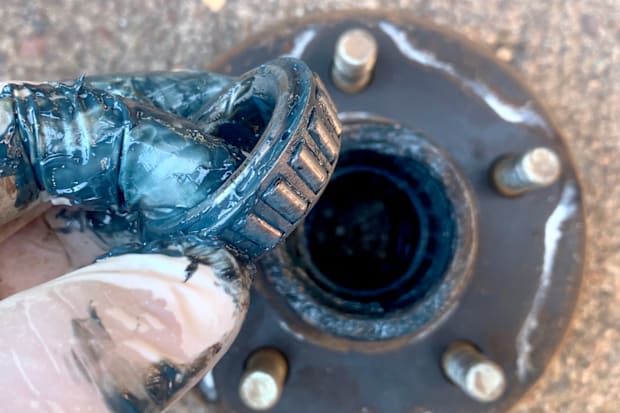
Your boat sits in water. Salt or fresh, it doesn't matter—water kills regular grease fast. I pulled apart a trailer hub last month where the owner used generic lithium grease. Fifty miles down the highway, it turned into a watery sludge and destroyed the races. The bearing cages were black, gritty, and the whole assembly had to be scrapped.
Marine grease resists washout and fights corrosion. Automotive grease emulsifies into a milky mess when it hits water, leaving metal exposed to rust and friction. I've seen outboard tilt tubes seize because someone thought all grease was the same. It's not. For detailed guides on outboard care, check out resources on avoiding common DIY maintenance mistakes.
What Actually Matters in Marine Grease
Water Resistance
Your grease has to stay on the metal even when submerged or constantly splashed. Water washout rate is the key spec here—it's tested under ASTM D1264 standards. Generic grease can lose over 10% of its mass to water in the test. A proper marine grease loses under 3%. That difference is the gap between a protected bearing and a rusted-out failure.
Some greases feel sticky out of the tube but turn to soup underwater within minutes. I've watched it happen on prop shafts where a "tacky" grease washed off before the boat even left the ramp. Real water resistance comes from the base oil and thickener chemistry, not how it feels in your hand.
Temperature Range and Oxidation Resistance
Outboards run hot, especially at higher RPMs. Trailer wheel bearings can hit serious temperatures on long highway hauls, particularly with any braking. Your grease needs a high dropping point—the temperature where it loses structure and runs off. For wheel bearings, you want at least 500°F because braking heat stacks on top of friction heat.
Oxidation resistance is separate but just as critical. A grease that resists washout but breaks down from heat and air exposure will turn into sludge and acids that eat your components. I've drained lower units where old grease had turned into a hard, clay-like substance that blocked fittings entirely.
Grease Types and Where They Work
Lithium Complex Grease
This is your standard marine workhorse. Quicksilver 2-4-C Marine Grease is a solid example—I use it on throttle cables, steering linkages, and tilt tubes. It's got decent water resistance and won't gum up in cold weather, which matters if you're launching early spring. It's affordable, widely available, and handles general lubrication points without issue.
But for serious applications—trailer bearings in saltwater, prop shafts on commercial rigs—lithium complex isn't always enough.
Calcium Sulfonate Complex Grease
This is the premium choice for harsh conditions. The thickener structure in calcium sulfonate grease makes it extremely resistant to washout and provides top-tier corrosion protection. Plews & Edelmann LubriMatic Marine Grease is a calcium sulfonate product, and I've seen it handle constant saltwater immersion without breaking down. Dropping points are high—often over 550°F—so it stays put on hot bearings.
According to Practical Sailor mechanics, "Calcium sulfonate grease that's the goal… it's what big industries use… that's what you want to see on the label" for winches, steering cables, and outboard fittings in harsh marine settings. Lithium grease "drops off much faster needs to be replaced much more often."
High-Temperature Grease for Extreme Duty
Some spots demand even more heat resistance. Stern drives, components near exhaust systems, or heavily loaded bearings need grease that won't break down under sustained high temps. Quicksilver High Performance Extreme Grease is formulated for this. I grab it when I'm working on anything that runs close to exhaust or sees extended high-RPM use.
Synthetic Marine Grease
Synthetic formulations like Green Grease 203 Synthetic Waterproof Grease cost more upfront but extend service intervals and perform across wider temperature ranges. I've used synthetics in high-stress applications where reliability is critical—commercial boats, tournament rigs—and the reduced need for frequent reapplication makes them cost-effective over time.
Where to Grease Your Outboard and Trailer
Outboard Motor Fittings
Look for Zerk fittings on your tilt tubes, swivel brackets, steering masts, and sometimes trim rams. These are the pivot points that let you steer and tilt the engine. Yamalube Marine Grease is designed specifically for Yamaha outboards, offering water resistance and adhesion under pressure and heat, plus it inhibits barnacle growth.
Shop Note: I use Quicksilver 2-4-C exclusively for throttle linkages because it doesn't gum up in cold weather and keeps the cable action smooth.
Prop Shaft Splines
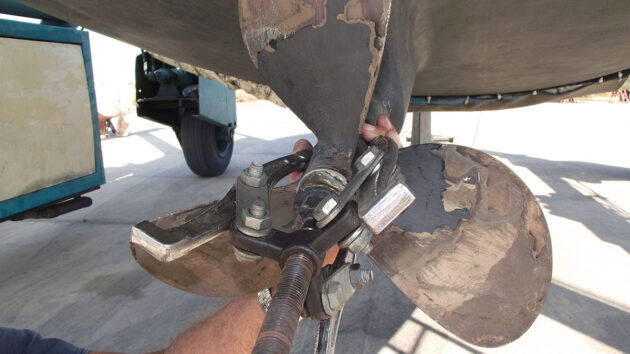
Apply a light coat of grease where the prop slides onto the shaft. This prevents the prop from seizing to the shaft, which makes removal way easier down the line. Don't pack it full here—excess grease attracts grit and can prevent the prop from seating fully against the thrust washer, leading to vibration. Wipe off any squeeze-out after you torque the prop nut.
Trailer Wheel Bearings
This is where failures happen most. Bearings need to handle highway heat and water immersion at the ramp. I lean hard toward calcium sulfonate complex greases here. Star Brite Trailer Wheel Bearing Marine Grease is a popular choice because it resists washout and handles the heat. Pack bearings annually at minimum, or more often if you're launching in saltwater frequently. Learn more about trailer wheel bearing care and replacement.
Sterndrive Components
Gimbal housings, trim rams, and steering systems on inboard/outboards have similar Zerk fittings. These need regular greasing to prevent binding and corrosion.
Remote Control Linkages and Trim Rods
Cables connecting your throttle and shifter to the engine need smooth operation. Grease the connection points to ensure precise control. Trim rods—hydraulic rams that control tilt and trim—should have a protective film of grease on any exposed rod surfaces to prevent pitting and corrosion.
How to Apply Grease Without Making a Mess
Wipe away old, dirty grease before you start. If you're using a grease gun, make sure the tip is clean—purge a small amount from the gun before connecting it to the Zerk fitting to clear out any debris. Connect the gun, apply steady pressure, and pump until you see fresh grease emerge from a seal or joint. That tells you the cavity is full.
Don't over-grease. Pumping too much can force seals out or create a mess where dirt gets churned into the lubricant. For prop shaft splines, apply a thin coat by hand and wipe off the excess.
Lube-Shuttle cartridges for grease guns are a solid innovation. They're cleaner and more precise than open tubs, and they minimize contamination when you're working in tight spaces or dealing with multiple lube points.
Never Mix Grease Types
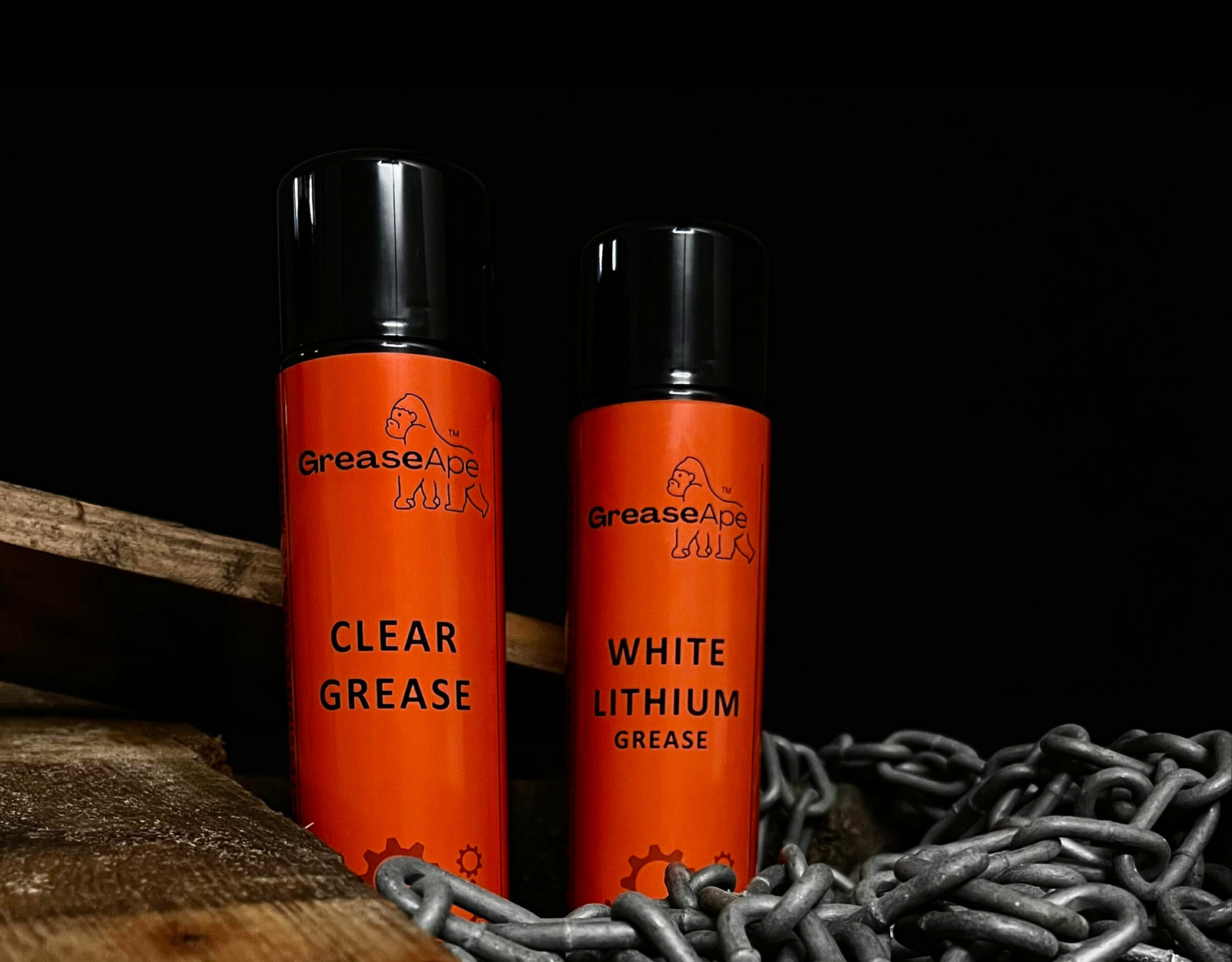
Mixing greases—especially different thickener types like lithium and calcium sulfonate—causes chemical incompatibility. Instead of working together, they break down and lose lubricating properties. I've seen mixed grease turn into a hard, clay-like substance that blocked Zerk fittings entirely.
Compatibility Guide:
- Lithium Complex is generally incompatible with Calcium Sulfonate Complex
- Aluminum Complex doesn't mix well with Lithium or Calcium types
- Polyurea-based greases are incompatible with most conventional greases
When switching grease types, clean out the old grease as thoroughly as possible. If you don't know what's currently in your trailer bearings, purge the old grease entirely until the new color appears.
Tested Grease Products I Trust

After tearing down hundreds of outboards and servicing trailers in saltwater and freshwater, these are the products I reach for.
-
Quicksilver 2-4-C Marine Grease: Lithium-based workhorse. Good water resistance, versatile for general lubrication on tilt tubes, steering cables, throttle linkages. It's reliable and affordable. Best for: General outboard maintenance and steering systems.
-
Quicksilver High Performance Extreme Grease: Formulated for high temps and extreme pressure. Use it on stern drive components or anything near exhaust. Best for: High-heat applications and stern drives.
-
AirTec SG-145 SeaGuard Marine Grade Grease: Calcium sulfonate complex in a mess-free cartridge. Exceptional water resistance and corrosion protection. I use this on prop shafts and heavily exposed components in saltwater. Best for: Saltwater prop shafts and exposed fittings.
-
Star Brite Trailer Wheel Bearing Marine Grease: Handles both friction heat and water immersion. Solid protection against washout and corrosion for trailer bearings. Best for: Trailer wheel bearings in any environment.
-
Lucas Oil Marine Grease (LUCA10320): Heavy-duty lithium complex marine grease with a 540°F dropping point and strong water washout resistance. Popular for outboards and trailer bearings. Best for: High-speed trailers and general outboard fittings.
-
Sta-Lube SL3121 Water-Resistant Marine Grease: Tried-and-true option for general lubrication points. Reliable protection against the elements. Best for: Routine maintenance on freshwater boats.
-
WD-40 Specialist Marine-Grade Grease: Decent for general lubrication with water resistance in mind. Suitable for common fittings. Best for: Light-duty marine applications.
-
Yamalube Marine Grease: Engineered for Yamaha outboards. Good water resistance, adhesion, and inhibits barnacle growth. If you're running Yamaha, stick with their product line. Best for: Yamaha outboard owners.
-
Liquid Wrench GR015 Marine Grease: Dependable lithium complex marine grease for various applications. Solid all-around choice. Best for: General marine maintenance.
-
Green Grease 203 Synthetic Waterproof Grease: Premium synthetic with exceptional temperature range and top-tier water resistance. Best for: Demanding applications and extended service intervals.
-
Plews & Edelmann LubriMatic 11404 Marine Grease: Calcium sulfonate complex with superior water resistance and high-temperature performance. Excellent for trailer bearings and heavily exposed outboard components. Best for: Saltwater trailer bearings.
Critical Lubrication Points You Can't Skip

Outboard Zerk fittings should be greased every 100 hours of operation or annually, whichever comes first. In saltwater, lean toward more frequent service—every 50-75 hours isn't overkill. Trailer wheel bearings need inspection and repacking annually at minimum, or more often if you're launching and retrieving in saltwater or hauling long distances.
Consult your owner's manual for manufacturer-specific intervals, but don't wait for the manual to tell you something's wrong. If a fitting won't take grease, you might have a blocked Zerk. Use a heat gun or penetrant to clear it—forcing grease into a blocked fitting can damage seals. For more on troubleshooting mechanical problems, see our guide on outboard goes into gear but won’t move.
Diagnostic: What Bad Grease Looks Like

When you purge old grease from a fitting, look at what comes out:
- Milkshake consistency: Water intrusion. The grease has emulsified and isn't protecting anything.
- Black and gritty: Metal wear. Particles mean components are grinding against each other.
- Hard, clay-like substance: Oxidation or incompatible grease mixing. This needs to be cleaned out entirely.
- Thin and runny: Heat breakdown. The grease has lost its structure.
If you see any of these, clean the system thoroughly and repack with fresh grease.
OEM vs. Aftermarket Grease
OEM greases like Quicksilver, Yamalube, or Evinrude are reliable and meet factory specs. You're paying a premium for the brand name on the tube, but you know it's compatible with your warranty requirements.
Cheap aftermarket grease from random sellers is a gamble. I've seen $10 tubs with grease that's too hard, won't stick, or washes out in minutes. It's not worth the headache of tearing your leg off again next weekend.
High-quality aftermarket options exist. Some factories that manufacture for OEM brands use excess capacity to produce non-OEM items, and these are often similarly high quality. Reputable brands like Lucas, Star Brite, and LubriMatic offer factory-spec quality without dealership markup. You get proper fitment, performance, and longevity without burning cash unnecessarily.
For genuine parts to match your marine engine, consider the JLM Marine parts collection to ensure compatibility and quality.
Quick Troubleshooting for Blocked Fittings
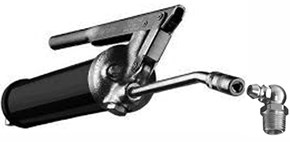
If a Zerk fitting won't accept grease, don't force it. You can damage the seal or blow out the fitting entirely. Here's the fix:
- Clean the Zerk with a wire brush and solvent.
- Apply penetrant and let it sit for 10-15 minutes.
- Gently tap the fitting with a small hammer to break up any internal blockage.
- Try the grease gun again with light pressure.
- If it still won't budge, replace the Zerk fitting.
Shopping List for Grease Maintenance
- Grease gun (manual or pneumatic)
- Flex hose for hard-to-reach fittings
- Clean rags
- Solvent (for cleaning old grease)
- Grease cartridges or tub (your preferred type)
- Replacement Zerk fittings (various sizes)
The Marine Tax: When You Don't Need Premium Grease
Not every point on your boat needs expensive marine grease. Internal cabin hinges, latches in dry storage compartments, or windshield wiper pivots don't see water exposure. A good general-purpose grease works fine for these. Save your premium marine grease for the critical points: bearings, prop shafts, steering components, and anything that touches water.
After greasing your trailer bearings, spin the wheel and check for smooth rotation with no binding or rough spots—that tells you the bearings are seated and properly lubricated.
For more marine maintenance advice spanning parts, troubleshooting, and repairs, visit the JLM Marine home page.
Hi—I’m Jim Walker
I grew up in a Florida boatyard, earning pocket money (and a few scars) by rebuilding outboard carbs before I could drive. That hands-on habit carried me through a Ph.D. in mechanical engineering, where I studied how salt water quietly murders metal.
I spent ten years designing cooling systems for high-horsepower outboards, then joined JLM Marine as CTO. We bench-test every new part in the lab, but I still bolt early prototypes onto my own 23-foot skiff for a weekend shake-down— nothing beats real wake and spray for finding weak spots.
Here on the blog I share the fixes and shortcuts I’ve learned so your engine—and your day on the water—run smooth.

Для владельцев лодок:
Мы надеемся, что следующие ресурсы окажутся полезными для вас в обслуживании и ремонте ваших судовых двигателей:
- Руководство по серийным номерам Mercury
- Руководства пользователя от Mercury
- Официальное руководство по номерам моделей в формате PDF от BRP
- Руководство по серийным номерам Johnson
-
Аксессуары для лодок от JLM Marine
О компании JLM Marine
Основанная в 2002 году, компания JLM Marine зарекомендовала себя как специализированный производитель высококачественных морских деталей, базирующийся в Китае. Наша приверженность совершенству в производстве заслужила нам доверие ведущих мировых морских брендов.
Как прямой поставщик, мы обходим посредников, что позволяет нам предлагать конкурентоспособные цены без ущерба качеству. Такой подход не только поддерживает экономическую эффективность, но и гарантирует, что наши клиенты получают наилучшую ценность напрямую от источника.
Мы рады расширить свое присутствие через розничные каналы, предлагая наш опыт и приверженность качеству непосредственно владельцам и любителям лодок по всему миру.
Распродажа лодочных аксессуаров
- $54.00
- $54.00
- Unit price
- per
- $38.50
- $38.50
- Unit price
- per
- From $39.13
$45.50- From $39.13
- Unit price
- per
- $53.50
- $53.50
- Unit price
- per
- From $54.00
- From $54.00
- Unit price
- per
- $34.50
- $34.50
- Unit price
- per

- $34.50
- $34.50
- Unit price
- per
- $54.00
- $54.00
- Unit price
- per
- $23.50
- $23.50
- Unit price
- per
-
Red
-
Blue
- $54.00
- $54.00
- Unit price
- per
- $45.00
- $45.00
- Unit price
- per
- $32.00
- $32.00
- Unit price
- per
- $40.00
- $40.00
- Unit price
- per
- $22.80
- $22.80
- Unit price
- per
-
Red
-
Blue

- $31.50
- $31.50
- Unit price
- per
- $22.80
- $22.80
- Unit price
- per
-
Red
-
Blue


- $59.00
- $59.00
- Unit price
- per

- $22.80
$27.00- $22.80
- Unit price
- per
- $54.00
- $54.00
- Unit price
- per

- $32.00
- $32.00
- Unit price
- per