



Digital Gauges vs. Analog: Upgrading Your Boat’s Dashboard
- Why Analog Still Shows Up on Dashboards
- What Digital Gauges Actually Do Better
- Alarms and Networked Monitoring
- What You Need to Check Before You Order
- Hybrid Gauges: Analog Look, Digital Guts
- Installation Difficulty: Analog vs. Digital
- Sender Compatibility: The Part Everyone Forgets
- What Digital Costs vs. Analog
- Sealing and Weatherproofing the Install
- Common Upgrade Mistakes
- Parts Quality: OEM vs. Aftermarket

If you're sitting in front of a dashboard with eight different analog gauges and squinting to see if your oil pressure just dropped or if it's just the glare, you've probably thought about going digital. After twenty years working on outboards, I've watched this transition happen across hundreds of boats. Analog has its place, but digital solves problems that used to mean pulling apart engine covers mid-trip to confirm what a needle might be telling you.
Why Analog Still Shows Up on Dashboards

Analog gauges work off mechanical linkages—senders convert pressure or temperature into needle movement on a dial. The biggest reason we still see them is simple: they don't need power. If your electrical system dies, that oil pressure gauge still tells you whether you're about to seize a powerhead. Needle movement is instant and visible—you spot a drop in fuel pressure or a spike in temperature without staring at numbers.
But they wear out. The mechanical sender units corrode in saltwater, the galvanometer inside the gauge loses calibration, and you end up with a bouncing needle or a reading that's off by 10 PSI. Parallax error is real too—if you're standing off to the side of the helm, that needle might look like it's sitting at 40 PSI when it's actually at 35. Not a huge deal on a lake, but if you're running hard offshore and need exact data, that margin matters.
Then there's dash space. A single-engine rig with full monitoring—oil pressure, water temp, voltage, fuel, trim, speed, depth—requires seven to ten separate gauges. That's a lot of holes to cut, a lot of wiring to run, and a cluttered sight picture when you're trying to scan everything at a glance.
What Digital Gauges Actually Do Better
Digital displays pull data from engine sensors and show it on a screen. You've got two main types: CANbus-networked gauges that tie into your engine's ECU, and standalone multifunction displays that are plug-and-play with preset layouts. Both offer better lighting, higher precision, and the ability to consolidate ten gauges into one screen.
Readability is the first thing you notice. Modern bonded LCD screens don't fog, they're bright enough to read in direct sun, and the backlighting doesn't create the same glare as a chrome bezel with a needle. You can customize what shows up—if you don't care about trim angle but need to watch fuel burn rate per hour, you configure it that way.
Fewer moving parts means fewer failures. There's no sender arm to corrode, no galvanometer to drift. Most digital units use aluminum or stainless housings, and because they're solid-state, vibration doesn't kill them the way it does a mechanical gauge over time.
The data logging is where digital pulls ahead for diagnostics. These systems record min/max values, track spikes, and flag when it's time for your next oil change based on engine hours. I've used logged data to prove to a customer that his engine hit 210°F three weeks ago, which explained why his head gasket blew even though "everything looked fine" at the time.
Alarms and Networked Monitoring
This is the part analog can't touch. You can set specific alarm thresholds—if oil pressure drops below 25 PSI or coolant temp exceeds 180°F, you get both a visual alert and an audible warning. That early warning has saved more engines than I can count. We had a guy last year whose low-pressure alarm went off because his oil pump was starting to fail—he shut down before it grenaded, saved himself a $4,000 rebuild.
Digital displays can also be networked via NMEA 2000. That means you can have one display at the helm, another in the cabin, and a third on a handheld tablet, all showing the same live engine data. If you've got crew managing lines or monitoring systems from different parts of the boat, everyone sees the same numbers at the same time.
Data recording also tracks service intervals—the system will flag you when you've hit 100 hours since your last impeller change or 50 hours since your last gearcase oil swap. It's a built-in maintenance log that doesn't rely on you remembering to write it down.
What You Need to Check Before You Order
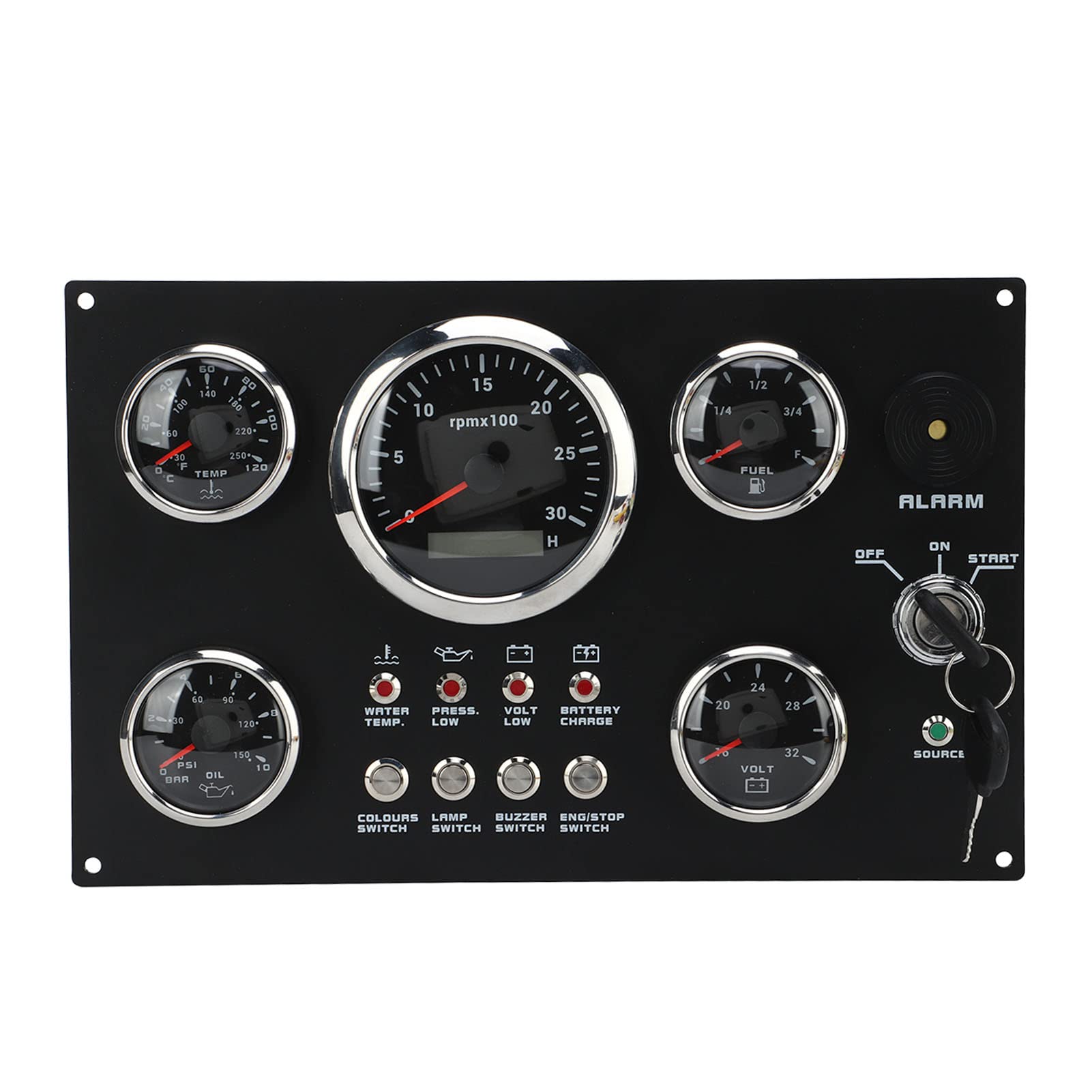
First, measure your existing dash cutouts. You need diameter and depth—some older consoles are shallow, and a new multifunction display might not clear the back panel. Newer screens are usually larger than the old round gauges, so if you've got a tight cluster, you might need to enlarge the hole or use a bezel adapter kit. Those kits let you mount a rectangular digital display in a round hole without cutting fiberglass, which is a huge timesaver.
Second, figure out what network your engine uses. If you've got a newer Mercury with SmartCraft or a Yamaha with Command Link, you need a display that talks to that protocol. Older mechanical engines don't have CANbus at all—they use resistive senders for fuel and oil pressure. Check your engine manual and wiring schematic to confirm what type of signal your senders put out (typically 0-90 ohms for fuel, 0-80 PSI for oil).
If you've already got a GPS, chart plotter, fish finder, or depth sounder on an NMEA 2000 backbone, your new gauges need to integrate with that network. Don't assume compatibility—verify the part number supports NMEA 2000 and that it's listed as compatible with your existing equipment.
Third, check your electrical panel. Digital displays pull more power than analog gauges—usually 0.5 to 1.5 amps depending on screen size. Make sure your instrument circuit can handle the load, and plan to run a dedicated fuse if your existing wiring is marginal. Most installs need 12V DC with a clean ground; if your ground bus is corroded, fix that first or you'll get flickering or ghost errors.
Hybrid Gauges: Analog Look, Digital Guts
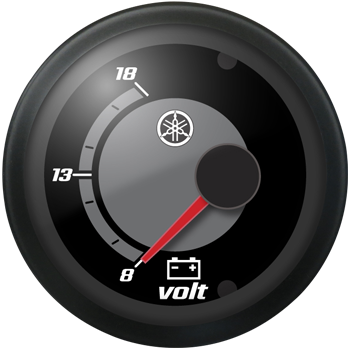
If you want the classic needle-and-dial appearance but need the accuracy of digital, hybrid gauges exist. These use stepper motors to drive the needle based on a digital signal, so you get the familiar look without the calibration drift of a purely mechanical gauge.
Hybrids can accept input from both CANbus networks and old-school analog senders, which makes them ideal for older mechanical engines that don't have ECU outputs. If you're restoring a classic boat and don't want to hack up the original dash, hybrid gauges let you keep the period-correct aesthetic while getting better data. They also work if your engine uses a mix of digital and analog sensors—common on mid-2000s outboards that were transitioning between the two.
The downside is cost—hybrid gauges typically run 30-50% more than a standard digital display because you're paying for the stepper motor mechanism and the custom bezel work.
Installation Difficulty: Analog vs. Digital

Swapping analog gauges is straightforward if you're replacing like-for-like. Pull the old gauge, match the sender wire to the new gauge terminal, connect power and ground, done. It's a 20-minute job per gauge if the senders are already installed.
Going from analog to digital is more involved. If you're installing a CANbus display, you need to tap into the engine's network—usually a 5-pin Deutsch connector or an NMEA 2000 backbone drop. That requires a T-connector, termination resistors on both ends of the backbone, and proper wire routing to avoid interference. Budget 4-6 hours for a clean single-engine install if you're doing it yourself.
If your engine is older and only has analog senders, you'll need an analog-to-digital converter module. These boxes take the resistive signal from your fuel sender or oil pressure sender and convert it to a digital output the display can read. It adds another failure point, but it's the only way to get digital readouts on a mechanical engine without replacing every sender.
For the physical mounting, you'll need a hole saw if you're cutting a new opening, marine-grade silicone or a gasket to seal the bezel, and heat-shrink butt connectors for the wiring (never use crimp connectors without heat shrink in a marine environment—they corrode). If you're pulling old gauges, you'll also need a socket set to remove the bezel nuts from behind the dash.
Sender Compatibility: The Part Everyone Forgets
This is where a lot of DIY upgrades go wrong. Your new digital gauge might expect a 240-ohm fuel sender, but your tank has a 33-ohm sender. The gauge will read full when you're empty, or vice versa. Always verify sender resistance range before you buy—it's listed in the gauge specs and your engine manual.
Oil pressure senders are usually 0-80 PSI or 0-100 PSI, but some older engines use a simple on/off pressure switch instead of a variable sender. If that's the case, you'll need to replace the switch with a proper variable sender to get a digital reading.
Temperature senders vary too. Most are 250-30 ohm or 450-50 ohm, but the curve matters—GM-style senders use a different resistance curve than VDO-style senders. If you mix them, your temp reading will be off by 20-30 degrees even though the sender is technically "working."
What Digital Costs vs. Analog
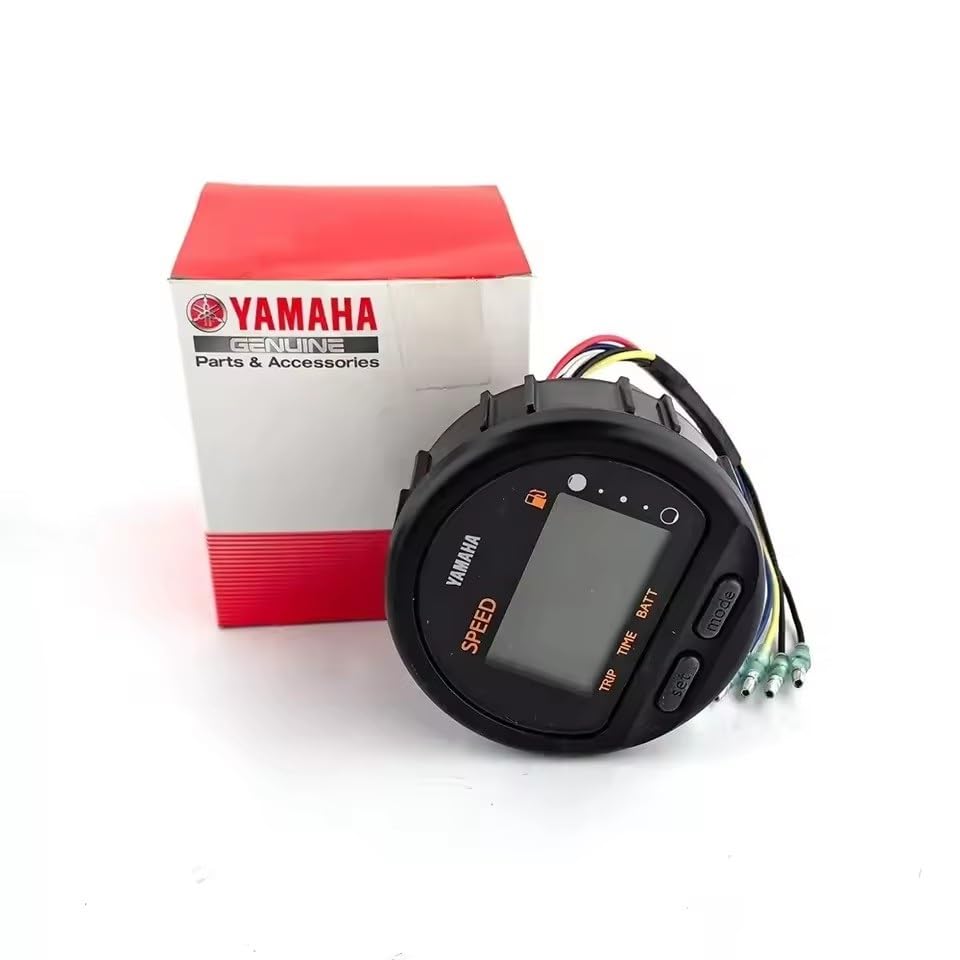
A full analog refresh—replacing seven gauges with new OEM units—runs $800-$1,200 depending on brand. That's $80-$150 per gauge, plus senders if yours are shot.
A single multifunction digital display that replaces all seven gauges runs $600-$1,500 depending on screen size and features. Add $200-$400 if you need new senders or a converter module for an older engine. So you're looking at $800-$1,900 total for a digital conversion.
Factor in labor if you're paying a shop—analog installs are usually $300-$500 for the full set, digital installs run $500-$800 because of the network integration and calibration. Net cost difference is minimal if you're doing it yourself, but digital wins on long-term durability because there's less to replace over time.
Sealing and Weatherproofing the Install

Once the gauge is mounted, the back of the dash needs to be sealed. If you're using a bezel adapter, the adapter usually has a gasket or O-ring—don't skip it. If you're cutting a new hole, run a bead of marine silicone around the back edge of the bezel before you tighten it down. Wipe off the excess, let it cure for 24 hours.
For the wiring, use marine heat-shrink terminals on every connection. Standard crimp connectors will corrode in six months. Route the wiring away from bilge pumps, VHF antennas, and other sources of electrical interference—CANbus networks are sensitive to noise, and you'll get random errors if the wiring runs next to a high-current circuit.
If your dash is exposed to spray, consider adding a clear acrylic shield over the display. Digital screens can handle moisture, but saltwater intrusion through the bezel seal will kill the electronics. We've seen screens die because the owner power-washed the console and blew water past the gasket.
Common Upgrade Mistakes
Biggest one: buying a gauge with the wrong ohm range for your sender. Second biggest: not checking dashboard depth before ordering a flush-mount display—some units are 4 inches deep and won't clear a shallow console. Third: assuming a "universal" digital gauge will work with your CANbus engine without verifying the protocol.
Other mistakes: not using a dedicated ground wire (sharing grounds with other accessories causes voltage drop and erratic readings), not terminating the NMEA 2000 backbone properly (you'll get intermittent dropouts), and not calibrating the fuel gauge after install (it'll read wrong until you run the tank empty and set the empty point).
Parts Quality: OEM vs. Aftermarket
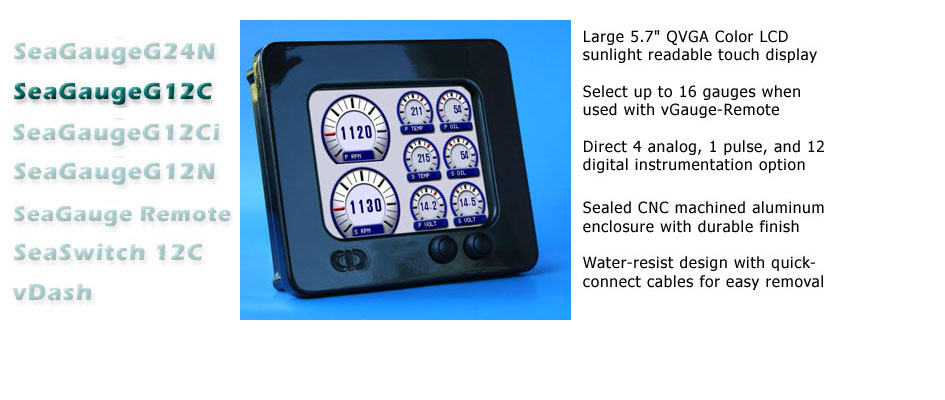
OEM gauges are good, but you're paying a premium for the brand name on the bezel. A Yamaha or Mercury digital display is $1,200-$1,500, and half of that is markup.
Cheap aftermarket gauges—$50 no-name units from random sellers—are garbage. The screens wash out in sunlight, the senders use hard rubber seals that leak, and the calibration drifts after a few months. You'll spend more time troubleshooting than you save on the purchase price.
The middle ground is reputable aftermarket like JLM Marine. Non-OEM quality ranges from low to high; some factories that manufacture for OEM brands use excess capacity to produce non-OEM items, and these parts are often of similarly high quality. You get factory-spec fitment, proper sender resistance ranges, and displays built to the same environmental ratings (IP67 waterproofing, UV-resistant bezels) without the dealership markup. We control the manufacturing and ship direct from Hebron, Kentucky, worldwide, so you're not paying a distributor chain.
We matched a customer in Sydney with an Outback engine sensor last year by using the engine serial number prefix to identify the correct sender type, got it to him in under ten days, saved him from a month of downtime waiting on OEM parts. That's the advantage of factory-direct sourcing—we know the cross-references and we stock the hard-to-find stuff. See our full range of boat accessories and parts at JLM Marine for reliable options.
Free worldwide shipping on all orders, and the quality is there because we're not cutting corners to hit a $40 price point.
Pro tip: When you pull your oil pressure sender for replacement, put a dab of anti-seize on the threads before you install the new one—saltwater will lock it in place otherwise, and you'll snap the fitting next time you need to pull it.
For more on high-quality marine parts and free shipping, visit JLM Marine.
About JLM Marine
Founded in 2002, JLM Marine has established itself as a dedicated manufacturer of high-quality marine parts, based in China. Our commitment to excellence in manufacturing has earned us the trust of top marine brands globally.
As a direct supplier, we bypass intermediaries, which allows us to offer competitive prices without compromising on quality. This approach not only supports cost-efficiency but also ensures that our customers receive the best value directly from the source.
We are excited to expand our reach through retail channels, bringing our expertise and commitment to quality directly to boat owners and enthusiasts worldwide.
Electric Parts on Sale
- $21.50
- $21.50
- Unit price
- per

- $19.00
$15.00- $19.00
- Unit price
- per

- $16.19
$19.00- $16.19
- Unit price
- per
- $34.99
- $34.99
- Unit price
- per

- $16.00
$12.00- $16.00
- Unit price
- per
- $17.50
- $17.50
- Unit price
- per

- $21.99
$26.00- $21.99
- Unit price
- per

- $42.49
$50.00- $42.49
- Unit price
- per

- $22.35
$26.00- $22.35
- Unit price
- per
- $37.04
- $37.04
- Unit price
- per

- $59.60
$71.00- $59.60
- Unit price
- per

- $26.99
$32.00- $26.99
- Unit price
- per

- $46.08
- $46.08
- Unit price
- per

- $28.99
- $28.99
- Unit price
- per

- $48.99
$58.00- $48.99
- Unit price
- per

- $25.99
$31.00- $25.99
- Unit price
- per

- $39.99
$47.00- $39.99
- Unit price
- per
- $23.98
- $23.98
- Unit price
- per
- $21.99
- $21.99
- Unit price
- per
- $25.99
- $25.99
- Unit price
- per