


Top 5 Aftermarket Accessories for Outboard Engines

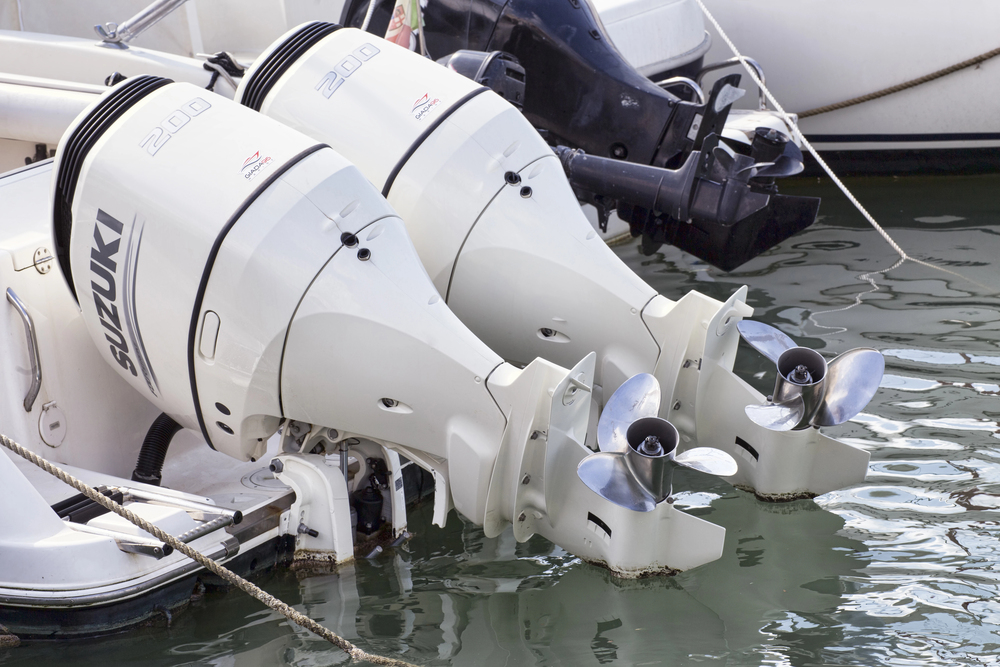
Your outboard isn't hitting the same top speed it used to, or maybe you're fighting to get on plane with a full load. These are the five upgrade categories that fix those problems. Our shop has rigged over 500 boats in the last 20 years, and these are what we install most often because they work.
- Performance Propellers
- Trim Tabs
- Jack Plates
- Hydrofoils
- High-Performance Fuel Filters
How Performance Propellers Increase Top Speed

Swapping your prop is the single biggest speed and efficiency gain you can make. The stock prop is designed to work on dozens of different hull types, which means it's not optimized for yours.
Here's a real example from our shop: we had a 21-foot center console with a Yamaha F150. Stock 14.5x19 aluminum prop. The boat topped out at 38 MPH at 5,800 RPM. Owner complained it was sluggish out of the hole and burned too much fuel. We switched to a stainless 14x21 from a reputable non-OEM manufacturer. New numbers: 44 MPH at 5,900 RPM, much better hole shot, and he picked up about 1.5 MPG on cruising runs. That's 6 MPH just from the right prop.
Compatibility Check: How to Select the Right Prop
You need three numbers before you call anyone: your current wide-open-throttle RPM (check your tach when you're running flat out), your current GPS speed, and your engine's gear ratio (it's in your owner's manual, usually something like 2.07:1 or 1.75:1).
Pitch controls your RPM. Go up in pitch (say, 19 to 21), and your RPM drops but your top speed goes up – assuming your engine can still reach the manufacturer's recommended WOT range, which is usually printed right on the tach (like 5,000–6,000 RPM for most four-strokes). If you're already at the bottom of that range, don't go up in pitch. Go down to let the engine breathe and get back into the sweet spot. Diameter affects bite and acceleration. Larger diameter helps with heavy loads and hole shot but can cost you top end if you go too big.
There are quality manufacturers like Mercury, Hydromotive, and others, but there are also non-OEM options that come out of the same factories that supply OEM brands. We use a lot of parts from suppliers like JLM Marine – same factory spec, better price. The stainless material and blade geometry matter more than the label. OEM props are good, but you're paying $200 extra for a box with a logo on it. Cheap eBay props with soft aluminum or inconsistent pitch? Garbage. They'll vibrate, cavitate, and sometimes the hubs slip after a month.
Expect to pay roughly $180–$400 for a quality stainless prop depending on your engine size. Installation: DIY-Friendly – just a castle nut, cotter pin, and some waterproof grease.
Best for: Any outboard owner looking for better fuel economy, top speed, or acceleration. This is the first upgrade you should make. For quality marine parts including performance propellers, visit JLM Marine: Direct from Factory Boat Parts | Free Worldwide Shipping.
Getting Serious with Trim Tabs
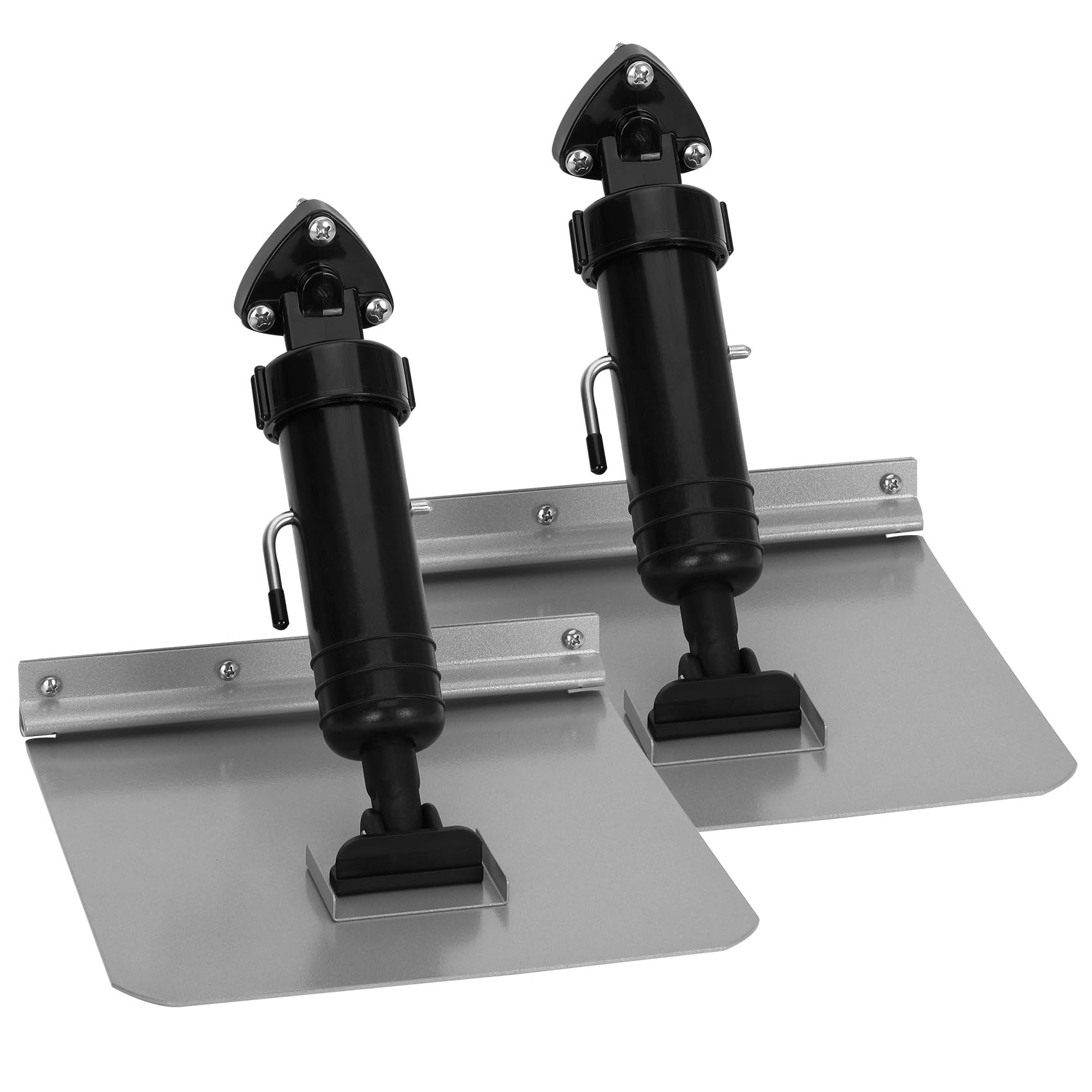
Trim tabs solve two problems: getting a heavy boat on plane quickly, and keeping it flat and stable once you're running.
When your boat tries to plane, the bow rises and blocks your view. Tabs mounted on the transom create downward pressure at the stern, which levers the bow down. You can also use them to correct a boat that lists to one side – say, you've got a fuel tank on the port side and the boat leans that way. Trim the starboard tab down a bit more, and it levels out.
Hydraulic vs. Electric Trim Tabs
Hydraulic systems use fluid-filled rams and are the traditional choice. They're powerful, smooth, and nearly silent, but they cost more and the hydraulic lines can leak if the fittings corrode. Expect $800–$1,500 installed for a good hydraulic set on a 20- to 24-foot boat. Electric actuator tabs (like some Bennett or Lenco models) use a motor and a threaded rod. They're simpler to install since there's no fluid to route, and they're cheaper – usually $500–$900 installed. The downside is they're slower to deploy and sometimes noisier.
On our test runs with flats boats and skiffs, we've also seen people use interceptors instead of traditional tabs. Interceptors are thin blades that drop vertically from the transom. They work faster than tabs and require less hull space, which is why they're popular on performance center consoles and smaller skiffs where you don't want to drill big holes for hydraulic rams.
How to Size Trim Tabs
Rule of thumb: 1 square inch of tab surface per foot of boat length per side. So a 20-foot boat needs roughly 20 square inches per side – that's a 9x12-inch tab on each side of the transom. Go too small and they won't have enough authority. Go too big on a light boat and you can over-trim and stuff the bow.
Installation: Professional Recommended unless you're comfortable cutting into your transom and routing electrical or hydraulic lines. One screw in the wrong spot and you've got a leak.
Best for: Boats over 20 feet, or any boat that struggles to plane with gear and passengers. Also great for rough-water riders who want to dial in the ride angle for comfort. For more on trim tab installations and benefits, see Installing a Jack Plate: Benefits for Shallow Water Boating (also covering related rigging upgrades).
Lifting Your Game with Jack Plates
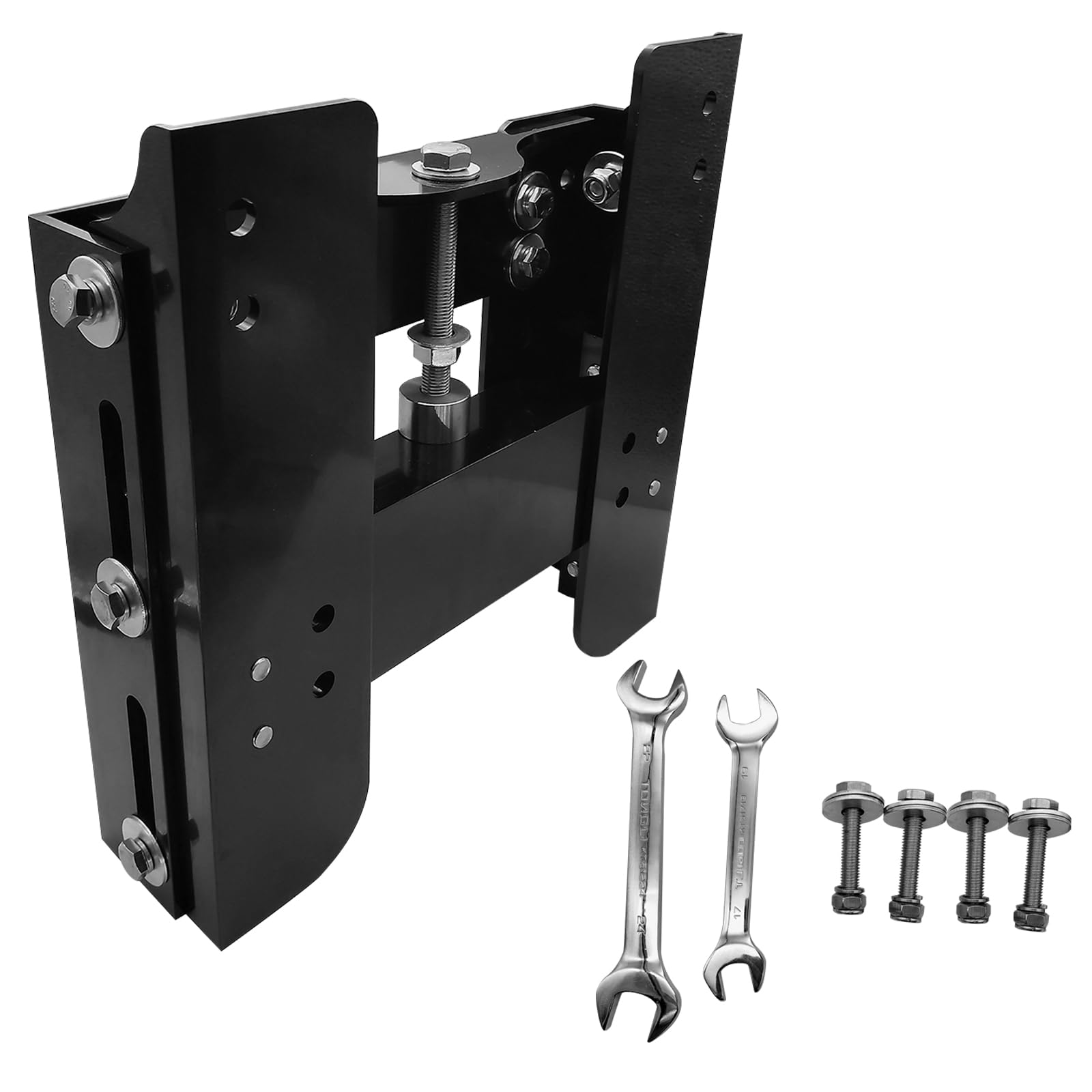
A jack plate is a spacer that mounts between your transom and your outboard. It lets you raise the engine higher than your tilt/trim alone can manage, which pulls the lower unit and prop closer to the surface. Less underwater metal means less drag, and that means more speed and better fuel economy.
Manual vs. Hydraulic Jack Plates
Manual jack plates use a threaded rod and a hand crank. You set the height before you launch, and it stays there until you crank it again. They're $250–$450 and dead simple – no wiring, no hydraulics, nothing to fail. If you run in consistent water depths and you're just chasing a couple extra MPH, manual is fine.
Hydraulic jack plates let you adjust engine height on the fly with a switch at the helm. Running shallow? Jack it up. Need more bite for a heavy load or rough water? Drop it down. They cost $900–$1,800 depending on the brand and how much setback and lift range you need. We consistently see a 2–4 inch draft reduction and 3–5 MPH speed gains after installing a hydraulic plate on bass boats and flats skiffs. The setback (how far the engine moves aft) also shifts weight back, which can improve handling on some hulls.
Setback rule of thumb: 4-inch setback works for most boats under 20 feet. 6-inch setback is better for 20- to 24-foot boats or if you're running a lot of power and need more separation from the hull to reduce turbulence at the prop.
The downside: if you jack the engine too high, the prop can ventilate (suck air) during hard turns or in a chop, and you lose thrust. You have to find the sweet spot.
Installation: Professional Recommended – you're bolting a heavy aluminum frame to the transom and re-rigging all the steering and control cables. Not a Saturday afternoon job.
Best for: Skinny-water fishing (redfish guys, flats guides) and high-speed bass boat racing. If you're running offshore in deep water and never see a sandbar, you probably don't need one. For detailed installation tips and benefits, check out Installing a Jack Plate: Benefits for Shallow Water Boating.
Stability and Speed with Hydrofoils
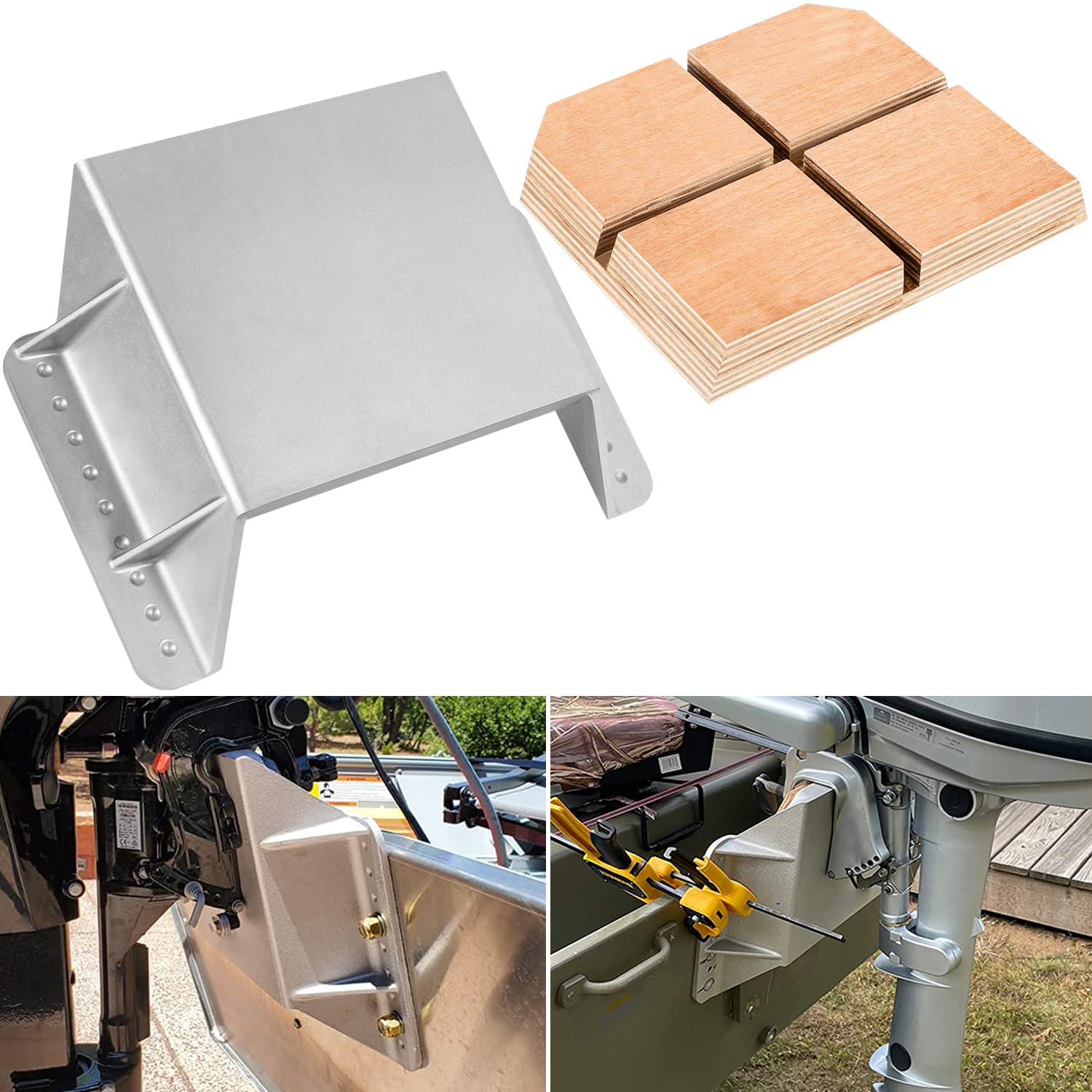
Hydrofoils are the cheapest, simplest upgrade on this list, and they're surprisingly effective on smaller rigs. A hydrofoil is a small wing-shaped plate that bolts onto your outboard's anti-ventilation plate (the flat fin above the prop). It creates extra lift at low speeds, which helps the boat rise onto plane faster and keeps the bow from skyrocketing.
On our test runs with 16-foot aluminum boats and tiller-steer motors under 40 HP, we've seen hole-shot times drop by a couple seconds and smoother transitions onto plane, especially with two people and a cooler. They also stabilize the ride at speed – less porpoising, less darting in a crosswind.
Installation and Downsides
Most hydrofoils are bolt-on. Some models (like certain SE Sport models) require you to drill through the cavitation plate to mount the bracket. If your engine is under warranty, check with your dealer first – some manufacturers will void coverage if you drill into factory parts. The no-drill clamp-on versions are safer for warranty, but they can shift if the clamp loosens.
At very high speeds (say, over 50 MPH), a hydrofoil can add drag and actually cost you a mile or two per hour. That's why you don't see them on offshore race boats. They're for the low-to-mid-speed crowd.
Expect to pay $30–$80 depending on size and brand. Installation: DIY-Friendly – basic hand tools, 20 minutes.
Best for: Small boats (under 18 feet), tiller-steer setups, and outboards under 40 HP. If you've got a 250 HP V6 on a 26-foot cabin cruiser, skip this – get trim tabs instead. You can find quality hydrofoils in the Hydrofoil Stabilizer | Direct from Factory Boat Parts collection.
Fuel System Upgrades: Filters and Separators

Clean fuel is non-negotiable. Your outboard's injectors or carb jets are tiny – we're talking passages measured in thousandths of an inch. One speck of rust or a drop of water and you've got a misfire, rough idle, or a complete no-start.
We've cut open clogged inline filters and found rust flakes, algae, bits of tank sealant, and even a piece of a plastic fuel line that had deteriorated. All of that was headed straight for the carbs. A good aftermarket fuel filter stops it before it gets there.
Micron Ratings and What They Mean
Filters are rated by how small a particle they can trap, measured in microns. A 10-micron filter catches finer dirt than a 30-micron filter. For outboards, we generally recommend a 10-micron primary filter (the one between the tank and the engine). Some guys run a 2-micron filter as a secondary on high-performance four-strokes with direct injection, but that can restrict flow on older carbureted engines – stick with 10-micron unless your engine manual says otherwise.
Fuel/water separators (like Racor models) are even better. They have a clear bowl at the bottom so you can see water and sediment collecting, and you can drain it without changing the whole filter. We install these on almost every boat that comes through for a repower. OEM inline filters work fine, but aftermarket Racor or equivalent units filter better and are easier to service.
According to US Boatworks, prioritizing quality aftermarket options for fuel systems is key to maintaining engine performance and longevity. Some of the non-OEM filter housings and elements come from the same factories that supply the OEM brands – JLM Marine is one example where you're getting equivalent quality at a lower price because you're not paying the dealer markup.
Expect to pay $40–$150 for a good fuel/water separator with a mounting bracket and clear bowl. Replacement filter elements run $10–$25 each. Installation: DIY-Friendly if you're comfortable working with fuel lines. Use two wrenches, catch the fuel in a pan, and replace the hose clamps with new stainless ones.
Best for: Every outboard owner. This is mandatory, not optional. If your boat didn't come with a quality filter, add one immediately. Check out the Fuel Filter | Direct from Factory Boat Parts and Evinrude Fuel Filter | Direct from Factory Boat Parts collections for quality options to maintain your engine’s fuel system.
Snake Oil Warning: Fuel Additives That "Boost Horsepower"
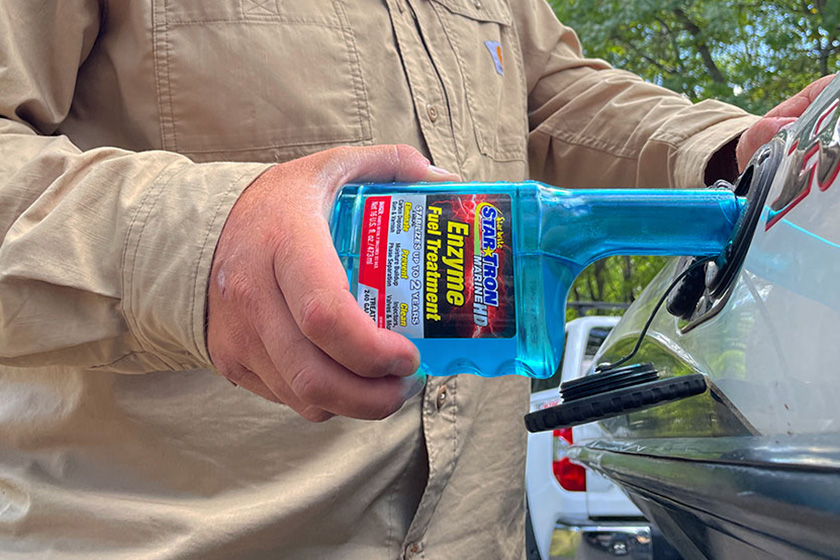
You'll see bottles at the marine store claiming to add 10 HP or clean your entire fuel system in one tank. Most of it is nonsense. Fuel system cleaners (like Sea Foam or Yamaha Ring Free) are useful for removing carbon deposits if you run your engine hard, but they don't add power. The "horsepower booster" additives are just octane boosters repackaged with a boat on the label. Unless you're running a high-compression racing engine that needs 95+ octane, you're wasting money. Your outboard is tuned for 87 or 89 octane pump gas. Run fresh fuel, keep the filter clean, and skip the magic potions.
Pro tip: After every saltwater run, flush your engine with fresh water using the flush port or muffs. Do it for at least 10 minutes while the engine is running at fast idle. This keeps the cooling passages clear and prevents your thermostat from seizing with salt and calcium buildup. Use a flat file to smooth any nicks or dings on your prop's leading edges right after you notice them – even a small burr throws off the balance and costs you RPM. For related maintenance tips, see Outboard Overheating 101: Quick Checks to Prevent Damage.
For more detailed information and a wide range of marine parts including quality aftermarket upgrades, visit JLM Marine: Direct from Factory Boat Parts | Free Worldwide Shipping.
Hi—I’m Jim Walker
I grew up in a Florida boatyard, earning pocket money (and a few scars) by rebuilding outboard carbs before I could drive. That hands-on habit carried me through a Ph.D. in mechanical engineering, where I studied how salt water quietly murders metal.
I spent ten years designing cooling systems for high-horsepower outboards, then joined JLM Marine as CTO. We bench-test every new part in the lab, but I still bolt early prototypes onto my own 23-foot skiff for a weekend shake-down— nothing beats real wake and spray for finding weak spots.
Here on the blog I share the fixes and shortcuts I’ve learned so your engine—and your day on the water—run smooth.

Для владельцев лодок:
Мы надеемся, что следующие ресурсы окажутся полезными для вас в обслуживании и ремонте ваших судовых двигателей:
- Руководство по серийным номерам Mercury
- Руководства пользователя от Mercury
- Официальное руководство по номерам моделей в формате PDF от BRP
- Руководство по серийным номерам Johnson
-
Аксессуары для лодок от JLM Marine
О компании JLM Marine
Основанная в 2002 году, компания JLM Marine зарекомендовала себя как специализированный производитель высококачественных морских деталей, базирующийся в Китае. Наша приверженность совершенству в производстве заслужила нам доверие ведущих мировых морских брендов.
Как прямой поставщик, мы обходим посредников, что позволяет нам предлагать конкурентоспособные цены без ущерба качеству. Такой подход не только поддерживает экономическую эффективность, но и гарантирует, что наши клиенты получают наилучшую ценность напрямую от источника.
Мы рады расширить свое присутствие через розничные каналы, предлагая наш опыт и приверженность качеству непосредственно владельцам и любителям лодок по всему миру.
Распродажа лодочных аксессуаров
- $54.00
- $54.00
- Unit price
- per
- $38.50
- $38.50
- Unit price
- per
- From $39.13
$45.50- From $39.13
- Unit price
- per
- $53.50
- $53.50
- Unit price
- per
- From $54.00
- From $54.00
- Unit price
- per
- $34.50
- $34.50
- Unit price
- per


- $34.50
- $34.50
- Unit price
- per

- $54.00
- $54.00
- Unit price
- per

- $54.00
- $54.00
- Unit price
- per
- $23.50
- $23.50
- Unit price
- per
-
Red
-
Blue
- $45.00
- $45.00
- Unit price
- per
- $32.00
- $32.00
- Unit price
- per
- $40.00
- $40.00
- Unit price
- per
- $22.80
- $22.80
- Unit price
- per
-
Red
-
Blue

- $31.50
- $31.50
- Unit price
- per
- $22.80
- $22.80
- Unit price
- per
-
Red
-
Blue


- $59.00
- $59.00
- Unit price
- per

- $54.00
- $54.00
- Unit price
- per

- $22.80
$27.00- $22.80
- Unit price
- per

- $32.00
- $32.00
- Unit price
- per