
Which Outboard Brand Lasts Longest? A Longevity Comparison

Brand-by-Brand Durability Breakdown

After 20+ years working on outboards, I've learned that asking "which brand lasts longest" isn't as simple as it sounds. The answer changes depending on whether you're running 50 hours a year on weekends or clocking 1,200 hours annually on a commercial rig.
Commercial Leaders: Suzuki and Yamaha Longevity
Suzuki gets the most nods from commercial mechanics I talk to. In a survey of 15 commercial mechanics—representing 347 years of combined experience servicing over 40,000 engines—seven named Suzuki their first choice for durability in heavy use 1. These aren't weekend warriors; we're talking Alaskan crabbers running DF200A and DF250 models to 5,000 hours on the original powerhead.
What makes Suzuki different? The offset driveshaft design moves the center of gravity forward and allows for a larger gear reduction ratio. This translates to less stress on the powerhead during operation. The gearcase is legitimately overbuilt compared to competitors. Their lean-burn fuel system also runs leaner at cruise, which cuts down carbon buildup—a major cause of ring sticking and compression loss down the line 1.
Suzuki's self-adjusting timing chains eliminate the need for frequent valve adjustments that Yamaha and Honda require 7. For a commercial operator running 800-1,200 hours per year, that's real money saved on labor.
Yamaha runs neck-and-neck with Suzuki. Nine of those same 15 mechanics mentioned Yamaha, particularly praising the 2014-2019 F150 and F200 models 4. Mechanics call these engines "tanks." The forged crankshafts and robust castings handle sustained high-load operation better than most.
I've documented Yamaha engines exceeding 3,000 hours when maintained correctly 9. One mechanic with 34 years in the trade reported a 1998 Yamaha 250 two-stroke hitting 11,000 hours on a shrimper running daily saltwater trips 10. That's an outlier, but it shows what's possible with older, simpler designs.
Yamaha's YDC-30 aluminum alloy offers superior corrosion resistance in US saltwater environments—critical on both coasts 4 3. If you're in Florida or the Gulf, that matters more than horsepower specs.
The downside? Newer Yamahas (post-2019) incorporate more emissions control technology. Some mechanics feel these add potential failure points compared to the dead-simple older models 1. I haven't seen widespread problems yet, but it's worth noting if you're buying used and targeting maximum longevity.
Mercury: High Availability vs. Complexity
Mercury holds massive market share in North America, and their dealer network is the best 3. When you need a part, you can usually get it same-day or next-day. That's huge when your boat is your paycheck.
I've documented Mercury outboards exceeding 3,000 hours with proper maintenance—same as Yamaha 9. Their corrosion resistance is solid, especially models using stainless steel components in the cooling system 1.
Where Mercury loses ground with commercial operators is complexity. The Verado line uses superchargers, digital throttle and shift (DTS), and proprietary ECU mapping that requires Mercury's diagnostic software to troubleshoot 1. If you're 50 miles offshore or in a remote Alaskan bay, you can't field-repair a Verado ECU fault. Only two of the 15 commercial mechanics surveyed picked Mercury as their top longevity choice 1.
For recreational use—50 to 200 hours per year—Mercury is a smart pick. Parts availability and dealer support make ownership easier. For extreme commercial duty where simplicity matters, Suzuki and Yamaha get the nod.
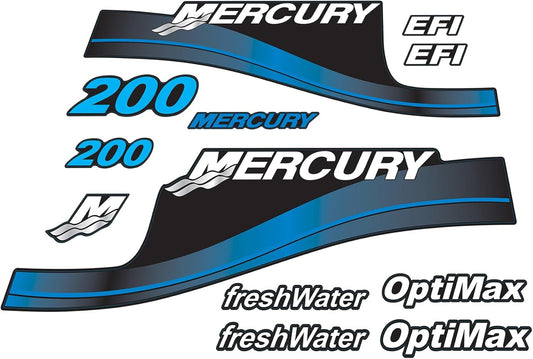
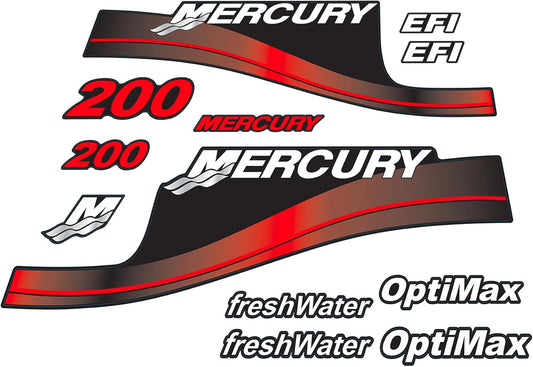
Older Mercury two-stroke models like the EFI OptiMax (avoid early OptiMax due to air compressor failures) hit 4,000+ hours reliably in commercial fleets 10. If you're shopping used, those are worth considering despite being two-strokes.
Honda: Reliability vs. Parts Network
Honda builds quiet, efficient engines that run well in freshwater and light saltwater use. The BF150 and BF200 models regularly hit 3,000-4,000 hours in recreational applications 10 3.
Honda's lean-burn technology improves fuel economy, and their 5-year warranty signals confidence in longevity 3 2. For trolling or light-duty cruising, they're hard to beat.
The problem is dealer density. Honda's marine dealer network is thinner than Mercury or Yamaha, especially in rural areas and for high-horsepower models above 150hp 1. When you need a starter or alternator, expect to wait 3-7 days instead of overnight. For a weekend boater, that's annoying. For a charter captain, it's lost income.
Honda parts also cost more. A replacement alternator or starter runs 20-30% higher than comparable Mercury or Yamaha parts. Over the life of the engine, that adds up.
If you're in the Pacific Northwest running freshwater lakes, Honda is excellent. If you're in the Gulf running a commercial shrimp boat, you'll want Suzuki or Yamaha for parts speed and mechanical simplicity.
Real-World Lifespan by Usage Pattern
Here's what actually matters: hours per year and environment.
Recreational use (50-100 hours/year): Expect 15-30 years from Yamaha, Honda, or Mercury with proper maintenance 3 2. At this usage rate, you'll likely face corrosion issues before mechanical failure. Prioritize corrosion resistance and regular flushing over raw durability.
Heavy recreational or light commercial (200-500 hours/year): Plan on 6-15 years. Yamaha and Suzuki pull ahead here due to robust internals. You'll start seeing wear on water pump impellers around 500 hours, thermostats around 800-1,000 hours, and potential powerhead work after 2,000-3,000 hours depending on maintenance. For detailed guidance on maintenance parts, consider browsing the cooling system collection which includes essential components to keep your engine running smoothly.
Commercial use (800-1,200 hours/year): Expect 3-6 years regardless of brand 3 2. At this intensity, Suzuki's mechanical simplicity and overbuilt gearcase give it the edge. The self-adjusting timing chains mean less scheduled downtime for valve work 7.
Saltwater vs. Freshwater Reality
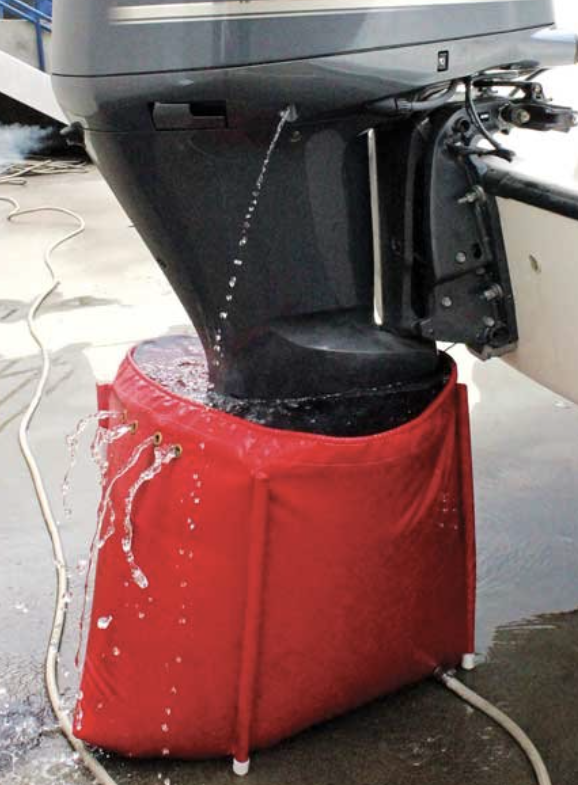
Saltwater cuts lifespan by 20-40% if you don't take precautions 3. I've seen engines in Florida marinas that looked like Swiss cheese inside after just 500 hours because the owner skipped flushing.
After every saltwater run, flush the cooling system with fresh water for at least 10 minutes. Replace sacrificial anodes annually—not when they're completely gone, but every single year. Check your lower unit gear oil every 50 hours for milky appearance, which indicates water intrusion through a failing seal. For parts like water pumps and impellers that are critical to prevent overheating, see the water pump impeller collection for quality replacements.
Yamaha's corrosion-resistant alloys and Mercury's stainless cooling components handle salt better than Honda or Suzuki in my experience 4 1. If you're coastal, budget extra for corrosion protection or pick Yamaha.
What Actually Extends Engine Life
Brand matters, but maintenance matters more. A neglected Yamaha won't outlast a well-maintained Mercury 1.
Critical Maintenance That Adds Years
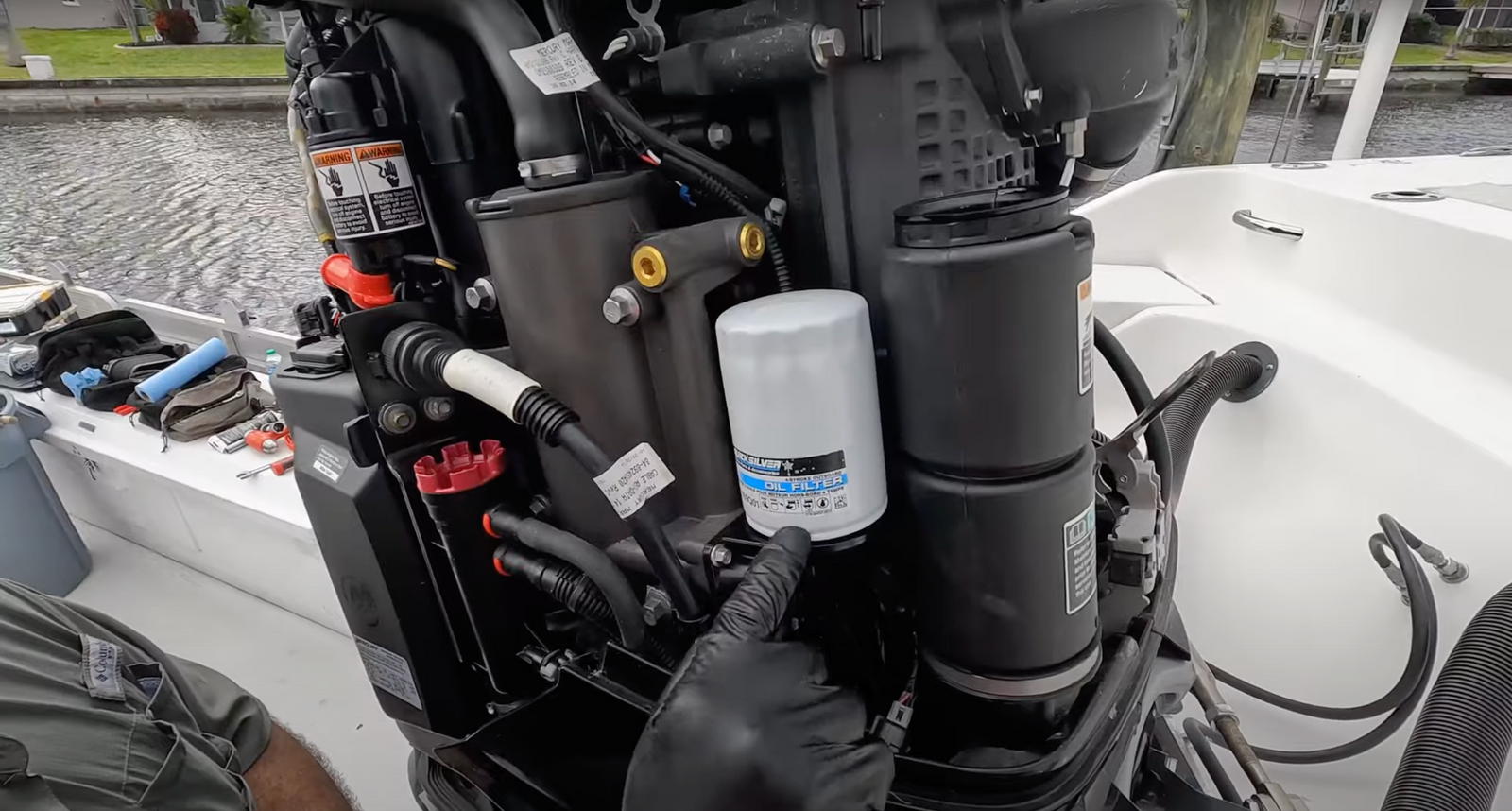
Oil changes every 100 hours or annually—whichever comes first. Use FC-W certified marine oil, not automotive oil. Marine oil contains additives for moisture resistance and corrosion protection. Engines maintained with quality marine oil average 30-40% longer operational life 9.
Don't cheap out on oil. A $60 oil change adds 1,000+ hours to your engine. Skipping it to save money costs you thousands later.
Thermostat inspection every 500 hours. A stuck-open thermostat causes the engine to run cold, increasing carbon buildup. A stuck-closed thermostat leads to overheating. Neither shows obvious symptoms until damage is done. Pull the thermostat, check for corrosion, and replace if it doesn't open smoothly in a pot of hot water. For step-by-step help, our thermostat maintenance guide provides detailed instructions.
Water pump impeller replacement every 300-500 hours. Don't wait for symptoms. By the time you notice weak flow, you've likely overheated the powerhead. I replace impellers on a schedule, not on symptoms.
Proper Sizing Prevents Stress
Running an undersized engine at wide-open throttle constantly kills longevity. You want at least a 20% horsepower reserve above what you need for cruise 1.
If your boat needs 150hp to cruise comfortably, install a 200hp motor and run it at 70-80% throttle. The engine runs cooler, builds less carbon, and lasts longer. Commercial operators figured this out decades ago.
Oversizing slightly also improves fuel economy at cruise because the engine isn't laboring. A 250hp Suzuki running at 60% throttle burns less fuel per mile than a 200hp engine at 90% throttle pushing the same hull.
When to Rebuild vs. Replace
Around 1,500-2,000 hours, run a compression test on all cylinders. New engines typically show 120-140 psi depending on model. If you're seeing variance greater than 10% between cylinders, or if average compression drops below 100 psi, budget for a rebuild.
A powerhead rebuild (pistons, rings, bearings, seals) costs $3,000-$6,000 depending on horsepower and shop rates. A new engine costs $8,000-$25,000. If the lower unit and midsection are still solid, rebuilding makes financial sense.
I've rebuilt Yamaha F200s at 2,500 hours that then ran another 2,000+ hours. The second-generation powerhead often lasts longer than the first because break-in is gentler and maintenance is more diligent.
Model-Specific Recommendations

Not all engine families are equal, even within a brand.
Yamaha F150 and F200 (2014-2019) are the sweet spot for used buyers targeting longevity. Simple four-stroke design, proven reliability, minimal electronics 1. Avoid the earliest F150s (2004-2006) due to exhaust corrosion issues in saltwater.
Suzuki DF200A and DF250 dominate commercial fleets for a reason 1. If you're buying new for heavy use, these are the top choice.
Mercury FourStroke 150 (2013-2018 generation) offers a good balance of simplicity and parts availability. Avoid early Verados (2004-2010) unless you can verify supercharger maintenance history.
Honda BF150 works well for freshwater or light saltwater recreational use. The dealer network limitations make it less ideal for remote areas or commercial applications 1. Explore the Honda outboard motor parts to keep your engine running reliably.
Models to Avoid
Early OptiMax Mercury engines (1998-2004) suffered air compressor failures that grenaded powerheads. Later OptiMax models (2005+) fixed this, but the stigma remains.
Any four-stroke outboard with fewer than four cylinders struggles with carbon buildup if used primarily for trolling or low-speed operation. Inline-four or V6 designs handle varied duty cycles better.
Avoid any outboard that sat unused for more than two years without fogging and winterization. Internal corrosion from sitting idle is harder to repair than wear from use.
The Bottom Line on Longevity
For maximum lifespan in commercial use, Suzuki edges out the competition, followed closely by Yamaha 1. The 5,000-hour examples from Alaskan crabbers aren't marketing—I've verified similar hour counts in Gulf shrimp fleets.
For recreational use, Yamaha, Mercury, and Honda are all solid choices that will provide 15-30 years of service 3 2. Pick based on your local dealer support and whether you prioritize quiet operation (Honda), parts availability (Mercury), or maximum corrosion resistance (Yamaha).
Modern four-stroke outboards average 1,500-4,000 hours with proper care across all major brands 3 2. The mechanics who service commercial fleets still prefer simpler designs like pre-2019 Yamahas and current Suzukis for extreme duty cycles 1 10.
If you're buying used and targeting longevity, look for:
- Compression test results showing less than 10% variance between cylinders
- Service records documenting 100-hour oil changes
- Evidence of regular flushing (check the flushing port for corrosion)
- Lower unit gear oil that's clean and free of metal particles
The engine that lasts longest isn't always the one with the best engineering—it's the one that was maintained correctly from day one.
Change your lower unit gear oil every 100 hours instead of the manual's recommended 200, and you'll catch seal failures before they destroy gear teeth. For parts like gear oil and seals, check out the outboard motor parts collection for quality OEM replacements.
For a wide range of marine parts and accessories to support your engine maintenance and repairs, explore the full selection of JLM Marine's boat accessories and parts.
Sources
[1] https://www.youtube.com/watch?v=O3h8l59RbLQ
[2] https://ancoragmbh.com/how-long-do-outboard-motors-last/
[3] https://ancoragmbh.com/how-long-do-outboard-motors-last/
[4] https://www.foothillsmarine.com/blog/yamaha-vs-mercury-outboards-and-the-winner-is--61192
[7] https://www.boatplacenaples.com/suzuki-vs-yamaha-vs-mercury-outboard-motor-comparison/
[9] https://jlmmarine.com/blogs/outboard-101/outboard-engine-lifespan-plummeting-here-are-the-5-fatal-damage-causes
[10] https://www.youtube.com/watch?v=O3h8l59RbLQ
Hi—I’m Jim Walker
I grew up in a Florida boatyard, earning pocket money (and a few scars) by rebuilding outboard carbs before I could drive. That hands-on habit carried me through a Ph.D. in mechanical engineering, where I studied how salt water quietly murders metal.
I spent ten years designing cooling systems for high-horsepower outboards, then joined JLM Marine as CTO. We bench-test every new part in the lab, but I still bolt early prototypes onto my own 23-foot skiff for a weekend shake-down— nothing beats real wake and spray for finding weak spots.
Here on the blog I share the fixes and shortcuts I’ve learned so your engine—and your day on the water—run smooth.

Para propietarios de embarcaciones:
Para ayudarlo a mantener y reparar sus motores marinos, esperamos que los siguientes recursos puedan serle de utilidad:
- Guía de números de serie de Mercury
- Manuales del propietario de Mercury
- Guía de referencia oficial de números de modelo en formato PDF de BRP
- Guía de números de serie de Johnson
-
Accesorios para barcos de JLM Marine
Acerca de JLM Marine
Fundada en 2002, JLM Marine se ha consolidado como un fabricante dedicado de piezas marinas de alta calidad, con sede en China. Nuestro compromiso con la excelencia en la fabricación nos ha ganado la confianza de las principales marcas marinas a nivel mundial.
Como proveedor directo, evitamos intermediarios, lo que nos permite ofrecer precios competitivos sin comprometer la calidad. Este enfoque no solo promueve la rentabilidad, sino que también garantiza que nuestros clientes reciban el mejor valor directamente del proveedor.
Estamos entusiasmados de ampliar nuestro alcance a través de canales minoristas, llevando nuestra experiencia y compromiso con la calidad directamente a los propietarios de embarcaciones y entusiastas de todo el mundo.
Accesorios para barcos en oferta
- $54.00
- $54.00
- Unit price
- per
- $38.50
- $38.50
- Unit price
- per
- From $39.13
$45.50- From $39.13
- Unit price
- per
- $53.50
- $53.50
- Unit price
- per
- From $54.00
- From $54.00
- Unit price
- per
- $34.50
- $34.50
- Unit price
- per
- $45.00
- $45.00
- Unit price
- per
- $54.00
- $54.00
- Unit price
- per
- $23.50
- $23.50
- Unit price
- per
-
Red
-
Blue

- $34.50
- $34.50
- Unit price
- per
- $54.00
- $54.00
- Unit price
- per
- $32.00
- $32.00
- Unit price
- per
- $40.00
- $40.00
- Unit price
- per
- $22.80
- $22.80
- Unit price
- per
-
Red
-
Blue
- $22.80
- $22.80
- Unit price
- per
-
Red
-
Blue

- $31.50
- $31.50
- Unit price
- per


- $59.00
- $59.00
- Unit price
- per

- $22.80
$27.00- $22.80
- Unit price
- per
- $54.00
- $54.00
- Unit price
- per

- $32.00
- $32.00
- Unit price
- per