



Inboard vs. Outboard for Small Boats: Pros and Cons


If you're shopping for a boat under 35 feet, you're going to run into the outboard versus sterndrive question. I've been wrenching on marine engines for 20 years, and this decision comes up constantly at the dock. Both setups work, but they work differently. Here's what actually matters when you're choosing between them.
What You're Actually Comparing

An outboard bolts to your transom. Everything—engine, lower unit, prop—is one package hanging off the back. Turn the whole motor to steer. Tilt it up for the trailer or shallow water. Service it by dropping the cowling or unbolting the whole thing.
A sterndrive (also called an I/O) puts the engine inside the hull. A drive unit goes through the transom and hangs in the water like an outboard's lower unit. You steer by pivoting that drive, not the whole engine. The swim platform stays clean, but you're crawling into an engine box for most service work.
True inboards—engine inside, prop underneath, steered by a rudder—are mostly for dedicated watersports boats. They shape a clean wake for wakeboarding, but that's not what most small boat buyers are cross-shopping with outboards.
Performance and Power
Outboards punch above their weight. A 200 hp outboard on a 24-foot hull will often outrun the same hull with a 250 hp sterndrive. The outboard is lighter. That weight difference changes how the boat sits, how fast it planes, and how it responds to throttle input.
We've seen this over and over: buyers assume the sterndrive's higher horsepower number means more performance. Then they sea-trial both and the outboard is faster. The difference is in total package weight—engine, fuel system, exhaust, cooling—and where that weight sits on the boat.
Price-wise, outboard boats sometimes cost 2-4% more than a comparable sterndrive boat, even when the outboard's rated horsepower is lower. You're paying for the actual performance, not just the number on the cowling. According to National Marine Manufacturers Association data, over 238,000 new powerboats sold in 2024 were majority outboard-equipped, and that trend reflects this performance-per-dollar reality.
Fuel Economy
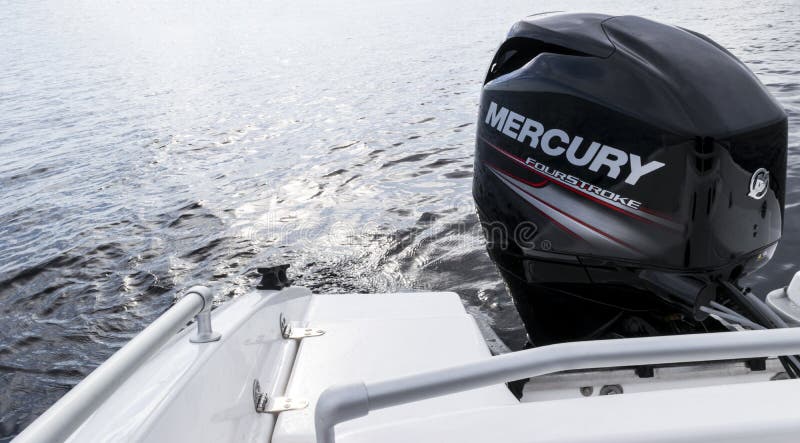
Outboards win here. Modern four-strokes are efficient, especially at cruise. The weight advantage carries through to fuel consumption. If you're running 100 miles on a Great Lakes trip or burning through weekends on a river, that difference adds up fast.
A sterndrive can be efficient at steady cruise speeds, but it's hauling more weight and dealing with more mechanical losses through the drive system. For small boats, outboards consistently deliver better miles per gallon.
Maintenance Access and Costs
This is where your weekends and wallet really diverge.
Outboards
Pop the cowling. Oil filter, spark plugs, fuel filter—everything is right there. Tilt the motor up to check the lower unit. If you need to pull the powerhead or swap a fuel pump, you can unbolt the whole motor, set it on a stand, and work at bench height. We've done complete lower unit rebuilds in a driveway.
Annual service on an outboard: oil change, lower unit oil, fuel filter, water pump impeller if needed, spark plugs every few years. If you're in saltwater, flush with fresh water after every trip. Miss that and you'll corrode thermostats, clog passages, and seize the tilt system. For parts like water pump impellers, seals, and thermostats, we stock what you need for popular outboards like Mercury, Yamaha, Honda, and Suzuki.
Sterndrives
Same annual checklist—oil, filters, plugs—but you're doing it in an engine box. You're reaching over the engine to get to the oil filter. Pulling the drive to service the gimbal bearing or replace the bellows means you're hauling 80+ pounds of metal out through the transom shield. It's doable, but it's not quick.
Winterization is non-negotiable. In cold climates, you must flush the cooling system and fill it with antifreeze. If you skip this, freeze damage will crack the block, manifolds, or risers. We've seen engines destroyed in one cold snap because an owner thought draining was enough. That's a $5,000+ mistake.
Sterndrive-specific parts fail more often than outboard equivalents. Bellows crack and let water into the bilge—if you don't catch it early, you're sinking. Gimbal bearings seize. Exhaust risers corrode through in saltwater, dumping exhaust into the bilge or engine. These aren't catastrophic on outboards because the parts don't exist or are less vulnerable.
Labor costs for sterndrives run higher because access is harder. A bellows replacement that takes us 6 hours on a sterndrive would be a 1-hour lower unit seal job on an outboard doing the same function. If you're looking for sterndrive parts like bellows kits or gimbal bearings, check our Volvo Penta parts collection and MerCruiser parts.
Repowering
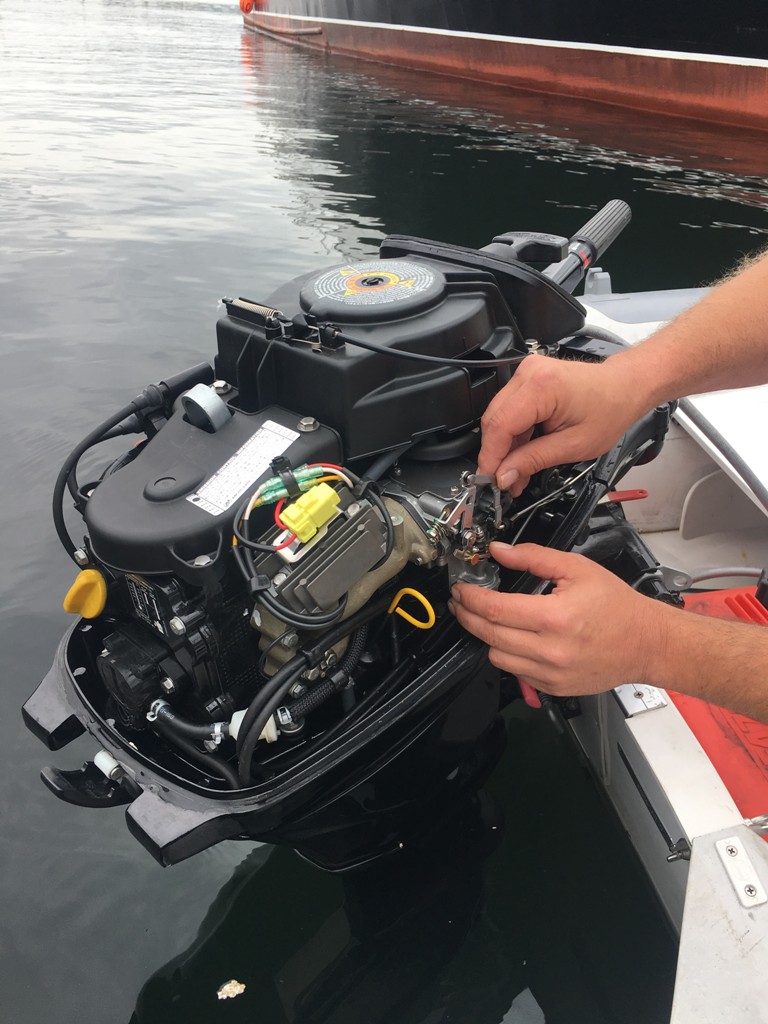
If you need to swap the engine—either it's worn out or you want more power—an outboard is a one-day job. Unbolt the old motor, bolt on the new one, connect the control cables and fuel line, done. You can even upgrade horsepower without major modifications as long as the transom is rated for it.
Repowering a sterndrive is a hull modification project. You're pulling the old engine out of the hatch, possibly cutting fiberglass to fit the new block, aligning the drive unit, and rebuilding the transom seal. It's a week-long job, minimum, and the cost reflects that.
Space and Layout
Outboards free up interior space. No engine box in the cockpit or cabin means more seating, more storage, or a bigger berth on a cuddy cabin boat. For boats in the 16-26 foot range—which represent over 94% of US recreational boats under 26 feet—that space matters.
Sterndrives give you a clean, uninterrupted swim platform. If swimming, diving, or boarding from the stern is a priority, that's a real advantage. The outboard is in the way. You're climbing around it or installing a bracket to move it further aft, which has its own handling trade-offs.
Shallow Water and Draft

Tilt an outboard completely out of the water. Run your boat onto a beach, tilt the motor up, no problem. Navigate a skinny river or a sand bar, tilt it halfway, keep going.
A sterndrive's lower unit is fixed in position when you're underway. You can tilt it for trailering, but not while running. Hit a rock or a sandbar and you're shearing pins or bending the drive. In shallow US inland waters—lakes, rivers, coastal flats—outboards have a massive advantage.
Noise and Vibration
Modern four-stroke outboards are quiet. You'll hear them, but it's not the high-pitched scream of old two-strokes. The engine sits outside the hull, so less vibration transfers into the deck.
Sterndrives are quieter at idle and cruise because the engine is inside, muffled by the hull and engine box. If noise is a deciding factor for cruising or overnighting, the sterndrive edges ahead. But the difference has narrowed significantly with modern outboard designs.
Resale Value and Market Demand

Outboards hold value better on small boats. The US market overwhelmingly prefers them for boats under 30 feet. When you go to sell, you'll have more buyers and faster turnover with an outboard boat. Sterndrives have a smaller buyer pool and often sit longer on the market.
According to market research, outboards hold a 38-42% share in recreational boating segments, far exceeding sterndrives for small vessels. That preference is reflected in resale prices.
Watersports Exception
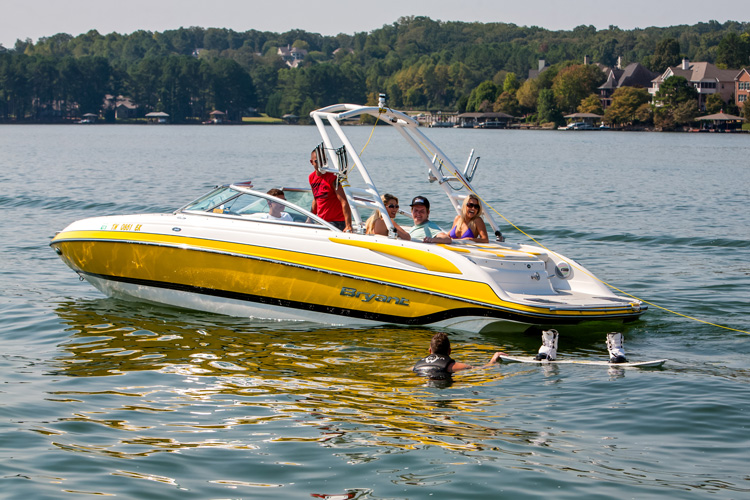
If you're pulling wakeboarders or skiers regularly, sterndrives and true inboards create better wakes. The prop is under the boat, away from the rider. The torque delivery is smoother for tow sports. Dedicated tow boats almost always run inboards for this reason.
But if watersports are occasional and you're mostly fishing, cruising, or day-tripping, the outboard's other advantages outweigh the wake quality difference.
Pros and Cons Summary
Outboard Strengths
- Easier maintenance: External access, tilt-up service, simple winterization (drain and flush, no antifreeze required in most cases).
- Better fuel economy: Lighter weight, more efficient modern four-strokes.
- Superior shallow-water performance: Tilt up while running, no fixed lower unit to damage.
- More interior space: No engine box eating cockpit or cabin room.
- Simpler repowering: Bolt-on replacement, minimal hull modification.
- Higher resale demand: Broader buyer pool for small boats.
Sterndrive Strengths
- Clean swim platform: No motor hanging off the transom, easier stern boarding.
- Quieter operation: Engine noise muffled inside the hull.
- Better for dedicated watersports: Prop placement and torque delivery suited for towing.
Outboard Weaknesses
- Transom clutter: Motor takes up swim platform space.
- Visible on the boat: Some buyers prefer the sleeker sterndrive look.
Sterndrive Weaknesses
- Complex maintenance: Tight engine box access, labor-intensive drive service, bellows and gimbal bearing failures.
- Mandatory winterization: Freeze damage risk in cold climates requires antifreeze flush.
- Higher repair costs: Harder access means more labor hours.
- Poor shallow-water capability: Fixed lower unit limits skinny-water running.
- Expensive repowering: Hull modifications, alignment, and transom work required.
What We Stock at JLM Marine
We've been supplying outboard and sterndrive parts worldwide for over two decades. When you're keeping either system running, you need the right parts fast. JLM Marine ships factory-direct, cutting out dealership markups.
For outboard maintenance—lower unit seal kits, water pump impellers, thermostats, anodes—we stock what you need for Mercury, Yamaha, Honda, and Suzuki engines through our extensive outboard motor parts collection. If you're running a sterndrive, we carry bellows kits, gimbal bearings, and exhaust components for MerCruiser and Volvo Penta drives within our Volvo Penta parts and MerCruiser selections.
When you're comparing OEM to aftermarket parts, here's the reality: OEM is good, but you're paying extra for the logo. Cheap aftermarket parts from random sellers are garbage—wrong tolerances, soft rubber, poor fits. You'll be tearing the lower unit apart again next season.
Quality aftermarket from reputable manufacturers like JLM Marine gives you OEM-spec performance without the dealership premium. The parts fit right, last, and ship free worldwide. Browse our main store hub for our full range or reach out if you need help matching a part number.
After every saltwater trip, flush your outboard with fresh water for at least 10 minutes using muffs or a flush port. It's the single easiest thing you can do to prevent corrosion in the cooling passages and extend your engine's life.
Hi—I’m Jim Walker
I grew up in a Florida boatyard, earning pocket money (and a few scars) by rebuilding outboard carbs before I could drive. That hands-on habit carried me through a Ph.D. in mechanical engineering, where I studied how salt water quietly murders metal.
I spent ten years designing cooling systems for high-horsepower outboards, then joined JLM Marine as CTO. We bench-test every new part in the lab, but I still bolt early prototypes onto my own 23-foot skiff for a weekend shake-down— nothing beats real wake and spray for finding weak spots.
Here on the blog I share the fixes and shortcuts I’ve learned so your engine—and your day on the water—run smooth.

Para propietarios de embarcaciones:
Para ayudarlo a mantener y reparar sus motores marinos, esperamos que los siguientes recursos puedan serle de utilidad:
- Guía de números de serie de Mercury
- Manuales del propietario de Mercury
- Guía de referencia oficial de números de modelo en formato PDF de BRP
- Guía de números de serie de Johnson
-
Accesorios para barcos de JLM Marine
Acerca de JLM Marine
Fundada en 2002, JLM Marine se ha consolidado como un fabricante dedicado de piezas marinas de alta calidad, con sede en China. Nuestro compromiso con la excelencia en la fabricación nos ha ganado la confianza de las principales marcas marinas a nivel mundial.
Como proveedor directo, evitamos intermediarios, lo que nos permite ofrecer precios competitivos sin comprometer la calidad. Este enfoque no solo promueve la rentabilidad, sino que también garantiza que nuestros clientes reciban el mejor valor directamente del proveedor.
Estamos entusiasmados de ampliar nuestro alcance a través de canales minoristas, llevando nuestra experiencia y compromiso con la calidad directamente a los propietarios de embarcaciones y entusiastas de todo el mundo.
Accesorios para barcos en oferta
- $37.99
$45.99- $37.99
- Unit price
- per
- $34.99
- $34.99
- Unit price
- per
- $128.99
- $128.99
- Unit price
- per

- $25.30
$30.00- $25.30
- Unit price
- per


- $34.99
$41.99- $34.99
- Unit price
- per

- $32.50
$31.00- $32.50
- Unit price
- per

- $139.99
- $139.99
- Unit price
- per


- $45.00
- $45.00
- Unit price
- per
-
Rojo
-
Azul

- $28.50
$29.00- $28.50
- Unit price
- per

- $159.99
- $159.99
- Unit price
- per


- $105.00
- $105.00
- Unit price
- per


- $34.99
$41.99- $34.99
- Unit price
- per


- From $68.00
- From $68.00
- Unit price
- per
-
Plata
-
Azul
-
Rojo


- $34.99
$41.99- $34.99
- Unit price
- per

- $59.95
$71.00- $59.95
- Unit price
- per

- $59.99
$71.00- $59.99
- Unit price
- per


- $34.99
$41.99- $34.99
- Unit price
- per

- $65.50
$78.00- $65.50
- Unit price
- per

- $67.00
$65.00- $67.00
- Unit price
- per

- $19.99
- $19.99
- Unit price
- per