


Trimming for Rough Water vs. Calm Water
- Calm Water: Getting Up and Efficient
- Rough Water: Cutting Through Instead of Slamming
- The Core Principle: Bow Attitude
- When to Adjust Mid-Run
- Tools and Indicators
- Common Mistakes
- Hull Type Matters
- Practical Steps for Rough Water Trimming
- Fuel Economy and Efficiency
- Load and Weight Distribution
- Safety Considerations
- Maintenance Tie-In
Trimming isn't just about speed. After 20 years working on outboards, I've seen plenty of operators who think trim is a "set it and forget it" thing. It's not. How you adjust your engine angle changes everything about how your boat handles, especially when conditions shift from glass to chop.
Calm Water: Getting Up and Efficient

In flat water, I'm trimming up. Positive trim lifts the bow, which reduces how much hull surface drags through the water. Less drag means better speed and fuel economy. The prop shaft should run nearly parallel to the water surface once you're on plane—maybe angled slightly upward.
I worked with a guy running a flats boat on the Gulf Coast who couldn't get on plane with two passengers. Engine was fine—90 HP, nothing wrong with it. We bumped his jack plate up half an inch and trimmed the motor for calm shallow water. Boat jumped right up. That's the difference proper trim makes when the water cooperates, and why installing a jack plate can be such a game changer for shallow water boating.
If you trim too high in calm water, the bow lifts excessively and you start porpoising—the hull bouncing off the surface. Back it down a touch until the ride smooths out. You want the boat riding on the aft sections of the hull where it's flatter, using that lift to your advantage.
Rough Water: Cutting Through Instead of Slamming

Rough water flips the script. Forget about speed. Your priority is keeping the boat stable and not beating everyone onboard to death. This means trimming down—negative trim. Lowering the bow lets the sharper forward sections of the hull slice through waves instead of launching off them.
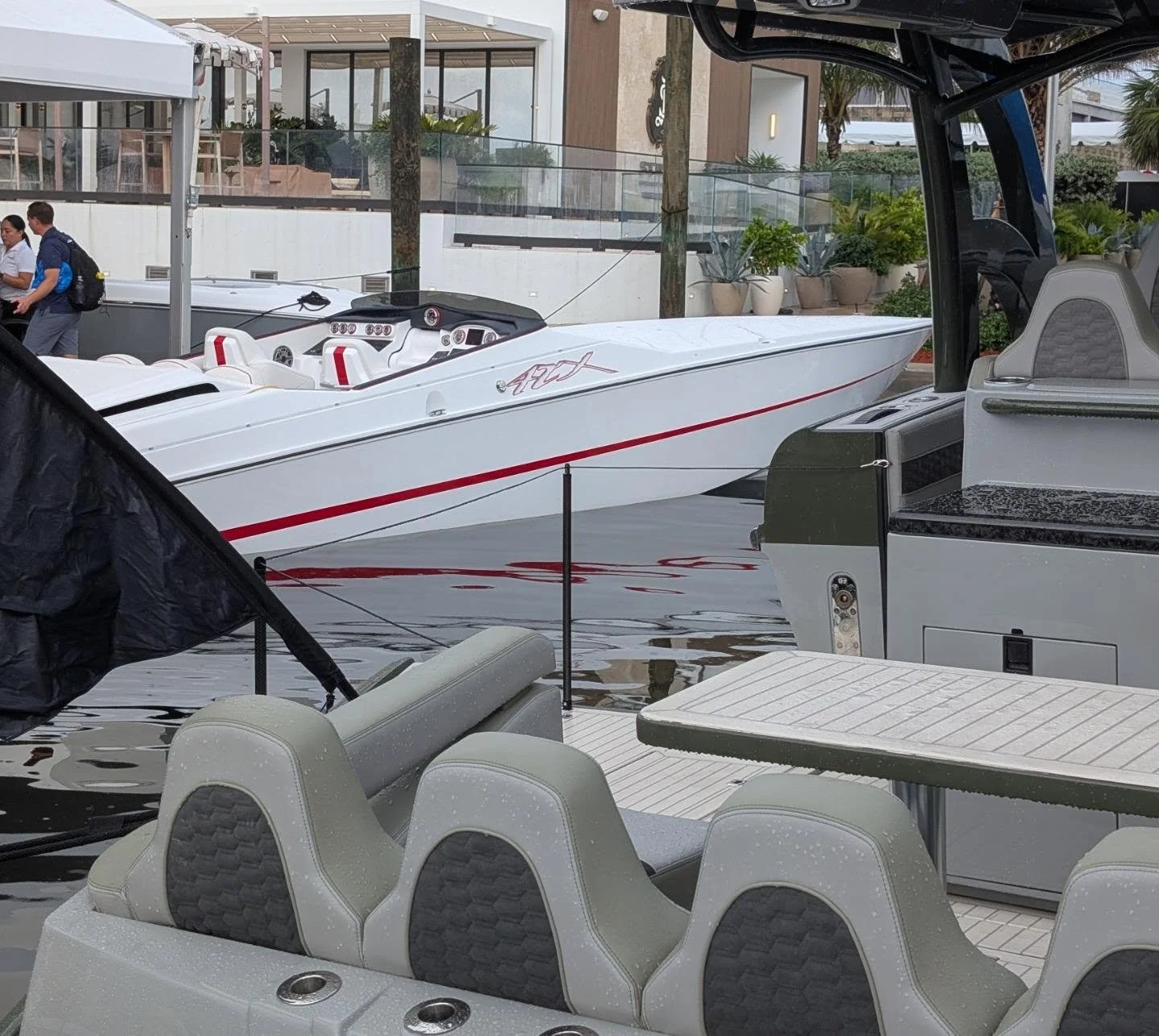
I heard about a run on Lake Michigan in a Cigarette 39' Top Gun with Mercury Racing HP700s. Conditions were rough, and the operator was told to tuck the drives and tabs down while holding around 50 mph. The sharp bow cut through the waves clean enough that the guy running it could stand between the bolsters without getting thrown around. Try that same speed with high trim in chop and you'd pound the hull—and your spine—into pieces.
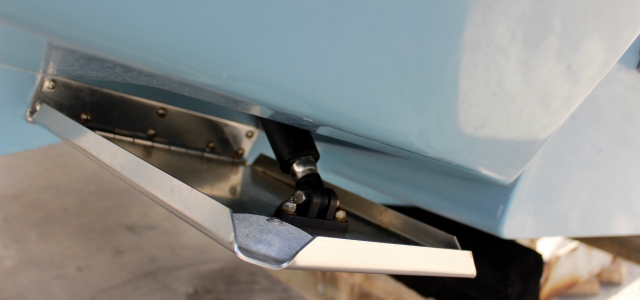
Trim tabs become critical here. They're like adjustable wings on your transom. In rough seas, I use them to keep the boat level, counteracting wave force. If you're taking waves from one side, you can adjust the tabs to keep the hull from listing. It's constant micro-adjustments—throttle, trim, tabs—working together.
US Coast Guard testing on patrol boats confirmed this. Optimal trim angles around 2 to 2.5 degrees work in calm planing conditions, but you need to trim lower in rough water to cut fuel use and reduce slamming. Real-world data backs it up: down-trim in chop gives better control and efficiency than trying to ride high.
The Core Principle: Bow Attitude
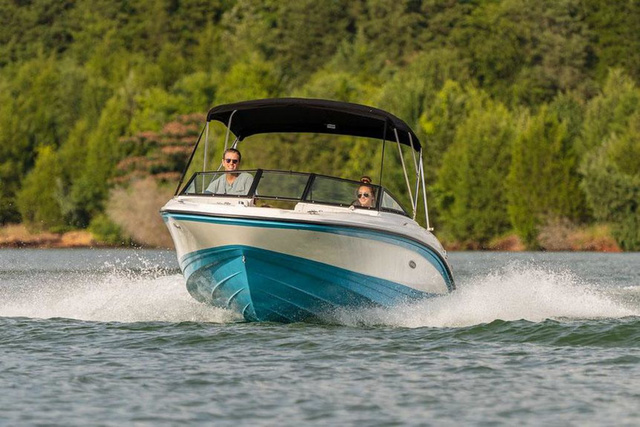
 The fundamental difference is what you're asking the bow to do. In calm water, bow up reduces drag and gets you on plane efficiently. In rough water, bow down uses the hull's V-shape to slice instead of slam. You're working with the water, not fighting it.
Deep-V hulls—20 to 24 degrees of deadrise—handle this best. They're built to cut through waves when trimmed down. Flatter hulls pound harder in rough conditions because they don't have that sharp entry to knife through. If you're running a flat-bottom in chop, you're limited in how much trimming down will help, but it's still better than trim up.
Every boat responds differently depending on hull design, weight distribution, and engine setup. Start with small adjustments. Trim down a bit, see how the ride changes, adjust again. Don't slam the trim all the way down and leave it—you'll lose too much speed and might stuff the bow into a wave if you overcook it.
When to Adjust Mid-Run
Conditions change. I've been out where it's flat near shore and builds to 3-foot rollers a mile out. You can't run the same trim the whole trip.
If you feel the bow starting to pound—that repetitive slam that rattles your teeth—trim down incrementally until it smooths. If the boat feels sluggish and you're plowing through water instead of riding over it, bring the trim up slightly. The engine's also telling you things. If the RPMs climb but speed doesn't, you're probably trimmed too high and the prop is ventilating. Drop it down.
Trim tabs give you finer control than engine trim alone, especially in a crosswind or quartering sea. One tab down more than the other keeps the boat level when waves hit from the side. I've run in conditions where I'm adjusting tabs every few minutes as the wind shifts.
Tools and Indicators

Most modern outboards and sterndrives have a trim gauge on the dash. Use it, but also learn to feel what the boat's doing. The gauge is a reference, not gospel. Some older setups don't have gauges at all—you're trimming by sound, feel, and watching the bow angle.
If you don't have tabs and you're stuck with engine trim only, you're more limited in rough water. You can still trim the engine down to get the bow lower, but you lose the ability to make those side-to-side adjustments that tabs provide. It's worth the upgrade if you run in variable conditions regularly.
Jack plates add another layer. They let you adjust the engine's mounting height, which changes how the prop sits in the water. Higher plate settings work well in calm shallow water—gets the prop up and reduces draft. Lower settings give better bite in rough water. I've seen guys run hydraulic jack plates and adjust on the fly, but most are manual and you set them dockside based on where you're headed.
Common Mistakes
Biggest mistake: trimming too high in rough water because you think it'll give you more speed. It won't. You'll just pound harder, lose control, and possibly damage the hull or engine mounts. I've seen cracked stringers from operators who refused to trim down.
Second mistake: never adjusting. Conditions change, load changes, fuel burns off and weight distribution shifts. If you set your trim at the dock and never touch it again, you're not optimizing anything.
Third: over-trimming down in calm water trying to "push through" when you're not on plane yet. You'll just plow and burn fuel. Trim stays neutral or slightly down until you're up on plane, then you bring it up.
Hull Type Matters
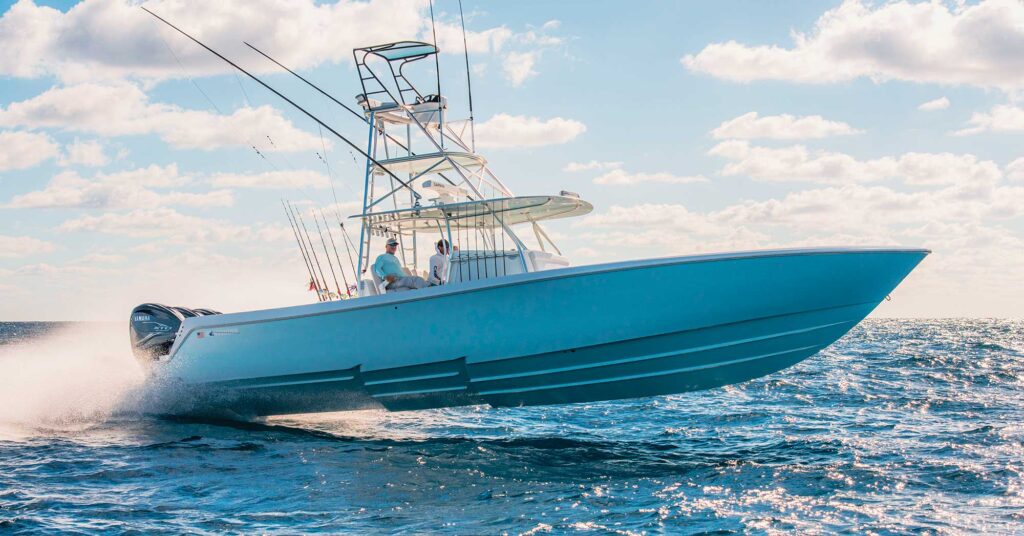
Not all hulls trim the same. Deep-V designs benefit the most from aggressive down-trim in rough water. Modified-V hulls—something like 16 to 18 degrees deadrise—are a compromise. They'll handle some chop with down-trim but won't slice as cleanly as a deep-V. Flat-bottoms and shallow-V hulls are rough-water nightmares no matter how you trim them. They're built for calm water speed, and that's where they belong.
Stepped hulls add complexity. In calm water at high speed, steps reduce wetted surface and increase efficiency—you can gain 5 to 10 knots. In rough water, they need careful trim to avoid instability. The steps can cause the hull to lose bite if you trim too high, and you'll feel it immediately as the boat starts to slide or lose directional control.
Catamarans and tunnel hulls are their own category. They're stable platforms and often need less trim adjustment than a mono-hull, but in a following sea, trimming down keeps the bow from diving. I've worked on cats where operators barely touch the trim because the hull does most of the work, but that doesn't mean you ignore it.
Practical Steps for Rough Water Trimming
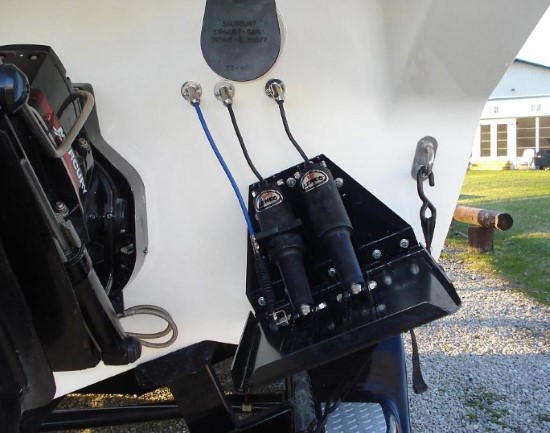
Start at neutral trim when you're getting underway. Once you're at cruising speed and hitting chop, incrementally trim down. Drop the bow until the pounding decreases and the ride smooths. If you have tabs, start by lowering them equally—maybe 2 to 4 degrees down. Adjust from there based on how the boat reacts.
If waves are hitting from one side (quartering sea), drop the tab on the side taking the impact slightly more than the other. This levels the boat and reduces roll. Watch your speed. You're not going to run 50 mph in 4-foot seas unless you've got a hull and setup designed for it, and even then, it's a beating. Slow down, trim down, let the hull work.
In head seas, trimming down is non-negotiable. Bow needs to cut, not launch. In a following sea, you might actually trim up slightly to keep the stern from squatting, but don't overdo it or the bow will dig in when a wave passes under you.
Fuel Economy and Efficiency

Trimming isn't just about comfort. Running the wrong trim in any condition kills fuel economy. Too high in calm water and the prop ventilates, RPMs spike, and you burn fuel without gaining speed. Too low and you're plowing, creating unnecessary drag.
In rough water, the efficiency equation shifts. You're already burning more fuel fighting waves and wind. Proper down-trim reduces hull slamming, which means the engine isn't constantly loading and unloading as the prop comes out of the water. Smooth, consistent power delivery is more efficient than the engine revving and bogging every few seconds.
I've seen operators cut their fuel consumption by 10 to 15 percent just by learning to trim properly for conditions. That's real money over a season, and it's less wear on the engine. You can learn more about trimming your outboard for optimal fuel consumption to save even more on fuel.
Load and Weight Distribution
Trim adjustments also depend on how the boat's loaded. Heavy bow load (extra fuel, gear, passengers up front) means you might need more up-trim in calm water to get the bow up and on plane. Light bow load means less trim needed. In rough water, a heavier bow actually helps—it keeps the sharp sections in the water and cutting. A light bow in chop will pound worse because there's less weight holding it down.
Aft-heavy boats (big outboard, passengers in the stern) need careful trim management. Too much up-trim and the bow skies, too much down-trim and the stern squats. This is where trim tabs earn their keep—you can level the boat without changing engine trim.
Fuel burn shifts weight too. Start a run with full tanks, you've got weight everywhere. By the end, tanks are down, and the boat rides differently. I adjust trim as fuel burns off, especially on longer offshore runs. Managing weight and trim is a key part of weight distribution for speed, essential for an efficient ride.
Safety Considerations

Running wrong trim in rough water isn't just uncomfortable, it's dangerous. Too much up-trim and you can't see over the bow—you're blind to what's ahead. In crowded or shallow waters, that's a disaster waiting to happen. Excessive down-trim in calm water can cause the bow to dig in during a turn, especially at speed. I've seen boats nearly flip from operators cranking the wheel with the engine trimmed all the way down.
If you lose trim function mid-run (hydraulic failure, electrical issue), you're stuck with whatever angle the engine's at. In rough water, if it's trimmed high when it fails, you're in for a rough ride home. Carry tools to manually adjust if your system allows, and know how your backup works. Some systems have a manual release valve—learn where it is before you need it.
Maintenance Tie-In

Trim systems take a beating. Hydraulic rams on outboards and sterndrives see constant use, and they're exposed to saltwater. If you're running in rough conditions and constantly adjusting trim, you're putting more demand on the system.
After every saltwater run, flush your engine with fresh water. This keeps salt from corroding the trim rams, seals, and fittings. Salt buildup will seize a trim system faster than anything else I've seen in the shop. For detailed maintenance tips, see avoiding common DIY maintenance mistakes.
Explore more about marine parts and boating essentials at JLM Marine.