


Comparing Propeller Pitches: Finding the Best Pitch for Your Boat
- What Pitch Actually Does
- How Pitch Changes RPM and Performance
- Matching Pitch to How You Actually Use the Boat
- The WOT Test: How to Dial In Your Pitch
- 3-Blade vs. 4-Blade: How Blade Count Affects Pitch Choice
- Cupping and Rake: The Hidden Pitch Adjustments
- Material: Aluminum vs. Stainless Steel and Flex
- OEM vs. Aftermarket Props: Quality and Cost
- Symptom/Solution Quick Reference
- Practical Mistakes to Avoid
- When to Call for Help
- Ventilation vs. Cavitation: What's Actually Happening
- Slip Calculation: What to Expect
- Weight Distribution and Pitch Tweaking
- Finding Propeller Numbers on a Dirty Hub
- Quick Summary
- Sources


Your engine's at 4800 RPM wide-open when the manual says it should be hitting 5500. Or maybe you're over-revving at 6200 when the redline's 6000. Nine times out of ten, you've got the wrong pitch. I've spent two decades pulling props off transoms, and the number of folks running around with the factory prop—completely wrong for how they actually use their boat—would surprise you.
Pitch is your final gear ratio to the water. Get it wrong and you're either lugging the engine (over-propped) or screaming it past redline (under-propped). Both kill engines. The fix is straightforward: match your propeller pitch to your engine's wide-open-throttle RPM range and how you run the boat.
What Pitch Actually Does

Pitch is stamped right on the hub, usually the second number in something like "14 x 19"—that's 14-inch diameter, 19-inch pitch. The 19 means the prop would theoretically move forward 19 inches in one full turn if water were solid. Water isn't solid, so you get "slip," but that number still dictates engine load.
Higher pitch = more distance per revolution = higher top speed if your engine has the grunt to spin it up to spec. Lower pitch = less distance per turn = faster acceleration and better hole shot, but you cap out earlier on speed. Think of it like gears in a truck. You wouldn't tow a trailer in fifth gear, and you wouldn't run the highway in second.
How Pitch Changes RPM and Performance
The 1-inch rule: Changing pitch by 1 inch typically shifts your WOT RPM by 150–200 RPM on most outboards and sterndrives.12345 So if you're 400 RPM low at WOT, dropping 2 inches of pitch (say, from 21 to 19) should bring you up about 300–400 RPM.23456
Over-propped (pitch too high): Engine can't reach its rated WOT RPM. You get sluggish acceleration, trouble getting on plane, poor fuel economy, and the engine runs hot because it's constantly working harder than it should. We pulled a 23-pitch prop off a guy's 150 Yamaha last season—engine was only hitting 4600 RPM when the book called for 5000–6000. Swapped him to a 21, and he jumped to 5400 RPM with noticeably better midrange and cooler running temps.78
Under-propped (pitch too low): Engine screams past max RPM at WOT. You're burning extra fuel, stressing internals, and you won't see the top speed you should because the engine's spinning air, not moving water efficiently. Both scenarios shorten engine life, as marine consultant Steve D'Antonio points out in his propeller technical notes—chronic overloading from too much pitch and overspeeding from too little both damage motors over time.9
Real Numbers: Pitch and Speed Trade-Offs
A Fort Lauderdale-based case study ran the same boat with only pitch changed—19-inch to 23-inch—and saw cruise speed jump from 31.5 mph to 37.3 mph with about 18% better fuel efficiency at that cruise setting.10 The catch: hole shot suffered because the higher pitch loaded the engine harder off the line.
Conversely, BoatTEST's controlled trials show that dropping pitch improves time-to-plane and low-speed acceleration, but you give up that top-end cruise number.1 There's no free lunch—you're always trading one performance metric for another.
Matching Pitch to How You Actually Use the Boat
Your engine manual lists a WOT RPM range, usually something like 5000–6000 RPM for modern outboards.246 The "best" pitch is the one that puts you in that range under your typical load—fuel, passengers, gear—while serving your primary use case.
Watersports and towing: Lower pitch. You need strong acceleration to pull a skier out of the water or get a tube on plane quickly. Sacrificing 2–3 mph of top speed to gain instant throttle response is the right call here.148
Cruising and fuel economy: Moderate pitch that keeps the engine in its efficient mid-range band. You're not gunning it every time, and you're not dragging along at hull speed. Aim for the middle or upper end of the WOT range so you have power on tap without constantly wringing the motor.411
Top-speed performance: Higher pitch, but only if your engine can still hit spec RPM at WOT. If you chase pitch without the horsepower to back it up, you'll bog down and actually go slower. We see this all the time with folks who read a forum post about someone else's boat and just bolt on the same prop without checking their own numbers.
Heavy loads or rough water: Drop a size. A boat loaded with four adults, a cooler, and 40 gallons of fuel weighs a lot more than the same hull with just the driver. If you regularly run heavy, going down 1 inch of pitch can keep the engine from lugging and improve overall driveability.812
The WOT Test: How to Dial In Your Pitch

Load the boat exactly how you'd run it on a normal day—same fuel level, same passengers, same gear. Then:
- Warm up the engine and get on a flat, calm stretch of water.
- Trim the boat to its best running angle for speed and stability.
- Go to wide-open throttle and hold it for 10–15 seconds. Watch your tachometer.
- Record max RPM. Compare it to your engine manual's WOT spec.
Results:
- RPM in range (say, 5200 in a 5000–6000 window): You're good. For everyday use, aiming for the upper half of the range gives you a bit more usable power without risk.
- RPM too low (example: 4700 RPM): You're over-propped. Drop pitch by 1–2 inches.
- RPM too high (example: 6300 RPM): You're under-propped. Add pitch by 1–2 inches.
Re-test after every prop change because hull, weight, and conditions all affect the outcome. We've had customers swap props three times before landing on the perfect fit—it's trial and error with data.
When Numbers Don't Add Up: Edge Cases
Standard pitch math assumes sea-level operation on a planing hull with a modern, efficient outboard. Real life isn't always standard:
High altitude: Thin air robs power. An engine that makes 150 HP at sea level might only put out 120 HP at 5,000 feet elevation. You may need to drop pitch to compensate for the power loss, even though charts say otherwise.
Heavy-slip hulls (pontoons, loaded cats): These don't break onto plane cleanly, so they slip more than a typical deep-V. The 150–200 RPM-per-inch rule can be off; you might see smaller RPM changes per pitch increment. Test, don't guess.
Cavitation or ventilation issues: If you see the engine suddenly rev up mid-run (not a clean acceleration, but a sudden spike and loss of thrust), you're likely sucking air at the prop. This isn't a pitch problem—it's a mounting height, trim, or blade-damage issue. Fix that before you swap pitch. For more information on this issue, see Cavitation vs Ventilation: Why Your Prop Isn’t Gripping Water.
3-Blade vs. 4-Blade: How Blade Count Affects Pitch Choice
Blade count changes how much water the prop grabs per revolution. A 4-blade prop of the same diameter and pitch as a 3-blade has more total blade area, so it bites harder and typically loads the engine more.
Switching from 3-blade to 4-blade usually means you need to drop pitch by 1–2 inches to maintain the same WOT RPM.2 The 4-blade will give you better hole shot and smoother low-speed handling (great for heavy boats or rough water), but if you keep the same pitch, expect RPM to drop and top speed to suffer.
Example: A boat running a 3-blade 19-pitch at 5500 RPM might only hit 5200 RPM with a 4-blade 19-pitch. Dropping to a 4-blade 17 or 18 brings RPM back up. Use the same WOT test to verify.
Cupping and Rake: The Hidden Pitch Adjustments
Cupping is a small curved lip on the trailing edge of each blade. It effectively adds about 1 inch of pitch without changing the stamped number on the hub.2 A prop stamped "19-inch" with aggressive cup might load the engine like a 20-inch flat blade. This is intentional—cupping reduces slip and ventilation, especially on high-performance setups. But if you're marginal on RPM, a heavily cupped prop can push you over-propped.
Rake is the angle of the blades relative to the hub. Higher rake (blades swept back) can lift the bow and reduce drag at speed, but it also affects load and handling. It's less about pitch comparison and more about fine-tuning after you've picked the right pitch range.
Bottom line: if you're testing props, start with standard cup and rake, then tweak from there. Don't assume two props with the same stamped pitch will perform identically if one has extra cup.
Material: Aluminum vs. Stainless Steel and Flex 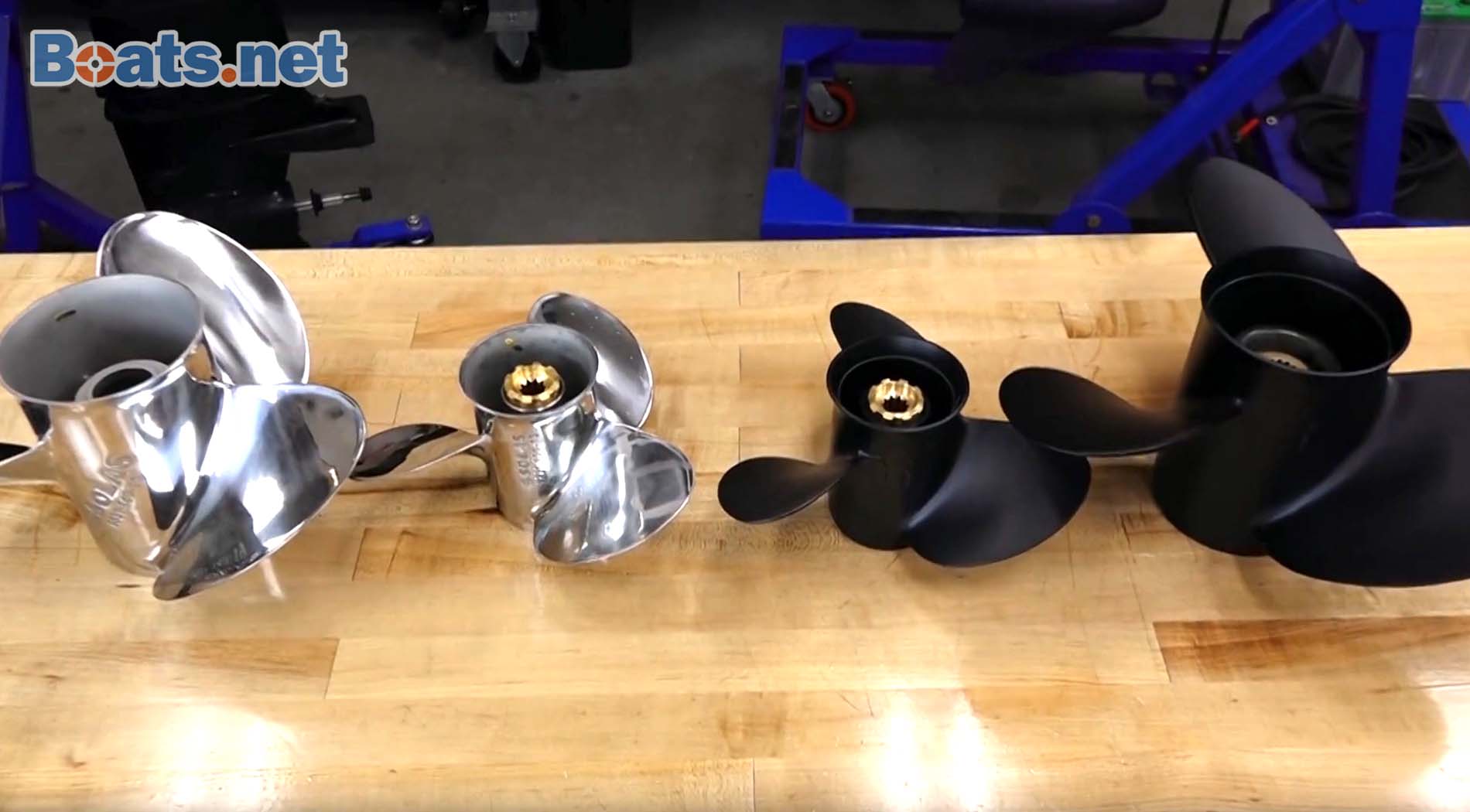

Aluminum props are cheaper and flex more under load. That flex acts like a slight reduction in effective pitch at higher RPM—blade tips bend back a bit, reducing bite. For most recreational setups under 150 HP, aluminum is fine and cost-effective.
Stainless steel props are stiffer, so they hold their shape and deliver more consistent thrust across the RPM range. Because they don't flex, a stainless 19-pitch often loads the engine harder than an aluminum 19-pitch. If you're switching from aluminum to stainless, you might need to drop pitch by 1 inch to maintain the same RPM, especially at WOT.2
Stainless also survives rock strikes and wear better, but costs more. For performance boats or commercial use, the extra expense is worth it. For weekend cruising on clean water, aluminum does the job.
When comparing pitches across materials, always re-test WOT RPM—don't assume the numbers transfer one-to-one. For info on comparing stainless steel and aluminum props, see Stainless Steel vs. Aluminum Propellers: Which Is Better?
OEM vs. Aftermarket Props: Quality and Cost
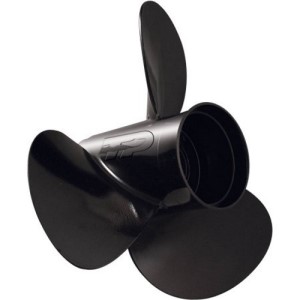
OEM props are solid, no argument. But you're paying a premium for the manufacturer's logo stamped on the hub. A factory Yamaha or Mercury prop is good quality, but it's also 30–50% more expensive than a quality aftermarket option.
Cheap no-name props are a different story. We've seen garbage from random online sellers—pitch stamped 17 but actually closer to 15 when measured, blades out of balance causing vibration, soft aluminum that bends on the first dock bump. You save $40 up front and spend $400 fixing the damage later. Not worth it.
Reputable aftermarket (like parts from JLM Marine or similar) hits the sweet spot. Many of these are made in the same factories that produce OEM parts, just sold without the brand markup. Quality control is tight, dimensions are accurate, and you save money without gambling on junk. We source direct from manufacturers and ship worldwide—guy in Australia couldn't find an OEM prop for his older 90 HP Suzuki, we matched the specs via email and sent him a quality replacement that's been running two seasons without issue. For more guidance importing OEM quality parts, see JLM Marine: Direct from Factory Boat Parts | Free Worldwide Shipping.
If you're comparing pitches to optimize performance, don't handicap yourself with a cheap prop. Get a known-good part, measure real-world results, then make informed decisions.
Symptom/Solution Quick Reference

| Symptom | Likely Cause | Fix |
|---|---|---|
| WOT RPM below spec, sluggish acceleration, engine runs hot | Over-propped (pitch too high) | Drop pitch 1–2 inches |
| WOT RPM above spec, engine screaming, poor fuel economy | Under-propped (pitch too low) | Raise pitch 1–2 inches |
| Great hole shot, poor top speed | Pitch too low for your use case | Raise pitch 1 inch, re-test |
| Slow to plane, good top speed once there | Pitch too high for load | Drop pitch 1 inch, or reduce boat weight |
| Sudden RPM spike mid-run, loss of thrust | Ventilation or cavitation (air at prop) | Check engine height, trim angle, and blade condition—not a pitch issue |
| Vibration at all speeds | Prop damaged, out of balance, or wrong hub | Inspect prop for dings, check hub for spun rubber, replace if needed |
Practical Mistakes to Avoid
Copying someone else's setup: A prop that works on a 20-foot center console with a single 150 HP Yamaha won't necessarily work on your 22-foot pontoon with the same engine. Hull shape, weight, and usage are different. Start with manufacturer recommendations, then test your own boat.
Testing with an empty boat: If you normally fish with two buddies and 30 gallons of fuel, test under those conditions. An empty boat will hit higher RPM with any given pitch, and you'll end up over-propped for real-world use.
Ignoring load changes: You can't run the same pitch year-round if your load varies significantly. A boat that's perfect for solo summer cruising might need a pitch drop when you add four passengers and a full cooler for fall fishing trips. Keep a spare prop if your use case swings that much.
Buying based on price alone: We've pulled cheap props off boats where the blades were visibly asymmetric and the hub was already starting to slip after a dozen hours. Quality matters. Spend the extra $50 for a known part.
Skipping the re-test: Changed pitch? Run a WOT test before you assume it's right. We've seen guys bolt on a new prop, run it once at half throttle, and declare victory—then wonder why the engine's lugging at WOT the next weekend.
When to Call for Help
If you've tested two or three props in the recommended range and still can't get your engine into its WOT spec, something else is wrong. Possible issues:
- Spun hub: The rubber inside the prop hub has slipped, so the prop spins on the shaft without full bite. You'll see RPM but no corresponding thrust. Replace the prop or hub kit.
- Engine tune or fuel system: If the engine's down on power due to bad fuel, a clogged filter, or ignition problems, no prop will fix it. Address the engine first. For troubleshooting fuel issues, see Outboard Motor Leaking Fuel & Running Rough?
- Hull damage or excessive drag: Heavy bottom paint buildup, a damaged keel, or a bent skeg can all rob speed and load the engine abnormally. Inspect the hull.
- Incorrect tach calibration: Rare, but if your tachometer is reading wrong, your data is garbage. Verify with a handheld diagnostic tool or GPS-based RPM calculator.
We help folks sort this out all the time. Send us your engine model, hull type, current prop specs, and observed WOT RPM, and we can usually point you in the right direction. Email support works—we've matched parts for customers from Florida to Alaska to Australia based on a few photos and details. Visit our JLM Marine homepage for contact info and support.
Ventilation vs. Cavitation: What's Actually Happening
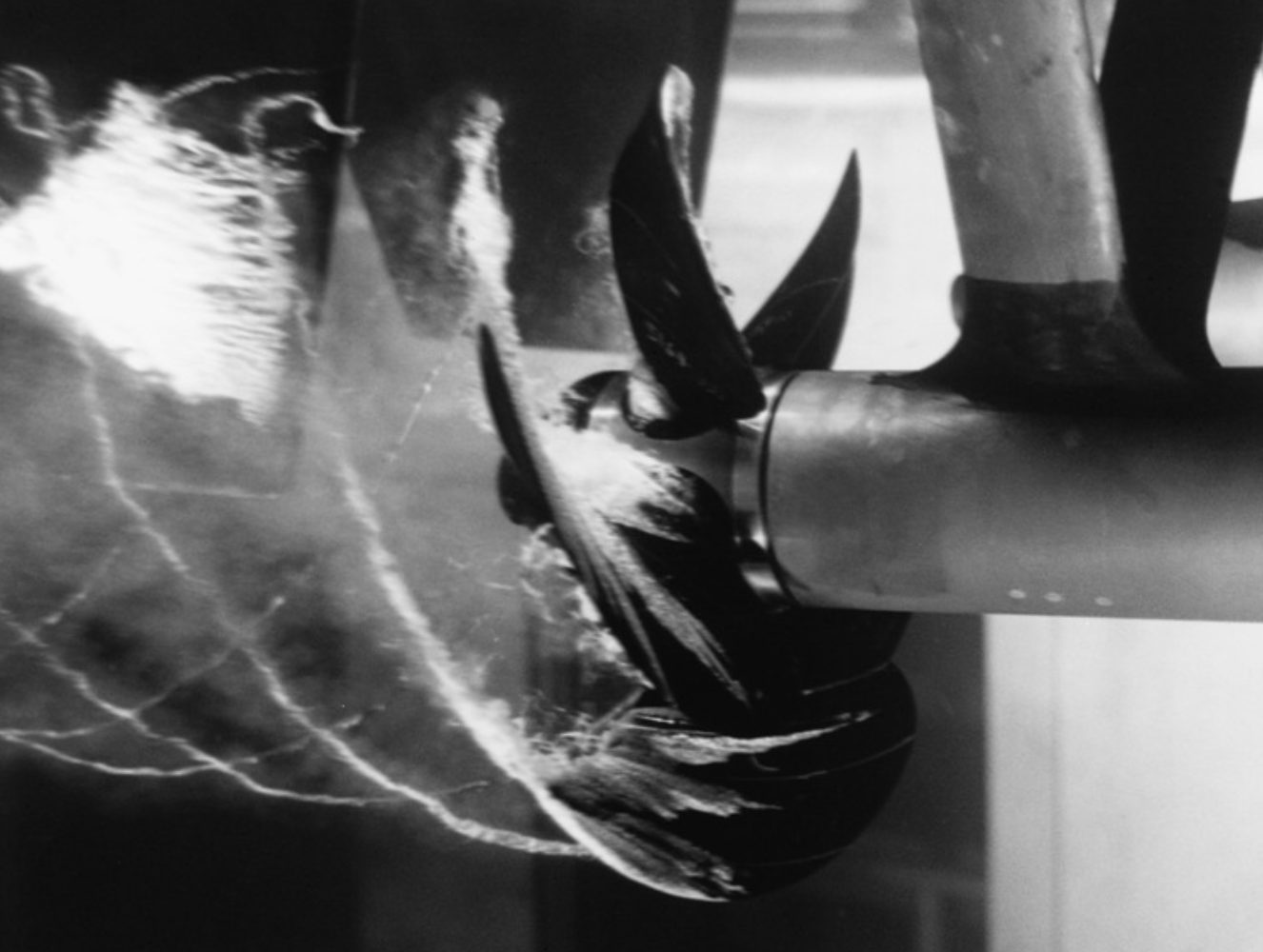
Both cause a sudden loss of thrust and RPM spike, but they're different problems:
Ventilation: Air is being drawn down from the surface into the prop. Common when trimmed too high, when running in following seas, or during hard acceleration if the prop breaks the surface. Fix: lower the engine, adjust trim, or add a stabilizer fin.
Cavitation: Water pressure drops so low on the blade face that it boils, forming vapor bubbles that collapse violently. This erodes metal over time and usually happens with a damaged or poorly designed prop. Fix: inspect blades for nicks and dings, replace if damaged, or switch to a prop with better blade geometry.
Neither is solved by changing pitch. If you see these symptoms, address the root cause before you start swapping props.
Slip Calculation: What to Expect

No prop is 100% efficient. "Slip" is the difference between theoretical distance traveled (based on pitch) and actual distance. Healthy slip for most recreational boats is 10–20%.2
Example: A 19-inch pitch prop at 5000 RPM should theoretically move the boat 19 inches × 5000 RPM ÷ 12 inches/foot ÷ 60 minutes/hour × 60 seconds/hour ≈ 47.5 mph. If your GPS shows 40 mph, your slip is about 16%—normal.
If slip jumps above 25–30%, something's wrong: spun hub, damaged blades, or severe cavitation. Check the prop and hub before assuming you need a different pitch.
Weight Distribution and Pitch Tweaking
Where you put the load affects how a given pitch performs. If you pack the bow with passengers, the boat squats and needs more power to get on plane—effective over-propping. Shift weight aft (or just move passengers toward the stern), and you reduce bow-down force, making the same pitch easier to spin up.
This isn't a fix for a badly chosen pitch, but it's a tool to fine-tune. If you're borderline on RPM (say, 100 RPM low at WOT with normal load), redistributing weight can sometimes be enough to bring you into range without buying a new prop.
Use trim tabs or an adjustable jack plate the same way: small changes in running angle can shift engine load and RPM by 50–100. Make sure your boat is trimmed and loaded properly before deciding a prop is wrong. For more tips on jack plates, see Installing a Jack Plate: Benefits for Shallow Water Boating.
Finding Propeller Numbers on a Dirty Hub

If your prop's been in saltwater for years, the stamped numbers are often corroded or covered in growth. Here's where to look:
- Hub inner barrel (the part that slides onto the propshaft): numbers are usually stamped here. Scrape off barnacles and corrosion with a flat screwdriver or wire brush.
- Between blades on the barrel face: some manufacturers stamp pitch and diameter here.
- Blade roots near the hub: less common, but some props have it.
If you still can't find the numbers, measure the diameter (tip to tip across the hub) and pitch (difficult to measure accurately without a jig—best to just replace the prop if you're unsure). Or email a photo to a parts supplier like us; we can usually ID the prop by shape, blade count, and hub size, then match you to the correct specs.
Quick Summary

- Match pitch to put your engine in its WOT RPM range with typical load.249
- 1 inch of pitch ≈ 150–200 RPM shift.12345
- Lower pitch = better acceleration, worse top speed.
- Higher pitch = better top speed (if engine can reach WOT), worse acceleration.
- Test under real-world load, not an empty boat.
- Account for blade count, cupping, and material when comparing props.
- Avoid cheap no-name props; quality aftermarket saves money without the risk.
When you dial in the right pitch, the boat feels different—smoother power delivery, cleaner hole shot, engine purring instead of straining. It's one of the easiest upgrades to get wrong and one of the most satisfying to get right.
Pro tip: Keep a wire brush and a can of fogging oil in your toolkit. After each season (or every few months if you run saltwater), pull the prop, brush the shaft clean of any growth or corrosion, and spray a light coat of fogging oil on the splines before you reinstall it. Keeps the prop from seizing on the shaft and makes future swaps a five-minute job instead of an all-day fight with a gear puller.
Sources
- https://boattest.com/article/how-does-propeller-pitch-affect-boats-performance
- https://jlmmarine.com/blogs/outboard-101/boat-propeller-guide-selection-maintenance-and-performance-optimization
- https://www.go2marine.com/blogs/boat-steering-drive/boat-propeller-fit-guide
- https://www.discoverboating.com/resources/propeller-pitch
- https://www.epropulsion.com/news-media/electric-boating-blog/prop-diameter-pitch-guide
- https://www.palmettoboatsales.com/blog/understanding-propeller-pitch-a-guide-for-boaters
- https://www.hallbergmarine.com/2023/04/03/understanding-the-pitch-of-a-boat-propeller/
- https://propdepot.com/how-does-propeller-pitch-affect-boat-performance
- https://stevedmarineconsulting.com/wp-content/uploads/2019/03/Propellers.pdf
- https://www.youtube.com/watch?v=HnAmAKVfWY0
- https://www.westmarine.com/west-advisor/Selecting-a-Propeller.html
- https://www.solas.com/exec/msg.php?mid=56&pid=56&lg=E
- https://jlmmarine.com/blogs/outboard-101/cavitation-vs-ventilation-why-your-prop-isn-t-gripping-water
- https://jlmmarine.com/blogs/outboard-101/stainless-steel-vs-aluminum-propellers-which-is-better
- https://jlmmarine.com/
- https://jlmmarine.com/blogs/outboard-101/outboard-motor-leaking-fuel-running-rough-diagnose-038-fix-mercury-75hp-2-stroke-issues
- https://jlmmarine.com/blogs/outboard-101/installing-a-jack-plate-benefits-for-shallow-water-boating
Hi—I’m Jim Walker
I grew up in a Florida boatyard, earning pocket money (and a few scars) by rebuilding outboard carbs before I could drive. That hands-on habit carried me through a Ph.D. in mechanical engineering, where I studied how salt water quietly murders metal.
I spent ten years designing cooling systems for high-horsepower outboards, then joined JLM Marine as CTO. We bench-test every new part in the lab, but I still bolt early prototypes onto my own 23-foot skiff for a weekend shake-down— nothing beats real wake and spray for finding weak spots.
Here on the blog I share the fixes and shortcuts I’ve learned so your engine—and your day on the water—run smooth.

Para propietarios de embarcaciones:
Para ayudarlo a mantener y reparar sus motores marinos, esperamos que los siguientes recursos puedan serle de utilidad:
- Guía de números de serie de Mercury
- Manuales del propietario de Mercury
- Guía de referencia oficial de números de modelo en formato PDF de BRP
- Guía de números de serie de Johnson
-
Accesorios para barcos de JLM Marine
Acerca de JLM Marine
Fundada en 2002, JLM Marine se ha consolidado como un fabricante dedicado de piezas marinas de alta calidad, con sede en China. Nuestro compromiso con la excelencia en la fabricación nos ha ganado la confianza de las principales marcas marinas a nivel mundial.
Como proveedor directo, evitamos intermediarios, lo que nos permite ofrecer precios competitivos sin comprometer la calidad. Este enfoque no solo promueve la rentabilidad, sino que también garantiza que nuestros clientes reciban el mejor valor directamente del proveedor.
Estamos entusiasmados de ampliar nuestro alcance a través de canales minoristas, llevando nuestra experiencia y compromiso con la calidad directamente a los propietarios de embarcaciones y entusiastas de todo el mundo.
Accesorios para barcos en oferta
- $54.00
- $54.00
- Unit price
- per
- $38.50
- $38.50
- Unit price
- per
- From $39.13
$45.50- From $39.13
- Unit price
- per
- $53.50
- $53.50
- Unit price
- per
- From $54.00
- From $54.00
- Unit price
- per
- $34.50
- $34.50
- Unit price
- per


- $34.50
- $34.50
- Unit price
- per


- $54.00
- $54.00
- Unit price
- per


- $54.00
- $54.00
- Unit price
- per
- $23.50
- $23.50
- Unit price
- per
-
Red
-
Blue
- $45.00
- $45.00
- Unit price
- per
- $32.00
- $32.00
- Unit price
- per
- $40.00
- $40.00
- Unit price
- per
- $22.80
- $22.80
- Unit price
- per
-
Red
-
Blue

- $31.50
- $31.50
- Unit price
- per
- $22.80
- $22.80
- Unit price
- per
-
Red
-
Blue


- $59.00
- $59.00
- Unit price
- per

- $54.00
- $54.00
- Unit price
- per

- $22.80
$27.00- $22.80
- Unit price
- per

- $32.00
- $32.00
- Unit price
- per