

Planing vs. Displacement: Running Your Boat Efficiently
- Running Displacement Hulls at the Right Speed
- Getting Planing Hulls Up and Running
- Planing Hulls at Displacement Speeds
- Semi-Displacement Hull Operation
- Fuel Consumption Reality Check
- Maintenance Differences by Hull Type
- Choosing the Right Operating Mode
- Speed vs. Conditions
- Parts Quality for Both Hull Types
- Operating Cost Comparison
- Trim and Load Effects
- Practical Speed Selection
- Weather and Sea State Adaptation
- Regional Considerations in the US

Your hull type dictates fuel burn more than any other single factor. If you're pushing a displacement hull past its limit or crawling along in a planing boat, you're wasting money. After 20 years in the shop, I've seen plenty of owners blow through fuel budgets because they don't understand what their hull is actually designed to do.
Running Displacement Hulls at the Right Speed

Displacement hulls move through water, not over it. They're limited by hull speed—roughly 1.34 times the square root of the waterline length. For a 40-footer, that's around 8.5 knots. Push past that and fuel consumption doubles or triples for maybe half a knot of extra speed.
The sweet spot is just under hull speed. A 40-foot displacement trawler with a single 185 hp diesel burns about 1.5 gallons per hour at 6-7 knots, getting you 3.4-3.5 nautical miles per gallon. That's the kind of efficiency that lets Great Harbour trawler owners run from Maine to Miami on one tank.
We see customers running the Great Loop average 2.2 miles per gallon over 450-500 miles at 6.5 knots. That's what a displacement hull is built for—covering distance without hemorrhaging diesel. The fuel curve is flat until you approach hull speed, then it goes vertical.
Key operating points:
- Stay between 0.9 and 1.2 times your hull speed calculation for best economy
- Watch your tachometer—most single-screw trawlers cruise efficiently at 1,700-1,800 RPM
- If you're making a big wake, you're going too fast and burning fuel for nothing
Getting Planing Hulls Up and Running

Planing hulls need to break free of the water to work efficiently. Below 12-15 knots, they're plowing through water like a barge—burning massive fuel for low speed. The transition from displacement to planing mode is the worst possible operating range. You're pushing maximum volume through the water while making almost no speed.
Once on plane, efficiency improves dramatically, but you're still burning way more than a displacement hull. Real numbers from owners: 0.6-0.65 nautical miles per gallon at 20-25 knots, versus 3.5 nmpg at 7.3 knots—that's five times worse fuel economy at speed.
The problem is the "hump speed" right before you get on plane. Your bow is up, visibility is terrible, the engine is screaming, and you're burning fuel at the maximum rate while barely moving. This is where we see the most stress on cooling systems and motor mounts—full load, maximum resistance, engine bay temps climbing.
Operating guidelines:
- Get through the transition phase quickly—don't linger at hump speed
- Trim tabs help the boat pop onto plane faster, reducing fuel waste
- Once on plane, back off throttle to find the minimum speed that keeps you there
- Running at 3,000-3,500 RPM on plane is usually more efficient than 2,500 RPM half-planing
Planing Hulls at Displacement Speeds
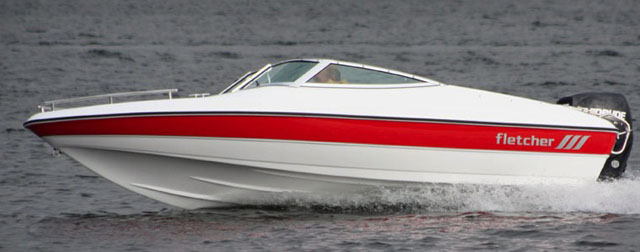
Some owners try running planing hulls slow to save fuel. It works, but not as well as you'd think. Same boat, one engine at 5 knots hits 4.5 nmpg, which sounds great until you realize a purpose-built displacement hull would do better with less noise and vibration.
Planing hulls have flat or shallow-V bottoms that create more wetted surface area at displacement speeds. That extra drag means higher fuel consumption compared to a round-bilge displacement hull doing the same speed. You can extend range this way—theoretically turning a 350-nautical-mile range into 1,800+ nautical miles on the same fuel—but you'll be doing 7 knots for days.
The physics work against you. The hull shape optimized for lift at 25 knots creates resistance at 7 knots. We get parts orders from ICW cruisers who run planing hulls slow out of necessity, but they're always fighting higher fuel consumption than the trawlers running alongside them.
Semi-Displacement Hull Operation

Semi-displacement or modified-V hulls split the difference. They won't plane fully but can run faster than pure displacement hulls without the efficiency disaster of a planing hull at low speed. According to naval architect Patrick J. Bray's data on lobster boat-type hulls, these designs achieve 30% better efficiency than comparable vessels across a wide speed range.
The trade-off is they don't excel at either extreme. You won't get pure displacement economy at 7 knots, and you won't hit 30 knots on plane. But if you need to run 12-18 knots regularly, semi-displacement makes sense. The hull form reduces slamming compared to pure planing hulls while offering better speed potential than displacement.
Speed range characteristics:
- Efficient from roughly 0.9 × √waterline length up to 2.3 × √waterline length
- Less rolling than displacement hulls, less pounding than planing hulls
- Popular in US lobster boats and downeast-style cruisers for this versatility
Fuel Consumption Reality Check
The difference in operating costs is brutal. Let's use real numbers:
Displacement mode (both hull types):
- Pure displacement hull: 3.4-3.5 nmpg at 7 knots
- Planing hull forced slow: 3.5-4.5 nmpg at 5-7 knots (noisier, higher stress)
Planing mode:
- Same planing hull at 20-25 knots: 0.6-0.65 nmpg
- Range drops from 1,800+ nautical miles to 350 nautical miles on 2,500 liters
At current US diesel prices around $3.50-4.00 per gallon, that difference adds up fast. A 100-nautical-mile run in a planing hull at 25 knots burns roughly 150-160 gallons ($525-640). The same trip in a displacement hull at 7 knots takes longer but uses maybe 30 gallons ($105-120).
Speed costs money. If you're running a planing hull, you need to be on plane or you're in the worst possible operating range. If you're running displacement, trying to go fast just dumps fuel overboard with no real gain.
Maintenance Differences by Hull Type

Hull design affects what breaks and when. Planing hulls operate under higher stress—higher RPMs, higher speeds, more slamming in chop. We see stress cracks in gel coat around stringers and transom corners, especially on older boats pushed hard. The slamming loads at speed can loosen fasteners, crack motor mounts, and damage electrical connections.
Displacement hulls run steadier but stay in the water year-round on many installations. Bottom paint and through-hull maintenance become more critical. Blistering (osmosis) in fiberglass is more common because the hull never dries out. Zincs corrode predictably, and we ship more sacrificial anodes to displacement hull owners than planing hull owners who trailer their boats.
Planing hull stress points:
- Inspect transom and stringer attachments annually for cracks from pounding
- Check motor mounts and steering components more frequently—vibration loosens hardware
- Fuel system components see higher flow rates and pressures; filters need regular changes—find quality replacements in our fuel filter collection
- Cooling systems work harder at high RPM; impellers, thermostats, and hoses fail faster—shop our cooling system parts to keep your engine reliable
Displacement hull considerations:
- Bottom cleaning every 3-4 months to prevent marine growth drag penalties
- Through-hull fittings and seacocks require vigilant monitoring for corrosion
- Shaft seals and cutlass bearings wear from continuous rotation at low speed
- Engine maintenance is less demanding at lower RPM, but longer run times accumulate hours—consider OEM quality parts from our outboard motor parts collection to ensure durability
Choosing the Right Operating Mode

Your intended use dictates everything. Great Loop cruisers, liveaboards, and offshore passage-makers need displacement efficiency. You're covering thousands of miles, and fuel capacity limits your range more than time. Running slow saves enough money to actually afford extended cruising.
Weekend warriors, sportfishermen running to offshore grounds, and anyone who values time over fuel cost will prefer planing hulls. You get to the fishing grounds in an hour instead of four. The fuel bill stings, but you're maximizing water time on a weekend schedule.
The mistake is buying the wrong hull for your actual use. We've sold parts to plenty of owners who bought a fast boat for a slow-cruising lifestyle, or a trawler for weekend trips where they're always frustrated by the lack of speed. Match the hull to the mission.
Speed vs. Conditions
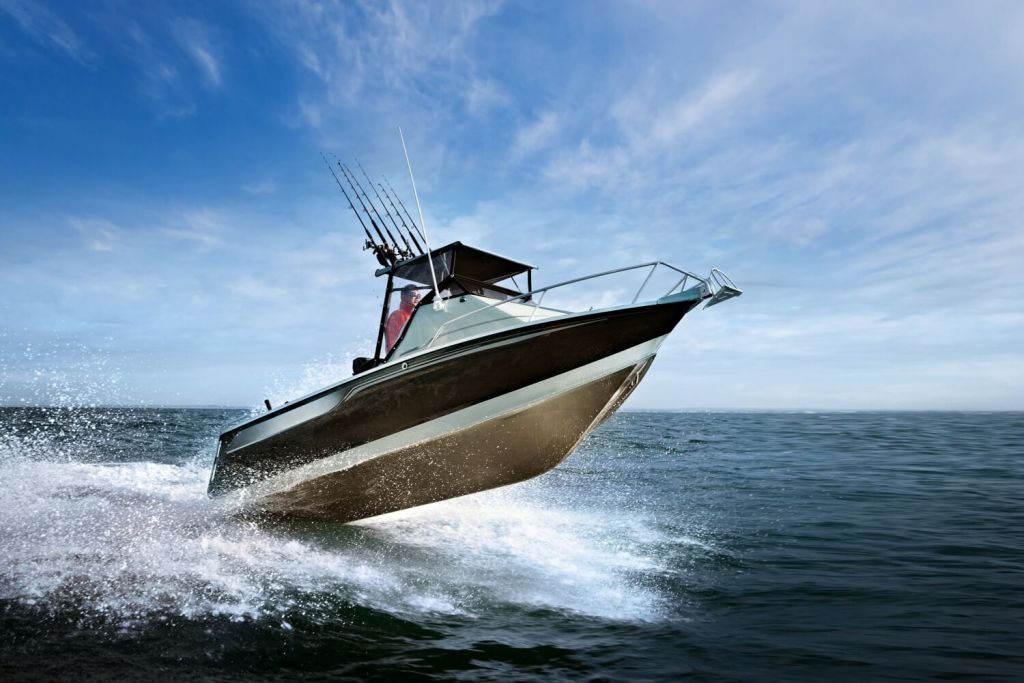
Displacement hulls handle rough water better at their operating speeds. They cut through waves instead of launching off them. In 3-4 foot chop, a displacement hull at 7 knots gives you a stable platform. That same sea state will beat the hell out of you in a planing hull unless you're fully on plane and skipping over the tops.
Planing hulls in displacement mode during rough conditions combine the worst of both worlds—slow speed, high fuel burn, and an uncomfortable ride. The flat bottom pounds instead of slicing. We hear from customers who cracked engine mounts or shook loose electrical connections trying to push through weather in a planing hull at 10 knots.
If you're stuck running slow in a planing hull due to sea state, you're burning fuel at displacement-hull rates while taking a beating. Better to wait for conditions or accept you bought the wrong boat for the water you're in.
Parts Quality for Both Hull Types
Whether you're running displacement or planing, the parts keeping your engine alive need to be right. Cheap aftermarket cooling components fail when you're on plane in a sportfish 20 miles offshore, or halfway through a Great Loop leg in a trawler. The $15 you saved on a sketchy impeller costs you a tow, a haul-out, or worse.
OEM parts work, but you're paying dealer markup for a box with a logo. The actual part often comes from the same factories producing quality aftermarket components. At JLM Marine, we stock factory-spec replacements—same quality, no middleman markup. A Yamaha impeller is a Yamaha impeller whether it has the dealer sticker or not, as long as the source is legitimate. Browse our cooling system impellers and repair kits to keep your cooling system in top shape.
The garbage-tier parts from random online sellers are where people get burned. Wrong materials, poor fitment, components that fail in weeks instead of seasons. You'll spend more time tearing the lower unit apart again than you saved on the part. For high-stress planing applications or critical long-range displacement systems, that risk isn't worth it.
Operating Cost Comparison
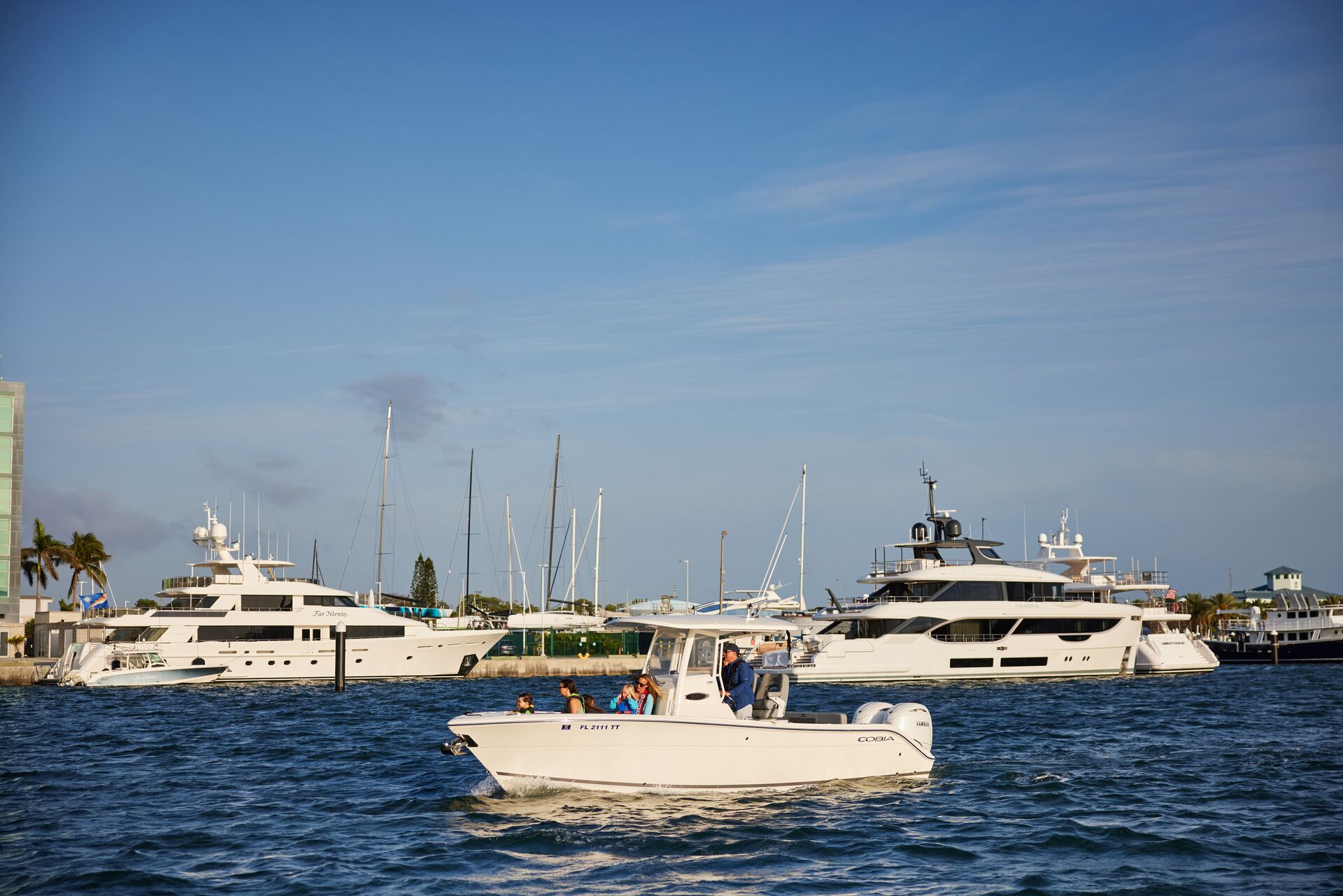
Run the numbers for your typical use before committing to a hull type. If you're planning 500-hour seasons covering long distances, displacement saves thousands annually. At 7 knots for 500 hours, a displacement hull burning 1.5 GPH uses 750 gallons ($2,625-3,000/year at $3.50-4.00/gallon).
A planing hull doing the same 3,500 nautical miles at 25 knots (140 hours) but burning 15-20 GPH uses 2,100-2,800 gallons ($7,350-11,200/year). You get there faster, but fuel becomes a major operating expense. Add higher engine maintenance from elevated RPMs, and the cost gap widens further.
For short, fast trips, the calculation flips. If you're running 2-3 hour trips on weekends (maybe 100 hours/year), even at planing speeds you're only burning 1,500-2,000 gallons ($5,250-8,000/year). The efficiency advantage of displacement becomes less relevant when total hours are low and time on the water is limited.
Trim and Load Effects
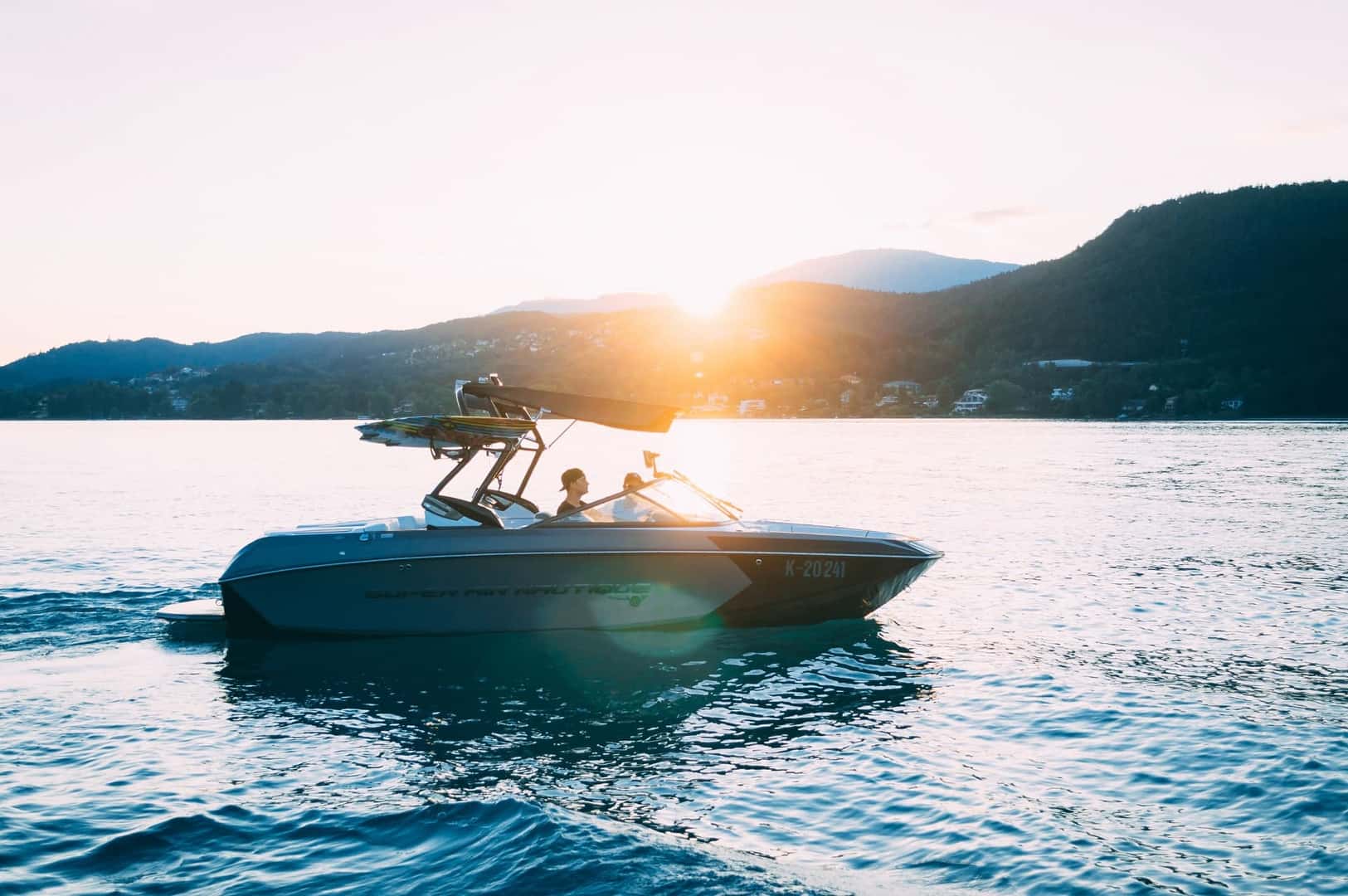
Proper trim changes fuel consumption significantly on planing hulls. Bow-high trim increases drag and kills efficiency. Bow-low trim can make the boat plow and prevent planing. The sweet spot is just enough trim to lift the bow and reduce wetted surface without forcing the stern down.
Overloading any hull hurts, but planing hulls suffer more. Extra weight requires more speed to achieve plane, burning more fuel in the transition phase. Displacement hulls simply sit deeper and push more water—less efficient, but not catastrophically so.
We see planing hull owners struggling to get on plane with full fuel, water, and gear aboard. They're burning excessive fuel trying to break free, often never achieving true planing speed. Displacement hulls care less about load distribution—they just settle deeper and keep pushing.
Practical Speed Selection
For displacement hulls, calculate your hull speed (1.34 × √waterline length) and plan to cruise at 0.9-1.0 times that number. A 36-foot waterline (6-foot square root) gives you 8 knots hull speed; cruise at 7.2-8 knots for best economy. Pushing to 8.5-9 knots might gain you half a knot for double the fuel burn.
For planing hulls, find your most efficient on-plane speed by testing at different RPMs. Most boats have a "sweet spot" where you're fully planing but not over-revving. It's usually 65-75% of maximum RPM. Below that you're semi-planing and inefficient; above that you're burning fuel for minimal speed gains.
If your mission requires displacement speeds in a planing hull regularly, you bought the wrong boat. Accept the higher fuel cost or sell it for a hull that matches your actual use. Trying to make a planing hull act like a trawler is expensive and frustrating.
Weather and Sea State Adaptation

Displacement hulls maintain efficiency across sea states better than planing hulls. In 2-3 foot seas, a displacement hull barely notices the change. Fuel consumption stays consistent, and ride quality remains predictable. You might slow slightly for comfort, but efficiency holds.
Planing hulls face a choice in rough water: slow down and pound through at terrible efficiency, or stay on plane and risk passenger comfort and hull stress. Many operators split the difference, running semi-planing speeds where efficiency is worst. The smart move in deteriorating conditions is to either commit to full speed or slow to true displacement speed and accept the fuel burn.
We get parts requests from planing hull owners after rough-water runs—broken livewells, cracked windshields, damaged electronics from slamming. The hull design works great in calm water, but rough conditions expose the compromises. Displacement hulls avoid most of that stress by design.
Regional Considerations in the US
Great Lakes and coastal cruisers favor displacement hulls for range and comfort in variable conditions. The ICW's speed restrictions and narrow channels make planing hulls frustrating—you're stuck at displacement speeds where they're least efficient, and the wake restrictions prevent running at optimal plane.
Western rivers, Southern lakes, and coastal bays suit planing hulls perfectly. Shorter distances, calmer water, and the need to move quickly between spots make speed practical. Fuel is available frequently enough that limited range isn't a dealbreaker.
Offshore fishing from US coasts splits the difference. Getting to the grounds requires planing speed, but fuel capacity limits range. Many operators run hard offshore, then return at semi-planing speeds to extend fuel. Not efficient, but it matches the mission.
Check your engine's raw water intake screens every time you run in shallow or weedy water—a clogged screen will cause overheating at idle before you notice any temperature rise at speed. For expert tips on cooling system maintenance and parts, visit our cooling system collection.
For the best selection of high-quality marine parts including filters, pumps, carburetors, and water pump impellers, explore our full range of factory-direct boat parts at JLM Marine. With over 20 years of experience, we help you keep your boat running efficiently and reliably, matching your hull and engine needs precisely.
Hi—I’m Jim Walker
I grew up in a Florida boatyard, earning pocket money (and a few scars) by rebuilding outboard carbs before I could drive. That hands-on habit carried me through a Ph.D. in mechanical engineering, where I studied how salt water quietly murders metal.
I spent ten years designing cooling systems for high-horsepower outboards, then joined JLM Marine as CTO. We bench-test every new part in the lab, but I still bolt early prototypes onto my own 23-foot skiff for a weekend shake-down— nothing beats real wake and spray for finding weak spots.
Here on the blog I share the fixes and shortcuts I’ve learned so your engine—and your day on the water—run smooth.

For Boat Owners:
To assist you in maintaining and repairing your marine engines, we hope the following resources may be of use:
- Mercury Serial Number Guide
- Owner's Manuals from Mercury
- Official Model Number Reference Guide PDF from BRP
- Johnson Serial Number Guide
-
Boat Accessories from JLM Marine
About JLM Marine
Founded in 2002, JLM Marine has established itself as a dedicated manufacturer of high-quality marine parts, based in China. Our commitment to excellence in manufacturing has earned us the trust of top marine brands globally.
As a direct supplier, we bypass intermediaries, which allows us to offer competitive prices without compromising on quality. This approach not only supports cost-efficiency but also ensures that our customers receive the best value directly from the source.
We are excited to expand our reach through retail channels, bringing our expertise and commitment to quality directly to boat owners and enthusiasts worldwide.
Boat Accessories on Sale
- $54.00
- $54.00
- Unit price
- per
- $38.50
- $38.50
- Unit price
- per
- From $39.13
$45.50- From $39.13
- Unit price
- per
- $53.50
- $53.50
- Unit price
- per
- From $54.00
- From $54.00
- Unit price
- per
- $34.50
- $34.50
- Unit price
- per

- $34.50
- $34.50
- Unit price
- per

- $54.00
- $54.00
- Unit price
- per
- $23.50
- $23.50
- Unit price
- per
-
Red
-
Blue

- $54.00
- $54.00
- Unit price
- per
- $45.00
- $45.00
- Unit price
- per
- $32.00
- $32.00
- Unit price
- per
- $40.00
- $40.00
- Unit price
- per
- $22.80
- $22.80
- Unit price
- per
-
Red
-
Blue
- $22.80
- $22.80
- Unit price
- per
-
Red
-
Blue

- $31.50
- $31.50
- Unit price
- per


- $59.00
- $59.00
- Unit price
- per

- $22.80
$27.00- $22.80
- Unit price
- per
- $54.00
- $54.00
- Unit price
- per

- $32.00
- $32.00
- Unit price
- per