



Cruising at the Most Efficient Speed: Finding the Sweet Spot
- For Automotive and Marine Engines
- Understanding the Efficiency Zone
- Variables Changing Your Efficiency: Wind, Drag, and Gearing
- How to Find Your Engine's Efficiency Zone
- Automotive Guidelines: Cars and Light Trucks
- Marine Guidelines: Boats and Outboards
- Commercial and Recreational Trade-Offs
- Addressing Common Myths
- Step-by-Step Test Protocol
- Troubleshooting: When the Sweet Spot Causes Problems
- The OEM vs. Aftermarket Parts Reality
- Glossary of Key Terms
- Daily Maintenance Tip
- Sources

For Automotive and Marine Engines

If your fuel gauge drops faster than it should or your engine's running rougher than normal, you're probably not cruising at the right speed. After 20 years wrenching on outboards and marine diesels, I see the same pattern: guys hammering their engines at wide-open throttle or cruising at speeds that burn fuel without gaining much ground. Finding your engine's efficiency zone saves fuel and keeps components from wearing out early.
Understanding the Efficiency Zone
Defining the RPM vs. Speed Balance
The "sweet spot" isn't a fixed number you can slap on every engine. For cars, data from the US Department of Energy shows optimal fuel economy happens between 40-50 mph for most vehicles built between 2003-2012. Push past that range and efficiency drops hard: fuel economy decreases an average of 12.4% from 50 to 60 mph, another 14% from 60 to 70 mph, and 15.4% more from 70 to 80 mph.
For marine engines, it's less about hitting a specific mph and more about watching your tachometer. Most diesel marine engines cruise efficiently at 70-80% of their maximum continuous RPM. Gasoline outboards might run best slightly higher, around 85% of max RPM, but you need to verify this against your specific engine's performance curve.
Why High-Speed Operation Wears Components
Sustained high-speed running doesn't just cost you at the fuel dock—it shortens engine life. When you're running above the efficiency zone, pistons, bearings, and rings take more heat and friction. The cooling system works harder. We've pulled apart engines with glazed cylinder walls and carbon buildup on valves that could've been avoided if the operator had backed off 500-1000 RPM during long transits.
According to the EPA's fuel economy data, every 5 mph over 55 mph costs you roughly 7-14% in fuel economy. That's not just wasted diesel or gas—that's extra heat, extra stress, and shorter intervals between rebuilds.
Variables Changing Your Efficiency: Wind, Drag, and Gearing
What "Best" Actually Means
"Best" depends on what you're optimizing for. Some guys want maximum speed. Others want to stretch the fuel tank as far as possible. For most of us, "best" means finding a balance—covering distance without burning excess fuel or accelerating wear.
If you're running a commercial vessel or towing a trailer, your priorities shift again. Fleet operators care about total operating cost per hour, not just fuel. Recreational boaters might prioritize engine longevity over shaving 10 minutes off a trip.
Engine Type: Gasoline vs. Diesel
Diesel and gasoline engines have different efficiency curves. Diesels generate peak torque at lower RPMs and are built for sustained loads. A Detroit Diesel or Cummins marine engine runs happiest at lower RPM ranges than a Yamaha or Mercury outboard.
Gasoline engines, especially smaller outboards, tend to reach their efficiency zone at higher RPMs. A 2-stroke might need 4500-5000 RPM to stay on plane efficiently, while a diesel trawler engine cruises smoothly at 1800-2200 RPM.
Turbocharged engines add another variable. Modern turbo gas engines can maintain efficiency at slightly higher speeds due to forced induction compensating for aerodynamic drag, but you still pay a penalty past a certain point.
Load, Weight, and Hull Design
Towing a trailer or running a boat with full fuel and water tanks shifts your efficiency calculation. The added weight increases rolling resistance on land or displacement in water, meaning you need more power to maintain the same speed.
For boats, hull type matters. Planing hulls require significant power to lift onto plane, but once there, they can cruise efficiently at higher speeds. Displacement hulls—common on trawlers—have a theoretical hull speed determined by waterline length. Pushing past hull speed forces the boat to climb its own bow wave, consuming fuel without gaining proportional speed.
Prop pitch also affects cruising efficiency. A higher-pitch prop reduces RPM at a given speed but requires more torque. If your engine can't generate enough torque, it'll lug and burn fuel inefficiently. A lower-pitch prop spins faster but may cause the engine to over-rev at cruising speeds.
For guidance on selecting the right propeller pitch for your boat, see our detailed comparison to optimize speed, acceleration, and fuel economy.
Environmental Conditions
Headwinds, rough seas, and steep grades force your engine to work harder. On the water, a 15-knot headwind can drop fuel efficiency by 20-30% at the same throttle setting. We've shipped parts to customers in Alaska who report dramatic fuel swings depending on tidal currents and wind direction.
On highways, climbing a grade at 65 mph might push your engine into a lower gear, spiking RPMs and fuel consumption. A tailwind or downhill stretch does the opposite, letting you maintain speed with less throttle.
You can't control the weather, but you can adjust your speed to compensate. Backing off 5 mph into a headwind often saves more fuel than you'd lose in extra transit time.
How to Find Your Engine's Efficiency Zone
Using OBD-II Scan Gauges for Automotive
If you want hard data, plug an OBD-II scan gauge into your vehicle's diagnostic port. Configure it to display:
- Instant MPG: Real-time fuel economy
- Engine Load %: How hard the engine is working
- Coolant Temperature: Confirms the engine is fully warmed up
Drive a flat, straight section of highway. Start at 45 mph in your highest gear and note the instant MPG. Increase speed in 5 mph increments, spending 2-3 minutes at each speed to let the system stabilize. Record the data.
You'll see MPG climb to a peak—usually between 50-55 mph—then drop as speed increases. That peak is your vehicle's efficiency zone for those conditions.
Conducting Manual Tests on Boats
For marine engines, the process is similar but relies on RPM and fuel flow instead of MPG. Warm up the engine fully. Find calm water with no current. Set a baseline RPM—say, 2000 RPM—and note the fuel flow rate from your engine monitor or calculate it manually by timing how long it takes to burn a measured amount of fuel.
Increase RPM in 200-300 increments. At each step, record:
- RPM
- Fuel flow (gallons per hour)
- Speed over ground (GPS, not knotmeter, to account for current)
Divide speed by fuel flow to get miles per gallon equivalent. Plot the results. You'll find a range where increasing RPM gives diminishing returns in speed but sharply increases fuel consumption. That's your upper limit.
Sample Data: What to Look For
Here's a simplified example from a diesel cruiser:
| RPM | Fuel Flow (GPH) | Speed (knots) | Efficiency (knots/GPH) |
|---|---|---|---|
| 1800 | 3.2 | 7.5 | 2.34 |
| 2000 | 4.1 | 8.8 | 2.15 |
| 2200 | 5.3 | 9.6 | 1.81 |
| 2400 | 7.0 | 10.2 | 1.46 |
At 1800 RPM, you're getting the best efficiency. Jumping to 2400 RPM adds less than 2 knots but nearly doubles fuel consumption. Unless you're in a hurry, running at 1800-2000 RPM is the smart call.
Warning Signs You've Exceeded the Efficient Speed
If you notice these symptoms, you're pushing too hard:
- Temperature gauge creeping higher than normal cruise temps
- Excessive vibration through the hull or steering wheel
- Black smoke from the exhaust (diesels)
- Engine sound changes from a smooth hum to a strained roar
- Fuel flow spikes disproportionately compared to speed gain
Back off the throttle. Sustained operation in this zone accelerates wear on injectors, turbos, and bearings.
Automotive Guidelines: Cars and Light Trucks
Optimal Speed Ranges by Engine Configuration
4-Cylinder Engines: Peak efficiency typically occurs at 50-55 mph. These engines have less power, so aerodynamic drag impacts them sooner. At 70 mph, you're often asking the engine to work at high load, dropping efficiency.
V6 Engines: The sweet spot shifts slightly higher, around 55-60 mph, because V6s generate more low-end torque and can maintain highway speeds without straining. You still pay a penalty above 65 mph.
V8 Engines: Larger displacement engines can cruise efficiently at 55-65 mph if they're in top gear with low RPMs. However, their weight and frontal area increase aerodynamic drag, so efficiency still drops past 70 mph.
Transmission Type Matters
CVT (Continuously Variable Transmission): CVTs keep the engine in its most efficient RPM range across a wide speed band. You'll often see better highway efficiency at 60 mph compared to traditional automatics.
Automatic (Traditional Gear Steps): Older automatics hunt between gears on hills or at specific speeds. If your transmission can't decide between 3rd and 4th gear, you're wasting fuel. Find a speed where it locks into top gear and stays there.
Manual: You control the gear. Shift into the highest gear that doesn't cause the engine to lug (RPMs dropping below ~1500 for most gas engines). Cruising at 2000-2500 RPM in top gear is usually optimal.
The False Economy of Driving Too Slow
Driving 35 mph in a 55 mph zone doesn't always save fuel. If you're stuck in 3rd gear because the transmission won't upshift, you're running the engine at higher RPMs than necessary. According to NRDC research, steady traffic between 35-65 mph maintains stable emissions, but stop-and-go conditions below 25 mph triple CO2 per mile due to constant acceleration.
Find the lowest speed that allows your transmission to lock into top gear. For most cars, that's 40-45 mph. Anything slower is counterproductive unless traffic forces it.
Marine Guidelines: Boats and Outboards
Planing vs. Displacement Hulls
Planing Hulls: These boats lift out of the water at speed, reducing drag. Getting on plane requires a burst of power—often 70-90% throttle. Once on plane, you can back off to 60-70% throttle and maintain speed efficiently. The trick is finding the minimum throttle to stay on plane without falling off the step.
Displacement Hulls: These push through the water rather than riding on top. Theoretical hull speed is roughly 1.34 times the square root of waterline length (in feet). For a 36-foot waterline, hull speed is about 8 knots. Pushing past this speed increases fuel burn exponentially without much speed gain. Stick to 80-90% of hull speed for best efficiency.
Specific RPM Targets for Marine Diesels
We stock parts for Cummins, Detroit Diesel, and Yanmar marine engines. Here's what we've observed:
Cummins QSB 5.9: Cruises efficiently at 2200-2400 RPM (about 75% of rated max). Pushing to 2800 RPM adds minimal speed but significantly increases fuel flow and turbo wear.
Detroit Diesel Series 60: These run best at 1600-1800 RPM under cruise load. They're built for low-RPM torque. Running them at 2200+ RPM for extended periods accelerates injector wear.
Yanmar 4LHA: Smaller recreational diesels like the 4LHA series perform well at 2400-2600 RPM. They're higher-revving than larger commercial engines but still benefit from staying below 3000 RPM on long trips.
Prop Slip and Efficiency
Prop slip—the difference between theoretical and actual distance traveled per revolution—affects efficiency. Most props operate at 10-20% slip under load. If slip exceeds 25%, you're wasting fuel spinning a prop that isn't effectively pushing the boat.
Calculate slip:
- Measure your RPM and speed over ground (GPS).
- Multiply RPM by prop pitch (in inches) to get theoretical inches per minute.
- Convert your actual speed to inches per minute.
- Slip % = ((Theoretical - Actual) / Theoretical) × 100
If slip is high, you may need to adjust trim, switch to a higher-pitch prop, or address hull fouling.
More tips on propeller-related fuel economy improvements can help you optimize your boat's running condition.
US Navy Efficiency Case: USS William P. Lawrence
The US Navy destroyer USS William P. Lawrence applied total fuel consumption analysis on a 2,175-mile transit from California to Pearl Harbor in December 2018. Instead of the standard 14 knots, they set speed of advance at 20 knots, accounting for gas turbine generators alongside main engines. This saved 27 hours (17.6% time reduction) with only 0.2% fuel difference and reduced engine wear. They identified 16-17 knots at Trail Shaft as optimal for transits ending in cold-iron status.
This proves that even large vessels benefit from analyzing total system fuel consumption rather than defaulting to "slow is always better."
Commercial and Recreational Trade-Offs
Fleet and Commercial Operators
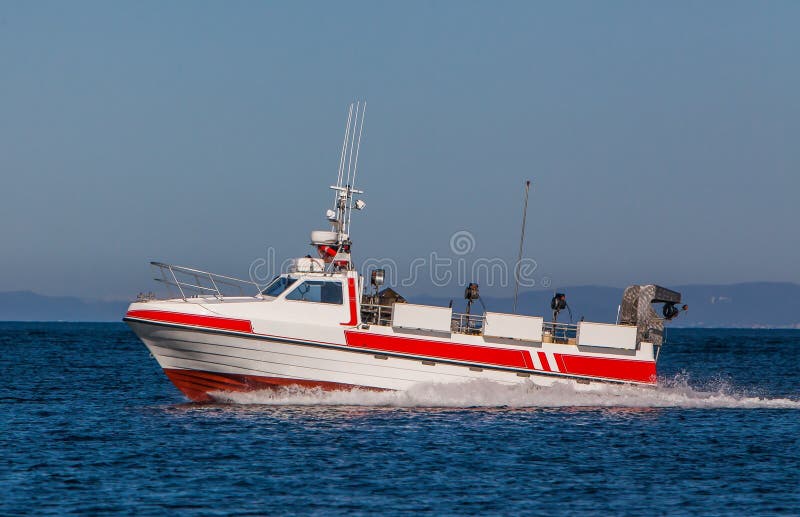
If you're running a commercial fishing boat or charter operation, your ROI calculation differs from a weekend recreational user. Time is money. Burning an extra 5 gallons per hour might be worth it if you can make an additional trip per day.
However, unnecessary speed still costs you. We've worked with Alaska Marine Highway System vessels. After engine repower to mtu units, their high-speed catamaran FVF Chenega achieved 5-7% fuel reduction at cruising speeds while maintaining 40-knot capability. The key was running at optimal cruise RPM rather than constantly pushing maximum speed.
Recreational Users: Maximizing Longevity
For recreational boaters, engine longevity often matters more than shaving 20 minutes off a trip. Consistently running at 90-100% throttle wears out turbos, exhaust valves, and fuel injectors faster. Replacement parts are expensive—especially OEM.
Backing off to 70-80% throttle on long transits might add 30 minutes to a 3-hour trip, but it can extend engine life by thousands of hours. That's real savings.
To maintain your engine's health, stock and replace important components like fuel filters regularly to prevent wear and costly damage.
Vessel Speed Reduction Programs at US Ports
EPA Vessel Speed Reduction (VSR) programs at ports like Los Angeles, San Diego, and New York/New Jersey cap speeds at 10-15 knots up to 40 nautical miles offshore. Container ships, cruise ships, and roll-on/roll-off vessels see the largest fuel and emissions reductions. Delays remain within arrival windows, proving that speed reduction is feasible without operational penalties.
Commercial operators participating in these programs often receive reduced berthing fees, making efficiency financially rewarding beyond just fuel savings.
Addressing Common Myths

Is 55 mph Always Optimal for Cars?
The 55 mph figure comes from historical EPA testing and 1970s-era CAFE standards. It's a solid starting point, but it's not universal. Modern vehicles with advanced aerodynamics, CVTs, and turbocharged engines may peak slightly higher or lower.
Your specific car's optimal speed depends on gearing, weight, and drag coefficient. Use a scan gauge to find your actual peak rather than assuming 55 mph applies.
Can I Just Use Cruise Control and Forget About It?
Cruise control helps maintain steady speed, which improves efficiency compared to constant throttle changes. However, if you set cruise at 75 mph, you're still burning more fuel than necessary.
Set cruise control within your vehicle's efficiency zone—usually 50-60 mph—and you'll see the best results. On hills, adaptive cruise control systems that adjust speed slightly can prevent the engine from lugging or over-revving.
Do Modern Engines Have Different Optimal Speeds?
Yes. Engines built in the last 10 years often feature:
- Direct fuel injection for better combustion control
- Variable valve timing to optimize airflow across RPM ranges
- Turbocharging to maintain power at lower RPMs
- 8, 9, or 10-speed transmissions that keep engines in efficient RPM bands
These technologies can shift the optimal cruising speed slightly higher or allow a broader efficiency range. Check your owner's manual or use diagnostic tools to understand your specific engine's sweet spot.
Does Slow Steaming Apply to Small Boats?
Slow steaming—running large ships at 18-20 knots instead of 24 knots—became standard after the 2008 fuel price spike. According to Transportation Geography, an 8,000 TEU containership drops fuel consumption from 225 tons/day at 24 knots to 150 tons/day at 21 knots.
For small boats, the principle applies but the numbers differ. A planing boat might burn 12 GPH at 30 knots but only 6 GPH at 20 knots. If the destination is 40 miles away, running at 20 knots costs less total fuel despite the longer trip time.
Step-by-Step Test Protocol
If you want to find your exact efficiency zone, follow this process:
- Warm up the engine fully. Coolant and oil must be at operating temperature. Cold engines consume more fuel.
- Find flat, calm conditions. For cars, choose a level highway with no traffic. For boats, pick calm water with no current.
- Reset your fuel economy meter (if equipped) or fill the tank to the brim for manual calculation.
- Start at the low end of your expected range. For cars, 40 mph. For boats, 1500-2000 RPM.
- Hold that speed for 5 minutes. Let the engine and fuel system stabilize.
- Record data: Speed, RPM, fuel flow (or instant MPG), and engine load percentage.
- Increase speed in increments. 5 mph for cars, 200-300 RPM for boats.
- Repeat steps 5-6 at each increment up to 70 mph (cars) or your engine's cruising limit (boats).
- Plot the results. You're looking for the speed where fuel economy peaks or where the fuel-to-speed ratio flattens out.
This gives you a custom efficiency map for your specific engine and conditions.
Troubleshooting: When the Sweet Spot Causes Problems
Vibration at Optimal Speed
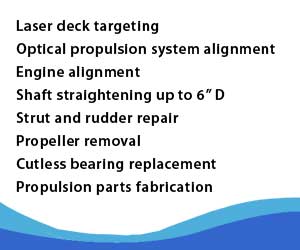
If your most efficient speed causes vibration, you have a separate mechanical issue. For boats, check:
- Prop balance: A bent or damaged prop vibrates at specific RPMs.
- Engine mounts: Worn mounts allow the engine to shake the hull.
- Shaft alignment: Misalignment creates vibration under load.
For cars:
- Wheel balance and alignment
- Transmission mounts
- Driveshaft or CV joint wear
Don't ignore vibration. It accelerates wear on every component it touches.
Engine Struggles to Maintain Speed
If the engine can't hold your target speed without high throttle, you're either overloaded, facing too much drag (fouled hull, underinflated tires), or the engine is underpowered for the application.
For boats, clean the hull. Growth and barnacles add drag. For cars, check tire pressure and remove unnecessary weight.
Excessive Heat at Cruise RPM
If coolant temperature climbs above normal at your target cruising speed, your cooling system isn't keeping up. Check:
- Coolant level
- Thermostat operation: A stuck thermostat won't open fully, trapping heat. For help, see our guide on how to replace the thermostat on your Yamaha outboard.
- Water pump flow: On outboards, water spits at idle but improves with throttle if the impeller is worn.
- Heat exchanger or radiator condition: Clogged cores restrict flow.
Running hot accelerates wear. Fix the cooling issue before optimizing speed.
The OEM vs. Aftermarket Parts Reality

When efficiency testing reveals you need new injectors, a thermostat, or a prop, you'll face the OEM-versus-aftermarket choice.
OEM parts are reliable, sure. They're built to the same spec as the original component. But you're paying a premium for the logo on the box—often 30-50% more than equivalent aftermarket.
Cheap aftermarket parts are a gamble. That $10 thermostat kit from a random seller might use hard rubber that doesn't seal properly, or a spring that fails after 50 hours. You'll tear the engine apart again next season. Not worth it.
The smart choice: Reputable aftermarket suppliers like JLM Marine source from the same factories that produce OEM components. Excess capacity from those factories produces non-OEM parts at the same quality level, just without the dealership markup. We ship these parts worldwide—guys in Australia and Alaska email us engine details, and we send factory-spec components directly to their dock.
You get the fit, durability, and performance of OEM without burning cash unnecessarily. Check out our full range of direct from factory boat parts to find quality OEM-equivalent components for your engine maintenance and repair needs.
Glossary of Key Terms
Planing: When a boat's hull lifts onto the water surface, reducing drag and allowing higher speeds.
Hull Speed: Theoretical maximum efficient speed for a displacement hull, calculated as 1.34 × √(waterline length in feet).
Prop Slip: The difference between the distance a propeller should theoretically push a boat per revolution versus actual distance, expressed as a percentage.
Aerodynamic Drag: Air resistance against a moving vehicle, increasing exponentially with speed.
OBD-II (On-Board Diagnostics): Standardized vehicle diagnostic system in cars built after 1996, accessible via a 16-pin connector.
RPM (Revolutions Per Minute): Engine crankshaft rotational speed.
GPH (Gallons Per Hour): Fuel consumption rate, common in marine applications.
CVT (Continuously Variable Transmission): Transmission using a belt and pulley system to provide infinite gear ratios within a range.
Daily Maintenance Tip
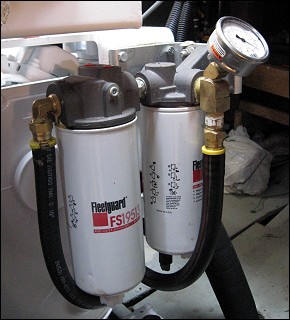
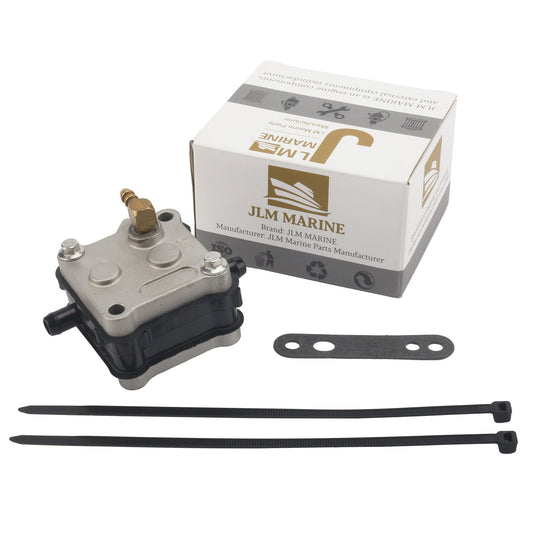
Check your fuel filter every 100 hours of operation or at the start of each season. A clogged filter restricts flow, forcing injectors to work harder and reducing efficiency regardless of your cruising speed. We stock OEM-equivalent filters for most marine diesels and outboards—replacing a $30 filter is cheaper than rebuilding fuel injectors. Browse our selection of fuel filters to keep your engine running smoothly and efficiently.
Sources
- https://www.energy.gov/eere/vehicles/fact-982-june-19-2017-slow-down-save-fuel-fuel-economy-decreases-about-14-when
- https://www.usni.org/magazines/proceedings/2020/july/greater-efficiency-through-total-fuel-consumption-analysis
- https://www.epa.gov/ports-initiative/marine-vessel-speed-reduction-reduces-air-emissions-and-fuel-usage
- https://www.mtu-solutions.com/na/en/casestudies/comercialmarine/alaskanhigh-speedcatamaranimprovesfuelefficiencyandcabin…
- https://transportgeography.org/contents/chapter4/transportation-and-energy/fuel-consumption-containerships/
- https://www.nrdc.org/stories/speed-sweet-spot
Hi—I’m Jim Walker
I grew up in a Florida boatyard, earning pocket money (and a few scars) by rebuilding outboard carbs before I could drive. That hands-on habit carried me through a Ph.D. in mechanical engineering, where I studied how salt water quietly murders metal.
I spent ten years designing cooling systems for high-horsepower outboards, then joined JLM Marine as CTO. We bench-test every new part in the lab, but I still bolt early prototypes onto my own 23-foot skiff for a weekend shake-down— nothing beats real wake and spray for finding weak spots.
Here on the blog I share the fixes and shortcuts I’ve learned so your engine—and your day on the water—run smooth.

For Boat Owners:
To assist you in maintaining and repairing your marine engines, we hope the following resources may be of use:
- Mercury Serial Number Guide
- Owner's Manuals from Mercury
- Official Model Number Reference Guide PDF from BRP
- Johnson Serial Number Guide
-
Boat Accessories from JLM Marine
About JLM Marine
Founded in 2002, JLM Marine has established itself as a dedicated manufacturer of high-quality marine parts, based in China. Our commitment to excellence in manufacturing has earned us the trust of top marine brands globally.
As a direct supplier, we bypass intermediaries, which allows us to offer competitive prices without compromising on quality. This approach not only supports cost-efficiency but also ensures that our customers receive the best value directly from the source.
We are excited to expand our reach through retail channels, bringing our expertise and commitment to quality directly to boat owners and enthusiasts worldwide.
Boat Accessories on Sale
- $37.99
$45.99- $37.99
- Unit price
- per
- $34.99
- $34.99
- Unit price
- per
- $128.99
- $128.99
- Unit price
- per

- $25.30
$30.00- $25.30
- Unit price
- per


- $34.99
$41.99- $34.99
- Unit price
- per

- $32.50
$31.00- $32.50
- Unit price
- per

- $139.99
- $139.99
- Unit price
- per


- $45.00
- $45.00
- Unit price
- per
-
Red
-
Blue

- $28.50
$29.00- $28.50
- Unit price
- per

- $159.99
- $159.99
- Unit price
- per


- $105.00
- $105.00
- Unit price
- per


- $34.99
$41.99- $34.99
- Unit price
- per


- From $68.00
- From $68.00
- Unit price
- per
-
Silver
-
Blue
-
Red


- $34.99
$41.99- $34.99
- Unit price
- per

- $59.95
$71.00- $59.95
- Unit price
- per

- $59.99
$71.00- $59.99
- Unit price
- per


- $34.99
$41.99- $34.99
- Unit price
- per

- $65.50
$78.00- $65.50
- Unit price
- per

- $67.00
$65.00- $67.00
- Unit price
- per

- $19.99
- $19.99
- Unit price
- per