

Overloading Your Boat: Recognizing Engine Strain Symptoms
- Engine Can't Hit Rated RPM at Wide-Open Throttle
- Temperature Gauge Climbing Higher Than Normal
- Boat Feels Sluggish and Won't Get on Plane
- Black Smoke During Hard Acceleration
- Fuel Consumption Spikes
- Unusual Vibration or Knocking
- Understanding U.S. Capacity Plates
- Real Accidents: Overload Kills
- On-Water Warning Signs You're Overloaded
- Propeller Pitch and Load: The Missing Link
- Preventative Checks Before Casting Off
- When to Call a Professional
- Essential Spares to Carry
- The Red-Line Rule: What to Do When Symptoms Appear

Your outboard's running hot, barely hitting plane, and the fuel gauge drops faster than it should. Before you start throwing parts at it, check your passenger count and gear weight. After twenty years wrenching on outboards, I can tell you most "mystery" performance problems trace back to simple overload.
Overloading forces your hull and engine to work harder than they're designed for. In 2018 alone, U.S. Coast Guard data recorded 87 accidents, 42 fatalities, and 41 injuries from improper loading or overloading. That's not counting the thousands of engines cooked by operators who didn't recognize the warning signs.
Engine Can't Hit Rated RPM at Wide-Open Throttle

Run your boat at WOT with your typical load. Check the tach. If you're supposed to see 5500 RPM but you're stuck at 4200, your engine's telling you it's overloaded. Marine diesel expert Nigel Calder puts it bluntly: "If I try to run at wide open throttle, I can't get my 3,000 RPM engine beyond 2400 RPM…I'm overloading the engine and I'm going to eventually…damage the engine. I'm going to burn out the valve or something."
This isn't a minor issue. When the engine can't spin up to spec, exhaust temperatures spike and you risk overheating valves and pistons. The propeller or hull drag is absorbing power the engine needs to breathe properly.
Quick check: Note your normal WOT RPM with just you aboard. Compare it to a full-crew, full-fuel, full-cooler run. A drop of 300+ RPM tells you the load is significant.
Temperature Gauge Climbing Higher Than Normal
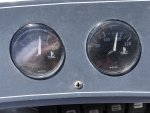

Overloaded engines generate more heat because they must work harder to move extra weight. When vessel load and drag exceed available engine power, the engine struggles and overheats.
Watch your temp gauge during a loaded run. If it's creeping into the upper third of the range when it normally sits mid-scale, that's strain. Don't wait for the overheat alarm—by then you've already done damage.
The cooling system can only dump so much heat. More load means more fuel burned, more combustion heat, and more stress on the thermostat and water pump. If your pee stream weakens to a dribble at the same time temps rise, suspect a failing impeller working overtime. For detailed guidance on replacing this crucial component, see our Johnson/Evinrude Outboard Water Pump Replacement Guide.
Boat Feels Sluggish and Won't Get on Plane
This one's obvious but often ignored. Your boat struggles to transition onto plane, wallows longer in the "hump," and feels like it's plowing water instead of skimming it. Overloaded boats exhibit sluggish acceleration and reduced performance.
The "hump" is where drag peaks—right before the hull lifts and planning begins. An overloaded boat gets stuck there, forcing the engine to pour fuel into moving a hull that won't cooperate. You're burning maximum fuel for minimum speed, and the engine's laboring the entire time.
If you used to hit plane in five seconds and now it takes fifteen, you're either overloaded, fouled, or dragging something. Check your bottom and your passenger count.
Black Smoke During Hard Acceleration

Excessive black smoke when you punch the throttle means unburnt fuel. The engine's trying to make power but can't process the fuel efficiently under load. While a puff of smoke on a cold start is normal for older two-strokes, a black cloud every time you accelerate signals trouble.
Here's the problem: unburnt fuel washes oil off cylinder walls—a process called cylinder washing. You're not just wasting fuel; you're accelerating wear on rings and bores. Over time, this leads to compression loss and a rebuild.
If you need help diagnosing fuel issues that can mimic overload symptoms, check out our Outboard Bogging Down? Troubleshooting Low Power, RPM Fluctuations & Fuel Issues guide.
Fuel Consumption Spikes
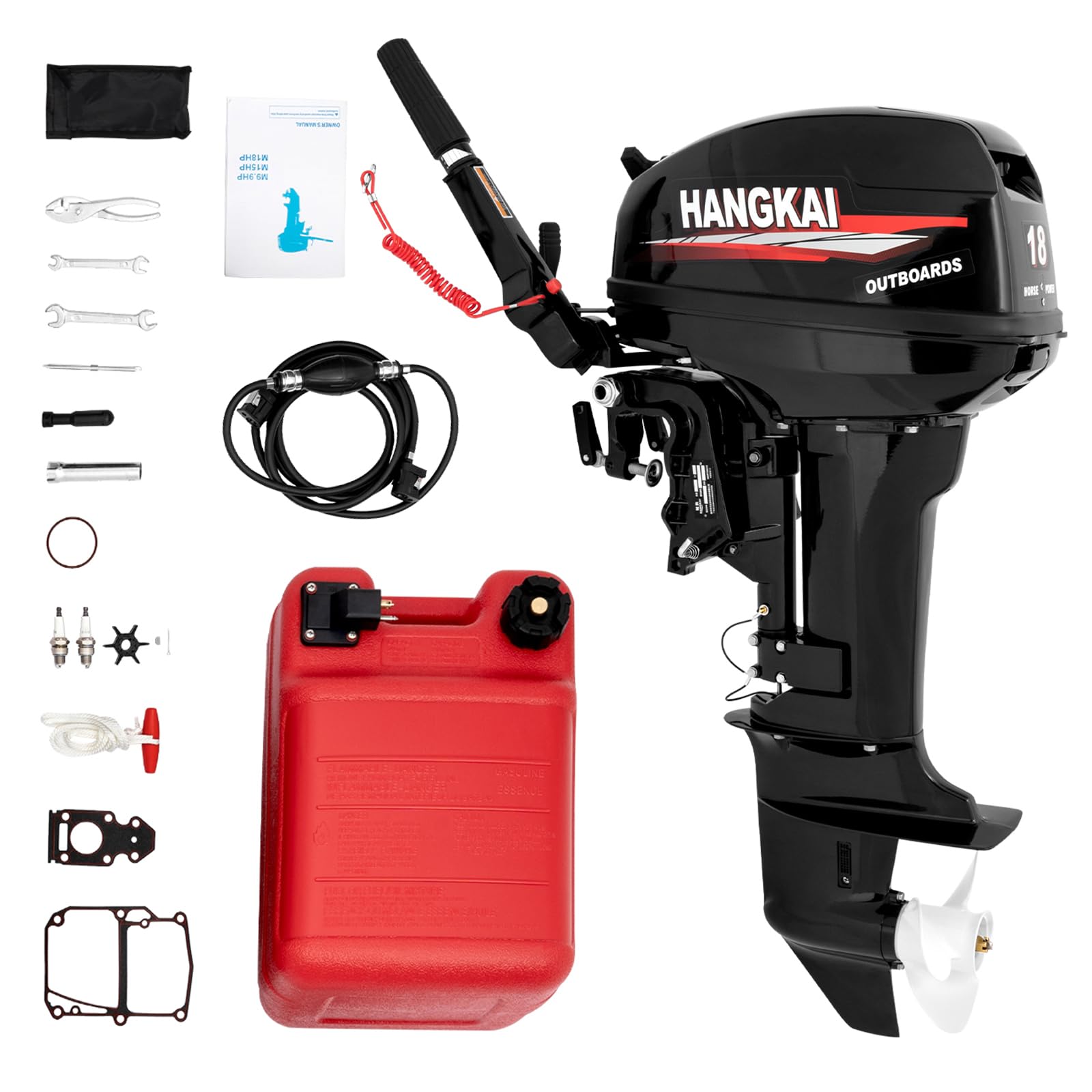
Overloading increases fuel consumption. It's physics. More weight requires more power, and more power requires more fuel. If your normal weekend trip used to take a half tank and now you're topping off twice, calculate your load.
Track your fuel burn over a few identical trips. Use the same route, same conditions, but vary your passenger and gear count. The pattern will show you exactly how much weight costs you in gallons per hour.
Unusual Vibration or Knocking
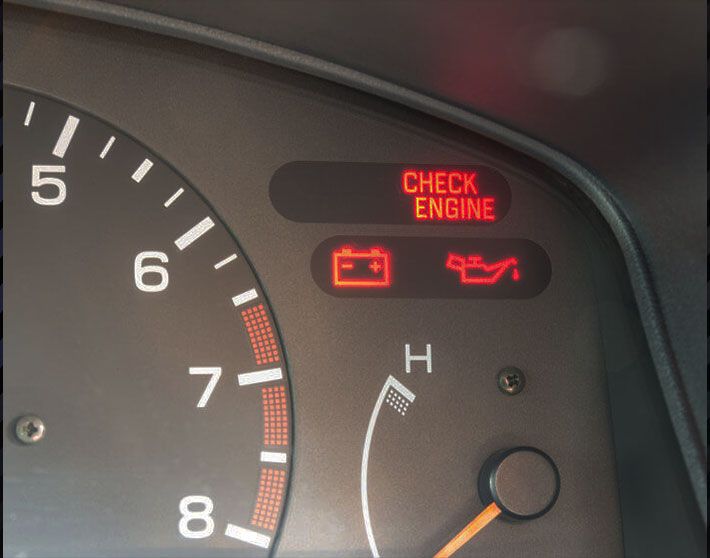
When an engine runs under excessive load at low RPM, it can experience pre-detonation—fuel igniting before the spark plug fires. You'll hear it as a metallic pinging or knocking, especially under hard acceleration. This is your engine telling you it's working outside its design envelope.
Pre-detonation hammers bearings, cracks pistons, and destroys ring lands. If you hear knocking that wasn't there before and it coincides with a full boat, back off the throttle immediately and redistribute weight or offload passengers.
Understanding U.S. Capacity Plates
Boats under 20 feet manufactured in the U.S. carry a capacity plate near the helm. It lists three critical numbers:
- Maximum persons: Total number of people.
- Maximum weight capacity: People plus gear, in pounds.
- Maximum horsepower: Engine size the hull is rated for.
Exceeding these limits is illegal under U.S. Coast Guard rules and can be treated as reckless operation. It also voids your insurance if something goes wrong.
Do the math before you leave the dock. Average adult weight in the U.S. is around 180 pounds. Add kids at 70–100 pounds each. Then add fuel: gasoline weighs 6.3 pounds per gallon. A 50-gallon tank adds 315 pounds when full. Coolers, batteries, fishing gear—it stacks up fast.
Example: A boat rated for 1,200 pounds max capacity.
- 4 adults (720 lbs)
- 50 gallons fuel (315 lbs)
- Cooler and gear (100 lbs)
- Total: 1,135 lbs
You're legal, but close. Add one more person or a heavy toolbox and you're over.
Real Accidents: Overload Kills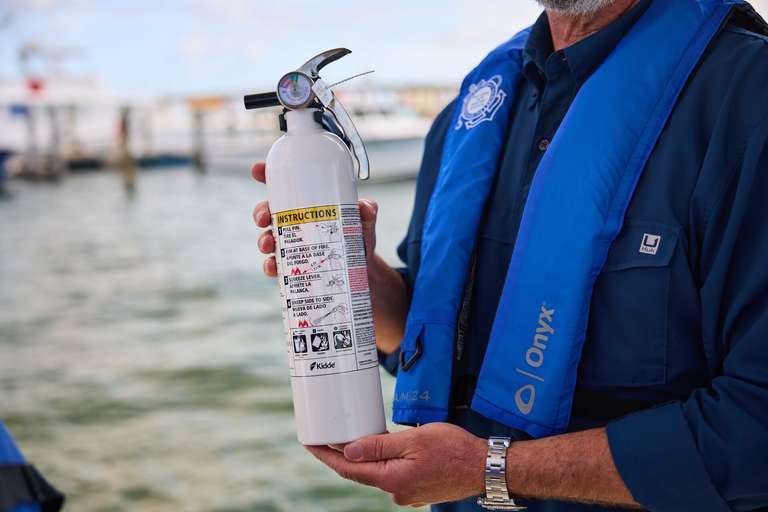
Hudson River sightseeing boat, New York Harbor: A boat rated for 11 passengers went out with 13 plus gear in heavy traffic and wakes. Reduced freeboard from overload made it unstable. The boat swamped and capsized, killing a woman and a 7-year-old. Everyone wore life jackets. Overload still killed them.
New Jersey inlet pontoon accident: Passengers sat forward, forcing the bow low. The pontoon "plowed" through waves instead of riding over them, increasing engine load and killing steering response. A wave from astern pitchpoled the boat. One person drowned trapped under the deck despite immediate Coast Guard helicopter response.
Lady D water taxi, Baltimore Harbor: Certificated for 25, the pontoon taxi capsized in wind and waves. The NTSB concluded the vessel lacked adequate stability due to an excessive passenger allowance based on outdated weight assumptions. The hull and engines had to work harder in rough conditions, contributing to loss of control and capsize with multiple fatalities.
These aren't freak accidents. In one year, U.S. Coast Guard data showed 115 accidents, 55 fatalities, and 70 injuries tied to overloading or improper loading.
On-Water Warning Signs You're Overloaded
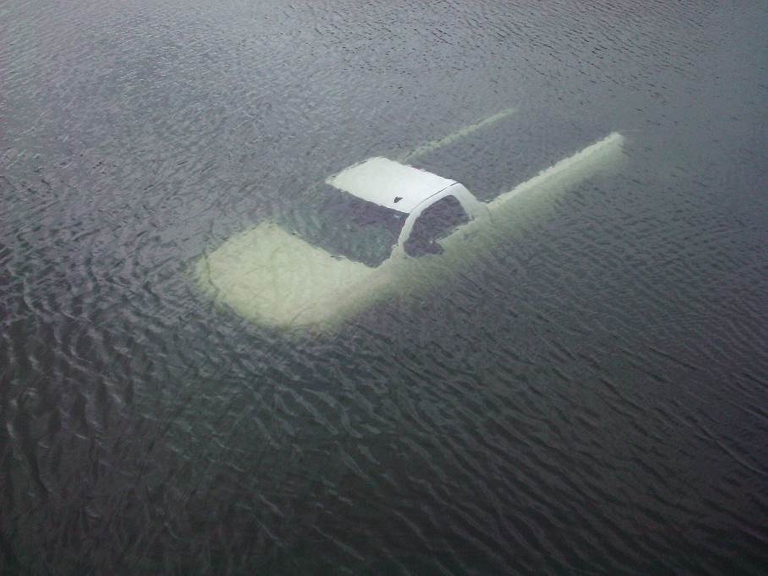

Before the engine screams, the boat will tell you:
- Waterline's too high: The boot stripe or waterline you normally see is underwater.
- Excessive rocking: The boat feels tippy even in calm water.
- Heavy steering: The wheel or tiller takes more effort to turn.
- Bow sits low: Especially if passengers are forward.
- Reduced visibility: You can't see over the bow because it's up too high trying to compensate for stern weight, or it's plowing because the bow's down.
If you see two or more of these, you're overloaded and risking capsizing, reduced maneuverability, and passengers going overboard.
Propeller Pitch and Load: The Missing Link
Your propeller's pitch determines how hard the engine works. Pitch is the theoretical distance the prop advances in one revolution, measured in inches. A higher-pitch prop (e.g., 19") loads the engine more than a lower-pitch prop (e.g., 15").
If you frequently run heavy loads—fishing charters, tow sports, family outings—you may need to step down in pitch. Dropping two inches of pitch typically gains you 200–400 RPM at WOT. This lets the engine breathe properly even when loaded.
How to test: Run your current prop at WOT with typical load. Note RPM. If you're under spec, try a prop two inches lower in pitch. Retest. You should hit your rated RPM range and see better acceleration.
Tow sports note: A tuber or wakeboarder adds significant drag, effectively acting as "weight" for engine strain purposes. If you tow regularly, prop accordingly.
Preventative Checks Before Casting Off

Read the capacity plate. Know your limits cold.
Calculate total weight. People, fuel, gear, batteries. Write it down if you have to.
Distribute weight evenly. Don't let everyone pile into the bow. Keep heavy items low and centered. Pontoons especially suffer from bow-heavy loading—it forces them to plow and increases engine load dramatically.
Run a baseline WOT test. After you've checked everything, run the boat hard on a calm day with a typical load. Note your WOT RPM, temperature, and how the boat feels. That's your reference point. When something changes, you'll know immediately.
When to Call a Professional
If you've verified your load is legal and distributed properly but you're still seeing overheating, low RPM, or knocking, you've got a mechanical problem.
EFI chip failures, bad fuel injectors, spun prop hubs, and transmission issues mimic overload symptoms but require diagnostic tools and expertise most DIYers don't have. A spun hub, for example, lets the prop slip on the shaft—high RPM, low speed, feels exactly like overload but isn't.
If you've ruled out overload and basic maintenance (clean bottom, fresh impeller, good fuel) and problems persist, it's time for a certified mechanic with a scanner and a compression gauge.
Essential Spares to Carry

Spark plugs: Two of the correct type. Overload fouls plugs fast; carry backups.
Impeller kit: Overloaded engines run hot and chew through impellers. A spare impeller plus gaskets can save your day.
Fuel filter: Bad fuel clogs filters. Have a spare and the wrench to swap it. Check out the fuel filter collection for quality options.
Propeller and prop wrench: A damaged prop drastically increases load. Carry a spare sized for your engine.
Basic socket set, screwdrivers, pliers: You can't fix what you can't reach.
When buying parts, skip the $10 impeller kits from random sellers. The rubber's too hard, fitment's off, and you'll be tearing the lower unit apart again next weekend. OEM is reliable but you're paying for the logo. We like quality aftermarket like JLM Marine—factory-spec components without the dealership markup. It fits right, lasts, and doesn't burn cash.
Some high-end aftermarket parts come from the same factories that supply OEM brands; they just run extra capacity for non-OEM production. These parts are often identical in quality but cost significantly less.
The Red-Line Rule: What to Do When Symptoms Appear
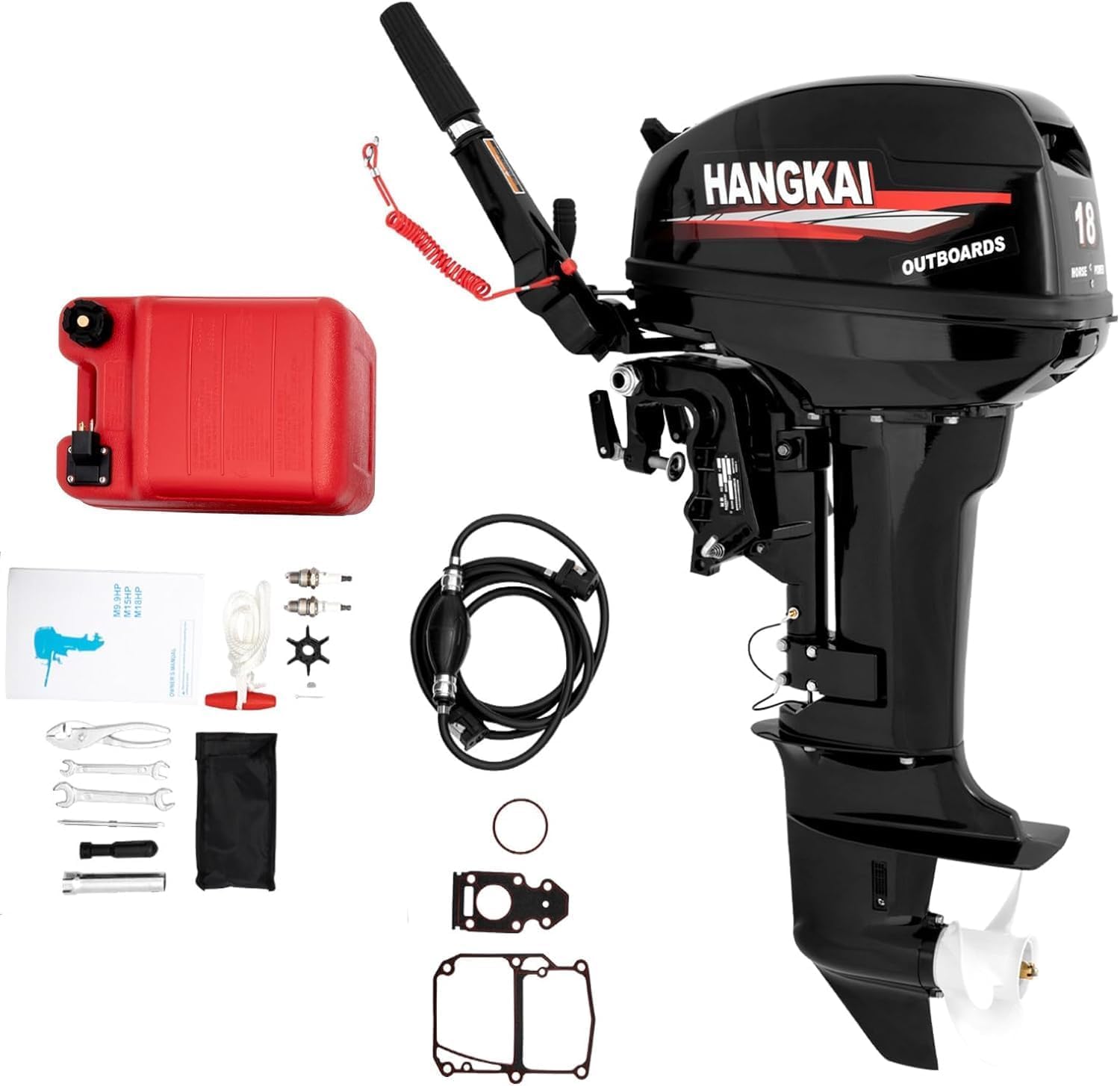
If you're underway and notice high temps, low RPM, knocking, or heavy smoke:
Immediately trim up and reduce throttle to idle. Let the engine cool for five minutes. Redistribute weight if possible. Reduce load by having passengers shift aft or, if safe, offloading non-essential gear at the dock.
Do not keep running hard hoping it improves. You'll crack a piston or seize a bearing.
After you've cooled down and redistributed, try a moderate throttle run. If symptoms return, head back at low speed. Forcing an overloaded engine is how you turn a $200 fix into a $4,000 rebuild.
Pro tip: Check your engine's pee stream every time you start up. That little stream of water from the side of the outboard is your cooling system's tell-tale. If it slows to a dribble or stops, your water pump or intake is compromised and overheating is imminent—shut down immediately and investigate.
For more tips on keeping your outboard running cool, see our guide on Outboard Overheating 101: Quick Checks to Prevent Damage.
Explore more boating maintenance essentials and trusted parts at our home page.