





Johnson/Evinrude Outboard Starting Problems and Solutions
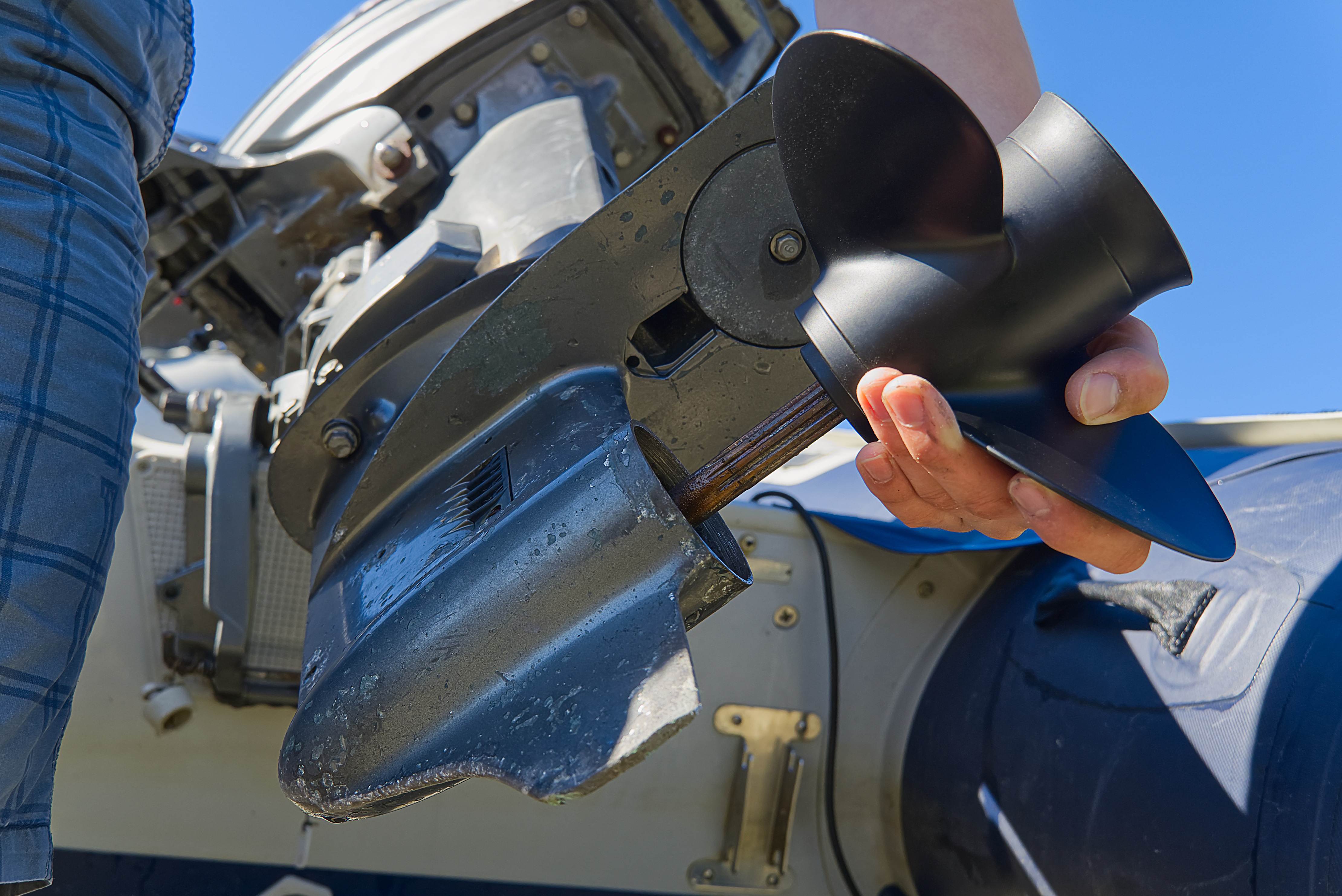
Most Johnson and Evinrude starting problems boil down to three things: corroded connections, bad fuel, or wrong technique.
Why Johnson/Evinrude Outboards Won't Start in Cold Weather
Cold kills batteries and thickens fuel. A battery that cranks fine in summer can barely turn the flywheel when it's 30°F because cold cranking amps drop with temperature. Cold fuel doesn't vaporize right either—you need a richer mixture to get combustion, which is why the choke exists.
Metal contracts when it's cold. This makes sticky linkages worse. If your choke cable was already borderline, cold weather will push it over the edge.
Oil gets thick. On 2-strokes with oil injection, cold oil pumps slower. On 4-strokes, thick engine oil resists the starter motor. Either way, cranking speed drops and ignition suffers.
What Usually Goes Wrong
Flooding. Over-priming dumps too much fuel in the cylinders. You'll smell raw gas and the engine will sputter but not catch. This happens when people pump the primer bulb ten times instead of just making it firm, or when they use full choke on an already-warm motor.
Corroded terminals. Green fuzz on battery posts or starter connections adds resistance. Marine mechanics see this constantly—three weeks of sitting and corrosion locks up the whole electrical path. A weak connection that worked fine at 70°F fails completely at 40°F because the battery has less power to push through the resistance.
Weak battery. A battery near the end of its life will test OK on a voltmeter but collapse under cranking load. Cold makes this worse because chemistry slows down inside the cells.
Stale fuel. Ethanol fuel breaks down in 30-60 days, especially in the US market where E10 is standard. Phase separation puts water in your carbs. We've seen boats sit three weeks and refuse to start because the fuel went bad.
Neutral safety switch. If the shifter isn't fully in the neutral detent, the safety switch won't allow cranking. Some switches fail internally and block starting even when the gear is neutral.
How to Cold-Start a Johnson/Evinrude Step-by-Step
Before You Touch the Key
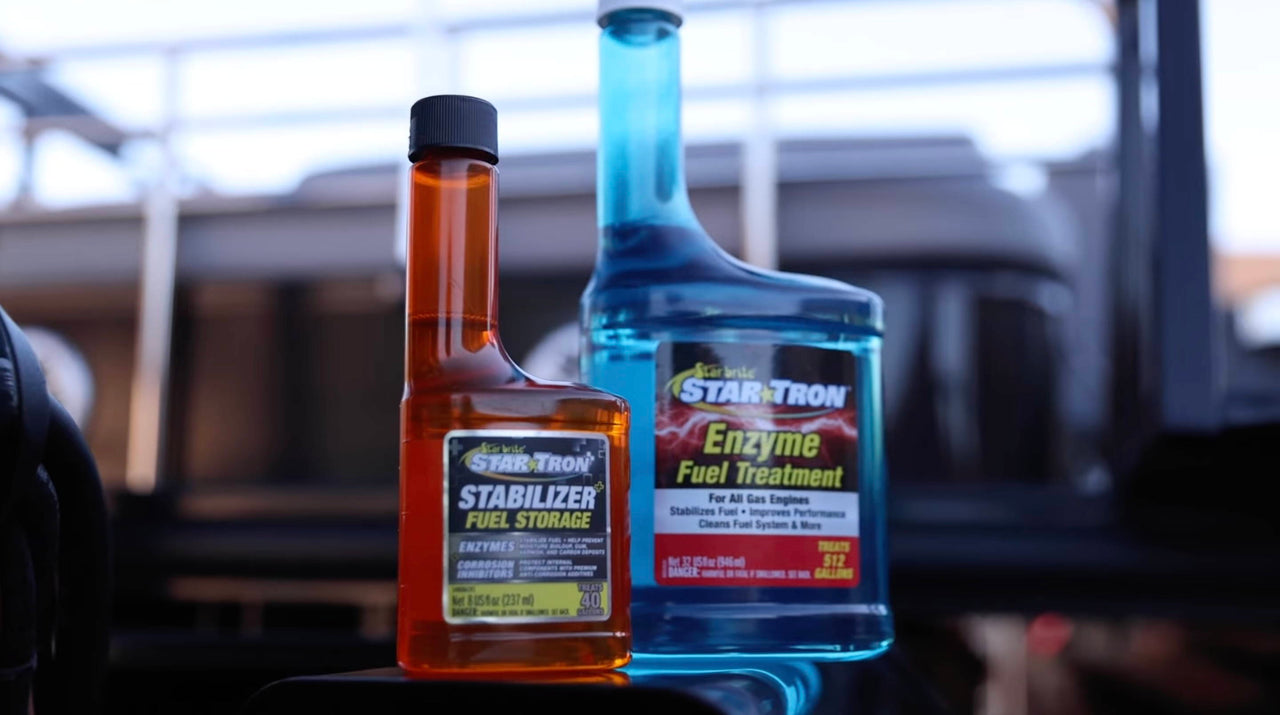
Check your fuel. If it's been more than a month, drain the tank and refill with fresh gas. For storage, use Star brite enzyme fuel treatment or similar to prevent gumming.
Verify battery voltage with a multimeter: you need 12.6V minimum for a full charge. Anything under 12.4V means the battery isn't fully charged. Clean the terminals with a wire brush until bare metal shows. Tighten the clamp bolts—loose connections cause voltage drop under load.
For 2-strokes: Confirm the oil reservoir is full. Cold oil takes longer to reach the injector pump.
For 4-strokes: Check the dipstick. Use the correct viscosity oil for cold temps—10W-30 flows better than 20W-50 when it's freezing.
Attach the kill switch lanyard. Sounds basic, but a missing lanyard is a common no-crank cause.
Put the shifter in neutral. Wiggle it to make sure it's seated in the detent. The neutral safety switch won't close unless the shifter is exactly centered.
The Cold Start Sequence
-
Pump the primer bulb until it's firm. Don't keep pumping after it gets hard—that's how you flood it.
-
Advance the throttle one-quarter to one-third. On tiller motors, twist the grip forward. On remote controls, push the lever forward from neutral about an inch. This opens the throttle plates slightly for better airflow.
-
Engage full choke. On most Johnson/Evinrude ignition keys, you pull the key outward to engage the choke. This closes the choke plates in the carburetors, enriching the mixture. Some older models have a separate choke knob or lever—pull it all the way out.
-
Crank for 5-10 seconds maximum. If it doesn't fire, stop. Let the starter cool for 30-60 seconds. Continuous cranking overheats the starter motor and can blow the main fuse.
-
If you smell gas strongly, you've flooded it. Push the key back in (disengages choke), advance the throttle to wide open, and crank again. The extra air clears the excess fuel. Once it fires, pull the throttle back immediately or it'll race.
-
When the engine starts, gradually reduce choke. As the motor warms and runs smoother, push the key back in slowly. If it starts to stumble, you've pulled choke off too fast—re-engage slightly and wait another 30 seconds.
Warm-Up
Let it run for 2-5 minutes before you put it in gear. Listen to the idle—it should transition from rough and fast to smooth and steady as the choke comes off. When you can push the choke key fully in and the engine idles smoothly, it's warm enough.
Don't run it hard until the thermostat opens and water temperature stabilizes. On a cold morning, this can take longer than you think. Learn more about thermostat maintenance to keep your engine temperature regulated.
Fixing No-Start and Hard-Start Problems
If the procedure above didn't work, here's how to find the fault. Start with the easiest checks.
Electrical: Battery, Solenoid, Connections
Symptom: Nothing happens when you turn the key. No click, no crank.
Check the main fuse first. On most Johnson/Evinrude motors, it's mounted near the rectifier on the engine's port side. If it's blown, something shorted or the key was left on too long. Replace it with the exact amperage rating—don't use a higher-amp fuse as a "fix."
Verify the kill switch lanyard is attached and the clip is making contact.
Test the neutral safety switch. With a multimeter set to continuity, check across the switch terminals while the shifter is in neutral. You should see continuity (beep or zero resistance). If not, the switch is bad or the shifter isn't fully in neutral. Wiggle the shifter forward and back until you hear the detent click.
Symptom: Single click, but no cranking.
This is a weak battery or a failing solenoid. Measure battery voltage while someone cranks. If it drops below 11V, the battery can't handle the load—replace it.
If voltage stays above 12V but you still only get a click, the solenoid contacts are burned or stuck. You can test this by carefully jumping the large battery terminal on the solenoid to the large starter terminal with a heavy-gauge wire or screwdriver. Warning: Do this with the motor in neutral, the kill switch off, and no loose clothing near the flywheel. If the starter cranks when jumped, the solenoid is bad.
Symptom: Slow cranking.
Clean every connection. Remove the battery cables and use a wire brush on the posts and the inside of the cable clamps. Corrosion is the number-one cause of slow crank on stored motors. Do the same for the starter motor terminals and the engine ground strap.
Check the ground wire from the battery negative to the engine block. If it's corroded or the mounting bolt is loose, you're losing half your cranking power through resistance.
If connections are clean and the battery is good, the starter motor itself may be worn. Brushes wear out after 7-10 years or excessive cranking.
Fuel: Flooding, Stale Gas, Clogged Filters
Symptom: Engine cranks but won't fire. Strong gas smell.
You've flooded it. Disengage the choke (push key in), open the throttle all the way, and crank for 10 seconds. This clears the cylinders. If it still won't start after three tries, pull the spark plugs. Wet, black plugs confirm flooding. Dry them with a rag or replace them, then try again with no choke.
Symptom: Engine cranks, fires briefly, then dies.
Stale fuel or a clogged fuel filter. If the boat sat for more than a month, drain the fuel tank and refill with fresh gas. Replace the inline fuel filter—they're cheap and clogging is common. We stock a wide range of fuel filters to keep your engine running smoothly.
Pump the primer bulb. If it won't get firm, you have a fuel delivery problem: either the bulb itself is cracked, the fuel line has a leak, or the tank vent is clogged. A clogged vent creates a vacuum that starves the carbs.
Symptom: Runs rough when cold, smooths out when warm.
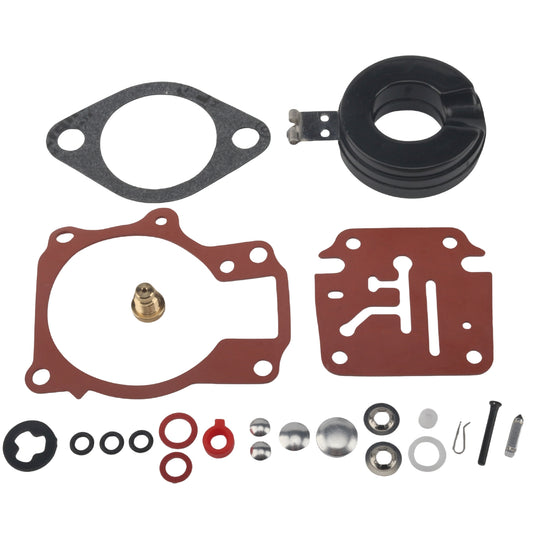
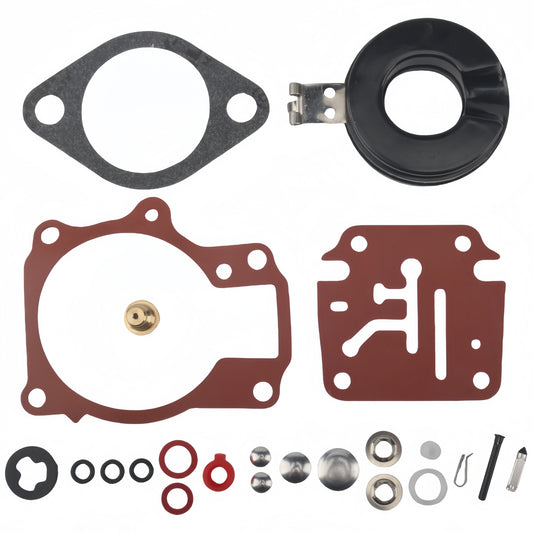
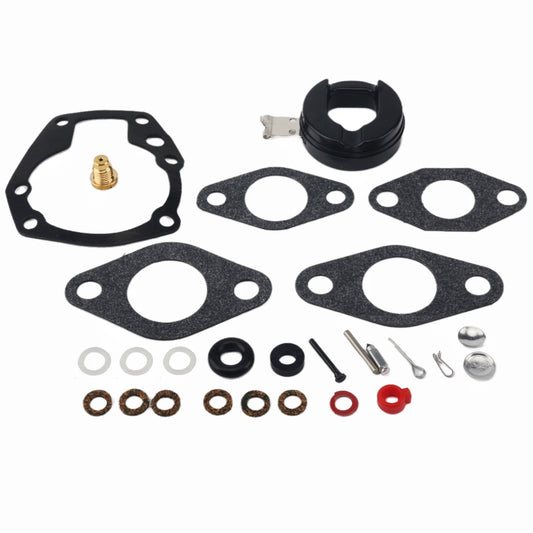
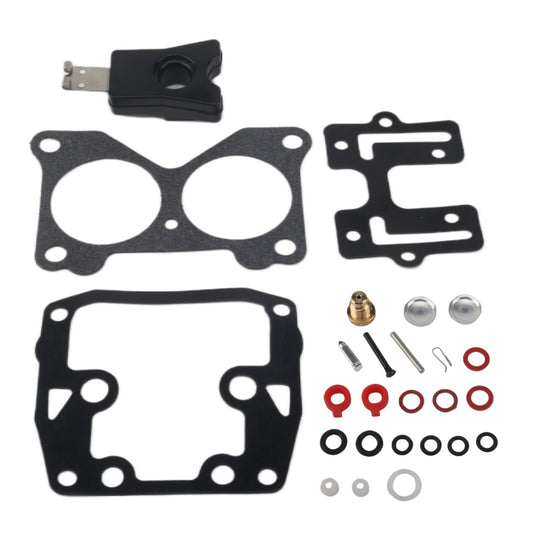
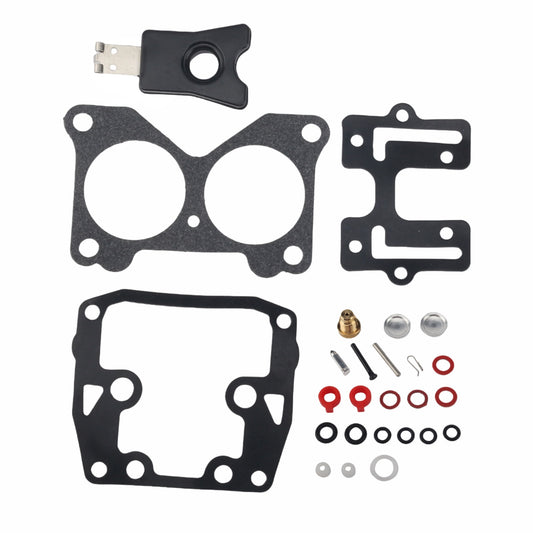
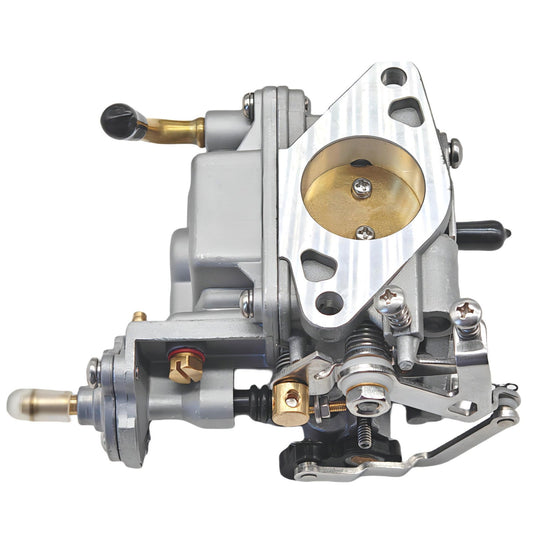
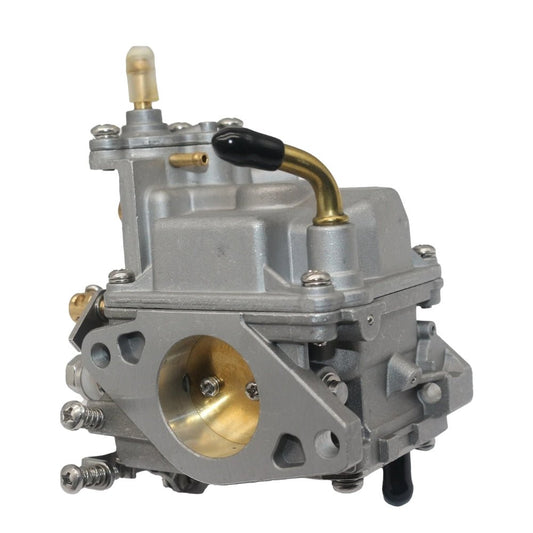
Carburetor icing or a partially clogged jet. Cleaning and adjusting the carbs often fixes hard cold starts on small Johnson motors. If you're comfortable doing it, pull the carb bowls, spray carb cleaner through the jets, and reassemble. Make sure the float needle isn't sticking. Find replacement parts and rebuild kits in our Johnson carburetor collection.
Check for water in the fuel. Ethanol attracts moisture. If you see a layer of separation in a clear fuel filter, the fuel is bad—drain and refill.
Tools You'll Need for Troubleshooting
- Multimeter (voltage and continuity tests)
- Wire brush (battery terminal cleaning)
- Spark plug wrench (Champion or NGK fitment for your model)
- Screwdriver set (carburetor bowl screws)
- Fuel line pliers (disconnect hose clamps)
- Replacement fuses (15A and 20A, depending on model)
- Spare spark plugs (pre-gapped to spec)
Model-Specific Issues
V4 and V6 models from the 1990s are prone to QuickStart solenoid failures in cold weather. The electric choke valve sticks. If your key-choke doesn't click when you pull it out, the solenoid is dead. Workaround: locate the manual primer lever on the fuel pump (usually red) and rotate it 90 degrees by hand to prime fuel, then crank with partial throttle.
Tiller-steer motors vs. remote controls: On a tiller, the throttle twist-grip physically opens the carb plates. On a remote, the control box has a fast-idle lever or a choke button that pulls a cable. If that cable is corroded or stretched, you won't get full choke even when the lever is pulled. Check cable free-play and replace if necessary.
2-stroke vs. 4-stroke cold start differences: 2-strokes need a richer mixture because oil is mixed with the fuel—this means more aggressive choke use and a longer warm-up to burn off excess oil. 4-strokes are less tolerant of flooding, so use choke sparingly and pull it off sooner.
When to Call a Mechanic
If you've tested spark (grounded plug against block), confirmed fuel delivery, cleaned all connections, and the motor still won't fire, you may have a compression or ignition module problem. Symptoms that mean "stop and get help":
- No spark on any cylinder after plug/wire cleaning.
- Compression below 90 psi on any cylinder (test with a gauge).
- Metallic clanking or grinding when cranking.
- Starter runs but flywheel doesn't turn (sheared flywheel key).
Maintenance to Prevent Cold Start Problems
Most starting failures come from neglect. Do these things and you'll rarely be stuck.
Fuel stabilizer every time. If the boat will sit more than two weeks, add stabilizer to the tank. We stock and use products that prevent ethanol phase separation, which is critical in the US fuel supply.
Annual winterizing. If you store the motor in freezing temps:
- Run it with stabilizer added to circulate treated fuel through the system.
- Fog the cylinders with fogging oil to prevent corrosion. Pull the plugs, spray fogging oil in each hole, and crank the engine a few times with the plugs out.
- Drain or replace the lower unit gear oil. Water gets in through the seals, and when it freezes it can crack the case.
- Store the motor upright or tilted slightly down so water doesn't pool in the exhaust passages.
Battery maintenance. Keep it on a smart marine charger during storage. A trickle charger prevents sulfation, which kills batteries. Clean the terminals every few months.
Fuel filter replacement. Change it annually or if you suspect contamination. A clogged filter is a $10 part that causes $500 worth of frustration. You can find a variety of Evinrude fuel filters and Johnson fuel filters in stock.
Choke and throttle linkage. Spray silicone lubricant on the throttle and choke cables once a season. Sticky cables prevent proper choke engagement. On older motors with manual choke levers, the shaft can seize in the bracket—clean and lube it.
Spark plugs. Replace them every 100 hours or annually, whichever comes first. A fouled plug is a common cold-start killer. Use the OEM-spec plug (Champion or NGK); cheap plugs misfire in cold weather because the electrode gap drifts.
OEM vs. Aftermarket Parts
You'll see a big price gap between OEM Johnson/Evinrude parts and aftermarket. Here's the reality: OEM is good quality, but you're paying extra for the OMC badge on the box. Cheap no-name aftermarket from random sellers is trash—wrong rubber compounds, poor fitment, parts that fail in six months.
The middle ground is high-quality aftermarket made by the same factories that produce OEM components. For example, some manufacturers run excess capacity and sell the same parts under different brands. These parts meet OEM specs without the dealer markup. That's the quality level we provide. You get factory fitment and durability without burning money.
Specific to starters and solenoids: OEM replacements are over-engineered and rarely fail if installed correctly, but they cost 2-3x more than quality aftermarket. We've had good results with aftermarket starters that use OEM-equivalent brushes and bearings. Avoid the $30 starters sold on auction sites—they use softer metals and fail within a season.
Quick Reference: 5-Step Cold Start Checklist
- Primer bulb firm, kill switch attached, shifter in neutral.
- Throttle advanced ¼ turn.
- Pull key out for full choke (cold engine only).
- Crank 5-10 seconds; rest 30 seconds between attempts.
- Reduce choke gradually as engine warms; run 2-5 minutes before applying load.
Emergency Start: Manual Rope Start with Dead Battery
If your battery is completely dead and you have a rope-start recoil:
- Remove the engine cover to access the flywheel.
- Wrap a ½-inch rope around the flywheel three full turns clockwise.
- Set the throttle to ¼ advance and engage the choke.
- Hold the rope handle and pull sharply. You need speed to generate a spark.
- Repeat until it fires. Once running, charge the battery with a portable jumper or the engine's own charging system at idle.
For electric-start-only models: Carry jumper cables or a portable lithium jump pack. You can jump from a car battery, but don't run the car while jumping—excessive voltage from the car's alternator can fry the outboard's rectifier.
Sound Diagnostics: Sneezing vs. Bogging
A motor that's too lean (not enough choke) will "sneeze" through the carb—short backfire pops and hesitation. Add more choke.
A motor that's too rich (flooded or too much choke) will "bog"—slow cranking, wet sputtering, heavy blue smoke, and a strong gas smell. Reduce choke or clear the flood.
After 20 years of listening to these motors, I can usually tell what's wrong by the sound before I even pull a plug.
Flush your engine with fresh water after every use to prevent salt and mineral buildup in the cooling passages. A clogged cooling system leads to overheating, which warps heads and makes cold starting even harder next season. For details on maintaining your cooling system, check out our cooling system parts collection.
For all your Johnson/Evinrude parts sourcing needs and expert advice, visit the JLM Marine homepage.
For Johnson Owners:
To assist you in maintaining and repairing your marine engines, we hope the following resources may be of use:
-
Johnson Outboard Parts from JLM Marine
- Johnson Thermostat
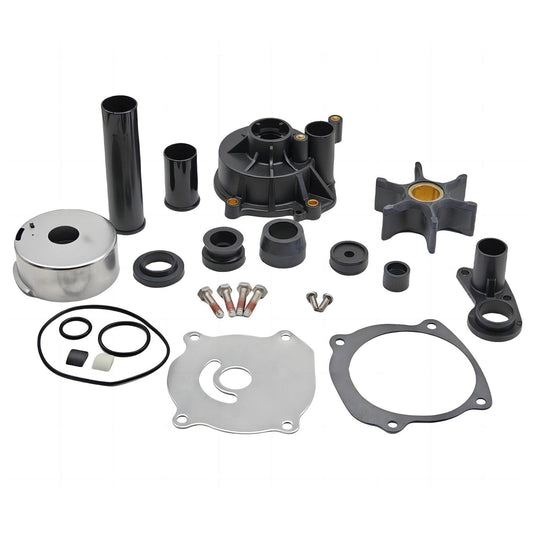
- Johnson Water Pump
- Johnson Water Pump Impeller
- Johnson Water Pump Impeller Kit
- Johnson Carburetor
- Johnson Carburetor Repair Kit
- Johnson Fuel Line Connector
- Johnson Fuel Filter
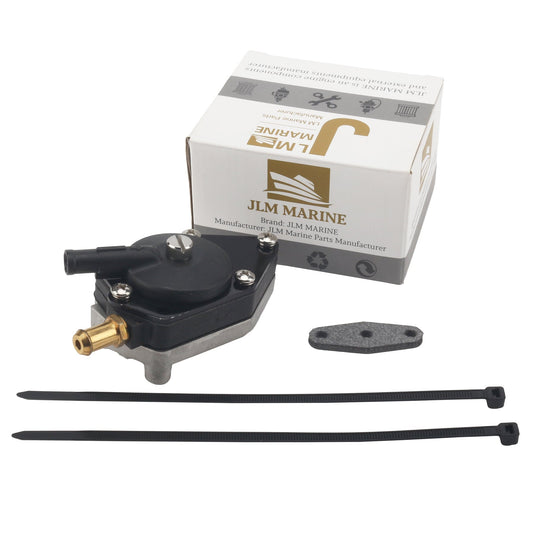
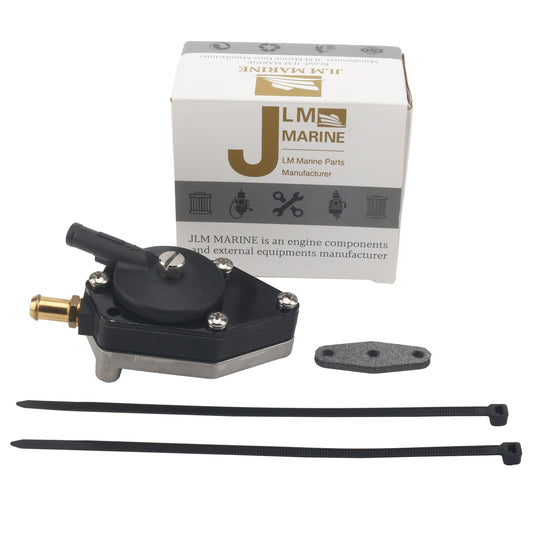
- Johnson Fuel Pump
- Johnson Fuel Pump Kit
- Johnson Oil Filter
- Johnson Oil Seal
- Johnson Gasket
- Johnson Relay
- Johnson Trim Sender
- Johnson Spark Plug Wire
- Johnson Accessories
About JLM Marine
Founded in 2002, JLM Marine has established itself as a dedicated manufacturer of high-quality marine parts, based in China. Our commitment to excellence in manufacturing has earned us the trust of top marine brands globally.
As a direct supplier, we bypass intermediaries, which allows us to offer competitive prices without compromising on quality. This approach not only supports cost-efficiency but also ensures that our customers receive the best value directly from the source.
We are excited to expand our reach through retail channels, bringing our expertise and commitment to quality directly to boat owners and enthusiasts worldwide.
Johnson Parts on Sale
- $50.99
$59.00- $50.99
- Unit price
- per
- $26.80
- $26.80
- Unit price
- per
- $17.39
$22.50- $17.39
- Unit price
- per
- $24.80
- $24.80
- Unit price
- per
- $39.98
$45.00- $39.98
- Unit price
- per


- $21.99
$24.00- $21.99
- Unit price
- per
- $26.90
- $26.90
- Unit price
- per
- $18.99
$15.00- $18.99
- Unit price
- per
- $15.99
$13.00- $15.99
- Unit price
- per

- $43.00
- $43.00
- Unit price
- per
- $138.00
- $138.00
- Unit price
- per
- $42.00
$42.00- $42.00
- Unit price
- per
- $24.80
$45.00- $24.80
- Unit price
- per

- $32.50
- $32.50
- Unit price
- per
- $32.00
$38.00- $32.00
- Unit price
- per
- $64.80
$82.00- $64.80
- Unit price
- per
- $41.85
$44.00- $41.85
- Unit price
- per

- $134.40
$145.00- $134.40
- Unit price
- per
- $39.99
$46.00- $39.99
- Unit price
- per
- $88.59
$102.00- $88.59
- Unit price
- per