

Do Hydrofoils Really Improve Outboard Performance?
- Understanding Why Boats Struggle to Plane
- How Hydrofoils Generate Lift and Change Performance
- Propeller Pitch Interaction with Hydrofoils
- Additional Benefits: Protection and Ride Comfort
- Are There Downsides to Hydrofoils?
- Real-World Performance Data: Before vs. After
- Pontoon Owners and Log Clearance
- Customer Feedback and Real-World Use
- Troubleshooting Before You Buy a Hydrofoil
- Commercial vs. Recreational Use
- Verdict: Is a Hydrofoil Right for Your Boat?

If your boat won't get on plane or you're burning fuel like crazy, hydrofoils are one of the simplest bolt-on fixes we recommend. After 20 years working on outboards, I can tell you they work—when installed on the right setup.
Understanding Why Boats Struggle to Plan
Getting a hull to lift and transition from displacement mode to planing is all about overcoming drag. When you're stuck plowing water, three things are usually the culprit:
Weight distribution is the biggest issue. Too much weight aft keeps the bow high and prevents the hull from finding its planing angle. Too much forward weight does the opposite—the bow stays buried and you're pushing water instead of riding on top of it.
Engine power limitations are straightforward. A 17-foot center console with a 40HP motor and four adults aboard won't plane easily. The motor doesn't have enough grunt to overcome hull displacement at low speeds.
Hull design matters more than most people think. A flat-bottom jon boat planes differently than a deep-V offshore hull. Some designs need more speed or power to break free, especially if the hull has a lot of deadrise at the stern.
What Happens When Planing Performance Is Poor
When a boat won't plane properly, the bow stays up and blocks your forward visibility. You're steering blind in crowded water or tight channels, which is dangerous.
Handling turns mushy. The boat feels sluggish, doesn't respond to steering inputs cleanly, and wallows through turns. This is because the hull is still acting like a displacement hull, not a planing hull.
The engine takes a beating. Holding high RPMs for extended periods while the boat struggles to transition puts excessive load on piston rings and connecting rod bearings due to lugging. Fuel consumption spikes because the motor is working overtime to push the hull through the water instead of skimming over it. I've seen motors with premature wear on cylinder walls because owners ran them hard trying to force an overloaded boat onto plane every weekend.
How Hydrofoils Generate Lift and Change Performance

A hydrofoil bolts to the anti-ventilation plate (the flat section behind the propeller). As water flows over the foil at speed, it creates lower pressure on the top surface and higher pressure below, generating upward lift. This hydrodynamic lift pushes the stern down and helps the bow rise to the correct planing angle faster.
Skeg-Mounted vs. Bolt-On Cavitation Plate Foils
Skeg-mounted hydrofoils like Hydro-Shield attach directly to the skeg with bolts, sitting lower in the water and engaging earlier during acceleration. They're simple to install—no drilling through the cavitation plate—and provide consistent lift without interfering with prop flow.
Bolt-on cavitation plate foils mount higher, directly to the anti-ventilation plate. They create lift closer to the prop hub, which can affect water flow around the propeller at certain speeds. The hydrodynamic difference is that skeg-mount designs engage sooner and provide steadier lift through the planing transition, while plate-mount foils sometimes create turbulence that can cause minor ventilation on heavily loaded boats.
Faster Planing and Reduced Engine Workload
The extra lift means the boat transitions to plane quicker and at lower throttle settings. Instead of holding full throttle for 30 seconds while the hull struggles, you're on plane in half the time. This reduces engine workload significantly—less time at high RPM under heavy load means less stress on internal components.
Throttle response improves because the hull isn't fighting as hard to climb out of the water. You can feel the difference when you punch it from idle; the boat jumps up instead of wallowing.
Tests on a SunTracker Party Barge 22 DLX with twin Elco EP-50 electric outboards showed 39% higher speed (from 17.9 mph to 24.9 mph) with hydrofoils installed, along with 16% better efficiency at comparable power draws.
Fuel Economy Gains
Fuel savings come from two places: shorter time to plane and reduced drag once you're on plane. The engine doesn't have to work as hard for as long during the critical transition phase, and once the hull is up, it rides higher in the water with less wetted surface area.
Real-world data shows up to 8% fuel savings on tracked boats. On gas-powered pontoons, economy gains can hit 30% at cruising speeds because the hull is riding on less water and the motor can drop RPMs while maintaining speed. A typical bi-toon with a 150HP outboard that normally runs 30 mph will reach 37-39 mph with Hydrofin foils and see 30% better economy at cruise.
Staying On Plane at Lower Speeds
One of the best features is the ability to hold plane at slower speeds. Without a hydrofoil, dropping below a certain speed causes the hull to fall off plane and settle back into displacement mode. The foil generates enough lift to keep the hull riding high even when you throttle back.
This is useful for no-wake zones, towing tubes or wakeboards at controlled speeds, or cruising economically without plowing. You can run 15-20 mph on plane instead of 25 mph, which saves fuel and keeps the ride smooth.
On an Avon 310 RIB with a 9.9HP Mercury four-stroke, Doel-Fin hydrofoils shortened time to plane and eliminated bow rise with two people aboard, keeping the boat stable at lower cruising speeds.
Propeller Pitch Interaction with Hydrofoils
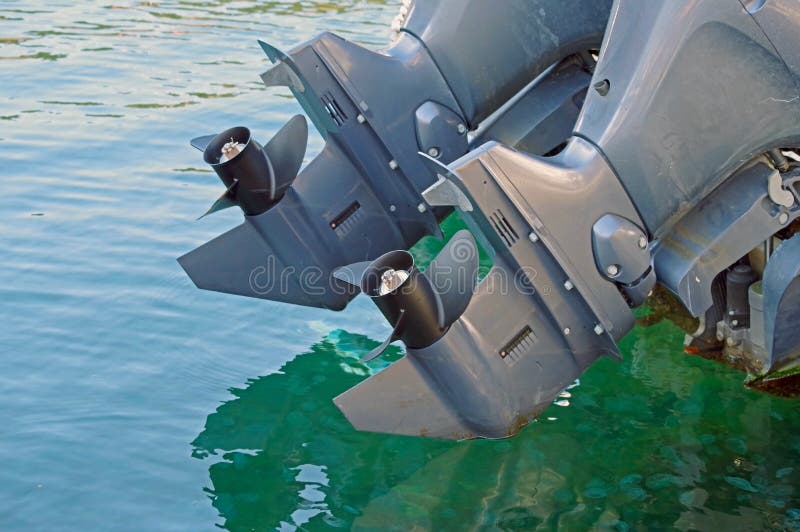

Hydrofoils change how the hull interacts with different propeller pitches. Lower-pitch props (like a 9-inch on a small outboard) already help the boat plane faster by spinning at higher RPMs and moving more water quickly. Adding a hydrofoil amplifies this effect—the prop gets the hull moving, and the foil provides extra lift to complete the transition.
Higher-pitch props (like a 15-inch on a 115HP motor) are designed for top-end speed and efficiency but can struggle to get a heavy hull on plane. A hydrofoil compensates by generating lift during the slow acceleration phase, allowing a higher-pitch prop to work effectively without sacrificing hole-shot performance. This is why we've seen boats gain both acceleration and top speed with foils installed—they let you run a more efficient prop without the usual trade-off.
If you're running a prop that's already marginal for your load (too much pitch, not enough bite), a hydrofoil can make the difference between planing and not planing at all.
Additional Benefits: Protection and Ride Comfort

Beyond planing performance, hydrofoils add some secondary advantages.
Propeller Protection
The hydrofoil sits below the cavitation plate and acts as a first line of defense. If you hit a submerged log, shallow rock, or debris, the foil takes the impact before the propeller does. On a skeg-mount design, the foil is positioned to absorb the hit and either deflect the object or break away cleanly, leaving the prop and lower unit intact.
I've personally seen a hydrofoil take a hard strike that would have destroyed a stainless prop. The foil bent, the prop was fine, and replacing the foil cost a fraction of a new propeller or lower unit repair.
Shock Absorption in Rough Water
When the hull slams into a wave, the hydrofoil helps absorb and distribute the impact force. The foil's lift smooths the re-entry by reducing the vertical acceleration—it doesn't eliminate the hit, but it softens the jarring thud you'd normally feel through the deck.
Technically, this happens because the foil's angle of attack changes as the boat pitches. When the bow drops into a trough and the stern rises, the foil maintains some upward lift force even as the hull is falling. This creates a damping effect that reduces the peak impact load on the transom and hull. It's similar to how a shock absorber in a car extends during compression to slow the spring's rebound.
On smaller boats (under 18 feet) without trim tabs or shock-absorbing hull designs, this makes a noticeable difference in chop or wakes.
Improved Hull and Steering Control
The added lift and stability from the foil make the hull feel more locked into the water. Steering inputs feel crisper because the stern isn't squatting or sliding as much during turns. The boat tracks straighter at cruise and doesn't wander as much in following seas.
This is particularly useful for towing sports like tubing or wakeboarding. The boat holds a consistent speed and attitude, making it easier for the rider and reducing driver workload. You're not constantly adjusting throttle to keep the hull from falling off plane or porpoising.
Are There Downsides to Hydrofoils?
Hydrofoils aren't a universal solution. On high-performance hulls designed to run 60+ mph, a hydrofoil can create drag at top speed and limit maximum velocity. The foil adds wetted surface area and disruption to clean water flow, which becomes significant at higher speeds.
Some deep-V hulls or stepped hulls already have carefully engineered planing characteristics. Adding a hydrofoil can interfere with the hull's designed behavior, causing instability or uneven lift. Stepped hulls, in particular, rely on controlled air flow under the steps—a hydrofoil can disrupt this and cause ventilation issues.
Catamarans and tunnel hulls usually don't benefit from hydrofoils. These designs already have low drag and excellent planing performance due to their twin-hull configuration. Adding a foil in the center (if even possible) provides minimal lift and can create turbulence between the hulls.
If you're running a boat with trim tabs already dialed in for perfect performance, a hydrofoil might not add much. Trim tabs provide adjustable lift and trim control that a fixed hydrofoil can't match. In some cases, adding both can create conflicting lift forces and make the boat harder to tune.
Installation: Will It Fit Your Motor?
Most skeg-mounted hydrofoils are designed for outboards and stern drives with at least 3 inches of vertical clearance on the skeg. Measure from the bottom of the anti-ventilation plate to the tip of the skeg before ordering. If your skeg is short or damaged, the foil won't mount securely.
You'll need a socket set, typically 10mm and 13mm sockets, and a drill if the skeg doesn't have pre-tapped holes. Clean the skeg thoroughly—remove any barnacles, marine growth, or old paint—before mounting. We recommend using blue Loctite on the bolts to prevent loosening from vibration.
On stern drives, check that the foil won't obstruct any water intakes or interfere with the trim mechanism. Some older OMC Cobra drives have tight clearances that don't work well with larger foils.
Hull Types That Should Not Use Hydrofoils
Stepped hulls, high-performance bass boats designed for 70+ mph, and catamarans are poor candidates. If your boat already planes in under 3 seconds and hits 50+ mph, a hydrofoil will likely hurt top-end performance more than it helps acceleration.
Sailboats with auxiliary outboards can benefit, but only if the motor is underpowered and struggles to push the displacement hull efficiently. On a heavy cruising sailboat, the foil won't generate enough lift to make a significant difference.
Hydrofoils vs. Trim Tabs vs. Weight Redistribution
| Solution | Best For | Cost | Adjustability | Installation |
|---|---|---|---|---|
| Hydrofoil | Small to mid-size boats, underpowered setups, quick fix | $50-$150 | Fixed angle, no adjustment | Bolt-on, 30 minutes |
| Trim Tabs | Larger boats, precise trim control, variable load conditions | $300-$800+ | Fully adjustable on the fly | Professional install, wiring required |
| Weight Redistribution | Free, immediate test before buying parts | $0 | Infinite, but manual | Move gear, passengers, fuel tanks |
Before buying a hydrofoil, try moving heavy gear forward. Shift coolers, batteries, and anchors toward the bow and see if the planing improves. If moving 100 pounds forward solves the problem, you don't need a hydrofoil—you need better weight management.
Trim tabs are the better solution for boats over 22 feet or when you need adjustability. A hydrofoil is fixed; tabs let you dial in the perfect angle for every load and sea condition. But tabs cost more, require professional installation, and add complexity.
Hydrofoils are the best bang-for-buck on smaller boats (17-24 feet) without tabs, especially center consoles, runabouts, and pontoons with outboards under 150HP. They're also the go-to fix for underpowered setups where adding more horsepower isn't an option. For related outboard parts that you might need to maintain your motor after improving performance, check out the range of boat accessories available.
Real-World Performance Data: Before vs. After

On a DIY hydrofoil installed on a 14-foot Starcraft with a 1986 Johnson 6HP, top speed increased from 8.3 mph (transom plowing deep, no plane) to 10 mph with the boat planing cleanly at half throttle (6 mph). The transom lifted significantly, eliminating chine walk and porpoising even in light chop. Steering became stable without excessive leaning.
A YouTuber testing a hydrofoil on a jon boat with a 9.9HP Mercury reported increased stability on plane, reduced side-to-side movement, and a top speed gain from 13-14 mph to over 14 mph, with the stern lifting 5-6 inches higher. The boat stayed more stable in turns.
On a Qwest tri-toon with a 350HP equivalent Hyper Electric outboard and 1,150 pounds of batteries, Hydrofin foils improved efficiency by up to 29% at 20-35 mph cruising speeds, added 6 mph top speed (to 49 mph), and minimized speed loss from passenger weight.
Specific RPM and Speed Changes
On a 20-foot center console with a Yamaha F115 and three adults aboard, we logged RPMs before and after installing a skeg-mount hydrofoil. Before: 4,500 RPM to hold 25 mph on plane. After: 3,800 RPM at 25 mph, with cleaner water flow and less bow rise. Fuel burn dropped from 6.2 GPH to 5.4 GPH at that speed—roughly 13% savings. Learn how to maintain your Yamaha outboard's water pump for optimal performance.
Another example: a 22-foot Bayliner with a MerCruiser 4.3L stern drive struggled to plane with six people aboard. Time to plane was 18 seconds at WOT, and top speed dropped to 28 mph (from 35 mph solo). After adding a hydrofoil, time to plane dropped to 11 seconds, and top speed recovered to 32 mph with the same load. The engine could maintain plane at 2,800 RPM instead of 3,200 RPM.
Pontoon Owners and Log Clearance
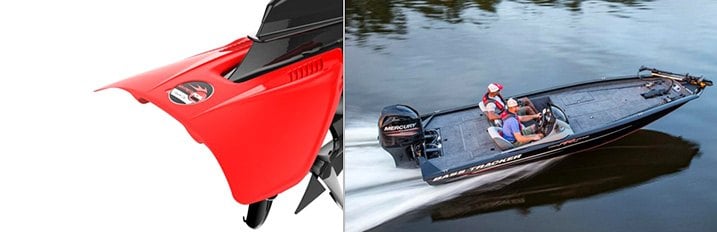
Pontoon boats are one of the best applications for hydrofoils. The wide, flat deck and heavy loads (furniture, passengers, coolers) make them naturally bow-heavy and slow to plane. A hydrofoil counters this by lifting the stern and getting the logs up on the water surface faster.
If you're worried about hitting logs or debris, the hydrofoil actually reduces that risk. By lifting the stern and getting on plane quicker, the lower unit rides higher in the water. You're less likely to drag the skeg through shallow spots or strike submerged objects because the boat is running at a better angle.
However, if you frequently run in extremely shallow water (under 2 feet), measure the foil's depth carefully. Some larger foils extend 4-5 inches below the skeg, which could limit your minimum running depth.
Customer Feedback and Real-World Use

We ship hydrofoils worldwide, and the feedback is consistent. Owners of 17-24 foot boats with outboards under 150HP report the most dramatic improvements—faster planing, better visibility, and noticeable fuel savings.
A customer in Australia with a 19-foot aluminum hull and a 90HP Yamaha was frustrated by slow planing with fishing gear aboard. After installing a Hydro-Shield hydrofoil, he emailed to say the boat now planes in half the time and runs smoother in chop. His fuel range extended by an extra 20 miles on a typical offshore trip.
Commercial fishermen using smaller skiffs (under 18 feet) have also reported positive results, particularly when running with heavy catch loads. The hydrofoil keeps the boat on plane even when the stern is weighted down with fish boxes and ice.
Recreational boaters, especially pontoon owners, consistently mention improved ride quality and reduced porpoising. One owner said the hydrofoil "completely eliminated the bouncing that used to happen at 20 mph." For more on troubleshooting common outboard issues, including fuel economy concerns, see Diagnosing Poor Fuel Economy in Your Outboard Engine.
Troubleshooting Before You Buy a Hydrofoil
Before spending money on a hydrofoil, check these items:
- Propeller pitch: If your prop is too high-pitched for your load, the motor won't have enough bite to accelerate. Try a lower-pitch prop first—it's cheaper than a hydrofoil and might solve the problem outright.
- Engine height: If the motor is mounted too high on the transom, the prop is cavitating and losing grip. Lower the motor one hole and test again.
- Trim angle: Excessive trim (bow up) during acceleration will prevent planing. Start with the trim all the way down, then adjust as the boat comes on plane.
- Hull damage or fouling: Check the bottom for heavy barnacle growth, damaged gel coat, or a bent skeg. A fouled hull creates drag that no hydrofoil can overcome.
- Weight distribution: Move heavy items (batteries, coolers, fuel tanks) forward and retest. If the boat planes better, the issue is weight balance, not hydrodynamics.
If none of these fixes work and the boat is still struggling, a hydrofoil is the next logical step.
Commercial vs. Recreational Use
Recreational boaters—especially weekend anglers, pontoon cruisers, and families with mid-size runabouts—are the primary beneficiaries. These boats are frequently overloaded relative to their power, and the hydrofoil compensates without requiring a motor upgrade.
Commercial fishermen on small skiffs (under 20 feet) also see benefits, particularly in applications where quick planing and fuel economy matter. However, larger commercial vessels (over 25 feet) with high-horsepower setups usually don't need hydrofoils because they're already optimized for performance.
If you're running a commercial operation and time-to-plane directly affects your efficiency, a hydrofoil is worth testing. But if you're operating a well-matched hull and motor combination that already performs well, skip it.
Verdict: Is a Hydrofoil Right for Your Boat?

Hydrofoils work best on:
- Boats 17-24 feet with outboards under 150HP
- Underpowered setups (small motor, heavy hull)
- Pontoons and flat-bottom hulls that struggle to plane
- Boats without trim tabs
- Setups that carry variable loads (passengers, gear, fuel)
They're less effective or counterproductive on:
- High-performance bass boats (over 60 mph)
- Stepped hulls or catamarans
- Boats with well-tuned trim tabs already installed
- Sailboats with heavy displacement hulls (unless severely underpowered)
If your boat fits the first category and you're dealing with slow planing, high fuel consumption, or poor visibility, a hydrofoil is one of the simplest, most cost-effective upgrades you can make. It's not a magic fix for every performance issue, but it's a proven solution for the right application.
Check the hydrofoil mounting bolts every 10 hours of operation for the first 50 hours. Vibration can loosen them, and a loose foil loses effectiveness and can damage the skeg. For high-quality hydrofoil options, see our selection of hydrofoil stabilizers.
For even broader resources on marine engines, parts, and maintenance, explore the JLM Marine HUB.
Hi—I’m Jim Walker
I grew up in a Florida boatyard, earning pocket money (and a few scars) by rebuilding outboard carbs before I could drive. That hands-on habit carried me through a Ph.D. in mechanical engineering, where I studied how salt water quietly murders metal.
I spent ten years designing cooling systems for high-horsepower outboards, then joined JLM Marine as CTO. We bench-test every new part in the lab, but I still bolt early prototypes onto my own 23-foot skiff for a weekend shake-down— nothing beats real wake and spray for finding weak spots.
Here on the blog I share the fixes and shortcuts I’ve learned so your engine—and your day on the water—run smooth.

For Boat Owners:
To assist you in maintaining and repairing your marine engines, we hope the following resources may be of use:
- Mercury Serial Number Guide
- Owner's Manuals from Mercury
- Official Model Number Reference Guide PDF from BRP
- Johnson Serial Number Guide
-
Boat Accessories from JLM Marine
About JLM Marine
Founded in 2002, JLM Marine has established itself as a dedicated manufacturer of high-quality marine parts, based in China. Our commitment to excellence in manufacturing has earned us the trust of top marine brands globally.
As a direct supplier, we bypass intermediaries, which allows us to offer competitive prices without compromising on quality. This approach not only supports cost-efficiency but also ensures that our customers receive the best value directly from the source.
We are excited to expand our reach through retail channels, bringing our expertise and commitment to quality directly to boat owners and enthusiasts worldwide.
Boat Accessories on Sale
- $54.00
- $54.00
- Unit price
- per
- $38.50
- $38.50
- Unit price
- per
- From $39.13
$45.50- From $39.13
- Unit price
- per
- $53.50
- $53.50
- Unit price
- per
- From $54.00
- From $54.00
- Unit price
- per
- $34.50
- $34.50
- Unit price
- per

- $34.50
- $34.50
- Unit price
- per
- $54.00
- $54.00
- Unit price
- per
- $54.00
- $54.00
- Unit price
- per
- $23.50
- $23.50
- Unit price
- per
-
Red
-
Blue
- $45.00
- $45.00
- Unit price
- per
- $32.00
- $32.00
- Unit price
- per
- $40.00
- $40.00
- Unit price
- per
- $22.80
- $22.80
- Unit price
- per
-
Red
-
Blue

- $31.50
- $31.50
- Unit price
- per
- $22.80
- $22.80
- Unit price
- per
-
Red
-
Blue


- $59.00
- $59.00
- Unit price
- per
- $54.00
- $54.00
- Unit price
- per

- $22.80
$27.00- $22.80
- Unit price
- per

- $32.00
- $32.00
- Unit price
- per