

Diagnosing Poor Fuel Economy in Your Outboard Engine
- Baseline Fuel Consumption Rates by Horsepower
- How Trim Affects Fuel Consumption
- Testing Your Outboard's Fuel Consumption
- Running at 75-80% Rated Horsepower
- Fuel System Diagnosis
- Propeller Diagnosis
- Engine Maintenance Affecting Fuel Economy
- Mechanical Diagnostic Checklist
- Weight, Hull, and External Factors
- Parts Quality and Replacement
- Tools for Diagnosis
- Real-World Example: Key West Yamaha 200-hp Case
- Frequently Asked Questions
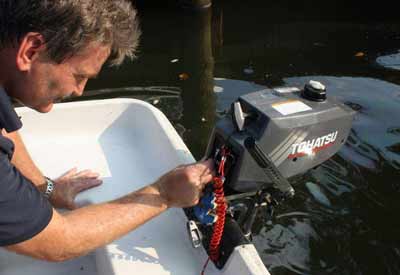

If your outboard is burning more fuel than usual, something's wrong. Start by measuring what "normal" consumption should be, then work through the most likely culprits: trim, prop, fuel system, and engine maintenance.
Baseline Fuel Consumption Rates by Horsepower
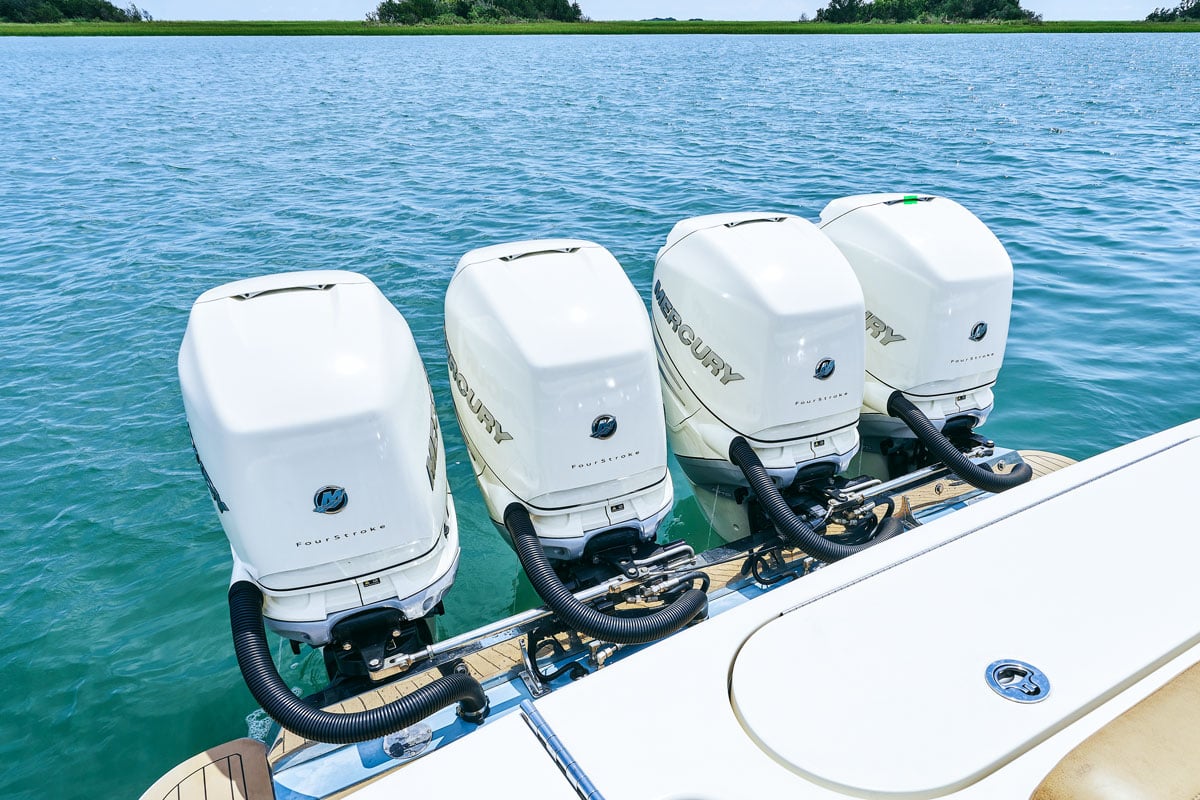
At wide-open throttle (WOT), most outboards consume roughly 10% of their rated horsepower in gallons per hour (gph). A 250-hp engine burns about 25 gph at 6000 rpm. Drop to 75% throttle and that falls to 12.5 gph—a 50% fuel savings.
Here's what you should expect:
| Horsepower | RPM (WOT) | GPH (Approx.) | Estimated MPG at Cruise (75% throttle, 21-ft hull) |
|---|---|---|---|
| 25 (4-str) | 5,500 | 2.3 | 4.5 |
| 50 (DI) | 5,500 | 5.0 | 3.8 |
| 115 (DI) | 5,500 | 12.0 | 3.2 |
| 250 | 6,000 | 25.0 | 2.8 |
Source: Marine Engine Digest Fuel Flow Chart
Fuel economy is worst between 1500-3000 rpm when the boat is trying to climb over its bow wave. Efficiency picks up once you're planing, typically around 3500-4000 rpm. The sweet spot for most outboards is 60-80% of rated horsepower.
How Trim Affects Fuel Consumption 
Incorrect trim is the single biggest fuel waster we see. When your boat's attitude in the water is wrong, drag goes up and the engine works harder.
Adjusting Vessel Trim for Lower Drag
Trim controls the angle of the hull relative to the water. Trimmed too far down, the bow digs in and creates massive resistance. Trimmed too far out, the stern squats and you lose hull efficiency.
Use your power trim to lift the bow 2 to 5 degrees once you're on plane. You'll know you're in the zone when the boat settles flat, the spray pattern is clean, and RPMs climb slightly without adding throttle. On planing hulls, this lifts the high-drag sections out of the water.
If your boat has trim tabs, use them to fine-tune the attitude at lower speeds or in choppy water. Tabs help level the hull side-to-side and prevent bow-down plow.
Symptom check: If you're plowing at cruise speed, trim up until the bow lifts and the engine note changes. If the boat starts porpoising or the stern feels like it's sinking, trim back down. You'll feel the difference immediately.
Testing Your Outboard's Fuel Consumption
You need data. Guessing doesn't work.
What You'll Need
- Clean hull and propeller (remove all fouling and debris)
- Full main fuel tank
- Separate portable fuel tank (6-gallon or 12-gallon), filled and marked
- GPS or accurate speedometer
- Notepad
Step-by-Step Testing Procedure
- Fill the portable tank completely and mark the exact starting fuel level. Use a transparent tank if possible.
- Connect the portable tank to your outboard, bypassing the main tank.
- Run a timed test at a specific RPM. For example, hold 4000 RPM for 30 minutes or cruise at 25 mph for 10 miles.
- Measure fuel used by checking the level in the portable tank after the run.
- Calculate consumption: Divide fuel used by time (for gph) or distance (for mpg).
Repeat at different RPM settings—3000, 3500, 4000, 4500, 5000. Plot the results to see where your engine is most efficient.
If/Then diagnosis: If performance and fuel consumption improve dramatically with the portable tank, the problem is in your boat's fuel lines, tank, or vent. If consumption stays high, the issue is with the engine or prop.
Recording Results: Speed vs. Fuel Use
Create a simple table showing RPM, speed, and gph. You're looking for the point where you get the best miles per gallon without sacrificing too much speed. On most setups, running at 4000-4500 RPM instead of WOT saves 40-50% fuel while only losing a few mph.
Running at 75-80% Rated Horsepower
WOT is for getting on plane or emergencies. Sustained WOT operation burns fuel at the highest possible rate and puts maximum stress on the engine.
For a 200-hp outboard, aim to cruise in the 150-160 hp range. This typically corresponds to 4000-4500 RPM on most engines. The fuel savings are huge—often cutting consumption nearly in half compared to WOT—and you're only giving up 5-8 mph.
Four-stroke outboards are up to 50% more efficient than two-strokes at equivalent horsepower, so factor that in if you're comparing older two-stroke data to modern engines.
Fuel System Diagnosis
Fuel Quality and Contamination
Stale fuel, water contamination, or ethanol phase separation will kill your fuel economy. E10 fuel (10% ethanol) has 4% less energy than pure gasoline, so you're already starting behind. Phase separation happens when ethanol absorbs water and separates from the gasoline, leaving a layer of water-alcohol mix in your tank that doesn't burn.
Timeline: Fuel starts degrading in as little as 30 days, especially in warm climates. Ethanol-blended fuel can phase-separate in 60-90 days if exposed to moisture.
Always use fresh marine fuel and add a quality stabilizer if the boat will sit for more than two weeks. Check for water in the tank by pulling a sample from the fuel/water separator drain.
Fuel Flow Restrictions
A collapsed fuel line, clogged filter, or failed tank vent will starve the engine and force it to run lean or rich, both of which waste fuel.
Jose from Jose's Extreme DIY highlights the tank vent as a prime suspect: "A lot of times these vents fail… the bulb will collapse as you're running the engine especially at higher speeds." If your primer bulb goes flat at cruise or WOT, check the anti-siphon valve and tank vent first.
Squeeze the primer bulb and hold it. It should stay firm. If it stays mushy, fuel is flowing backward—check the bulb's internal check valve. If the bulb collapses under load, you've got a vent or supply-side restriction.
Fuel flow test: Disconnect the fuel pump output hose, aim it into a container, and crank the engine. You should see a steady, strong stream with no air bubbles. Weak flow or spurting indicates a restriction upstream.
Inspect fuel lines for internal collapse. The outer hose can look perfect while the inner liner has separated and is blocking flow. This is common on older hoses and shows up as poor WOT performance while mid-throttle runs fine.
Fuel Pump and Vapor Separator Tank (EFI Engines)
On modern EFI outboards, the vapor separator tank (VST) is a common trouble spot. Internal leaks at the VST or fuel pressure regulator can send extra fuel into the crankcase, thinning the oil and spiking fuel consumption.
Mechanics now routinely use fuel pressure gauges at the VST to diagnose poor running and fuel-related issues. If the engine shows high fuel consumption or can't reach target RPM, check fuel pressure at the VST and injectors. Low pressure points to a clogged VST filter or weak lift pump. High pressure can indicate a stuck regulator.
Symptom: If you're smelling raw fuel and the oil on the dipstick is overfull or smells like gas, you've got fuel leaking internally. Pull the VST and inspect the diaphragm and regulator.
Propeller Diagnosis
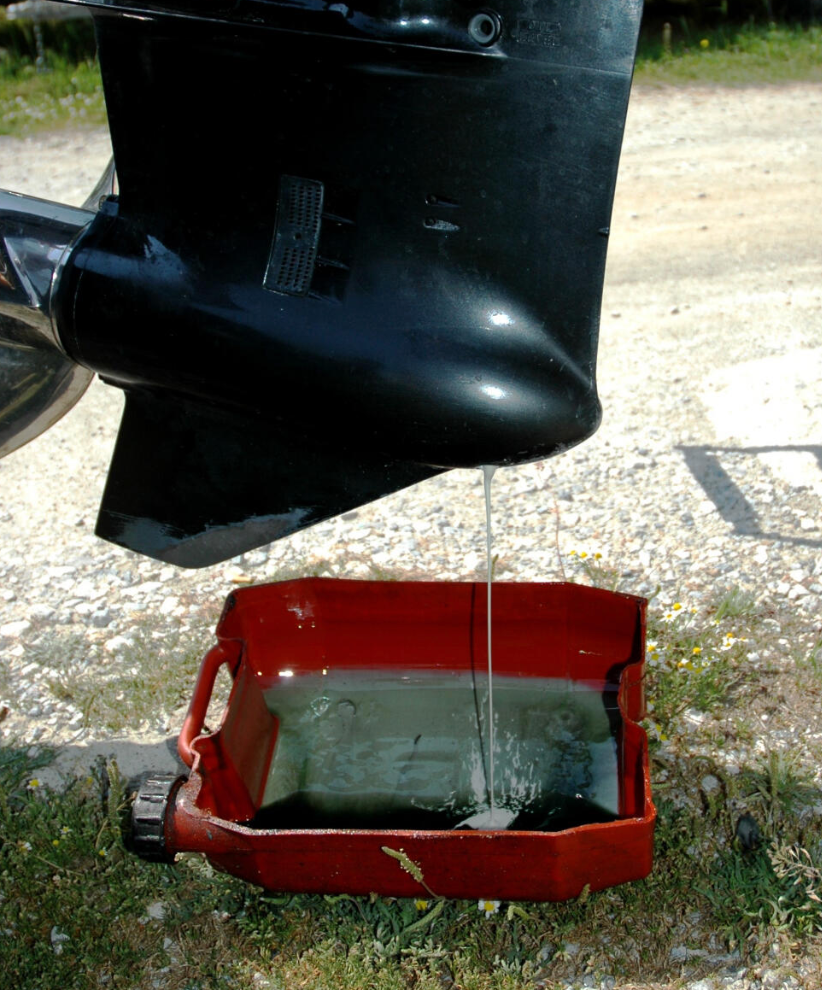
The wrong prop—or a damaged one—forces the engine to work harder, burning extra fuel.
Propeller Pitch and Slip
Prop pitch is the theoretical distance the prop advances in one revolution. If the pitch is too high (oversized prop), the engine lugs and can't reach its rated RPM at WOT. You'll hear it: the engine sounds deep and labored, struggling to gain RPM. If the pitch is too low, the engine over-revs and screams at WOT but the boat doesn't go much faster.
How to check: Run the boat at WOT and note the RPM. Compare it to the engine manufacturer's specified WOT range (usually printed on the cowling or in the manual). If you're 200+ RPM below the range, the prop is likely oversized. If you're 200+ RPM above, it's undersized.
Calculate slip by comparing the prop's theoretical speed (pitch × RPM ÷ gear ratio ÷ 1056) to actual GPS speed. Typical slip is 10-20%. If slip is over 25%, check for prop damage, cavitation, or a spun hub.
Physical Damage and Fouling
Inspect the prop blades for dings, bends, or missing pieces. Even small damage increases drag and reduces efficiency. We've seen cases where fishing line wrapped around the prop shaft created enough drag to noticeably spike fuel consumption and bog the engine at higher RPM.
Pull the prop and check the shaft for line or debris. Inspect the hub for slippage—if the rubber insert has spun inside the prop, you'll see black rubber dust and the prop will slip under load.
Tool needed: Prop wrench (sized to your engine's prop nut), block of wood to lock the prop while loosening the nut, marine grease for reinstallation.
Engine Maintenance Affecting Fuel Economy
Spark Plugs and Ignition
Fouled or worn spark plugs cause incomplete combustion, which shows up as poor fuel economy, rough idle, and black smoke from the exhaust. Pull the plugs and inspect the electrodes. They should be light tan or gray. Black, sooty deposits mean the engine is running rich. White, crusty deposits suggest it's running lean or the plug is too hot.
Check the plug gap with a feeler gauge. Most outboards spec 0.028-0.032 inches. Worn plugs will have a gap over 0.040 inches.
Maintenance interval: Check plugs every 100 hours or annually. Replace every 200-300 hours or if they're fouled.
Thermostat and Operating Temperature
A stuck-open thermostat forces the engine to run too cool, which richens the fuel mixture and wastes fuel. One owner on a marine forum reported poor fuel economy after swapping to incorrect thermostats; going back to the original 140°F spec thermostats restored normal fuel burn.
Most outboards are designed to run at 140-160°F. Check your engine's manual for the exact spec. If the engine is running below that range (check with an infrared thermometer at the cylinder head), inspect the thermostat.
How to test: Remove the thermostat and suspend it in a pot of water with a thermometer. Heat the water and watch the thermostat open at its rated temperature. If it opens early or doesn't close fully when cooled, replace it. For a detailed guide on thermostat replacement, see How to Replace the Thermostat on Your Yamaha F225, F250, or F300 4.2L V6 Outboard Motor.
Fuel Injectors and Carburetors
On EFI engines, clogged injectors cause uneven fuel spray, poor atomization, and wasted fuel. Symptoms include rough idle, hesitation, and increased consumption.
Use an injector cleaner additive in the fuel or have the injectors professionally cleaned ultrasonically. On carbureted engines, dirty jets or stuck float needles will cause rich running and high fuel use. Pull the carbs, disassemble, and clean all passages with carb cleaner and compressed air.
Carburetor-specific tip: If your engine has been sitting, ethanol fuel leaves varnish deposits in the jets. Don't just spray cleaner—physically remove the jets and soak them overnight, then blow them out with compressed air. For help with carburetor maintenance, check out our Yamaha Outboard Carburetor Rebuild Tutorial.
Lubrication and Internal Wear
Inadequate oil protection leads to crankshaft wear and carbon buildup that reduces efficiency by up to 15%. A National Marine Manufacturers Association study found nearly 40% of premature outboard failures involve inadequate lubrication at bearing surfaces, causing power loss and higher fuel consumption. In one case, improper oil led to 28% more fuel use after just 50 hours.
On two-stroke engines, check the oil injection system. A failed oil pump or clogged lines will starve the engine of lubrication, increasing friction and fuel burn. On four-strokes, low oil or old, contaminated oil has the same effect.
Maintenance interval: Change lower unit gear oil every 100 hours or annually. Change engine oil per the manual—typically 100 hours or annually for four-strokes. On two-strokes, verify oil injection operation every 50 hours by watching the oil tank level drop during a run.
Mechanical Diagnostic Checklist
Work through this list from top to bottom. These are ordered by probability and ease of check.
- Primer bulb: Squeeze and hold. Should stay firm. If it collapses under load, check the tank vent and anti-siphon valve.
- Fuel filter: Remove and inspect for debris or discoloration. Replace if it's more than one season old. You can find high-quality Fuel Filters at JLM Marine.
- Fuel lines: Inspect for cracks, softness, or internal collapse. Squeeze the line—if it feels stiff or crackly, replace it with reliable parts like those in our Fuel & Induction collection.
- Propeller: Check for damage, debris on the shaft, or spun hub. Verify WOT RPM is within spec.
- Spark plugs: Pull, inspect, gap-check, and replace if fouled or worn.
- Thermostat: Verify the engine reaches operating temperature. Test the thermostat in hot water if you suspect it's stuck open.
- VST filter (EFI): On engines with vapor separator tanks, pull the filter screen and check for debris. Clean or replace.
- Fuel pressure (EFI): Connect a fuel pressure gauge to the Schrader valve at the fuel rail. Compare the reading to spec (typically 30-40 psi on most EFI outboards). Low pressure indicates a clogged filter or weak pump; high pressure suggests a stuck regulator.
Weight, Hull, and External Factors
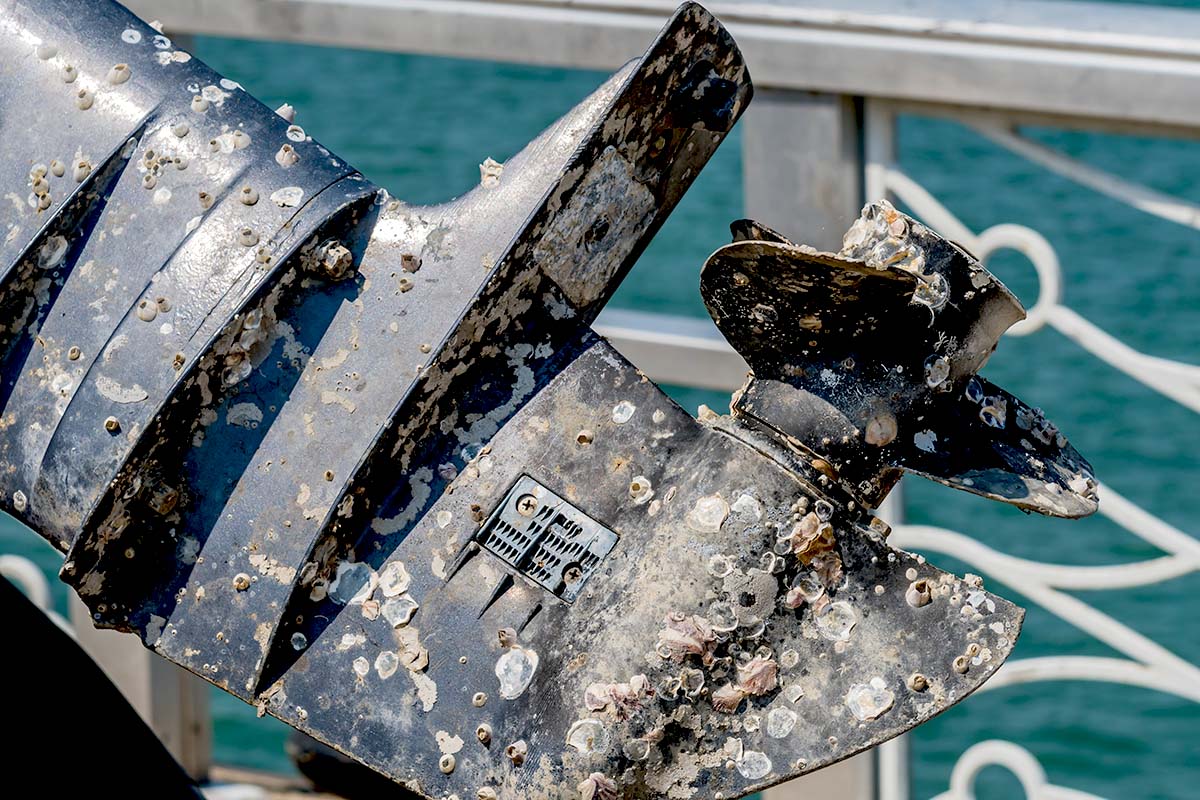
Every 100 lbs of added gear reduces efficiency by roughly 1-2%, depending on hull type. A waterlogged hull (water in the bilge or foam) can add hundreds of pounds. Pump the bilge dry and check for leaks.
Hull fouling—barnacles, algae, or slime—increases drag significantly. A dirty hull can cut top speed by 3-5 mph and spike fuel consumption by 10-15%. Scrub the hull and running surfaces before any fuel economy test.
Sea state and wind have obvious effects. Running into a 15-knot headwind or 3-foot chop can double your fuel burn compared to calm conditions. Plan trips to take advantage of favorable weather and following seas when possible.
Parts Quality and Replacement
When replacing fuel system components, filters, or props, quality matters. OEM parts are reliable but expensive—you're paying a premium for the brand sticker. Cheap aftermarket parts are a gamble; we've seen fuel lines with stiff inner liners that collapse after a few months and filters that disintegrate and clog injectors.
High-quality aftermarket manufacturers often use the same factories that produce OEM parts and offer similar specs at lower prices. For example, JLM Marine stocks fuel system components that meet factory specifications without the dealership markup. The fitment is correct, the materials are durable, and you're not burning cash unnecessarily. Browse our full selection of Inboard & Outboard Motor Parts to find quality replacements.
Avoid generic no-name parts from random sellers. A $10 fuel line kit might save money upfront, but if the inner liner collapses or the fittings leak, you'll spend the next weekend tearing the fuel system apart again.
Tools for Diagnosis
- Fuel pressure gauge with Schrader valve adapter (for EFI engines)
- Tachometer (if not built into the dash)
- GPS or accurate speedometer
- Infrared thermometer (for checking engine operating temperature)
- Feeler gauge (for spark plug gap)
- Compression tester (if you suspect internal engine wear)
- Portable fuel tank (6-gallon, transparent if possible)
- Prop wrench and blocking wood
Real-World Example: Key West Yamaha 200-hp Case
A boat owner in Key West experienced a sudden spike in fuel consumption on his 200-hp Yamaha. He'd checked the basics—spark plugs, fuel quality, and prop—but consumption stayed high. After he contacted us with his engine serial number, we identified a specific inline fuel filter that's often missed in routine maintenance on that model. It's located upstream of the VST and isn't listed in the standard 100-hour service checklist. After replacing it, his fuel economy returned to baseline, saving him hundreds on his next offshore trip.
Diagnostic insight: We noticed the issue by reviewing his fuel pressure data. Pressure at idle was within spec, but it dropped under load—classic symptom of a restriction. That pointed us to the inline filter rather than the VST screen, which would have caused low pressure at all RPMs.
If you're stuck diagnosing poor fuel economy, send us your engine make, model, and serial number. We'll identify the weak points specific to your setup and recommend the exact parts and checks. We ship worldwide, direct from the factory to your dock. Learn more about our wide range of Boat Accessories and parts to keep your engine running efficiently.
Frequently Asked Questions
How much fuel does a 100-hp outboard motor consume per hour?
A 100-hp outboard consumes roughly 10 gph at WOT. At 75% throttle (cruising), expect around 7.5 gph.
What is the best RPM range for fuel efficiency on an outboard engine?
For most outboards, the optimal range is 3500-4500 RPM once the boat is on plane, corresponding to 60-80% of rated horsepower.
How does boat trim affect fuel consumption?
Proper trim lifts the bow 2-5 degrees, reducing hull drag. Incorrect trim—either bow-down or stern-squatting—increases resistance and forces the engine to burn more fuel to maintain speed.
Can fuel consumption testing improve my boat's efficiency?
Yes. Testing creates a speed vs. fuel curve for your specific boat. Knowing where your engine is most efficient lets you adjust throttle habits and save fuel on every trip.
Why does fuel use increase so much at wide-open throttle?
At WOT, the engine produces maximum power, which requires maximum fuel flow. A 250-hp engine at WOT burns around 25 gph, but at 75% throttle that drops to 12.5 gph—a 50% fuel savings.
Pro tip: Flush your engine with fresh water after every use, especially in saltwater. This prevents salt buildup in the cooling passages and corrosion in the fuel system, both of which can increase fuel consumption over time.
Sources:
- https://jlmmarine.com/blogs/outboard-101/outboard-engine-lifespan-plummeting-here-are-the-5-fatal-damage-causes
- https://boattest.com/article/maximize-your-fuel-economy-part-i-outboards
- https://blog.lakefrontliving.com/what-kind-of-gas-mileage-can-i-expect-on-my-boat/
- https://www.gminsights.com/industry-analysis/outboard-engines-market
- https://www.marineenginedigest.com/specialreports/fuelflowchart.htm
- https://www.youtube.com/watch?v=8NI9drrnB9Q
- https://annapolisinflatables.net/blogs/news/outboard-fuel-pump-troubleshooting
- https://www.marineengine.com/boat-forum/threads/excessive-fuel-consumption.376336/
- https://marinesquadron.com/outboard-motor-low-power-at-wot-causes-and-diagnostic-process/
- https://www.marineengine.com/boat-forum/threads/removing-thermostats.389372/
- https://forums.iboats.com/threads/too-much-oil-gas-in-oil.139810/
- https://www.powerandmotoryacht.com/blogs/how-the-outboard-mechanics-job-has-evolved
- https://clixfueling.com/blogs/news/boat-fuel-problems-tips-to-diagnose-prevent-issues
- https://www.frsmithandsonsmarina.com/blog/common-outboard-performance-issues-and-how-to-fix-them?Tag=Outboard+Motor
- https://yamahaonlineparts.com/blogs/yamaha-outboard-motors-maintenance/how-to-improve-outboard-fuel-efficiency-save-money
- https://blog.amsoil.com/five-things-affecting-outboard-performance/
- https://www.mercurymarine.com/us/en/lifestyle/dockline/improving-your-boats-fuel-efficiency
- https://yamahaoutboardmaintenance.com/blogs/resources/how-to-improve-outboard-fuel-efficiency-for-long-days-on-the-water
For additional resources and parts, visit our JLM Marine Hub.