


De-Winterizing Your Outboard: Spring Startup Checklist
Your outboard's been sitting all winter. Now it's time to get it running. Skip a step here and you'll be dealing with seized parts, fuel system clogs, or worse—a cracked block. I've spent two decades pulling apart motors that owners thought they prepped correctly, so let's walk through this the right way.
Why Winter Sits Hard on Outboards

Water expands about 9% when it freezes. If any got trapped in your cooling passages or block, you're looking at cracks. We just quoted a guy $9,400 for a cracked powerhead because he missed flushing one gallery. That's not unusual—service bays see 25-35% of spring repairs tied directly to botched winterization, and backlogs run 4-6 weeks in March and April.
Fuel's the other killer. Ethanol gas breaks down in 30-60 days, pulls moisture, corrodes anything aluminum or brass. I've seen carb bowls that looked like they were dipped in acid after a winter of sitting on untreated fuel. Even in Florida, where guys think they don't need to winterize, occasional freezes crack blocks on boats stored outside.
Over 60% of the damage we repair comes from owners who thought they winterized correctly. With 278,000 outboards sold in the US in 2024 worth $3.6 billion, that's a lot of potential for expensive mistakes.
What Should've Happened Last Fall
If you didn't stabilize your fuel, top off the tank, fog the cylinders, and flush antifreeze through the cooling system before storage, you're starting from behind. Treated fuel resists breakdown. Fogging oil coats the cylinder walls against corrosion. Antifreeze pushes out the last drops of water.
We can't rewind the clock, but knowing what was skipped tells you what to watch for. No stabilizer? Expect varnish in the fuel system. No fogging? Check for rust on the cylinder walls when you pull the plugs.
Marine fuel stabilizer stops oxidation and phase separation. You want the fuel to stay liquid and combustible, not turn into a gummy sludge that clogs injectors or carb jets. If you need supplies for this, check our high-quality fuel stabilizer products.
Battery First
Pull your battery if you stored it separately. If it stayed in the boat, check it now.
Use a multimeter. You want to see at least 12.6 volts at rest. Anything under 12.4 volts means it's not fully charged. Charge it with a marine-rated charger before you do anything else.
Clean the terminals with a wire brush. White or green crusty buildup kills connections. Once clean, reinstall the battery and secure it properly. Vibration will shake a loose battery until the terminals crack or the posts snap. The ABYC (American Boat and Yacht Council) and Coast Guard have standards for securing batteries—use a proper hold-down, not a bungee cord.
Replace any wing nuts on the terminals with stainless steel nyloc nuts. Wing nuts loosen from vibration. We see it constantly. A loose connection at the starter can look like a dead battery or bad solenoid when it's just a nut that backed off.
Check Every Electrical Component
Turn the key to "on" without starting the engine. Test your electronics one by one: GPS, fishfinder, VHF radio, nav lights, bilge pump, horn, trim/tilt.
For the bilge pump, pour a bucket of water into the bilge. The float switch should trip and the pump should kick on and discharge water overboard. If it doesn't, pull the pump and check for a jammed impeller or a corroded float switch.
Go through every switch on the dash and console. A stuck or corroded switch that worked fine in October might be dead now. Cheaper to replace a $12 rocker switch than to lose your nav lights five miles offshore at dusk.
Flush the Freshwater System

If your boat has a pressurized freshwater system, it's full of pink RV antifreeze right now. Run every faucet, the shower head, and the deck washdown until the flow runs clear. This can take a few gallons of flushing.
After flushing, sanitize the system. Mix 1/4 cup of household bleach per 15 gallons of tank capacity. Fill the tank with this solution, run it through all the lines and faucets for 30 seconds each, then let it sit for three hours. Drain it completely and flush with fresh water until there's no chlorine smell.
If you skip this, you're drinking stale water that sat in hoses all winter. Not a good time.
Engine Inspection
Open the cowling. Look for any signs of rodent nests—shredded insulation, acorns, droppings. I've seen mice chew through ignition wiring over a single winter. If you see any sign of critters, inspect every wire and hose for damage.
Oil and Filter
Pull the dipstick. If the oil is black or smells burnt, change it now even if you changed it in the fall. Old oil sitting for months can absorb condensation. You want clean oil before the first start.
If you're running a four-stroke, this is basic: drain the old oil, replace the filter, fill with the manufacturer's spec oil. For most outboards, that's 10W-30 or 10W-40 marine-grade oil, but check your manual. Overfilling is just as bad as running it low—excess oil can blow seals.
New oil should look amber or light gold when you check it on a white rag. Synthetic oil can be harder to read on a dipstick because it's so clear, so press the stick against a paper towel to see the level clearly.
Fuel System
Inspect every fuel line from the tank to the engine. Squeeze the lines. They should feel pliable, not hard or cracked. If they're stiff or you see any surface cracks, replace them. Fuel line failure is a fire hazard.
Look for the Coast Guard rating stamped on the hose: USCG Type A1-15 for gas. Anything less isn't rated for ethanol and will permeate, meaning fuel vapors will leach through the hose wall. You'll smell gas in the bilge even without a visible leak.
Check your fuel/water separator. If there's water in the bowl or the filter looks dirty, replace it. Water in fuel will stall your engine, and a clogged filter starves the system. We stock filters and fuel line at JLM Marine that meet factory specs without the dealer markup, including marine fuel filters and fuel pump kits.
If you didn't add stabilizer last fall, you might want to drain the tank and start fresh. Stale gas causes more no-start issues than anything else I see in April. If the gas smells like varnish or looks cloudy, don't run it.
Cooling System Components
For outboards and sterndrives, your water pump impeller is a wear item. Replace it every 1-2 years or every 200 hours, whichever comes first. Impellers are cheap. Rebuilding an overheated powerhead is not.
If you're doing the impeller yourself, you'll need the lower unit off on most outboards. That means draining the gear lube, pulling six to eight bolts, and dropping the unit. Inspect the old impeller. If the vanes are cracked, curled, or missing chunks, you're lucky you caught it now.
New impellers go in with a light coat of glycerin or dish soap—never grease—so they don't tear on the first dry spin. Make sure the key or pin is aligned so the impeller actually turns with the driveshaft. Find quality replacement water pump impellers or impeller kits at JLM Marine.
Inboards with belt-driven raw-water pumps: check the belt tension and inspect the pump housing for corrosion. Pull the cover and check the impeller the same way.
If your engine has a thermostat (most modern four-strokes do), consider replacing it if you're over 200 hours or it's more than three years old. A stuck-closed thermostat will overheat your engine in under five minutes. For guidance, see our thermostat replacement tutorial.
Lower Unit and Gear Lube
Pull the drain and vent screws on the lower unit. Catch the old lube in a pan. You're looking for clean, honey-colored gear oil. If it comes out milky, grey, or smells burnt, you've got water intrusion or gear damage.
Milky lube means the seals are bad. Water got in. If you run it like that, you'll chew up the gears in short order. Pull the lower unit and replace the seals, or take it to a shop if you don't have the tools.
Refill from the bottom (drain hole) until lube comes out the top (vent hole). This pushes out any air pockets. Use the manufacturer's specified gear lube. For most outboards, that's a 90-weight hypoid gear oil or a specific synthetic blend.
Starting the Engine

You've checked everything. Now it's time to see if it runs.
Set Up Water Supply
For outboards and sterndrives, you need flushing muffs (the "earmuff" style) or a flushing adapter that fits your specific lower unit. Slide the muffs over the water intakes on the lower unit. Connect a garden hose. Turn the water on slowly—you want steady pressure, not a fire hose. Too much pressure can blow a hose or damage the impeller.
For inboards, you'll connect to the raw-water intake or sea strainer. Make sure the seacock is open if you're on the hard.
Prime Fuel
If you have a primer bulb in the fuel line, squeeze it until it's firm. This pulls fuel from the tank and fills the filter and lines. If you have an electric fuel pump, turn the key to "on" (not start) and listen for the pump to run. Most will beep or hum for a few seconds as they prime. If you don't hear it, check the fuse and connections.
Start Procedure
Put the shift in neutral. Every modern outboard has a neutral safety switch—it won't start in gear. If yours does start in gear, that switch is broken and it's a safety hazard. Fix it.
Turn the key. The engine should crank and fire within a few seconds.
Immediately check for water flow from the tell-tale—that little stream that shoots out of the side or back of the cowling on an outboard, or from the overboard discharge on a sterndrive. You should see a steady stream within 10 seconds of startup. If you don't, shut it off now. Running dry will destroy the impeller in under a minute.
If the tell-tale is clogged with salt or debris and won't flow even though the pump is working, you can clear it with a piece of monofilament fishing line or a twist of wire. Poke it in gently from the outside.
You'll see smoke for the first few minutes. That's the fogging oil you (hopefully) sprayed in the cylinders last fall burning off. It's normal. Let it clear.
Let the engine idle for 5-10 minutes. Watch your gauges. Oil pressure should come up immediately. Temperature should stay in the normal range (usually 140-160°F for most outboards). If temp climbs or you see no water flow, shut down and troubleshoot.
Test the Gears
With the engine warmed up and water still running, shift into forward. Let it engage for a second, then back to neutral. Shift into reverse, same thing. You're checking that the shift linkage and clutch/dog engagement work smoothly. Don't give it throttle on the muffs or you'll blow the hose off and trash the water pump.
Safety Gear and Controls
Kill Switch
Your engine kill switch (the lanyard you clip to your life jacket) is required by federal law on most boats under 26 feet. Test it. With the engine idling, pull the lanyard. The engine should die instantly. If it doesn't, the switch is bad. Replace it. I've seen guys crank engines for five minutes wondering why it won't start, only to find the lanyard clip sitting on the dash, not attached. That's the most common "operator error" we see. For more on this, see our Understanding the Kill Switch guide.
Steering
Turn the wheel full lock to port, then full lock to starboard. There should be no binding, no excessive play, no grinding. Cable steering can corrode or fray over winter. Hydraulic steering can develop leaks. If you feel any roughness or see fluid weeping from a hydraulic ram, address it before you launch.
Propeller and Zincs
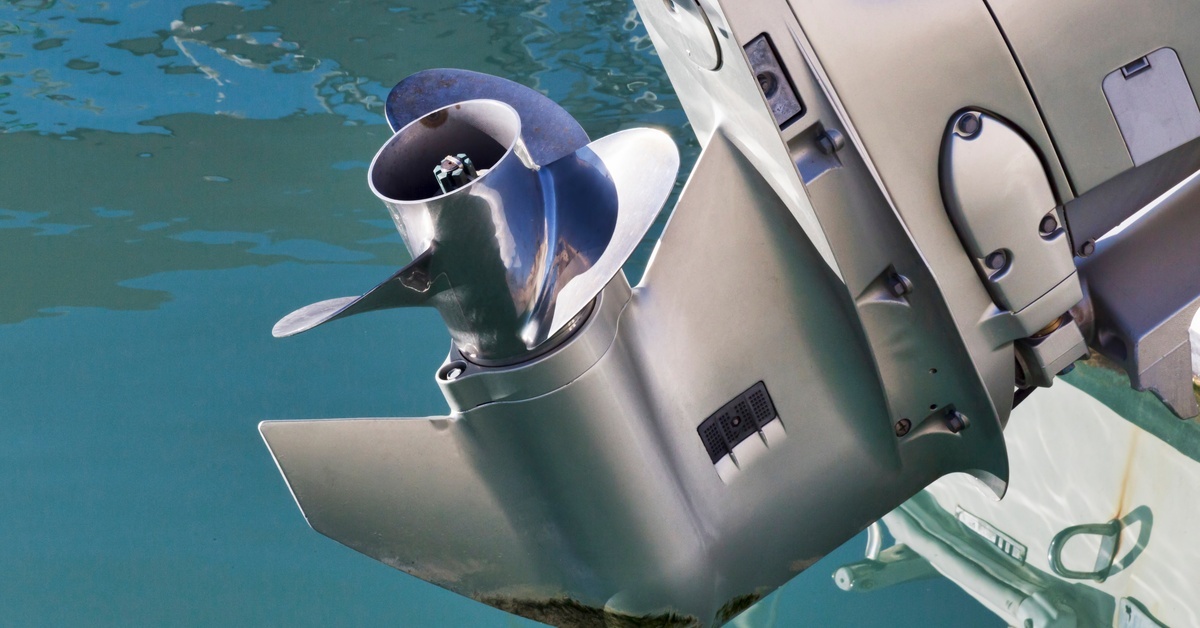
Pull the prop. Check the shaft for fishing line wrapped behind the prop. Even a little bit of mono can cut into the prop shaft seal and let water into the gear case. Inspect the prop blades for dings, cracks, or bent edges. A damaged prop vibrates and kills performance. We offer a variety of boat propellers and accessories to keep your boat ready.
Check your zinc anodes. On outboards, there are usually zincs on the trim tab (the small metal fin below the cavitation plate) and sometimes inside the midsection cooling passages. Zincs are sacrificial—they corrode so your aluminum engine parts don't. If a zinc is more than 50% gone, replace it. If it's completely gone, you've been running without protection and your engine components may already have galvanic corrosion.
Zincs are cheap. New powerheads are not.
Beyond the Engine

Trailer
If you trailer your boat, go over it now. Check tire pressure—most boat trailer tires run 50-65 PSI, which is stamped on the sidewall. Inflate to the max rated pressure, not the vehicle recommendation. Under-inflated trailer tires blowout on the highway.
Pull a wheel and check the bearing grease. If it's grey or milky instead of clean brown or amber, water got in. Repack the bearings with marine-grade waterproof grease. A blown bearing at highway speed will lock the wheel, shred the tire, and possibly flip the trailer.
Inspect the trailer frame, welds, and rollers or bunks. Look for rust or cracks. Test the lights—running lights, brake lights, turn signals. Check that the coupler latch and safety chains are secure. Grease the hitch ball.
Hull and Topsides
Wash the hull. Use a boat soap and a soft brush. Look for any cracks, blisters, or damage. If the boat sat outside all winter and the hull dried out, you might see osmotic blisters (small bubbles in the gelcoat) that weren't visible before. These indicate water intrusion in the laminate. If you see them, get a surveyor's opinion before you splash the boat.
Wax the hull if it needs it. A good coat of marine wax protects the gelcoat and makes cleanup easier all season.
If you're applying bottom paint, do it now. Use fresh paint suited to your local waters—copper-based for salt, zinc or hybrid for fresh. Follow the manufacturer's instructions for number of coats and dry time between coats. Old bottom paint loses effectiveness, so if your boat's been out of the water all winter, a fresh coat is cheap insurance against fouling.
Lines and Anchor
Check dock lines for chafe and UV damage. If they're frayed or stiff, replace them. A snapped dock line in a storm can total your boat.
Pull out your anchor and anchor rode. Inspect the line for wear, check the chain (if you run chain) for rust, and make sure the anchor shackle is moused (secured with wire or a zip tie so it can't unscrew). Test the windlass if you have one.
Registration and Insurance
Verify your boat registration is current and the decal is displayed. Most states require annual renewal. Check your insurance policy. If you dropped coverage or went to storage-only coverage over the winter, reinstate full coverage before you launch. Your marina or ramp may require proof of insurance.
When to Call a Shop
You can handle most of this yourself if you're mechanically inclined and have a manual. But some jobs need a pro.
If your engine won't start after you've checked fuel, spark, and compression, call a certified tech. If you see milky gear lube and don't have the pullers and sealers to rebuild a lower unit, bring it in. If you suspect freeze damage—cracks, weeping coolant, rough running after sitting—don't guess. A compression test or leak-down test takes five minutes with the right tools and tells you exactly what's broken.
We see a lot of DIY repairs that made the problem worse. A guy tries to pull a flywheel without a puller and cracks it. Someone cross-threads a drain plug and strips the case. If you're not confident, don't force it.
Shops offer spring commissioning packages that include a full inspection, fluid changes, impeller replacement, and a test run. Prices vary, but expect $300-$600 depending on the engine size. That's cheap compared to a $2,000 tow bill and a ruined weekend.
For scheduled maintenance—valve adjustments, timing belt replacement, injector cleaning—find a shop with factory-trained techs for your brand. They'll have access to service bulletins and the correct diagnostic software.
If you need parts, JLM Marine stocks OEM-spec components without the dealer markup. A factory impeller kit runs $80 at the dealer; the same kit built in the same plant for the aftermarket is $35 from us. You're getting the same quality rubber and hardware, just without the logo tax.
Keep a simple maintenance log in a notebook or your phone. Write down what you did, what parts you replaced, and the date. Next spring you'll know exactly when you changed the impeller or the last time you serviced the fuel filter.
For all your boat parts and accessories, JLM Marine offers direct factory-quality replacements and excellent customer support.
Explore our full range of products and resources at the JLM Marine homepage.