




Yamaha Outboard Lacks Top-End Speed: Possible Fixes
- Fuel System Restrictions at High RPM
- Ignition Failures Under Load
- Propeller Damage and Spun Hubs
- Compression Loss in Cylinders
- Cooling System Overheating and Guardian Mode
- Carburetor Tuning for 2-Stroke Models
- Air Intake and Exhaust Flow
- Oil Injection System Issues (2-Stroke)
- When to Call a Professional
- Parts Quality: OEM vs Aftermarket
- Real-World Cases
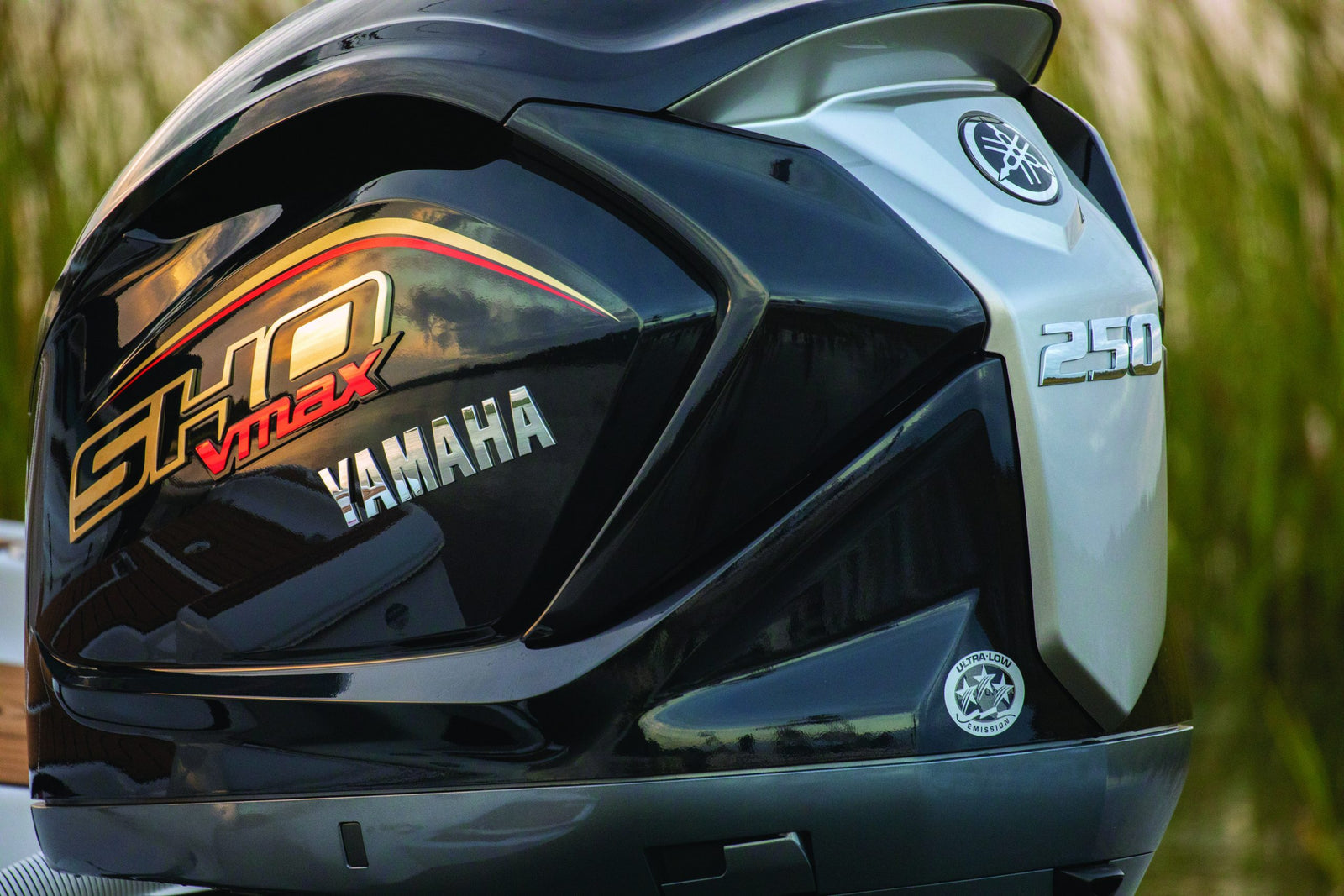
Your Yamaha won't pull past mid-range RPM. The engine sounds normal at idle, but when you open the throttle, it bogs, sputters, or just refuses to climb past 3500-4000 RPM. If you're running a 2-stroke or a 4-stroke EFI, the problem usually sits in one of five systems: fuel delivery, ignition, propeller condition, compression, or cooling. Start with the cheap stuff first.
Fuel System Restrictions at High RPM
Most top-end speed loss on Yamahas traces back to fuel starvation. The engine gets enough fuel to idle and cruise, but when you hammer the throttle, it runs lean and cuts power.
What you'll notice: The motor pulls fine up to about 3800 RPM, then stumbles or dies back. Sometimes it recovers if you back off the throttle, sometimes it doesn't. On a fuel-injected model, you might see the RPM spike and drop repeatedly, like it's hunting for fuel.
Why it happens: Ethanol fuel breaks down over time and leaves varnish in filters, lines, and carb jets. The Vapor Separator Tank (VST) on EFI models has a small pre-filter screen that clogs with sediment, cutting high-pressure fuel flow. The lift pump can also weaken, failing to deliver volume under load. On carbureted 2-strokes, the main jet—responsible for WOT fueling—clogs while the pilot jet (idle circuit) stays clear, so the engine runs fine at low speed but starves at the top end.
What to check:
- Pull the VST filter screen and inspect for brown crud or white gel (ethanol phase separation). If it's dirty, replace it and flush the VST bowl.
- Check the primer bulb. Squeeze it while the engine runs at idle. If it collapses and won't firm up, you have a restriction between the tank and the engine—blocked pickup, crimped line, or failing anti-siphon valve on the tank.
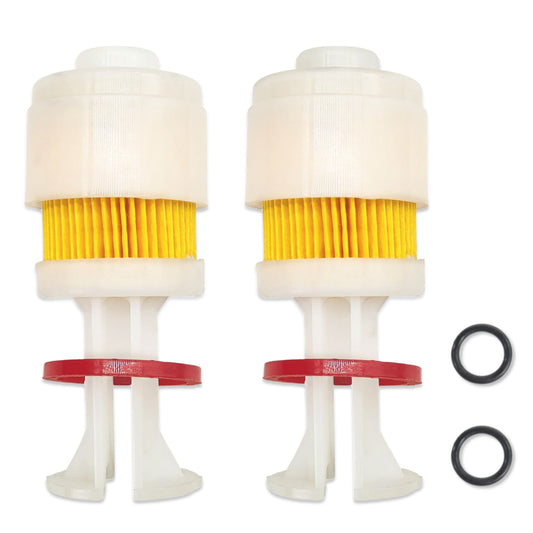
- Replace the external fuel filter. It's a $15 part that eliminates half the fuel complaints we see.
- On carbureted models, pull the carb bowls and inspect the main jets. A tiny speck of debris in a 0.5mm jet hole will kill top speed. Use carb cleaner and compressed air, not a wire.
- Test fuel pressure at the rail (EFI) or carb inlet. You need a gauge rated for your system—typically 3-5 PSI for carbs, 30-45 PSI for high-pressure EFI. If pressure drops under load, the pump is weak.
If you're in the US and running E10, add a stabilizer like Startron to every tank. Ethanol attracts water, and that water gums up every small passage in the fuel system.
Ignition Failures Under Load
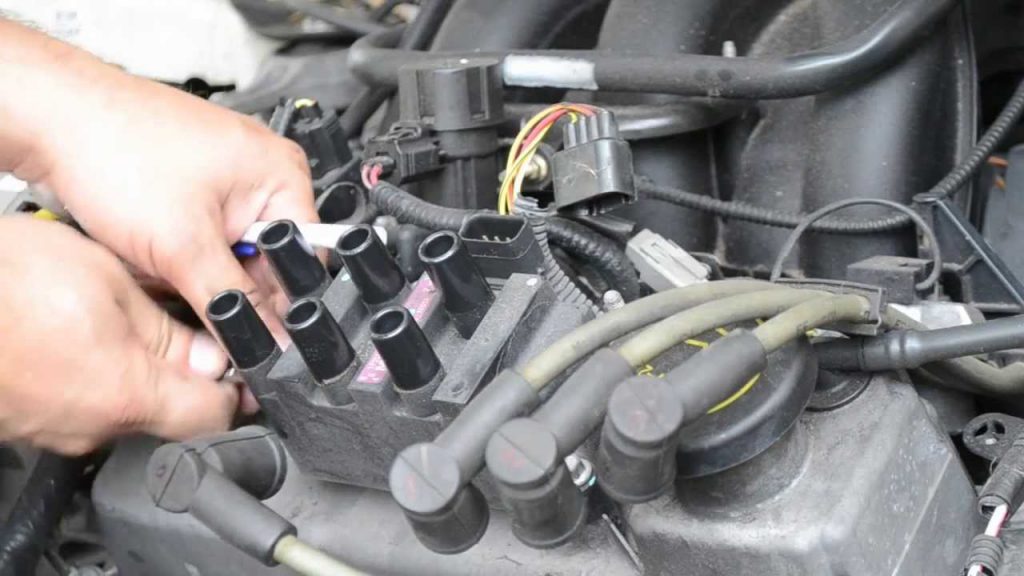
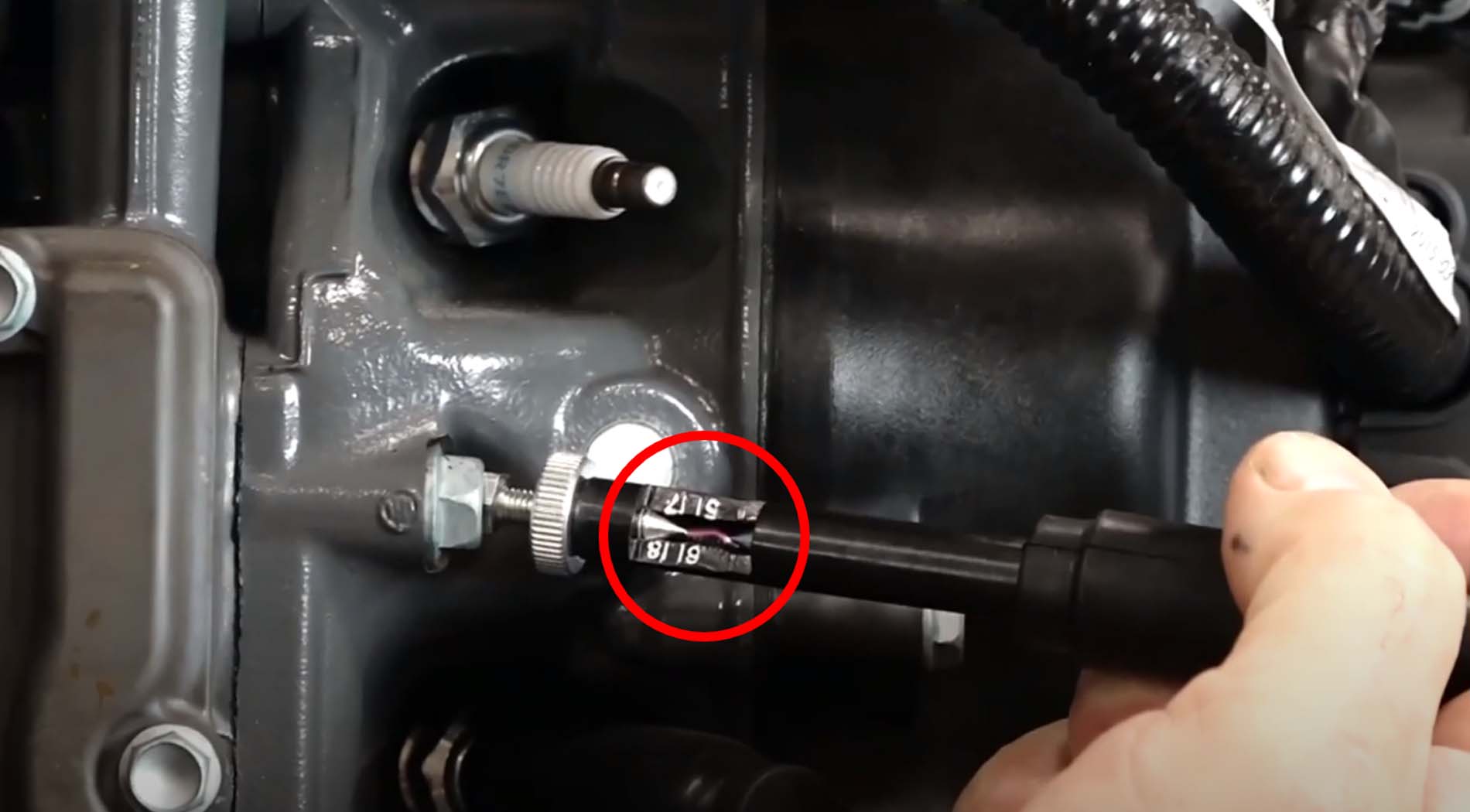
Weak or intermittent spark shows up as a misfire at high RPM. The engine might sound rough, pop through the exhaust, or lose 500-1000 RPM suddenly.
What you'll notice: The motor runs acceptable at low speed but stumbles or backfires when you push it. Sometimes one cylinder drops out entirely, and you'll feel a vibration. On a 2-stroke, you'll see excess smoke if one cylinder is dead and dumping unburned oil.
Why it happens: Spark plugs erode over time. The electrode gap widens, and the coil can't jump the gap under cylinder pressure at high RPM. Ignition coils also fail—they test fine when cold but break down internally when they heat up. This is called "heat soak," and it's common on older Yamaha CD ignition systems. Corroded plug wires add resistance, weakening the spark further.
What to check:
- Pull the plugs. If the electrode is rounded or the gap is over 0.040", replace them. For a 2-stroke, use the exact NGK or Champion heat range specified in the manual—running too cold will foul, too hot will pre-ignite.
- Inspect the ceramic insulator. Cracks or carbon tracking mean the plug is shorting to ground.
- Test the coils with a multimeter. Primary resistance should be around 0.3-0.5 ohms, secondary around 5,000-10,000 ohms (check your service manual for exact specs). If a coil is out of range, it's toast.
- Check plug wire resistance. Each wire should read under 5,000 ohms total. If it's higher, replace the wire set.
- For a proper spark test, use a spark tester that loads the coil. Pulling a plug and grounding it to the block doesn't tell you if the coil can fire under compression. You need a peak voltage adapter to test the CD unit properly—this is where most DIY guys stop and call a shop.
Eric Sorensen, a marine surveyor, stresses that ignition and compression tests should confirm the engine is making full power; if RPM is low with the correct prop, check for cylinder misfire, low compression, or fuel delivery restriction rather than continuing to run the engine hard. Source
Propeller Damage and Spun Hubs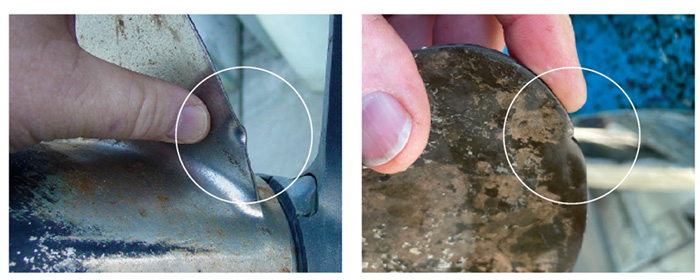
The propeller converts engine power into thrust. If it's damaged or the hub is spun, the engine will rev but the boat won't accelerate.
What you'll notice: The RPMs climb normally—maybe even hit your WOT range of 5000-6000—but the boat speed stays flat. You might also feel vibration or hear a "clunking" noise when you shift into gear.
Why it happens: Hitting a rock, log, or sandbar bends the blades or spins the rubber hub. The hub is designed to slip to protect the lower unit, but once it spins, it's done. The prop will freewheel on the shaft under load while the engine screams at 6000 RPM and you're doing 15 mph.
What to check:
- Inspect each blade for dings, bends, or missing chunks. Even a small nick on the leading edge creates drag and throws the prop out of balance.
- Mark the inner hub and the outer barrel with a grease pencil. Run the boat at WOT for 10 seconds, then check if the marks are misaligned. If they've moved, the hub is spun.
- Verify you have the correct pitch and diameter. For a typical 40-60hp Yamaha on a 16-18' skiff, you're looking at a 10-13" diameter and 13-17" pitch. Too much pitch and the engine lugs (low RPM, no speed); too little and it over-revs (high RPM, no speed).
- Check for fishing line wrapped around the propshaft. Even a few loops will overheat the lower unit seal and kill your top speed.
Sorensen notes that under-propped or damaged propellers and excess hull drag are frequent reasons an outboard cannot reach rated wide-open-throttle RPM and top speed, recommending verification of prop pitch, condition, and bottom cleanliness before suspecting the powerhead. Source
Compression Loss in Cylinders
Low compression means the engine can't build cylinder pressure, so it won't make power no matter how much fuel and spark you throw at it.
What you'll notice: The engine feels weak at all RPM ranges, not just top end. It's hard to start, idles rough, and won't plane the boat or hold speed in a chop.
Why it happens: Piston rings wear out, cylinder walls score, or the head gasket blows. On a 2-stroke, this happens faster if you've been running lean (bad oil injection) or detonating from low-octane fuel. A stuck-open thermostat can also prevent the engine from reaching operating temperature, which affects piston expansion and ring sealing.
What to check:
- Perform a compression test. You need a compression gauge, a spark plug socket, and someone to crank the engine.
- Warm the engine to operating temp first. Cold tests give false readings.
- Remove all spark plugs and disable the ignition (disconnect the coil wires or pull the ignition fuse).
- Hold the throttle plates wide open during the test—this lets the cylinders draw full air.
- Screw the gauge into each cylinder and crank the engine for 5-8 seconds. Record the highest reading.
- Compare cylinders. A healthy Yamaha 40-60hp 2-stroke should read 115-125 PSI. More importantly, all cylinders should be within 10% of each other. If one reads 120 and another reads 90, you have a ring or valve problem.
- If compression is below 90 PSI on any cylinder, the engine needs internal work—rings, pistons, or a top-end rebuild. Don't waste money on filters and plugs.
Cooling System Overheating and Guardian Mode
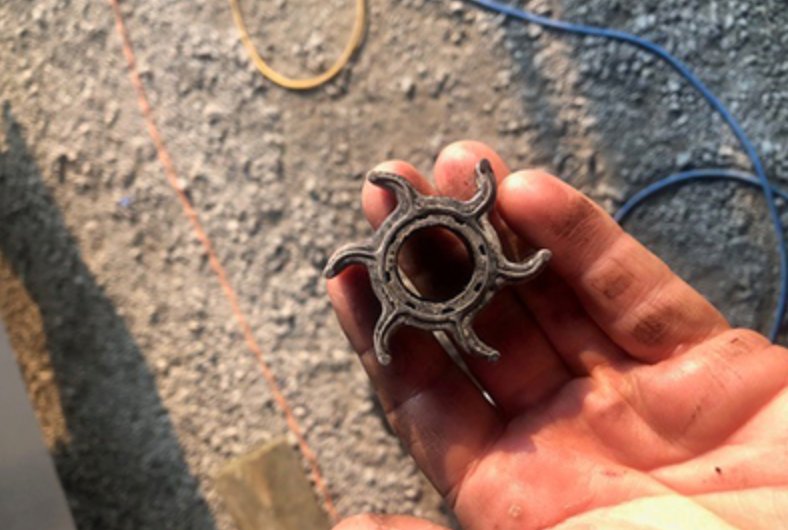
Yamaha outboards have a guardian system that cuts RPM if the engine overheats. You'll hit 4000 RPM, and the ECU will clamp it there to prevent damage.
What you'll notice: The engine runs fine for a few minutes, then suddenly loses power and won't accelerate. The tell-tale stream (pee hole) might be weak or intermittent. On some models, a warning beep sounds or a light flashes.
Why it happens: The water pump impeller wears out and can't move enough water at high RPM. The thermostat sticks closed, blocking coolant flow. The intake screens clog with weeds, sand, or a plastic bag.
What to check:
- Confirm the tell-tale stream is strong at idle and increases with RPM. If it's a dribble or stops above 3000 RPM, the pump is failing.
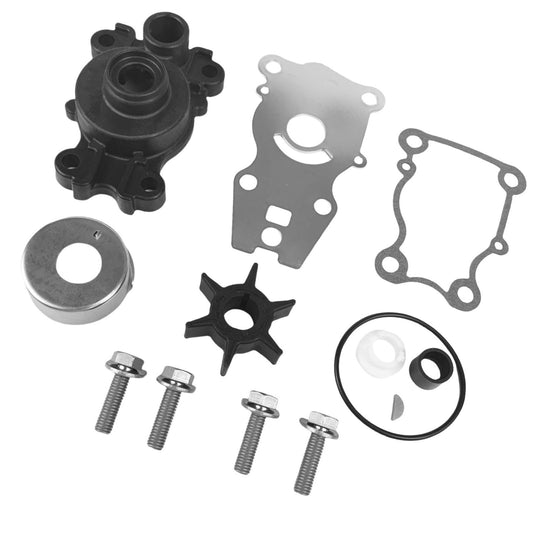
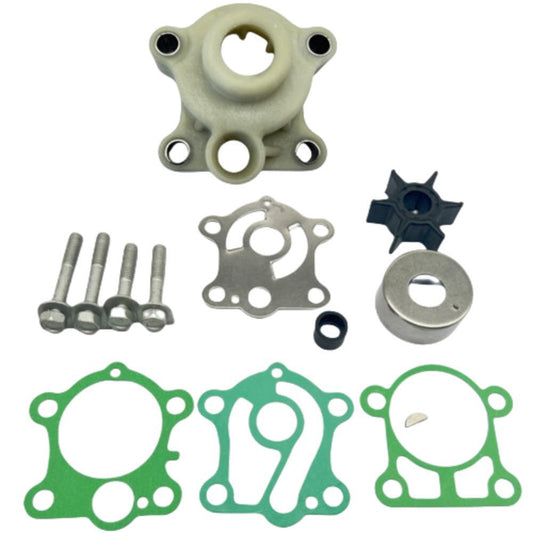
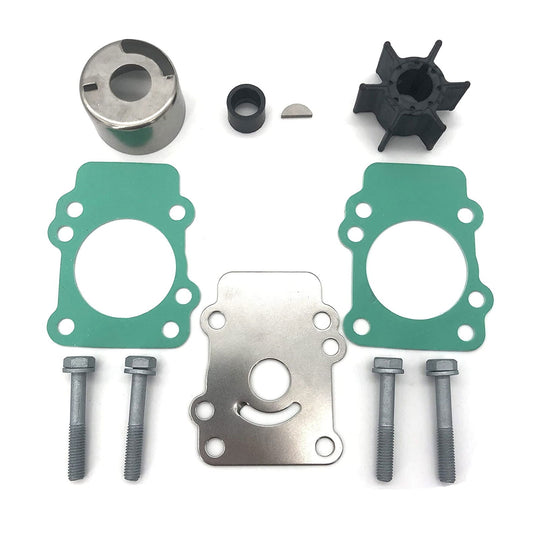
- Pull the lower unit and inspect the impeller. Vanes should be flexible and intact, not cracked or worn flat. Replace it every 2-3 years regardless of appearance.
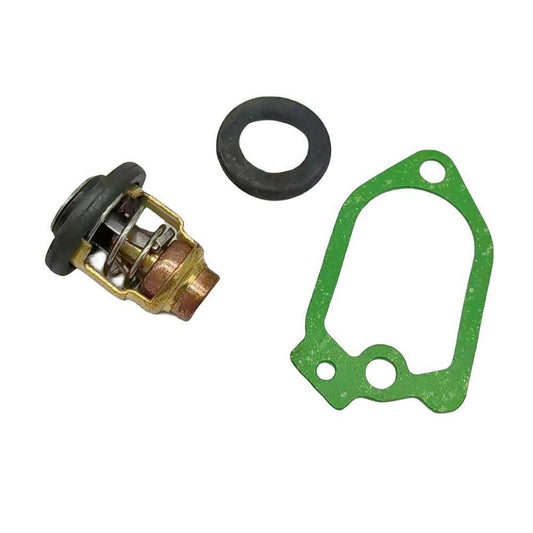
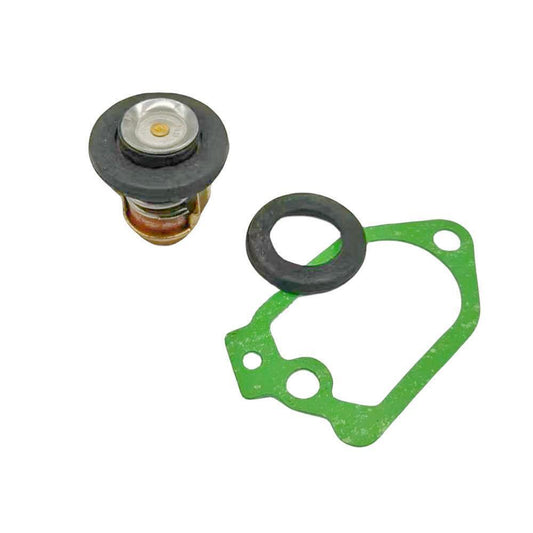
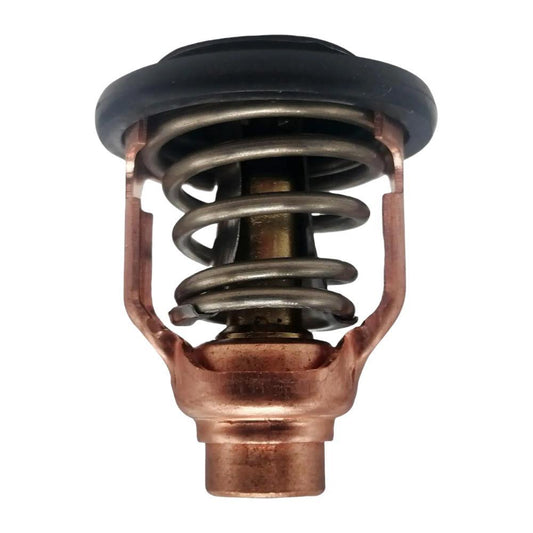
- Remove the thermostat and test it in a pot of water with a thermometer. It should open at the rated temp (usually 140-160°F). If it's stuck, replace it. For detailed thermostat care, see our guide on thermostat maintenance.
- Flush the cooling passages with a hose. On a salt-water engine, scale builds up in the block and restricts flow.
Technicians at Certified Marine Outboards note that many Yamaha owners only notice subtle performance loss at the top end, which is often traced to deferred 100-hour services where filters, plugs, and other wear items that support full power should be replaced. Source
Carburetor Tuning for 2-Stroke Models
If you've checked fuel delivery and the carbs are clean but the engine still won't pull, the jetting might be off.
What to check:
- Pull the carb bowls and note the main jet size. Cross-reference it with the Yamaha parts diagram for your model and altitude. Running the wrong jet size (from a previous owner's "fix") will limit top speed.
- Inspect the float height. If it's set too low, the carb runs lean at WOT. Too high and it floods at idle.
- Check the accelerator pump on models equipped with one. If the diaphragm is torn, you'll get a bog when you snap the throttle open.
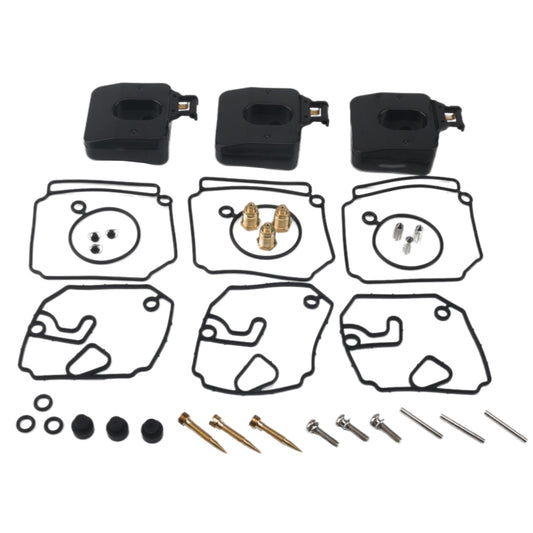
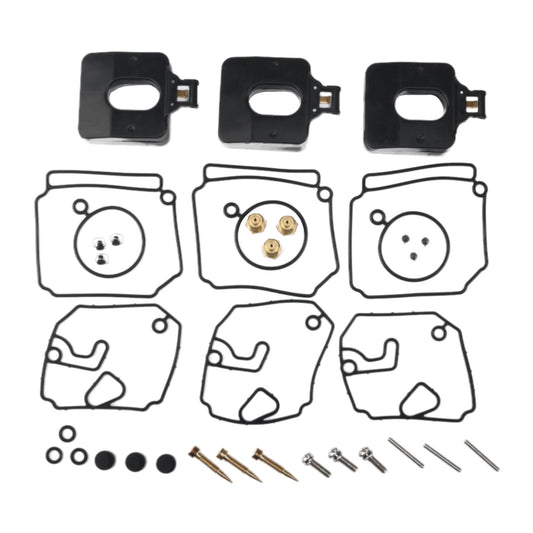
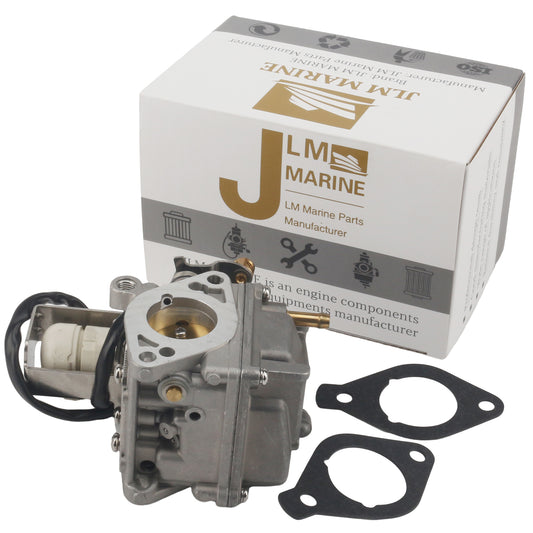
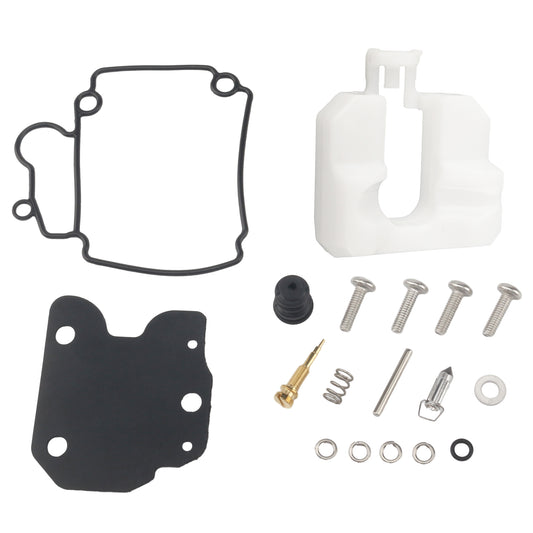
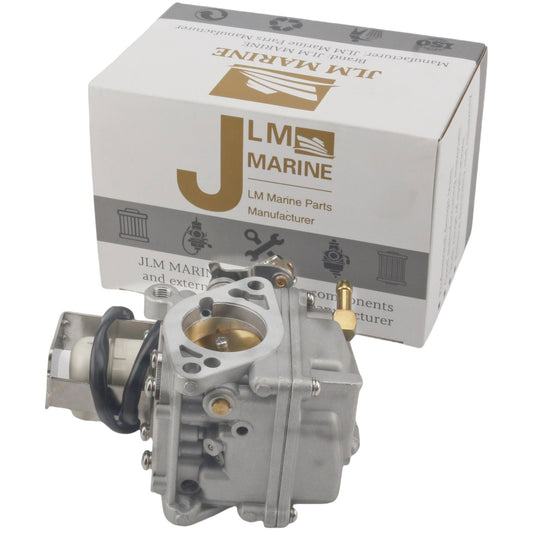
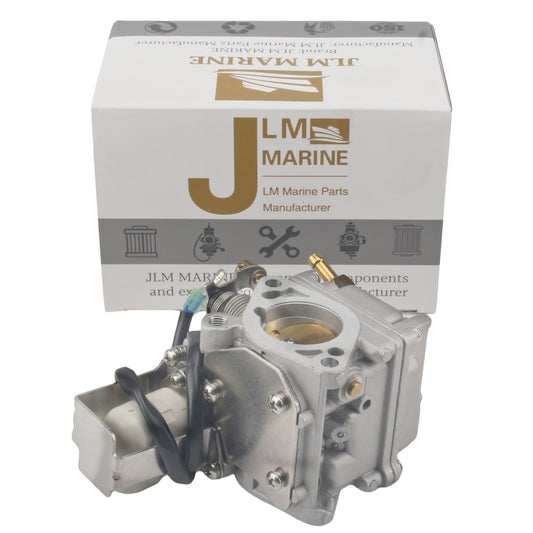
For carburetor parts or kits, you can find quality Yamaha carburetor repair kits and carburetor components at JLM Marine.
Air Intake and Exhaust Flow

Restricted airflow chokes the engine just like a clogged fuel filter.
What you'll notice: The engine sounds muffled or labored at high RPM, like it's working harder than it should.
Why it happens: The air silencer foam element clogs with dirt or oil. The flame arrestor screen (on EFI models) gets coated with carbon. On older 2-strokes, mice or wasps build nests in the air box if the engine sits.
What to check:
- Remove the engine cowling and locate the air intake. On a 2004-2010 Yamaha, it's usually a rectangular box on the side of the cowl.
- Pull the air filter or silencer element. If it's black, soaked with oil, or collapsed, replace it.
- Inspect the exhaust outlet underwater. Excessive carbon buildup at the prop hub exhaust ports creates backpressure.
Oil Injection System Issues (2-Stroke)

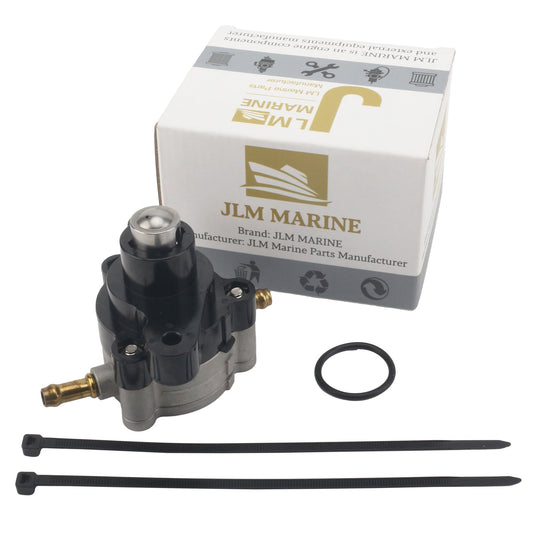
If the oil injection system fails, the engine will either seize (no oil) or run rich and foul plugs (too much oil).
What you'll notice: Heavy blue smoke, fouled plugs, or a roughness at all RPMs. In extreme cases, the engine will lose power suddenly as it goes into a protection mode.
Why it happens: The oil pump linkage rod pops off or bends, especially on 40-60hp models. The pump cable stretches or corrodes, throwing off the oil-to-fuel ratio. The oil tank pickup clogs, starving the pump.
What to check:
- Verify the oil tank is full and the oil is fresh. Old 2-stroke oil thickens and won't flow properly.
- Inspect the linkage rod that connects the throttle to the oil pump. It should move smoothly through the full throttle range. If it's disconnected or bent, the pump won't sync with engine RPM.
- Test the pump output. Disconnect the oil line at the engine and crank it over. You should see a steady stream of oil. If it's a drip or nothing, the pump is dead.
When to Call a Professional
Most of the checks above are DIY-friendly if you have basic tools and can turn a wrench. But some jobs need specialized equipment or training.
Stop and get help if:
- Compression is below 90 PSI and you need an internal rebuild.
- The ECU is throwing fault codes you can't read with a basic multimeter. Longshore Boats' Yamaha-certified master mechanics describe how proper computerized diagnostics—checking fault codes, fuel-pressure data, and ignition performance—are key when a Yamaha will not achieve normal top-end speed, instead of replacing parts blindly. Source Note that a 2004 2-stroke carburetor model won't have an ECU to scan, but later EFI models require Yamaha's YDS software.
- You suspect internal carburetor damage or need ultrasonic cleaning. Rebuilding a triple-carb rack on a 90hp is a full-day job even for pros.
- The lower unit needs disassembly for a full water pump service and you've never done it before. Messing up the shift linkage or pinion nut torque will cost you more than a shop visit.
Technicians at Aronson Boat Works note that loss of top-end power on outboards is often due to simple maintenance items—clogged fuel filters, old fuel, or restricted fuel lines—and advise starting with cleaning or replacing filters and confirming fresh, proper-octane fuel. Source
Parts Quality: OEM vs Aftermarket

You'll face this choice when ordering fuel pumps, impellers, carb kits, or ignition coils.
OEM (Yamaha branded): It's quality stuff, but you're paying a premium for the logo on the box. A Yamaha fuel pump might run $180 when an equivalent aftermarket part is $90.
Cheap aftermarket: Stay away from the $15 carburetor rebuild kits on auction sites. The rubber is too hard, the gaskets don't seal, and you'll be tearing the carbs off again next weekend. Same goes for impellers—cheap ones crack after one season.
Quality aftermarket (like JLM Marine): This is the sweet spot. Reputable suppliers source from the same factories that make OEM parts, often using excess production capacity. You get factory-spec fitment and materials without the dealership markup. We ship globally, and a guy in Australia had the exact spun hub issue last month—swapped in a JLM prop hub and was back on the water in two days.
Real-World Cases

A US forum user with a 70hp Yamaha saw his top speed drop from 21 mph to 14 mph. The engine revved fine but wouldn't accelerate. Diagnosis pointed to a spun prop hub—high RPM, no thrust. Replacing the hub fixed it. Source
Another owner with a 200hp fuel-injected 2-stroke could only hit 10 mph at WOT. Turned out to be a combination of wrong prop pitch and clogged fuel injectors. Cleaning the injectors and fitting the correct prop restored full speed. Source
A 2004 Yamaha F115TLRC idled fine and ran up to 3900 RPM, then stumbled and lost power. New filters and plugs didn't fix it. Eventually traced to air leaks in the fuel line fittings that only showed up under high vacuum at WOT. Replacing the lines and O-rings solved it. Source
After any fuel system work, run a full sea trial. Get the engine to operating temp and hold WOT for at least 30 seconds. Watch the RPM gauge—it should stay steady in the rated range without hunting. If it spikes or drops, you still have a fuel delivery issue.
Keep a spare set of spark plugs and a fuel filter in the boat. Swap them once a season whether you think you need to or not.
For a wide range of quality marine parts to help maintain your Yamaha outboard and more, visit JLM Marine.
Для владельцев подвесных моторов Yamaha:
Мы надеемся, что следующие ресурсы окажутся полезными для вас в обслуживании и ремонте ваших судовых двигателей:
-
Детали подвесных моторов Yamaha
- Водяной насос Ямаха
- Рабочее колесо водяного насоса Yamaha
- Комплект крыльчатки водяного насоса Yamaha
- Термостат Ямаха
- Карбюратор Ямаха
- Комплект для ремонта карбюратора Yamaha
- Топливный насос Ямаха
- Топливный фильтр Ямаха
- Топливная магистраль и соединитель Yamaha
- Топливная магистраль Yamaha
- Сальник Yamaha
- Прокладка Ямаха
- Переключатель зажигания Yamaha
- Комплект топливного насоса Yamaha
О компании JLM Marine
Основанная в 2002 году, компания JLM Marine зарекомендовала себя как специализированный производитель высококачественных морских деталей, базирующийся в Китае. Наша приверженность совершенству в производстве заслужила нам доверие ведущих мировых морских брендов.
Как прямой поставщик, мы обходим посредников, что позволяет нам предлагать конкурентоспособные цены без ущерба качеству. Такой подход не только поддерживает экономическую эффективность, но и гарантирует, что наши клиенты получают наилучшую ценность напрямую от источника.
Мы рады расширить свое присутствие через розничные каналы, предлагая наш опыт и приверженность качеству непосредственно владельцам и любителям лодок по всему миру.
Распродажа деталей Yamaha
- $34.50
- $34.50
- Unit price
- per
- $55.50
- $55.50
- Unit price
- per
- $32.00
- $32.00
- Unit price
- per
- $21.19
$32.00- $21.19
- Unit price
- per

- $36.00
- $36.00
- Unit price
- per
- $19.95
$25.00- $19.95
- Unit price
- per
- $22.80
$28.50- $22.80
- Unit price
- per
- $34.99
- $34.99
- Unit price
- per
- $30.00
- $30.00
- Unit price
- per

- $73.50
$84.99- $73.50
- Unit price
- per

- $38.50
- $38.50
- Unit price
- per
- $21.79
- $21.79
- Unit price
- per
- $17.58
$23.00- $17.58
- Unit price
- per

- $28.90
- $28.90
- Unit price
- per

- $22.95
- $22.95
- Unit price
- per
- $69.99
$88.88- $69.99
- Unit price
- per
- $40.00
$47.00- $40.00
- Unit price
- per
- $44.50
- $44.50
- Unit price
- per


- $89.50
$119.00- $89.50
- Unit price
- per


- $56.20
$67.00- $56.20
- Unit price
- per