





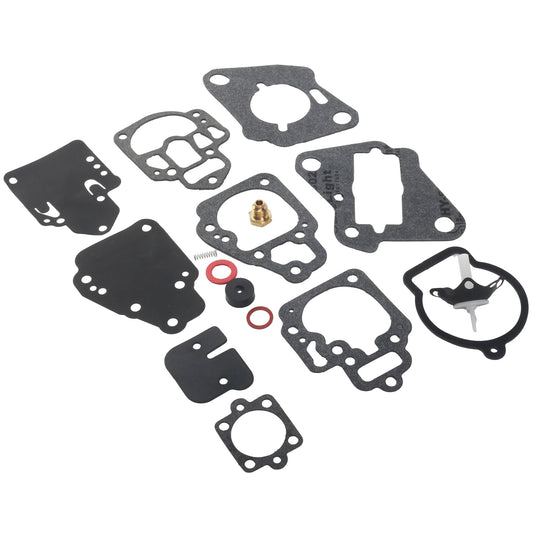
Old Carbureted vs. New EFI Outboards: Is It Time to Upgrade?
- How Carbureted and EFI Outboards Differ
- Performance: Starting, Throttle, and Fuel Burn
- Maintenance: Frequency, Complexity, and DIY Reality
- Emissions Regulations: Why Carburetors Are Disappearing
- Resale Value and Long-Term Ownership
- Decision Guide: When Carbureted Still Makes Sense vs. When EFI is Worth It
- Conversion Kits vs. Repowering
- Sound, Vibration, and Idle Quality
- Parts Quality: OEM vs. Aftermarket for Carbureted and EFI Engines
- Troubleshooting: Carburetor vs. EFI
- Break-Even Analysis: When Does EFI Pay for Itself?
- What to Check Before Upgrading
- FAQ


Your carbureted outboard still starts. It runs. So why spend thousands on EFI? Because after twenty years wrenching on both systems, I can tell you the question isn't if you should upgrade—it's when it makes sense for your wallet and your season.
Carbureted engines work fine until they don't. You fight cold starts. You clean jets twice a year. Ethanol gums up the float bowl if the boat sits three weeks. EFI fixes all that, but you pay upfront and you give up the simplicity of a rebuild you can do in your driveway with a screwdriver and a can of carb cleaner.
How Carbureted and EFI Outboards Differ

Carbureted outboards use a venturi—a narrow passage in the carburetor throat—to create low pressure as air rushes through. That low pressure sucks fuel out of the float bowl through calibrated jets. The fuel mixes with air, then flows into the cylinder. It's purely mechanical. No computer, no sensors, just air velocity and fuel jets sized for average conditions.
EFI outboards use an ECU (engine control unit) that reads sensors: throttle position, manifold pressure, air temperature, coolant temperature, engine RPM. The ECU calculates the exact fuel mass needed, then fires solenoid injectors that spray atomized fuel into the intake manifold or directly into the cylinder. The system adjusts fuel delivery hundreds of times per second based on real-time conditions.
The practical difference: a carburetor is a fixed compromise tuned for sea level and 70°F, while EFI adapts to 28°F mornings, 95°F afternoons, sea level, and 5,000-foot altitude lakes without you touching anything.
Performance: Starting, Throttle, and Fuel Burn
Cold and Hot Starting
Carbureted engines need manual choke. Pull it out, crank, wait for the engine to warm, push it back in. If you flood it, you wait. If the choke cable sticks or you forget to push it back, you foul plugs or run rich until something breaks.
EFI starts clean every time. Turn the key. The ECU reads coolant temperature, adds extra fuel if cold, and fires the injectors for exactly the duration needed. I've seen EFI engines fire at 28°F on the first crank with zero warm-up drama, according to a US charter operation that compared two EFI-converted outboards against two carbureted 200HP engines over twelve months. The carbureted engines required multiple cranking cycles and choke adjustments in freezing conditions; the EFI engines started instantly.
Hot restart is another pain point for carburetors. Fuel in the float bowl can vapor-lock on a heat-soaked engine. You crank, it sputters, you wait, you crank again. EFI doesn't care—fuel sits in a cool VST (vapor separator tank) under pressure, so hot starts are as reliable as cold.
Throttle Response and Maneuverability
Carburetors have an accelerator pump that squirts extra fuel when you slam the throttle open, but there's still a split-second lag while the venturi catches up and the main jet flow stabilizes. You feel a hesitation or a flat spot, especially going from idle to wide-open in one motion.
EFI has zero lag. The throttle position sensor tells the ECU "wide open now," and the injectors respond in milliseconds. A bass tournament angler who converted to EFI reported night-and-day improvement in throttle response, with instant engine reaction and smooth acceleration free of the hesitation he fought with his carbureted rig. That instant response matters when you're maneuvering in current or trying to get on plane fast with a heavy load.
Fuel Economy
Carburetors are inherently wasteful. They meter fuel mechanically based on airflow, so they run slightly rich at idle (to prevent lean misfire) and slightly rich at cruise (because jets are fixed). Over a hundred-hour season, that adds up.
EFI meters fuel to the milligram. The ECU targets stoichiometric mixture (14.7:1 air-fuel ratio for gasoline) across the entire RPM range, leaning out the mixture when cruising and enriching only when needed for power. Multiple fleet operators and independent tests show EFI outboards typically use 10-15% less fuel than comparable carbureted engines, with some applications seeing 20-30% reductions.
A charter boat captain who converted a 150HP carbureted outboard to EFI tracked fuel use over a full season and achieved 12% better economy on identical runs, saving about $400 in fuel costs. The same charter operation with four 200HP outboards found that two EFI-converted engines used 14% less fuel over twelve months compared to the two remaining carbureted engines.
For a recreational boater running 50 hours a year, 12% fuel savings might mean $150-200. For a guide running 300 hours, it's $1,500 or more. The payback math changes based on your usage.
Altitude and Temperature Adaptation
Carburetors are sized for standard atmospheric pressure. At 5,000 feet, air density drops roughly 15%, so a sea-level-jetted carburetor runs too rich. You lose power, foul plugs, and waste fuel. The fix is re-jetting—physically swapping smaller main jets to lean out the mixture—which you reverse when you come back down.
EFI doesn't care. The manifold pressure sensor reads the thinner air, the ECU cuts fuel proportionally, and you get correct mixture at any altitude without touching a wrench. A marine engine builder noted that EFI's automatic compensation for altitude, temperature, and humidity changes is a major reason commercial operators and boaters who travel to varying elevations choose to convert.
Maintenance: Frequency, Complexity, and DIY Reality

Routine Carburetor Maintenance
Carburetors need annual cleaning if you run ethanol fuel. Ethanol attracts water (phase separation), which settles in the float bowl and corrodes the brass jets and passages. Even if you use fuel stabilizer religiously, varnish builds up on the needle-and-seat, and the jets clog with microscopic debris.
A carburetor rebuild—gaskets, needle-and-seat, jets, float bowl cleaning—costs $300-500 in parts and labor if you pay a shop, or $50-100 in parts if you do it yourself. Figure on doing this every 1-2 years if the boat sits or if you run pump gas with 10% ethanol.
A Florida fishing guide who converted to EFI reported he had been destroying carburetors annually due to ethanol fuel, but after the EFI conversion he ran issue-free for three years on the same fuel blends without a single fuel-system failure. For replacement parts used in such maintenance, check our carburetor repair kits collection for quality OEM-spec parts at great prices.
EFI Maintenance Requirements
EFI fuel systems have a replaceable in-line fuel filter (change annually) and a VST filter screen (check every 100 hours or annually). The injectors rarely clog if you run clean fuel, and the ECU has no wear parts. Charter fleet data showed EFI engines had 68% lower maintenance costs compared to carbureted engines over a twelve-month period, primarily due to elimination of carburetor cleaning, jet replacement, and float adjustments.
The catch: when EFI does fail, it's expensive. A failed high-pressure fuel pump runs $400-600. A bad throttle position sensor is $150-250. Injectors are $100-200 each. Diagnosing the fault requires a scan tool (Yamaha YDS, Mercury DDT, Suzuki SDS) to read ECU fault codes, which means you're either buying the tool yourself ($300-800) or paying a dealer $120-150/hour for diagnostics. For fuel pumps or filters, equivalent parts are available via our fuel pump and fuel filter collections.
DIY Repair: Carburetor vs. EFI
Carburetors are straightforward. You can pull one apart on your tailgate with a 10mm socket, a flathead screwdriver, and a can of cleaner. Service manuals walk you through it. Parts are cheap. If you're mechanically inclined, carburetor work is very doable.
EFI is tougher for DIY. You can change filters and test fuel pressure with a $30 gauge, but diagnosing misfires, rough idle, or hard starting means reading sensor data and fault codes. You need the scan tool. You need to understand what "Bank 1 lean at idle" means. A marine technician with 25+ years' experience noted that EFI conversions make the most sense for commercial operators who run boats frequently, but for weekend recreational boaters the cost is difficult to justify unless you're experiencing constant carburetor problems, because properly maintained carburetors can be very reliable and much easier for DIYers to service.
If you like wrenching and learning, EFI is learnable. If you just want to fish and not think about fuel systems, EFI is lower-touch once it's running, but when it breaks you're calling the shop.
Emissions Regulations: Why Carburetors Are Disappearing
EPA Tier 3 and State-Level Rules
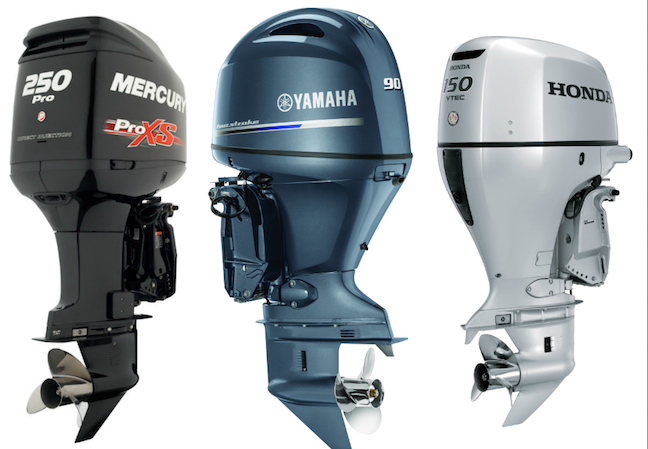
The US EPA marine spark-ignition regulations have pushed manufacturers toward cleaner four-stroke and advanced two-stroke technologies, and EFI is one of the main tools used to meet these standards. Older carbureted two-stroke outboards can discharge around 20-30% of their fuel unburned into air and water, which has led to restrictions or phase-outs of high-emission models on some US waters.
California's two-stroke outboard restrictions under the Air Resources Board (CARB) are the strictest, banning pre-1998 carbureted two-strokes from certain lakes and requiring Star-rated engines. Other states with sensitive waterways are following suit. EFI four-strokes and direct-injection two-strokes meet or exceed all current emission standards without special exemptions.
Real-World Emission Differences
Carbureted two-strokes are the worst offenders, but even carbureted four-strokes emit more unburned hydrocarbons than EFI because the carburetor can't atomize fuel as finely and can't shut off fuel delivery instantly on deceleration (it relies on throttle plates closing and idle jets, which still dribble fuel). EFI injectors shut off completely on decel, and the finer fuel atomization means more complete combustion.
If you boat on lakes or bays with emission testing or sticker requirements, an old carbureted outboard may not pass in the next few years. If you're buying used, check local regulations before you invest in a carbureted rig that might get restricted.
Resale Value and Long-Term Ownership

EFI outboards hold resale value better than carbureted models, especially in the 25HP-and-up range. Buyers searching online listings filter by "EFI" because they want reliability and modern features. A 2015 carbureted 90HP might sell for $4,500; a 2015 EFI 90HP in similar condition will pull $5,500-6,000. That $500-1,000 gap reflects the market's preference for EFI technology.
If you plan to keep the outboard ten years, resale is less important. If you trade or sell every 3-5 years, the EFI premium pays back when you sell.
Decision Guide: When Carbureted Still Makes Sense vs. When EFI is Worth It
Stick with Carbureted If:
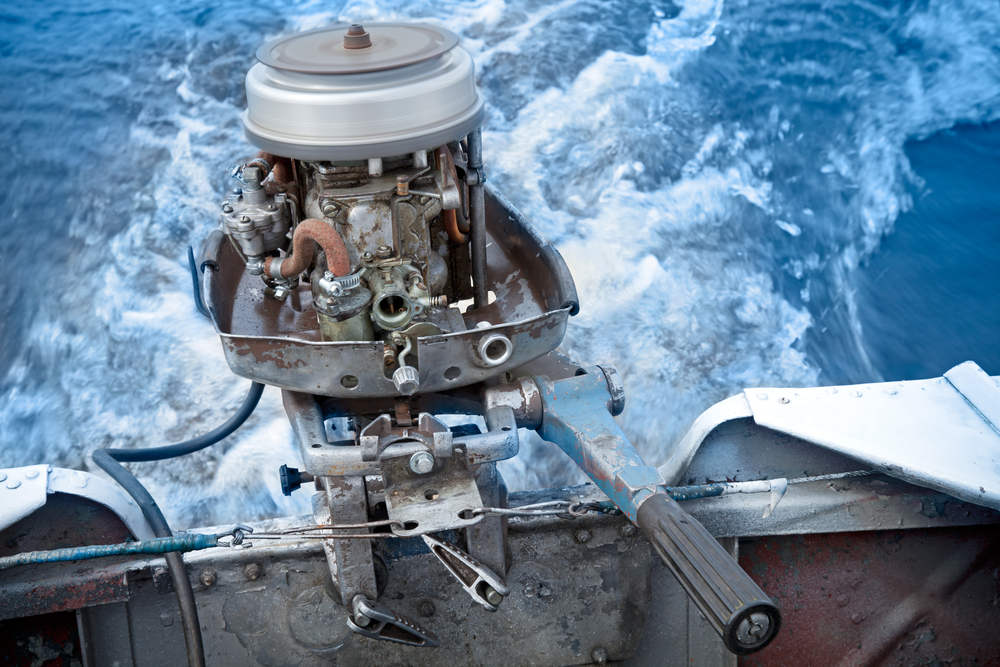
- You run fewer than 30 hours per year (fuel savings won't offset EFI's higher upfront cost).
- Your current carbureted outboard is in good health (compression above spec, no chronic starting or running issues).
- You're comfortable doing annual carburetor cleaning and adjustments yourself.
- You boat exclusively at the same altitude and temperature range (no need for EFI's adaptive tuning).
- Your budget is tight and you can't justify the $1,000-3,000 price premium for a new EFI engine or conversion kit.
Upgrade to EFI If:
- You run 100+ hours per year (fuel savings alone can pay back the EFI premium in 2-4 years).
- You're fighting chronic carburetor problems: gummed jets, ethanol varnish, cold-start struggles, hesitation at throttle-up.
- You travel to lakes at varying altitudes or you boat in temperature extremes (EFI's self-tuning eliminates re-jetting hassles).
- You want to eliminate missed days on the water due to fuel-system failures (the charter operation case study showed zero cancellations for EFI engines versus seven for carbureted over twelve months).
- You're subject to emissions testing or operate in waters with two-stroke restrictions.
- You value convenience over DIY—EFI requires less routine fuel-system maintenance, even if repairs are more complex when they occur.
Commercial and Charter Use
If you run charters, guide trips, or any commercial operation, EFI is almost always the right call. Missed trips cost hundreds of dollars per day. The charter operation that converted two of four 200HP outboards to EFI saw the conversion pay back in under 22 months via fuel savings and zero fuel-related cancellations. For commercial users, reliability and fuel efficiency directly affect the bottom line.
Weekend Warriors and Light Recreational Use
If you're a weekend angler who runs 20-40 hours a year and your carbureted outboard starts reliably, the financial case for upgrading is weak. The $2,000-4,000 you'd spend on a new EFI outboard (or $1,500-3,000 on a conversion kit) takes 8-15 years to pay back at light usage. However, if you're simply tired of choke knobs, carb cleanings, and the anxiety of "will it start today," EFI is worth the peace of mind even if the math doesn't pencil out perfectly.
Conversion Kits vs. Repowering
EFI Conversion Kits
Conversion kits are available for some popular outboard models (certain Mercury, Yamaha, and Tohatsu engines). A kit typically includes the ECU, wiring harness, throttle position sensor, fuel rail, injectors, and sometimes a new intake manifold. Kits run $1,200-2,500 depending on horsepower and manufacturer, plus installation labor if you don't do it yourself.
Installation is not plug-and-play. You're removing the carburetor, modifying fuel lines, mounting sensors, routing wiring, and flashing or installing the ECU. If you have marine wiring and mechanical experience, it's a weekend project. If you don't, expect to pay a shop 8-12 hours of labor ($800-1,500).
The upside: you keep your existing lower unit, powerhead, and controls. If the engine is otherwise healthy, a conversion extends its useful life and brings most of the benefits of a new EFI outboard at half the cost.
The downside: you're putting modern electronics on an old engine. If the powerhead has worn rings or a weak stator, the EFI won't fix that, and you've invested $2,000+ in an engine that might need a rebuild soon anyway.
Repowering with New EFI
Repowering means replacing the entire outboard. A new 25HP EFI runs $4,000-5,000; a 90HP EFI is $9,000-12,000. It's a bigger upfront hit, but you get a factory warranty (typically 3-5 years), fresh everything (powerhead, lower unit, controls, wiring), and the latest technology (integrated displays, tilt/trim, etc.).
For engines with high hours (500+) or unknown service history, repowering is the smarter long-term play. For engines with low hours and documented maintenance, a conversion kit can make sense if you're handy.
Sound, Vibration, and Idle Quality

EFI engines idle noticeably smoother and quieter than carbureted engines. A carburetor's idle circuit is a compromise—it has to flow enough fuel to keep the engine running but not so much that it floods. This often results in a slightly rough, loping idle with some misfires or inconsistent RPM.
EFI adjusts fuel delivery at idle based on engine load, coolant temperature, and RPM feedback. The result is a glassy-smooth idle with zero hunting or stumbling. You can hear the difference: a carbureted engine sounds like it's clearing its throat at idle; an EFI engine purrs.
Vibration is also lower with EFI because the combustion is more consistent. Misfires—even small ones—create vibration spikes. EFI's precise fuel delivery eliminates most idle misfires, so the whole boat feels smoother at dock.
Parts Quality: OEM vs. Aftermarket for Carbureted and EFI Engines

Carburetor Rebuild Kits
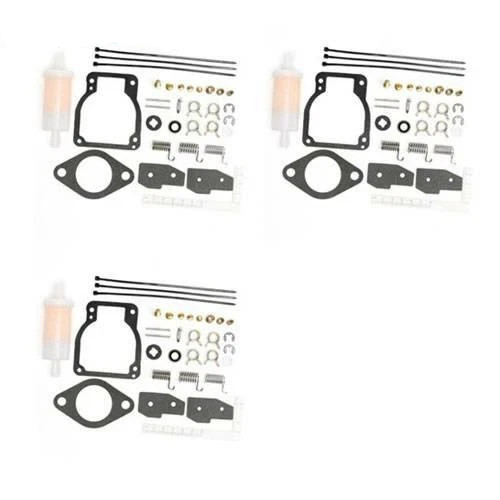
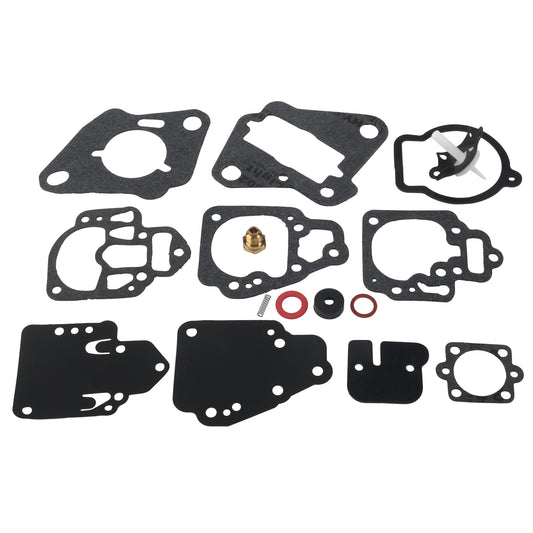
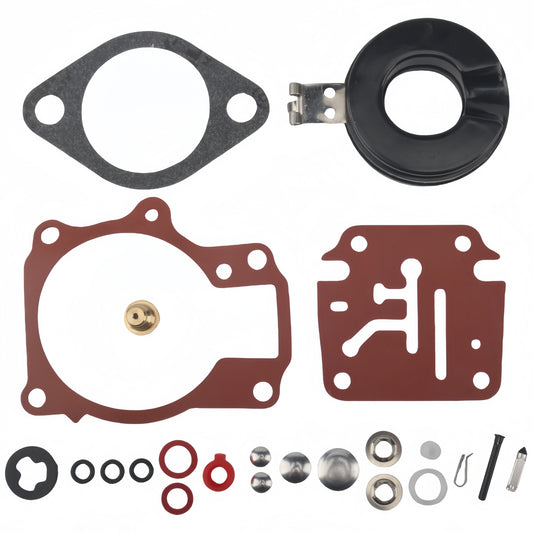
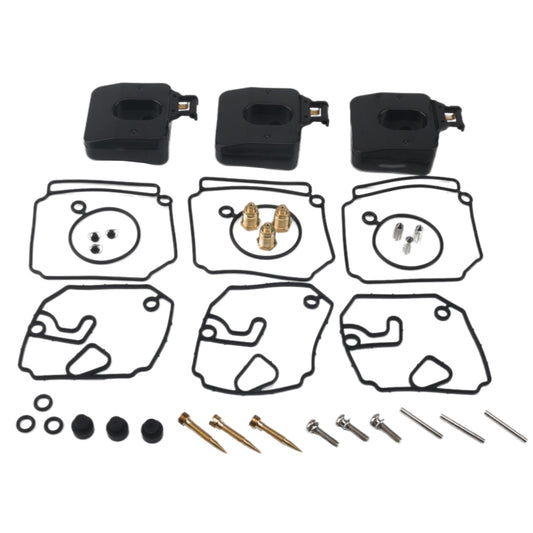
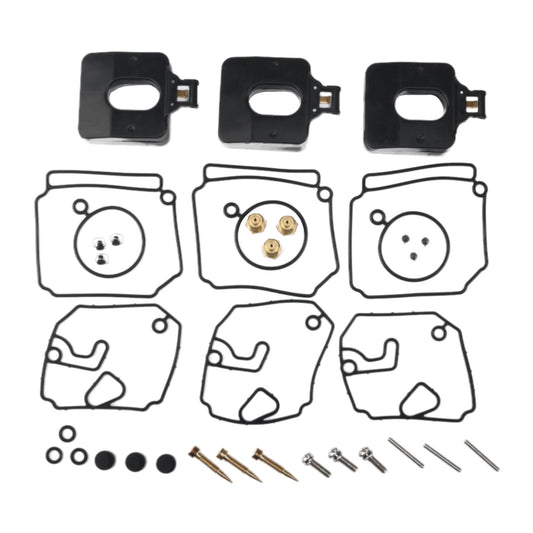
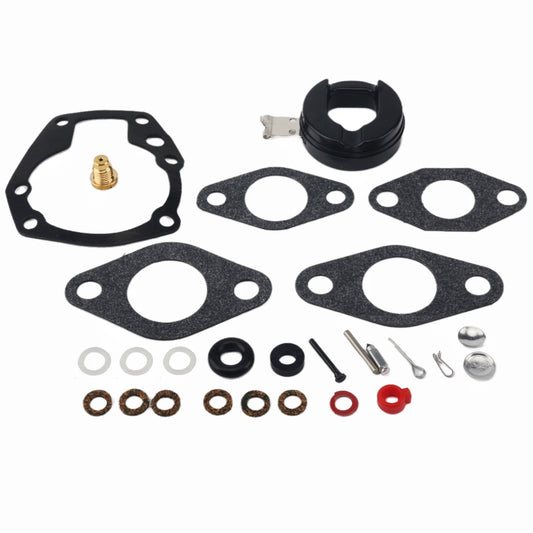
OEM carburetor kits (Yamaha, Mercury, Tohatsu) are good quality but overpriced—$80-150 for gaskets, a needle-and-seat, and a float that cost maybe $15 to manufacture. Cheap no-name kits on eBay or Amazon are junk: the rubber is too hard, the float doesn't seal, and the needle wears out in one season. You'll be pulling the carb apart again next spring.
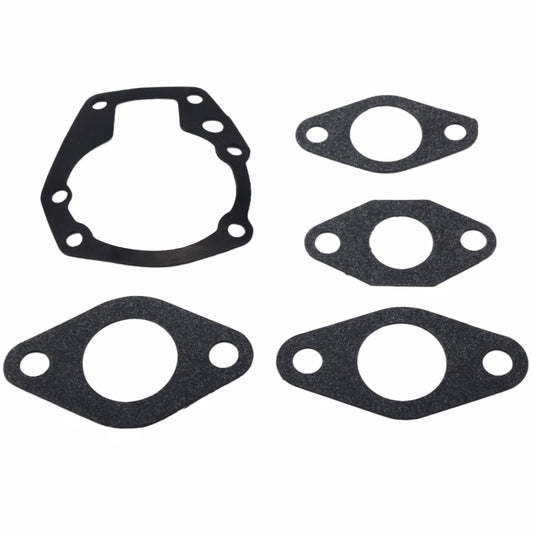
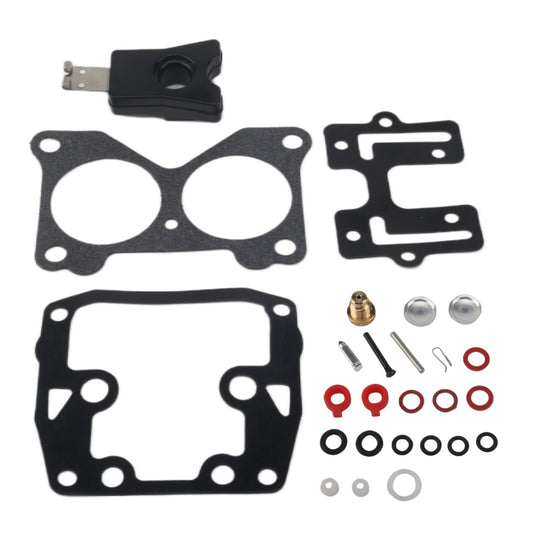
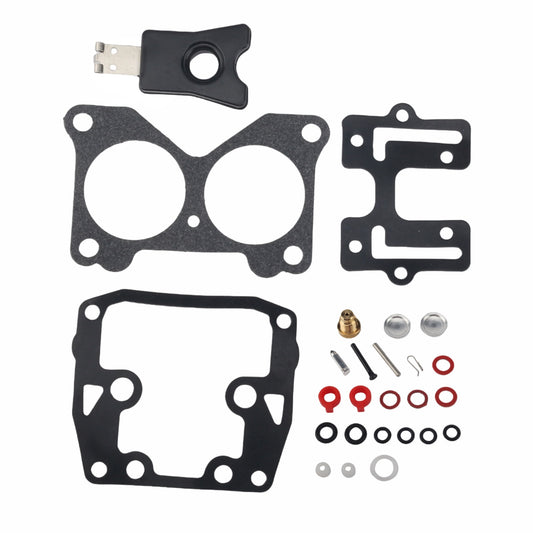
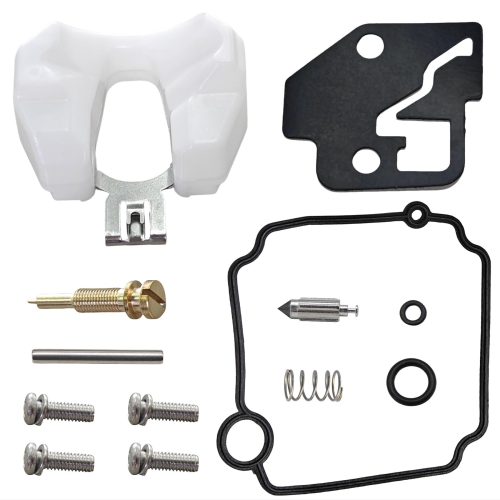
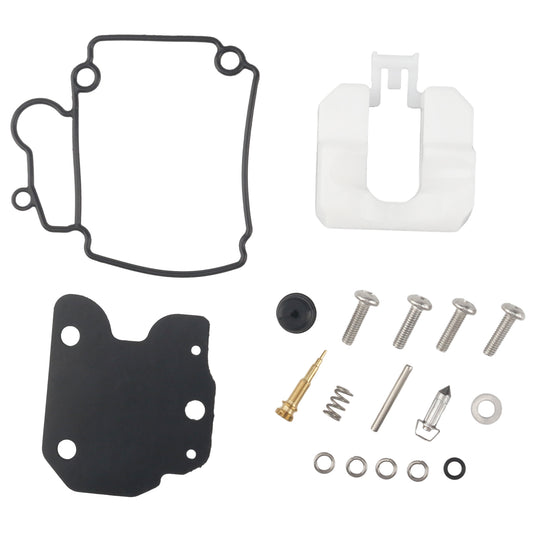
The smart play: buy from a reputable aftermarket supplier that sources from the same factories that make OEM components. Some factories that manufacture for OEM brands use excess capacity to produce non-OEM items, and these parts are often of similarly high quality. We stock carburetor rebuild kits that fit OEM specs without the dealer markup. You get the factory fitment and materials at half the price. Browse our carburetor collections and carburetor repair kit options for superior replacement parts.
EFI Components
EFI parts are trickier. Sensors (TPS, MAP, temp sensors) and injectors have tight electrical tolerances. A cheap Chinese TPS might read 0.8V when it should read 0.5V at idle, and the ECU will throw a fault code or run the engine rich.
For EFI sensors and injectors, OEM is safer unless you're buying from a known-good aftermarket brand. Fuel pumps and filters can be aftermarket if the specs match (flow rate, pressure rating, micron rating for filters). The VST filter screen is a wear item—aftermarket is fine as long as the mesh size is correct (typically 100 microns for most outboards).
If you email us your engine serial number, we'll make sure you get the right part—whether it's an OEM-spec aftermarket kit or a genuine OEM component—so you're not guessing. For fuel-induction system components, check our fuel & induction parts collection for options.
Troubleshooting: Carburetor vs. EFI
Rough Idle on a Carbureted Engine
- Most likely: Idle mixture screw out of adjustment or clogged idle jet. Turn the idle mixture screw in until it seats lightly, then back it out 1.5 turns (baseline for most carburetors). If that doesn't fix it, pull the carburetor and clean the idle jet with carb cleaner and compressed air.
- Next: Vacuum leak at the intake gasket. Spray carb cleaner around the base gasket while the engine is idling. If the RPM jumps, you have a leak. Replace the gasket.
- Least likely: Float level too high, causing flooding. Check the float height with a caliper (spec is in the service manual, usually 13-15mm depending on the model).
Rough Idle on an EFI Engine
- Most likely: Dirty or failed idle air control valve (IAC). The IAC meters air at idle to stabilize RPM. Remove it, spray it with throttle body cleaner, and reinstall. If the rough idle persists, replace the IAC ($80-150).
- Next: Vacuum leak at the intake manifold gasket or a cracked vacuum hose. Same test as carbureted: spray carb cleaner around gaskets and hose connections; if RPM changes, you found the leak.
- Least likely: Failed injector (stuck open or clogged). Requires a scan tool to read injector pulse width and fuel trim data. If one cylinder is lean or rich, swap injectors between cylinders and see if the fault follows the injector. Replace the bad injector ($100-200).
Hard Starting (Cold) on a Carbureted Engine
- Most likely: Choke not closing fully. Check the choke cable and linkage. The choke plate should be fully closed (horizontal) when you pull the choke knob. If it's only halfway closed, adjust the cable or replace it.
- Next: Fuel not reaching the carburetor. Squeeze the primer bulb until it's firm. If it stays soft, you have a fuel delivery issue (clogged filter, bad fuel pump diaphragm, air leak in the fuel line).
- Least likely: Flooded. If you smell raw gas, the float needle is stuck open. Wait five minutes, open the throttle wide (to clear excess fuel), and try again.
Hard Starting (Cold) on an EFI Engine
- Most likely: Weak battery or poor connection. EFI fuel pumps draw significant current. If the battery voltage drops below 10V during cranking, the fuel pump can't maintain pressure and the injectors won't fire properly. Load-test the battery; replace it if it can't hold 12.4V or more at rest.
- Next: Failed coolant temperature sensor. The ECU uses the coolant temp sensor to add extra fuel for cold starts. If the sensor reads incorrectly (e.g., it thinks the engine is warm when it's actually cold), the ECU won't enrich the mixture. Scan the ECU and check the coolant temp reading. If it's off, replace the sensor ($60-120).
- Least likely: Low fuel pressure (failed fuel pump or clogged VST screen). Connect a fuel pressure gauge to the Schrader valve on the fuel rail. Pressure should jump to 35-45 psi (depending on the engine) when you turn the key to "on." If it's below spec, check the VST screen first, then test the fuel pump.
Break-Even Analysis: When Does EFI Pay for Itself?

Assume you're comparing a $4,500 carbureted 50HP vs. a $6,000 EFI 50HP. The EFI premium is $1,500.
- Fuel savings: EFI uses 15% less fuel on average. If you burn 100 gallons per season at $4/gallon ($400 total fuel cost), EFI saves you $60/year. Payback: 25 years. Not compelling for light use.
- Maintenance savings: Carburetor rebuild every other year costs $400 in parts and labor. EFI maintenance is minimal (annual filter change, $30). Savings: $185/year. Payback: 8 years. More interesting.
- Combined savings (fuel + maintenance): $245/year. Payback: 6 years. For a boater who runs 80-100 hours/year, the math works.
- Heavy use (200 hours/year): Fuel savings double to $120/year, plus maintenance savings of $185/year = $305/year. Payback: 5 years. This is why commercial operators convert.
If you run fewer than 50 hours per year, the financial case for EFI is weak unless you assign a dollar value to convenience (no choke, instant starts, no carb cleanings). If you run 100+ hours, EFI pays for itself in fuel and maintenance savings within the useful life of the engine.
What to Check Before Upgrading
Before you spend $6,000 on a new EFI outboard or $2,000 on a conversion kit, make sure your current engine isn't worth saving with basic maintenance.
- Compression test: Pull all the spark plugs and screw a compression gauge into each cylinder. Crank the engine with the throttle wide open. Compression should be within 10% across all cylinders and above the minimum spec (usually 120-140 psi for most outboards). If one cylinder is down 20+ psi, you have worn rings or a valve issue. Don't convert—repower.
- Spark test: Pull each plug wire and connect a spark tester (available for $15 at any auto parts store). Crank the engine. You should see a bright blue spark jumping the gap. Weak yellow spark or no spark means ignition issues (coil, stator, CDI). Fix that first before blaming the carburetor or considering EFI.
- Fuel system health: Squeeze the primer bulb. It should get firm and stay firm. If it goes soft after 30 seconds, you have a fuel leak (cracked hose, bad check valve in the bulb, leaking primer). Replace the fuel line and bulb ($40-60). This often fixes "hard starting" issues that owners blame on the carburetor.
If compression is good, spark is strong, and the fuel system holds pressure, your engine is healthy. A carburetor cleaning and tune-up might be all you need. If compression is down or the ignition system is weak, a conversion or repower makes sense because you're addressing multiple end-of-life issues at once.
FAQ
Can I convert any carbureted outboard to EFI?
No. Conversion kits are only available for certain models where the manufacturer or aftermarket suppliers have engineered a bolt-on solution (mostly Mercury, Yamaha, and Tohatsu 40HP and up). Older outboards or oddball brands don't have kits available. Check with us before you plan a conversion—email your engine serial number and we'll confirm if a kit exists.
Will EFI add horsepower?
Not significantly. EFI optimizes fuel delivery for efficiency and smooth running, but it doesn't change compression, cam timing, or displacement. You might see a 2-5% power increase at the top end due to better mixture control, but you won't turn a 50HP into a 60HP. The real gains are in throttle response, fuel economy, and starting reliability.
Can I run ethanol-free fuel in an EFI engine?
Yes, and it's better for the fuel system. Ethanol attracts water and can corrode fuel system components over time (especially carburetors, but EFI systems aren't immune). If you have access to ethanol-free premium, use it. If you're stuck with E10 (10% ethanol pump gas), run a quality fuel stabilizer like Star Tron or StaBil Marine every tank, and you'll be fine.
Do I need a dealer scan tool to maintain an EFI outboard?
Not for routine maintenance (oil changes, filter changes, spark plugs). You do need a scan tool if a warning light comes on or the engine runs poorly and you want to read ECU fault codes. You can buy your own scan tool (Yamaha YDS is around $500, Mercury DDT is $800, or a generic OBD-II adapter with marine software is $150-300) or take it to a shop. For most boaters, paying the shop once every few years for diagnostics is cheaper than buying the tool.
What happens if the ECU fails on an EFI engine?
The engine won't run. The ECU controls fuel delivery, ignition timing, and idle speed. If it dies, you're dead in the water. ECU failures are rare (we see maybe one per year across hundreds of engines), but when they happen you need a new or remanufactured ECU ($600-1,200 depending on the model) and a dealer to flash it with the correct software. This is the EFI tax: higher reliability 99% of the time, but expensive and complex when something breaks.
Can I tow an EFI outboard if it dies on the water?
Yes, same as a carbureted engine. Tilt the engine up (or raise it all the way if you have a tilt/trim), disconnect the fuel line, and tow at slow speed (under 5 mph to avoid damage to the lower unit). The ECU failure won't prevent you from getting towed home.
Keep your battery terminals clean and tight. Corrosion on the battery posts or ground connections is the number-one cause of weird EFI issues—misfires, hard starting, rough idle—that owners blame on the injectors or sensors. A $3 wire brush and five minutes of cleaning can save you a $150 diagnostic fee.
Sources:
- https://jlmmarine.com/blogs/outboard-101/converting-your-outboard-from-carburetor-to-efi-is-it-worth-it
- https://www.mordorintelligence.com/industry-reports/outboard-motor-market
- https://annapolisinflatables.net/blogs/news/outboard-engines-advantages-of-efi-over-carburetor
- https://onlineoutboards.com/blogs/outboard-motors-basics/efi-vs-a-standard-4-stroke
- https://soundingsonline.com/news/engines-emission-rules-shaping-outboard-technology
- https://www.epa.gov/regulations-emissions-vehicles-and-engines/regulations-emissions-marine-spark-ignition-engines
- https://dbw.parks.ca.gov/TwoStroke
For more information on marine parts and to explore our full range of products, visit the JLM Marine homepage.
Для владельцев подвесных моторов:
Мы надеемся, что следующие ресурсы окажутся полезными для вас в обслуживании и ремонте ваших судовых двигателей:
-
Карбюраторы от JLM Marine
-
Комплекты для восстановления карбюраторов от JLM Marine
- Комплект для ремонта карбюратора
- Комплект для ремонта карбюратора Yamaha
- Комплект для ремонта карбюратора Mercury
- Комплект для ремонта карбюратора Johnson
- Комплект для ремонта карбюратора Evinrude
- Комплект для ремонта карбюратора Suzuki
- Комплект для ремонта карбюратора Honda
- Комплект для ремонта карбюратора Volvo
- Комплект для ремонта карбюратора Tohatsu
О компании JLM Marine
Основанная в 2002 году, компания JLM Marine зарекомендовала себя как специализированный производитель высококачественных морских деталей, базирующийся в Китае. Наша приверженность совершенству в производстве заслужила нам доверие ведущих мировых морских брендов.
Как прямой поставщик, мы обходим посредников, что позволяет нам предлагать конкурентоспособные цены без ущерба качеству. Такой подход не только поддерживает экономическую эффективность, но и гарантирует, что наши клиенты получают наилучшую ценность напрямую от источника.
Мы рады расширить свое присутствие через розничные каналы, предлагая наш опыт и приверженность качеству непосредственно владельцам и любителям лодок по всему миру.
Комплекты для ремонта карбюратора в продаже
- $46.00
$55.00- $46.00
- Unit price
- per
- $24.99
$29.00- $24.99
- Unit price
- per
- $18.13
$59.00- $18.13
- Unit price
- per

- $19.50
$23.00- $19.50
- Unit price
- per
- $17.39
$22.50- $17.39
- Unit price
- per

- $16.99
$20.00- $16.99
- Unit price
- per
- $21.19
$32.00- $21.19
- Unit price
- per


- $21.99
$24.00- $21.99
- Unit price
- per
- $18.99
$15.00- $18.99
- Unit price
- per
- $15.99
$13.00- $15.99
- Unit price
- per

- $19.99
$23.00- $19.99
- Unit price
- per
- $25.50
$30.00- $25.50
- Unit price
- per

- $18.79
$15.00- $18.79
- Unit price
- per

- $21.99
$19.00- $21.99
- Unit price
- per

- $19.99
$23.00- $19.99
- Unit price
- per

- $20.89
$17.00- $20.89
- Unit price
- per
- $20.72
$18.00- $20.72
- Unit price
- per

- $17.68
$16.00- $17.68
- Unit price
- per
- $17.58
$23.00- $17.58
- Unit price
- per
- $30.50
- $30.50
- Unit price
- per