



High Altitude Lake Boating in Summer: Tuning Tips
- Horsepower Loss by Elevation
- Propeller Pitch Changes
- Gear Ratio Adjustments for Sterndrives
- Carbureted Engine Adjustments
- Cooling System Considerations at Altitude
- Weight Distribution and Load Management
- Launch Ramp Realities at High Altitude
- Health and Altitude Acclimatization
- Sun and UV Protection
- Clothing for Rapid Weather Changes
- Boat and Engine Types for High Altitude
- Fuel-Injected vs. Carbureted: What Actually Happens
- Specific Engine Brands and Altitude Kits
- When to Skip the Tuning
- The Danger of Returning to Sea Level
- Tools and Spares to Bring
- Pre-Departure Checklist
- What "Success" Looks Like
At higher elevations, your outboard loses about 3% horsepower for every 1,000 feet above sea level. That's the first thing you need to accept before you tow your boat to a mountain lake. At 5,000 feet, you're down 15% power. At 9,000 feet—like Dillon Reservoir—it's closer to 27%. Your 200hp motor is effectively running at 170hp or 146hp. The thinner air has less oxygen, so combustion suffers. No way around the physics.
Modern fuel-injected engines adjust the fuel delivery automatically to match the reduced oxygen, but that doesn't magically create more power. You still need to address propeller pitch and, for sterndrives, possibly gear ratios. Carbureted setups require manual jet adjustments because they'll run too rich at altitude—you'll see black smoke, fouled plugs, and sluggish throttle response if you don't dial them in.
Horsepower Loss by Elevation
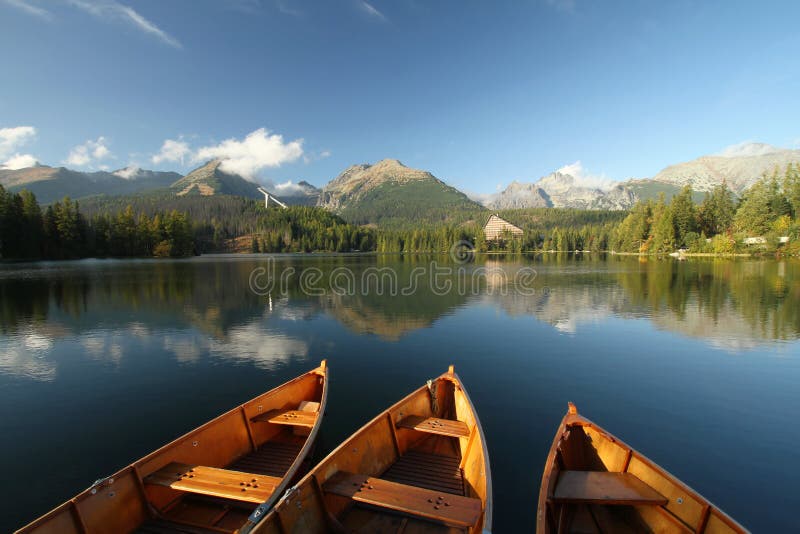
Here's what you're actually dealing with when you climb:
| Elevation | HP Loss | 150 HP Becomes | 200 HP Becomes | 300 HP Becomes |
|---|---|---|---|---|
| 3,000 ft | 9% | 137 hp | 182 hp | 273 hp |
| 5,000 ft | 15% | 128 hp | 170 hp | 255 hp |
| 7,000 ft | 21% | 119 hp | 158 hp | 237 hp |
| 9,000 ft | 27% | 110 hp | 146 hp | 219 hp |
The math compounds fast. If your boat barely planes with full load at sea level, it won't plane at all at 7,000 feet without tuning.
Propeller Pitch Changes
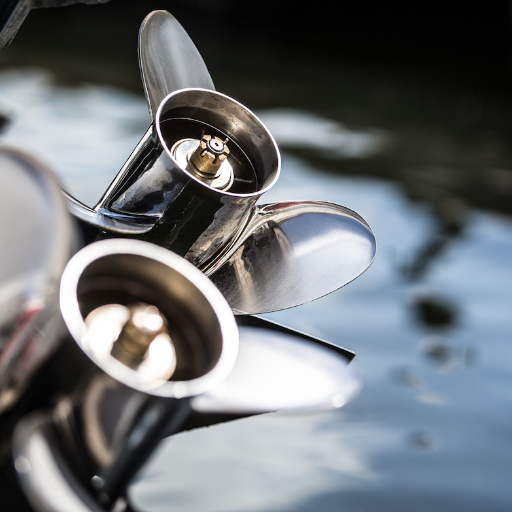
This is the single most important adjustment. At altitude, you need a lower pitch propeller to let the engine spin up to its optimal RPM range under reduced power. Pitch is how far forward the prop would theoretically move in one full rotation. Lower pitch = higher RPM = better acceleration in thin air.
If you normally run a 21-pitch prop at sea level, drop to a 17- or 19-pitch for lakes above 5,000 feet. The exact number depends on your boat's weight, hull design, and how much elevation you're climbing. Scott Jensen at Island Lake Marine in Fort Collins (5,000 feet) sees this daily: out-of-state boaters arrive thinking their engine failed when really they just need a different prop.
Tools you'll need to swap a prop lakeside:
- Prop wrench (size varies by engine—usually 1-1/8" for many outboards; check JLM Marine boat accessories for the right tools)
- Block of wood to wedge against the cavitation plate
- Pliers for removing cotter pins or bending tab washers
- Grease for the prop shaft splines (an essential part of propeller maintenance)
Your target RPM at wide-open throttle (WOT) should match your engine manufacturer's spec—typically 5,000-6,000 RPM for outboards, sometimes higher for high-performance models. Check your owner's manual. If you're only hitting 4,200 RPM at WOT when the range is 5,400-5,800, you need to drop pitch. If you're over-revving past 6,000, you need more pitch (rare at altitude unless you went too low).
Rough heuristic: For every 2,000 feet of elevation gain, drop 2 inches of pitch from your sea-level setup. That's not absolute, but it's a starting point if you can't consult a local dealer.
Gear Ratio Adjustments for Sterndrives
For sterndrive or I/O setups, changing the gear ratio inside the lower unit can make a bigger difference than prop pitch alone. Gear ratio is how many engine rotations it takes to turn the prop shaft once. A higher numerical ratio (like 2:1) means the engine turns twice for every one prop rotation, giving you more torque at lower speeds.
Many sterndrives come factory-set at 1.47:1 for sea-level use. At high altitude, Jensen swaps them to 1.75:1 or even 2:1. He explains: "Changing the gear ratio allows us to run a 17-pitch or 19-pitch prop, which is enough pitch for a good hole shot, and you're also able to maintain some speed." Without that ratio change, he says, "If you try to run the standard gear ratio up here, you're running such a small prop pitch in order to get up on plane you won't have the speed to go anywhere."
Gear ratio changes are not a DIY job unless you've torn down a lower unit before. This requires pulling the lower unit, disassembling the gear case, swapping gears, shimming correctly, and reassembling with precise torque specs. Take it to a shop that knows the specific brand—Mercury, Volvo Penta, and others publish altitude-specific gear combos in their service bulletins.
Carbureted Engine Adjustments
If you're running a carbureted outboard or I/O, you'll need to lean out the fuel mixture manually. At altitude, there's less oxygen per cubic foot of air, so the stock jetting delivers too much fuel. Symptoms of running rich:
- Black or dark gray smoke from the exhaust
- Fouled spark plugs (wet, sooty deposits)
- Rough idle that smooths out under load
- Hesitation or bogging when you punch the throttle
How to adjust:
- Main jets: Drop roughly two jet sizes for every 2,500 feet of elevation. If you're at 5,000 feet and running a #78 main jet at sea level, try a #74 or #76. (Explore carburetor repair kits for compatible parts)
- Air/fuel mixture screws: Turn them out (counterclockwise) 1/4 to 1/2 turn from your sea-level setting to lean the mixture. Make small changes and test.
- Needle position: On carbs with adjustable needles, raise the clip one notch to lean mid-range throttle.
Always adjust with the boat loaded as you'd actually run it—fuel, gear, passengers. An empty boat will tune differently than a loaded one. Run the engine at WOT for 10-15 seconds and check your RPMs. If it's still rich, the engine will bog and struggle to rev. If it's too lean, it'll rev too high and run hot—back off before you toast a piston.
Some older setups might have high-altitude jet kits available from the manufacturer. Check the parts catalog or call a dealer.
Cooling System Considerations at Altitude
Water boils at a lower temperature as elevation increases. At sea level, water boils at 212°F. At 5,000 feet, it's around 203°F. At 10,000 feet, it's down to 194°F. Your engine is working harder to produce the same power (because it's pulling less air per combustion cycle), which generates more heat, but the coolant can't absorb as much heat before it starts to steam.
This is why overheating becomes more common at altitude, especially in summer when ambient temps are already high. Before you head up, check:
- Impeller condition: If it's more than two years old or shows any cracking, replace it (shop for a reliable water pump impeller)
- Thermostat operation: Pull it, drop it in a pot of water on the stove, and confirm it opens at the rated temp (usually stamped on the housing—160°F, 143°F, etc.). See our guide about testing outboard thermostats
- Water passages: Flush the block with a hose and confirm strong flow from the tell-tale (pee stream). Any restriction means buildup or a blockage.
If your engine overheats at altitude, the first check is the tell-tale. It should spit a steady stream at idle. If it only dribbles or spits intermittently, you've got a clog or a failing impeller. If it pees fine at idle but the engine still overheats under load, the thermostat might be sticking or the water pump housing is worn.
Weight Distribution and Load Management
Jarrett Edwards, a Mercury Pro Team member who fishes high-altitude Colorado lakes, emphasizes balancing weight: "When you're fishing at high altitude the first rule is to have the correct prop pitch. But you can also help yourself by balancing the weight in your boat."
At altitude, you have less power to lift the bow. If too much weight is aft, the boat squats and the prop digs deeper, increasing drag. Move heavy gear—coolers, fuel tanks, batteries—forward. On smaller mountain lakes, you don't need a full fuel tank. Run half-full to save 100-150 pounds.
Trim also matters more. Start with the drive trimmed all the way down (in) for the hole shot. Once you're on plane, trim out slowly to lift the bow and reduce drag. If you trim too much too fast, the prop loses bite and you'll porpoise or fall off plane. Learn more about weight distribution for speed for your boat.
Launch Ramp Realities at High Altitude
Mountain lake ramps aren't like coastal marinas. Water levels fluctuate wildly depending on snowmelt and summer drawdown. What was a paved ramp in June might expose 20 feet of gravel and mud by August. The concrete pad is often short, the slope steeper, and the turnaround tighter.
Before you back down:
- Walk the ramp first. Check for dropoffs, rocks, or soft spots.
- Know how far you need to back the trailer to float the boat. At altitude, your boat sits lower in the water (same displacement, less buoyancy because of lower air pressure), so you might need an extra foot of depth.
- If the ramp is busy, have your boat prepped—tie-downs off, plug in, gear loaded—before you back down. Don't be the guy blocking the ramp for 20 minutes. For tips on boat trailer and launch prep, check our guide.
Health and Altitude Acclimatization
Your body reacts to thin air the same way your engine does—less oxygen, less performance. Altitude sickness hits some people at 5,000 feet, most people by 8,000. Symptoms include:
- Headache (usually starts at the back of the head)
- Nausea or vomiting
- Dizziness or lightheadedness
- Fatigue that feels disproportionate to your activity level
- Shortness of breath, even at rest
If you or a passenger shows these signs, descend. Drop 1,000-2,000 feet in elevation if possible, rest, and hydrate. Pushing through it doesn't work; altitude sickness can escalate to pulmonary or cerebral edema, both life-threatening.
Prevention:
- Arrive a day or two early and take it easy. Let your body adjust before you start hauling gear or skiing.
- Drink more water than you think you need. The air is drier, you're breathing harder, and you lose moisture faster.
- Avoid alcohol the first night. It dehydrates you and worsens symptoms.
- Eat carbs. Your body metabolizes them more efficiently in low oxygen.
This isn't medical advice—consult a doctor if you have pre-existing heart or lung conditions before heading to high altitude.
Sun and UV Protection
UV exposure increases roughly 10% for every 3,000 feet of elevation. At 6,000 feet, you're getting about 20% more UV than at sea level, and the reflection off the water doubles it. You can get sunburned on a cloudy day without realizing it until you're cooked.
Wear polarized sunglasses rated UV400 or higher. Cheap gas-station glasses don't cut it—they reduce glare but let UV through, and your pupils dilate behind the dark lenses, letting in more harmful light.
Use sunscreen with SPF 50 or higher. Reapply every 90 minutes, not every two hours, because you're sweating and splashing. Zinc-based formulas (the white paste lifeguards wear) work better than chemical sunscreens in high UV.
Clothing for Rapid Weather Changes
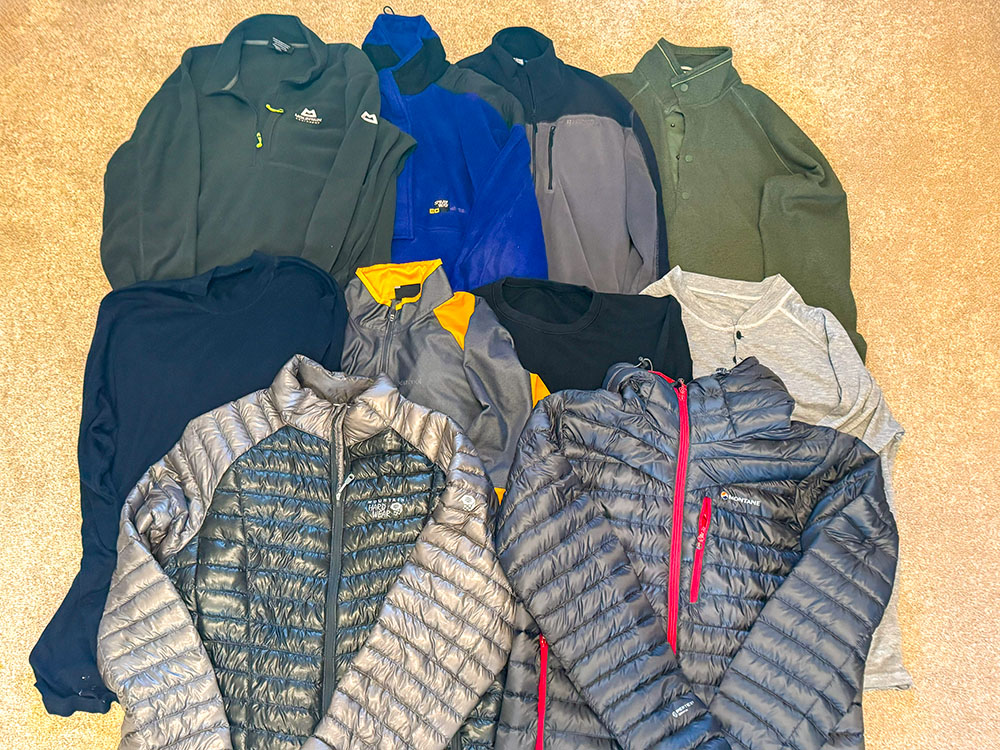
Mountain weather moves fast. You can launch in a t-shirt at 10 a.m. and be shivering by 3 p.m. when the wind picks up. Afternoon thunderstorms build quickly—clouds that weren't there 20 minutes ago can dump rain and lightning with almost no warning.
Layer your clothes:
- Base layer: synthetic or wool, not cotton. Cotton holds moisture and you'll freeze.
- Mid layer: fleece or a light down jacket that packs small.
- Outer layer: waterproof/windproof shell. Doesn't need to be expensive, just functional.
Keep a dry bag on the boat with extra layers, even if it's 80°F when you launch. Once the sun drops behind the ridgeline, temps can fall 20-30 degrees in an hour.
Boat and Engine Types for High Altitude

Some hull designs handle altitude better than others. Lighter boats with moderate deadrise (12-16 degrees) plane easier because they need less power to lift. Deep-V hulls (20+ degrees deadrise) are great in chop but require more power to get up, which you don't have at altitude.
Pontoons are popular on mountain lakes because they're stable, carry a lot of weight, and plane at relatively low speeds if they have enough horsepower. A 24-foot pontoon with a 150hp outboard that struggles at sea level will do fine at 6,000 feet if you drop to a 17-pitch prop.
Aluminum fishing boats (14-18 feet) with 50-90hp outboards are common. They're light, easy to launch on rough ramps, and less affected by power loss because they don't need much to begin with.
Wakeboard/surf boats are tougher. They're heavy, ballasted, and designed to create wake, which means they need a lot of power. A surf boat with 400hp at sea level might struggle to pull a rider out of the water at 8,000 feet without re-propping and possibly adding ballast up front to help the bow stay down during the pull.
If you're buying a boat specifically for high-altitude use, consider one with a higher baseline horsepower than you'd spec at sea level. That 150hp motor you'd pick for a 20-foot runabout at the coast should be a 200hp at altitude. Forced induction (supercharged or turbocharged engines) helps because the charger forces more air into the intake, partially offsetting the atmospheric loss. A supercharged 300hp engine at 7,000 feet performs closer to a naturally aspirated 275hp, whereas a naturally aspirated 300hp drops to around 237hp.
Fuel-Injected vs. Carbureted: What Actually Happens
Fuel-injected engines use an oxygen sensor (O2 sensor) in the exhaust and an ECM (engine control module) to adjust the fuel injector pulse width based on real-time air/fuel ratio. At altitude, the ECM sees less oxygen and reduces fuel delivery to maintain the correct ratio. This prevents running rich, but it doesn't create more power—it just keeps the engine from fouling plugs or wasting fuel.
What the ECM can't do: increase ignition timing enough to compensate for reduced cylinder pressure, or add more air than the atmosphere provides. The combustion process is still oxygen-starved, so you lose power.
Carbureted engines don't have closed-loop feedback. The jets are fixed orifices. At altitude, the same jet flows the same amount of fuel, but there's less air in the mix, so the ratio goes rich. You have to physically install smaller main jets or adjust the mixture screws to compensate. It's trial and error, and you need to revert the changes when you return to sea level or the engine will run dangerously lean and overheat.
Learn detailed carburetor tuning and repair with resources like JLM Marine carburetor collections and carburetor repair kits.
Specific Engine Brands and Altitude Kits
Mercury/MerCruiser: Publishes altitude-specific prop charts and gear ratio recommendations in their service manuals. Dealers like Island Lake Marine stock the 1.75:1 and 2:1 gear sets for Alpha and Bravo drives. Mercury also offers high-altitude recalibration for some ECMs, though most modern ECMs handle it automatically.
Yamaha: Four-stroke outboards self-adjust via O2 sensors. Older two-strokes (pre-2000) may need carb rejetting. Yamaha sells high-altitude jet kits for some models—check the parts catalog by engine serial number.
Volvo Penta: Similar to MerCruiser. Their DuoProp sterndrives benefit from gear ratio swaps at altitude. Volvo's "High Altitude" service bulletin recommends specific prop combos for elevations above 5,000 feet.
Evinrude/Johnson (legacy): Most are carbureted and will need jetting. E-TEC models (direct injection) adjust automatically but still lose power.
If you're running an older or less common brand, consult a local shop at the lake. They've likely dealt with your exact engine setup before.
When to Skip the Tuning
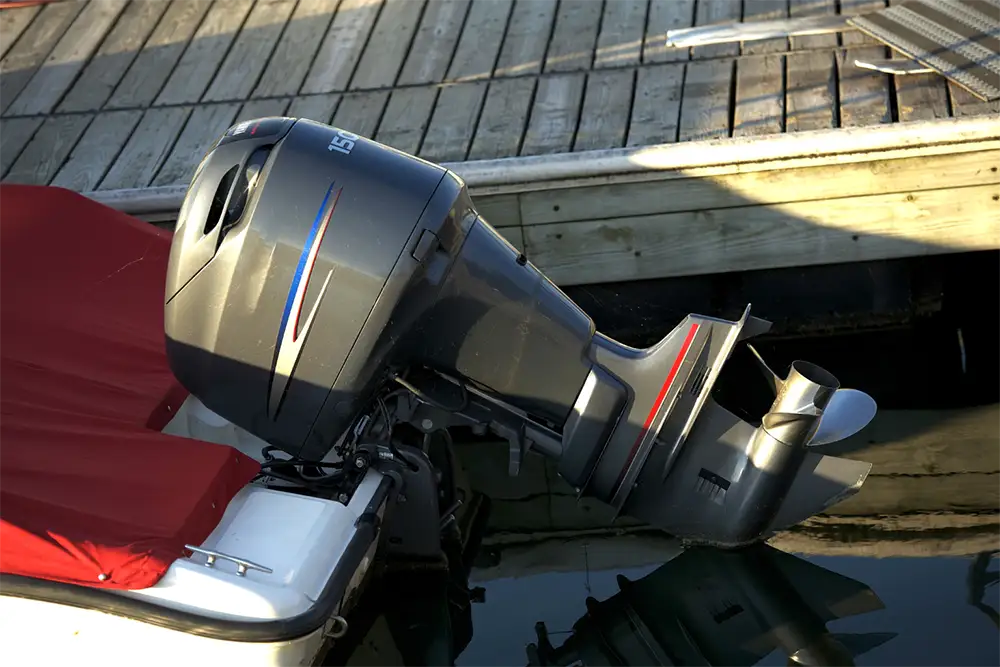
If you're renting a boat at a high-altitude lake for a single day, the rental company should have already propped the boat correctly for that elevation. Ask them directly: "Is this boat set up for this altitude, or is it a sea-level setup?" If they look confused, rent from someone else.
If you own the boat and you're only doing a weekend trip, you might decide the cost of a new prop ($200-400) and shop labor ($100-150) isn't worth it for 10 hours of run time. In that case, reduce your load—fewer passengers, half a tank of fuel, minimal gear—and accept that you won't have the same performance. Don't expect to pull three skiers or hit 40 mph. You might not plane at all with a full load.
For month-long trips or seasonal lakehouse stays, dial in the setup properly. You'll burn less fuel, the engine runs cleaner, and you're not fighting the boat every time you launch.
The Danger of Returning to Sea Level

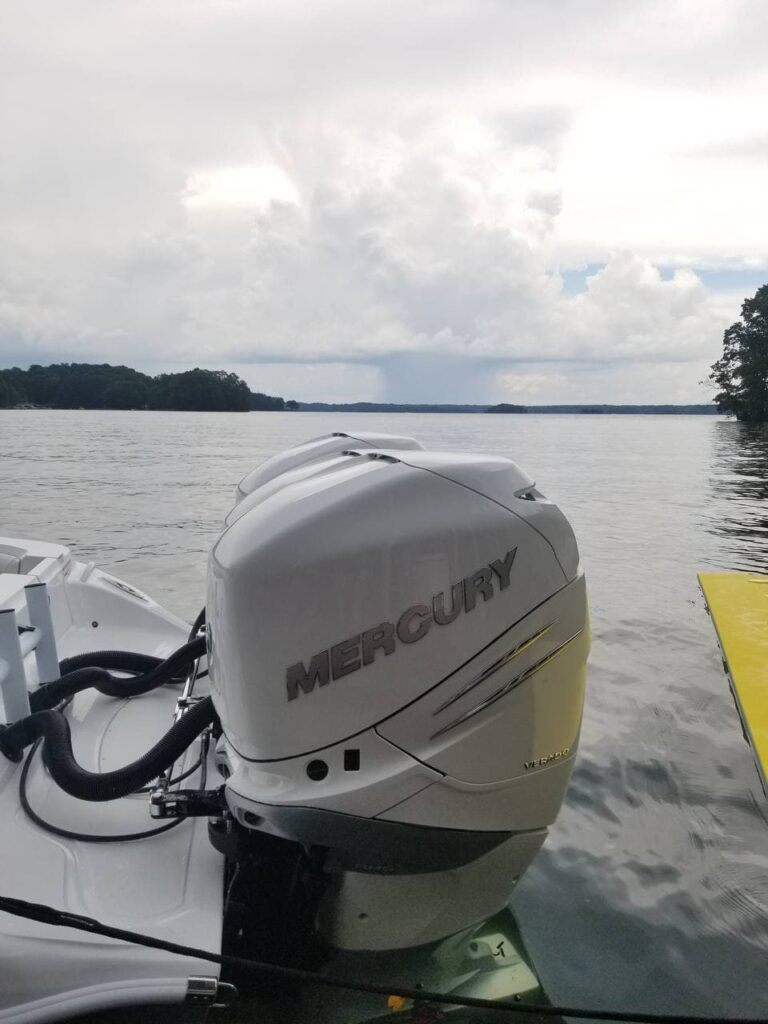
This is critical: when you drive back down to lower elevation, you must swap the prop back to your original higher pitch or you risk over-revving the engine. If you leave a 17-pitch prop on at sea level after running it at 8,000 feet, the denser air will let the engine scream past its max RPM—potentially 7,000+ when the redline is 6,000. That'll grenade the powerhead. Valve springs break, pistons crack, bearings seize.
Before you leave the mountain, either swap the prop back or make a note to do it the moment you get home, before you launch locally. Set a reminder. We've seen too many guys forget and blow up a perfectly good motor on their home lake because they were still running the altitude setup.
Tools and Spares to Bring 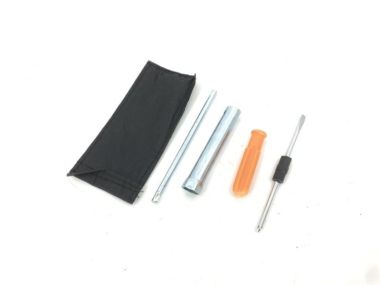
Pack these in the boat:
- Spare prop (your sea-level pitch, in case you damage the altitude prop on a rock)
- Prop wrench and hardware (cotter pins, tab washers, thrust washer) from trusted sources like JLM Marine boat accessories
- Impeller kit (if your pump fails, you're done for the trip otherwise; browse impeller kits)
- Thermostat (cheap insurance, takes 20 minutes to swap; check cooling system parts)
- Spark plugs (already gapped, in a waterproof bag)
- Basic hand tools: screwdrivers, pliers, adjustable wrench, socket set
- Duct tape and zip ties
- Tow rope and fenders (mountain lakes are small; you'll encounter other boaters)
If you're running a carbureted engine, bring the jets you removed and label them. When you head home, you need to put them back in.
Pre-Departure Checklist
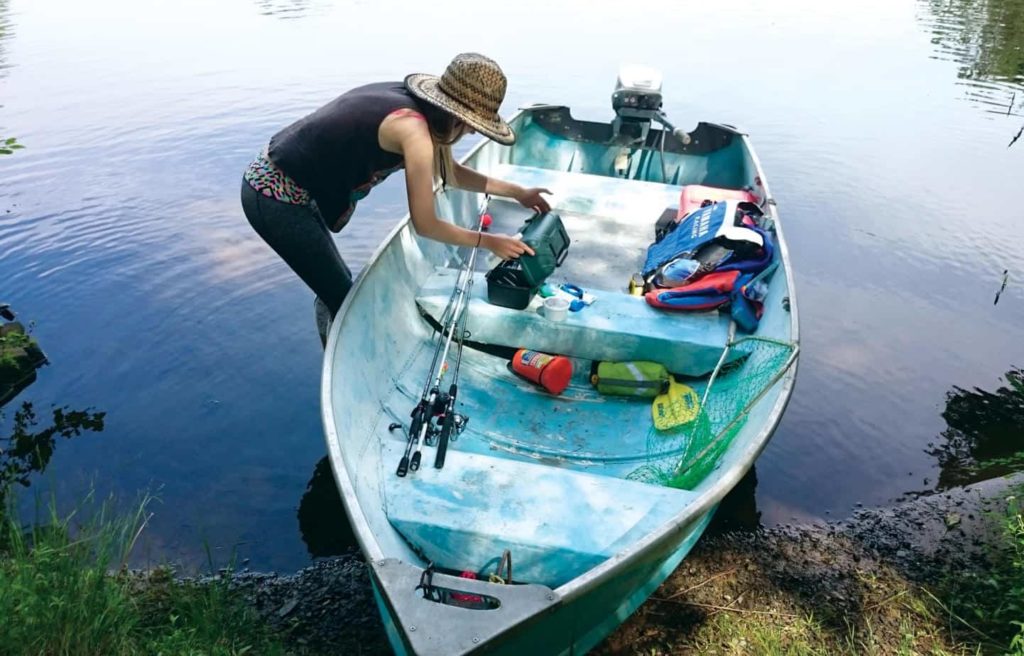
Before you leave for a high-altitude lake:
- Confirm propeller pitch for your target elevation (call a local dealer or use manufacturer charts).
- Inspect and replace impeller if it's over two seasons old.
- Test thermostat in a pot of boiling water—confirm it opens.
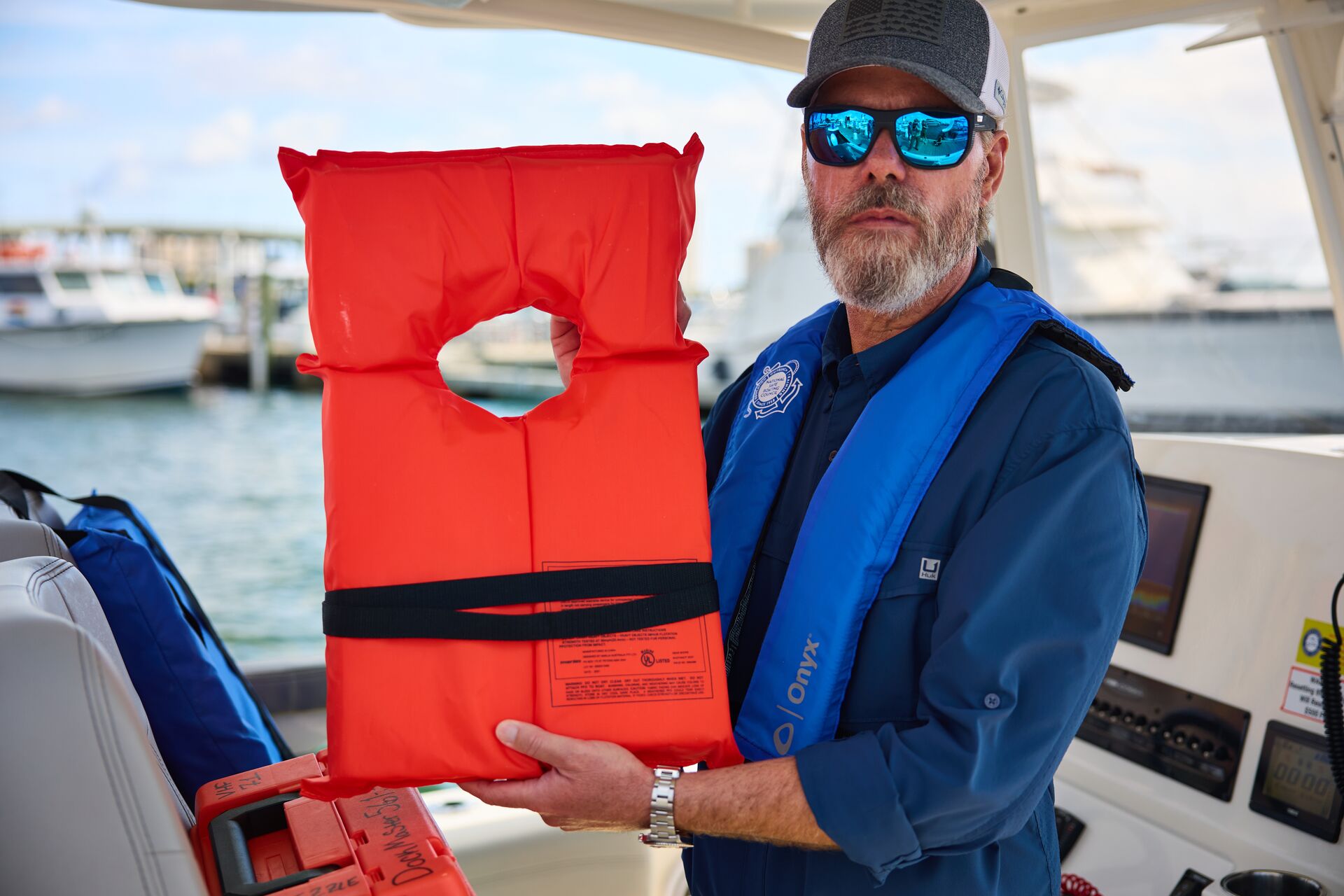
- Load survival gear: extra layers, first-aid kit, sunscreen, water.
- Check trailer bearings and lights—mountain roads are hard on trailers.
- Run the engine at WOT (if possible) before you leave to establish baseline RPMs.
Once you arrive:
- Walk the launch ramp before backing down.
- Test-run the boat with partial load first to confirm it planes.
- Monitor engine temps closely the first few runs.
What "Success" Looks Like

A properly tuned high-altitude setup should:
- Get the boat on plane in under 10 seconds with typical load
- Reach WOT RPMs within the manufacturer's specified range (usually ±200 RPM)
- Maintain plane at 3,000-3,500 RPM cruise without lugging
- Show a steady tell-tale stream at all speeds
- Run clean exhaust (no black smoke, no excessive steam)
If you're hitting these marks, you've dialed it in. If not, start with the prop—it's the easiest variable to change and has the biggest impact.
After every outing, flush the engine with fresh water using a set of muffs or a flushing port. Mountain lakes often have higher mineral content than coastal water, and sediment buildup in the cooling passages will choke flow and cause overheating on your next trip.
Learn more detailed tips and parts for boat maintenance and repairs at JLM Marine's home page.
For comprehensive resources on boat parts, repairs, and maintenance, explore the full range of JLM Marine collections, your trusted source for direct-from-factory marine parts and accessories.
Hi—I’m Jim Walker
I grew up in a Florida boatyard, earning pocket money (and a few scars) by rebuilding outboard carbs before I could drive. That hands-on habit carried me through a Ph.D. in mechanical engineering, where I studied how salt water quietly murders metal.
I spent ten years designing cooling systems for high-horsepower outboards, then joined JLM Marine as CTO. We bench-test every new part in the lab, but I still bolt early prototypes onto my own 23-foot skiff for a weekend shake-down— nothing beats real wake and spray for finding weak spots.
Here on the blog I share the fixes and shortcuts I’ve learned so your engine—and your day on the water—run smooth.

Для владельцев лодок:
Мы надеемся, что следующие ресурсы окажутся полезными для вас в обслуживании и ремонте ваших судовых двигателей:
- Руководство по серийным номерам Mercury
- Руководства пользователя от Mercury
- Официальное руководство по номерам моделей в формате PDF от BRP
- Руководство по серийным номерам Johnson
-
Аксессуары для лодок от JLM Marine
О компании JLM Marine
Основанная в 2002 году, компания JLM Marine зарекомендовала себя как специализированный производитель высококачественных морских деталей, базирующийся в Китае. Наша приверженность совершенству в производстве заслужила нам доверие ведущих мировых морских брендов.
Как прямой поставщик, мы обходим посредников, что позволяет нам предлагать конкурентоспособные цены без ущерба качеству. Такой подход не только поддерживает экономическую эффективность, но и гарантирует, что наши клиенты получают наилучшую ценность напрямую от источника.
Мы рады расширить свое присутствие через розничные каналы, предлагая наш опыт и приверженность качеству непосредственно владельцам и любителям лодок по всему миру.
Распродажа лодочных аксессуаров
- $37.99
$45.99- $37.99
- Unit price
- per
- $34.99
- $34.99
- Unit price
- per
- $128.99
- $128.99
- Unit price
- per

- $25.30
$30.00- $25.30
- Unit price
- per


- $34.99
$41.99- $34.99
- Unit price
- per

- $32.50
$31.00- $32.50
- Unit price
- per

- $139.99
- $139.99
- Unit price
- per


- $45.00
- $45.00
- Unit price
- per

- $28.50
$29.00- $28.50
- Unit price
- per

- $159.99
- $159.99
- Unit price
- per


- $105.00
- $105.00
- Unit price
- per


- $34.99
$41.99- $34.99
- Unit price
- per


- From $68.00
- From $68.00
- Unit price
- per


- $34.99
$41.99- $34.99
- Unit price
- per

- $59.95
$71.00- $59.95
- Unit price
- per

- $59.99
$71.00- $59.99
- Unit price
- per


- $34.99
$41.99- $34.99
- Unit price
- per

- $65.50
$78.00- $65.50
- Unit price
- per

- $67.00
$65.00- $67.00
- Unit price
- per

- $19.99
- $19.99
- Unit price
- per