




Flooded Engine Recovery: How to Restart Your Outboard
- Recognizing a Flooded Outboard
- Safety and Pre-Check Before You Start
- The Clear-Flood Procedure for Carbureted Outboards
- How to Unflood a Fuel-Injected (EFI) Outboard
- Spark Plug Service for Flooded Engines
- Using an Inline Spark Tester
- Success Indicators and What to Expect
- Issues That Mimic Flooding But Aren't
- Preventing Outboard Flooding
- Advanced Troubleshooting: When Unflooding Doesn't Work
- Recovering a Submerged or "Dunked" Outboard
- Trailer Boaters vs. Slip Boaters: Storage Habits Matter
- Tools You Should Carry Onboard
- When to Call a Shop
If your outboard won't fire after cranking, smells like raw gas, or sputters and dies immediately, it's flooded. Here's how to clear it and get running again.
Recognizing a Flooded Outboard

You'll smell unburned fuel—that's the first giveaway. The engine cranks normally but won't catch, or it fires for a second then quits. Pull a spark plug and you'll see it wet with fuel, maybe with dark fouling. On carbureted engines, flooding usually comes from choking too long after the first start attempt or pumping the primer bulb too many times. Low compression can also let fuel puddle instead of burning cleanly.
On 2-stroke motors, oil mixed with the fuel complicates things—your plugs can be wet with both gas and oil, making them harder to dry and more prone to fouling even after you clear the excess fuel.
Safety and Pre-Check Before You Start
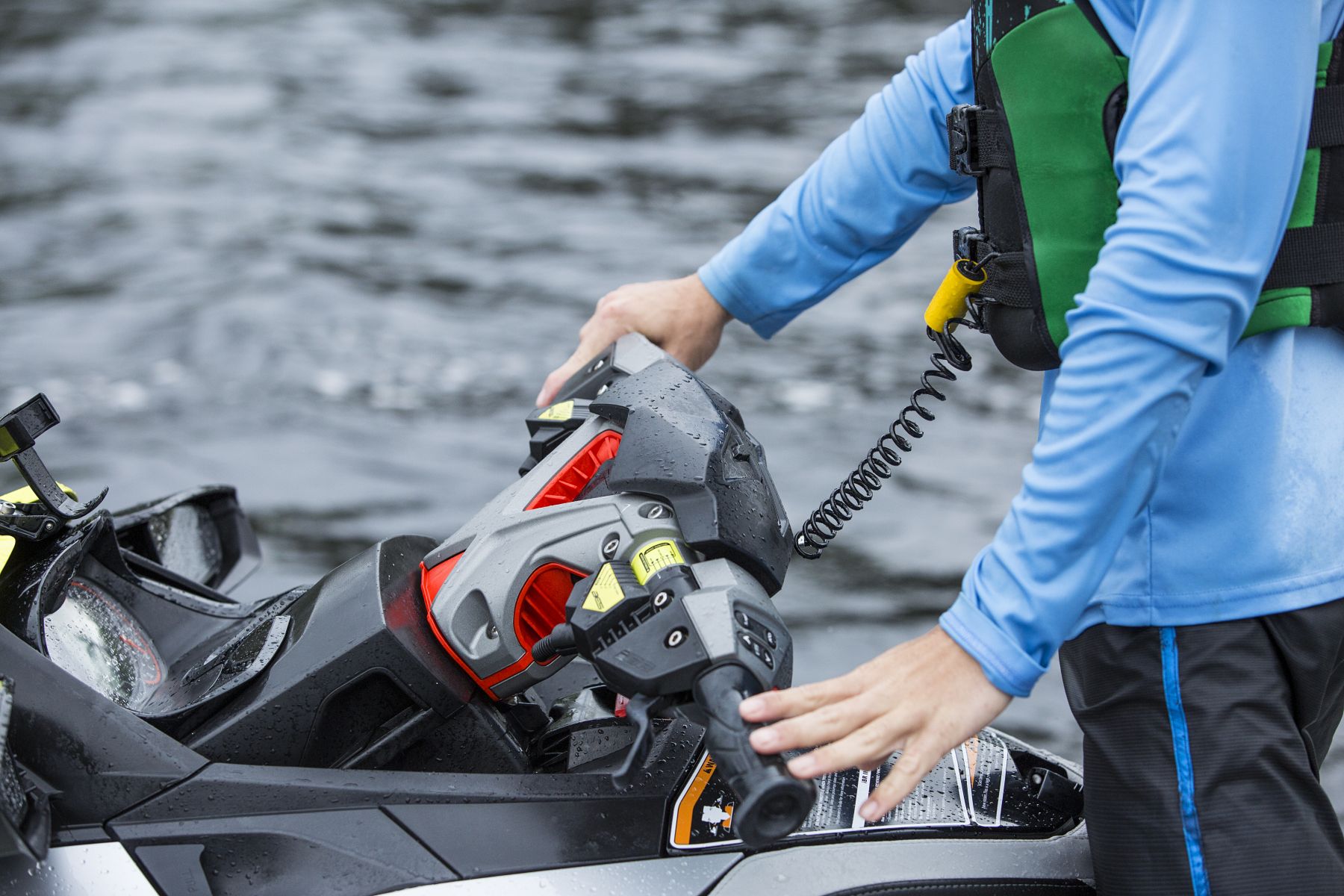
Check your kill switch lanyard first. Cranking with the lanyard off is the number-one way people flood their own engines—no spark means fuel just piles up in the cylinders. Also confirm your fuel vent is open and the primer bulb is firm, not flat.
Safety warning: If you're going to heat spark plugs with a propane torch (covered below), do it away from the boat and any fuel vapors. Heating plugs near gas fumes can cause an explosion.
The Clear-Flood Procedure for Carbureted Outboards
Shut off the ignition and let the engine sit 10-15 minutes. This allows some fuel to evaporate and gives your starter motor a break if you've been cranking hard. Waiting also reduces the risk of hydro-lock—if the cylinders are so full of liquid that the piston can't compress it, forcing the starter can bend a connecting rod.
After waiting, disengage the choke completely. On a tiller-handle outboard, twist the throttle grip to the full-open position. On a console setup, advance the throttle lever all the way forward (in neutral, using the throttle-only button if your control box has one). Do not look for an accelerator pedal—outboards use a lever or twist grip, not a foot pedal. Opening the throttle wide allows maximum air into the engine, leaning out the fuel-air mix so you can purge the excess gas.
Crank the engine for 5-10 seconds. You're not trying to start it yet; you're pushing out fuel vapors through the exhaust. You may see a mist or smell more gas—that's normal. Release the starter, wait a few seconds, then crank again if needed. After two or three purge cycles, back the throttle off to just a crack above idle and try a normal start.
For small portable tillers: Tilt the entire motor up vertically and let it sit for 2 minutes. Gravity drains fuel out of the crankcase (2-strokes) or cylinders. Lower it back down, then crank at full throttle with no choke.
For more details and step-by-step visual guidance, check out the Yamaha Outboard Carburetor Rebuild Tutorial, which gives insight into carburetor function and maintenance that can help prevent flooding.
How to Unflood a Fuel-Injected (EFI) Outboard

Modern EFI outboards don't have a choke, and most have a built-in "clear flood mode." The procedure varies slightly by brand:
- Mercury/Mariner: Advance the throttle to wide-open (in neutral), then crank. The ECU cuts fuel delivery automatically when it sees full throttle and no RPM signal.
- Yamaha: Same—full throttle, then crank. Some models require holding the key for a few seconds after cranking to trigger the mode.
- Suzuki: Full throttle plus cranking usually works, but check your manual; some DF-series motors have a separate button sequence.
EFI engines rarely flood from user error, so if yours is fuel-fouled, suspect a leaking injector or failed fuel pressure regulator and plan on a shop visit after you get it running.
If you're troubleshooting fuel delivery or pressure issues in EFI engines, browsing the Fuel Pump or the Fuel Filter collections might provide the components you need for maintenance or repairs.
Spark Plug Service for Flooded Engines
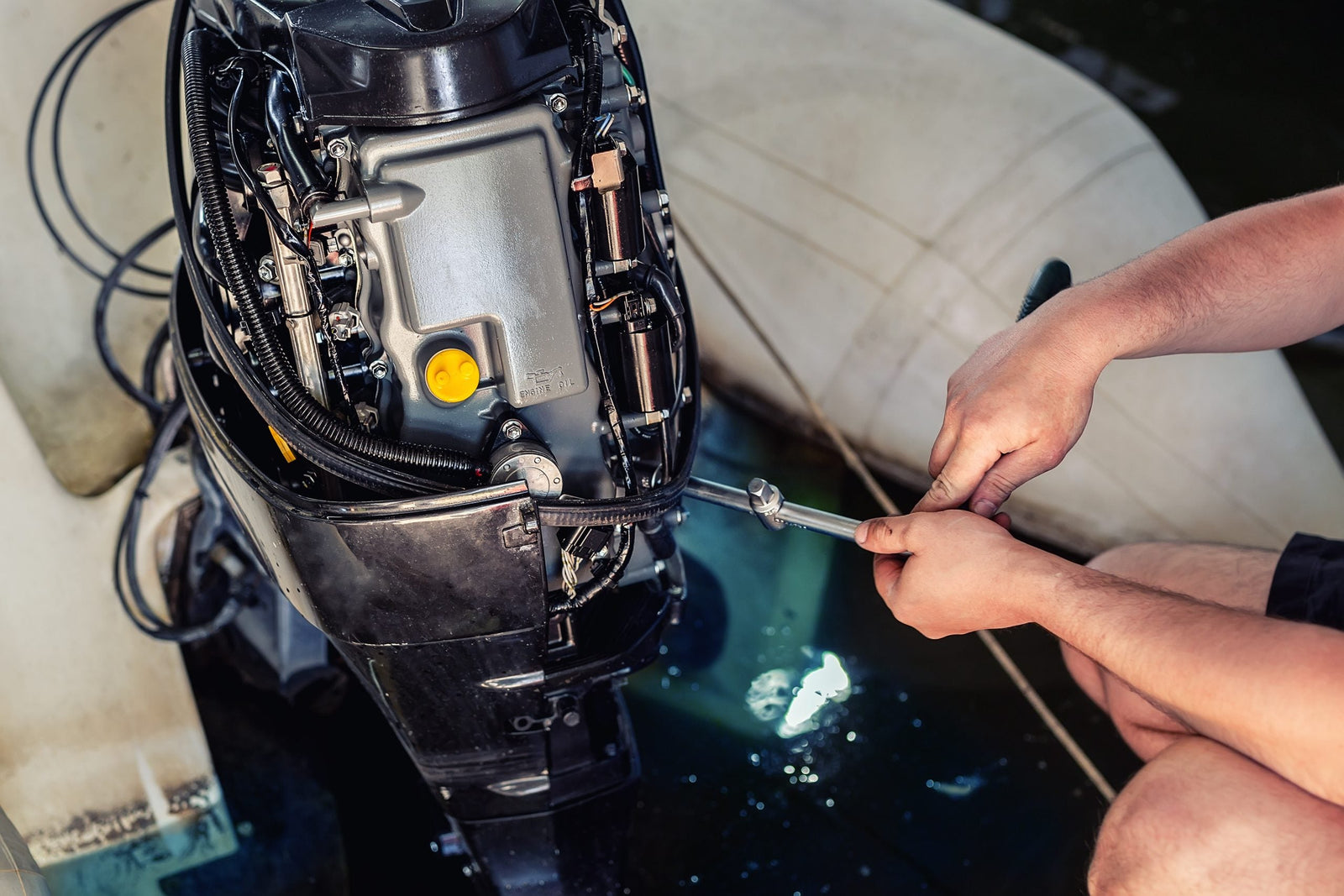
If the clear-flood crank doesn't work, pull the plugs. You'll need a deep socket or a thin-walled spark plug socket—outboard cylinders are often recessed, and a standard automotive socket won't fit. On inline engines, the top plug is easy; the bottom one usually requires removing a cover or working around the flywheel.
Wet plugs won't spark. Wipe them dry with a clean rag, then inspect the electrode. If it's black and oily (common on 2-strokes), the plug is fouled and drying won't help—replace it. If it's just wet with clear-smelling gas, you can dry it and reuse it. Some guys use compressed air; others carefully wave a propane torch near the electrode for a few seconds (again, do this away from the boat and fuel). Don't overheat the ceramic—if it cracks, the plug is trash.
Reading the plug: A wet plug that smells like gas indicates incidental flooding (operator error or a stuck float). A black, oily plug means your engine is running rich all the time—check your carburetor's high-speed jet or your oil ratio if it's a 2-stroke.
Once plugs are dry or replaced, thread them back in by hand first to avoid cross-threading. Torque them to spec if you have a wrench; if not, snug them down firmly, then another quarter-turn. Reconnect the plug wires, making sure they click onto the terminal.
For general parts needs, including spark plugs and sockets designed for outboard motors, the Inboard & Outboard Motor Parts collection on JLM Marine offers OEM-quality components for a variety of engines.
Using an Inline Spark Tester
Instead of just drying plugs and hoping, use an inline spark tester to confirm ignition while you troubleshoot. Connect the tester between the plug wire and the plug, then crank the engine. You should see a bright blue spark in the tester's window. No spark? Your problem isn't flooding—it's ignition (bad coil, power pack, or stator), and adding more cranking will only flood it worse.
Success Indicators and What to Expect
When the engine tries to clear, it will cough, sputter, or backfire through the carbs. Don't panic—that's normal. It may fire unevenly for a few seconds as it burns off the excess fuel. Once it catches and runs steadily, do not snap the throttle back to idle immediately. Let it run at 1,200-1,500 RPM for 10-15 seconds to stabilize, then ease the throttle down. If you chop it to idle right away, it may load up again and stall.
Issues That Mimic Flooding But Aren't
If the engine smells like gas, cranks normally, and won't start even after the clear-flood procedure, check for:
- Sheared flywheel key: The flywheel timing is off, so spark happens at the wrong moment. The engine will pop or backfire but won't run. You'll need to pull the flywheel to confirm.
- Stuck or corroded kill switch: Even with the lanyard attached, internal corrosion can ground the ignition. Disconnect the kill switch wire at the engine and try cranking—if it fires, replace the switch.
- Blocked fuel vent: The tank can't breathe, so the carb starves for fuel after a few seconds. You'll get one start, then a stall. Crack the fuel cap and listen for a hiss.
These conditions all prevent spark or fuel delivery, which leads to flooding if you keep cranking, but the root cause isn't flooding itself.
For a deeper dive into kill switch issues and diagnosis, see the Understanding the Kill Switch: Why Your Engine Won’t Start blog.
Preventing Outboard Flooding
Primer bulb: Pump until the bulb is firm, not a set number of times. An empty fuel line might need six or seven pumps; a full line might need two. Stop when you feel resistance.
Choke use: Engage the choke only for a cold start. As soon as the engine fires and runs for 2-3 seconds, push the choke back in halfway. Once it runs smoothly, disengage it fully. Leaving the choke on floods the engine and fouls plugs.
Carburetor maintenance: A sticking float needle lets fuel dribble into the cylinders even when the engine is off. If your outboard floods after sitting a few days, pull the carb and check the float. Older floats absorb fuel and get heavy, so they don't shut off the needle valve properly—replace the float and needle as a set.
For help with rebuilding or maintaining your carburetor to avoid problems like flooding, visit the Carburetor Repair Kit collection for quality OEM kits.
Storage: Before storing the engine for more than a week, either run the carburetor dry (disconnect the fuel line and let it idle until it dies) or add fuel stabilizer and run the engine for 5 minutes to circulate treated fuel through the system. Stale gas turns to varnish, which gums up jets and needle valves, leading to flooding and hard starts.
Advanced Troubleshooting: When Unflooding Doesn't Work
You've waited, cranked at full throttle, dried the plugs, checked the kill switch—and it still won't start. Time to look deeper.
Ignition system: Use a multimeter or an inline tester to check for spark at each cylinder. No spark on one cylinder suggests a bad ignition coil. No spark on any cylinder points to the power pack or stator. These are shop-level repairs, but knowing which part failed saves diagnostic time and money.
Fuel delivery: If the engine fires briefly then dies, you might have a clogged idle jet (carbureted) or a failing lift pump (EFI). Pull the carb bowl and inspect the jets—varnish buildup looks like brown crust. Soak jets in carb cleaner overnight, then blow them out with compressed air. For EFI, check fuel pressure at the rail with a gauge; it should read 35-45 psi depending on the model.
Compression: Low compression (below 90 psi on most 2-strokes, below 120 psi on 4-strokes) means worn rings or a blown head gasket. Fuel won't compress and burn properly, so it puddles and floods. A compression test takes 10 minutes—remove all plugs, hold the throttle wide open, and crank each cylinder. Write down the numbers. If one cylinder is 30% lower than the others, you've found your problem.
Recovering a Submerged or "Dunked" Outboard
If your outboard goes underwater—capsized boat, high water at the dock, swamped transom—you're dealing with water flooding, not fuel flooding. The procedures are completely different.
Immediate steps (first 30 minutes):
- Do not crank the starter. Water in the cylinders creates hydro-lock. Forcing the starter will bend rods or crack the block.
- Disconnect the battery and pull the kill switch lanyard.
- Remove all spark plugs or injectors.
- Turn the flywheel by hand (use a socket on the flywheel nut). If you feel hard resistance, stop—there's still water in a cylinder. Tilt the engine or pull the plugs again to drain it.
- Once the flywheel turns freely, point the plug holes down and crank the starter for 5-10 seconds. Water will shoot out of the plug holes—stand clear.
Flushing and protection (first 2 hours):
John Wilkinson from Yamaha Marine Service puts it bluntly: "Your number one enemy is air, so if you are not prepared to work on it immediately, sink it in fresh water." If you're hours from a shop, submerging the engine in a barrel of fresh water stops saltwater corrosion. If you're ready to work, flush the exterior with fresh water from a hose, then spray fogging oil into each cylinder through the plug holes. Crank the engine a few times (still no plugs) to coat the cylinder walls.
David Greenwood from Suzuki adds: "One crucial thing is to take the starter motor apart and clean it up. That starter motor is going to start corroding in no time, so you need to clean and grease all electrical connections." Pull the starter, blow out any water with compressed air, and pack the terminals with dielectric grease. Do the same for the rectifier, CDI, and all connectors.
Oil changes (next 24 hours):
Reinstall the plugs (or use old ones as temporary plugs). Fill the engine with fresh oil. Start it and let it idle for 5 minutes. Drain the oil—it'll look like chocolate milk if there's water. Refill and repeat. Most mechanics do this 3-4 times until the oil drains clear. On the final run, bring the engine up to 200°F (normal operating temp) to evaporate any residual moisture in the crankcase.
If the engine won't start after all this, suspect a corroded power pack or stator. Saltwater kills electronics fast, and submerged engines often need a complete rewire.
For more detail on dunked outboard recovery, see the full guide at Southern Boating.
Trailer Boaters vs. Slip Boaters: Storage Habits Matter
Trailer boaters: You're pulling the boat every trip, so tilt the engine fully up and let it drain. Fuel in the carburetor bowl evaporates faster in the tilted position, reducing the chance of varnish buildup. If you store the trailer outdoors, pull the cowl off periodically and check for wasp nests in the intake—one mud nest can block the carb throat and cause flooding when you restart.
Slip boaters: Your engine sits in the water 24/7. Condensation builds up in the fuel tank from temperature swings, so water in the fuel is more common. Use a 10-micron fuel-water separator and check it monthly. If you see water in the bowl, drain it immediately—water in the carb causes rust in the jets, which leads to stuck floats and flooding.
Tools You Should Carry Onboard
If you're serious about self-recovery, keep these in a dry bag:
- Spark plug socket (deep or thin-walled, depending on your engine)
- Spare spark plugs (one per cylinder, matched to your engine's heat range)
- Inline spark tester
- Small can of fogging oil
- Adjustable wrench (for fuel line fittings and the flywheel nut)
- Screwdriver set (for carburetor access panels)
With this kit, you can diagnose and fix 90% of flooded-engine problems on the water instead of calling for a tow.
When to Call a Shop
If you've done the clear-flood procedure, replaced the plugs, confirmed spark, checked fuel delivery, and the engine still won't start or stay running, the issue is beyond field repair. Possible causes:
- Internal carburetor damage (warped float, cracked seat)
- Failed fuel pump or clogged pickup tube
- Valve timing issue (4-strokes)
- Crankshaft seal leak (2-strokes—pulls air and leans out the mix, but can also flood if the leak is on the fuel side)
Bring it to a qualified marine mechanic. If you need parts during the diagnosis—carburetor rebuild kits, fuel pumps, ignition coils—we stock OEM-spec components for most brands at JLM Marine. Send us your model and serial number (stamped on the transom bracket) and we'll match the exact part. We ship worldwide, usually within 5-15 days.
For specific carburetor repair needs, the Carburetor Repair Kit collection is a great place to start.
Daily tip: After every ride, squeeze the primer bulb and feel how firm it is. If it stays soft or you hear fuel draining back, your anti-siphon valve is failing. Replace it before it lets fuel flood the carb overnight and ruin your next start.
For more boating tips, resources, and premium parts, visit the JLM Marine homepage.