


Using a Kicker Motor: Backup Outboard for Safety
- Kicker Motor vs Trolling Motor
- Why You Need a Kicker Motor
- Drawbacks to Consider
- Choosing the Right Kicker Motor Power
- Shaft Length and Propeller Selection
- Electric vs Gas Kicker Motors
- Mounting Methods and Hardware
- Mounting Side: Port vs Starboard
- Fuel System Integration
- Remote Steering for Kicker Motors
- Shaft Length and Trim Adjustment
- Electric Kicker Battery Sizing
- Recommended Kicker Motors
- Kicker Motor Maintenance
- Troubleshooting Common Kicker Problems
- Pre-Departure Checklist for Kicker Motors
If your main engine quits miles offshore, you need a way to get back. A kicker motor is that way. It's a small auxiliary outboard—usually 5 to 10 hp—mounted on your transom to provide backup propulsion when the primary engine fails.
Kicker Motor vs Trolling Motor
A trolling motor is electric, low-voltage, designed for precise boat positioning at very slow speeds in calm water. A kicker motor is a full outboard—gas or electric—built to push your boat several miles per hour against wind and current.
The key difference is thrust under load. A trolling motor drawing 50 amps might move a bass boat at 2 mph in flat water, but add a 15-knot headwind and you're going backward. A 9.9 hp kicker will push that same boat at 5 knots into the same wind. It's about the propeller size, gear reduction, and raw horsepower. Trolling motors use small props optimized for battery efficiency. Kickers use standard outboard props designed to move displacement hulls.
We've seen boaters try to limp home on a trolling motor after a main engine failure. In calm conditions within a mile of the ramp, it works. Three miles out with afternoon chop building, the batteries die long before you reach safety.
Why You Need a Kicker Motor

The US Coast Guard's 2024 Recreational Boating Statistics reported machinery failure as the 4th leading cause of boating incidents, contributing to 289 cases, 13 deaths, and 94 injuries. A kicker directly addresses that risk by providing independent backup propulsion.
Beyond emergencies, kickers let you troll at 2-3 knots all day without idling a 200 hp main engine. A big outboard at minimum throttle burns roughly 2-3 gallons per hour just to maintain 1,200 rpm. A 9.9 hp kicker at the same speed uses about 0.6 gallons per hour. Over an eight-hour salmon trip, that's 12-18 gallons saved.
Electric kickers eliminate fuel costs entirely and run silent. No exhaust smell, no vibration, no need to adjust idle screws when the engine warms up.
Drawbacks to Consider
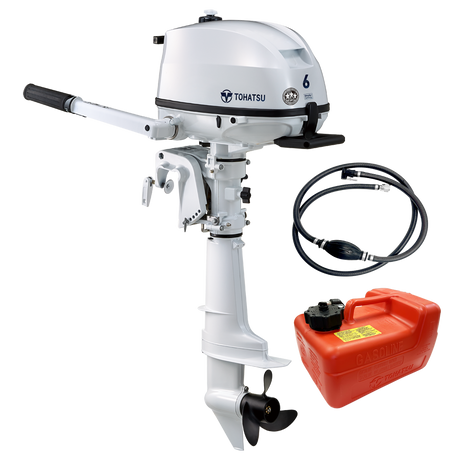
You're adding 50-90 pounds to your transom, depending on the motor. A Mercury 9.9 hp four-stroke weighs about 84 pounds. That shifts your boat's center of gravity aft and to one side. Smaller hulls—under 18 feet—can develop a noticeable list. Trim tabs or redistributing gear helps, but the weight is permanent.
If you mount a gas kicker, you need fuel storage. A six-gallon portable tank takes up deck space and needs to be secured. Sharing the main fuel tank requires plumbing a fuel line with a shutoff valve and water separator, which adds installation time and potential leak points. Installers often recommend using a fuel filter and a fuel pump to ensure clean fuel delivery to the kicker motor.
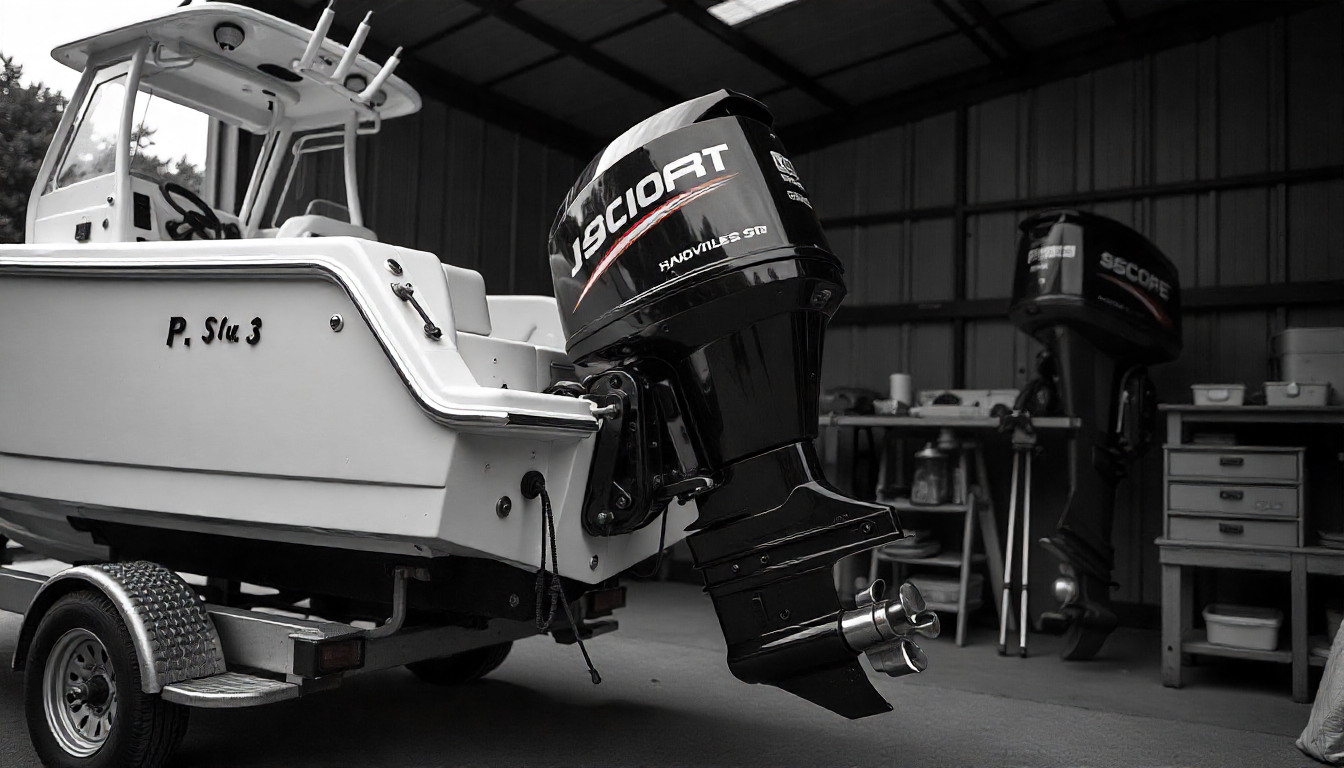
Finally, the kicker has to stow somewhere when you're running the main engine. If it doesn't tilt high enough, the lower unit drags in the water, creating resistance and cavitation risk. We've seen props damaged because a kicker was left down at 30 mph.
Choosing the Right Kicker Motor Power

For most boats under 25 feet, a 5 to 9.9 hp kicker is appropriate. The question is how much wind and current you'll fight.
A 5 hp motor on a 20-foot center console in calm water will move you at about 4 knots. Add a 10-knot headwind and you drop to 2 knots. That's slow, but it's enough to make progress. If you fish offshore where afternoon winds regularly hit 15-20 knots, you want 8-9.9 hp.
We generally see this sizing:
- 16-19 foot aluminum or light fiberglass boats: 5-6 hp
- 20-24 foot center consoles or walkarounds: 8-9.9 hp
- 25-30 foot boats: 9.9 hp minimum
The ePropulsion Navy 6.0 Evo—an electric equivalent to a 9.9 hp gas motor—pushed a 16-foot Bass Tracker at 8.3 mph in testing, showing electric kickers now match gas performance for smaller hulls.
One detail often missed: hull speed matters more than horsepower once you pass a certain point. A 20-foot hull has a theoretical hull speed around 6 knots. Adding a 15 hp kicker instead of 9.9 hp won't get you to 8 knots—you'll just burn more fuel hitting the same speed. The extra power helps in rough conditions where you need reserve thrust to climb waves, not in flat water where hydrodynamics limit you. For more on how boat weight affects fuel and performance, see our discussion on how boat weight affects fuel use.
Shaft Length and Propeller Selection
Measure your transom height from the mounting surface to the bottom of the hull. Most outboards come in 15-inch (short shaft) or 20-inch (long shaft) versions. A few models offer 25-inch for bracket applications.
If your main engine is a 20-inch shaft, your kicker should match unless you're mounting it lower via a bracket. An incorrect shaft length means the prop either runs too shallow (ventilates and loses thrust) or too deep (powerhead sits low, exhaust backpressure increases, cooling inlet submerges too far and risks debris ingestion).
Standard kicker props are often pitched wrong for heavy boats. Stock props on a 9.9 hp motor are usually 9-10 inch pitch, designed for light inflatables. On a 3,000-pound boat, that prop will over-rev the engine and produce weak thrust. Switching to a high-thrust prop—like a Solas Rubex 3-blade with 7-8 inch pitch—drops rpm, increases blade area, and gives you better push at low speeds. You lose top-end speed you didn't need anyway. For advice on selecting the right propeller, check our blog on comparing propeller pitches and prop pitch and diameter.
Electric vs Gas Kicker Motors
Gas kickers are proven. They run until the fuel tank is empty, start reliably if maintained, and deliver consistent power regardless of how long you've been on the water. A 9.9 hp four-stroke will burn about 0.7 gallons per hour at half throttle, giving you 8-10 hours of runtime on a six-gallon tank. Maintenance involves annual gear oil changes, spark plug replacement every 100 hours, and occasional carburetor cleaning if you let fuel sit over winter. Detailed maintenance for outboard components, including carburetors, can be found in our carburetor repair kit collection and related guides.
The downsides: they're loud at close range, vibrate through the transom, require pulling a starter cord (or maintaining a small battery for electric start models), and need winterization if you're in freezing climates. Ethanol fuel wreaks havoc on carburetors if the motor sits unused for months.
Electric kickers like the ePropulsion Navy 6.0 Evo or Spirit 1.0 Evo eliminate all that. Push-button start, zero maintenance beyond rinsing salt off and checking electrical connections, and silence that doesn't spook fish or annoy nearby boaters. The Navy 6.0 Evo paired with a 3.5 kWh lithium battery provides roughly 4-6 hours of runtime at trolling speeds (2-3 knots), or about 1 hour at full throttle. Larger battery packs extend that proportionally.
The trade-off is cost and charging logistics. A comparable gas 9.9 hp runs $2,000-$2,500; the Navy 6.0 Evo with battery starts around $4,500. If you fish from a slip with shore power, charging overnight is simple. If you trailer, you need a plan to charge at home between trips.
Range anxiety is real. Running a graph, livewell, and electric kicker simultaneously on a single battery bank means monitoring voltage carefully. Lithium batteries handle deep discharge better than lead-acid, but once you hit cutoff voltage, you're done until you recharge. For more details on battery care, see our battery care during the off-season.
Mounting Methods and Hardware
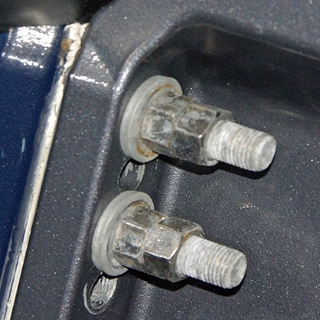
Small electric kickers—under 6 hp equivalent—clamp directly to the transom like any outboard. Tighten the clamps to the manufacturer's spec (usually hand-tight plus a quarter turn with a wrench) and verify they don't shift under throttle.
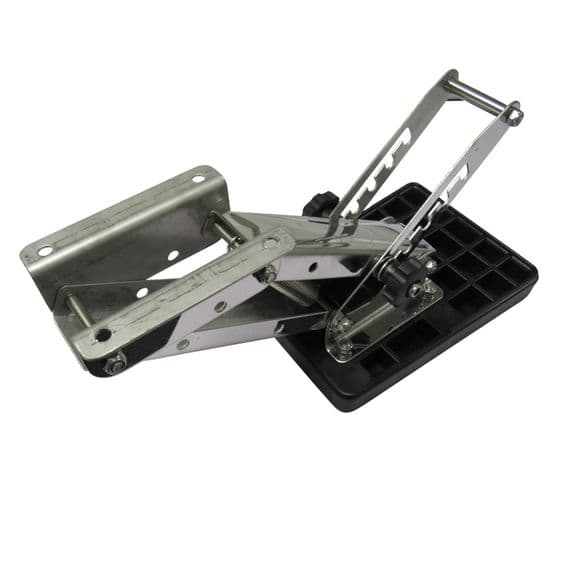
For 9.9 hp gas motors or heavier electrics, a transom-mount bracket is necessary. These brackets are typically aluminum or stainless, triangulated to spread the load across multiple mounting points. They bolt through the transom using four to six 3/8-inch stainless bolts.
Here's the installation process we use:
-
Position the bracket so the kicker motor, when mounted, clears the main engine when both are tilted up. Measure twice. We've seen brackets installed too close, preventing the main engine from tilting fully.
-
Mark the bolt holes and drill pilot holes first—1/8-inch bit—to ensure alignment before stepping up to the final 3/8-inch diameter.
-
Drill the final holes and immediately coat each hole with epoxy or thickened resin if the transom is cored fiberglass. This seals the core from water intrusion. If the transom is solid glass or aluminum, skip this.
-
Install backing plates on the interior side of the transom. Use 1/4-inch thick aluminum or starboard (HDPE). This distributes bolt tension and prevents compression damage to the transom skin.
-
Bed the bracket with 3M 5200 or similar polyurethane sealant around each bolt and along the bracket foot. Avoid 4200 here; you want the permanence of 5200 for structural mounting.
-
Bolt it down using stainless 316 bolts, washers, and nyloc nuts. Torque to 20-25 ft-lbs, checking that the sealant squeezes out evenly.
Some installers skip backing plates on thick transoms (over 1.5 inches solid glass). We don't. The bolt load under vibration will eventually create compression cracks without proper backing.
For additional tips on installing mounting hardware and dealing with hull issues, see our guides on installing a water pump repair kit and hull attitude and balance.
Mounting Side: Port vs Starboard

Most kickers mount on the port side. The reason is propeller rotation and steering torque. Outboard props spin clockwise when viewed from behind. This creates a side thrust that pushes the stern to starboard, especially at low speed. Mounting the kicker on the port side balances this effect when the main engine is off and you're running on the kicker alone.
However, if your boat already lists to port due to fuel tank placement or battery location, mounting the kicker on starboard can level the boat. A balanced boat planes easier, drifts straighter, and handles better in a beam sea.
Test your boat's natural list by loading it with typical gear and fuel, then idling in calm water. If one side sits noticeably lower, mount the kicker on the opposite side. For advice on managing weight distribution on your boat, see our article on weight distribution for speed.
Fuel System Integration

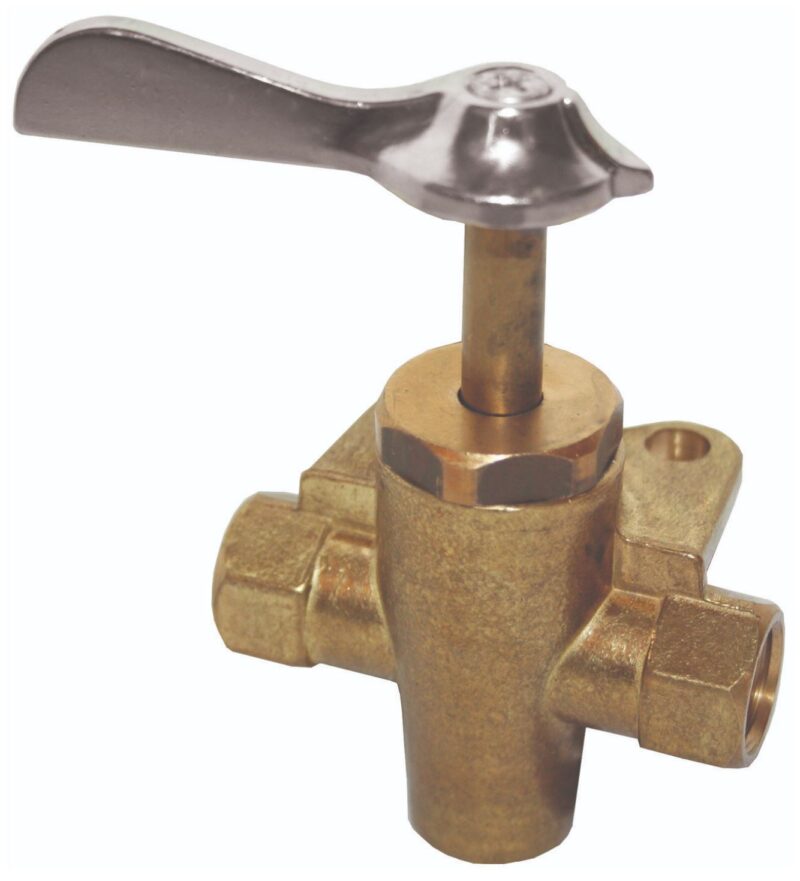
Running a kicker off a portable six-gallon tank works fine but limits range. Plumbing into your main fuel tank requires a few components:
- Fuel line with primer bulb: Standard 3/8-inch marine fuel hose, long enough to reach from the tank to the kicker.
- Fuel/water separator filter: Mandatory. Mount it on the transom or nearby structure where you can access it for draining.
- Three-way valve: Install this at the tank outlet so you can select main engine, kicker, or off. This prevents accidental fuel draw from the wrong motor.
Run the fuel line along the gunwale or under the rub rail, securing it every 18 inches with UV-resistant cable clamps. Avoid zip ties—they degrade in sunlight. The line must have a drip loop before entering the kicker's fuel inlet to prevent water from running down into the connection.
If your main tank is below the waterline, you may need a check valve to prevent fuel from siphoning back when the kicker is off. For parts like fuel pumps, fuel filters, and fuel pump kits needed in this setup, visit our collections on fuel pumps, fuel filters, and fuel pump kits.
You can also explore our HUB for marine parts for comprehensive solutions and quality components.
Remote Steering for Kicker Motors

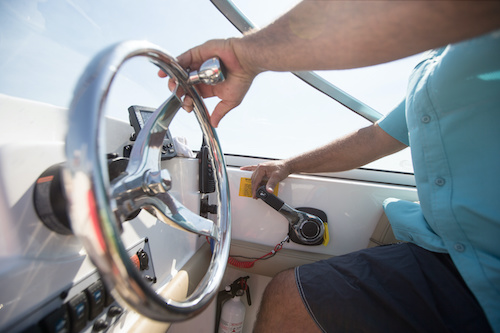
Tiller steering works for short distances or slow trolling, but if you're running the kicker for an hour to get back from a breakdown, steering from the helm is far more comfortable.
Remote steering linkage kits connect the kicker's steering arm to your boat's existing helm via a push-pull cable or tie-bar system. The tie-bar mounts between the main engine's tilt tube and the kicker's steering arm using ball joints. When you turn the wheel, both motors turn together.
For hydraulic steering systems, you can tee into the hydraulic lines with a selector valve. When the valve is open to the kicker circuit, turning the wheel sends fluid to a small hydraulic ram mounted on the kicker. This is cleaner than mechanical linkage but costs more and requires bleeding the system.
The tricky part is synchronizing the steering ratio. Main engines have different steering arm lengths than kickers, so a 1:1 mechanical link will cause them to turn at different rates. Most kits include adjustable tie-bar lengths or offset mounting holes to tune the ratio. Expect to adjust this on the water—aim for the kicker to turn slightly less than the main, which prevents oversteering.
Shaft Length and Trim Adjustment
Once mounted, set the kicker's trim angle. It should run parallel to the main engine when both are down, or slightly toe-out (angled away from the hull centerline by 1-2 degrees). Toe-in causes the kicker to push the stern sideways, creating steering resistance.
Most kicker brackets have slotted mounting holes for trim adjustment. Loosen the bolts, rotate the motor, and retighten. Test it on the water at idle speed—if the boat pulls hard to one side with the wheel centered, adjust the trim.
The tilt mechanism must lock securely in the full-up position. We've seen kickers drop while trailering because the tilt pin didn't seat properly. Drill a secondary safety hole through the bracket and motor mount so you can insert a backup pin when trailering.
Electric Kicker Battery Sizing 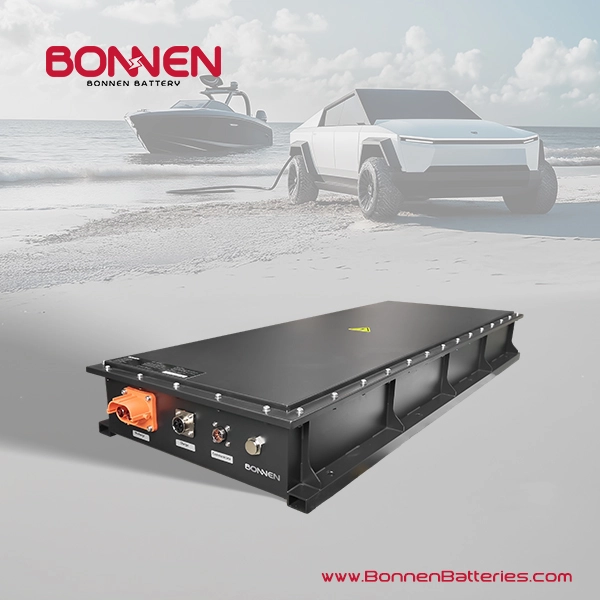
For electric kickers, runtime depends entirely on battery capacity measured in kilowatt-hours (kWh) or amp-hours (Ah).
A rough conversion: 1 kWh equals about 80 Ah at 12V. The ePropulsion Navy 6.0 Evo draws roughly 1.2 kW at half throttle (trolling speed). A 3.5 kWh battery provides about 3 hours of runtime at that draw, accounting for efficiency losses and avoiding full discharge.
If you want all-day runtime—8 hours—you need about 10 kWh of capacity. That's heavy and expensive with lead-acid (around 400 pounds and $1,200). Lithium batteries cut that to 120 pounds and $3,500, but the upfront cost stings.
Charge time matters too. A 3.5 kWh lithium pack on a 10-amp charger takes about 6 hours to refill from 20% to 100%. If you're doing back-to-back fishing days, you either need two battery packs or access to faster charging (20-amp shore power).
Recommended Kicker Motors
For electric kickers, the ePropulsion Navy 6.0 Evo is the strongest option under 10 hp equivalent. It's rated at 3 kW continuous output, roughly matching a 9.9 hp gas motor in thrust. The integrated battery options (2.5 kWh or 3.5 kWh) keep the installation clean—no separate battery boxes to mount. We've run these on 22-foot boats in 10-knot winds and maintained 4 knots, which is acceptable for backup propulsion.
The ePropulsion Spirit 1.0 Evo is better for dinghies or as a secondary backup on smaller boats under 16 feet. It's only 1 kW (roughly 2 hp equivalent), so it won't push a heavy hull against wind, but it's light enough to remove and stow when not needed.
For gas kickers, the Mercury 9.9 hp four-stroke is the industry standard. It's been in production for decades, parts are everywhere, and any mechanic can work on it. Weight is 84 pounds, and it includes both tiller and optional remote steering. The manual-start version is cheaper and more reliable than electric start—one less battery to maintain. Reliable replacement parts can be found in our Mercury parts collection.
The Yamaha 9.9 hp high-thrust four-stroke is worth considering if you have a heavy displacement hull. It uses a larger-diameter prop and lower gear ratio than the standard 9.9, producing more thrust at low rpm. You lose 1-2 mph of top speed, but you gain the ability to push into weather. See our Yamaha parts collection for replacement components.
Kicker Motor Maintenance
Gas kickers need the same maintenance as any small outboard:
-
Flush with freshwater after every saltwater use. Connect a hose to the flushing port (if equipped) or use muffs over the lower unit intake. Run the engine at idle for 10 minutes to clear salt from the cooling passages. For more on flushing and water pump maintenance, visit our guide on replacing a Mercury outboard water pump impeller.
-
Change gear oil annually or every 50 hours. We see water intrusion in kicker lower units more often than main engines because they sit idle for long periods while the boat is underway, and small prop strikes go unnoticed. Water in the gear oil looks milky. If you see that, change it immediately and inspect the prop shaft seal.
-
Replace the water pump impeller every two seasons. Kickers often sit with the lower unit submerged when the boat is docked. Barnacles and grass grow on the intake screen, restricting water flow. The impeller runs dry, heats up, and the vanes crack. We've pulled impellers from kickers that looked like they'd been chewed—vanes missing, the hub distorted. A new impeller kit costs $30 and takes 20 minutes to install. Explore our water pump impeller collection for OEM parts.
-
Stabilize fuel if storing over winter. Add fuel stabilizer to the tank, run the engine for five minutes to circulate it through the carburetor, then either run the carb dry or fog the engine. Leaving untreated ethanol fuel in the carb over winter guarantees clogged jets. For carburetor maintenance, see our carburetor repair kit.
Electric kickers are simpler. Rinse the motor with freshwater after saltwater use—just spray it down, no need to run it. Check the propeller for fishing line wrapped around the shaft. Inspect electrical connections for corrosion, especially the battery terminals. Apply dielectric grease annually to all plug connections.
The battery requires its own care. Lithium batteries should be stored at 50-70% charge if you're not using the boat for months. Lead-acid batteries need a trickle charger to prevent sulfation.
Troubleshooting Common Kicker Problems

Kicker vibrates excessively at idle: Check the motor mounts. Loose transom clamps or bracket bolts transmit vibration into the hull. Tighten to spec. If the vibration continues, inspect the propeller for damage—a bent blade or missing chunk causes imbalance. Also check that the motor is trimmed correctly; too much toe-in forces the prop to work against the hull, creating vibration.
Propeller ventilates in choppy water: The kicker is mounted too high. Lower it one mounting hole on the bracket or add a setback plate to drop the prop deeper. Ventilation happens when the prop breaks the surface and ingests air, losing thrust and over-revving the engine. In following seas, this is common if the kicker is set for calm-water operation.
Engine is hard to start when cold (gas kickers): Check the choke mechanism. Many tiller-handle kickers use a manual choke lever that can stick or corrode. Spray it with penetrating oil and work it back and forth. If the choke is functioning, the carburetor may need cleaning—old fuel leaves varnish that blocks the idle jet. Remove the carburetor bowl, spray carb cleaner through all ports, and reassemble.
Electric kicker loses power after 30 minutes: The battery is undersized or failing. Check the voltage under load using a multimeter. If it drops below 11V on a 12V system while the motor is running, the battery can't supply the current needed. Replace it or add capacity.
Pre-Departure Checklist for Kicker Motors
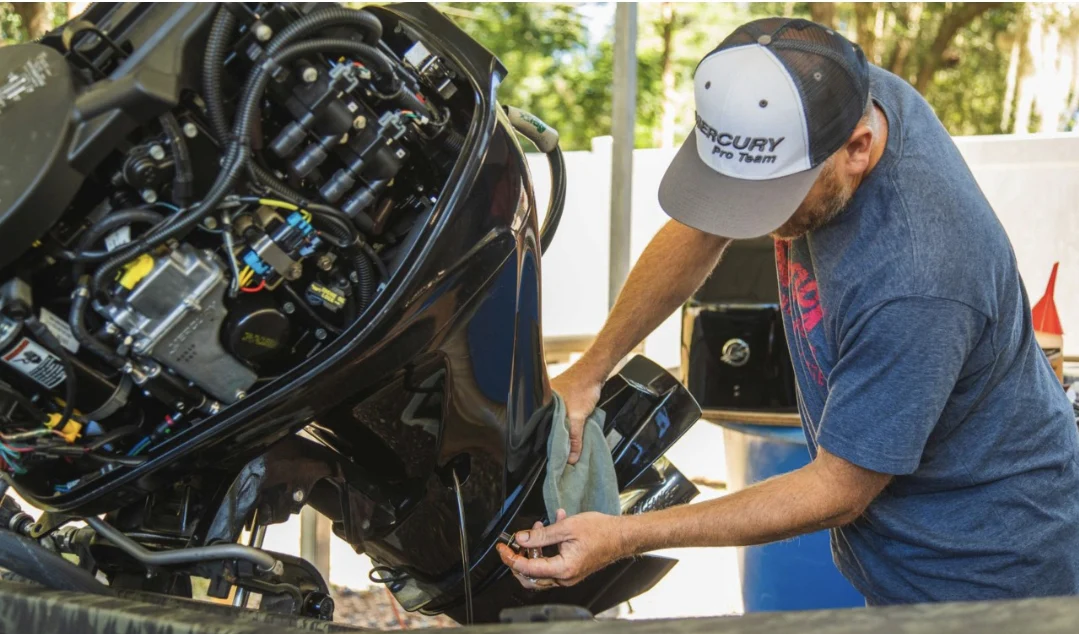
Before leaving the dock, verify:
- Transom clamps or bracket bolts are tight. Hand-check them—loose hardware can cause the motor to shift or fall off.
- Fuel tank vent is open (gas kickers). A closed vent creates a vacuum, starving the engine.
- Battery is charged (electric kickers). Check voltage with the boat's gauge or multimeter.
- Propeller spins freely and has no fishing line wrapped around the shaft.
- Tilt mechanism locks in both the up and down positions.
- Kill switch lanyard is attached if the kicker has one.
After starting, verify the cooling system. Gas motors should produce a steady stream of water from the telltale (pee hole) within 15 seconds. If it dribbles or doesn't flow, shut down immediately and check for intake blockage.
When you return, tilt the kicker fully up. Leaving it down in the water while docked invites marine growth on the lower unit and corrosion on the prop shaft.
For comprehensive boat parts and accessories to keep your kicker motor running smoothly, visit the JLM Marine Hub to explore OEM-quality components and supplies.
Internal links included:
- fuel filter
- fuel pump
- fuel pump kits
- how boat weight affects fuel use
- comparing propeller pitches
- prop pitch and diameter
- battery care during the off-season
- carburetor repair kit
- Mercury parts collection
- Yamaha parts collection
- replacing a Mercury outboard water pump impeller
- water pump impeller collection
- fuel filter and fuel pump collections, (https://jlmmarine.com/collections/fuel-pump)
- weight distribution for speed
- JLM Marine Hub