




Understanding Maintenance Schedules: Mercury vs. Yamaha
- What a Maintenance Schedule Actually Is
- Mercury FourStroke Maintenance Intervals
- Yamaha FourStroke Maintenance Intervals
- Direct Comparison: Workload and Complexity
- Portable vs. High-Horsepower Maintenance Differences
- Winterization and Long-Term Storage
- Timing Belt vs. Chain: What You Need to Know
- Maintenance Alert Systems: Mercury vs. Yamaha
- Saltwater vs. Freshwater Maintenance Adjustments
- OEM vs. Aftermarket Parts: The Real Story
- Troubleshooting: Warning Signs of Missed Maintenance
- Final Verdict: Which Schedule is Easier?
- Sources

After two decades wrenching on outboards, I can tell you the quickest way to kill a good engine is ignoring the schedule. Mercury and Yamaha have different interval callouts and service quirks, so knowing exactly when and what to service keeps you on the water instead of stuck at the dock waiting for parts.
What a Maintenance Schedule Actually Is

A maintenance schedule is your hour-based and calendar-based roadmap for oil changes, gear lube flushes, filter swaps, and component inspections. Both Mercury and Yamaha use "whichever comes first"—100 hours or 1 year, for example—because sitting idle can be just as hard on seals and lubricants as running hard. The schedule isn't optional if you want warranty coverage to stick and the engine to hit high hours without grenading. For an overview of quality parts to support this maintenance, browse JLM Marine's full selection of outboard motor parts.
Mercury FourStroke Maintenance Intervals

Mercury structures most of its modern FourStroke lineup around three core milestones: 100 hours / 1 year, 300 hours / 3 years, and 500 hours / 5 years. Portable and mid-range models (20hp to 150hp) share the basic pattern, but high-horsepower Verado and Pro XS engines add tasks like supercharger belt inspection and specialized fuel filter changes that the smaller engines skip.
Break-In Service: Often Overlooked
Mercury recommends an early check around 20 hours or 3 months for new engines, though it's not always labeled as formally as Yamaha's. This first service catches manufacturing debris in the oil and lets you spot any early seal weeps or loose fittings before they become bigger problems. Skipping this means you're running contaminated oil through the break-in period, which accelerates wear on cam lobes and cylinder walls.
100-Hour Service: The Core Interval
At 100 hours, you're changing engine oil and filter, flushing and refilling gear lube in the lower unit, greasing pivot points on the tilt/trim, and inspecting control cables and the steering system for fraying or stiffness. On Mercury engines, the oil filter is usually hand-accessible on smaller models but requires a cup wrench (often 3-1/8" or similar) on larger V6 and V8 blocks. The Mercury flush port system uses a quick-connect garden hose fitting on the side of the engine, which is convenient but sometimes leaks if the O-ring dries out—check it every season. For the right components to keep your Mercury stocked, consider Mercury parts direct from JLM Marine.
300-Hour Service: Deeper Inspections
The 300-hour service adds spark plug replacement, fuel filter and water separator changes, and a close look at the timing belt (on models that use one; some Mercury engines use a maintenance-free chain). You're also checking the thermostat for corrosion and ensuring the water pump impeller isn't cracked or missing vanes. If you run in saltwater, this is when you pull the lower unit to inspect the shift shaft and water tube seals, because salt loves to bind those up. To maintain critical water pump components, see JLM Marine’s Water Pump Impeller Kits.
500-Hour Service and Beyond
At 500 hours, expect more comprehensive replacement: timing belt (if belt-driven), deeper cooling system inspection, and potentially a valve clearance check on larger engines. Mercury Verado models add supercharger belt and oil checks. With strict adherence to these intervals, most modern Mercury FourStrokes reach 1,500–2,000 hours, and some push past 3,000 hours in well-maintained commercial fleets.
Yamaha FourStroke Maintenance Intervals
Yamaha's interval structure mirrors Mercury's in the long term—100 hours / 1 year, 300 hours / 3 years, 500 hours / 5 years—but Yamaha makes the 20-hour break-in service a formal, non-negotiable appointment and ties mid-season tasks (like fuel-water separator changes every 50 hours) directly into the published schedule.
20-Hour Break-In: Mandatory First Stop
Yamaha's 20-hour service is a full dealer visit: oil and filter change, gear lube flush, initial anode inspection, and a systems check. This early oil change pulls out metal shavings from piston rings and gears bedding in. Missing this service voids some warranty claims and leaves abrasive particles circulating through the oil pump.
100-Hour Service: The Routine Anchor
Yamaha's 100-hour service bundles oil and gear lube changes, spark plugs, fuel filter and water separator, and anode inspection (critical in saltwater). Yamaha oil filters on F-series engines often require a specific cup wrench size (varies by model, but 3-1/4" is common on mid-range F150s). The Yamaha garden hose flush attachment threads directly onto the lower unit's flush port—it's tool-free and reliable, but you need to remove it before starting the engine or you'll crack the plastic fitting. If replacing fuel filters, check JLM Marine’s Yamaha Fuel Filter collection for OEM quality parts.
300-Hour and 500-Hour Services: Component Replacement
At 300 hours, Yamaha adds thermostat replacement, water pump housing and impeller swap, and valve clearance inspection on some four-cylinder models. The 500-hour service includes timing belt replacement (on belt-driven models; confirm with your specific engine's manual, as some F-series use chains), deeper fuel system cleaning, and a comprehensive look at the electrical system for corroded terminals. Yamaha markets this as supporting "rock-solid reliability," but that's generic dealer speak—the real reliability comes from doing the work on time, not the logo on the cowling.
The Charleston Water Taxi case study in Charleston, South Carolina, shows what extreme adherence looks like: their twin Yamaha F150s log roughly 300 hours per month in commercial passenger service. They go beyond the manual, changing oil monthly and replacing water pumps, anodes, and timing belts annually instead of waiting for the 300- or 500-hour marks. One of their older F150s hit 15,515 hours on the original powerhead because of this aggressive schedule. That's not typical recreational use, but it proves the schedule works when you tighten it up for heavy duty.
Direct Comparison: Workload and Complexity
Interval Alignment
Both brands land on the same core milestones for US owners:
| Interval | Mercury FourStroke | Yamaha FourStroke |
|---|---|---|
| Break-In | 20 hrs / 3 months (recommended, not always formalized) | 20 hrs (mandatory dealer service) |
| 100 hrs / 1 yr | Oil, filter, gear lube, cables, pivot grease | Oil, filter, gear lube, spark plugs, anodes, fuel filter |
| 300 hrs / 3 yrs | Spark plugs, fuel filter, water pump, thermostat, timing belt check | Thermostat, water pump, valve clearance check, timing belt check |
| 500 hrs / 5 yrs | Timing belt replacement (if applicable), valve clearance, deeper cooling/fuel system inspection | Timing belt replacement (if applicable), comprehensive fuel/electrical/cooling inspection |
The actual workload is nearly identical. If you're doing a 100-hour service yourself, budget 2–3 hours for a mid-range engine (F150 or Mercury 150 FourStroke) if you're methodical and have the right tools. High-horsepower models (Verado, Yamaha V6) can push 4 hours because of added systems like superchargers or integrated steering pumps.
Mechanical Differences in Service Access
Mercury:
- Oil filter placement on V6/V8 models can be tight; you'll often reach it from the side or below the cowling.
- Gear lube drain and fill screws are magnetic on most models, so expect metal shavings on the plug even in healthy units—don't panic unless it's excessive.
- Fuel-water separator on Mercury is usually a single canister under the cowling; twist it off by hand or with a strap wrench if it's stuck. For quality replacement water pump parts, explore Mercury water pump impeller kits.
Yamaha:
- Oil filter on F150 and similar models sits more forward and is easier to reach without removing side panels.
- Gear lube plugs are standard slotted screws; bring a large flathead and a catch pan because the bottom plug always drips.
- Fuel-water separator is often a spin-on cartridge; Yamaha's design tends to trap air, so crack the bleed screw on top after replacement and crank the engine to purge bubbles before you throttle up.
Cost of Parts: 100-Hour Service Example
For a Yamaha F150 100-hour service kit (OEM from a dealer):
- Engine oil (4 qts): ~$40
- Oil filter: ~$15
- Gear lube (2 bottles): ~$30
- Fuel filter: ~$25
- Spark plugs (set of 4): ~$40
Total OEM: ~$150
For a Mercury 150 FourStroke 100-hour service kit (OEM):
- Engine oil (4 qts): ~$40
- Oil filter: ~$18
- Gear lube (2 bottles): ~$28
- Fuel filter: ~$22
Total OEM: ~$108 (Mercury often doesn't bundle spark plugs into the 100-hour kit, pushing them to 300 hours)
High-quality aftermarket from JLM Marine:
- Yamaha F150 equivalent kit: ~$90–100
- Mercury 150 equivalent kit: ~$65–75
You get factory-spec fitment and materials without the dealer markup. Cheap aftermarket kits (the $40 "universal" oil filter and unknown-brand gear lube) are a gamble—wrong viscosity or a filter that doesn't seal right will cost you a lot more than you saved when the engine overheats or the lower unit seizes. Find affordable OEM-quality parts through JLM Marine's trusted collections.
Portable vs. High-Horsepower Maintenance Differences

Portable and Mid-Range Engines (2.5hp to 90hp)
These engines are simpler. Many smaller Yamaha and Mercury portables (under 20hp) use manual recoil start (no battery to maintain) and tiller steering (no hydraulic or cable system to service). The 100-hour service is straightforward: drain the oil from a single drain plug, swap the gear lube, grease the tilt pivot, and you're done. Spark plugs are easy to reach, and there's no timing belt—most small engines use gear-driven cams.
DIY-Friendly: These are the best engines to learn maintenance on. You don't need a lift, and the cowling pops off with two or three latches.
High-Horsepower Engines (200hp to 600hp)
Mercury Verado, Pro XS, and Yamaha V6/V8 offshore models add complexity:
- Supercharger belts (Verado): Inspect at 100 hours, replace around 1,000 hours or when you see cracking.
- Integrated steering pumps (Verado): Check hydraulic fluid at every service; top-off is easy, but if it's low, you have a leak somewhere in the helm line.
- Multiple fuel filters: Larger engines often have a low-pressure filter under the cowling and a high-pressure filter in the vapor separator—miss either one, and you'll lose power at wide-open throttle.
- Valve clearance: Some high-output four-strokes (like Yamaha's HPDI or F300/F350) require valve clearance checks at 300 or 500 hours. This isn't a backyard job—you need feeler gauges, a service manual with the spec (usually around 0.15–0.25mm intake, 0.20–0.30mm exhaust), and patience.
Professional Service Recommended: Unless you have a lift and diagnostic software (Mercury VesselView or Yamaha's diagnostic kit), take high-horsepower engines to a certified shop for anything beyond oil and gear lube.
Winterization and Long-Term Storage

If you're a seasonal boater in the northern US and don't run 100 hours a year, the calendar side of "whichever comes first" governs your schedule. Both Mercury and Yamaha require a winterization service before storage that includes:
- Fogging oil sprayed into the intake or through the spark plug holes to coat cylinder walls and prevent rust.
- Fuel stabilizer added to a full tank (a full tank prevents condensation; an empty tank rusts from the inside).
- Gear lube change before storage, because moisture in old gear lube freezes and cracks the housing.
- Battery removal and trickle charge to prevent sulfation over the winter.
Mercury and Yamaha both sell winterization kits with the right fogging oil and stabilizer. Don't use automotive fogging oil—marine two-stroke fogging oil has the correct additive package for saltwater corrosion. After winter, before the first start in spring, change the engine oil even if you only ran 20 hours the previous season—condensation and acids build up in oil sitting idle.
Timing Belt vs. Chain: What You Need to Know
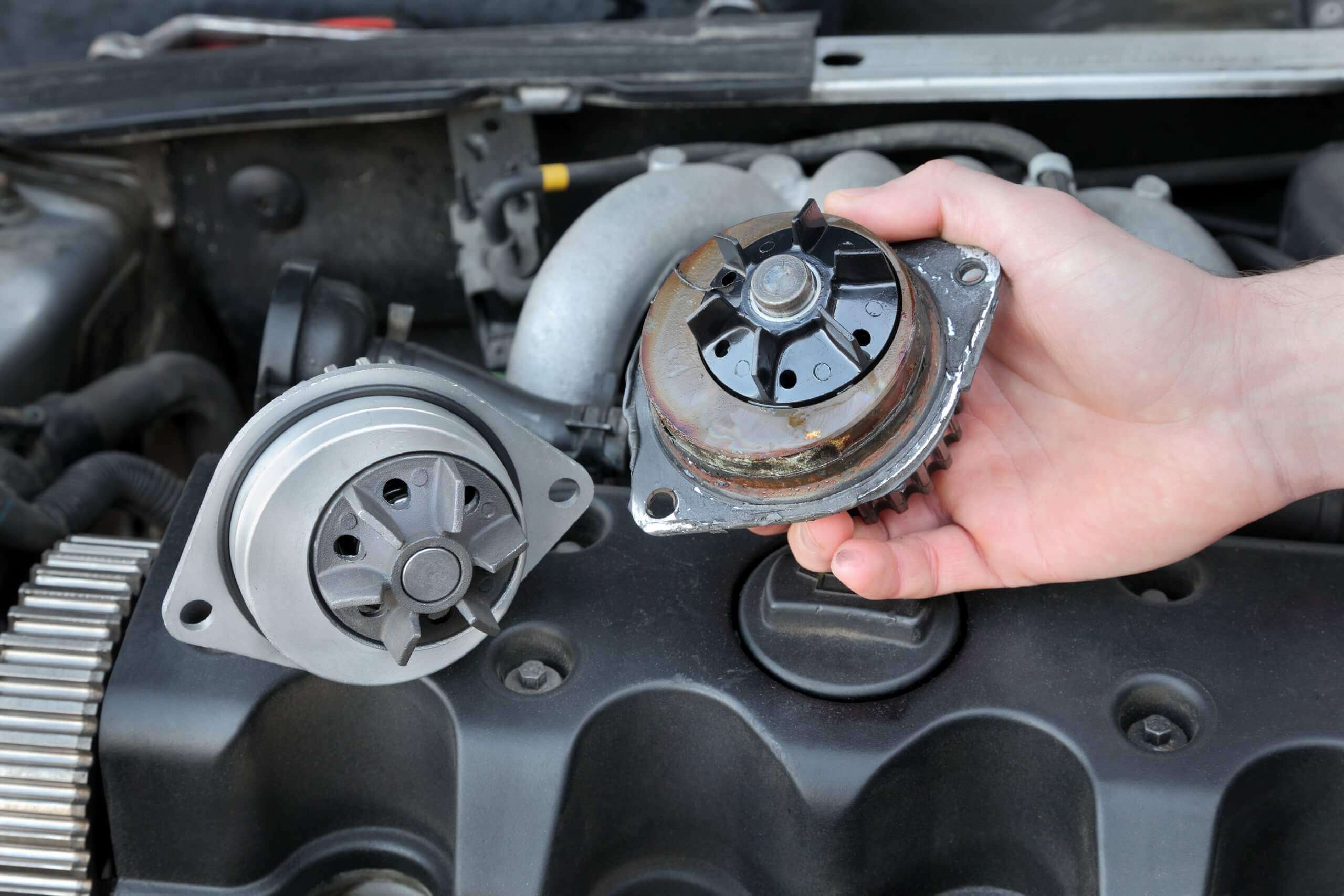

This is a critical distinction that affects your 300- and 500-hour service costs.
Timing Chain (Maintenance-Free):
Many newer Mercury FourStroke models (like the 3.4L V6) use a timing chain instead of a belt. Chains last the life of the engine and don't need replacement. You'll still check for slack or noise at major intervals, but there's no $400 belt job looming at 500 hours.
Timing Belt (Replacement Required):
Yamaha F150, F200, and some Mercury models use a timing belt that requires replacement at 500–1,000 hours or 5–10 years, depending on the engine. If the belt breaks, the valves hit the pistons (interference engine), and you're looking at a complete top-end rebuild. Replacement is a dealer job on most engines because you need to lock the crankshaft, set cam timing with alignment marks, and torque the belt tensioner to spec. For detailed timing belt replacement instructions, see guides like How to Replace the Thermostat on Your Yamaha F225, F250, or F300 4.2L V6 Outboard Motor.
Check Your Manual: Don't assume. Look up your specific engine model. Some Mercury V8s use a belt on one bank and a chain on the other due to accessory drive layout.
Maintenance Alert Systems: Mercury vs. Yamaha

Mercury SmartCraft:
Mercury's digital gauge systems (VesselView, SmartCraft) track engine hours and trigger service reminders at preset intervals (100, 300, 500 hours). When a reminder pops up, the gauge displays "SERVICE DUE" and logs a fault code. After you complete the service, you reset the reminder through the gauge menu (procedure varies by gauge model, but usually involves holding two buttons during power-up). If you ignore the alert, the system keeps nagging you, but it won't limit engine power.
Yamaha Command Link:
Yamaha's Command Link and Command Link Plus gauges also track hours and display service alerts. Yamaha's system is more granular—it can remind you separately for oil, lower unit, and fuel filter changes based on the schedule you program. Resetting is similar: hold the "MODE" and "SET" buttons during power-up and scroll to "SERVICE RESET." Like Mercury, it's informational, not a hard lockout.
Without Digital Gauges:
If you have an older tachometer without digital alerts, log your hours manually. Write down the hour meter reading (or use a phone app) at the end of each trip, and mark your calendar for annual services. A $10 logbook saves you thousands in missed maintenance.
Saltwater vs. Freshwater Maintenance Adjustments
Saltwater:
Salt accelerates corrosion on anodes (which protect the aluminum block and lower unit from galvanic corrosion), binds up thermostats, and clogs cooling passages with barnacle larvae and calcium deposits. If you run in saltwater:
- Inspect anodes every 50 hours, replace when they're 50% eroded.
- Flush with fresh water after every single trip (see final tip below).
- Replace the thermostat at every 300-hour service even if it looks okay—salt builds up on the spring and valve seat, causing it to stick open or closed. See our blog on Thermostat Maintenance: Keeping Your Outboard Running Cool for detailed tips.
- Check the water pump impeller at 100 hours instead of waiting for 300 hours; salt corrodes the housing and dries out the rubber faster.
Freshwater:
Freshwater is easier on components, but you still get sediment and algae. The main enemy is condensation in the fuel tank and crankcase during seasonal storage. Change oil before winter storage, and run the engine dry (or add stabilizer) if you're storing for more than a month. Anodes last longer in freshwater, but still inspect them annually—stray current from docks and marinas can eat them up.
OEM vs. Aftermarket Parts: The Real Story
OEM (Original Equipment Manufacturer):
OEM parts from Mercury or Yamaha are guaranteed to fit and meet factory spec. You're paying a premium for the brand sticker and the warranty backing. For critical components like water pump housings, thermostats, and gear sets, OEM is a safe bet if you're not experienced enough to evaluate aftermarket quality.
Cheap Aftermarket:
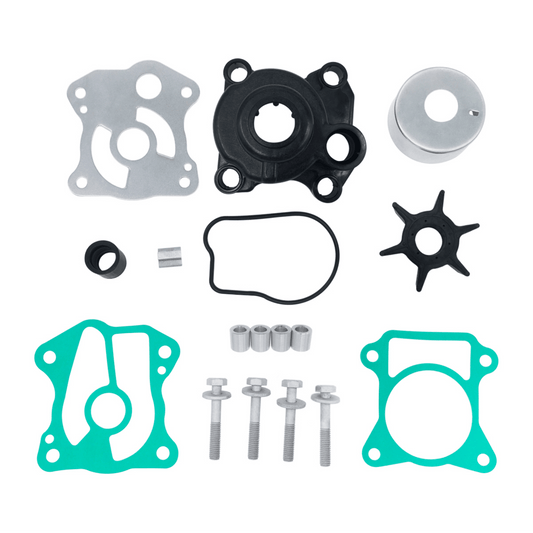
The $15 "universal" impeller kit from an unknown overseas seller is a coin flip. The rubber compound might be too hard (won't flex and pump water), the fit might be off by 0.5mm (causes cavitation and overheating), or the wear plate might be stamped steel instead of stainless (rusts in six months). Don't gamble on cooling system parts.
High-Quality Aftermarket (JLM Marine):
Some factories that manufacture parts for Mercury and Yamaha use excess production capacity to produce non-OEM parts under different branding. These parts use the same tooling, materials, and quality control as the OEM versions. JLM Marine focuses on this tier—you get factory-spec impellers, filters, and anodes at a lower price because you're not paying for the Mercury or Yamaha box. For a 100-hour service kit, you're saving $40–60 without compromising reliability. We back it with the same warranty confidence as OEM because the parts come from the same production lines. Explore all affordable OEM-quality parts at JLM Marine's full collection.
Troubleshooting: Warning Signs of Missed Maintenance
Overheating at Idle, Fine at Throttle:
This usually means a clogged water intake screen or a failing thermostat stuck partially open. The higher flow at throttle compensates, but idle flow isn't enough. Pull the thermostat and boil-test it (it should open around 140°F–160°F depending on spec). If it doesn't move, replace it.
Milky Gear Lube:
Water intrusion in the lower unit. You either have a bad propeller shaft seal or a cracked lower unit housing. If you skip the 100-hour gear lube change, you won't catch this until the gears seize. Always inspect the old lube when you drain it—clear or amber is good, milky or metallic gray is bad.
Hard Shifting or Grinding in Gear:
Missed gear lube changes let the clutch dog and gear teeth wear. If the lube level drops (slow leak from a seal), metal-on-metal contact scores the engagement surfaces. By the time you hear grinding, you're looking at a lower unit rebuild. Regular 100-hour lube changes catch the leak early as a slow drip, not a catastrophic failure.
Loss of Power at WOT (Wide-Open Throttle):
Clogged fuel filter or water separator is the most common cause. If you skip the 100-hour filter change, sediment from the tank and water from condensation plug the filter, starving the engine at high demand. Swap the filter, bleed the air, and the power comes back.
Rough Idle or Misfire:
Old spark plugs fouled with carbon or a widened gap cause misfires. Mercury and Yamaha both spec plug changes at 300 hours (or 100 hours for Yamaha's schedule in some models). If you wait until 500 hours, you'll burn more fuel and risk damaging the ignition coil from repeated misfires.
Final Verdict: Which Schedule is Easier?

There isn't a meaningful difference in total maintenance workload between Mercury and Yamaha when you compare engines of the same horsepower and use profile. Both schedules converge on 100-hour oil and gear lube changes, 300-hour spark plugs and cooling system service, and 500-hour deeper inspections. Yamaha's explicit 20-hour break-in service is smart and should be matched by Mercury owners even if the manual doesn't formalize it as aggressively. Mercury's timing chain on newer models eliminates the belt replacement job, which is a cost and complexity win. Yamaha's digital gauges and formal schedule documentation make it slightly easier for first-time owners to track intervals, but Mercury's SmartCraft system is just as capable once you learn the reset procedure.
Choose based on your dealer network and parts availability in your region, not because one brand's schedule is "easier." Both schedules work if you follow them. For all your maintenance parts needs, visit JLM Marine to find OEM-quality components direct from factory.
Pro Tip: The Post-Trip Flush
Flush your engine with fresh water after every single trip, especially saltwater. Connect the garden hose to the flush port (Mercury quick-connect or Yamaha threaded fitting), turn on the water until you see a steady stream from the cooling outlet, then start the engine and let it run at idle for 5 minutes. This washes salt, sand, and algae out of the cooling passages and prevents the thermostat and water pump from seizing up. It's 5 minutes that will add years to your engine's life.
Sources
- Outboard Maintenance Schedule - Boat Engine
- Yamaha Outboard Maintenance Schedule
- Mercury FourStroke Maintenance
- Yamaha Maintenance Matters
- Why Your Mercury Outboard Needs a 100-Hour Service - Inlet Marine
- Midseason Maintenance Tips - Yamaha Outboards
- Yamaha Outboard Service Schedule - Yamaha Online Parts
- Yamaha Four Stroke Maintenance Schedule - SIM Yamaha Blog
- Maintenance Made Easy - Mercury Marine
- Yamaha Outboard Engine Service Intervals Complete Maintenance Guide
Para propietarios de motores fuera de borda:
Para ayudarlo a mantener y reparar sus motores marinos, esperamos que los siguientes recursos puedan serle de utilidad:
-
Carburadores de JLM Marine
-
Kits de reconstrucción de carburadores de JLM Marine
- Kit de reparación de carburador
- Kit de reparación de carburador Yamaha
- Kit de reparación de carburador Mercury
- Kit de reparación de carburador Johnson
- Kit de reparación de carburador Evinrude
- Kit de reparación de carburador Suzuki
- Kit de reparación de carburador Honda
- Kit de reparación de carburador Volvo
- Kit de reparación de carburador Tohatsu
Acerca de JLM Marine
Fundada en 2002, JLM Marine se ha consolidado como un fabricante dedicado de piezas marinas de alta calidad, con sede en China. Nuestro compromiso con la excelencia en la fabricación nos ha ganado la confianza de las principales marcas marinas a nivel mundial.
Como proveedor directo, evitamos intermediarios, lo que nos permite ofrecer precios competitivos sin comprometer la calidad. Este enfoque no solo promueve la rentabilidad, sino que también garantiza que nuestros clientes reciban el mejor valor directamente del proveedor.
Estamos entusiasmados de ampliar nuestro alcance a través de canales minoristas, llevando nuestra experiencia y compromiso con la calidad directamente a los propietarios de embarcaciones y entusiastas de todo el mundo.
Kits de reparación de carburador en oferta
- $46.00
$55.00- $46.00
- Unit price
- per
- $18.13
$59.00- $18.13
- Unit price
- per
- $24.99
$29.00- $24.99
- Unit price
- per

- $19.50
$23.00- $19.50
- Unit price
- per
- $17.39
$22.50- $17.39
- Unit price
- per


- $21.99
$24.00- $21.99
- Unit price
- per

- $16.99
$20.00- $16.99
- Unit price
- per
- $21.19
$32.00- $21.19
- Unit price
- per
- $18.99
$15.00- $18.99
- Unit price
- per
- $15.99
$13.00- $15.99
- Unit price
- per

- $19.99
$23.00- $19.99
- Unit price
- per

- $21.99
$19.00- $21.99
- Unit price
- per

- $18.79
$15.00- $18.79
- Unit price
- per
- $25.50
$30.00- $25.50
- Unit price
- per

- $19.99
$23.00- $19.99
- Unit price
- per
- $20.72
$18.00- $20.72
- Unit price
- per

- $20.89
$17.00- $20.89
- Unit price
- per

- $17.68
$16.00- $17.68
- Unit price
- per
- $17.58
$23.00- $17.58
- Unit price
- per
- $30.50
- $30.50
- Unit price
- per