


Smooth Throttle Control: Why It Matters for Performance
- How Electronic Throttle Systems Actually Work
- Diagnosing Throttle and Idle Problems
- Throttle Response: Cable vs. Drive-By-Wire Systems
- Improving Throttle Response Without Expensive Mods
- Throttle Response Controllers: What They Actually Do
- Fuel Economy and Smooth Throttle Control
- Performance Driving and Racing Applications
- Cable-Driven vs. Electronic Idle Systems
- Real-World Case: Tracking Down an Intermittent Stall
- Tools and Data to Monitor Throttle Health
- OEM vs. Aftermarket Throttle Body and IAC Valve Parts
- Next Steps When DIY Fails
- Difficulty Scale and Tools Required
- Maintenance Checklist to Prevent Throttle and Idle Issues
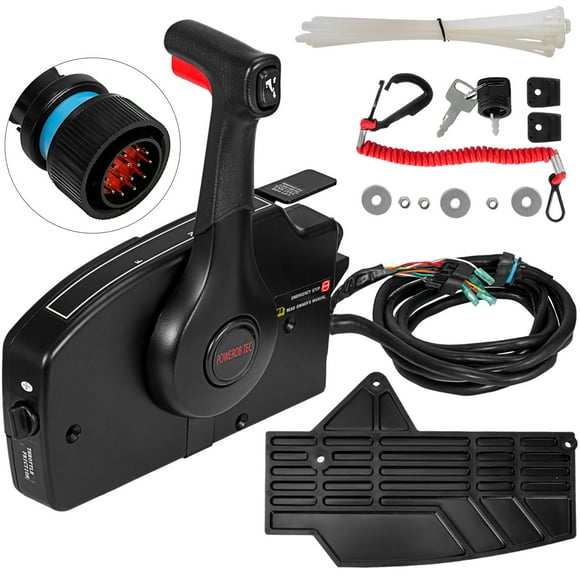
After two decades working on outboards, I've seen what happens when throttle control goes south. Jerky acceleration, stalling on idle, engines that refuse to hold steady RPM – all symptoms of a throttle system that's not doing its job. Smooth throttle control isn't just about comfort; it's about extracting performance, protecting your engine, and avoiding breakdowns.
How Electronic Throttle Systems Actually Work
Most modern outboards use drive-by-wire throttle systems. When you push the throttle lever, you're not pulling a cable anymore. You're sending an electronic signal to the Engine Control Unit (ECU). The ECU reads data from the Throttle Position Sensor (TPS), Mass Air Flow (MAF) sensor, Manifold Absolute Pressure (MAP) sensor, oxygen sensors, and coolant temperature sensor. Based on that input, it commands the throttle body's butterfly valve to open a specific amount and tells the Idle Air Control (IAC) valve how much air to bypass around the closed throttle plate.
This setup allows precise fuel-air mixture management under all conditions. The ECU constantly adjusts to maintain target idle – usually between 600 and 900 RPM for most four-stroke outboards – and delivers smooth power when you accelerate. But when one component in this chain fails or gets dirty, the whole system struggles.
Diagnosing Throttle and Idle Problems
Specific Symptoms to Watch For
If your engine pees fine at throttle but dribbles at idle, that's usually a thermostat or water pump issue, not throttle-related. But if the engine surges between 500 and 1,200 RPM randomly or stalls when you drop to neutral, you're looking at idle air control problems.
Throttle lag – that dead spot when you punch the throttle and nothing happens for a second – points to either a failing TPS or, in cable systems, a sticky throttle cable. Unpredictable acceleration where the engine sometimes responds and sometimes doesn't often means a dirty throttle body or a vacuum leak letting unmetered air into the intake.
Step-by-Step Diagnosis Process
1. Scan for codes first. Plug in an OBD-II scanner (yes, modern outboards have them). Codes P0505 (Idle Air Control System Malfunction), P0506 (Idle Control System RPM Lower Than Expected), or P0122 (TPS Circuit Low Input) point you directly to the problem area.
2. Check for vacuum leaks. With the engine running at idle, spray carb cleaner around intake manifold gaskets, throttle body base gasket, and any vacuum hose connections. Listen for a change in idle speed – a rise in RPM means you found your leak. You'll often hear a faint hissing sound near the leak point. We once traced a rough idle on a Yamaha F150 to a cracked intake manifold boot that was invisible until we pulled the cowling and really looked. For advice on related water cooling system issues that may present similar symptoms, see the Cooling System parts collection.
3. Inspect the throttle body. Remove the air intake hose. Look inside the throttle bore with a flashlight. Carbon buildup around the butterfly valve and bore is common, especially on engines that idle a lot or run short trips. If you see black crusty deposits, that's your problem.
4. Test the TPS voltage. Use a multimeter set to DC voltage. Backprobe the TPS signal wire (check your service manual for the pin). At closed throttle, you should see around 0.5 to 0.9 volts. Slowly open the throttle by hand; voltage should climb smoothly to 4.5 to 5.0 volts at wide open. If the voltage jumps, drops out, or doesn't reach the upper range, replace the TPS.
5. Check live sensor data. If you have access to a scan tool that reads live data, watch the MAF sensor reading at idle. For a typical 100-150 HP four-stroke, expect 3 to 6 grams per second at idle. Higher numbers suggest a vacuum leak (extra air). Also monitor Short Term Fuel Trim (STFT) and Long Term Fuel Trim (LTFT). If STFT is constantly above +10%, the ECU is adding fuel to compensate for extra air – another vacuum leak indicator.
Cleaning the Throttle Body (The Right Way)
Pull the throttle body or at minimum disconnect the intake tube so you have full access. Do not use generic carb cleaner on coated throttle bodies. Many modern throttle bores have a molybdenum or Teflon coating to reduce carbon sticking. Harsh solvents strip that coating, making carbon buildup worse next time. Use a throttle body-specific cleaner like CRC Throttle Body & Air-Intake Cleaner.
Spray the cleaner on a soft microfiber rag, then wipe the throttle bore and butterfly valve. Never force a drive-by-wire throttle plate open by hand. These have internal plastic gears for the motor; forcing them can strip the gears, and you'll be buying a new throttle body. Let the cleaner do the work. For stubborn carbon, soak the area, let it sit two minutes, then wipe. If you're interested in more detailed instructions on throttle body care and related carburetor maintenance, consider our Yamaha Outboard Carburetor Rebuild Tutorial.
The Idle Relearn Procedure
After cleaning the throttle body, the ECU's stored idle parameters are often wrong. The engine will hunt for idle or run too high. You need to perform an idle relearn.
Method 1 (Battery disconnect): Disconnect the negative battery cable for 10 minutes. Reconnect. Start the engine and let it idle in neutral for 10 minutes without touching the throttle. The ECU will relearn the correct idle air volume.
Method 2 (Drive cycle): Start the engine, let it warm to operating temperature (thermostat open). Drive at steady cruise – around 2,500 to 3,000 RPM – for 5 minutes. Then return to idle in neutral for 2 minutes. Repeat this cycle three times. The ECU adapts during this process.
For additional guidance on thermostat-related maintenance, see our guide on How to Replace the Thermostat on Your Yamaha F225, F250, or F300.
When Cleaning Doesn't Work
If cleaning the throttle body makes idle worse – higher or more erratic – you likely have a failing IAC valve that was compensating for the restricted airflow. Now that airflow is restored, the stuck-open IAC is letting in too much air. Replace the IAC valve.
If you've cleaned everything, checked for leaks, confirmed sensor voltages are correct, and the problem persists, check base engine mechanical issues: valve lash out of spec (causes rough idle), worn camshaft lobes, or low compression in one cylinder. At that point, pull the valve cover and check clearances or run a compression test.
Throttle Response: Cable vs. Drive-By-Wire Systems
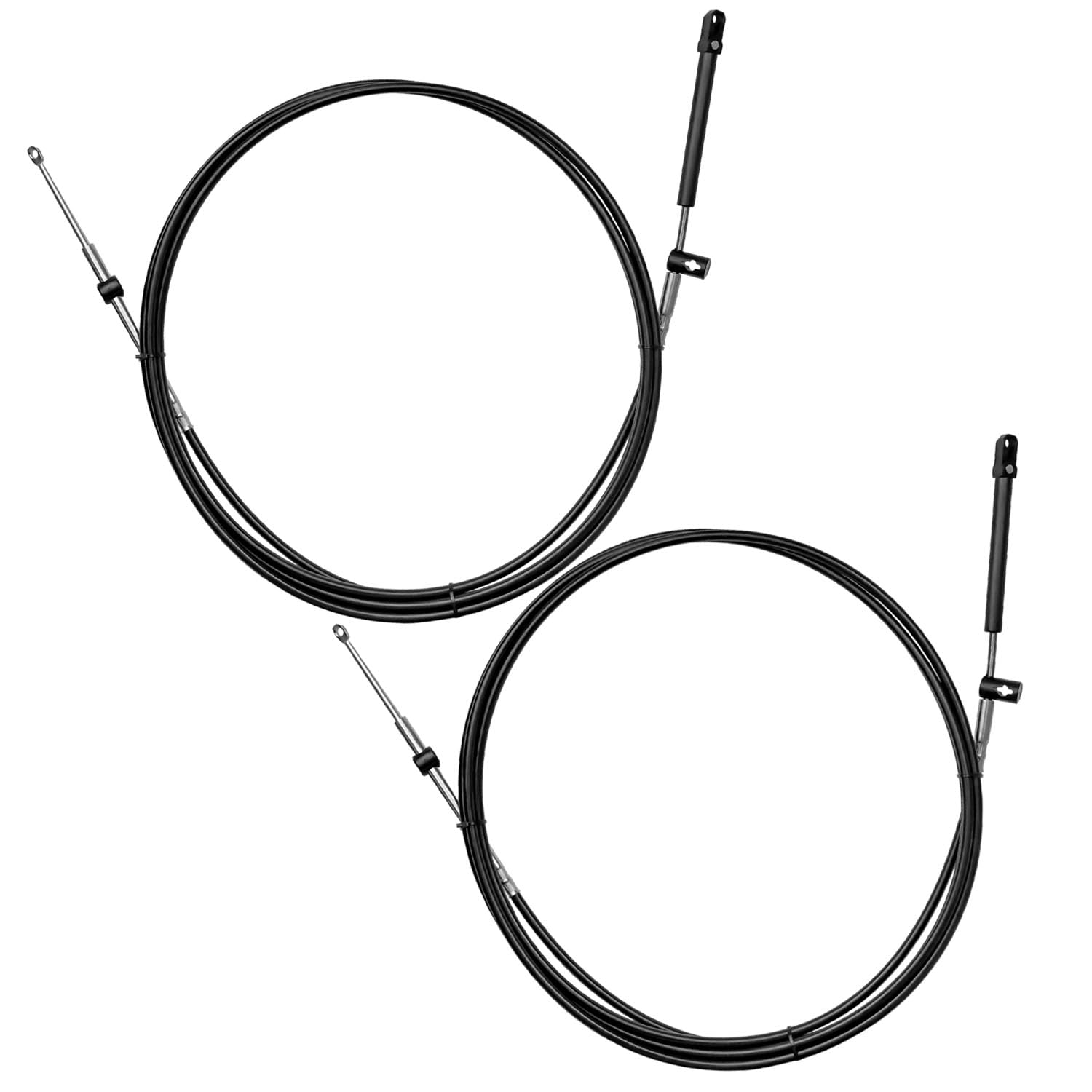
Older cable-actuated throttles give direct mechanical connection. You pull the lever, the cable opens the throttle plate. Response is instant but lacks the precision for emissions control.
Drive-by-wire systems interpret your input. The ECU reads the TPS signal, then calculates how much throttle to actually open based on engine load, RPM, temperature, and programmed torque maps. Manufacturers intentionally add a slight delay – usually 100 to 300 milliseconds – to smooth out power delivery, reduce wheel spin in cars, or in marine applications, prevent prop cavitation from abrupt throttle stabs.
This delay is why some engines feel "lazy." You're not imagining it. The ECU is mediating your request. For most recreational boating, that's fine. For performance use – racing, towing, or situations where you need instant power – that lag is a problem.
Improving Throttle Response Without Expensive Mods

Maintenance first. A dirty throttle body doesn't just affect idle. Carbon buildup restricts maximum airflow, blunting throttle response. Clean it.
Check your fuel system. Clogged fuel filters or a weak fuel pump that can't maintain pressure at high demand cause hesitation that feels like throttle lag. Replace fuel filters every 100 hours or annually. Test fuel pressure at the rail: most outboard four-strokes need 35 to 45 psi at idle, rising under load. If pressure sags when you open the throttle, replace the pump. OEM or quality aftermarket parts can be found in the Fuel Pump collection and Fuel Filter collection.
Inspect the air intake. A clogged air filter chokes the engine. We've seen 15% power loss from a filter that looked "okay" but was packed with salt residue. Replace foam filters every season. Paper filters every 200 hours or when visibly dirty.
Upgrade your throttle/shift cables (for cable systems). Old cables develop internal corrosion and friction. Teleflex or SeaStar replacement cables with Teflon liners cut friction, giving you crisper throttle feel. This isn't electronic, but if your cable has any stickiness, you're fighting the system before the throttle even opens.
Throttle Response Controllers: What They Actually Do
Throttle controllers modify the voltage signal between your throttle position sensor and the ECU. In a stock drive-by-wire system, moving the throttle lever 50% might send 2.5 volts to the ECU, which the ECU interprets as a request for moderate throttle opening – maybe 40% actual opening due to torque management programming.
A throttle controller intercepts that signal and amplifies it. In "sport" mode, that same 50% lever movement might send 3.5 volts, which the ECU interprets as a request for 70% throttle opening. You get more immediate response. The controller doesn't add horsepower or torque; it changes when you access the power you already have.
Pedal Commander is one of the more reliable units we've come across. It's a plug-and-play module – no permanent wiring changes – with adjustable modes from Eco (reduces sensitivity for fuel savings) to Sport+ (maximum aggressive response). Installation takes 15 minutes: unplug the TPS connector, plug the controller inline, done. For engines where the factory programming feels numb, this makes a noticeable difference without risking engine damage from a bad ECU flash.
That said, these controllers can mask underlying problems. If your throttle response is poor because you have a vacuum leak or dirty MAF sensor, a controller will make the numbers look different to the ECU but won't fix the root cause. Fix mechanical issues first.
Fuel Economy and Smooth Throttle Control
Testing by Caltrans on SmartPedal systems – devices that smooth accelerator inputs to prevent micro-accelerations from road bumps – showed a 6.29% average fuel economy gain across a fleet of six vehicles (source). The principle is simple: abrupt throttle changes cause the ECU to enrichen the fuel mixture temporarily (acceleration enrichment). Smooth, gradual inputs keep the engine closer to stoichiometric air-fuel ratio (14.7:1 for gasoline), burning fuel more completely.
In marine applications, this matters during long cruises. Constantly adjusting throttle in choppy water or while trimming burns extra fuel. A throttle controller in Eco mode can flatten those inputs, keeping the engine at steady load. We've heard reports of 10-15% better fuel economy in real-world use, though that depends heavily on driving style.
For more tips on improving fuel efficiency through maintenance, see our 10 Ways to Improve Outboard Fuel Efficiency guide.
Performance Driving and Racing Applications
Smooth throttle control is the difference between fast and slow lap times. OptimumG's vehicle dynamics research shows faster drivers spend a higher percentage of lap time at 90-100% throttle, while slower drivers spend excess time modulating between 11-89% (source). Abrupt throttle application causes wheel spin, delaying full-throttle recovery by 40 meters in corners due to lost grip.
The same applies to marine racing or high-performance boating. Stabbing the throttle causes the prop to cavitate – spinning in aerated water – which kills acceleration. Smooth, progressive throttle lets the prop bite and load the engine properly. You get to full power faster because you're not fighting traction loss (or in this case, hydrodynamic grip loss).
In a Formula SAE case, CSU Sacramento's Hornet Racing team redesigned their intake manifold for smoother airflow, eliminating throttle lag and nonlinear power delivery. The result: engine RPM increased from 10,500 to the original 14,000 redline – a 33% performance gain – purely from improving airflow smoothness and throttle response (source).
Cable-Driven vs. Electronic Idle Systems
Older mechanical idle systems used a physical idle speed screw that set a minimum throttle plate opening, plus a dashpot or fast-idle cam for cold starts. Adjustments were manual: turn the screw until idle sounded right. Simple, but it couldn't adapt to load (switching on bilge pumps, alternator load, etc.).
Modern electronic systems adjust instantly. When you switch on electrical loads or the engine is cold, the ECU commands the IAC valve to open more, compensating without any input from you. The target idle can shift based on coolant temperature: a cold engine might idle at 1,200 RPM to warm up faster, then drop to 700 RPM at operating temperature.
The tradeoff is complexity. Mechanical systems fail mechanically – a stuck screw or worn linkage. Electronic systems fail electronically – a bad sensor, corroded connector, or failed stepper motor in the IAC valve. Diagnosis requires different tools, but when working correctly, electronic idle control is far superior for drivability and emissions compliance per NHTSA FMVSS No. 124 standards (source).
Real-World Case: Tracking Down an Intermittent Stall


We had a Mercury Verado 250 that would stall returning to idle after high-speed runs. No codes. Idle was smooth on the hose in the shop, perfect on short test runs. Only failed after 20 minutes at cruise, then dropping to neutral.
Checked fuel pressure: good. TPS voltage: smooth sweep, no dropouts. MAF sensor: clean, readings normal. Finally watched live data during a longer test. LTFT was at +18% after sustained cruise. ECU was adding massive fuel to compensate for something. That much fuel trim means a huge air leak – but only at operating temperature.
Pulled the intake manifold. Found a hairline crack in the manifold plenum that only opened when the aluminum expanded at full heat. Unmetered air poured in, leaning the mixture. The ECU added fuel to compensate, but at idle, the mixture was so rich it fouled and stalled. Replaced the manifold, LTFT dropped to +2%, problem gone.
That's why live data matters. Codes only trigger when a sensor is completely dead or out of range. Fuel trim data shows the ECU's compensation strategy, pointing you to problems before they set a code.
For parts related to intake manifold and water pump issues, browse the Evinrude Water Pump collection and Water Pump Impeller collections.
Tools and Data to Monitor Throttle Health
Beyond a basic code scanner, get a tool that reads Parameter IDs (PIDs) in real time. For marine use, software like MEFI Marine (for Mercury) or Yamaha Diagnostic System connects to the engine and shows:
- MAF sensor g/s (grams per second of airflow): Typical idle range for a 100 HP four-stroke is 3-6 g/s. Higher suggests vacuum leak.
- TPS voltage: Should be 0.5-0.9V closed, 4.5-5.0V wide open.
- IAC valve position (steps or %): At warm idle, typically 10-30 steps (or 5-15% duty cycle depending on system). If it's above 50 steps/30%, the ECU is fighting a restriction or leak.
- STFT and LTFT (%): Should hover near 0%. STFT swings ±5% momentarily; LTFT corrects long-term. If LTFT is consistently above +8%, find the air leak. Below -8%, you're running rich – check for a failing O2 sensor or leaking injector.
Monitoring these before a symptom becomes a breakdown saves time and money. We caught a failing MAF sensor because STFT was erratic – swinging ±15% – even though idle seemed fine. Replaced the sensor, stability returned.
OEM vs. Aftermarket Throttle Body and IAC Valve Parts
OEM parts from Mercury, Yamaha, Suzuki, etc., are high quality but expensive. A factory IAC valve might run $250. You're paying for the brand.
Cheap no-name aftermarket parts are risky. We've seen IAC valves with stepper motors that bind after 50 hours, throttle bodies with gaskets that don't seal, and TPS units that fail within a season. The $40 savings turns into pulling the engine apart twice.
High-quality aftermarket manufacturers – companies that sometimes produce for OEM brands using excess capacity – offer a middle path. JLM Marine parts, for example, are factory-spec components without the dealer markup. Fitment is correct, materials meet OEM standards, and you're not burning cash unnecessarily on a logo. For a throttle body gasket set or IAC valve, these parts work just as reliably as OEM at a fraction of the price. Visit the JLM Marine main page for more parts and details.
When choosing aftermarket, verify the part number cross-reference matches your engine's serial number range, and check that the supplier has a return policy if fitment is off.
Next Steps When DIY Fails
If you've cleaned the throttle body, checked for vacuum leaks with carb cleaner, tested TPS voltage, performed an idle relearn, and the problem persists, it's time to escalate.
Ask a mechanic for a smoke test. They use a smoke machine to pressurize the intake system with visible smoke. Any leak – even a tiny crack invisible during a visual inspection – shows up immediately.
Request a fuel pressure test under load. Shops have fuel pressure gauges that stay connected during a run. Pressure should hold steady as RPM climbs. If it sags, the pump or regulator is failing.
Check for ECU software updates. Manufacturers release flash updates to fix known idle or throttle response issues. A dealer or qualified marine tech can check if your ECU is on the latest calibration and reflash it if needed. This sometimes fixes surging or poor throttle response without replacing hardware.
Difficulty Scale and Tools Required
Basic Diagnosis (Easy):
- Tools: OBD-II scanner, multimeter, flashlight, carb cleaner spray.
- Skills: Ability to read voltage, follow a service manual wiring diagram.
- Time: 1-2 hours.
Throttle Body Cleaning (Moderate):
- Tools: Screwdrivers or socket set (typically 8mm or 10mm), throttle body cleaner, microfiber rags.
- Skills: Removing air intake components, careful handling of sensors.
- Time: 30 minutes to 1 hour.
IAC Valve Replacement (Moderate):
- Tools: Socket set, new gasket or O-ring, torque wrench.
- Skills: Following torque specs (usually 6-8 ft-lbs for small fasteners).
- Time: 1 hour.
Advanced Diagnosis – Fuel Trim Analysis, Smoke Test (Advanced):
- Tools: Scan tool with live data, smoke machine.
- Skills: Interpretation of fuel trim data, understanding closed-loop fuel control.
- Time: 2-4 hours.
- Recommendation: Unless you have the tools and training, hand this to a professional.
Maintenance Checklist to Prevent Throttle and Idle Issues
Run through this list every 100 hours or annually, whichever comes first:
- Replace air filter. Clogged filters restrict airflow, leaning mixture and causing poor throttle response.
- Inspect throttle and shift cables (cable systems). Look for fraying, kinks, or corrosion. Lubricate with marine cable lube.
- Check fuel filter. Inline filters should be clear, not discolored. Replace if in doubt.
- Clean MAF sensor. Use MAF sensor cleaner spray (not throttle body cleaner – different solvents). Let it air dry.
- Inspect intake manifold gaskets and vacuum hoses. Look for cracks, hardening, or oil residue indicating a leak.
- Run a bottle of fuel system cleaner through a tank every 50 hours to prevent injector clogging and carbon buildup.
For long-term storage (winter layup), fog the engine and stabilize fuel to prevent varnish from clogging the throttle body and injectors.
Pro tip: After every ride, flush your engine with fresh water if you run in saltwater. Salt crystals can crust up inside the throttle body bore and IAC valve passages, causing sticking and erratic idle next season.
For additional parts related to throttle, fuel, and water pumps maintenance, visit the extensive JLM Marine Parts collection.