


Small Outboards Shootout: Mercury 9.9 vs Yamaha 9.9 vs Honda 9.9
- Speed and Fuel Burn Test Results
- Noise Levels: What You Actually Hear
- Weight: The Real Pain Point
- Handling and Controls: Daily Operation Details
- Throttle Response and Prop Selection
- Maintenance Access: Oil Changes and Service Points
- Durability and Warranty Coverage
- Pricing and Real-World Costs
- Common Failure Points We've Seen
- Prop Recommendations for Specific Boats
- Dealer Network and Parts Availability
- Which Engine for What Use
- Model-Specific Identification for Purchasing
- Pre-Purchase Checklist
- Sources

If you need a kicker for your sailboat or power for your dinghy, you're looking at the 9.9hp class. Mercury 9.9, Yamaha 9.9, and Honda 9.9 are the standard picks. All are four-stroke, twin-cylinder engines. The real question is which one holds up in actual use and which one won't drive you nuts when you're wrestling it onto a transom or trying to fix a problem at the dock.
Speed and Fuel Burn Test Results

Practical Sailor ran these engines on a Walker Bay Genesis 270 RIB to get hard numbers. Mercury 9.9 topped out at 17 knots. Yamaha 9.9 hit 15.5 knots. Honda 9.9 managed 15 knots. 1 2
That 1.5-2 knot difference means Mercury gets you back to the dock about 10% faster on a typical 3-mile harbor run. Not huge, but noticeable when the weather's turning.
For fuel burn at 10 knots cruise, Honda sipped 0.5-0.6 gph. Mercury used 0.6 gph. Yamaha burned 0.75 gph. 1 2 Over a 50-hour season, that's about a 7-gallon difference between Honda and Yamaha—call it $30-$40 saved with the Honda.
Wide-open throttle fuel consumption was roughly the same across all three: around 1.5 gph. The efficiency gap shows up at cruise, not when you're hammering it.
Noise Levels: What You Actually Hear

At idle, all three sit around 62-64 dB. That's library-quiet. Honda measured 62 dB, the lowest. 1
At 10 knots, the noise differences become clear. Mercury registered 84 dB. Honda came in at 87 dB. Yamaha hit 88 dB. 1 2
For reference, 84 dB is about the level of a garbage disposal. 88 dB is closer to a lawnmower. The 4 dB jump from Mercury to Yamaha is enough that you'll notice it when you're trying to talk to someone on the boat. If you're using this as a sailboat auxiliary and want to maintain some peace, Mercury wins. Honda is quieter at idle but noisier at cruise than Mercury, which is odd but consistent across tests.
Weight: The Real Pain Point

Mercury 9.9 weighs 84 pounds. Yamaha 9.9 is 91 pounds. Honda 9.9 pushes 90+ pounds. 1 2
Seven pounds doesn't sound like much until you're lifting one of these off a high transom after a long day. Mercury's lighter weight makes it easier to wrestle solo. The carry handles on all three are decent, but Mercury's placement is slightly better balanced—the weight distribution feels more centered when you're hauling it.
We've seen guys rig up hoist systems for the heavier engines, especially on larger sailboats with permanent transom brackets. If you're constantly on-and-off mounting (which is common with dinghy use), those extra pounds on the Honda and Yamaha add up fast.
All three require port-side storage when laid down to prevent oil migration into the cylinders. The cowling shape on the Mercury sits slightly more stable on its side than the Yamaha, which has a tendency to rock if you don't wedge it properly. Honda's cowling is bulkier but stable once positioned.
Handling and Controls: Daily Operation Details
Mercury puts the gear shifter directly in the throttle handle. Forward-neutral-reverse is a single motion. The stop button is right there on the handle too. This setup means you're not reaching around for separate levers when you're trying to dock in a crosswind. 1
Yamaha uses a separate shift lever on the side of the tiller. It's smooth, but it's one more thing to grab. The long tiller on the Yamaha is great for leverage when steering but makes the engine harder to store in tight cockpit lockers—it doesn't fold down as neatly as Mercury's throttle.
Honda's tilt lever is large and easy to engage, but the tension adjustment requires a wrench and some fiddling. We've had to re-adjust Honda tilt levers after a season because they loosen up with use. Mercury and Yamaha tilt systems hold their settings better in our experience.
Yamaha has the best freshwater flush port—it's large, clearly marked, and positioned on the side of the lower unit where it's easy to reach. Honda's flush port is on the side too, well-designed. Mercury's is functional but slightly more recessed, which can be annoying when you're trying to thread the hose fitting in low light.
Throttle Response and Prop Selection
Mercury has snappy throttle response off idle. Twist the grip and it jumps without hesitation. This matters when you're maneuvering in tight slips or around other boats.
Yamaha's throttle is smooth but not as immediate. There's a slight lag between input and engine response, which isn't a problem in open water but can be noticeable in close-quarters handling.
Honda's throttle is very linear—predictable but not aggressive. Some people prefer this for auxiliary use on sailboats where sudden power changes can be jarring.
Prop pitch makes a big difference in how these engines perform. For heavy displacement sailboats, you want a lower pitch prop (more blade angle) to get better low-end torque for maneuvering. For planing dinghies, a higher pitch prop gives better top-end speed. Mercury and Yamaha offer several prop options; Honda's prop selection is more limited. Stock props on all three are pitched for general use, which means they're a compromise.
We've swapped props on Mercury 9.9s for customers running heavier Catalina 27s and seen a noticeable improvement in slow-speed handling with a 7.5-inch pitch instead of the stock 9-inch.
Maintenance Access: Oil Changes and Service Points
Oil changes are due every 100 hours after the initial 10-hour break-in. 1
Honda has the easiest oil access. There's a side panel that pops off, giving you clear access to the oil fill cap and drain plug. The drain plug is positioned so oil drains cleanly into a pan without running down the lower unit—good engineering. Honda uses a cartridge-style oil filter that's simple to swap.
Mercury's oil drain is accessible but not as clean. You'll get some drips on the lower unit casing. The oil filter sits in a tighter spot, which means you need a strap wrench with a shorter handle to get good leverage.
Yamaha's oil access is similar to Mercury—functional but not as thoughtful as Honda. The filter is easier to reach than Mercury's, but the drain plug positioning means you're likely to make a mess unless you're careful with the drain pan.
All three have spark plugs accessible under the cowling. Mercury and Yamaha use standard NGK plugs that are cheap and easy to find. Honda uses a specific plug that costs a bit more but lasts longer in our experience.
Lower unit gear oil changes (typically every 100 hours or annually) are straightforward on all three. Mercury and Yamaha use the same basic lower unit design (they share components), so the drain and fill plugs are identical. Honda's lower unit has a slightly different plug arrangement, but nothing difficult.
For detailed replacement parts, including water pumps and impellers, you can explore high-quality options at the Marine Water Pump Impeller collection. Also, if your engine requires oil or fuel pumps, consider browsing the Fuel Pump collection for OEM-quality parts.
Durability and Warranty Coverage

Honda offers a 5-year warranty. Mercury and Yamaha both offer 3-year warranties. 1 2
Honda's longer warranty reflects their confidence in the engine's longevity. In 20 years of shop work, we've seen fewer catastrophic failures on Honda 9.9s compared to the others. The main issues we see on Hondas are wear items: impellers, thermostats, and occasionally starter issues after 10+ years in saltwater.
Mercury reliability is good, but we've replaced more powerhead gaskets and water pump housings on Mercs than Hondas. Part of that is volume—there are simply more Mercs in use—but the failure rate is slightly higher.
Yamaha's durability is solid. The main problem we see is corrosion in the lower unit if owners don't flush regularly. Yamaha's paint on the lower unit seems to chip more easily than Honda or Mercury, which accelerates galvanic corrosion in saltwater.
Honda's warranty is transferable with proof of registration, which is a plus for resale. Mercury and Yamaha warranties are also transferable but require the original owner to initiate the transfer with the dealer, which adds a step.
All three engines meet EPA three-star emissions standards, which means they're legal on most regulated lakes in the US, including restricted waters like Lake Tahoe. 1
Pricing and Real-World Costs

During the test period, Mercury 9.9 had an MSRP of $2,595 but street prices (Defender, West Marine) were closer to $2,086. 1
Honda 9.9 MSRP was $3,003, with street prices around $2,337. 1
Yamaha 9.9 MSRP was $2,830. 2 Street pricing typically falls 10-15% below MSRP, putting it around $2,400-$2,500.
Current pricing (2025) has shifted. Verify current MSRP and dealer pricing before buying, as these numbers reflect older test data.
Annual maintenance costs are similar across all three. Budget roughly $150-$200 per year for oil, gear lube, spark plugs, and a water pump impeller replacement every 2-3 years. Honda parts cost about 10-15% more than Mercury or Yamaha, but the longer intervals between repairs offset that.
To find replacement parts like spark plugs, fuel filters, or carburetors at competitive prices, browsing the Boat Accessories collection can provide good options to keep your engine running smoothly.
Resale value holds best on Honda. A 10-year-old Honda 9.9 in decent shape will sell for about 50-60% of its original price. Mercury and Yamaha hold about 40-50%. If you're planning to sell the engine after 5-10 years, Honda's higher upfront cost gets partly recovered.
Common Failure Points We've Seen
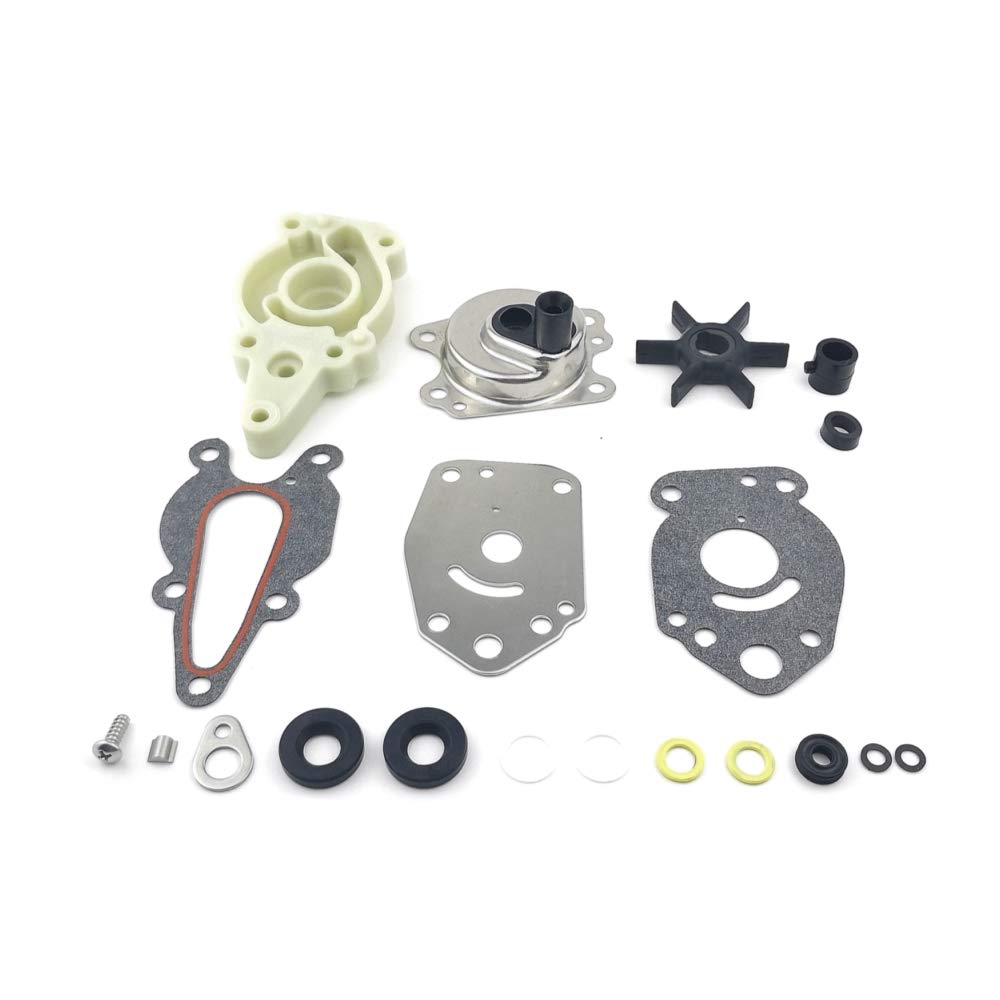
Mercury 9.9: Water pump impellers fail around 200-300 hours if you're in sandy or silty water. The impeller housing on older Mercs (pre-2015) had a rough casting that chewed up impellers faster. Newer models are better. Thermostat sticking is common after 5 years in saltwater if you don't flush religiously. For insights on replacing these, see our How to Replace a Mercury Outboard Water Pump Impeller guide.
Yamaha 9.9: Lower unit seal failure is the most common issue we fix. The shift shaft seal leaks, allowing water into the gear oil. This shows up as milky gear oil during a routine check. It's a $200-$300 fix if caught early. Yamaha's fuel pump diaphragm also seems to degrade faster in ethanol fuel—we've replaced more Yamaha fuel pumps than Honda or Mercury.
Honda 9.9: Starter motor corrosion is the main problem in saltwater. The starter is positioned lower on the powerhead than Mercury or Yamaha, which means it gets more spray exposure. After 8-10 years, the starter brushes wear out or the solenoid contacts corrode. A rebuild kit is about $80, but the labor to pull the starter is a pain. Honda's rectifier (charging system) also fails more often than the others, usually after 7-10 years.
Prop Recommendations for Specific Boats

For a heavy displacement sailboat (like a Catalina 30 or similar), use a lower-pitch prop to improve low-speed torque. Mercury and Yamaha both offer a 7.5-inch or 8-inch pitch prop that works better than the stock 9-inch for this application. Honda's prop selection is more limited, but you can find aftermarket props from Solas or Michigan Wheel that fit.
For a planing dinghy (RIB or similar), stick with the stock 9-inch pitch or go to a 9.5-inch if the engine can spin it without bogging. The goal is to keep the engine in the 5000-5500 rpm range at wide-open throttle. If it's revving higher, you need more pitch. If it's lugging below 4500 rpm, drop to a lower pitch.
For fishing applications where you're running a lot of trolling speed, consider a 4-blade prop instead of the stock 3-blade. Four-blade props give better bite at low speeds and smoother running, though you'll lose a bit of top-end speed. Mercury and Yamaha both have 4-blade options.
Dealer Network and Parts Availability
Mercury has the widest dealer network in the US. You can find Mercury parts at most marine dealers and many auto parts stores carry common wear items like impellers and thermostats. If you're cruising and need a part, Mercury is the easiest to source.
Yamaha has good dealer coverage but slightly less than Mercury. Parts availability is solid in coastal areas but can be sparse in inland regions.
Honda has the smallest dealer network of the three. If you're in a major boating area, no problem. If you're in a rural area or cruising remote regions (like the Caribbean), Honda parts can be tough to find. Plan ahead and carry spares if you're running a Honda in remote areas.
All three brands have online parts diagrams and part numbers available, which makes ordering easier. Aftermarket suppliers (like JLM Marine) carry quality non-OEM parts for all three brands. Non-OEM impellers and gasket kits are often sourced from the same factories that make OEM parts—they just don't carry the brand stamp. You're looking at 30-40% savings on wear items with no quality difference if you buy from a reputable aftermarket source. Browse our full selection of Inboard & Outboard Motor Parts for OEM-quality replacement components.
Which Engine for What Use
For sailboat auxiliary use: Honda 9.9 if you want the quietest operation, best fuel efficiency, and longest warranty. The extra weight isn't a big deal if it's permanently mounted on a bracket. The 5-year warranty and lower maintenance frequency make it the smart long-term pick for this role.
For frequent on-and-off dinghy use: Mercury 9.9 is the best choice. Lighter weight, faster top speed, and better ergonomics (shifter in handle, stop button on throttle) make it easier to use day-to-day. The noise difference between Mercury and Honda isn't huge, and the speed advantage (17 knots vs 15 knots) is noticeable in real use.
For budget-conscious buyers: Yamaha 9.9 sits in the middle. It's not the fastest, not the quietest, and not the lightest, but it's competent across the board. If you can find a good deal on a Yamaha (used or dealer discount), it's a solid engine that won't let you down. The long tiller is a bonus if you're running a wider dinghy.
For liveaboards needing charging: None of these engines have high alternator output in the base models. Mercury and Yamaha offer higher-output alternators as options on some models, but they're not standard. If you need to charge house batteries, check the specs on the specific model you're buying. Honda's alternator output is adequate for maintaining a starting battery but won't charge a large house bank.
For anglers: Mercury or Yamaha with a 4-blade prop for better trolling performance. The smoother idle on Mercury makes it easier to hold a consistent slow speed for trolling.
Model-Specific Identification for Purchasing
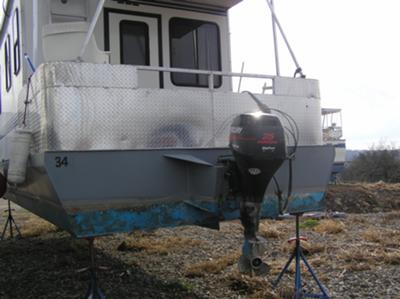
When buying, specify the exact model code to avoid confusion. Mercury 9.9 comes in several versions: standard, high-thrust (Big Foot), and Command Thrust. The standard model is what we've been discussing. High-thrust versions have a larger lower unit and prop for heavy displacement boats but weigh more.
Yamaha 9.9 also has standard and high-thrust (T9.9) versions. The F9.9 is the standard model. The T9.9 has a larger gear ratio for more low-end torque.
Honda offers the BF9.9 as the standard model. There's also a long-shaft version (BF9.9LH) for boats with deeper transoms.
Make sure you're comparing the same configuration. High-thrust models weigh 5-10 pounds more and cost $200-$400 extra, but they're worth it if you're pushing a heavy sailboat.
Pre-Purchase Checklist
Before you buy, verify:
- Shaft length: Standard is 15 inches (short shaft). Long shaft is 20 inches. Measure your transom height from the top to the bottom of the kicker bracket. You want the cavitation plate to sit just below the hull bottom.
- Tiller vs remote: All three engines are available in tiller-steer (what we've been discussing) or remote-steer (with cables for a console). Remote-steer models cost more and weigh slightly more.
- Electric start: Optional on all three. Adds about 10 pounds and $500-$700 to the price. Worth it if you're older or have any physical limitations, but manual pull-start is reliable on these engines.
- Prop pitch: Confirm what pitch prop is included. Stock is usually 9-inch, but verify.
- Warranty registration: Make sure the dealer registers the warranty at purchase. We've seen cases where dealers skip this step and the customer has problems later.
After every saltwater outing, connect a garden hose to the flush port, start the engine in a test tank or with muffs on, and let it run for 3-5 minutes. This flushes salt out of the cooling passages and prevents thermostat seizure and corrosion buildup that'll cost you a $400 repair down the line. For tips on flushing and maintaining your cooling system, see the Cooling System collection for replacement parts and kits.
Sources
- Practical Sailor: 9.9-Horsepower Outboard Engines Put to the Test
- Practical Sailor: March Outboards PDF
For a wide selection of high-quality marine parts sourced direct from factory, including fuel pumps, carburetors, water pump impellers, and more, visit JLM Marine to keep your small outboard running at peak performance.