



Hydraulic vs Manual Tilt: Troubleshooting Trim System Issues
- Step-by-Step Electrical Diagnostics: Battery, Solenoid, and Motor
- Common Electrical Failure Causes and Solutions
- Hydraulic System Troubleshooting
- Manual Release Valve for Emergency Lowering
- Cost and Reliability Comparison: Hydraulic vs. Manual Systems
- Common Hydraulic System Failure Points
- Hydraulic Fluid Checks and Leak Detection
- Manual Tilt System Maintenance
- Preventing Tilt and Trim Failures
- Expert Advice: Diagnosis Tips from Marine Surveyor Frank Lanier
- FAQ: Your Tilt and Trim Questions Answered

Step-by-Step Electrical Diagnostics: Battery, Solenoid, and Motor
When your trim quits, start with the battery. Charge level matters—if your battery's sitting below 12 volts, the trim motor won't have enough juice to push the pump. Check your battery switch position. Clean those terminals. We've pulled boats into the shop where the only problem was white crusty buildup on the battery posts choking out the electrical flow.
Next, hit the trim switch and listen. You should hear a distinct click from the solenoid. That click is the solenoid trying to close its internal contacts to send power to the trim motor.
No click? Check your trim switch first, then trace back to the fuse or circuit breaker. Pull the fuse and inspect it. A blown fuse is the easiest fix you'll get.
Click but no motor sound? The solenoid is working, but the trim motor isn't spinning. This usually means the motor is dead or the wiring between the solenoid and motor is shot.
Corrosion kills more trim systems than anything else. Saltwater and vibration work connectors loose. Pull every connector on the trim circuit—switch, solenoid, motor—and check for green or white fuzz. If you see it, scrape it off with a small wire brush, spray with electrical contact cleaner, and coat with dielectric grease before reconnecting. Skipping this step will have you back at square one in six months.
Testing the Tilt and Trim Motor
If you're getting the solenoid click but the motor won't spin, test the motor directly. This cuts out all the boat's wiring and tells you whether the motor itself is good.
Find the trim motor—usually bolted to the side of the hydraulic pump assembly. You'll see wires coming off it. The two you care about are blue (raises the engine) and green (lowers it). We remember it as blue sky up, green grass down.
Safety first: Make sure the boat is stable and supported. Disconnect the motor wires from the boat harness so you're only testing the motor itself.
Grab jumper wires—use at least 12-gauge wire or thicker, because these motors pull serious amperage. Thin jumper wires will heat up, melt the insulation, and leave you with a bigger mess. Connect 12 volts from your battery: positive to the blue wire, negative to the motor's ground (usually black). The motor should spin. Now swap positive to the green wire. It should spin the opposite direction.
Motor spins both ways when directly powered? The motor is fine. Your problem is the solenoid or the wiring between the solenoid and motor.
Motor doesn't spin, even with direct 12V power? The motor is toast. Replace it. We've seen guys spend hours chasing wiring gremlins when the motor was seized the whole time.
One pro tip: if the motor spins but draws way more current than normal (you'll see your jumper wires get hot fast, or the battery voltage sags hard), the motor's internal brushes or bearings are failing. It might work now, but it won't last the season.
Common Electrical Failure Causes and Solutions
Solenoids take a beating. They're electromagnetic switches mounted in the engine compartment where they get soaked with spray, baked by the sun, and shaken constantly. The internal contacts pit and corrode. When they fail, you get that click, but no power flows through to the motor.
Sometimes tapping a failing solenoid with a screwdriver handle will jar it back to life long enough to get the boat trimmed and back to the dock. That's a temporary fix. Replace the solenoid. Don't cheap out on a $9 no-name solenoid from a random online seller—it'll fail in three months. We recommend quality aftermarket units that meet the OEM spec without the dealership markup.
Relays control the solenoid on some setups. They're usually located in a fuse panel or relay box, not bolted to the pump like the solenoid. If you have a relay, check it the same way—listen for the click, swap in a known-good relay to test.
Wiring connectors work themselves loose from vibration. Pull on them gently. If they slide apart with zero resistance, they weren't making good contact. Crimp-style connectors corrode internally even when they look fine outside. If you've got a chronic problem, cut the old connectors off and solder the wires with heat-shrink tubing. It's more work, but it's permanent.
Clean connections monthly if you're in saltwater. Spray them down with fresh water after every trip, let them dry, then hit them with dielectric grease or a corrosion inhibitor spray. This simple step prevents 80% of the electrical headaches we see. For more about marine electrical maintenance, check our expert tips on avoiding common DIY maintenance mistakes.
Hydraulic System Troubleshooting
If the motor spins but the engine won't move, you're into hydraulic territory.
Start with the hydraulic fluid reservoir. It's usually a tank or a chamber molded into the trim pump assembly, typically on the side facing the transom. With the engine trimmed all the way down, pull the fill cap and check the level. It should be within the marked range or near the top of the sight glass.
Low fluid? You have a leak. Hydraulic fluid doesn't evaporate or burn off. If it's low, it's leaking out somewhere.
Top it off with the correct fluid. Most systems use a non-foaming marine hydraulic fluid or ATF (Automatic Transmission Fluid). Check your engine manual—some manufacturers spec ATF Type F, others want Dextron, and some call for a specific marine hydraulic oil. Do not mix fluid types. If you're not sure what's in there, drain it and start fresh. Wrong fluid can swell or shrink the seals, making leaks worse.
After filling, bleed the system. Cycle the trim up and down 5-8 times slowly. This works trapped air out of the lines and seals. You'll see the fluid level drop as air escapes—keep topping it off until the level stays steady and the trim moves smoothly without hesitation or a spongy feel.
Now hunt for the leak. Wipe down the trim rams (the hydraulic cylinders) and the area around the pump. Cycle the trim again and watch for fresh fluid. Most leaks show up at the ram seals—you'll see wetness or drips on the exposed piston rod. Hose connections and the pump body can also leak, but that's less common.
Milky or cloudy fluid? That's water contamination. Water gets in through a bad seal on the motor shaft or someone topped off the reservoir with straight water (yes, we've seen it). Water causes internal rust and corrosion that eats the pump. If you see milky fluid, drain the system completely, flush it with clean hydraulic fluid, refill, and bleed it. Then find how the water got in and fix that seal.
If the fluid is full, clean, and you've bled the system, but the engine still won't move or slips down slowly, the problem is inside the pump or valve body. That's worn internal components, failed check valves, or a damaged pump piston. These repairs need the pump disassembled. Most DIYers send the pump out or replace it.
Understanding how to maintain your hydraulic system can prevent breakdowns; for detailed maintenance parts and supplies, visit Boat Accessories at JLM Marine.
Manual Release Valve for Emergency Lowering
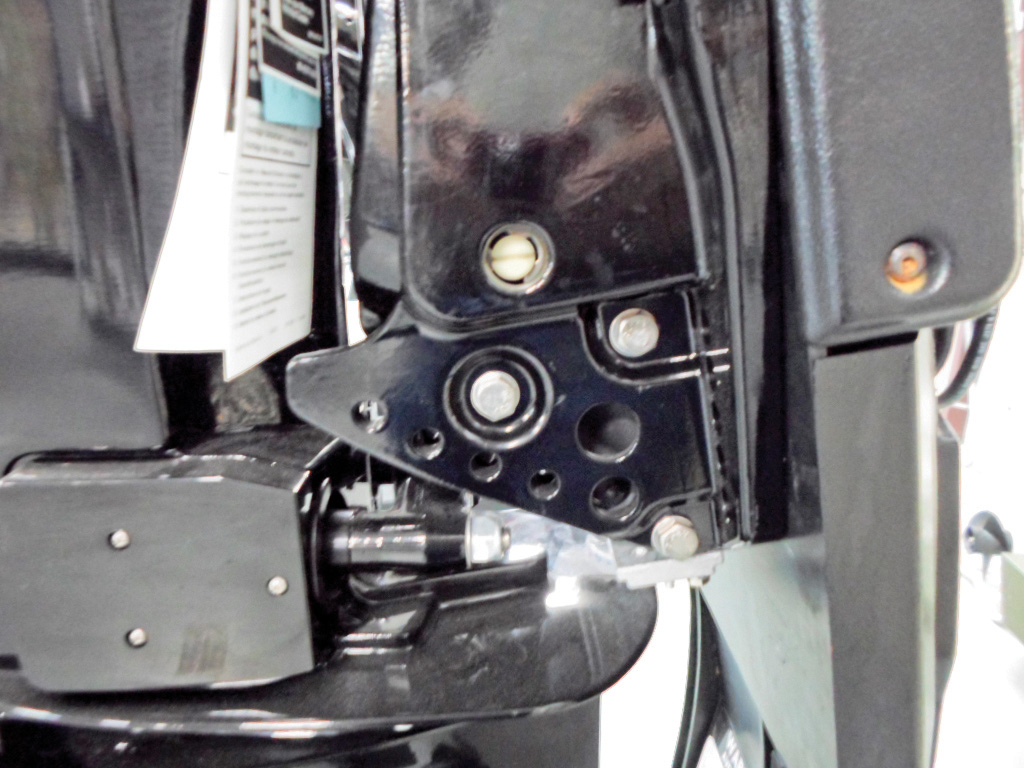
Every hydraulic tilt system has a manual release valve. It's your get-home card if the hydraulics fail completely and you need to lower the engine.
The valve is usually a slotted screw or a square-head fitting on the side of the trim bracket or pump body. Turn it counterclockwise (lefty-loosey) slowly—about a quarter turn is enough. This opens an internal bypass that lets the hydraulic fluid flow freely, and the engine will lower under its own weight. Don't crank it open all the way. You just need enough to relieve the pressure.
Once the engine is down, close the valve (righty-tighty) before you try to raise it again. If you leave it open, the trim won't build pressure.
Keep a flathead screwdriver or a square socket in your tool kit that fits this valve. Knowing where it is and how to use it can save you from being stuck on the water with a tilted engine that won't come down.
Cost and Reliability Comparison: Hydraulic vs. Manual Systems
Hydraulic systems run over 80% of outboards above 40 horsepower in the US. They give you the power to lift heavy engines and the precision to dial in your boat's attitude for speed, fuel economy, or handling. But that comes at a cost—literally and mechanically.
Hydraulic leaks account for 40-50% of all hydraulic trim complaints. Ram seals are the worst offenders. They wear out from use, crack from UV exposure, or get nicked by debris. Once they leak, the engine slowly drifts down, or it won't hold trim at all. Seal kits are available—JLM Marine stocks them for most common engines—and you can replace them yourself if you're comfortable tearing down the ram assembly. Expect to spend $50-$100 on a seal kit and a few hours of your time. Compare that to a full ram replacement at $300-$600 or a professional rebuild at $500-$1500.
Corrosion hits 20-30% of hydraulic systems annually if you're in saltwater and skip the monthly greasing. The exposed ram rods rust, the pump housing corrodes, and electrical connections fall apart. Regular maintenance cuts that number down hard.
Manual tilt systems dominate the under-30-horsepower market—about 90% of smaller outboards still use them. They're dead simple: a lever, a pin, or a gas-assist strut. No hydraulic fluid to leak, no pump to fail, no solenoid to corrode. Manual tilt issues are rare, under 10% of the service calls we get, and they're almost always bent linkage from hitting bottom or a gas strut that's lost pressure after five or six years.
For reliability, manual wins. For convenience and performance, hydraulic wins. For cost, manual is the clear champ. A gas strut replacement runs $50-$200. A bent lever? Sometimes you can just straighten it. Compare that to hydraulic repairs and it's not even close.
We hear it from commercial fishermen and duck hunters all the time: "I'd rather have a manual I can count on than a hydraulic that quits when I need it." For weekend recreation boaters with bigger engines, the hydraulic convenience is worth the trade-off.
Explore our catalog of Inboard & Outboard Motor Parts to find quality replacement parts for both hydraulic and manual tilt systems.
Common Hydraulic System Failure Points
Ram seals are the number one failure. The piston rod slides in and out through a seal every time you trim. Saltwater spray, UV light, and heat degrade the rubber. Once it cracks or wears, fluid leaks out. You'll see it dripping down the rod or pooling at the base of the ram. If the engine slowly drops when trimmed up, bad ram seals are the usual cause.
Replacing ram seals is a DIY job if you've got basic mechanical skills. Pull the ram off the engine (usually two bolts at each end), disassemble the cylinder, swap the seals, reassemble, reinstall, and bleed the system. Quality seal kits—like those from JLM Marine—run $50-$80 and match the factory spec without the OEM markup. Cheap kits use hard rubber that doesn't seal right or tears during installation. Don't waste your time.
Hoses and fittings fail less often, but when they do, it's messy. Hydraulic hoses can crack from age or chafe where they rub against the bracket. A pinhole in a high-pressure hose sprays fluid everywhere. Check all the hoses visually. Look for cracks, wet spots, or worn areas where the hose contacts metal. Replace any suspect hose before it blows. Fittings can leak at the crimp or the threads. Tighten them first; if they still weep, replace the hose.
Hydraulic pump and valve body failures show up as the motor running but the engine not moving, or the trim working intermittently. Internal wear, failed check valves, or a scored pump piston are the usual culprits. These aren't easy DIY fixes. The pump has to come apart, the valve body needs cleaning or replacement, and worn components need swapping. Most shops charge $300-$800 in labor alone for this work. Buying a remanufactured pump assembly is often cheaper than rebuilding your old one.
Water contamination is the silent killer. Water gets into the hydraulic system through a bad motor shaft seal or a missing O-ring on the reservoir cap. Once inside, it rusts everything. The fluid turns milky or cloudy—that's your visual clue. If you catch it early, drain the system, flush it with clean fluid two or three times, replace the seals that let the water in, refill, and bleed. If it's been running with water for months, expect internal corrosion damage that means a pump replacement.
Hydraulic Fluid Checks and Leak Detection
Check your fluid every couple of months, or at least before any multi-day trip. With the engine trimmed all the way down, pull the reservoir cap. The fluid should be near the top of the fill neck or within the sight glass range. If it's low, you're leaking.
To find the leak, wipe everything down first—the rams, the pump, the hoses, the fittings. Get it clean and dry. Then cycle the trim up and down a few times and watch for fresh fluid. Most leaks are obvious once you've cleaned off the old oil and grime.
Fluid around the ram rod? Bad ram seal. Wetness at a hose connection? Tighten it; if it still leaks, replace the hose or fitting. Fluid seeping from the pump body or motor base? Internal seal failure—time for a rebuild or replacement.
Don't just top off the fluid and ignore the leak. A small leak becomes a big leak. Low fluid starves the pump, causes air ingestion, and eventually kills the whole system. Fix it now while it's cheap.
When you add fluid, use the correct type. If your manual calls for ATF Dextron III, don't dump in Type F or random hydraulic oil. Wrong fluid swells the seals or makes them shrink. Either way, you'll create leaks where none existed. If you don't know what's in there, drain it and refill with the correct spec.
The reservoir cap usually has an O-ring. If it's cracked or missing, water can get in during rain or washdowns. Replace it. A $2 O-ring prevents a $500 pump replacement.
Manual Tilt System Maintenance
Manual systems need lubrication. Grease the pivot points where the engine tilts on the transom bracket and where the tilt mechanism attaches. Use marine-grade waterproof grease. Hit these points every month in saltwater, every other month in freshwater. Dry pivots wear fast, and replacing worn bushings or shafts is a pain.
If your manual tilt has locking pins that hold the engine at set angles, keep them clean and greased. Corrosion can seize them. If a pin sticks, pull it out, wire-brush it, coat it with grease, and work it in and out a few times. If it's badly corroded, replace it—pins are cheap.
Gas-assist struts help lift the engine and hold it up. They're pressurized cylinders, like the ones on a car hatchback. After five to seven years, they lose pressure. You'll notice the engine feels heavier or won't stay up without the support rod. Replacing a strut is easy: unbolt the old one, bolt on the new one. Struts run $50-$150 depending on size. We've replaced hundreds of them—it's a 15-minute job.
Always use the tilt support bracket. When you tilt the engine up for trailering or storage, engage the support rod or bracket that locks the engine in the raised position. This takes the load off the tilt mechanism, prevents parts from bending, and keeps the rams or struts from sitting under tension for days. It also prevents corrosion buildup where metal parts contact each other under pressure.
Manual systems don't need fluid checks or bleeding, but they do need physical inspection. Look for bent linkage, cracked mounts, or loose bolts. Tighten anything that's worked loose. Bent parts usually mean you hit something—a rock, a sandbar, the trailer. If a lever is slightly bent but still functional, you can often straighten it in a vise. If it's badly tweaked, replace it before it fails completely.
For available marine-grade greases and tools, browse our Boat Accessories collection.
Preventing Tilt and Trim Failures
For hydraulic systems:
Check the fluid level every two months. Top it off if needed and bleed the system. This takes five minutes and prevents bigger problems.
Inspect for leaks visually. Wipe down the rams and hoses, cycle the trim, look for fresh fluid. Catching a small leak early means a $60 seal kit instead of a $1200 pump replacement.
Clean all electrical connections—trim switch, solenoid, motor wiring—every month if you're in saltwater. Spray them with fresh water after every trip, let them dry, then coat with dielectric grease or a corrosion spray. This one step eliminates most electrical failures.
Flush the system annually if you boat in saltwater. Drain the old fluid, refill with fresh, cycle the trim 10-15 times to circulate the new fluid, then top off. This removes contaminants and water before they cause damage.
Grease the exposed ram rods monthly. Wipe them clean, apply a thin coat of marine grease. This prevents rust and keeps the seals from drying out and cracking.
For manual systems:
Grease all pivot points and locking pins monthly. Use waterproof marine grease. Dry metal wears out and seizes.
Check gas struts annually. If they feel weak or the engine won't stay up, replace them. Don't wait for them to fail completely.
Always engage the tilt support bracket when the engine is raised. This protects the mechanism and prevents corrosion.
For both systems:
Inspect the sacrificial anodes near the tilt unit every few months. These zinc or aluminum pieces prevent electrolysis from eating your trim rams and brackets. If the anode is more than 50% eroded, replace it. A $10 anode saves a $400 ram.
Rinse your engine with fresh water after every saltwater trip. Flush the external components—tilt rams, brackets, wiring connectors—not just the internal cooling system. Salt buildup accelerates corrosion faster than anything else.
Keep the boat out of the water when not in use if possible. Wet slips expose the lower unit and trim system to constant saltwater, dramatically increasing corrosion. Trailer boaters have fewer trim issues because the components dry out between trips.
For comprehensive tips on marine engine care, see our guide on avoiding common DIY maintenance mistakes.
Expert Advice: Diagnosis Tips from Marine Surveyor Frank Lanier
According to Frank Lanier, a marine surveyor and contributor to Southern Boating, isolating the problem saves time. "The first step is determining whether the issue lies with the electric tilt and trim motor or the hydraulic pump/assembly." Start with the electrical side—it's faster and cheaper to diagnose.
Lanier recommends the jumper test using the mnemonic "blue sky, green grass" to remember which wire does what. The blue wire raises the engine (toward the sky), and the green wire lowers it (toward the grass). This matches the ABYC (American Boat and Yacht Council) standard wiring color codes used across the marine industry. Blue is consistently "up," and green is consistently "down" on most trim systems built after the mid-1980s. Knowing this lets you jumper-test any trim motor without a wiring diagram.
When the motor runs but the engine won't move, Lanier advises: "If the tilt and trim motor works fine but the engine won't raise or lower, slips down when in the raised position or won't stay trimmed, chances are that the problem is with the hydraulic pump or valve body assembly. Start by checking the hydraulic fluid reservoir level."
He emphasizes a critical diagnostic point: "Hydraulic fluid doesn't evaporate, so a low fluid level indicates a leak in the system hoses, fittings, or seals." Don't assume the fluid just "disappeared." Find the leak and fix it, or you'll be topping it off forever.
For sound-based diagnosis, listen to what the motor does. A motor spinning freely with no resistance usually means the coupler between the motor and pump has sheared—the motor spins, but it's not turning the pump. A motor that strains and pulls heavy current (you'll hear it laboring and see the voltage sag) means the pump is seized or the internal components are binding. That's often from corrosion or lack of lubrication.
Learn more about marine electrical systems and troubleshooting by visiting the main JLM Marine site.
FAQ: Your Tilt and Trim Questions Answered
What causes tilt and trim systems to fail?
Electrical problems—corroded wiring, bad solenoids, or a dead trim motor—cause about 70-80% of hydraulic trim failures. On the hydraulic side, leaking ram seals, hose failures, and water contamination are the main culprits. Manual systems fail far less often, usually from bent linkage or worn gas struts. Saltwater corrosion accelerates every failure mode.
How can I tell if the trim motor or hydraulic pump is bad?
Push the trim switch. If you hear a solenoid click but no motor sound, the motor is probably dead or the wiring to it is broken. To confirm, jumper 12 volts directly to the motor. If it spins, the motor is fine and the problem is upstream (solenoid or wiring). If the motor spins but the engine doesn't move, the issue is the hydraulic pump, valve body, or a major leak.
Can I fix a hydraulic fluid leak myself?
Minor leaks from ram seals are DIY jobs. Pull the ram, disassemble it, replace the seals with a quality kit, reassemble, reinstall, and bleed the system. You'll need basic hand tools and a clean workspace. Hose leaks require replacing the hose—usually straightforward. Leaks from the pump body or valve assembly often need professional work or a replacement pump.
Why does my trim motor click but not operate?
The click means the solenoid is getting power and trying to close its contacts to send power to the motor. If the motor doesn't run after the click, either the motor is seized or burnt out, or the wiring between the solenoid and motor is broken or badly corroded. Test the motor directly with jumper wires to isolate the problem.
How often should I check my tilt and trim system?
Check hydraulic fluid and inspect for leaks every two months, or before any long trip. Clean electrical connections monthly if you're in saltwater. Grease pivot points and ram rods monthly in saltwater, every other month in freshwater. A quick visual inspection before every outing catches most problems before they strand you.
What do I do if I'm stranded with a failed hydraulic trim?
Find the manual release valve—usually a slotted screw on the side of the trim bracket or pump. Turn it counterclockwise about a quarter turn to let the engine lower under its own weight. Once it's down, close the valve before trying to raise it again. You can also jumper power directly to the trim motor from the battery if the solenoid is bad, bypassing the boat's wiring to get enough movement to limp home.
When should I give up and call a professional?
If you've tested the motor and it's fine, checked the wiring and it's clean, bled the system and the fluid level is good, but the trim still doesn't work or slips badly, the problem is likely internal to the pump or valve body. Disassembling and rebuilding a hydraulic pump assembly requires special tools, a clean environment, and experience. At that point, send it to a shop or replace the unit.
Pro tip: Grease the tilt rams monthly—just wipe them clean, apply a thin coat of waterproof marine grease to the exposed piston rod, and cycle the trim a few times to work it in. This simple step prevents rust, keeps the seals from drying out, and extends the life of your hydraulic system by years.
For all your boating parts and supplies, remember to shop direct from the factory at JLM Marine for premium quality and free worldwide shipping.
Hi—I’m Jim Walker
I grew up in a Florida boatyard, earning pocket money (and a few scars) by rebuilding outboard carbs before I could drive. That hands-on habit carried me through a Ph.D. in mechanical engineering, where I studied how salt water quietly murders metal.
I spent ten years designing cooling systems for high-horsepower outboards, then joined JLM Marine as CTO. We bench-test every new part in the lab, but I still bolt early prototypes onto my own 23-foot skiff for a weekend shake-down— nothing beats real wake and spray for finding weak spots.
Here on the blog I share the fixes and shortcuts I’ve learned so your engine—and your day on the water—run smooth.

Para propietarios de embarcaciones:
Para ayudarlo a mantener y reparar sus motores marinos, esperamos que los siguientes recursos puedan serle de utilidad:
- Guía de números de serie de Mercury
- Manuales del propietario de Mercury
- Guía de referencia oficial de números de modelo en formato PDF de BRP
- Guía de números de serie de Johnson
-
Accesorios para barcos de JLM Marine
Acerca de JLM Marine
Fundada en 2002, JLM Marine se ha consolidado como un fabricante dedicado de piezas marinas de alta calidad, con sede en China. Nuestro compromiso con la excelencia en la fabricación nos ha ganado la confianza de las principales marcas marinas a nivel mundial.
Como proveedor directo, evitamos intermediarios, lo que nos permite ofrecer precios competitivos sin comprometer la calidad. Este enfoque no solo promueve la rentabilidad, sino que también garantiza que nuestros clientes reciban el mejor valor directamente del proveedor.
Estamos entusiasmados de ampliar nuestro alcance a través de canales minoristas, llevando nuestra experiencia y compromiso con la calidad directamente a los propietarios de embarcaciones y entusiastas de todo el mundo.
Accesorios para barcos en oferta
- $37.99
$45.99- $37.99
- Unit price
- per
- $34.99
- $34.99
- Unit price
- per
- $128.99
- $128.99
- Unit price
- per

- $25.30
$30.00- $25.30
- Unit price
- per


- $34.99
$41.99- $34.99
- Unit price
- per

- $32.50
$31.00- $32.50
- Unit price
- per

- $139.99
- $139.99
- Unit price
- per


- $45.00
- $45.00
- Unit price
- per
-
Rojo
-
Azul

- $28.50
$29.00- $28.50
- Unit price
- per

- $159.99
- $159.99
- Unit price
- per


- $105.00
- $105.00
- Unit price
- per


- $34.99
$41.99- $34.99
- Unit price
- per


- From $68.00
- From $68.00
- Unit price
- per
-
Plata
-
Azul
-
Rojo


- $34.99
$41.99- $34.99
- Unit price
- per

- $59.95
$71.00- $59.95
- Unit price
- per

- $59.99
$71.00- $59.99
- Unit price
- per


- $34.99
$41.99- $34.99
- Unit price
- per

- $65.50
$78.00- $65.50
- Unit price
- per

- $67.00
$65.00- $67.00
- Unit price
- per

- $19.99
- $19.99
- Unit price
- per