


Using Antifreeze for Outboard Winterization: Necessary or Not?
- The Drain-Only Method: Does It Actually Work?
- The Problem: Trapped Water Pockets
- Where You Are Determines What You Do
- Choosing the Right Antifreeze
- Step-by-Step: The Antifreeze Flush Process
- OEM Manuals vs. Forum Wisdom
- Parts That Make Winterization Easier
- Cost vs. Risk
- Decision Matrix
- Common Winterization Failures to Watch For in Spring
- Specific Engine Quirks
- Environmental and Legal Considerations
I've winterized hundreds of outboards over twenty years in the shop, and this question comes up every fall. The answer depends on where you store your boat and how thoroughly you drain the cooling system. In hard-freeze climates, antifreeze is cheap insurance. In warmer areas or climate-controlled storage, you can probably skip it if you drain properly.
The Drain-Only Method: Does It Actually Work?

Outboards are designed to self-drain when tilted fully down. Gravity pulls water out of the block, exhaust passages, and most of the cooling jacket. This is why many experienced mechanics and boat yards skip antifreeze entirely.
A professional yard in Wisconsin winterizes over 300 boats annually—both inboards and outboards—without using a drop of antifreeze, and they report zero freeze damage. Wisconsin actually bans antifreeze for marine winterization due to environmental runoff concerns. Their method: tilt the motor all the way down, sometimes twice, and let it sit for a few minutes to ensure complete drainage.
Yachting Magazine backs this up: "With an outboard, it's completely unnecessary just as long as you remember to store the engine in the tilted-down position. Outboards are designed to drain completely when tilted down, so water damage won't be any issue." The key word is completely—you need full tilt, not just trim.
One forum contributor from Connecticut put it bluntly: "It is completely unnecessary to put Antifreeze into our Outboard. Tilt her down and all the water runs out. Save your money." Boaters across the East Coast, Michigan, and even Alaska have reported decades of success with drain-only winterization.
The Problem: Trapped Water Pockets

Here's the catch: not every outboard drains perfectly, and not every owner tilts the motor low enough. Modern 4-stroke outboards have more complex cooling passages than older 2-strokes. If your engine sits slightly off-level during storage, water can pool in the thermostat housing, around exhaust elbows, or in the mid-section water passages.
When that water freezes, it expands roughly 9% in volume. That's enough force to crack an aluminum block, split a hose fitting, or blow out a freeze plug. Nearly 30% of US boat owners suffer engine damage from improper winterization, often costing thousands in repairs. I've personally pulled apart a Yamaha F150 that cracked the block because the owner "forgot" to tilt it down one winter. The crack ran through two cylinder walls. Total loss.
Even if your motor mostly drains, antifreeze protects whatever's left behind. One contributor noted: "It may not be necessary to use antifreeze to keep the engine from freezing however, there is another advantage. The antifreeze also has lubricants in it which help prolong the life of your water pump. Also, if your engine is not perfectly level, pockets of water will collect in the cooling system. Antifreeze keeps pockets of trapped water from freezing."
That lubrication point is legitimate. Propylene glycol prevents the rubber impeller from dry-rotting during storage, especially if you live in a low-humidity climate. It also leaves a corrosion inhibitor film inside the cooling passages, which can extend engine life by 10-15 years compared to plain water. For detailed help with impellers, see our guide on Signs Your Outboard Impeller Needs Replacement.
Where You Are Determines What You Do

If you're in Arizona and your boat lives in a heated garage that never drops below 40°F, you don't need antifreeze. If you're in Minnesota, Wisconsin, New England, or anywhere with sustained sub-freezing temps, skipping antifreeze is a gamble.
When Antifreeze Is Essential
Use antifreeze if:
- You store the boat outdoors or in an unheated building where temps drop below 32°F for more than a few hours
- Your engine is an older model with known water-trap spots (Mercury V6 2-strokes are notorious for this)
- You have freshwater tanks, raw water washdown systems, live wells, or heads—those absolutely need antifreeze in cold climates
- You're not 100% confident the motor is tilted low enough or drains completely
West Marine recommends flushing your motor with antifreeze as a precautionary measure even if you think it drained fully.
When You Can Skip It
You can likely skip antifreeze if:
- You store in a climate-controlled facility that stays above 40°F all winter
- You're in a region where hard freezes are rare or last less than 24 hours
- You've verified the motor drains completely (run it tilted down, shut it off, then tilt it down again and watch for any additional water dripping from the prop or exhaust ports)
The Wisconsin yard I mentioned is meticulous: they tilt motors, wait, tilt again, and verify zero water drips before calling it done. If you're willing to put in that effort, you can save the cost of antifreeze.
Choosing the Right Antifreeze
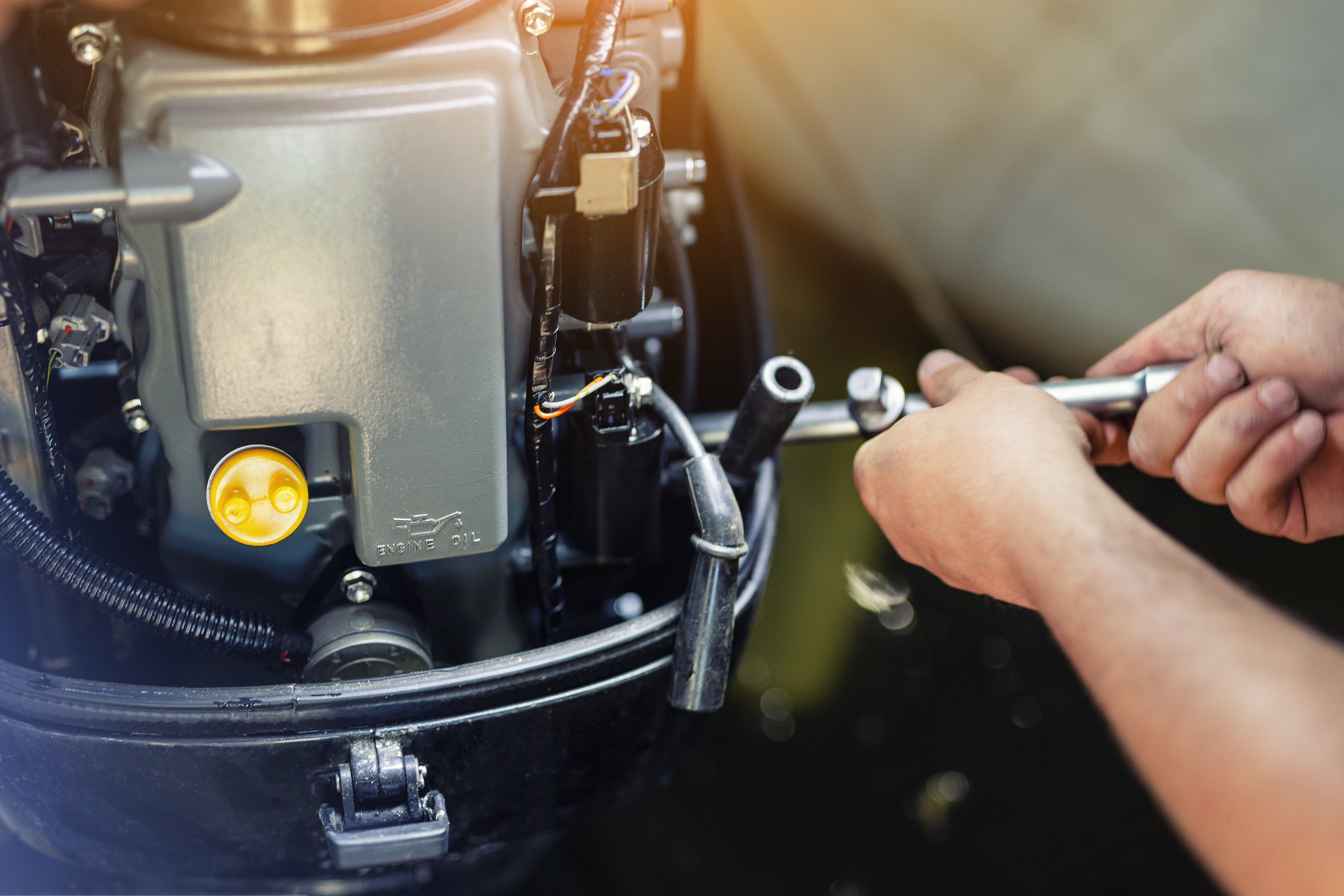
If you decide to use antifreeze, never use automotive ethylene glycol coolant. It's toxic to marine life, incompatible with rubber impellers, and will trash your cooling system. You need marine-specific, non-toxic propylene glycol antifreeze.
Most marine antifreeze is pre-mixed and rated to -50°F, which handles the majority of US climates. If you're in northern Minnesota or North Dakota where temps hit -30°F regularly, look for -100°F rated product. The rating refers to the "burst point"—the temperature at which a copper pipe filled with the fluid will crack. It's not the same as coolant "freeze protection," but it's close enough for our purposes.
Expect to use 2-3 gallons for a typical V6 outboard, less for smaller 4-cylinder or inline engines. Reusing antifreeze season-to-season is fine if you catch it in a clean container; I've seen guys run the same batch for three years.
Step-by-Step: The Antifreeze Flush Process

Here's the method we use in the shop:
-
Warm the engine first. Connect flushing muffs or a flushing port adapter to your raw water intake. Run the engine on fresh water for 5-10 minutes until the thermostat opens (usually around 140°F). You'll know it's open when the tell-tale stream gets stronger and steadier. If you don't warm the engine, the thermostat stays closed and antifreeze won't circulate through the block.
-
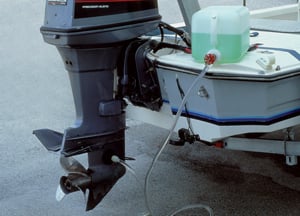
Switch to antifreeze. Shut off the engine. Disconnect the freshwater supply and connect a winterizing kit (basically a hose that draws from a bucket). Fill the bucket with marine antifreeze. Some guys use a small submersible pump in a kiddie pool filled with 6-7 gallons of antifreeze—easiest and cleanest method I've seen.
-
Run until you see color. Restart the engine and let it run at idle until you see pink or blue antifreeze (depending on brand) flowing steadily out of the tell-tale hole. This usually takes 30-60 seconds. Don't rev the engine; idle is fine. Once you see solid color with no water, shut it off immediately. You're done.
-
Tilt it down anyway. Even with antifreeze, tilt the motor fully down to drain as much fluid as possible. This reduces the weight on the tilt/trim system and ensures maximum drainage.
Tools you'll need:
- Flushing muffs (the "earmuff" style) or a motor-specific flush port adapter, which can be found in our Boat Accessories collection.
- 2-3 gallons of marine propylene glycol antifreeze
- A 5-gallon bucket or kiddie pool
- Optional: a small submersible pump to recirculate antifreeze
Common mistakes:
- Not running the engine long enough before switching to antifreeze. If the thermostat is still closed, you're just pumping antifreeze into the lower unit water pump and not the block.
- Using too little antifreeze. If you see the tell-tale spit pink for two seconds then go clear, you didn't displace all the water. Keep running it.
- Revving the engine. You're running dry once the antifreeze is in; high RPM risks damaging the impeller. To avoid impeller damage, consider inspecting and replacing parts from our Water Pump Impeller collection if needed.
Troubleshooting: What If Nothing Comes Out the Tell-Tale?
If you don't see antifreeze (or water) exiting the tell-tale during the flush, you've got a blockage or a failed water pump impeller. Shut down immediately. Check for debris in the tell-tale hole using a small wire or compressed air. If it's clear, pull the lower unit and inspect the impeller. A worn or missing impeller won't circulate fluid at all.
For detailed instructions, refer to our guide on How to Replace a Mercury Outboard Water Pump Impeller.
OEM Manuals vs. Forum Wisdom
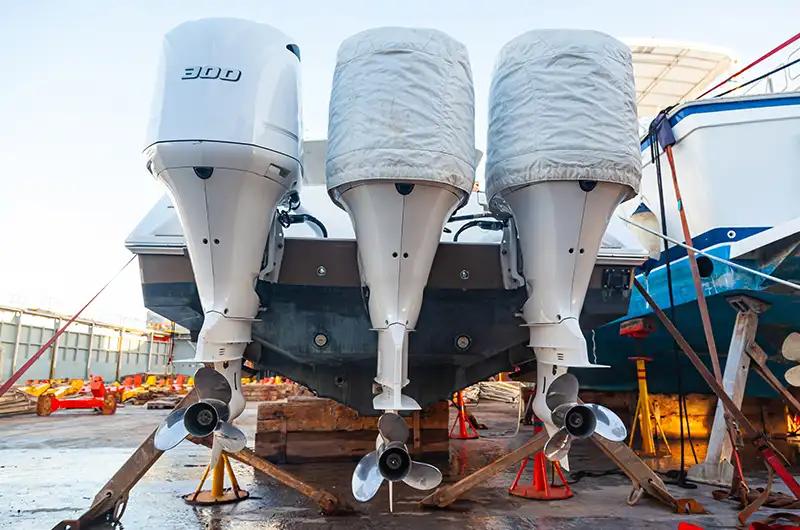
Most outboard manufacturers—Mercury, Yamaha, Suzuki, Honda—include winterization instructions in their owner's manuals. Mercury and Yamaha both recommend antifreeze flushing for storage in freezing climates, though Yamaha notes it's optional if you've completely drained the system. I'd trust the OEM manual for your specific engine over generic forum advice, but the Wisconsin yard's track record is hard to argue with.
The debate on forums like ContinuousWave has gone on for decades. The consensus leans toward "unnecessary if you drain properly," but nearly every thread has at least one story of a cracked block from a guy who "thought" he drained it fully.
Our Inboard & Outboard Motor Parts collection has a wide range of OEM replacement parts to keep your engine running smoothly through all seasons.
Parts That Make Winterization Easier
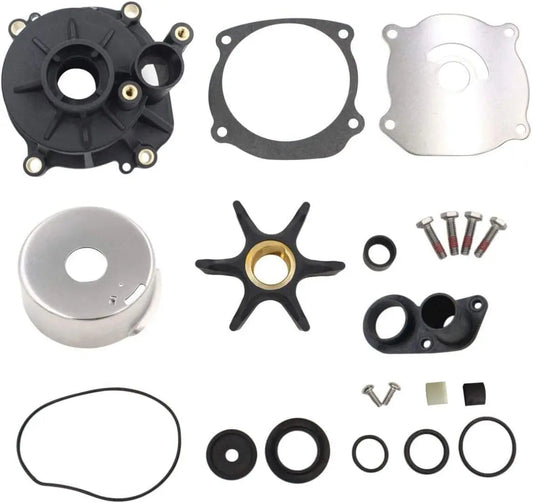
Whether you use antifreeze or not, a few parts make the job simpler and more reliable:
- Flushing muffs or motor-specific flush adapters: Not all engines use the same intake design. Newer Yamahas and Hondas have built-in flush ports that eliminate muffs entirely. If you're using muffs, make sure they seal tightly—cheap muffs let air into the system and can cavitate the pump.
- Replacement impellers: If your impeller is more than 2-3 seasons old, replace it during winterization. A $25 impeller is cheaper than a $3,000 powerhead. Inspect the old one for missing vanes, cracks, or flat spots.
- Quality marine antifreeze: Don't buy the $8 jug of "RV antifreeze" at the big-box store. It's often diluted and rated to only -20°F. Marine-specific brands are thicker, better lubricated, and rated lower.
We stock factory-spec flushing kits and impellers that fit OEM housings perfectly. The cheap aftermarket kits you find online often use hard rubber that doesn't seal right, and you'll be pulling the lower unit again next spring. It's not worth the headache. You get the OEM-quality fit without the dealership markup, and we ship anywhere—sent a kit to a guy in northern Alberta last season who had the exact same winterization question.
See our Cooling System and Water Pump Impeller Kit collections for quality parts that make winterization easier.
Cost vs. Risk
A gallon of marine antifreeze costs $10-$15. Three gallons to winterize a V6: $45. The cost to replace a cracked cylinder head or block? $2,500-$8,000 depending on the engine. Even if antifreeze is only 10% "necessary," the math works in your favor.
Decision Matrix

Here's the quick-reference version:
| Your Situation | Recommendation |
|---|---|
| Outdoor storage, temps regularly below 32°F | Use antifreeze |
| Indoor unheated storage, temps occasionally below 32°F | Use antifreeze or drain meticulously |
| Climate-controlled storage, always above 40°F | Drain only, antifreeze optional |
| Warm climate (Texas, Florida, California coast) | Drain only |
| You have freshwater systems, live wells, or heads | Always use antifreeze in those systems, even if you skip the motor |
Common Winterization Failures to Watch For in Spring
When you launch in spring, check for these signs that winterization failed:
- Water in the oil: Pull the dipstick. If it's milky or tan instead of amber, you cracked something and water infiltrated the crankcase. Don't start the engine.
- Coolant leaks at startup: If you see pink or blue fluid dripping from the midsection or powerhead after your first spring flush, you likely cracked a passage.
- Weak or no tell-tale stream: Could mean the impeller dry-rotted over winter (this is where the "antifreeze lubricates the pump" argument comes in).
If you spot any of these, pull the boat and get it to a shop before you do real damage.
Specific Engine Quirks

Some outboards are more prone to water-trapping than others:
- Mercury V6 2-strokes (150-250 HP): Known for holding water in the exhaust crossover passages even when tilted down. These are prime candidates for antifreeze.
- Yamaha 4-strokes with integrated exhaust: The mid-section on these is more complex. I've seen water pool near the oil cooler if the boat was stored slightly nose-down.
- Honda 4-strokes with built-in flush ports: These are easier to flush than muff-style setups, but you still need to run the engine long enough to open the thermostat.
Check your owner's manual for model-specific drain plug locations. Older engines sometimes have petcock-style drains on the block that you can open manually.
Environmental and Legal Considerations
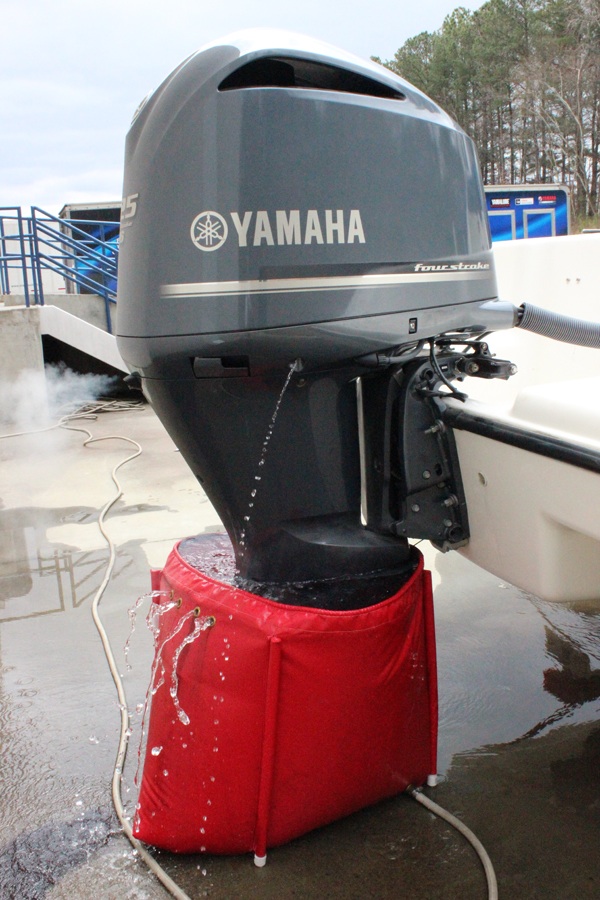
Propylene glycol is "non-toxic" compared to ethylene glycol, but it's not exactly fish food. Some marinas and states restrict dumping antifreeze-laden water during spring commissioning. Wisconsin bans it outright. Check your local DNR or marina rules before you flush pink fluid into the lake come April.
If you're in a restricted area, the drain-only method makes more sense anyway.
Run fresh water through your outboard for 5-10 minutes after every saltwater trip, even in summer. This keeps the cooling passages clear of salt crystals and reduces corrosion year-round, which means less trapped debris and easier winterization when the time comes. To learn more about keeping your cooling passages in top shape, check out our guide on Unclogging a Blocked Outboard Cooling Water Intake.
For more tips and parts to maintain your motor year-round, visit JLM Marine, your source for factory-direct marine parts and expert advice.