



Mercury Outboard Serial Number Lookup: How to ID Your Engine When the Sticker's Gone
- Where to Find Your Mercury Outboard Engine Serial Number
- Locating the Serial Number on Mercruiser Sterndrive and Inboard Engines
- Why Your Mercury Serial Number is Critical for Ordering Parts
- How to Determine Your Mercury Engine Year Using the Serial Number
- Resources and Tools for Mercury and Mercruiser Parts and Maintenance
- Customer Support and Best Practices for Serial Number Inquiries
If you need parts for your Mercury outboard or MerCruiser sterndrive and the serial number tag is gone, you're stuck guessing. That wastes time and money. We've seen it hundreds of times—wrong parts ordered because the serial number got overlooked or the tag weathered off.
Your serial number is the only way to match parts to your specific engine. Mercury changes components mid-year based on serial ranges, so ordering by horsepower alone gets you the wrong gasket or impeller half the time.
This guide covers where to find that serial number when the sticker's missing, how to use it for year identification, and how to order the right parts every time.
Where to Find Your Mercury Outboard Engine Serial Number
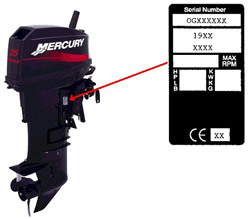
For most Mercury outboards 8hp and up, the serial number tag sits on the transom bracket, starboard side, as you face the back of the motor. It's usually a metal plate or sticker.
Engines 6hp and under have it on the top of the swivel bracket. Tilt the motor up to see it clearly.
Mercury 9.9hp engines typically place it on the top swivel bracket as well. Again, tilting helps.
Mercury serial numbers generally follow formats like 0GXXXXXX or 1BXXXXXX. If you see a string starting with a digit and letter combination followed by six digits, that's likely your serial. Part numbers are different—they're usually shorter or stamped on individual components, not the main ID tag.
Mercury Verado Serial Number Location
Verado engines differ from standard 2-strokes and smaller 4-strokes. Remove the cowling to access the serial tag, which is usually mounted on the port side of the engine block near the fuel rail or on the midsection casting. Don't assume it's in the same spot as older Mercury models.
Additional Tips for Serial Number Capture
Take a photo of the serial number. Seriously. Stickers fade, get scratched, or fall off. Weathering, a repaint, or general wear makes them unreadable.
Store that photo somewhere you'll find it later—a phone album titled "Boat Stuff" or "Engine ID" works. It saves you a headache when you need a part in a pinch.
If the tag is completely damaged or unreadable, look for stamped serial numbers on the engine block itself, inside the cowling, or on a Welch plug—a silver, quarter-sized metal disc stamped into the engine block, often near the top of the powerhead. It's less common, but it's there.
To clean a dirty metal tag, use a rag with mild soapy water. Avoid harsh solvents that strip ink from printed stickers. For stamped numbers, a wire brush and penetrating oil can help reveal worn digits.
Pre-1980s Vintage Engines
Older Mercury engines often have purely numeric serial numbers and may locate them on different clamp bracket areas or the swivel housing. If you're working on a vintage model, expect the tag to be in a less standardized spot. Check all sides of the transom clamp and the lower cowling edge.
Locating the Serial Number on Mercruiser Sterndrive and Inboard Engines
Mercruiser engines hide their serial numbers more than outboards. Common spots include:
- Near the starter motor: Often on a bracket or the engine block.
- On the engine block: Sometimes stamped directly into the metal.
- Around the flywheel housing: Look for a plate or sticker.
- Under the flame arrestor: Common on gasoline engines, especially newer ones.
Distinguish between engine block serials and drive leg serials. The engine block serial identifies the powerhead; the drive leg serial identifies the lower unit and transom assembly. If you're ordering parts for the drive, you need the drive serial, not the engine serial. They're formatted differently and often located on opposite ends of the assembly.
If the engine block was replaced at some point, the serial number on the block might not match the original transom tag. Cross-check service records if numbers don't align.
Finding these tags can be a scavenger hunt. Peer into dark corners with a flashlight. Rotate the engine or check all accessible sides of the block, starter, and bell housing.
MerCruiser Diesel Variants
If you're running a diesel MerCruiser, tag placement follows similar logic, but component-specific serials (like turbo or injection pump numbers) may also be required for parts lookup. We handle parts for both gas and diesel MerCruiser engines, but always specify fuel type when contacting us.
Why Your Mercury Serial Number is Critical for Ordering Parts
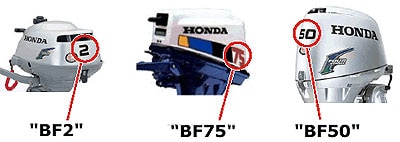
Mercury doesn't make one version of an engine and stick with it for years. They tweak components constantly. A gasket material change, a water pump housing redesign, or a fuel injector upgrade can all happen mid-production year.
If you order parts based solely on horsepower or model name (like "Mercury 150hp Optimax"), you risk getting a part that doesn't fit or doesn't work right for your specific engine. That's wasted money and delay.
Your serial number identifies your engine's exact configuration. When you use it with official Mercury parts diagrams or contact us at JLM Marine, we ensure the parts match your engine's serial range. It takes the guesswork out and gets you the right part the first time. For example, check our Mercury Water Pump Impeller Kits and other parts tailored by serial number.
Warranty claims also require the serial number. Without it, you can't process warranty support, even if the engine is still under coverage.
According to Mercury Marine data, Mercury holds about 47% of the US retail outboard market as of late 2025, with high-horsepower models (300+ HP) comprising over 40,000 units sold in 2022 alone. That's a lot of engines, each with unique serial-specific part changes.
How to Determine Your Mercury Engine Year Using the Serial Number

Once you've found the number, you need to figure out when it was built.
The most reliable method is using official Mercury serial number-to-year charts. Mercury Marine publishes these, and they're the gold standard. You can find them on their official website or through authorized dealers.
Online lookup tools like the ones on Mercury's site or third-party parts catalogs work well. Enter your serial number and get instant model and year info. We direct customers to these tools regularly because they're accurate.
Why you can't just decode the year yourself: Mercury serials are sequential, not date-coded like VINs. The numbers don't directly translate to a build date. This debunks the common myth that you can "read" the year from the serial string. You need a reference chart or database.
If your serial number doesn't return results in standard tools, it might be an older engine or an unusual batch. Look at the serial number prefix. For example, a serial starting with "0T" or "1A" points to a specific year range. Consult a qualified Mercury technician or an experienced marine parts supplier who can cross-reference older serials.
Model Year vs. Production Year: The build date stamped on the tag (e.g., late 2011) might label the engine as a 2012 model. This is common in Mercury's production cycles. Always use the model year listed on the tag for parts lookup, not the build month.
Serial Number Prefix Examples
-
0G: Typically late 1990s to early 2000s models. -
1B: Often mid-2000s to early 2010s. -
Xprefix: Remanufactured engines—serials starting with "X" indicate a factory reman. Parts compatibility can differ slightly, so always specify this when ordering.
Casting Number vs. Serial Number
Don't confuse a casting number (raised definition on the metal block, like "3512345A1") with a serial number (stamped into the metal, like "0G123456"). The casting number identifies the mold used to manufacture the block; the serial number identifies your specific engine. Only the serial number works for parts lookup.
What to Do If Lookup Tools Fail
If the serial doesn't come up in online tools, contact a Mercury dealer to access the legacy database. Older engines (pre-1996) often aren't in public online systems. As noted by Mastertech Marine, no official post-1996 serial-to-year references exist in some independent databases, so dealer access is key.
Resources and Tools for Mercury and Mercruiser Parts and Maintenance
Once you have your serial number, you need tools to use it.
The Mercury parts catalogs (often called the Electronic Parts Catalog or MBM catalogs by dealers) are detailed, with exploded diagrams. They require your serial number to show compatible parts. These are often available online through Mercury's site or dealer portals.
Mercury Marine's official parts lookup offers direct entry of your serial for parts identification. Third-party tools exist as well, but always cross-reference with official sources.
We, at JLM Marine, offer direct access to high-quality parts and expert support. As an independent marine parts manufacturer, we specialize in delivering factory-spec quality without dealership markup. Our team can help you navigate catalogs or cross-reference your serial number to find obscure parts. Check our extensive Mercury Parts collection for OEM-quality options. We've shipped to over 100 countries, so we understand global logistics and the need for accuracy.
International customers: If you're running a Mariner-branded engine (common outside the US), note that Mariner serials often track identically to Mercury models. The engines are typically the same; only the branding differs. Specify "Mariner" when contacting us so we cross-reference correctly.
OEM vs. Non-OEM Parts
OEM parts are reliable, sure, but you're paying a premium for the sticker on the box. Cheap aftermarket parts are a risk—wrong fitment, hard rubber seals, and you're tearing the lower unit off again next weekend. It's not worth it.
This is why we like the JLM kits. You get factory-spec quality without the dealership markup. It fits right, it lasts, and you don't burn cash unnecessarily. Some factories that manufacture for OEM brands use excess capacity to produce non-OEM items of similarly high quality. JLM Marine sources from these facilities, ensuring you're not sacrificing quality for cost.
Decision Tree for Finding Your Serial
- Outboard? → Look at transom bracket (starboard side, 8hp+) or top swivel bracket (6hp and under).
- Sterndrive? → Look at engine block near starter, flywheel housing, or under flame arrestor.
- Verado? → Remove cowling, check port side engine block or midsection casting.
- Sticker gone? → Check stamped engine block, Welch plug, or inside cowling.
- Still can't find it? → Check bill of sale, insurance papers, or boat registration for recorded serial.
Customer Support and Best Practices for Serial Number Inquiries

When you reach out for help—to us, a dealer, or a repair shop—they'll ask for your serial number. Be ready.
Common Mistakes to Avoid
- Don't confuse model numbers with serial numbers. They are different. A model number describes the engine type (e.g., "150 Optimax"); the serial number identifies your specific unit.
- Pay attention to alpha-numeric characters. Mercury serials generally do not use the letter "I" or "O" in the numeric sequence to avoid confusion with "1" and "0." If you think you see an "O," it's likely a "0."
- If it looks weathered, take multiple photos from different angles and in good light.
- When in doubt, ask. The cost of asking for clarification upfront is pennies compared to buying the wrong part.
Physical Backup for Your Serial Number
Beyond photos, write the serial number in permanent marker under your boat console or on the battery switch cover. If your phone dies or you lose the photo, you'll have a physical backup that's protected from weather.
Email Template for Parts Requests
When contacting JLM Marine or another supplier, use this format to streamline your request:
Subject: Parts Request - [Engine Type] Serial [Your Serial]
Body:
- Engine Type: Outboard / Sterndrive / Inboard (circle one)
- Brand: Mercury / MerCruiser / Mariner
- Horsepower: [e.g., 150hp]
- Serial Number: [e.g., 0G123456]
- Model Year: [e.g., 2005] (if known)
- Part Needed: [e.g., water pump kit, lower unit seal kit]
- Symptom (if applicable): [e.g., overheating at idle, leaking gear oil]
This helps us (or any supplier) pull the right diagrams and confirm compatibility fast.
Troubleshooting Checklist If You Can't Find the Serial
- Check the bill of sale for the engine or boat—often lists the serial.
- Check insurance papers—many policies require the serial number on file.
- Check boat registration—some states record engine serials alongside hull IDs.
- Check service records—if the engine was ever serviced at a shop, the invoice likely has the serial.
- Contact the previous owner (if second-hand boat)—they may have photos or records.
Second-Hand Boat Buyers
If you just bought a used boat, you're the most likely to not know where the serial number is. The original owner probably had the manual and documentation. Don't assume the seller gave you everything. Locate and photograph the serial number before you need parts. We've sent kits to customers in Australia, Canada, and across the US who wished they'd done this step first.
Marine Mechanics: Cross-Referencing Serials
If you're a professional mechanic, cross-reference the transom assembly serial with the engine block serial. Replacement blocks or repowered boats sometimes have mismatched numbers. Always verify which serial applies to the part you're ordering—block parts use the block serial; transom/lower unit parts use the transom serial.
SeaPro and Commercial Models
SeaPro or commercial-rated Mercury engines sometimes have additional identifier plates near the serial tag, listing warranty tier or duty cycle rating. These don't change the serial number format, but they affect parts availability (some SeaPro components have beefed-up specs). Note "SeaPro" or "Commercial" when ordering to ensure correct cross-reference.
Pro tip: Flush your engine with fresh water after every ride in salt or brackish water. It takes five minutes and prevents salt buildup in the cooling passages, which is the number one cause of thermostat seizure and impeller damage down the line. Learn more about engine cooling maintenance from our Cooling System parts collection and guides.
For more on marine engine parts and accessories, please explore the comprehensive resources available at JLM Marine.
Hi—I’m Jim Walker
I grew up in a Florida boatyard, earning pocket money (and a few scars) by rebuilding outboard carbs before I could drive. That hands-on habit carried me through a Ph.D. in mechanical engineering, where I studied how salt water quietly murders metal.
I spent ten years designing cooling systems for high-horsepower outboards, then joined JLM Marine as CTO. We bench-test every new part in the lab, but I still bolt early prototypes onto my own 23-foot skiff for a weekend shake-down— nothing beats real wake and spray for finding weak spots.
Here on the blog I share the fixes and shortcuts I’ve learned so your engine—and your day on the water—run smooth.

For Boat Owners:
To assist you in maintaining and repairing your marine engines, we hope the following resources may be of use:
- Mercury Serial Number Guide
- Owner's Manuals from Mercury
- Official Model Number Reference Guide PDF from BRP
- Johnson Serial Number Guide
-
Boat Accessories from JLM Marine
About JLM Marine
Founded in 2002, JLM Marine has established itself as a dedicated manufacturer of high-quality marine parts, based in China. Our commitment to excellence in manufacturing has earned us the trust of top marine brands globally.
As a direct supplier, we bypass intermediaries, which allows us to offer competitive prices without compromising on quality. This approach not only supports cost-efficiency but also ensures that our customers receive the best value directly from the source.
We are excited to expand our reach through retail channels, bringing our expertise and commitment to quality directly to boat owners and enthusiasts worldwide.
Boat Accessories on Sale
- $37.99
$45.99- $37.99
- Unit price
- per
- $34.99
- $34.99
- Unit price
- per
- $128.99
- $128.99
- Unit price
- per

- $25.30
$30.00- $25.30
- Unit price
- per


- $34.99
$41.99- $34.99
- Unit price
- per

- $32.50
$31.00- $32.50
- Unit price
- per

- $139.99
- $139.99
- Unit price
- per


- $45.00
- $45.00
- Unit price
- per
-
Red
-
Blue

- $28.50
$29.00- $28.50
- Unit price
- per

- $159.99
- $159.99
- Unit price
- per


- $105.00
- $105.00
- Unit price
- per


- $34.99
$41.99- $34.99
- Unit price
- per


- From $68.00
- From $68.00
- Unit price
- per
-
Silver
-
Blue
-
Red


- $34.99
$41.99- $34.99
- Unit price
- per

- $59.95
$71.00- $59.95
- Unit price
- per

- $59.99
$71.00- $59.99
- Unit price
- per


- $34.99
$41.99- $34.99
- Unit price
- per

- $65.50
$78.00- $65.50
- Unit price
- per

- $67.00
$65.00- $67.00
- Unit price
- per

- $19.99
- $19.99
- Unit price
- per