


Man Overboard Drill: Cutting the Engine & Quick Response
- Immediate Actions When Someone Goes Over
- Why You Cut the Engine Immediately
- The Spotter's Job: Don't Blink
- Powerboat Recovery: The Approach
- Sailboat Recovery: The Figure-Eight
- Getting Them Back Aboard
- Practice: The Only Thing That Works
- Cold Water and the Clock
- MOB Technology: Worth It or Not?
- MOB Drills for Solo Sailors
- Wind, Current, and Drift: The Invisible Enemies
- The Psychological Factor: Tunnel Vision and Panic
- Neutral vs. Off: The Engine Decision
- The Drill Checklist: What to Practice
- Offshore vs. Inshore: Different Urgency
Immediate Actions When Someone Goes Over
The second you hear "Man Overboard," everything shifts. First action: shout it again. Loud. Multiple times. Get every crew member's attention immediately.
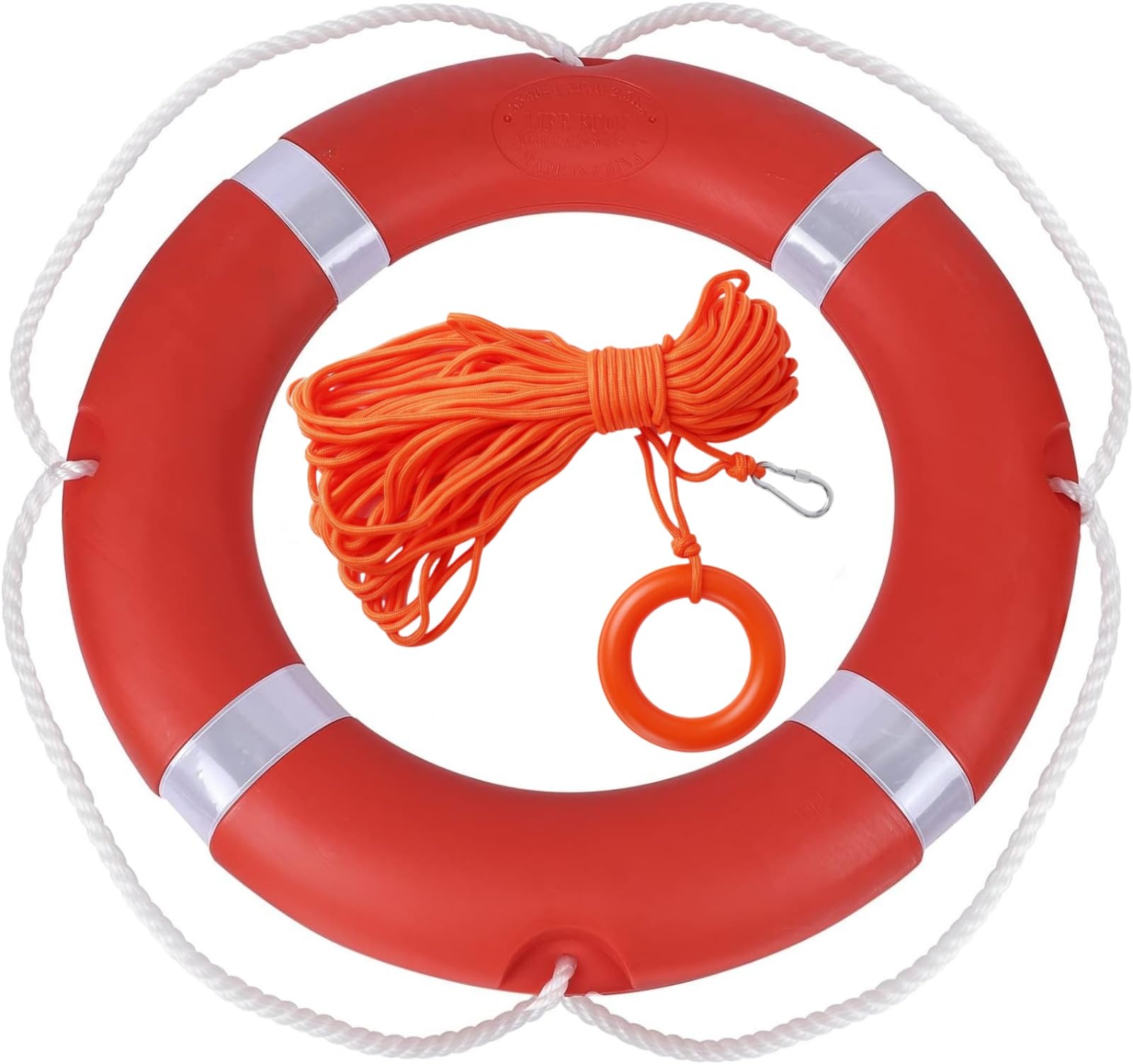
Next, throw flotation—life ring, seat cushion, cooler, anything that floats. Get it near the person in the water (PIW). This marks the spot and gives them something to grab.
Assign a spotter right now. Their only job: point at the PIW and don't look away. Not for a second. The spotter guides the entire recovery. Without them, you lose the person in chop or waves within minutes.
Hit your GPS MOB button if you've got one. Sound five short blasts on the horn—that's the USCG signal for man overboard.
On a powerboat: cut the engine. Pull the kill switch or yank the Engine Cut-Off Switch (ECOS) lanyard. Federal law requires ECOS on recreational boats under 26 feet, and for good reason—it stops the prop instantly and prevents the boat from circling back over the victim or running away if you get thrown off the helm. For those equipping their boats, explore essential Boat Accessories that can enhance safety and recovery efforts.
On sailboats, get the engine in neutral or kill it, then prepare to maneuver under sail or power depending on conditions.
The entire sequence—yell, throw, point, mark, cut—needs to happen in under 20 seconds.
Why You Cut the Engine Immediately
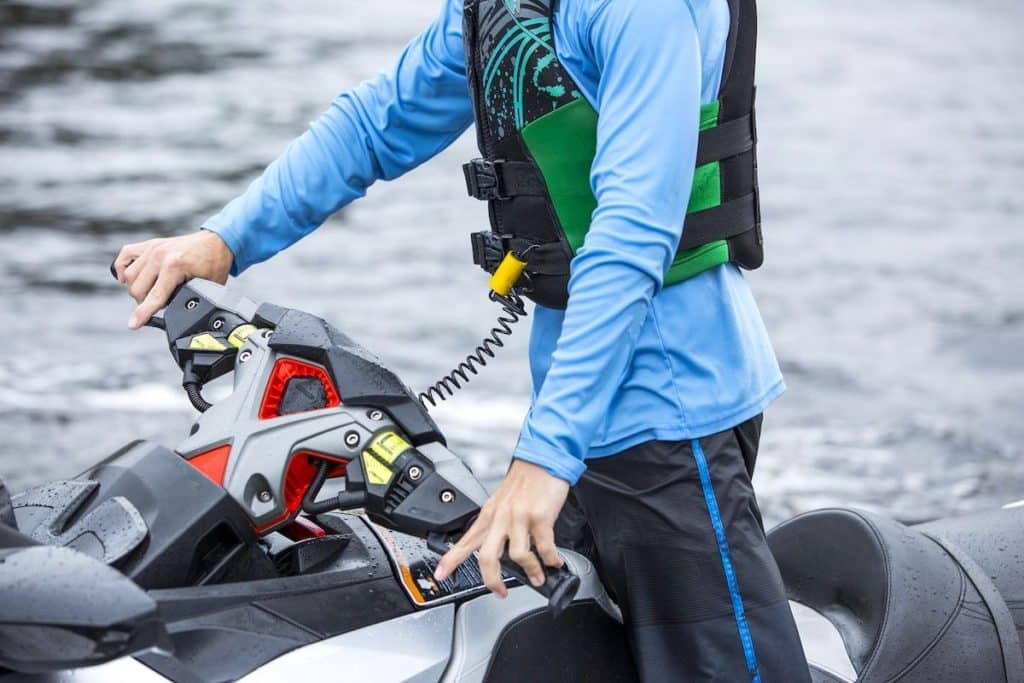
Cutting the engine on a powerboat isn't optional. The moment someone goes over, that spinning prop becomes the biggest threat. We've seen PIW drift aft in current or get pulled toward the stern by prop wash, and a strike is fatal.
The ECOS lanyard law went federal in 2021 specifically because USCG accident data showed operator ejections leading to runaway boats or circling vessels that ran over the victim. The 2022 USCG Recreational Boating Statistics recorded 239 falls overboard with 138 deaths—a 58% fatality rate. Falls overboard kill more people than collisions or groundings despite being less common.
Here's the nuance: some operators shift to neutral instead of killing the engine entirely, keeping the ability to power-steer against wind or current during the approach. That works if you've got experience and calm conditions, but it requires discipline—one bump of the throttle into gear and you're in the danger zone. For most recreational crews, especially in a high-adrenaline situation, kill it is the safer call. Restart it only when you're positioned and ready for a controlled final approach.
In strong wind or current, you may need to restart and use short bursts in neutral to maintain position, but the engine goes to off or neutral the instant the PIW is within 20 feet and drifting near the stern.
If you want to deepen your understanding of safe engine operation, reading about Inboard & Outboard Motor Parts can provide valuable technical insights to ensure your equipment is properly maintained and responsive during emergencies.
The Spotter's Job: Don't Blink

The spotter is the most critical role in the first five minutes. Their job is brain-dead simple but physically demanding: keep eyes locked on the PIW and point.
Not "sort of point." Full arm extension. Continuous. Even when the helmsman is turning hard and the boat is heeling or bouncing. Even when someone is yelling questions at them. The spotter does not help with lines, does not adjust sails, does not look at the GPS. They point.
Why? Because in 2-foot chop, a human head is nearly invisible past 50 yards. Add glare, add panic, add the helmsman trying to look over his shoulder while steering, and you lose the person. We've run drills where the spotter looked away for ten seconds to grab a radio, and it took three minutes to reacquire the dummy. In cold water, that's the difference between recovery and body retrieval.
The spotter should be calling out bearing changes: "Thirty degrees to port," "Dead ahead," "Drifting right." Verbal updates keep the helmsman oriented without taking his hands off the wheel.
If it's night, the spotter should have a high-intensity flashlight pointed at the sails or the hull, not at the water. Shining a light on the water destroys everyone's night vision. Light up your boat so the PIW can see you. The PIW should also have a whistle or a strobe if you've done your pre-departure safety check.
Powerboat Recovery: The Approach
Once the engine is cut and you've got the PIW marked, the recovery maneuver depends on conditions.
In light wind and calm water: Turn the boat in a wide circle to come back alongside. Keep the turn away from the side the person fell from—this swings the stern and prop away from them. Circle around and approach slowly from downwind, positioning so the PIW ends up along your beam (mid-ship), not near the stern.
In stronger wind or current: Use a Williamson Turn. Turn the wheel hard toward the side they fell from (about 60 degrees), then counter-steer hard the opposite direction to bring the boat onto the reciprocal course. This puts you on a track that should bring you back near the PIW's drift path. Restart the engine in neutral only when you're lined up and need steering control for the final approach.
The final approach: Restart the engine if it's off. Shift to neutral. Idle speed or less. Approach the PIW from upwind or up-current so you drift toward them, not away. This gives you control—if you overshoot, the boat naturally drifts back. Never approach from downwind; you'll blow past them and have to restart the whole maneuver.
When the PIW is alongside, shift to neutral and kill the engine again. Do not leave it running in neutral with someone in the water near the stern. One accidental shift into gear and it's over.
Sailboat Recovery: The Figure-Eight

The Figure-Eight method is standard teaching in U.S. Sailing's ASA 101 and Coastal Cruising courses. It's reliable and keeps the boat under control in moderate wind.
Here's the sequence: After the initial throw and shout, sail away from the PIW on a broad reach (wind coming from behind at an angle). This gives you room to maneuver. The crew preps a line with a bowline knot and gets the boarding ladder or Lifesling ready.
After sailing 5-10 boat lengths, tack or jibe to turn back. The goal is to create a figure-eight path that brings you back upwind of the PIW, slightly behind them. This lets you luff the sails (ease them so they flutter) to slow down and drift gently toward the victim.
If you come in too fast or overshoot, luff harder or tack away and reset. The key is the final approach at near-zero speed, sails luffing, drifting alongside so the crew can throw the line or deploy the Lifesling without the boat sailing over them.
Engine use on a sailboat during MOB is situation-dependent. If you've got the skill to execute a clean Figure-Eight under sail alone, great. If the wind dies or you're in a crowded anchorage, start the engine in neutral early and use it to position. Just remember: engine in neutral during the final approach, then off when the PIW is at the beam.
Getting Them Back Aboard
The approach is only half the problem. A wet, cold, possibly hypothermic adult is dead weight. Lifting them over the freeboard is brutal, especially on larger boats.
Lifesling method: The Lifesling is a floating harness on a long line. You circle the PIW while dragging the Lifesling in the water; they grab it and slip it over their head and under their arms. Once secured, you haul them to the boat using a halyard or dedicated hoist. This works well for short-handed crews because it doesn't require lifting their full body weight by hand.
Ladder deployment: If you've got a swim ladder or boarding ladder, deploy it amidships (not at the stern if the engine is anywhere nearby). The PIW climbs up while crew members spot them. This works if the person is conscious, uninjured, and has the strength to climb. In practice, cold water saps strength fast—don't count on them climbing more than 2-3 rungs without help.
The parbuckle: If the person can't climb, use a parbuckle rig. Run a line under their armpits and down under the hull or keel (on a sailboat) or under the rub rail (on a powerboat), then haul from the opposite side. This rolls them up and onto the deck. It's slow but effective for unconscious or exhausted victims.
Boom hoist (sailboats): Attach a line to the main boom, swing it outboard over the PIW, attach a sling or harness, and use the boom as a crane to lift them aboard. This requires pre-rigged gear and practice.
Regardless of method, the crew doing the hauling must be secured to the boat. Clip into jack lines or brace against a stanchion. Reaching over the side to grab someone is how you end up with two people in the water.
Once aboard, get them horizontal, remove wet clothes immediately, wrap in blankets or a thermal rescue blanket, and monitor for secondary drowning (water in the lungs causing delayed respiratory distress). Even if they seem fine, get them checked by a medic ashore. Cold shock and exhaustion can mask injuries.
Practice: The Only Thing That Works 
Reading this is not enough. MOB drills need to be physical, repeated, and realistic.
The USCG requires monthly MOB drills on inspected vessels (46 CFR §122.520) for a reason: muscle memory. If you wait until the emergency to figure out where the life ring is stored or how to rig the Lifesling, you've already failed.
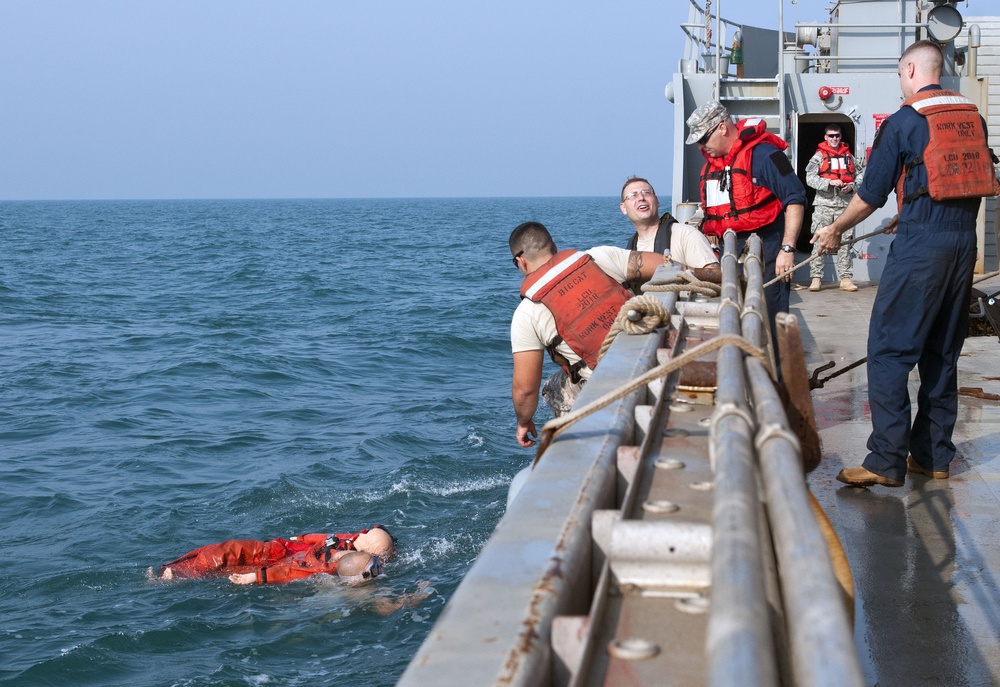
Run a full drill quarterly at minimum. Use a fender or a cushion as the "victim." Throw it overboard without warning and execute the full recovery: shout, throw, point, cut engine, maneuver, approach, retrieve. Time it. Note what went wrong. Do it again.
Practice at night. Practice in moderate chop. Practice with the smallest crew you'll ever sail with, because that's when it'll happen.
Drill the physical retrieval too. Actually haul the weighted fender (load it with a few gallons of water in a bag to simulate body weight) up the ladder or over the rail. You'll discover real quick if your ladder mount is strong enough or if you've got the upper body strength to deadlift 180 pounds of soaked human.
If you're sailing solo or short-handed, rig jack lines and tethers before you leave the dock, and practice self-recovery. Install a boarding ladder you can deploy from the water. A solo MOB is usually fatal unless you've pre-rigged for it.
Cold Water and the Clock
Cold water survival time is shockingly short. The USCG data shows that falls overboard have a 58% fatality rate, and cold water is a primary factor. In water below 60°F, cold shock hits within 1-2 minutes—hyperventilation, gasping, panic. Swim failure and loss of dexterity follow in under 10 minutes.
The PIW needs to assume the HELP position (Heat Escape Lessening Posture): knees to chest, arms crossed over the chest, minimizing heat loss from core areas. If there are multiple people in the water, huddle together.
This is why the MOB drill is a race. Every second the PIW is in the water, their core temp drops. A recovery that takes five minutes in 50°F water might still result in a fatality from hypothermia even if you get them aboard alive.
At night, survival odds plummet. You can't see a head in the water past 30 feet even with a spotlight. The PIW should have a strobe light on their PFD—this is non-negotiable for offshore or night sailing.
MOB Technology: Worth It or Not?
Modern electronics help, but they're not a replacement for skill.
GPS MOB Button: Every chartplotter made in the last ten years has one. Hit it and it marks the exact lat/long. In low visibility or if you lose visual contact, this waypoint is your only reference. But it marks where they were, not where they are after drifting. Factor in wind and current.
AIS MOB Beacons: Personal AIS beacons transmit a distress signal that shows up on your chartplotter and VHF radio. Garmin and others make wireless MOB devices that clip to a PFD and auto-activate on water contact. These are excellent for offshore or night ops—they give you a live position update, not just a static waypoint. The downside: they require an AIS receiver onboard, and they're another piece of gear to maintain and test.
Wireless Kill Switches: Some newer outboards support wireless ECOS—a fob you wear that kills the engine if you go overboard. Useful for solo operators, but it won't help if a passenger goes over and you need to maneuver.
The tech is worth having, but it's secondary. The drill, the crew coordination, the spotter's discipline—that's what saves lives. The GPS just makes it a little less likely you'll drift past them in the dark.
If you're interested in maintaining your outboard for optimal performance in emergency situations, consider exploring Outboard Motor Parts to enhance reliability.
MOB Drills for Solo Sailors 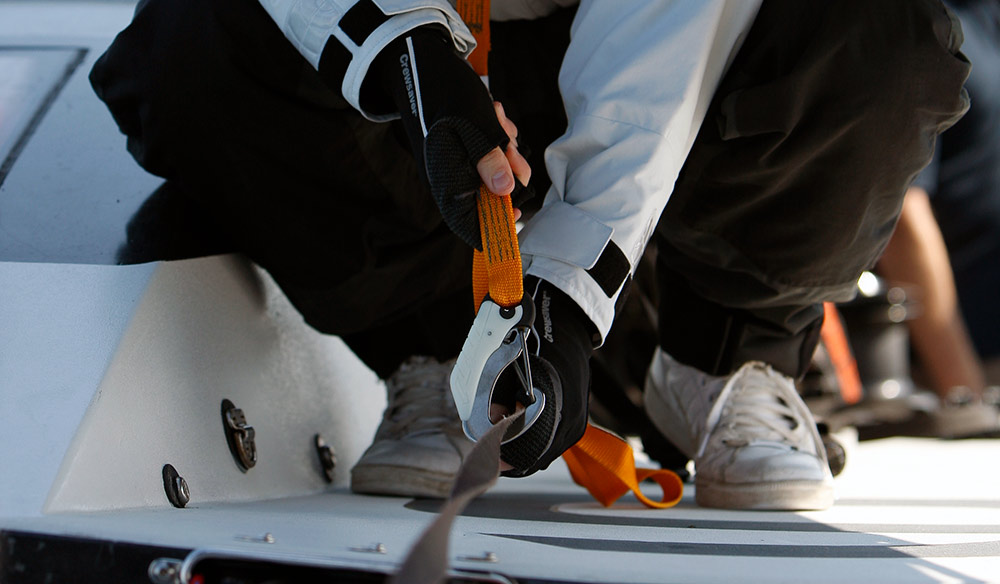
If you're single-handing, MOB prevention is life-or-death. Once you're in the water, self-recovery is nearly impossible on most boats unless you've rigged for it.
Prevention: Wear a PFD with a harness. Rig jack lines the full length of the boat. Clip in whenever you're on deck in rough weather, at night, or offshore. The tether should be short enough that if you go over, you stay alongside, not trailing astern under the hull.
Self-Recovery Ladder: Install a dedicated boarding ladder that you can deploy from the water. Most factory swim ladders are useless if you're in the water—you can't reach the release. Products like the Lifesling ladder or aftermarket rail-mounted steps solve this. Test it. Jump in the water with your foul-weather gear on and try to climb back aboard. If you can't, you're dead if you fall off alone.
Emergency Tiller and Auto-Cutoff: If you get dragged overboard on a tether, the boat will keep sailing or motoring unless you've rigged an auto-cutoff. Some solo sailors rig a line from the ECOS lanyard to their harness so going over kills the engine. Others rely on the tether breaking under load (not recommended). At minimum, practice stopping the boat quickly if you're dragged to leeward.
Solo MOB is mostly about not going over in the first place. If you do, your odds are grim unless you're rigged and trained for self-rescue.
Wind, Current, and Drift: The Invisible Enemies
Here's what the textbooks don't emphasize enough: wind and current are constantly moving the PIW and the boat in different directions. A person in the water drifts with the current and downwind. A powerboat with no way on drifts mostly downwind. A sailboat with sails up drifts fast downwind even with no engine.
This means the PIW is not sitting still at the GPS waypoint. They're moving. After five minutes in a 2-knot current, they're 600 feet from where they fell. Add wind drift and it compounds.
During the approach, factor this in. If you're motoring back to the GPS mark and there's a crosswind, aim upwind of the mark so you drift toward their likely drift path, not away from it. Use the spotter's updates to correct.
The final approach—coming in upwind or up-current of the PIW—uses this to your advantage. You drift toward them. If you kill the engine early, the boat will naturally blow or drift down onto them, giving you a second or third chance if the first pass misses. Approaching from downwind is a disaster; you blow past them and have to circle again.
In strong current (2+ knots), the boat's drift is often faster than a swimmer can paddle. The PIW cannot "swim to the boat." The boat must come to them, and it must do it accurately the first time.
The Psychological Factor: Tunnel Vision and Panic

Adrenaline hits hard in a real MOB. We've seen experienced helmsmen fixate on the GPS and ignore the spotter's directions. We've seen spotters break visual contact to answer a radio call. We've seen crew freeze up instead of deploying the ladder.
This is why drills matter. The drill builds autopilot responses. When panic sets in, training takes over.
Tactical breathing helps: Four-count inhale, four-count hold, four-count exhale. Sounds dumb, but it drops heart rate and clears the tunnel vision. The helmsman should force himself to do this while maneuvering.
Command voice: The most experienced crew member needs to take command immediately and give short, direct orders. "You—point. You—prep the ladder. You—ready the line." No discussions, no debate. Decide and move.
The PIW is also fighting panic. Cold shock causes hyperventilation. If they're not wearing a PFD, they'll struggle to stay afloat and burn energy fast. The boat crew needs to project calm—yell encouragement, tell them you see them, tell them to stay still and conserve energy. A panicked swimmer is exponentially harder to recover.
Neutral vs. Off: The Engine Decision
Here's the detail that matters: neutral keeps the engine running and gives you instant throttle response for steering corrections. Off means the prop is stopped and zero risk of a strike, but you lose powered steering until you restart.
In practice, the safest protocol for most recreational crews is:
- Cut (off) immediately when the MOB is called.
- Maneuver using momentum, wind, or sail to position the boat.
- Restart in neutral when you're 100+ feet out and need powered steering for the final approach.
- Shift to neutral (if it wasn't already) when the PIW is within 50 feet.
- Cut (off) again when the PIW is at the beam or near the stern, before anyone reaches into the water.
The risk of leaving it in neutral near the victim is accidental engagement. Someone bumps the throttle, or a wave jolts the helmsman's hand, and the shift lever moves. We've seen it. If the engine is off, that can't happen.
Experienced operators who can hold neutral discipline in high-stress situations may keep it in neutral through the whole final approach for micro-corrections. But if there's any doubt, kill it.
The Drill Checklist: What to Practice
Here's a printable checklist for your monthly drill. Run this with your actual crew.
Pre-Drill Brief:
- Assign roles: helmsman, spotter, retrieval crew.
- Review the MOB protocol (shout, throw, point, mark, cut).
- Confirm location of life ring, ladder, Lifesling, and ECOS.
Execution:
- Throw the dummy (fender or weighted bag) overboard without warning.
- Crew shouts "Man Overboard!" (three times minimum).
- Spotter points continuously.
- Helmsman cuts engine (or shifts to neutral and announces it).
- Crew throws flotation and hits GPS MOB.
- Helmsman executes recovery maneuver (circle, Williamson, or Figure-Eight).
- Final approach at idle or drift speed.
- Engine off when dummy is alongside.
- Deploy ladder or Lifesling.
- Retrieve dummy aboard (actually haul it up).
Debrief:
- Time from throw to retrieval.
- Did the spotter lose visual contact? (If yes, fail.)
- Did the engine shut off when required?
- Did the crew deploy the ladder/line without fumbling?
- Could you physically lift the dummy?
Run it again. Time it. Beat your previous time.
Offshore vs. Inshore: Different Urgency
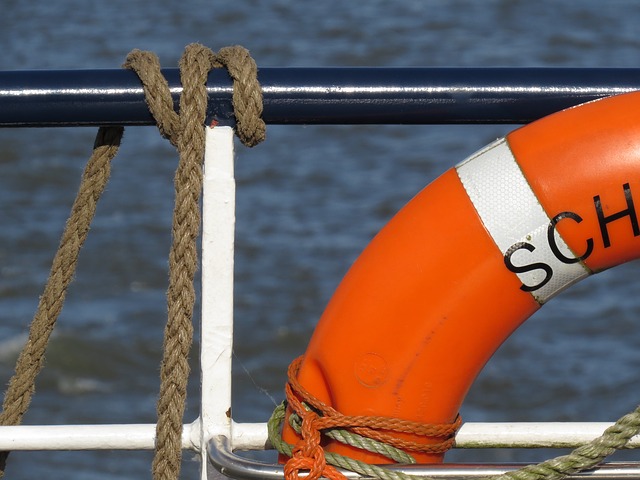
Recovery in a lake or bay with warm water, traffic, and nearby help is a different scenario than offshore in cold water with no support.
Inshore (lake, harbor, calm bay): You may have time for a second or third approach. Water temp might be survivable for 20-30 minutes. Other boats are nearby to assist. You can call for help on VHF and expect a response. The drill can be slightly less time-critical, but it's still urgent.
Offshore (coastal, open ocean): Cold water, isolation, and no backup mean you get one good approach, maybe two. After that, hypothermia or exhaustion sets in. The USCG or a Good Samaritan might be an hour away. The recovery must be fast and accurate. This is where the quality of your drills shows up. Offshore crews should practice MOB monthly minimum and consider advanced retrieval systems like the Lifesling or hoisting gear.
If you're cruising offshore, every crew member should have a PFD, a whistle, a strobe, and ideally a personal AIS beacon. The cost is negligible compared to a life.
Keep a dive knife strapped to the ladder mount—if someone gets tangled in a line during retrieval and you need to cut them free fast, you don't want to be digging through a locker.
For more comprehensive boating knowledge and equipment, visit our JLM Marine Hub.