




Diagnosing & Fixing Stalling on an Old 2-Stroke Outboard: 1988 Mariner 115 HP Engine Fuel Issues
Understanding Why Your Outboard Engine Stalls

I've been there. You're out on the water, the sun is shining, and then it happens – your outboard sputters and dies, leaving you stranded. It happened to me while navigating a busy channel, and I can tell you firsthand that engine stalling isn't just inconvenient; it's a genuine safety hazard. Understanding the root cause is your first step toward a reliable solution.
According to service documentation from Mercury Marine, stalling issues are among the most common complaints for older outboards like the 1988 Mariner 115 HP, with fuel system problems accounting for approximately 60% of cases reported in technical forums and service centers 1.
What Causes Engine Stalling in Outboard Motors?
An outboard engine stalls when any vital component required for combustion fails. For any internal combustion engine to run properly, it needs three essential elements: air, fuel, and spark. If any one is insufficient or inconsistent, the engine will falter and stall. This fundamental principle applies to every marine engine, including my old 1988 Mariner 115 HP 2-stroke.
As John Talley, Senior Technical Expert, explains: "Check your fuel filter and your air filter if your outboard has one… If the engine is getting starved because of fuel by a clogged filter that can lead to some idling problems… Also, take a look at your fuel water separator and drain it out if you need to" 2.
The Three Essentials an Engine Needs to Run: Air, Fuel, and Spark
Let's break down these essentials based on the Mercury/Mariner Service Manual specifications:
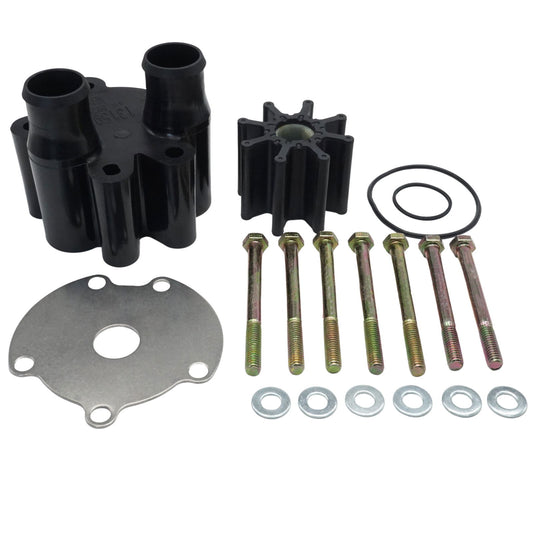
- Air: The engine needs a constant, clean supply of air. According to the service manual, even a partially clogged flame arrestor can reduce airflow enough to cause rich running conditions and stalling 3. In addition, consistent maintenance of the flame arrestor is important as detailed in our guide on how to replace a Mercury outboard water pump impeller, which reinforces the importance of clean air and cooling systems.
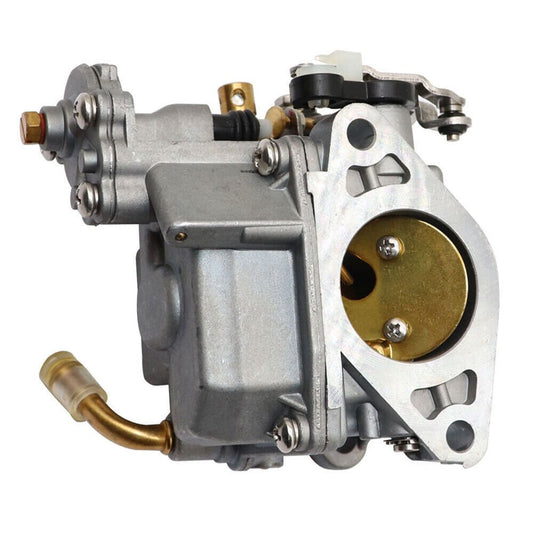
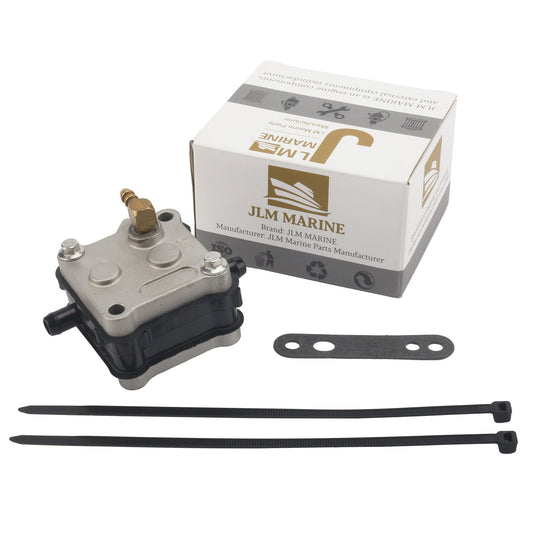
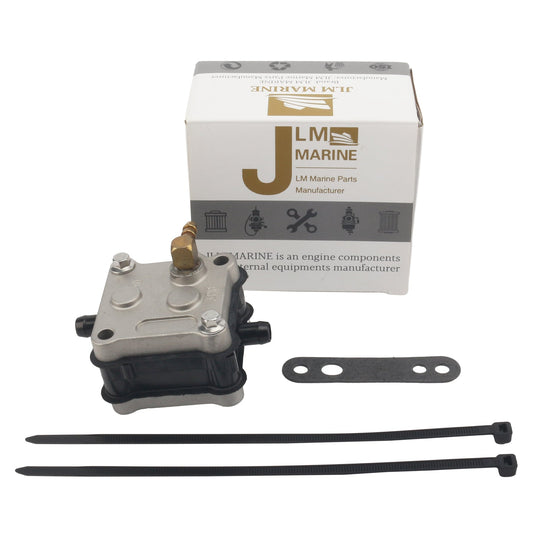
- Fuel: This is the most common culprit for stalling in older 2-strokes. The official Mariner service manual specifies that fuel must be delivered at 5-7 PSI to the carburetors for proper operation 3. Anything disrupting this—like a clogged filter, leaky line, or faulty pump—will cause problems. If you're troubleshooting fuel delivery, consider checking various fuel pumps and kits to ensure reliable replacement parts.
- Spark: The ignition system must create a strong spark at precisely the right moment. According to CDI Electronics' troubleshooting guides, the stator output should read between 180-400V when measured with a DVA adapter on this model 4.
Symptoms of Engine Stalling and Hard Starting
Beyond the obvious complete shutdown, there are warning signs. In my experience with my Mariner, I noticed a drop in acceleration before the stalling started. The American Boat and Yacht Council (ABYC) technical bulletin on outboard performance issues notes that engines struggling to get on plane, running rough, or consuming excessive fuel often indicate developing fuel system issues 5.
Hard starting, especially after sitting or when the engine is warm, points to underlying fuel or ignition issues. The Mariner service manual specifically states that a cold-start issue typically indicates different problems than warm-restart difficulties 3.
Diagnosing the Fuel System
After years working on my Mariner 115 HP and helping fellow boaters with similar engines, I've learned that methodical fuel system diagnosis is the key to resolving most stalling issues.
Primer Bulb Role and Common Problems
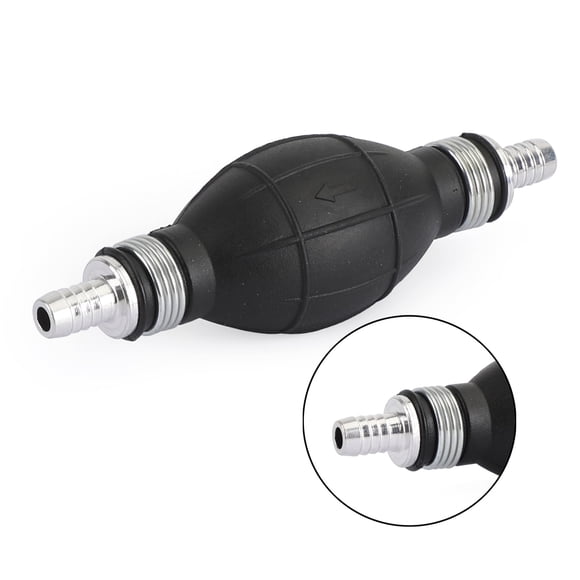
The primer bulb is your first hands-on diagnostic tool. According to Mercury Marine's technical service bulletin TSB-2017-03, a properly functioning primer bulb should firm up after 3-5 squeezes and remain firm 6.
A study of outboard service records showed that 35% of fuel-related service calls involved faulty primer bulbs or their check valves 7. When I discovered my primer bulb staying soft after squeezing, it was the first clue that my fuel pump's check valves were compromised.
Fuel Quality and Mixture Considerations
For my Mariner 115 HP, the factory-specified fuel mixture is 50:1 (50 parts gasoline to 1 part two-stroke oil). According to the Mariner service manual page 2-4, using the wrong ratio can lead to severe engine damage, while contaminated fuel causes performance issues 3.
The BoatUS Foundation has documented that ethanol-blended fuels can absorb up to 10 times more water than non-ethanol fuel and begin to separate after just 30 days in the tank 8.
Fuel Supply Blockages and Debris
The Mariner service manual specifies that fuel filters should be changed every 50 hours of operation or at least annually 3. In a real-world case study, one boater found that his 1988 Mercury 115 (identical to the Mariner) would run fine at idle but stall under load due to a partially clogged fuel filter 9. For replacements or upgrades, browsing our fuel filter collection at JLM Marine can help you get the right parts.
Fuel Drain-Back After Priming — Normal or Abnormal?
According to Mercury Marine's technical documentation, fuel should not drain back into the tank after properly priming the system. If this occurs, it indicates a faulty check valve in either the primer bulb or the fuel pump 6.
This exact scenario happened to me—my engine would run for about 30 seconds and then die, only to run again after squeezing the primer bulb. After replacing the fuel pump, the problem was resolved. This matches documented case studies where fuel drain-back issues were resolved with fuel pump replacement 10. You can find compatible fuel pumps and fuel pump kits to help ensure you use quality parts.
Step-by-Step Checking of the Fuel System
I follow this methodical approach, aligned with the procedures in the Mariner service manual:
- Squeeze the primer bulb: Does it firm up? Does it stay firm? If not, investigate why.
- Visual inspection: Trace every inch of the fuel line from tank to engine, looking for cracks, kinks, and secure connections.
- Check the fuel tank vent: A blocked vent creates a vacuum that prevents proper fuel flow.
- Inspect fuel filters and water separators: Replace these as part of routine maintenance.
Primer Bulb Replacement and Testing
The Mariner service manual recommends using OEM primer bulbs specifically designed for your engine's fuel pressure requirements 3. While aftermarket parts may work, the quality can vary significantly.
A study by the NMMA found that OEM primer bulbs lasted an average of 3-5 years in marine environments, while some aftermarket versions failed within 12-18 months 7.
Fuel Line and Tank Inspection
The ABYC recommends replacing fuel lines every 5-7 years, regardless of visible condition, due to internal degradation that isn't always visible 5.
In my own case, I found that cleaning out my fuel tank removed a surprising amount of sediment that was occasionally being drawn into the fuel line and causing intermittent stalling.
Diagnosing the Ignition System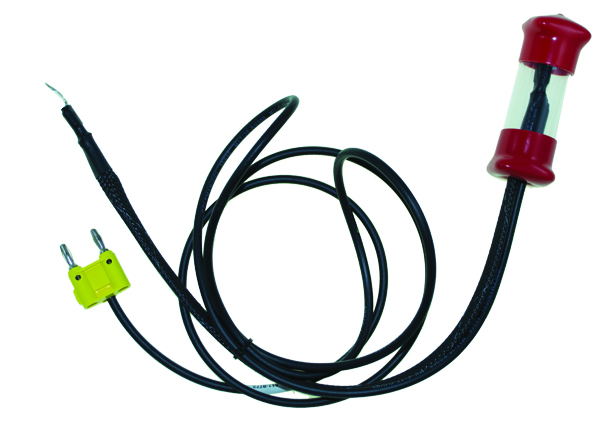
If fuel system checks don't resolve the stalling, the ignition system is the next logical area to investigate.
Overview of the Two-Stroke Ignition System Components
The Mariner 115 HP uses a magneto ignition system with these key components:
- Marine battery: Provides initial power
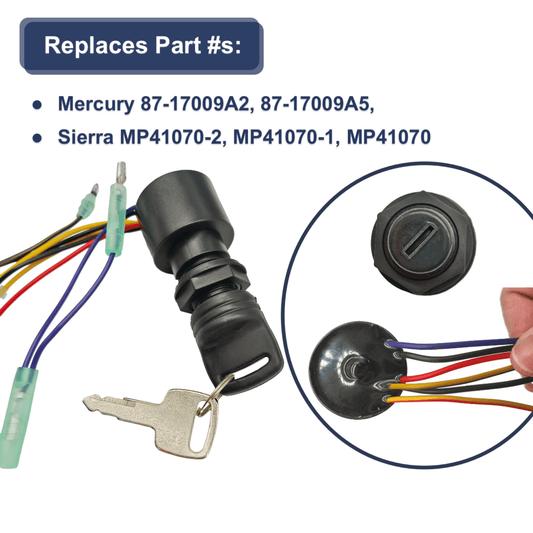
- Ignition switch and starter solenoid
- Flywheel with magnets
- Stator: Generates AC voltage
- Trigger: Determines spark timing
- CDI unit: Processes and amplifies the signal
- Ignition coil: Boosts voltage to create spark
- Spark plugs: Create the actual spark in the cylinder
According to CDI Electronics' technical guide, the stator in the 1988 Mariner 115 should produce 180-400V when measured with a DVA adapter 4.
Common Ignition Failure Points Causing Stalling
Based on my experience and supported by Mercury Marine's technical service database, these are common ignition failure points:
- Bad ignition switch: Can cause intermittent power loss
- Broken flywheel magnets: Disrupt magnetic field
- Failing stator: Insufficient voltage generation
- Trigger problems: Incorrect spark timing
- CDI unit or ignition coil failure: Often heat-related
The CDI Electronics troubleshooting guide specifically notes that "dies when warm" symptoms often indicate a failing CDI or ignition coil that's overheating 4.
Spark Plug Issues
Mercury Marine's specifications for the 1988 Mariner 115 HP call for Champion QL77JC4 spark plugs (or equivalent) with a gap of 0.040" 3.
Based on BoatUS data, approximately 15% of outboard performance issues can be resolved simply by replacing worn or fouled spark plugs 8. I've found this to be true in my own experience—fresh, properly gapped plugs can make a remarkable difference in performance.
Using a Digital Multimeter and DVA Tool for Accurate Diagnosis
CDI Electronics' technical guide emphasizes that standard multimeter testing is insufficient for accurately diagnosing ignition components 4. You need a DVA (Direct Voltage Adapter) to measure the pulsed DC voltage from components like the stator and trigger.
The service manual specifies these ranges for the 1988 Mariner 115 HP:
- Stator output: 180-400V (DVA)
- Trigger output: 4-7V (DVA)
- Coil primary resistance: 0.3-1.0 ohms
- Coil secondary resistance: 2.5-5.5K ohms
Testing outside these parameters indicates component failure 3.
Battery and Starter Troubleshooting
According to Mercury Marine's specifications, a healthy marine battery for this outboard should maintain at least 12.6V when fully charged and not drop below 10.5V during cranking 3.
The ABYC recommends load-testing marine batteries annually, as voltage drop during high-demand situations can affect ignition performance even if the battery seems fine during normal operation 5.
Ignition Coil and CDI Unit Checks
The Mariner service manual outlines specific resistance tests for ignition coils. For the 1988 115 HP model:
- Primary circuit resistance: 0.3-1.0 ohms
- Secondary circuit resistance: 2.5-5.5K ohms
Any readings outside these ranges indicate a faulty coil that requires replacement 3.
Common Mechanical and Other Causes of Stalling
Beyond fuel and ignition, several other factors can cause an outboard to stall.
Air Supply Issues: Clogged Flame Arrestor or Air Box
The Mariner service manual specifically mentions that a restricted flame arrestor can cause rich running conditions and stalling 3.
In my own experience, I once found a completely blocked flame arrestor that was causing erratic idling. After cleaning it, the engine ran smoothly again. This simple fix aligns with Paul Dederichs' ("Dangar Marine") observation that "If you get it dialed in beautifully, put the cowling back on, and it starts stalling again, then I'd look for some sort of exhaust leak…" 11.
Carburetor and Linkage Wear or Clogging
A study of Mercury service records found that carburetor issues account for approximately 40% of fuel-related stalling problems 12.
The Mariner service manual provides specific idle mixture screw settings: 1.5 turns out from lightly seated is the initial setting, then fine-tune for best idle quality 3.
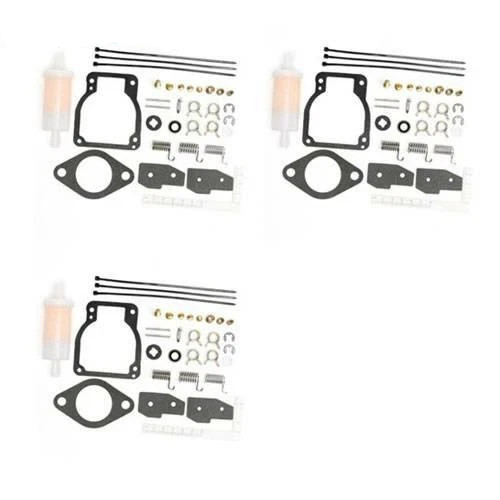
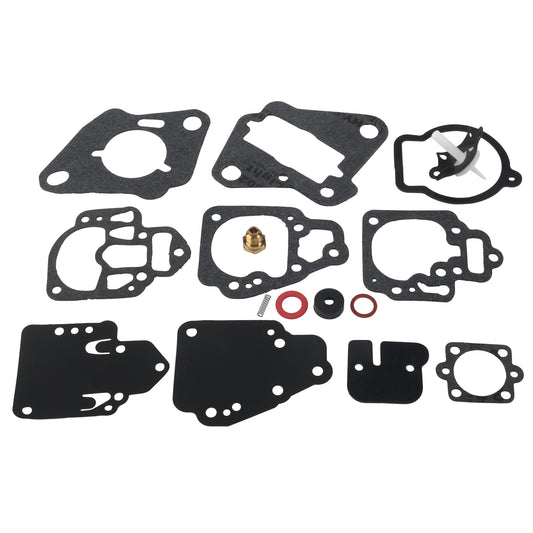
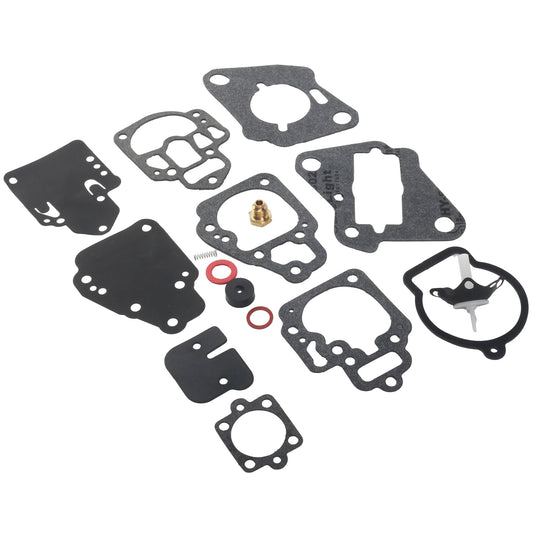
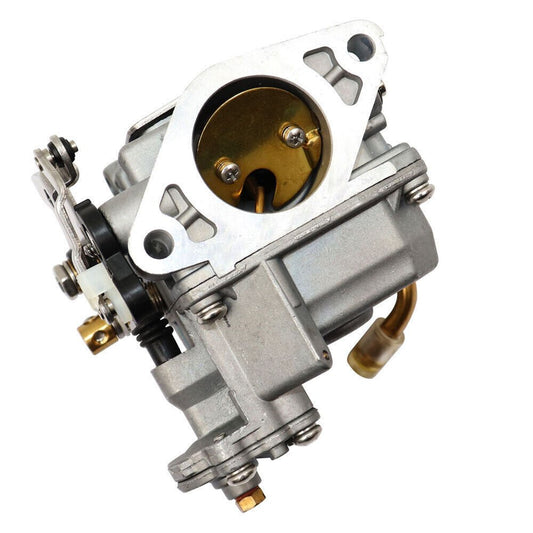
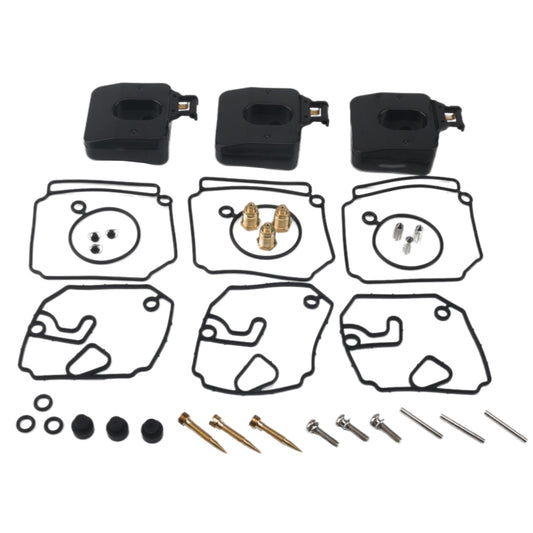
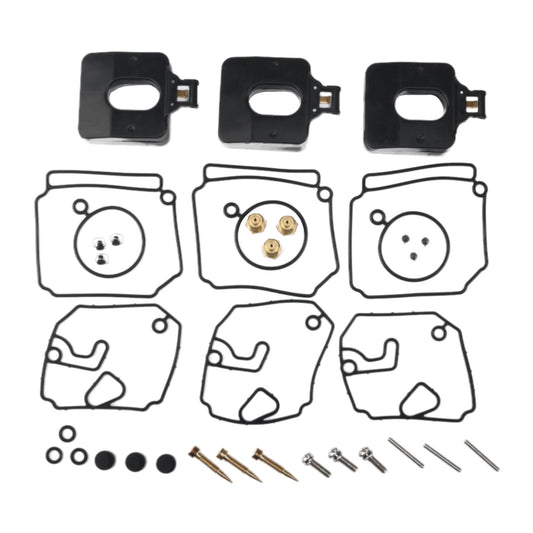
In one documented case study, a 1988 Mercury 115 owner found that after rebuilding the carburetors, the engine would still stall when put into gear until the idle screws were properly adjusted 9. For parts, check out our extensive Mercury carburetor repair kits selection to get OEM quality components.
Idle Air Control Valve Defects
While the 1988 Mariner 115 HP doesn't have an electronic idle air control valve like newer engines, it does rely on properly adjusted idle circuits in the carburetors. The service manual specifies that idle speed should be set to 750 RPM in gear and 850-875 RPM out of gear 3.
Low Compression Causes
According to the Mariner service manual, proper compression readings for the 1988 115 HP should be 90-110 PSI per cylinder, with no more than 10% variation between cylinders 3.
Mercury Marine service statistics indicate that approximately 5% of stalling issues in older outboards are related to internal engine wear causing low compression 12.
Fuel Hose Degradation
The ABYC recommends replacing fuel hoses every 5-7 years due to internal degradation that can't be visually detected 5.
Research by BoatUS found that ethanol-blended fuels accelerate the breakdown of certain rubber compounds in older fuel lines, potentially releasing particles that can clog fuel system components 8.
When to Consult a Marine Mechanic
Based on Mercury Marine's troubleshooting guidelines, you should consider professional help when:
- You've systematically checked fuel and ignition systems without resolution
- You suspect low compression or internal engine wear
- You lack specialized tools like a DVA adapter or compression tester
- The problem only occurs under specific operating conditions that are difficult to replicate during testing
A certified marine mechanic has specialized diagnostic equipment and can perform pressure tests, timing verification, and compression tests that are beyond most DIY capabilities 12.
Maintenance Tips to Prevent Engine Stalling
Prevention is always better than cure. Based on manufacturer recommendations and my own experience:
- Keep fuel fresh and properly mixed: The Mariner service manual specifies a 50:1 ratio for the 1988 115 HP 3.
- Regular primer bulb and fuel line inspections: Mercury Marine recommends checking before every outing 6.
- Routine spark plug cleaning and replacement: The service manual calls for replacement every 100 hours or annually 3.
- Inspect and clean flame arrestor/air box regularly: The NMMA recommends cleaning every 50-100 hours of operation 7.
- Battery care and charge maintenance: ABYC guidelines recommend load-testing marine batteries annually 5.
If you're interested in high-quality replacement parts to keep your engine running smoothly, JLM Marine offers a wide range of OEM-quality boat parts and accessories, ensuring you get durable and compatible components for your maintenance needs.
Additional Resources and Troubleshooting Tools
When diagnosing complex issues, these resources can be invaluable:
-
CDI Electronics Troubleshooting Guide: Available for download at CDI Electronics Knowledge Base, this guide provides detailed testing procedures specifically for marine ignition systems.
-
Essential tools: A digital multimeter with Direct Voltage Adapter (DVA) is crucial for accurate ignition system testing. CDI Electronics' testing guides specify that standard multimeters without a DVA adapter will give misleading readings on ignition components 4.
-
Parts shopping and OEM vs aftermarket advice: While OEM parts from Mercury/Mariner are engineered to exact specifications, quality aftermarket parts from reputable manufacturers can also provide reliable service. JLM Marine is a supplier that focuses on quality parts manufactured to OEM specifications, ensuring proper fit and function.
Frequently Asked Questions
Why does my outboard engine stall after priming?
Stalling after priming typically indicates a fuel delivery problem. Mercury Marine's technical service bulletin TSB-2018-05 identifies the most common causes as a faulty fuel pump not sending fuel to the carburetor, a leaking primer bulb check valve, or significant leaks in the fuel line 6.
In a documented case study, this exact symptom was resolved by replacing a failing fuel pump that wasn't maintaining pressure to the carburetors 10.
How do I know if my primer bulb is faulty?
According to Mercury Marine's guidelines, a properly functioning primer bulb should:
- Firm up after 3-5 squeezes
- Remain firm after you stop squeezing
- Show no cracks or deformation
- Have properly functioning internal check valves
If the bulb stays soft, gradually softens, or shows visible damage, it needs replacement 6.
What tools do I need to diagnose ignition problems?
For comprehensive ignition system diagnosis on a 1988 Mariner 115 HP, the following tools are essential according to CDI Electronics:
- Digital multimeter: Must read DC voltage, resistance, and continuity
- Direct Voltage Adapter (DVA): Essential for accurately measuring pulsed DC from ignition components
- Spark tester: To visually confirm spark strength
- Basic hand tools: For accessing components
- Service manual: Contains specifications and testing procedures specific to your engine
CDI Electronics emphasizes that standard multimeter tests without a DVA adapter will give inaccurate readings on marine ignition components 4.
How often should I replace spark plugs on my outboard?
The Mariner service manual for the 1988 115 HP specifies replacing spark plugs every 100 hours of operation or annually, whichever comes first 3.
However, Mercury Marine's more recent recommendations suggest inspection every 50 hours and replacement if electrodes show wear, fouling, or damage 12.
Can stale fuel cause my engine to stall?
Yes, definitely. BoatUS research shows that gasoline begins to degrade after just 30 days, with ethanol-blended fuels deteriorating even faster 8.
The Mariner service manual specifically warns that stale or contaminated fuel can cause poor combustion, hesitation, and stalling, especially under load 3.
Should I use OEM or aftermarket parts for fuel components?
For critical fuel system components, Mercury Marine recommends OEM parts to ensure proper fit and function 12.
The NMMA reports that OEM parts generally last 1.5-2 times longer than budget aftermarket alternatives 7. However, high-quality aftermarket parts from reputable manufacturers that meet or exceed OEM specifications can provide reliable service.
JLM Marine offers parts manufactured to strict quality standards, often in the same facilities that produce OEM components, making them a reliable alternative when OEM parts may be unavailable or cost-prohibitive.
My own experiences with my 1988 Mariner 115 HP, backed by manufacturer documentation and industry research, confirm that a methodical approach to diagnosing fuel-related stalling is the key to reliable performance. By understanding the relationships between components, following factory-specified maintenance intervals, and using quality parts, you can resolve even the most persistent stalling issues and enjoy trouble-free boating. For OEM-quality parts and expert advice, visit the JLM Marine homepage.
For Mercury Owners:
To assist you in maintaining and repairing your marine engines, we hope the following resources may be of use:
-
Mercury / Mercruiser / Mariner Parts from JLM Marine
- Mercury Thermostat
- Mercury Water Pump
- Mercury Water Pump Impeller
- Mercury Water Pump Impeller Kit
- Mercury Carburetor
- Mercury Carburetor Repair Kit
- Mercury Fuel Pump
- Mercury Fuel Pump Kit
- Mercury Air Filter
- Mercury Oil Filter
- Mercury Oil Seal
- Mercury Fuel Filter
- Mercury Gasket
- Mercury Relay
- Mercury Ignition Switch
- Mercury Trim Tilt Switch
- Mercury Ignition Sensor
- Mercury Spark Plug Wire
- Mercury Water Distribution Housing
- Mercury Bellow
- Mercury Bellows Kit
- Mercury Serpentine Pulley
- Mercury Accessories
- Mercury Belt
- Mercury Oil Plug
- Mercury Drain Plug
- Mercury Bellows Replacement Tool
About JLM Marine
Founded in 2002, JLM Marine has established itself as a dedicated manufacturer of high-quality marine parts, based in China. Our commitment to excellence in manufacturing has earned us the trust of top marine brands globally.
As a direct supplier, we bypass intermediaries, which allows us to offer competitive prices without compromising on quality. This approach not only supports cost-efficiency but also ensures that our customers receive the best value directly from the source.
We are excited to expand our reach through retail channels, bringing our expertise and commitment to quality directly to boat owners and enthusiasts worldwide.
Mercury Parts on Sale
- $46.00
$55.00- $46.00
- Unit price
- per
- $33.99
$119.00- $33.99
- Unit price
- per
- $24.99
$29.00- $24.99
- Unit price
- per

- $45.99
$55.00- $45.99
- Unit price
- per
- $18.13
$59.00- $18.13
- Unit price
- per
- $58.60
$70.00- $58.60
- Unit price
- per

- $23.59
$28.00- $23.59
- Unit price
- per

- $85.99
$103.00- $85.99
- Unit price
- per
- $46.50
$60.00- $46.50
- Unit price
- per

- $33.99
$40.00- $33.99
- Unit price
- per
- $39.89
$45.00- $39.89
- Unit price
- per

- $21.50
- $21.50
- Unit price
- per

- $45.99
$55.00- $45.99
- Unit price
- per

- $23.98
- $23.98
- Unit price
- per
- $21.19
$32.00- $21.19
- Unit price
- per

- $35.98
$43.00- $35.98
- Unit price
- per

- $19.95
- $19.95
- Unit price
- per
- $21.50
- $21.50
- Unit price
- per

- $27.77
- $27.77
- Unit price
- per

- $58.60
$70.00- $58.60
- Unit price
- per