


4-Stroke vs 2-Stroke Troubles: Differences in Diagnosis
- Why the Design Matters for Diagnosis
- 2-Stroke Diagnostic Focus: Fuel Mix, Air Leaks, and Compression
- 4-Stroke Diagnostic Focus: Oil, Valves, and Complex Fuel Delivery
- Ignition Diagnosis Differences
- Real-World Failure Examples
- Compression Testing: Same Tool, Different Meaning
- Emission Regulations and the Industry Shift
- Parts Quality: OEM vs Aftermarket
- Step-by-Step Diagnostic Order
- Cost Comparison: Maintenance and Repairs
- When Diagnosis Gets Complex: Know Your Limits
- Global Perspective: Field Repairs

After two decades wrenching on outboards, I can tell you the biggest mistake people make is thinking all engine problems look the same. They don't. A 2-stroke that's misfiring and a 4-stroke running rough might both sputter at the dock, but what's causing it and how you fix it are completely different. The design dictates the failure, and the failure dictates your diagnostic path.
Why the Design Matters for Diagnosis

A 2-stroke fires every revolution and mixes oil directly with fuel. A 4-stroke fires every other revolution and keeps oil separate in a sump. That's not just trivia—it changes everything about what breaks and how you find it.
When a 2-stroke acts up, you're looking at fuel delivery, air leaks in the crankcase, or spark plugs fouled by burnt oil. When a 4-stroke has issues, you're checking valves, oil systems, timing components, and carb circuits that a 2-stroke doesn't even have.
2-Stroke Diagnostic Focus: Fuel Mix, Air Leaks, and Compression

Fuel System and Air Leaks
The number one killer of 2-strokes is a lean condition. Because the oil is premixed with gas, any air leak between the carb and crankcase lets extra air in, leaning out the mixture. The piston overheats, expands, and seizes against the cylinder wall. I've pulled apart dozens of motors with scored cylinders from this exact problem.
How to check: Swap a section of your fuel line with clear hose and watch it while the engine runs. If you see bubbles traveling through the line, you've got an air leak somewhere—fuel pump diaphragm, hose cracks, or a bad seal at the connection. You'll also hear a faint hissing at idle if the leak is bad enough. Fix it immediately or you're looking at a top-end rebuild.
According to a small engine specialist at Earl's Yard Services, "Hard starting or low power is often a sign of failing seals, a clogged exhaust, or low compression from worn rings. A compression test is vital. Also check for air leaks at the crankshaft seals or manifold, which cause a dangerously lean mixture."
Another common 2-stroke issue is the fuel-oil ratio being off. Too little oil and you get rapid wear or seizure. Too much oil and you're fouling plugs and clogging the exhaust with carbon. Always mix to the manufacturer's spec—usually 50:1 for modern outboards, but older motors might need 32:1. Don't guess.
Spark Plug Fouling
2-strokes burn oil, so carbon buildup on the plug is constant. A fouled plug shows up as black, sooty deposits on the electrode. The engine will misfire, idle rough, or refuse to start when cold.
Pull the plug annually on outboards, or every 50 hours of use. Check the gap—it should be around 0.028 to 0.030 inches for most motors. If it's carbon-covered or the gap is blown out past 0.040, replace it. Don't try to clean and reuse a badly fouled plug; it's a $4 part that saves hours of frustration.
Compression and Wear
Normal compression for a healthy 2-stroke sits between 90 and 110 psi. Anything under 90 and you're losing ring seal or the cylinder is scored. Because 2-strokes rely on crankcase pressure to pull in the fuel-air mix, low compression kills power fast.
Run a compression test with the throttle wide open and the plug out. If one cylinder is 15 psi lower than the others, that's your problem cylinder. Piston rings wear faster in 2-strokes because the oil film is thinner than in a 4-stroke's splash system, especially at high RPM.
I've seen two-stroke outboards run 1,500 hours before needing a top-end rebuild, but that's with religious maintenance. Run it hard, skip the oil mix, and you'll be lucky to get 500.
Exhaust Port Carbon
Because oil burns in the exhaust, carbon builds up in the ports and power valve (if equipped). A clogged exhaust chokes the engine, killing top-end power. You'll notice it runs fine at low RPM but won't rev out.
Pull the exhaust cover and scrape the ports with a wooden or plastic tool—metal will gouge the aluminum. Some motors need this every 100 hours. It's dirty work, but it's cheaper than replacing a seized power valve.
4-Stroke Diagnostic Focus: Oil, Valves, and Complex Fuel Delivery
Oil System Issues
A 4-stroke's lifeblood is its oil. The pump circulates it through the crankshaft, cam, valves, and piston skirts. If the oil level drops or the oil gets contaminated, parts wear fast.
Check the oil every ride. Use the dipstick, not a guess. Low oil starves the cam and rocker arms, scoring the lobes and causing a ticking or knocking sound. Dirty oil won't protect bearings, leading to rod knock—a deep, heavy thud that means the engine is toast.
We had a guy ignore his oil light for two weeks. When he brought it in, the crankshaft bearings were welded to the journal. A $50 oil change turned into a $2,500 powerhead replacement.
A small engine mechanic puts it simply: "Pay close attention to spark plug condition, clean air filtration, and, most importantly, the condition and level of the engine oil." That's the core of 4-stroke diagnosis.
Valve Train Problems
Unlike 2-strokes, 4-strokes use intake and exhaust valves. Over time, valve clearances change as parts wear. Too tight and the valve doesn't close fully, causing compression loss and burnt valves. Too loose and you get a loud ticking and poor performance.
Check valve clearances every 300 hours or per the manual. You'll need feeler gauges and the engine cold. Typical clearances run 0.004 to 0.006 inches on the intake and 0.006 to 0.008 on the exhaust, but verify with your spec sheet.
If a valve is burnt, you'll see it in a compression test—one cylinder will be way down. Pull the head and inspect the valve face. A burnt valve has a groove or divot on the sealing edge. Replacing a valve seat costs $300–$600 in parts and machine work, compared to a 2-stroke top-end at $150–$300 for a piston and rings.
Carbon buildup on the valves also causes knocking. If you hear a metallic rattle under load, pull the head and scrape the carbon off the piston crown and valve faces with a plastic scraper. Don't use a wire wheel—it'll damage the aluminum.
Carburetor Complexity
4-stroke carbs have multiple circuits: idle, low-speed, high-speed, and sometimes an accelerator pump. A 2-stroke carb is simpler, often just a single jet and needle.
When a 4-stroke bogs or stalls at low RPM, the idle circuit is clogged. I've seen this on dozens of outboards that sat over winter with old gas. The ethanol in modern fuel gums up the tiny passages.
Pull the carb, remove the float bowl, and pull every jet and passage plug. Spray carb cleaner through each hole until it flows clear. A single speck of varnish will block a 0.020-inch jet. This video shows a 4-stroke outboard that failed at low speed because the low-speed jet was clogged—exactly the kind of issue you don't see in a 2-stroke.
For detailed guidance on carburetor maintenance or parts, check out the extensive carburetor collection and carburetor repair kits available directly from the factory to keep your engine running smoothly.
Also check the float needle and seat. If it sticks, the carb floods, dumping raw gas into the cylinder and washing oil off the walls. You'll see white smoke at startup and fuel dripping from the carb throat.
Governor and Timing
4-strokes on equipment like generators and lawn tractors use a governor to control RPM. If the governor spring loses tension or the linkage binds, the engine surges or stalls under load.
To check, manually move the throttle linkage. It should snap back smoothly. If it's sticky or doesn't return, clean the pivots and check the spring. A troubleshooting guide from iFixit lists governor misalignment as a top cause of 4-stroke stalls.
Timing chains or belts also fail on 4-strokes, especially after 1,000+ hours. A slipped timing chain retards the ignition and valve events, causing hard starting and low power. Replacing a timing belt runs $1,000+ on outboards due to labor.
Ignition Diagnosis Differences
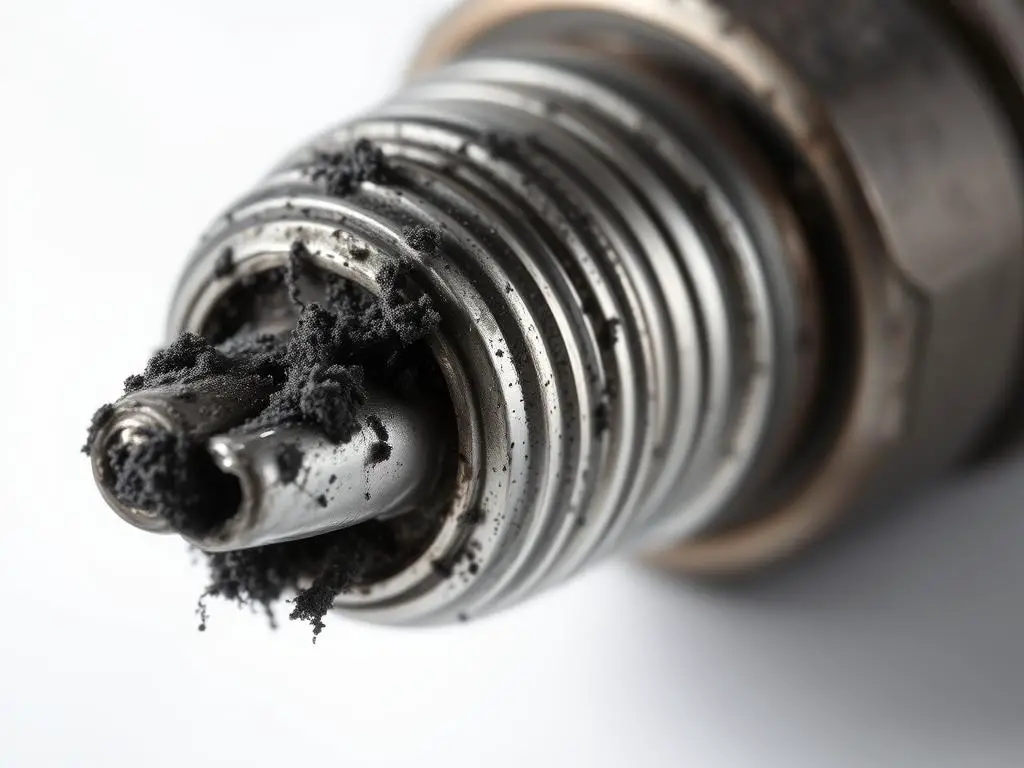
Both engines need spark, but the failure modes differ.
On a 2-stroke, fouled plugs are the first suspect. Pull it, check for wet, black carbon, and replace if needed. If the plug is clean but there's no spark, test the coil. Disconnect the kill switch wire—if spark returns, the switch or wiring is grounding the coil.
On a 4-stroke, plugs last longer because there's no oil in the fuel. But coils can fail, especially if water gets into the plug wells. Swap coils between cylinders to see if the misfire moves. If it does, replace the bad coil. If it doesn't, suspect a valve or injector on that cylinder.
Also check plug condition for fuel delivery clues. A white, chalky plug means lean (vacuum leak or clogged jet). A black, wet plug means rich (stuck choke or flooding carb). An oily plug on a 4-stroke means worn rings or valve seals, not normal operation like on a 2-stroke.
Real-World Failure Examples
2-Stroke Piston Seizure
A case study from Scribd describes a two-stroke piston with an ash-colored crown from overheating. The piston material melted near the exhaust side, nearly causing total failure. Causes included lean jetting, wrong spark plug heat range, advanced timing, or general overheating. This is the four-corner seizure pattern common in 2-strokes when they run lean—the piston expands faster than the cylinder can handle.
We've rebuilt motors like this. The cylinder needs boring to the next oversize, new piston, rings, and often a crank if it seized hard enough to bend the rod. Parts run $200–$400, plus labor.
4-Stroke Power Loss and Surging
A forum post details a 2008 Yamaha F40TLR 4-stroke with only 6 hours that suddenly dropped from 3/4 throttle to idle and shut off. After dealer carb cleaning, new filters, fuel, and plugs, it still surged above idle. The diagnosis pointed to fuel delivery or carburetion—likely a partially blocked jet or a faulty fuel pump diaphragm.
This is typical 4-stroke trouble: intermittent issues tied to complex fuel circuits. A 2-stroke would either run or seize; a 4-stroke limps along with partial blockages because the valve timing masks some fuel starvation.
For parts like fuel pumps, consider the quality and fit of components from trusted sources such as the fuel pump collection or fuel pump kit collection to ensure reliable repairs.
Marine Mechanic Perspective
According to Vintage Boats, "Commercial operators tell an interesting story. Many crabbers and gilnetters still run ancient two-strokes because they're field repairable. Blow a power head, swap it in an afternoon. Try that with a modern four-stroke's complex valve train."
That's the trade-off. A 2-stroke is simple to diagnose and fix but wears faster. A 4-stroke lasts longer but costs more when it breaks. The same source notes 4-stroke timing belts can cost $1,000+ to replace, while 2-stroke maintenance was "spark plugs, lower unit oil, and making sure you mix the right amount of oil in."
Compression Testing: Same Tool, Different Meaning
Both engines use a compression gauge, but what you're testing differs.
On a 2-stroke, low compression usually means worn rings or a scored cylinder from a lean seizure. The rings are doing all the sealing work because there are no valves.
On a 4-stroke, low compression can be rings, but also valves not sealing, a blown head gasket, or carbon holding a valve open. To narrow it down, squirt oil into the cylinder and retest. If compression jumps, it's rings. If it stays low, it's valves or the head.
Normal 4-stroke compression is higher, typically 120–180 psi depending on the engine. Anything under 100 psi and you've got a problem.
Emission Regulations and the Industry Shift
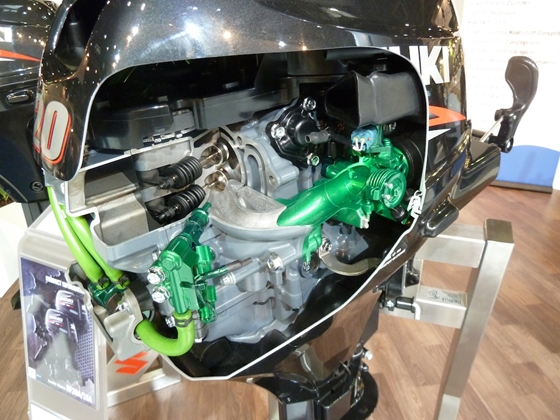
The EPA tightened emission rules in 2004, effectively banning traditional 2-stroke outboards from new production. Two-strokes produce higher hydrocarbons and particulates because unburnt fuel escapes during the scavenging process. According to MarineMax, this regulation pushed the industry toward 4-strokes and direct-injection 2-strokes like Evinrude E-TEC.
Modern DI 2-strokes inject oil and fuel separately under high pressure, eliminating most of the emissions and efficiency problems. They're cleaner and more powerful than old carbureted 2-strokes, but they're also more complex to diagnose—closer to a 4-stroke in terms of required tools and knowledge.
For diagnostic purposes, lump DI 2-strokes with 4-strokes. You'll need a scan tool to read injector codes and fuel pressure gauges to check the high-pressure pump. Traditional carburetor 2-stroke diagnosis doesn't apply.
Parts Quality: OEM vs Aftermarket
When you're fixing either engine type, parts quality matters.
OEM parts fit right and meet the original spec. But you're paying a premium for the brand name stamped on the box. A Yamaha OEM impeller runs $40–$60; a quality aftermarket from a reputable supplier like JLM Marine runs $18–$25 and uses the same rubber compound. We've installed thousands of JLM parts—impellers, water pump kits, fuel pumps—and the failure rate is the same as OEM.
Cheap aftermarket is a different story. The $10 water pump kit from a random online seller uses hard rubber that cracks in six months, or the tolerances are off so it doesn't seal. You'll tear the lower unit apart twice, wasting a weekend and a tube of gear oil. Not worth it.
The middle ground is parts from manufacturers who supply OEM factories but also sell aftermarket under their own label. These use the same tooling and materials. JLM Marine sources from these factories, so you get OEM-level quality without the dealership markup. For diagnosis, using good parts means your fix actually holds, and you're not chasing the same problem again next season.
For quality parts selections, browse the water pump collection, including options for impellers and water pump kits, to avoid repeated breakdowns.
Step-by-Step Diagnostic Order
Here's the order I follow in the shop.
For 2-Strokes:
- Check fuel delivery. Squeeze the primer bulb—does it get firm? If not, there's a leak or the tank vent is blocked. Swap in a clear section of fuel line and look for air bubbles.
- Pull the spark plug. Wet and black? Fouled. Dry and white? Lean. Replace if questionable.
- Run a compression test. Under 90 psi? You've got ring or cylinder wear.
- Inspect the exhaust. Pull the cover and look for carbon buildup choking the ports.
- Check the fuel-oil ratio. Wrong mix causes most 2-stroke problems.
For 4-Strokes:
- Check the oil level and condition. Low or black? Change it and check for metal shavings.
- Pull the spark plug. Check color and gap. Oily? Rings or valve seals. White? Lean condition.
- Test compression. Low on one cylinder? Could be a valve. Squirt oil in and retest to isolate rings vs. valves.
- Inspect the carburetor. Pull the bowl and jets. Look for varnish or debris. Spray cleaner through every passage.
- Check valve clearances (if the engine has been running 300+ hours). Tight valves burn; loose valves tick.
- Test the governor linkage (on utility engines). Sticky? Clean and lubricate.
Cost Comparison: Maintenance and Repairs
According to a forum discussion on Bass Resource, 4-stroke outboard maintenance runs around $700 every 100 hours (oil, filter, plugs, lower unit service). For a 2-stroke, you're paying for premix oil constantly, but scheduled service is cheaper—mostly plugs and lower unit oil.
Long-term, 4-strokes cost more in parts (valve jobs, timing belts) but last longer. Two-strokes are cheaper to rebuild but need it more often. Which one costs less depends on how many hours you run and how hard you push the engine.
When Diagnosis Gets Complex: Know Your Limits
Some problems need a dealer scan tool or specialized knowledge. If a 4-stroke has a misfire that swaps between cylinders randomly, you might be looking at an ECU issue or a failing stator. If a DI 2-stroke won't start and the injectors aren't clicking, you need to check fuel rail pressure with a high-pressure gauge.
Don't throw parts at a problem you can't diagnose. I've seen customers replace coils, fuel pumps, and carbs on a 4-stroke that just needed valve adjustment. That's $500 in parts for a $100 fix.
When in doubt, run through the basics: fuel, spark, compression, air. Ninety percent of problems are in those four systems.
Global Perspective: Field Repairs
We ship parts worldwide, and the feedback from commercial operators is consistent. In remote areas—Alaska, the South Pacific, Australia—2-strokes still dominate because you can fix them with hand tools and a parts kit. A fisherman in the Bering Sea can swap a powerhead in a few hours. Try that with a 4-stroke's timing chain and valve train.
But for recreational users near dealers, 4-strokes make more sense. Cleaner, quieter, better fuel economy, and professional support when needed.
Pro tip: Keep a small notebook in your toolbox. Log every symptom, what you checked, and what fixed it. After a few seasons, you'll have your own diagnostic manual for your specific engine, and patterns will jump out that save hours of troubleshooting.
For comprehensive parts sourcing and support during your diagnostics and repairs, consider browsing options at the JLM Marine main site, where quality marine parts and accessories are available with free worldwide shipping.