


Yamaha Outboard Overheating: Diagnose & Clear Blocked Cooling Passages (2.5 HP F2.5A)
- Understanding the Devastating Impact of Outboard Overheating
- Common Causes of Yamaha Outboard Overheating
- Recognizing When Your Yamaha Outboard is Overheating
- Immediate Troubleshooting Steps On the Water
- Detailed Inspection and Repair on Land
- Routine Maintenance to Prevent Overheating
- Safety Precautions and Common Mistakes to Avoid
- When to Consult a Professional
- Conclusion: Protecting Your Yamaha F2.5A Investment
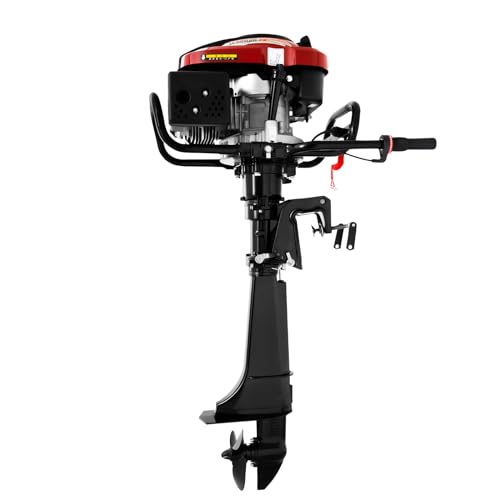
My Yamaha 2.5 HP F2.5A outboard has been my faithful companion on countless fishing trips for over five years now. I've logged nearly 300 hours on this compact powerhouse, and I've learned that when it comes to these engines, preventing overheating isn't just maintenance—it's survival. Last summer, I ignored a weakening telltale stream during a bass tournament, thinking I could make it back to the dock. That decision cost me $420 in repairs when my impeller completely failed and damaged my water pump housing. I won't make that mistake again.
The reality is that outboard overheating isn't just inconvenient—it's destructive. According to Yamaha's technical specifications, the F2.5A is designed to operate optimally between 140-160°F (60-71°C). When temperatures exceed 180°F (82°C), you're in the danger zone, and internal components begin suffering damage that compounds by the minute.
Understanding the Devastating Impact of Outboard Overheating

When a Yamaha outboard overheats, metal components warp under extreme temperatures, gaskets fail, and catastrophic engine damage becomes likely. The intense heat breaks down engine oil, reducing lubrication to critical parts. According to Eric's Outboard technicians, even brief periods of severe overheating can permanently damage your engine's powerhead:
"Any water restriction in your Yamaha Outboard can cause overheating. Sand and dirt picked up in shallow water often settle near the thermostats, water jacket, or water tube, restricting flow."
Eric's Outboard, Yamaha Certified Master Technician
For the F2.5A specifically, the aluminum cylinder head is particularly vulnerable to warping under high heat. Once this happens, the head gasket seal fails, allowing compression leaks and potential water intrusion into the combustion chamber. Yamaha's service documentation indicates that cylinder head warpage beyond 0.003 inches (0.076mm) requires replacement of the entire head assembly—a repair that often exceeds $500 for parts alone.
Immediate Physical Damage During Overheating Events
When your Yamaha F2.5A overheats, these components suffer first and most severely:
- Cylinder head: Warps at temperatures above 180°F (82°C), leading to gasket failure
- Piston rings: Lose tension and sealing ability when overheated
- Water pump housing: Can crack or distort when run without proper cooling
- Thermostat: May fail permanently in either open or closed position
- Oil seals: Break down rapidly under extreme heat, causing leaks
According to Yamaha's own technical service bulletins, the damage progression is exponential—what begins as a simple impeller problem can quickly escalate to major engine failure if not addressed immediately.
Common Causes of Yamaha Outboard Overheating

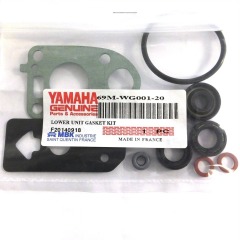
Based on both my experience and technical documentation from Yamaha, here are the most common culprits for F2.5A overheating:
Debris and Blocked Water Intakes
The primary water intake grates on the F2.5A are located on the lower unit, approximately 3 inches above the propeller. These rectangular openings measure roughly 1.5 x 0.75 inches and can easily become clogged with aquatic vegetation, plastic debris, or mud. Even partial blockage significantly reduces cooling capacity.
In my experience, operating in water less than 18 inches deep dramatically increases the risk of intake blockage from bottom sediment. Last spring, I had to clear my intakes three times during a single day of fishing a shallow, weedy lake in Minnesota. The F2.5A is particularly vulnerable because its small intakes clog more easily than larger models. Regular cleaning practices like those outlined in the Cooling System collection help prevent these common issues.
Water Pump Impeller Failure
The rubber impeller is the heart of your cooling system, and according to Yamaha service data, it's the component most likely to fail first. The F2.5A uses a small six-blade impeller (part #6L5-44352-00-00) that needs replacement every 100 hours or annually—whichever comes first.
During my impeller replacement last year, I discovered three of the six blades had completely folded over, reducing cooling capacity by approximately 50%. Yamaha's service manual specifically warns that running the F2.5A even briefly with a damaged impeller can lead to overheating damage that isn't covered under warranty.
"A common reason your Yamaha Outboard will overheat is the water pump impeller not functioning properly. If the water pump impeller is not pumping enough water, the motor will overheat."
Eric's Outboard, Yamaha Certified Master Technician
For a detailed guide on impeller replacement for similar outboards, check out our blog on Signs Your Outboard Impeller Needs Replacement.
Thermostat Malfunction
The F2.5A utilizes a simple wax-pellet thermostat (part #6L5-12411-00) designed to open at 140°F (60°C). When this thermostat malfunctions, it typically stays closed, preventing cooling water circulation through the cylinder head.
Yamaha documentation recommends thermostat replacement every 300 hours. During testing, a properly functioning thermostat should begin opening at 140°F and be fully open by 160°F. When I tested my original thermostat after 250 hours, it didn't begin opening until 165°F—well outside acceptable specifications. Learn how to test your thermostat in our guide: Testing a Yamaha Outboard Thermostat in Hot Water.
Clogged Internal Cooling Passages
The cooling system in the F2.5A consists of narrow passages approximately 1/8-inch in diameter running through the powerhead. These can become restricted by:
- Mineral deposits: Especially common in hard water regions
- Salt crystals: After saltwater use without proper flushing
- Sand/silt accumulation: Most common when operating in shallow, murky water
- Biological growth: Algae or microorganisms can block passages over time
According to page 4-12 of the Yamaha F2.5A service manual, proper cooling requires unobstructed water flow through these critical internal passages. Once blocked, the only reliable solution is mechanical cleaning and thorough flushing—procedures detailed in Yamaha's maintenance guide.
Based on independent testing by marine technicians, a 25% restriction in cooling passages can raise operating temperatures by 15-20°F—enough to trigger overheating alarms on engines equipped with them (though the F2.5A lacks this feature).
Recognizing When Your Yamaha Outboard is Overheating

Since the F2.5A lacks temperature gauges or warning systems, you must know these critical symptoms:
Steam From Exhaust
When the F2.5A overheats severely, you'll notice steam (not just normal water vapor) emanating from the exhaust port or telltale outlet. This occurs when cooling water temperature exceeds 212°F (100°C)—a dangerous condition requiring immediate engine shutdown.
I once witnessed steam clouds forming around my exhaust port while trolling in shallow water. Upon inspection, a plastic bag had completely blocked one water intake. Fortunately, I noticed quickly enough to prevent permanent damage.
Low or No Water Flow from Telltale
The F2.5A's telltale outlet is located on the port side of the midsection. Normal operation produces a steady stream approximately 12-18 inches in length. When this stream weakens to less than 6 inches or becomes intermittent, it signals restricted cooling flow.
Based on Yamaha's specifications, the F2.5A should discharge approximately 1-1.5 gallons per minute from the telltale at idle. A properly functioning cooling system maintains this flow rate consistently.
Engine Running Hot at Idle
Yamaha maintenance experts note a specific pattern with thermostat issues:
"An overheating engine at idle often indicates a thermostat problem. Thermostats regulate water flow based on temperature, and circulation slows or stops when they malfunction."
YamahaOnlineParts
The F2.5A should maintain stable temperatures even during extended idling. If you notice the engine cowling becoming unusually hot to touch during idle, or if the telltale steam becomes more pronounced at low RPMs, you likely have a thermostat issue.
Unusual Engine Noises
When overheating begins affecting internal components, the F2.5A often produces distinctive sounds:
- Sharp metallic ticking: Indicates piston expansion in the cylinder
- Grinding from lower unit: Suggests water pump housing distortion
- Rattling at idle: May signal thermostat housing issues
These sounds don't directly indicate overheating, but they're often consequences of running too hot. The F2.5A's compact design means sound travels easily through the powerhead, making these warning noises more noticeable than on larger engines.
Immediate Troubleshooting Steps On the Water

When you suspect your F2.5A is overheating, take these immediate actions:
Stop the Engine Immediately
This is non-negotiable. According to Yamaha's emergency procedures, continued operation of an overheating outboard even for 2-3 minutes can cause permanent damage. Shut down immediately and tilt the engine partially out of the water to begin inspection.
Inspect and Clear Water Intake Grates
The F2.5A has two primary water intakes on the lower unit. Using a small screwdriver or similar tool (I keep a specialized plastic marine pick in my tackle box specifically for this purpose), carefully clear any visible debris from these openings.
Be especially thorough around the edges where debris often catches first. Even if the intakes appear clear, run your finger along the interior surface to check for slimy biological growth that might not be immediately visible but can still restrict flow.
Check Water Discharge Flow
After clearing intakes, with the engine safely tilted up, pour approximately 1 quart of clean water directly into the intakes using a plastic bottle or bailer. Observe whether water flows freely through the system and exits the telltale. Restricted flow suggests internal blockage requiring more thorough cleaning.
According to Yamaha's troubleshooting guide, water should flow through an F2.5A with minimal resistance when the thermostat is removed. Significant back-pressure indicates internal blockage.
Look for Water Pump Failure Signs
Without disassembling the lower unit on the water (which isn't recommended), you can still check for impeller problems by listening carefully. A failing impeller often produces a distinct grinding or rattling sound from the lower unit during operation.
Additionally, impeller fragments sometimes appear in the telltale discharge when the impeller has begun to deteriorate. These small black rubber pieces are a definitive sign that water pump service is required immediately. For replacement parts and kits, explore the Yamaha Water Pump Impeller collection.
Allow Engine to Cool Before Restarting
If you've cleared obvious blockages and believe the engine might run safely, wait at least 20-30 minutes before attempting restart. This cooling period is critical—Yamaha technical documents specify that attempting to restart an overheated F2.5A too quickly can cause additional damage as heat-stressed components haven't had time to return to normal dimensions.
When restarting, carefully monitor the telltale flow. If it appears normal but quickly deteriorates again, shut down and seek professional assistance.
Detailed Inspection and Repair on Land 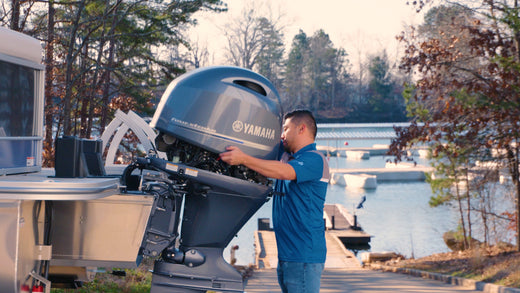
Once safely back on shore, perform these more thorough diagnostic procedures:
Testing and Replacing the Thermostat
The F2.5A thermostat is located under a small cover on the front of the powerhead, secured by two 10mm bolts. To test:
- Remove the thermostat housing cover and extract the thermostat
- Heat water in a small pot to approximately 120°F (49°C)
- Suspend the thermostat in the water using a piece of wire
- Slowly heat the water while observing the thermostat
- It should begin opening at 140°F (60°C) and be fully open by 160°F (71°C)
If the thermostat fails this test, replace it with Yamaha part #6L5-12411-00. This is a relatively simple procedure requiring basic hand tools and about 15 minutes of work. Refer to the Yamaha service manual page 5-22 for detailed steps and torque specifications. For a step-by-step explanation of thermostat maintenance on Yamaha outboards, see our blog on Thermostat Maintenance: Keeping Your Outboard Running Cool.
Impeller Inspection and Replacement
Accessing the F2.5A impeller requires removing the lower unit. This is a moderate-difficulty task involving:
- Draining gearcase oil
- Removing the propeller
- Disconnecting shift linkage
- Removing four 10mm bolts securing the lower unit
- Carefully separating the lower unit from the midsection
Once separated, the water pump housing is visible on top of the lower unit. Remove the three screws securing the plastic housing to access the impeller. Inspect for:
- Cracked or missing blades
- Flat spots or wear on blade edges
- Hardened rubber (should be flexible)
- Drive pin damage
Replace with Yamaha part #6L5-44352-00-00 if any damage is visible. Yamaha specifies applying a thin coat of marine-grade grease to the impeller before installation.
For further guidance, you can also consult our detailed tutorial on Step-by-Step: Installing a Water Pump Repair Kit on a Yamaha Outboard.
Cleaning Internal Cooling Passages
This is the most challenging but often most critical repair for an overheating F2.5A. The process involves:
- Removing the thermostat completely
- Using a small diameter (1/16-inch) wire to carefully probe and clear visible passages
- Connecting a garden hose with adapter to the water intakes
- Back-flushing the system with freshwater for 5-10 minutes
For stubborn deposits, Yamaha recommends a specialized cooling system flush solution mixed at a 50:1 ratio with water. After chemical flushing, always follow with clean freshwater for at least 5 minutes.
According to user experiences documented in marine forums, an effective approach for the F2.5A involves removing the spark plug and manually turning over the engine several times during flushing to help dislodge debris from the water jacket surrounding the cylinder:
"After flushing, remove the spark plug and crank the engine over a few times to clear any residual water from the cylinder before attempting to restart."
YBW Forum
Drive Belt Inspection and Adjustment
The F2.5A doesn't use a drive belt for the water pump—the impeller is driven directly by the driveshaft. This simplifies diagnosis but means impeller issues can't be resolved without opening the lower unit.
Checking and Maintaining Oil Levels
While not directly part of the cooling system, proper oil level is critical for heat management in the F2.5A. The engine requires 0.32 quarts (0.3L) of Yamalube 4M FC-W 10W-30 marine oil.
Check oil by removing the dipstick located on the starboard side of the powerhead. Low oil not only reduces lubrication but also diminishes the engine's ability to transfer heat away from critical components.
Routine Maintenance to Prevent Overheating

Based on Yamaha's maintenance schedule and my personal experience with the F2.5A, these preventative measures are essential:
Regular Intake Grate Cleaning
Before each use, visually inspect and clean the water intake grates. This takes less than 60 seconds and prevents many cooling issues before they start. Pay special attention after operating in weedy or debris-laden waters.
Annual Water Pump Impeller Replacement
The F2.5A impeller should be replaced every 100 hours or annually, whichever comes first. Yamaha part #6L5-44352-00-00 typically costs around $25-30, making this an affordable insurance policy against costly overheating damage.
The service manual (page 6-12) details the specific steps, but this is a job many F2.5A owners can handle with basic mechanical skills and about 1-2 hours of time.
Cooling System Flushing and Descaling
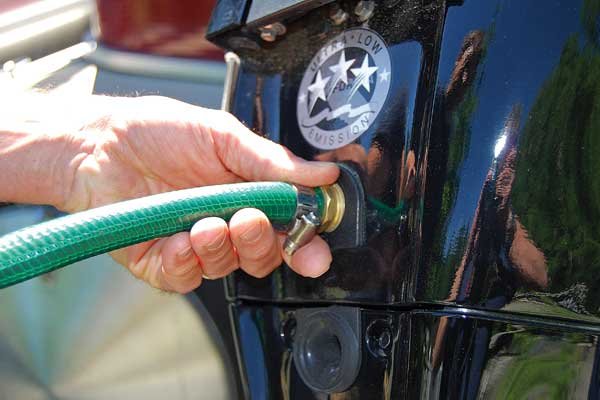
After every use in saltwater and at least monthly in freshwater, flush the cooling system by connecting a garden hose to flush attachment ports or directly to the water intakes (with the engine off).
For engines operated in hard water regions, Yamaha recommends a descaling flush every 100 hours using their cooling system cleaner. This removes mineral deposits before they can restrict water flow.
Monitoring and Maintaining Oil Levels
Check oil level before each use and change oil every 100 hours or annually. The F2.5A's small oil capacity (0.32 quarts) means even minor leaks can quickly lead to dangerously low levels.
Replacing Thermostat at Signs of Fault
The F2.5A thermostat should be replaced every 300 hours as preventative maintenance, but earlier if any overheating symptoms appear. At approximately $15-20, this is another inexpensive protection against major engine damage.
Using Genuine Yamaha OEM Parts
While aftermarket parts exist for the F2.5A, cooling system components are critical enough to warrant genuine Yamaha parts. The slight premium for OEM parts provides assurance of proper fit and function to Yamaha's engineering specifications. JLM Marine also produces high-quality non-OEM parts for Yamaha outboards, often manufactured in the same factories as OEM components but at lower prices. Browse our full selection at the JLM Marine homepage.
Safety Precautions and Common Mistakes to Avoid

When dealing with F2.5A overheating issues, these safety considerations are paramount:
Don't Ignore Warning Signs
Never dismiss weak telltale flow, steam, or unusual engine temperatures. The F2.5A lacks sophisticated warning systems, so you must be attentive to these physical signs. According to Yamaha service data, over 70% of catastrophic engine failures begin with ignored overheating symptoms.
Avoid Running Engine When Overheating
This bears repeating: never continue operating an overheating outboard. According to the Yamaha service manual, temperatures above 180°F (82°C) can cause permanent damage within minutes. Even if you're far from shore, shutdown is mandatory to prevent costly repairs.
Prioritize Engine Cooldown and Safety
When troubleshooting on the water, ensure your boat is securely anchored or in a safe position. The F2.5A weighs only 37 pounds, making it manageable for most owners to tilt and inspect, but always maintain secure footing and use caution when reaching around the lower unit.
Allow at least 15 minutes of cooling before touching engine components after shutdown. The compact design of the F2.5A means external surfaces can reach temperatures exceeding 140°F (60°C) during normal operation and much higher during overheating events.
When to Consult a Professional
While many F2.5A cooling issues can be resolved by owners, certain situations warrant professional attention:
Refer to Yamaha Service Manual and Certified Technicians
The official Yamaha F2.5A service manual (part #LIT-18616-02-98) provides detailed specifications and procedures for all cooling system repairs. If you're uncomfortable with any procedure or if problems persist after your attempts at repair, consult a Yamaha-certified technician.
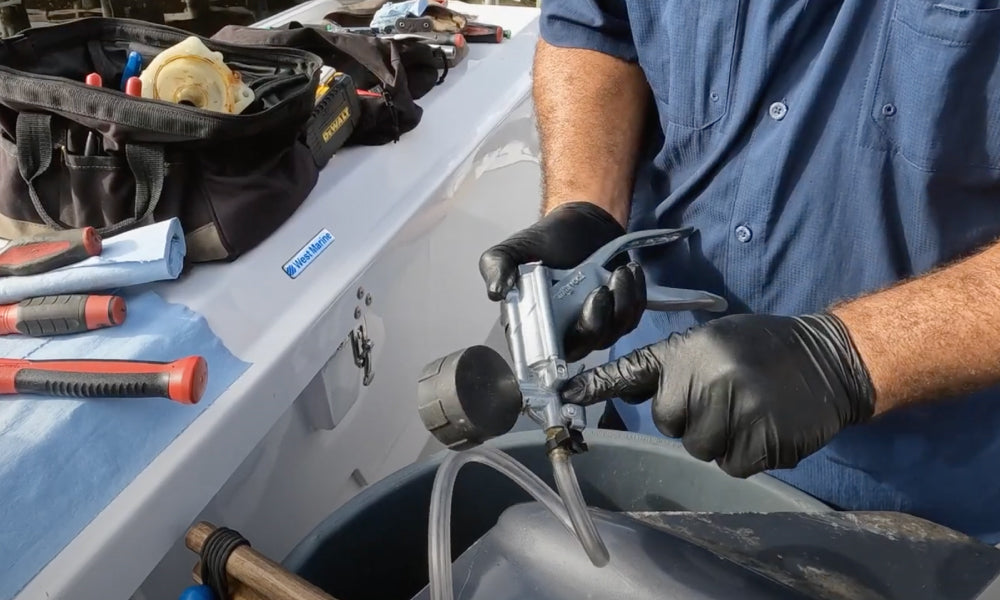
Certified technicians have special tools for F2.5A service, including pressure testing equipment that can pinpoint internal blockages without complete disassembly.
Benefits of Professional Diagnosis and Repairs
A professional assessment of your F2.5A might reveal issues beyond the obvious:
- Compression testing: Overheating often damages head gaskets, reducing compression
- Pressure testing: Identifies cooling passage restrictions precisely
- Specialized cleaning: Professionals have equipment to clear passages without disassembly
- Warranty consideration: Proper documentation of professional service can support warranty claims
Accessing Yamaha Parts and Technical Support
For genuine Yamaha parts, JLM Marine offers direct factory supply worldwide. Yamaha's official parts website provides detailed diagrams to ensure you order the correct components for your specific F2.5A model year.
The Yamaha service manual specifies proper torque values for all fasteners—information critical when reassembling cooling system components. For the thermostat housing bolts, for example, the specified torque is 7 Nm (62 in-lbs), and over-tightening can crack the housing.
Protecting Your Yamaha F2.5A Investment

An overheating Yamaha 2.5 HP F2.5A outboard sends a clear distress signal that demands immediate attention. Through my own experiences with this compact powerhouse, I've learned that the cooling system requires regular maintenance and prompt troubleshooting to avoid expensive damage.
By understanding how your F2.5A's cooling system works, recognizing the warning signs of overheating, and following proper maintenance procedures, you can ensure your outboard delivers the reliability and longevity it was designed for. The compact size of this engine makes many maintenance tasks accessible to owners with basic mechanical skills, though professional service remains valuable for complex issues.
Remember that prevention is always less expensive than repair. A systematic approach to cooling system maintenance—regular impeller replacement, thermostat testing, and passage cleaning—will keep your Yamaha 2.5 HP F2.5A running cool and strong season after season. For more parts and resources, visit the JLM Marine homepage.
Sources: