



Troubleshooting No Spark on One Cylinder of an Evinrude 25 HP Outboard
- Tools You'll Need
- How the Ignition System Works
- Safety and Liability Warning
- Component Testing: Most Likely to Least Likely
- Exact Specs by Model Year
- Step-by-Step Diagnostic Sequence
- When to Replace vs. Keep Testing
- Parts Replacement: What You'll Need
- Real Case: 1978 Evinrude 25 HP Electric Start
- OEM vs. Non-OEM Parts
- Ordering Parts: What Info You'll Need
- Summary of Diagnostic Results
- Additional Resources
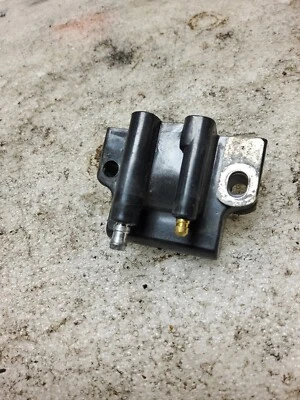
If your Evinrude 25 HP outboard runs on only one cylinder, you're dealing with an ignition problem. The component that's failed is usually one of these: ignition coil, power pack, or a wiring short in the kill circuit. Less common culprits include a weak flywheel magnet, faulty timer base, or insufficient cranking speed below 250 RPM.
Tools You'll Need
A Digital Multimeter (DMM) with a Direct Voltage Adapter (DVA) is non-negotiable. You cannot accurately test CDI power packs and stators without one. Standard multimeters won't read the high-energy pulses correctly. The DVA converts those pulses into steady DC voltage your meter can measure. Brands like Fluke are solid, but a mid-range DMM with DVA will work.
You'll also need:
- Spark gap tester – Set to 7/16 inch gap for consistent testing. Don't rely on holding the plug near the block.
- Ohmmeter – Built into most DMMs for checking resistance in coils, triggers, and stators.
- Basic hand tools – Sockets, screwdrivers (insulated), pliers, wire strippers.
- Safety gear – Safety glasses and insulated gloves. CDI systems discharge 150V+ DC pulses.
- Load resistor – 5000-ohm rated for ignition testing, used to isolate bad coils from bad power packs.
- Service manual – Specific to your engine's year. Wiring colors and specs changed across production runs.
How the Ignition System Works

Your Evinrude 25 HP uses alternator-driven CD (Capacitor Discharge) ignition on 1972+ models. Pre-1972 models may have points ignition.
When you crank the engine, magnets embedded in the flywheel pass over coils in the stator, generating AC voltage. This AC feeds the power pack (CDI unit), which stores energy in a capacitor. At the precise moment determined by the timer base (trigger), the power pack dumps stored energy into the primary winding of the ignition coil. The coil transforms this into 20,000+ volts that jumps the spark plug gap.
The ignition switch grounds out the power pack via the black/yellow kill wire to shut the engine off. If this wire shorts to ground, you lose spark. The rectifier/regulator charges the battery and powers the tach but rarely causes single-cylinder spark loss.
Safety and Liability Warning
You are working with high-voltage ignition components that discharge over 150V DC. Always disconnect the battery before testing. Wear safety glasses and insulated gloves. Ground all test leads to unpainted metal on the cylinder head. If you are uncomfortable performing these tests, contact a certified marine technician. JLM Marine and the author assume no liability for injury or damage resulting from DIY repairs.
Component Testing: Most Likely to Least Likely

We test from simplest to hardest, moving from the spark plug to the stator.
Spark Plugs
Always start here. Two-stroke engines foul plugs constantly from excess oil or carbon buildup.
What to do:
Remove both plugs. Inspect for wet carbon, cracked porcelain, or worn electrodes. The correct plug for most Evinrude 25 HP models is Champion QL77JC4. Verify this in your service manual , as plug heat range varies by year.
If one plug is fouled or damaged, replace both. They have similar service life. A fouled plug prevents spark even if the rest of the system is perfect.
Ignition Kill Circuit (Black/Yellow Wire)
The black/yellow wire runs from the ignition switch to the power pack. When the key is turned off, it grounds out the CDI to kill the engine. If this wire shorts to ground anywhere in the boat's wiring harness, it grounds the CDI constantly.
Test:
- Locate the black/yellow wire at the power pack.
- Disconnect it.
- Retest for spark on both cylinders using a spark gap tester set to 7/16 inch, grounded to an unpainted cylinder head bolt.
- Crank the engine.
If spark returns, the fault is in the boat-side wiring: check the key switch, shift interlock switch, or chafed harness wiring. According to CDI Electronics troubleshooting guides, disconnecting the kill circuit isolates the engine from helm wiring and rules out stop-circuit faults.
To totally isolate the engine, unplug the red Amphenol connector (if equipped) that connects the boat harness to the engine harness. Retest for spark. If spark appears, the boat wiring is shorting the kill circuit.
Ignition Coils
Each cylinder has its own coil. The coil transforms the low-voltage pulse from the power pack into high voltage for the spark plug. Coil insulation breaks down from heat, vibration, and saltwater corrosion.
Swap test:
- Disconnect the primary wires (low-voltage black leads from the power pack) from both coils.
- Swap them—connect the wire from the dead cylinder to the working cylinder's coil, and vice versa.
- Retest for spark.
If the no-spark condition moves to the other cylinder, the coil is faulty. Replace it. We recommend replacing both coils at the same time on a twin-cylinder engine; if one failed, the other is close behind. Shop Evinrude 25 HP ignition coils at JLM Marine.
Resistance test:
Use an ohmmeter to check primary winding resistance. Specs vary by year, but typically read 0.05–0.2 ohms for the primary and 225–325 ohms for the secondary (spark plug wire to ground). Infinite resistance indicates an open winding; the coil is bad.
Power Pack (CDI Unit)
The power pack stores energy from the stator and discharges it to the coils. Heat, vibration, and saltwater accelerate failure. A common failure mode is one output channel dying while the other works.
DVA output test:
- Disconnect the orange wires (coil outputs) from both ignition coils.
- Connect your DMM with DVA to one orange wire. Set the meter to DC volts.
- Crank the engine and note the DVA reading.
You should see at least 150V DVA, often higher. If the reading is low or zero, the power pack output for that cylinder is dead.
Load resistor test:
If DVA is low, determine whether the coil is loading down the power pack or the pack itself is weak.
- Disconnect the suspect orange wire from the coil.
- Connect it to a 5000-ohm load resistor (rated for ignition testing).
- Reconnect your DVA meter to the orange wire.
- Crank the engine briefly—no more than 2–3 seconds to avoid overheating the resistor.
If the DVA reading improves significantly with the resistor (e.g., jumps from 50V to 180V), the ignition coil is bad—it's drawing too much current. If the reading remains low, the power pack is faulty.
A real-world case from a 1983 Johnson 25 HP (same ignition as Evinrude) reported on iboats forums showed no spark on the bottom cylinder. The owner tested stator output (good) and swapped coil wires (no change). DVA on the power pack's orange wire to the dead coil read 40V. After replacing the power pack, DVA jumped to 200V and spark returned.
Timer Base (Trigger Assembly)
The timer base senses flywheel magnet position and signals the power pack when to fire. It mounts under the flywheel on a small plate with an air gap to the flywheel magnets.
Resistance test:
Locate the timer base wires. On most Evinrude 25 HP models, these are a white wire and a black/white wire. Check resistance between them with an ohmmeter. Typical spec: 15–42 ohms. Out-of-spec readings indicate a bad trigger.
DVA test:
- Connect your DMM with DVA to the timer base output wires (often white and black/white).
- Crank the engine.
- You should see at least 0.6V DVA, usually closer to 1–2V.
Low or zero DVA indicates a weak or failed timer base. Adjust the air gap between the timer base sensor and flywheel magnets to 0.020 inch using a feeler gauge. If DVA doesn't improve, replace the timer base.
Critical warning: A faulty timer base can send erratic voltage spikes back into the power pack, damaging it. If you replace a power pack and it fails again quickly, test the timer base. The electrical feedback occurs because the trigger circuit shares a common ground with the power pack's capacitor discharge circuit. A failing trigger with internal shorts creates a low-resistance path that allows high-voltage backfeed during the CDI discharge cycle, overheating and destroying transistors in the power pack.
Stator
The stator generates AC voltage that powers the ignition system. It sits under the flywheel, and its coils are potted in epoxy. Heat and saltwater intrusion cause insulation breakdown, leading to shorted or open windings.
Resistance test:
On most Evinrude 25 HP models, the stator's ignition charging coils are the brown and brown/yellow wires. Disconnect these from the power pack. Measure resistance with an ohmmeter: typical spec is 450–550 ohms. Significantly higher resistance (open circuit) or near-zero (short) indicates a bad stator.
DVA test:
- Reconnect the stator wires to the power pack.
- Connect your DMM with DVA to the brown and brown/yellow wires at the power pack side (or backprobe the connector).
- Crank the engine.
- You should see at least 150V AC DVA, often 200V+ on a healthy stator.
Readings below 100V suggest the stator is failing. Visually inspect the stator under the flywheel for melted, sticky, or leaking potting compound dripping onto the engine block—a clear sign of internal short-circuit damage.
A 1990 Evinrude 25 HP owner on TinBoats forum reported weak spark on both cylinders. Stator DVA measured only 80V cranking. After replacing the under-flywheel stator and converting to an external CDI system, spark returned strong on both cylinders.
Flywheel Magnets
The flywheel contains permanent magnets that pass over the stator and trigger. If a magnet cracks, chips, or becomes demagnetized, voltage output drops. This is rare but happens after flywheel strikes or improper removal.
Inspection:
Remove the flywheel using a harmonic balancer puller threaded into the center of the flywheel. Never use a jaw-style gear puller—it will crack the flywheel. Visually inspect each magnet for chips, cracks, or separation from the flywheel. Gently tap each magnet with a plastic hammer; a loose magnet will make a hollow sound.
A chipped magnet on a 1978 Evinrude 25 HP caused stator DVA to drop from 220V (normal) to 95V on one charging coil. The engine ran on one cylinder intermittently. After flywheel replacement, DVA returned to 210V.
Timing:
If you remove the flywheel, note the position of the woodruff key in the crankshaft. This key aligns the flywheel magnets to the timer base. A sheared key will retard ignition timing, causing rough running or no start. Reinstall the flywheel with the key properly seated and torque the flywheel nut to factory spec—typically 40–45 ft-lbs for Evinrude 25 HP models. Verify this in your service manual.
Battery and Cranking Speed
The battery powers the starter motor. If cranking speed drops below 250 RPM, the stator doesn't generate enough voltage to charge the power pack's capacitor. This results in weak or no spark on both cylinders.
Test:
- Measure battery voltage with the engine off: should be at least 12.6V.
- Crank the engine and measure voltage at the battery terminals. Voltage should not drop below 10V.
- Listen to cranking cadence. If it sounds sluggish or uneven, suspect a weak battery, corroded cables, or failing starter motor.
You can estimate cranking RPM by sound: a healthy 25 HP Evinrude should produce a steady "whir-whir-whir" at roughly 4 cranks per second (240 RPM). Slower cranking will cause ignition failure.
Use a marine-rated battery with adequate Cold Cranking Amps (CCA). A car battery may start the engine but lacks the consistent power delivery needed for reliable ignition in damp marine conditions.
Rectifier/Regulator
This component converts AC from the stator to DC for battery charging and sometimes powers the tachometer. It rarely causes single-cylinder spark loss. However, on some older Evinrude models, a failed rectifier can create a voltage drain on the stator, indirectly weakening spark.
Symptoms:
- Battery not charging
- Tachometer dead
- Weak spark on both cylinders (less common)
If you're also experiencing charging issues, test the rectifier. Otherwise, skip this component when diagnosing single-cylinder no spark.
Exact Specs by Model Year
Evinrude 25 HP ignition specs vary across production eras. Here are tested values for DVA and resistance:
Pre-1993 models (points or early CDI):
- Timer base resistance: 15–25 ohms
- Timer base DVA: ≥0.6V cranking
- Stator charging coil (brown/brown-yellow): 450–500 ohms, ≥150V DVA
- Power pack output to coils (orange): ≥150V DVA
1993 and newer (solid-state CDI):
- Timer base resistance: 20–42 ohms
- Timer base DVA: ≥1.0V cranking
- Stator charging coil (brown/brown-yellow): 500–550 ohms, ≥180V DVA
- Power pack output to coils (orange): ≥180V DVA
For exact wire colors and connector pin-outs, consult your engine's service manual. Early models may use different color codes.
Step-by-Step Diagnostic Sequence

We recommend testing in this order:
- Spark plug – Remove, inspect, replace if fouled.
- Kill circuit – Disconnect black/yellow wire, retest.
- Coil swap test – Swap primary wires, see if no-spark moves.
- Power pack DVA – Test orange wire output to dead coil.
- Load resistor test – Isolate coil vs. pack failure.
- Timer base – Check resistance and DVA.
- Stator – Measure resistance and DVA output.
- Flywheel magnets – Visual inspection if all else passes.
Safe Spark Testing Procedure
- Disconnect the battery negative cable.
- Remove both spark plugs.
- Install a known-good spark plug into the wire for the dead cylinder, or use a spark gap tester set to 7/16 inch.
- Ground the tester to an unpainted cylinder head bolt for a true ground.
- Reconnect the battery.
- Crank the engine using the ignition switch or pull cord (if manual start).
- Observe the spark: you want a strong, consistent blue spark. Weak yellow or orange spark indicates low voltage. No spark confirms the fault.
If spark moves to the other cylinder after swapping coil wires, the original coil or its plug wire is bad.
When to Replace vs. Keep Testing
Replace immediately:
- Fouled or damaged spark plug
- Ignition coil that fails the swap test or shows out-of-spec resistance
- Timer base with low DVA or wrong resistance
- Power pack with low DVA output after load resistor test confirms it
- Stator with low DVA or open/shorted windings
Keep testing:
- If power pack DVA is good (≥150V) but coil shows low output, test the coil primary resistance and secondary resistance. A high-resistance secondary (over 400 ohms on most models) indicates internal coil failure.
- If stator resistance is correct but DVA is low, inspect flywheel magnets before replacing the stator.
Replace both coils together: On twin-cylinder engines, if one coil has failed, the other has endured the same conditions. Save yourself a second trip by replacing both. Order matched ignition coil sets for Evinrude 25 HP at JLM Marine.
Parts Replacement: What You'll Need
Replacing components under the flywheel (stator, timer base) requires:
- Flywheel puller – Harmonic balancer style threaded into flywheel center. A universal jaw puller will crack the flywheel.
- Flywheel holder strap – Prevents flywheel rotation while loosening the center nut.
- Torque wrench – Flywheel nut must be torqued to spec (40–45 ft-lbs typical).
- Feeler gauge – Set timer base air gap to 0.020 inch.
Timer base synchronization: If you replace the timer base, ignition timing must be reset. The timer base plate has slotted adjustment holes. Loosen the mounting screws, rotate the plate to align timing marks per the service manual (typically stamped on the flywheel and visible through a port in the block), then retighten. Without proper timing adjustment, the engine will run rough, backfire, or fail to start.
Real Case: 1978 Evinrude 25 HP Electric Start
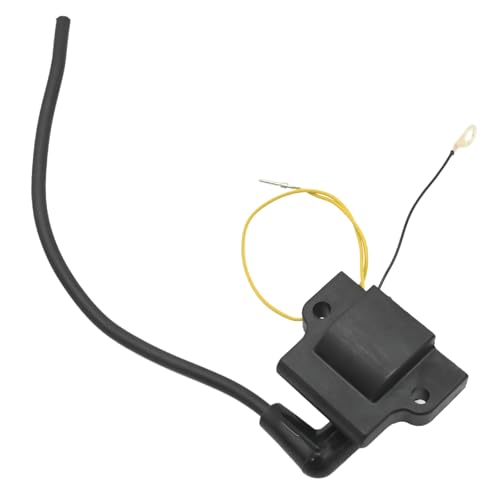
A customer reported spark only on the bottom cylinder. Tests showed:
- Stator DVA: 200V (good)
- Timer base resistance: 18 ohms (good)
- Timer base DVA: 1.2V (good)
- Power pack DVA to top coil (orange wire): 55V (bad)
- Power pack DVA to bottom coil (orange wire): 210V (good)
Load resistor test on the top coil's orange wire: DVA jumped to 190V, confirming the top ignition coil was loading down the pack. Replaced the top coil. Spark returned strong. Engine ran smoothly. (iboats forum case)
OEM vs. Non-OEM Parts
OEM (Evinrude/BRP): Guaranteed fit and quality, but you're paying a premium for the logo on the box. A factory ignition coil can run $120–180 each.
Cheap aftermarket: Avoid no-name sellers offering $15 coils. The potting compound cracks, windings corrode, and you'll be pulling the engine apart again in six months. Not worth the headache.
Quality non-OEM (JLM Marine): Many factories that manufacture OEM components use excess production capacity to make non-OEM parts. These are identical or near-identical to OEM but sold without the brand markup. JLM Marine sources ignition coils, stators, and power packs directly from these factories. You get factory-spec quality without the dealership price. A JLM ignition coil runs $45–70, and it fits right, lasts, and you don't burn cash unnecessarily.
Ordering Parts: What Info You'll Need
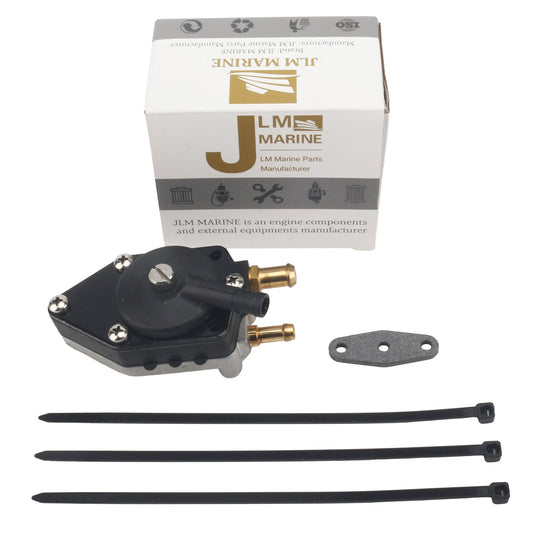
To order the correct parts from JLM Marine, have this information ready:
- Year of your Evinrude 25 HP
- Model number (stamped on the mounting bracket or ID plate)
- Serial number (also on ID plate)
The model number determines which ignition system your engine uses (points, UFI under-flywheel, or external CDI). Email your engine details to support@jlmmarine.com, and we'll match the exact part.
Alternatively, use our online parts catalog and filter by year and HP. If you're unsure, contact us through our inquiry form—we respond within 24 hours.
Summary of Diagnostic Results
If you've completed all DVA and resistance tests, here's how to interpret your data:
- Stator DVA good + Timer DVA good + Power pack DVA to coil bad = Replace power pack
- Stator DVA good + Timer DVA good + Power pack DVA to coil good + Load resistor test improves DVA = Replace ignition coil
- Stator DVA low + Timer DVA good + Power pack DVA low = Replace stator
- Stator DVA good + Timer DVA low = Replace timer base
- Coil swap test moves no-spark to other cylinder = Replace ignition coil
- Disconnect black/yellow wire restores spark = Fault in kill circuit or boat wiring
Additional Resources
For deeper technical detail, consult these sources:
- CDI Electronics Troubleshooting Guide for Johnson/Evinrude – Comprehensive DVA voltage tables and resistance specs for OMC outboards.
- CDI Electronics - Testing Ignition Components (YouTube) – Step-by-step video on using DVA meters to test power packs and coils.
- JLM Marine About Us – Learn about our direct-from-factory sourcing and global parts shipping.
If you've tested all components and are still stuck, or if you're uncomfortable working with high-voltage ignition, contact a certified marine technician. These systems can cause injury if mishandled.
Daily maintenance tip: Flush your engine with fresh water after every single use, especially in saltwater. Connect a flush muff to the lower unit water intakes, run the engine at idle for 5 minutes, then shut it off. This prevents salt and mineral buildup in the cooling passages and stops corrosion on the stator, power pack, and rectifier. It's the single easiest way to extend the life of your ignition components. For more guidance on routine engine care, see our Johnson/Evinrude Outboards: Off-Season Maintenance Tips.
Sources:
- https://www.discount-marine.com/sites/default/files/comment/troubleshootingjohsevinr.pdf
- https://www.discount-marine.com/club/files/controlcdijohson.pdf
- https://www.aomci.org/forums/topic/1985-evinrude-9-9-ignition-problem/
- https://www.marineengine.com/boat-forum/threads/cylinder-1-no-spark-on-and-off.288058/
- https://www.youtube.com/watch?v=MDbvkFM1V_c
- https://www.youtube.com/watch?v=5gN9ZpoSUU0
- https://www.youtube.com/watch?v=uBOWNpDT_cA
- https://www.youtube.com/watch?v=b7AbRsbrlhc
- https://www.marineengine.com/boat-forum/threads/79-25hp-evinrude-running-on-one-cylinder-mostly.428313/
- https://forums.iboats.com/threads/78-evinrude-25hp-having-problem-with-one-cylinder-getting-spark.434034/
- https://forums.iboats.com/threads/no-spark-1-cylinder.521926/
- https://forums.iboats.com/threads/1983-johnson-25hp-firing-only-one-cyl.615745/
- https://www.youtube.com/watch?v=u56t7gt36VM
- https://www.scribd.com/document/190153850/Cdi-Troubleshooting-Guide-Johnson-Evinrude
- https://www.tinboats.net/threads/1990-evinrude-25hp-poor-no-spark-ufi-to-cdi-conversion.46770/
- https://www.marineengine.com/boat-forum/threads/25-hp-no-spark.14193/
- https://www.marineengine.com/boat-forum/threads/1975-evinrude-25hp-no-spark.405574/
- https://forums.iboats.com/threads/1973-evinrude-25-hp-ignition-problems.511382/
Для владельцев Johnson:
Мы надеемся, что следующие ресурсы окажутся полезными для вас в обслуживании и ремонте ваших судовых двигателей:
- Руководство по серийным номерам Johnson
- Официальное руководство по номерам моделей в формате PDF от BRP
-
Детали подвесных лодок Johnson от JLM Marine
- Термостат Джонсона
- Водяной насос Джонсона
- Рабочее колесо насоса Johnson Water
- Комплект крыльчатки для водяного насоса Johnson
- Джонсон Карбюратор
- Комплект для ремонта карбюратора Johnson
- Соединитель топливопровода Джонсона
- Топливный фильтр Джонсона
- Джонсон Топливный Насос
- Комплект топливного насоса Johnson
- Фильтр масла Джонсона
- Сальник Джонсона
- Джонсон Гаскет
- Джонсон Релей
- Джонсон Трим Отправитель
- Провод свечи зажигания Джонсона
- Джонсон Аксессуары
О компании JLM Marine
Основанная в 2002 году, компания JLM Marine зарекомендовала себя как специализированный производитель высококачественных морских деталей, базирующийся в Китае. Наша приверженность совершенству в производстве заслужила нам доверие ведущих мировых морских брендов.
Как прямой поставщик, мы обходим посредников, что позволяет нам предлагать конкурентоспособные цены без ущерба качеству. Такой подход не только поддерживает экономическую эффективность, но и гарантирует, что наши клиенты получают наилучшую ценность напрямую от источника.
Мы рады расширить свое присутствие через розничные каналы, предлагая наш опыт и приверженность качеству непосредственно владельцам и любителям лодок по всему миру.
Распродажа деталей Johnson
- $50.99
$59.00- $50.99
- Unit price
- per
- $26.80
- $26.80
- Unit price
- per
- $17.39
$22.50- $17.39
- Unit price
- per
- $24.80
- $24.80
- Unit price
- per
- $39.98
$45.00- $39.98
- Unit price
- per


- $21.99
$24.00- $21.99
- Unit price
- per
- $18.99
$15.00- $18.99
- Unit price
- per
- $26.90
- $26.90
- Unit price
- per

- $43.00
- $43.00
- Unit price
- per
- $15.99
$13.00- $15.99
- Unit price
- per
- $138.00
- $138.00
- Unit price
- per
- $42.00
$42.00- $42.00
- Unit price
- per
- $24.80
$45.00- $24.80
- Unit price
- per
- $32.00
$38.00- $32.00
- Unit price
- per

- $32.50
- $32.50
- Unit price
- per
- $41.85
$44.00- $41.85
- Unit price
- per
- $64.80
$82.00- $64.80
- Unit price
- per

- $134.40
$145.00- $134.40
- Unit price
- per
- $39.99
$46.00- $39.99
- Unit price
- per
- $88.59
$102.00- $88.59
- Unit price
- per