




Troubleshooting 2023 Mercury 15 HP EFI Outboard Power Loss & Fuel Issues
- Understanding Mercury Outboard Engine Basics and Common Symptoms
- Fuel System Issues and Solutions
- Ignition System Diagnostics and Repairs
- Propeller and Mechanical Issues Affecting Throttling
- Battery and Electrical System Checks
- Advanced Diagnostics and When to Seek Professional Help
- Maintenance Tips to Prevent Engine Problems
- Conclusion
- Further Reading & Official Resources
Understanding Mercury Outboard Engine Basics and Common Symptoms
If you're a Mercury outboard owner, especially with a 15 HP or 30 HP EFI 4-stroke model, you know the joy of being out on the water. But when your engine starts sputtering, losing power, or hesitating when you hit the throttle, that joy quickly turns into frustration. I've been there myself, spending more time tinkering than cruising, and it's a common pain point for many boaters.
My own 15 HP Mercury EFI once performed a dramatic impression of a dying lawnmower mid-lake, and let me tell you, it wasn't pleasant. I was fishing with my nephew about two miles from the dock when the engine suddenly started coughing and sputtering. Each time I tried to throttle up, it would bog down and nearly stall. We ended up limping back at idle speed, a trip that took over an hour and taught me the importance of understanding engine troubleshooting.
The most common symptoms you'll encounter that signal trouble are:
- A noticeable drop in power, especially at higher RPMs
- A rough, uneven idle that sounds like it's about to give up
- An annoying hesitation or lag when you advance the throttle
- That dreaded "bogging down" sensation where the engine just won't rev up how it should
These are clear indicators that something isn't right within the complex dance of fuel, air, and spark that keeps your outboard purring.
Common Engine Symptoms: Power Loss, Sputtering, Throttle Lag, Bogging Down
When your Mercury outboard isn't performing optimally, the symptoms are often quite distinct and consistently point towards specific system failures. For the Mercury 15 HP and 30 HP EFI 4-stroke engines, understanding these common issues is the first step toward a smooth sailing experience.
One of the most prevalent complaints I see in forums and hear from fellow boaters is a significant power loss, particularly when the engine should be at its peak performance. This can manifest as the boat not reaching its usual top speed or struggling to get onto a plane.
Closely related is sputtering, where the engine runs unevenly, almost as if it's misfiring or struggling to find its rhythm. This can happen at idle, during acceleration, or even at a steady cruise. I experienced this firsthand last summer when my engine would randomly misfire every few minutes, making a sound like someone briefly choking it.
Another frustrating issue is throttle lag, where you push the throttle forward, and there's a noticeable delay before the engine responds, if it responds at all. Finally, the dreaded bogging down is when the engine chokes, hesitates, and fails to gain RPMs when you try to accelerate, often accompanied by a rough, uneven sound.
These symptoms aren't just minor annoyances; they indicate a problem that needs addressing, usually stemming from the fuel, ignition, or air intake systems. To understand more about typical fuel-related symptoms, you might find the Outboard Bogging Down? Troubleshooting Low Power, RPM Fluctuations & Fuel Issues post useful.
Fuel System Issues and Solutions
When I encounter an engine problem, my first instinct is to check the fuel system. It's often the most common culprit for these types of issues. It's the lifeline of your engine, and if it's not delivering clean, consistently pressurized fuel, nothing else will matter.
I can't stress enough how crucial a clean fuel system is, especially with modern EFI engines. They are far more sensitive to fuel quality and delivery than their older carbureted counterparts.
Causes of Fuel Delivery Problems Affecting Throttle and Power
Many things can go wrong within a fuel system. It's a complex network of lines, filters, pumps, and injectors all working in harmony. For Mercury outboards like the 15 HP and 30 HP EFI models, issues commonly begin with the basics: is there fuel in the tank? Is it the right fuel?
From there, things get more intricate. Fuel delivery issues are rampant, and they directly impact how your engine performs, especially when it comes to throttle response and overall power. Think of it like trying to drink through a straw that's been partially squashed or has a piece of grit lodged inside – the flow is compromised, and that directly affects your engine's ability to breathe and run.
Diagnosing Empty Fuel Tank or Wrong Fuel Grade
It sounds overly simple, but you'd be amazed how many times a "power loss" issue is simply due to an empty tank, especially after a long fishing trip or when a fuel gauge is acting up. I always make it a point to visually check the fuel level or even take a peek inside the tank if possible.
Beyond that, using the wrong fuel grade can cause subtle but significant problems over time. For Mercury 4-stroke outboards, especially the EFI models, sticking to the manufacturer's recommended octane rating is vital; using lower octane can lead to pre-ignition or knocking, which causes power loss and potential engine damage.
While the specific grade can vary, checking your owner's manual is key. According to the Mercury 15/20 HP EFI FourStroke service manual, these engines typically require 87 octane minimum (91 RON), and using lower grades can impact performance and longevity. The official Mercury Marine service manuals are invaluable resources for this kind of detail, and they're often available online through Mercury Marine's owner's manual page.
Identifying and Resolving Clogged Fuel Filters and Dirty Fuel Lines
Clogged fuel filters and dirty fuel lines are incredibly common issues that directly lead to sputtering and power loss. A clogged filter restricts fuel flow, starving the engine when it demands more fuel, like during acceleration.
I've had moments where a simple lack of fuel flow made my outboard act like it was trying to run with clogged injectors. Fuel lines can degrade over time, especially with exposure to the elements and certain fuel additives, leading to internal blockages or even collapsing under suction.
Inspecting these components is a no-brainer. Many fuel lines are see-through, allowing you to spot particulate matter or discoloration, which is a clear warning sign of contamination. One user I read about on Microskiff, experiencing difficulty starting after running, suspected fuel delivery despite relatively new spark plugs, highlighting how easily fuel issues can be the hidden culprit. The thread titled "2019 Mercury 15 HP Four Stroke EFI not starting" showed how even newer engines can suffer from these basic issues. I always recommend replacing fuel filters according to the manufacturer's schedule, but if you suspect trouble, don't hesitate to change it sooner. For quality fuel filters suitable for Mercury outboards, check out our Mercury Fuel Filter collection.
Effects of Ethanol in Gasoline and Fuel Stabilizer Use
Ethanol in gasoline is a double-edged sword for marine engines. While it can help prevent phase separation in stored fuel, it can also absorb water, leading to corrosion and problems with rubber or plastic fuel system components over time.
I've learned the hard way that improper fuel storage with ethanol blends can lead to a gritty, waterlogged fuel supply, which is catastrophic for EFI systems. The chemistry behind ethanol phase separation is fascinating, but for us boaters, it means that if water and ethanol separate from the gasoline, you can end up with a layer of water at the bottom of your tank, which your fuel pump will suck up, leading to immediate engine sputtering and potential damage.
This is why using a quality fuel stabilizer that combats these ethanol issues is something I consider essential, especially if your boat sits for any length of time. The BoatUS Foundation has excellent guidance on this issue, recommending specific stabilizers designed for marine engines and ethanol-blended fuels. Their research shows that proper stabilization can extend fuel life from 30 days to up to 12 months, which is crucial for seasonal boaters like myself. Learn more about ethanol effects from BoatUS.
Checking and Fixing Vapor Separator Flooding, Collapsed or Kinked Fuel Lines
The vapor separator, an integral part of many EFI fuel systems, can sometimes flood if its vent system is blocked. This can lead to overly rich fuel mixtures, causing rough running and power loss.
Similarly, collapsed or kinked fuel lines create significant restrictions to fuel flow. A collapsed line is often due to the hose degrading internally and softening, allowing it to be sucked shut by the fuel pump.
I've experienced a kinked fuel line myself after a close call with some submerged debris; it's a simple physical obstruction that can completely halt fuel delivery. When diagnosing, visually inspect the fuel lines for any obvious kinks or signs of wear. If you suspect a collapse, replacing the fuel line is often the quickest fix. Don't underestimate the impact of a poorly routed or stressed fuel line; it can lead to performance issues that are baffling until you physically check it.
Importance of Fresh Fuel and Proper Fuel Storage
This circles back to my earlier points, but it bears repeating: fresh fuel is paramount. Old fuel, especially non-stabilized fuel containing ethanol, can degrade, lose volatility, and even form gummy deposits that clog components.
My personal rule is that if fuel is more than a few months old, I use it in my car and buy fresh for the boat. Proper fuel storage also involves keeping your fuel tanks as full as possible during the off-season to minimize condensation, and always using a quality fuel stabilizer. Some online discussions highlight severe issues with fuel that has sat too long, reinforcing the need for diligence in this area.
According to marine engine maintenance best practices from the American Boat & Yacht Council (ABYC), maintaining fuel quality through proper storage and handling is one of the most critical factors in preventing engine problems. The ABYC offers detailed fuel system guidelines that I've found extremely helpful in maintaining my outboard's health.
Inspecting and Maintaining Fuel Filters and Lines
When you're dealing with sputtering or power loss, the fuel filter is often the first place I'd look. It's designed to catch debris, and once it's full, it restricts fuel flow.
The signs that a fuel filter is clogged are usually evident in how the engine performs under load – it might start fine but then lose power as you try to accelerate. The replacement schedule for fuel filters is important, but experience has taught me that if you notice performance degradation, changing it out proactively, even if it's not "due," can save you a lot of headaches.
Using a fuel filter with a clear bowl or transparent casing can be incredibly helpful, allowing you to see if the fuel is dirty or if there's water present. As for fuel lines, I always inspect them visually for any signs of cracking, softening, or bulging, which can indicate internal degradation. Replacing a degraded fuel line is a straightforward process, but it's critical for maintaining consistent fuel delivery. If you want to source quality fuel lines and filters, our Fuel Filter collection and Fuel & Induction parts are great places to start.
Fuel Pump and Vapor Separator Troubleshooting
If the fuel filters and lines check out, the fuel pump and vapor separator are next on my diagnostic list. Testing the electric fuel pump's pressure and flow is crucial. Mercury service manuals provide specific pressure ranges you should expect, and you'll need a fuel pressure gauge to test this.
My own experience with a failing electric fuel pump was a gradual decline in power, but sometimes they can fail more abruptly. A pulsing fuel pump, if your model uses one, can also be a source of intermittent fuel supply issues.
Regarding the vapor separator, it's essentially a small reservoir that keeps the fuel cool and vaporized, ready for the injectors. If its venting system gets clogged with dirt or debris, it can lead to a flood condition, affecting the air-fuel mixture. Servicing these components might involve disassembly, careful cleaning, and reassembly, or in some cases, replacement if they are found to be faulty.
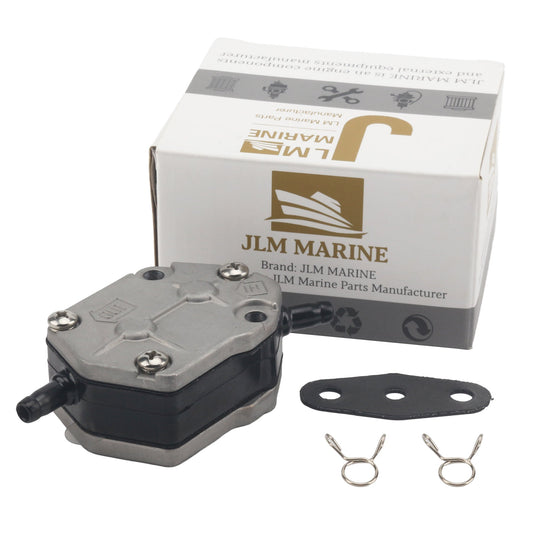
For genuine parts, the Mercury Fuel Pump and Mercury Fuel Pump Kit collections provide reliable options.
Fuel System Best Practices
To avoid these issues altogether, adopting good fuel system practices is key. Always use fresh, name-brand fuel in the recommended octane rating. If you plan to lay up your boat for an extended period, follow the proper fuel conditioning procedures—this typically involves adding marine-grade fuel stabilizer, running the engine for a few minutes to circulate the treated fuel throughout the system, and ideally, filling the tank to minimize air space where condensation can form.
Some manuals even suggest draining the fuel tank for long-term storage, though in my experience with modern stabilizers and fuel-efficient usage, filling it with treated fuel is usually sufficient. Regular tank cleaning, if you suspect sediment buildup, can also prevent future problems.
Ignition System Diagnostics and Repairs
Once I've thoroughly vetted the fuel system, my attention shifts to the ignition. If the fuel is there, it needs a spark at the precise moment to ignite, and that's where the ignition system comes in. A weak or mistimed spark is just as detrimental as a lack of fuel, leading to the same sputtering and power loss issues.
I've learned that even with a healthy fuel system, a fouled spark plug can completely derail an otherwise perfect day on the water.
Checking Spark Plugs, Spark Plug Wire Connections, and Ignition Coils
The humble spark plug is often the first and easiest component to check in the ignition system. Removing them allows for visual inspection of their condition. You can often tell a lot from the color and buildup on the electrode. Fouled plugs, damaged insulators, or incorrect gaps are common reasons for misfires and power loss.
My own Mercury 15 HP EFI, despite running fine most of the time, once fouled a spark plug surprisingly quickly after a particularly rough patch of water where it might have been running erratically. Beyond the plugs themselves, I always check the resistance of the spark plug wires and ensure the connections to the coil and the plugs are clean and tight.
A loose connection or a corroded wire can interrupt the electrical signal. The ignition coils are also critical; testing their primary and secondary resistance according to the service manual is essential. If a coil shows improper resistance or no resistance, it's likely the culprit.
Diagnosing Ignition Timing Issues and Correcting Timing
Ignition timing is absolutely critical for engine performance. The spark needs to occur at the precise moment in the combustion cycle. While modern EFI systems have sophisticated Electronic Control Modules (ECMs) that manage timing, issues can still arise.
While a user typically can't manually adjust the timing on these EFI outboards without specialized tools, diagnosing why the timing might be off is still possible. This could stem from sensor issues (like a crank position sensor or cam position sensor) that feed incorrect information to the ECM, leading it to calculate the wrong timing.
If the ECM itself has failed or is experiencing a fault, it can also lead to incorrect timing. The ECM in these engines is the brain of the operation, and any fault here can cascade into numerous performance issues, including power loss and sputtering.
Inspecting ECM (Electronic Control Module) Faults
The Electronic Control Module (ECM), often called the Engine Control Unit (ECU) on outboards, is the sophisticated computer that manages everything from fuel injection timing to ignition firing. When I suspect a significant or persistent issue that can't be traced to simpler components like spark plugs or fuel filters, I often wonder if the ECM itself is compromised.
These units receive data from various sensors (like throttle position, engine speed, temperature, and manifold pressure) and use that data to make real-time adjustments. While ECMs are generally robust, they can fail due to water intrusion, electrical surges, or internal component failure.
Diagnosing ECM faults typically requires specialized diagnostic software that can communicate with the ECM, read stored fault codes, and monitor live sensor data. Mercury dealers have this equipment, and it's often the best way to determine if the ECM is the source of your power loss or sputtering problems.
Test Procedures for Ignition Components and Common Replacement Parts
Testing ignition components is a systematic process. For spark plugs, you'll want to check their gap against the specifications in your Mercury service manual and look for signs of excessive wear, fouling (black carbon buildup), or deposits from oil or fuel.
Replacement is straightforward, but using the correct plug type and heat range is vital. Ignition coils can be tested for resistance using a multimeter; the manual will specify the acceptable resistance values for both primary and secondary windings. If a coil is out of spec, it needs to be replaced.
If the spark plug wires themselves are suspect, checking their resistance is a good first step, but also look for any physical damage, cracks, or worn insulation. For stators and other ignition components, testing often involves checking output voltage and waveform patterns, usually requiring more specialized diagnostic equipment or a Mercury service manual with detailed procedures.
In one case I studied, a boater was experiencing intermittent power loss on their Mercury 30 HP EFI. After replacing the spark plugs with no improvement, they eventually discovered the stator had a failing coil winding that was causing the ignition to cut out only when the engine reached a certain temperature. This kind of diagnostic journey highlights the importance of systematic testing.
Ignition Component Testing and Replacement
Performing these tests yourself can save time and money. For example, testing spark plug resistance and replacing spark plugs is incredibly straightforward. You just need a spark plug socket and a torque wrench.
You pull the plug, check its gap with feeler gauges, and if it looks worn or fouled, you replace it with the exact equivalent specified by Mercury. Identifying a faulty ignition coil might involve swapping it with a known good one from another cylinder if your engine has multiple, or directly testing its resistance.
Wiring harness failures can be trickier; you're looking for breaks in the wires, corrosion at the terminals, or damaged insulation. Repairing or replacing failed stators and coil assemblies typically involves carefully removing the flywheel or other components to access them, but again, following a detailed service manual is your best bet.
Propeller and Mechanical Issues Affecting Throttling
Sometimes, the problem isn't in the fuel or spark, but in the mechanical transfer of power to the water. This can be anything from something wrapped around the propeller to internal wear within the engine's drive train.
I've learned that propeller issues, in particular, can create baffling performance problems that mimic fuel or ignition issues.
Removing Debris Wrapped Around Propellers Causing Vibration and Drag
This is a surprisingly common cause of power loss and unusual vibrations. Fishing line, weeds, plastic bags, or even small pieces of debris can get wrapped around the propeller, creating drag and making the engine work much harder.
When this happens, you'll feel a distinct vibration or a general sluggishness. The fix is often as simple as inspecting the propeller closely and carefully removing any entangled material.
I recall a time when a stray piece of old fishing net snagged my prop, and the boat suddenly felt like it was pulling an anchor. Being able to visually inspect your prop, perhaps even pulling the boat out for a quick look, is a necessary step in troubleshooting. The U.S. Coast Guard offers helpful guidance on propeller safety and maintenance that I've found useful in understanding these issues. U.S. Coast Guard Boating Safety provides resources on proper propeller maintenance and safety.
Inspecting Propeller Shaft and Tightening Mounting Bolts
Beyond debris, the propeller shaft itself needs attention. Ensure that the propeller mounting bolt is properly tightened. A loose propeller can slip on the shaft, causing erratic acceleration and power loss.
Additionally, inspect the propeller shaft for any signs of damage or wear, such as bent splines or scoring from debris. If the shaft itself is bent or damaged, it will require professional repair or replacement.
The wear sleeve or rings within the engine can also cause issues, affecting compression and overall performance if they become worn or damaged. These are more internal components, and their failure often leads to more significant power loss and reduced engine longevity.
Effects of Worn Sleeve, Rings, Pistons on Engine Compression and Power
Worn cylinder sleeves, piston rings, or pistons themselves directly impact the engine's compression. Compression is the force generated when the piston compresses the air-fuel mixture before ignition.
If these components are worn, the compression will be low, leading to a significant reduction in power, rough running, and difficulty starting. Think of it like a leaky balloon that can't hold air – the engine simply can't build enough pressure to burn the fuel efficiently.
Diagnosing this usually involves a compression test, which measures the cylinder pressure. If the readings are low and inconsistent across cylinders, it's a strong indicator of wear in these internal parts, often necessitating a more extensive engine rebuild rather than a simple fix.
Diagnosing Broken Motor or Pump Driveshafts
In more severe cases, the driveshaft itself—the shaft that connects the powerhead to the lower unit and propeller—can break. This is usually the result of a catastrophic failure, such as hitting submerged objects hard or internal component seizure.
If the driveshaft breaks, you'll likely experience a sudden and complete loss of propulsion, even though the engine itself might still be running. Similarly, the driveshaft for the water pump impeller can also break, which would lead to overheating issues and potential engine shutdown, indirectly causing power problems.
Diagnosing a broken driveshaft typically involves disassembling the lower unit to inspect the shaft for breaks or severe damage.
Cooling System Checks
An overheating engine, caused by issues in the cooling system, can lead to a dramatic reduction in power and even automatic engine shutdown. This is a protective measure by the engine's control system.
One of the most common causes of overheating is a worn or damaged water pump impeller. The impeller is a rubber component that circulates cooling water through the engine. If it's cracked, torn, or simply worn out, it won't pump water effectively.
Signs of a faulty water pump include the engine running hotter than usual, or in some cases, no "tell-tale" stream of water exiting the engine when it's running. Replacing the water pump impeller is a relatively routine maintenance task, usually done every few years.
A stuck thermostat, either open or closed, can also cause cooling problems. A thermostat stuck open will prevent the engine from reaching optimal operating temperature, impacting performance, while one stuck closed will cause rapid overheating.
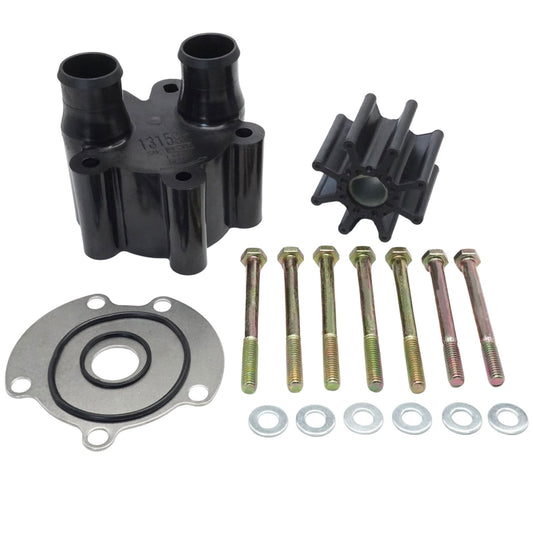
For detailed guidance and to source parts, see our Mercury Water Pump Impeller collection and Cooling System parts. Also, our step-by-step guide on How to Replace a Mercury Outboard Water Pump Impeller offers practical help.
Battery and Electrical System Checks
The electrical system and battery are the unsung heroes of your outboard's operation, especially with modern EFI engines that rely heavily on electronics. If the battery is dead, weak, or the wiring is compromised, it can lead to a cascade of problems, from failed starts to intermittent power loss and issues with the sophisticated EFI system.
Diagnosing Drained or Faulty Batteries
A weak or dead battery is perhaps the most straightforward electrical issue to diagnose. If your engine struggles to crank, or the starter motor sounds sluggish, the battery is the prime suspect.
I always keep a multimeter handy to check battery voltage. A fully charged marine battery should read around 12.6 volts or higher when the engine is off. If it's significantly lower, it might be discharged or faulty.
Also, inspect the battery terminals for corrosion and ensure the connections are clean and tight. Corroded terminals create resistance, hindering the flow of electricity. If the battery consistently fails to hold a charge, despite being properly charged, it likely needs to be replaced.
Inspecting and Repairing Damaged Electrical Wire Harnesses
The wiring harness on an outboard connects all the electrical components—from the ignition coil to the ECM and throttle position sensors. Damage to this harness, whether from vibration, abrasion, corrosion, or even rodent damage, can cause all sorts of unpredictable issues.
I've seen situations where a frayed wire caused an intermittent connection, leading to the engine cutting out randomly. Inspecting the entire length of the harness for any signs of damage, frayed insulation, or melted wires is crucial.
Pay close attention to areas where the harness flexes or rests against other components. If you find damaged sections, repairing them properly – using heat-shrink tubing and marine-grade connectors – is essential to prevent future problems.
Testing Electrical Components Impacting Starting and Throttle Control
Beyond the battery and harness, other electrical components play a role. The starter motor, alternator (if equipped and not integrated into the ignition system), kill switch wiring, and sensors like the throttle position sensor (TPS) all need to be functioning correctly.
If the starter isn't engaging, or the alternator isn't charging, you'll have starting or battery issues. A faulty TPS, for instance, can send incorrect information to the ECM about your throttle input, directly causing erratic acceleration or inability to reach full throttle.
Testing these components often involves using a multimeter to check for voltage, continuity, and resistance as specified in the Mercury service manual.
Advanced Diagnostics and When to Seek Professional Help
While many issues can be tackled with basic tools and procedures, some problems require more advanced diagnostic techniques. It's about knowing when you're in over your head and when to call in the cavalry—a qualified Mercury technician.
Use of Portable Fuel Tanks for Isolation Testing
One incredibly useful diagnostic technique for fuel system issues is to isolate the boat's main fuel tank from the outboard by using a portable fuel tank.
If the engine runs perfectly with fresh fuel from the portable tank, you know the problem lies within your boat's main fuel tank system—the tank itself, the fuel lines running from it, or the fuel water separator if you have one.
This simple isolation test can save hours of troubleshooting and pinpoint where your problem originates. I found this technique invaluable when I suspected my fuel was old, and confirming it ran perfectly with a fresh portable supply allowed me to focus my efforts on cleaning out my main tank.
Measuring Fuel Pump Pressure Ranges and Interpreting Results
As mentioned earlier, fuel pressure is paramount. Using a fuel pressure gauge connected to the fuel rail or appropriate test port is essential for EFI engines.
You'll need to consult your Mercury service manual for the exact pressure specifications for your 15 HP or 30 HP EFI outboard. The Mercury 15/20 HP EFI FourStroke service manual typically specifies pressure ranges between 36-38 PSI at idle.
Generally, you'll want to check the pressure with the engine off (static pressure), when cranking, and at idle. If the pressure is consistently low, it could indicate a weak fuel pump, a clogged filter, a leak in the system, or a faulty fuel pressure regulator. Interpreting these readings requires understanding what "normal" looks like for your engine, which is why having the manual is so important.
Checking Warning Lights and Error Codes on Mercury EFI Engines
Modern Mercury EFI engines are sophisticated and can store fault codes if the ECM detects a problem. While there might not be a dashboard warning light like in a car, these codes can often be read with dealer-level diagnostic equipment.
Some systems might have a rudimentary way to flash error codes through a gauge or by specific sequences of ignition on/off. Understanding how to access and interpret these codes, often found in service bulletins or manuals, is a significant step in advanced diagnostics.
If your engine is equipped with Mercury's SmartCraft system, diagnostic information often becomes more accessible through compatible gauges or onboard diagnostics.
Safety Notes and Authorized Repair Restrictions
When performing any troubleshooting or maintenance, safety is always my top priority. Always disconnect the battery before working on electrical components, ensure the boat is well-ventilated and fire extinguishers are nearby when working with fuel, and wear appropriate personal protective equipment (PPE) like safety glasses and gloves.
Some repairs, especially those involving the ECM or complex ignition timing, might be restricted to authorized repair centers or require specialized tools and training. Mercury Marine emphasizes consulting certified technicians for recurring complex issues. It's important to understand your own skill set and the potential risks involved before diving into advanced diagnostics. If you're unsure, it's always best to let a professional handle it.
Maintenance Tips to Prevent Engine Problems

The best troubleshooting, in my opinion, is preventative maintenance. I've found that by sticking to a regular maintenance schedule, I avoid a lot of the common headaches that plague boat owners. It's often less expensive and far less time-consuming than responding to an emergency breakdown.
Best Maintenance Practices for Mercury Outboards
Consistent maintenance for your Mercury outboard means more than just an oil change. It includes regularly inspecting spark plugs, fuel filters, and hoses, as mentioned in the troubleshooting sections.
It also involves checking and topping off or replacing lubricants in the gearcase, greasing moving parts, and ensuring the cooling system is clear. Following the specific recommendations in your Mercury 15 HP or 30 HP EFI Owner's Manual is the golden rule.
Mercury Marine themselves stress the importance of using genuine Mercury recommended parts and lubricants to ensure compatibility and optimal performance. I've learned through trial and error that following the manufacturer's schedule is critical—the one time I skipped changing the lower unit oil on schedule, I ended up with water intrusion that could have been prevented.
Recommended Fuel Types and Storage
As discussed, using the correct fuel grade and type is critical. Always use fresh fuel, and if you anticipate storing the boat for more than a month, use a quality marine fuel stabilizer.
For long-term storage, fill the tank completely with stabilized fuel. Some sources even suggest draining the fuel system if the outboard will be stored for many months, but with modern fuel stabilizers, this is often not strictly necessary if done correctly.
I personally find filling the tank properly with a good stabilizer to be the most practical approach for my seasonal storage. The EPA provides helpful guidelines on fuel storage and handling that I follow to ensure both compliance and optimal engine health. EPA Small Engine Fuel Recommendations offers information about proper fuel handling.
Routine Inspection Schedules for Spark Plugs, Filters, and Hoses
I've developed my own annual checklist based on Mercury's recommendations and my experience. This includes:
- Spark Plugs: Inspect them before the season starts and at least annually. Replace if they show significant wear or fouling.
- Fuel Filters: Replace the primary fuel filter annually or more often if you suspect contaminated fuel. Inspect fuel lines for cracks or degradation.
- Cooling System: After the season, flush the cooling system with fresh water, especially if you operate in saltwater. Inspect the water intake screens. Ensure the water pump impeller is checked as part of your major service interval (usually every 2-3 years).
Seasonal Preparation for Long-Term Storage
Before storing your Mercury outboard for the off-season, it's essential to "winterize" it. This typically involves:
- Fuel System Treatment: Add fuel stabilizer and run the engine for several minutes to ensure the treated fuel circulates through the entire fuel system, including the injectors.
- Cooling System Flush: Run the engine in a test tank or with raw water flush ports connected and flush the cooling system with fresh water to remove salt, silt, and mineral deposits.
- Oil Change: Change the engine oil and filter if you've run it for a significant number of hours during the season, or at least once a year. Proper lubrication is vital.
- Lower Unit Lubrication: Drain and refill the lower unit gearcase oil. Inspect the old oil for water or metal shavings, which indicate potential seal or gear damage.
- Spark Plug Removal and Cylinder Lubrication: Remove the spark plugs and spray a marine-grade storage lubricant into each cylinder. Turn the engine over a few times to distribute the lubricant. Then, reinstall the spark plugs.
- Battery Care: Remove the battery and store it in a cool, dry place. Connect it to a trickle charger periodically to maintain its charge.
- Exterior Protection: Clean the outboard thoroughly and apply a protectant to the exterior surfaces.
Following these steps diligently ensures your engine is protected during storage and ready to go when the boating season arrives.
Conclusion
Navigating the sometimes tricky waters of Mercury outboard troubleshooting, particularly for power loss and fuel issues on your 15 or 30 HP EFI model, might seem daunting, but with a systematic approach, you can often diagnose and resolve many common problems yourself.
I've found that focusing on the core systems—fuel, ignition, and electrical—and performing regular, proactive maintenance has been the key to keeping my own Mercury running smoothly. Remember, a clean fuel system, healthy spark plugs, and a well-maintained electrical network are the foundations of reliable engine performance.
My final takeaway is this: don't be afraid of your outboard. Understand its basic systems, arm yourself with a good service manual, and tackle the common issues first. Whether it's a clogged fuel filter, a fouled spark plug, or a loose wire, these are often fixable problems that can get you back on the water quickly.
Ultimately, the best way to avoid major headaches is to be diligent with maintenance. Treat your engine well with fresh fuel, regular checks, and proper seasonal care, and it will reward you with countless hours of enjoyable boating. And if you do encounter a problem that's beyond your comfort zone or diagnostic capabilities, never hesitate to reach out to a qualified Mercury Marine authorized dealer; they have the expertise and tools to get you sorted. Happy boating!
Further Reading & Official Resources


- Mercury Marine Owner's Manuals
- BoatUS Foundation - Ethanol & Fuel Information
- American Boat & Yacht Council (ABYC) Guidelines
- U.S. Coast Guard Boating Safety Resources
- EPA Small Engine Fuel Recommendations
- For a broad range of marine parts and accessories, including genuine Mercury components, visit the JLM Marine main site
About the author: I've been a Mercury outboard owner for over 15 years, primarily running 15HP and 30HP EFI models. What started as a necessity (my first boat's engine problems led me down the DIY repair rabbit hole) has become a passion for understanding these machines from the inside out. I've personally diagnosed and repaired dozens of power loss, fuel, and ignition issues across multiple Mercury models, and I continue to learn something new with each troubleshooting adventure.
Для владельцев Mercury:
Мы надеемся, что следующие ресурсы окажутся полезными для вас в обслуживании и ремонте ваших судовых двигателей:
-
Запчасти Mercury / Mercruiser / Mariner от JLM Marine
- Ртутный термостат
- Водяной насос Mercury
- Крыльчатка водяного насоса Mercury
- Комплект крыльчатки водяного насоса Mercury
- Ртутный карбюратор
- Комплект для ремонта карбюратора Mercury
- Ртутный топливный насос
- Комплект топливного насоса Mercury
- Воздушный фильтр ртути
- Фильтр масляный ртутный
- Ртутный сальник
- Ртутный топливный фильтр
- Прокладка ртути
- Ртутное реле
- Ртутный выключатель зажигания
- Переключатель наклона Mercury Trim
- Датчик зажигания ртутный
- Провод свечи зажигания ртутный
- Корпус для распределения воды Mercury
- Меркурий Беллоу
- Комплект сильфонов Mercury
- Ртутный шкив со змеевидным шкивом
- Аксессуары для Меркурия
- Пояс Меркурия
- Ртутная масляная пробка
- Пробка для слива ртути
- Инструмент для замены сильфонов Mercury
О компании JLM Marine
Основанная в 2002 году, компания JLM Marine зарекомендовала себя как специализированный производитель высококачественных морских деталей, базирующийся в Китае. Наша приверженность совершенству в производстве заслужила нам доверие ведущих мировых морских брендов.
Как прямой поставщик, мы обходим посредников, что позволяет нам предлагать конкурентоспособные цены без ущерба качеству. Такой подход не только поддерживает экономическую эффективность, но и гарантирует, что наши клиенты получают наилучшую ценность напрямую от источника.
Мы рады расширить свое присутствие через розничные каналы, предлагая наш опыт и приверженность качеству непосредственно владельцам и любителям лодок по всему миру.
Детали Mercury в продаже
- $54.00
- $54.00
- Unit price
- per
- $46.00
$55.00- $46.00
- Unit price
- per
- $38.50
- $38.50
- Unit price
- per
- $33.99
$119.00- $33.99
- Unit price
- per
- $18.13
$59.00- $18.13
- Unit price
- per
- $58.60
$70.00- $58.60
- Unit price
- per


- From $39.13
$45.50- From $39.13
- Unit price
- per

- $24.99
$29.00- $24.99
- Unit price
- per

- $45.99
$55.00- $45.99
- Unit price
- per


- $53.50
- $53.50
- Unit price
- per
- $46.50
$60.00- $46.50
- Unit price
- per

- $85.99
$103.00- $85.99
- Unit price
- per


- $54.00
- $54.00
- Unit price
- per
- $39.89
$45.00- $39.89
- Unit price
- per

- $33.99
$40.00- $33.99
- Unit price
- per
- $23.50
- $23.50
- Unit price
- per
-
Red
-
Blue


- $34.50
- $34.50
- Unit price
- per


- $54.00
- $54.00
- Unit price
- per

- $21.50
$18.00- $21.50
- Unit price
- per

- $23.59
$28.00- $23.59
- Unit price
- per