



Trimming Your Outboard for Optimal Fuel Consumption
- The Mechanics of Boat Trim: How it Works
- Step-by-Step Guide: Manual Trim Adjustment
- Automatic Trim Systems Overview
- Trim Tabs: Controlling Side-to-Side Level
- Maintaining Optimal Trim for Different Conditions
- Quick Reference: Trim Settings by Condition
- Cost of Drag: Real Dollar Impact
- Tools and Parts You'll Need
- How JLM Marine Can Help
- Troubleshooting Checklist: Quick Diagnosis
- References

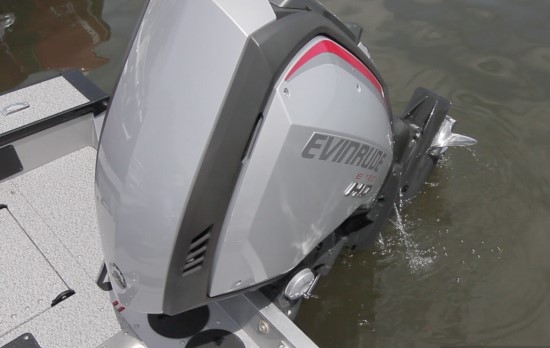
Most outboards burn more fuel than they should because the trim's set wrong. After 20 years fixing these motors, I can tell you the problem's not the engine—it's how you're running it. Trim the motor correctly, and you'll cut drag, save fuel, and stop stressing the powerhead.
The Mechanics of Boat Trim: How it Works
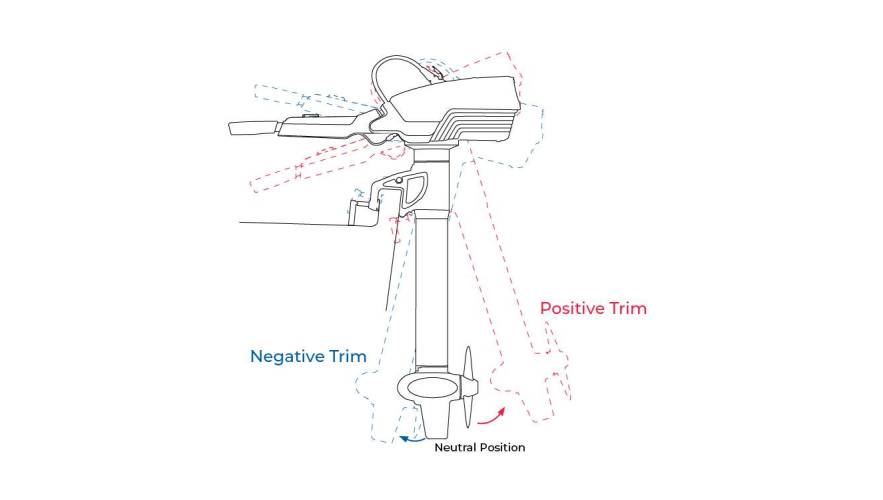
Trim is the angle of the outboard relative to the transom. Tilt it up, the bow lifts. Tilt it down, the bow drops. That change affects how much hull drags through the water.
When you trim up, less hull contacts the water—this is called reducing wetted surface. Less drag means the engine pushes the boat forward easier, burning less fuel. Mercury Marine emphasizes that trimming out once on plane minimizes lower unit drag and directly improves fuel efficiency.
Trimming down pushes the bow into the water. You need this when getting on plane—it gives the prop maximum bite and lifts the stern so the hull transitions from plowing to skimming.
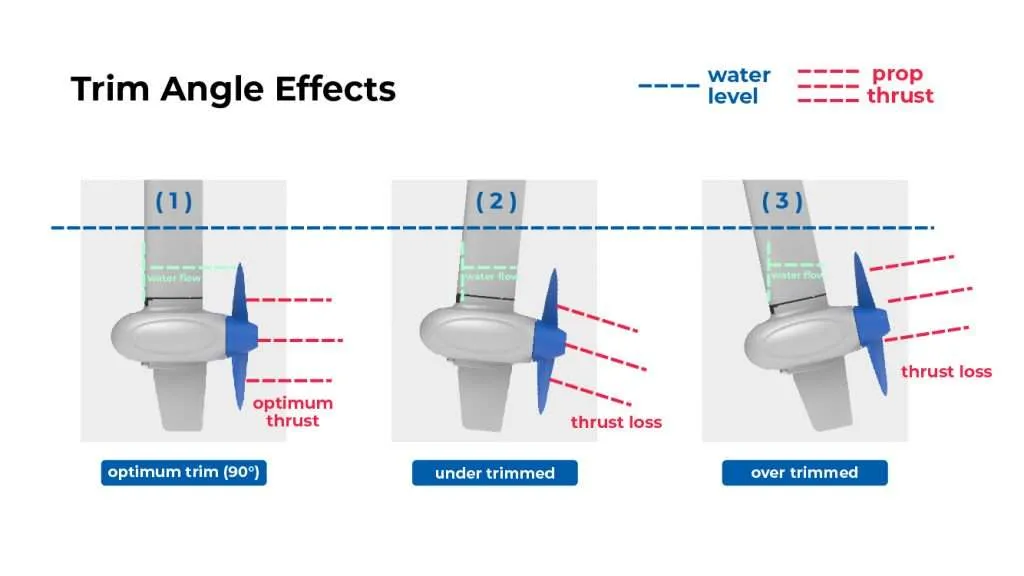
The goal is to align the propeller shaft as close to parallel with the waterline as possible at cruising speed. We've seen trim optimization yield up to 15% gains in fuel efficiency by hitting that sweet spot. That's real money saved over a season.
Tim Reid, Mercury's VP of product development and engineering, put it plainly: "Boats in general are inefficient, the drag is so high. Ideally, you want to get as much of the wetted hull surface as possible out of the water… You'll get the best mileage when you're running at 60 to 80 percent of the top speed of the boat." (Source)
Step-by-Step Guide: Manual Trim Adjustment

Most modern outboards have power trim controlled by buttons on the throttle or dash. Small motors might use a manual pin system or fixed trim.
How the Trim Button Works
- Press Up: Tilts the anti-ventilation plate (the flat metal plate above the propeller) up, lifting the bow.
- Press Down: Tilts the plate down, pushing the bow into the water.
Using Negative Trim to Get on Plane Quickly
Before you hit the throttle, trim all the way down. This gives the prop clean water and maximum thrust to push the boat onto plane. Trying to plane with the trim already up is like trying to climb a ladder while leaning backward—it won't work.
We shipped a hydraulic trim pump to a guy in Queensland last year who thought his Yamaha F150 was gutless. Turned out the trim relay was stuck half-up. Once he got it trimmed down properly at launch, the boat jumped on plane like it should have all along.
Adjusting Trim Progressively in Small Steps
Once you're on plane, don't just hammer the trim button and leave it. Make small adjustments—one or two seconds at a time. Watch your GPS speed and feel how the hull responds. You're looking for the point where speed picks up but the boat stays stable.
It's like tuning carburetors on old two-strokes: small tweaks, check the result, adjust again. You can learn more about carburetor tuning in the Yamaha Outboard Carburetor Rebuild Tutorial for tips on maintaining smooth power delivery.
Trimming at Different Phases
At Idle/Low Speeds: Trim fully down. The prop needs to grip clean water to push you forward efficiently. (Mercury Marine)
During Acceleration (Getting on Plane): Keep it down. You want the stern squatting and the bow lifting smoothly as you throttle up.
Cruising Speed: This is where you start trimming out. As the bow lifts, you'll feel the ride smooth out and your speed increase—or your fuel flow drop if you've got a meter. Keep trimming out in small steps until the boat feels like it's starting to get light or unstable, then back it off slightly.
Boat tester Jim Chapman documented tests on a Skeeter SL 210 with a Yamaha 225-hp F225TLR. By optimizing rpm and trimming out properly, he achieved 6.13 mpg at 3000 rpm (about 28 mph). At 4500 rpm without proper trim, economy dropped 30% to 4.33 mpg; at 5500 rpm, it tanked 60% to 3.82 mpg. (Source)
The sweet spot often shows up when the propeller shaft runs nearly parallel to the waterline. Real-world measurements on trim algorithms show 1-3% fuel flow reductions at consistent speeds, with some achieving up to 5-6% in vessel trials. (NASA Report, ABS Advisory)
Visual Trim Check: Look at the rooster tail (the spray behind the boat). If it's shooting higher than the engine cowling, you're probably over-trimmed. The tail should stream out low and flat.
Auditory Feedback: When you hit the right trim, the engine tone smooths out. You'll feel less vibration in the steering wheel, and the tachometer will settle into a steady range without hunting.
Trimming in Choppy or Rough Water
In chop, trim down slightly. This lowers the bow so it cuts through waves instead of pounding over them. It also keeps the prop submerged and gripping, which prevents ventilation and loss of thrust. You're trading a bit of top-end efficiency for a smoother, safer, drier ride. (Mercury Marine)
Eric Miller, Mercury's technical advisor and engineering manager, notes: "Adjusting to sea conditions by changing the trim really helps performance. Maximum trim is usually best," but he's referring to flat conditions—not rough water. (Source)
Manual Pin Systems for Small Outboards
If you've got a small outboard (like a Tohatsu 9.8 or Suzuki 15) with a manual trim pin instead of power trim, you'll need to stop the boat to adjust. These pins go through holes in the trim bracket.
How to Choose the Pin Hole:
- Light load, calm water: Use a higher hole to trim the motor out and lift the bow.
- Heavy load or rough water: Use a lower hole to keep the bow down for better control and prop bite.
You'll need a flathead screwdriver or pry bar to pop the pin out under spring tension. It's old-school, but the principles are identical—just less convenient than hitting a button.
Common Trim Problems and Fixes
Porpoising (Bow Bobbing Up and Down)
Porpoising is that rhythmic up-and-down bounce at speed. It happens when the bow is trimmed too high. The hull loses consistent contact with the water, and sometimes the prop starts sucking air—this is called ventilation or blow-out.
The Fix: Trim down a couple clicks. If that doesn't stop it, throttle back slightly. You might also have the wrong propeller pitch, which makes the boat prone to porpoising even with correct trim. A prop with too much pitch for your load and hull can't hold the stern down.
Sound of Blow-Out: You'll hear the engine RPM suddenly spike—like it's revving in neutral—without the boat speeding up. The prop is spinning in aerated water instead of gripping solid water.
Prop Aeration from Over-Trimming
When you trim too far out, the prop can break the water surface or pull air down the hull, causing aeration. The boat feels erratic, speed drops, and RPM jumps.
The Fix: Trim down until the prop gets clean water again. Don't fight it by adding throttle—you're just spinning the prop in foam.
Trimming for Turns
Entering a turn: Trim down before you initiate the turn. This keeps the prop deep in the water for maximum grip and prevents the stern from sliding out or the prop from ventilating mid-turn.
Exiting a turn: Once you're straightening out, begin trimming out again to lift the bow and get back to your efficient cruising attitude. (Captains Preferred)
Safety Warning: Never trim up aggressively in a sharp turn. If the prop ventilates mid-turn, you lose thrust and steering control instantly, which can cause a spinout or collision.
Pontoon Boat Note
Pontoons react differently than V-hulls. Because pontoon tubes have less hull surface to begin with, over-trimming can make them unstable faster. Keep trim adjustments smaller and prioritize a level ride over maximum bow lift.
Automatic Trim Systems Overview
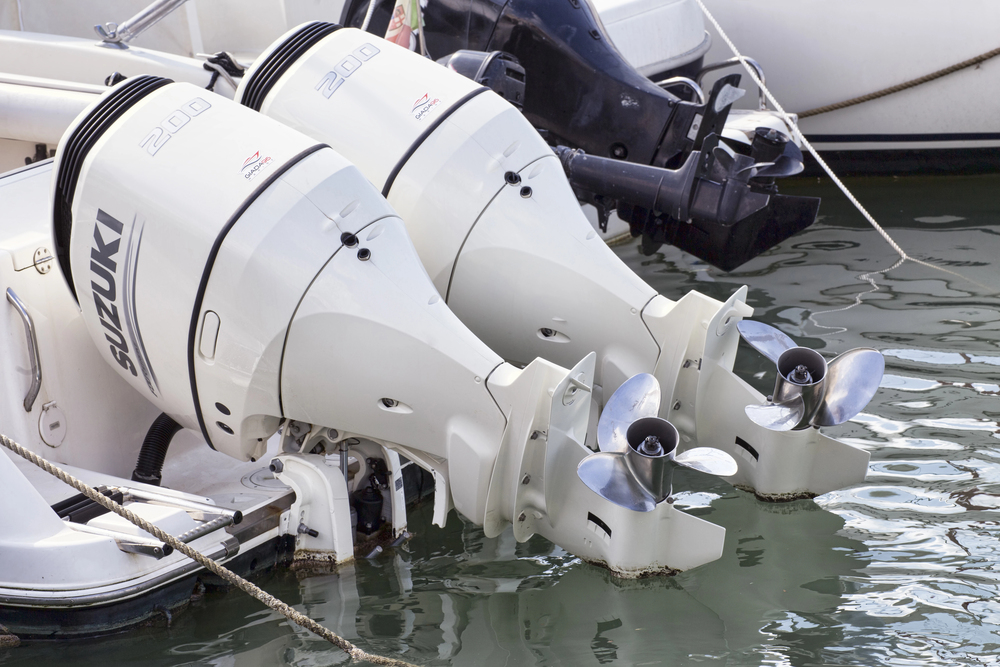
Automatic trim systems like Mercury's Active Trim eliminate the guesswork. These systems use GPS speed data and engine performance sensors to constantly adjust the outboard's trim angle.
How Mercury's Active Trim Works
Active Trim monitors your speed in real time via GPS and makes micro-adjustments to the trim angle. If you hit a patch of rough water, add passengers, or change throttle, the system compensates automatically to maintain the optimal angle.
Tim Reid explained that the system is designed to "get as much of the wetted hull surface as possible out of the water" to maximize efficiency. (Source)
The system integrates with Mercury's SmartCraft technology on compatible outboards (typically Verado and some FourStroke models). It runs constantly in the background, making adjustments you'd never notice manually but that add up over time.
Iowa boaters using Active Trim on rolling swells report maximized speed and fuel savings through optimal engine positioning, especially in variable lake conditions where manual trim would require constant attention. (Alcona Marine)
Benefits of Automatic Trim
- Fuel Savings: Consistent optimal trim means less drag. Tests show 1-3% fuel flow reductions from peak-seeking algorithms. (NASA Report)
- Reduced Engine Stress: The engine runs at its most efficient angle, reducing wear on the powerhead and lower unit.
- Ease of Use: You don't need to constantly fiddle with the trim button, especially in changing conditions.
A Great Lakes boater saved hundreds of gallons of fuel on a leisurely Lake Erie crossing by relying on his Mercury's automatic trim system instead of manual adjustments. (Alcona Marine)
Overriding Automatic Trim
You're still in control. Most systems let you hit the manual trim buttons to override the automatic adjustment anytime. If you're navigating tight channels, launching in shallow water, or making sharp turns, you can manually trim down and the system will defer to your input.
Who Shouldn't Rely on Automatic Trim
Automatic trim works great for cruising and general boating, but it's not ideal for every situation:
- Shallow-water anglers: If you're running skinny flats or rocky rivers, you need manual control to tilt the motor up quickly to avoid hitting bottom.
- High-performance racing: Racers want full manual control to tune trim aggressively for every straightaway and turn.
- Very light loads: On small tenders or skiffs, automatic systems might over-compensate for minor weight shifts, causing unnecessary adjustments.
Trim Tabs: Controlling Side-to-Side Level
Power trim adjusts the bow angle (up and down). Trim tabs control the boat's side-to-side level, also called lateral list.
Trim tabs are adjustable plates mounted on the transom, controlled by switches at the helm. If you've got three people sitting on the port side, the boat will list to port. Deploy the port trim tab, and it pushes that side down, leveling the boat.
Difference Between Power Trim and Trim Tabs
- Power Trim: Controls fore-and-aft angle (bow up/down). Primarily affects speed, drag, and fuel economy.
- Trim Tabs: Control lateral balance (side-to-side level). Primarily used for correcting uneven weight distribution and fine-tuning hull attitude for a smooth, level ride.
Using Trim Tabs with Power Trim
They work together. You might use power trim to set your bow angle for cruising efficiency, then deploy trim tabs to counteract a list caused by uneven fuel tanks, wind, or passenger seating.
LaCannes Marine recommends an optimal trim angle of two to five degrees bow up when using both power trim and tabs for best drag control.
Trim Tab Sizing
The size of tabs you need depends on your boat's length, weight, and speed. Heavier boats and higher speeds require larger tabs to generate enough lift. Manufacturers provide sizing charts—typically, a 20-foot boat might need 9x12-inch tabs, while a 30-footer could need 12x18-inch tabs.
Drill: Learning to Use Trim Tabs
Go out on a calm day. Have a passenger move to one side of the boat to induce a noticeable list. Practice deploying the opposite trim tab to level the boat. This hands-on exercise builds muscle memory so you can react instinctively when you're loaded unevenly or running in a crosswind.
Maintaining Optimal Trim for Different Conditions
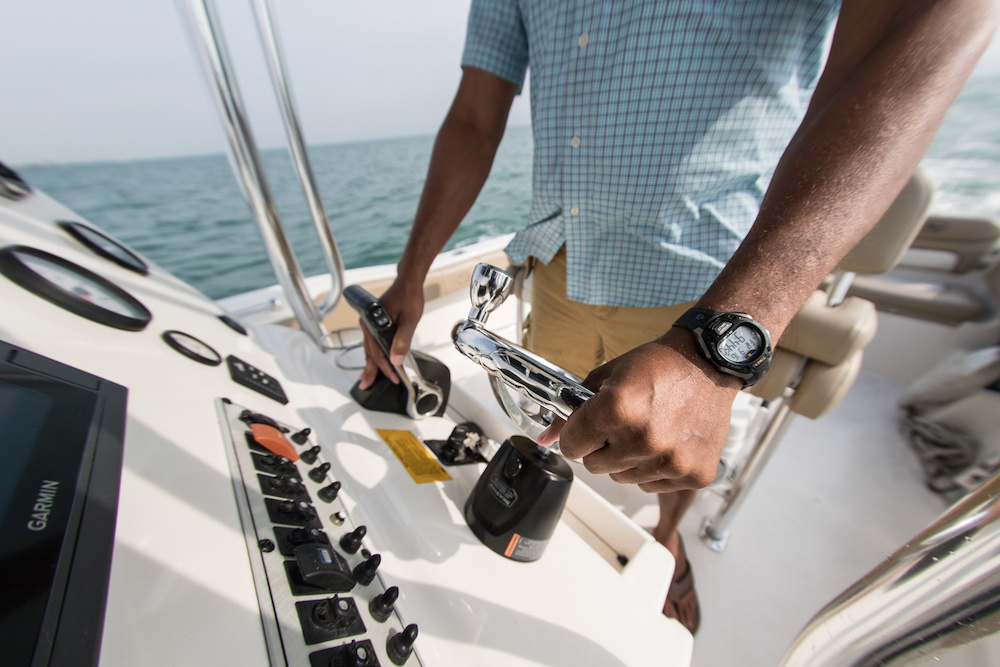
Trim isn't a set-it-and-forget-it thing. You adjust constantly based on load, speed, water conditions, and wind.
Rough Water
Trim down to lower the bow and cut through waves. This keeps the ride smoother, reduces slamming, and keeps the prop submerged for consistent thrust. (Mercury Marine)
Entering and Exiting Turns
- Entering: Trim down for prop grip and hull control.
- Exiting: Trim out gradually as you straighten to restore efficient cruising. (Captains Preferred)
Adjusting for Load and Weight Distribution
If you've got a full livewell, extra fuel, or a stack of gear in the stern, the boat will sit stern-heavy. Trim the motor out more than usual to lift the bow and compensate. If the weight is forward (like a heavy anchor locker), you might need less trim or even trim down slightly to keep the bow from riding too high.
Use trim tabs to correct side-to-side imbalance when passengers or gear are concentrated on one side.
Coming Off Plane
When you throttle back and the boat drops off plane, experienced boaters trim down as the speed decreases. This keeps the prop in solid water and maintains control as the hull settles back into displacement mode. It also prevents the bow from dropping suddenly, which can bury the nose if you're trimmed out when you slow down.
Quick Reference: Trim Settings by Condition
| Condition | Trim Position | Goal |
|---|---|---|
| Idle / Low Speed | Fully Down | Prop bite, clean water flow |
| Getting on Plane | Down | Maximum thrust, stern squat |
| Cruising (Flat Water) | Out (incremental) | Lift bow, reduce drag, save fuel |
| Rough Water / Chop | Down (slightly) | Cut waves, stable ride, prop grip |
| Entering Turn | Down | Prop grip, control |
| Exiting Turn | Out (gradual) | Return to efficient cruising |
| Heavy Stern Load | Out (more) | Compensate for stern-heavy attitude |
| Slowing / Off Plane | Down | Maintain prop bite, control |
Cost of Drag: Real Dollar Impact
Here's the math. Say you burn 20 gallons per hour at cruise, and fuel costs $5 per gallon. That's $100 per hour in fuel.
A 5% fuel savings from proper trim cuts consumption to 19 gallons per hour, saving $5 per hour. Over a 50-hour season, that's $250 saved. If you run 100 hours, it's $500.
Scale that up for bigger motors or higher fuel prices, and the savings get serious fast. A single season of proper trimming can pay for a new fuel flow meter or a set of quality trim tab actuators from JLM Marine.
Tools and Parts You'll Need
If your trim system is slow or unresponsive, you might need:
- Hydraulic trim fluid: Check your owner's manual for the correct spec (often ATF or specific marine trim fluid). Low fluid causes sluggish trim response.
- Trim pump motor: If the pump runs but the motor doesn't trim, the motor or relay might be shot.
- Trim ram seals: Leaking seals cause the motor to drift down over time, especially when tilted up.
- Anodes for trim tabs: Trim tab actuators and metal tabs corrode in saltwater. Replacing zinc or aluminum anodes extends their life.
We stock all of these at JLM Marine, and we ship direct from the factory worldwide. You get OEM-spec quality without the dealership markup—same fit, same performance, without burning cash on a logo.
How JLM Marine Can Help
At JLM Marine, we're not just parts suppliers—we're mechanics who've torn down and rebuilt these systems hundreds of times. When you order trim components from us, you're getting parts that match factory specs because some of the same factories that build OEM parts run excess capacity for the aftermarket. Brands like JLM source from those facilities, so you get the same quality for less.
We've set up thousands of boats over two decades. Our standard shop procedure for a new boat setup includes:
- Load the boat with typical gear and fuel.
- Run it at cruise speed and incrementally adjust trim until GPS speed peaks at the lowest stable RPM.
- Mark that trim setting on the dash gauge with a grease pencil for the owner's reference.
- Test turning and rough-water handling with slight trim-down adjustments.
- Install or verify trim tab function and level the boat under load.
You can follow the same process on your own boat. It's not magic—it's method.
For other helpful guidance on repairing and maintaining your outboard, explore our full range of outboard motor parts to keep your boat running efficiently.
Troubleshooting Checklist: Quick Diagnosis
If your boat isn't trimming right, run through this list:
- Porpoising at speed: Trim down 2-3 clicks. If it continues, reduce throttle or check prop pitch.
- Prop ventilation (RPM spike, no speed): Trim down until the prop grips clean water.
- Sluggish trim response: Check hydraulic fluid level in the trim reservoir. Top off if low.
- Trim drifts down when tilted up: Leaking trim ram seals. Replace seals or rams.
- Bow won't lift at cruise: Trim actuator might be weak or sticking. Inspect wiring and pump operation.
- Boat lists to one side: Deploy the opposite trim tab to level. Check for uneven fuel or gear distribution.
- Trim tabs don't respond: Check breaker, actuator motor function, and wiring connections at the helm switch.
Pro Tip: Always flush your outboard and trim system with fresh water after every saltwater run. Salt buildup corrodes trim ram seals, actuator rods, and electrical connections. A quick freshwater flush prevents expensive hydraulic seal replacements and keeps your trim operating smoothly for years.
For more detailed troubleshooting of trim components, see our article on Diagnosing Tilt and Trim Malfunctions on Outboards.
References
- Mercury Marine. "How to Trim Your Outboard for Optimal Performance." https://www.mercurymarine.com/us/en/lifestyle/dockline/how-to-trim-your-outboard-for-optimal-performance
- NASA Technical Reports Server. "Fuel Flow Reduction via Trim Optimization." https://ntrs.nasa.gov/api/citations/20140008318/downloads/20140008318.pdf
- ABS. "Energy Efficiency Advisory." https://ww2.eagle.org/content/dam/eagle/advisories-and-debriefs/ABSEnergyEfficiency_Advisory.pdf
- xShip Marine. "Trim Optimization Case Study." https://xship.in/img/Rev-Case-Study-13-Trim-Optimization-helps-in-Fuel-Savings-2.pdf
- Boats.com. "Outboard Expert Fuel Saving Tips." https://www.boats.com/reviews/outboard-expert-fuel-saving-tips/
- Salt Water Sportsman. "Improve Your Boat's Fuel Efficiency and Range." https://www.saltwatersportsman.com/improve-your-boats-fuel-efficiency-and-range/
- Mercury Marine. "8 Examples of How Mercury Boosts Fuel Economy." https://www.mercurymarine.com/us/en/lifestyle/dockline/8-examples-of-how-mercury-boosts-fuel-economy
- Alcona Marine. "Optimizing Mercury Active Trim for Iowa's Rolling Swells." https://algonamarine.com/blog/optimizing-mercury-active-trim-for-iowas-rolling-swells/
- Alcona Marine. "10 Tips for Enhancing Fuel Economy with Your Mercury Outboard." https://algonamarine.com/blog/10-tips-for-enhancing-fuel-economy-with-your-mercury-outboard/
- Captains Preferred Products. "What is Boat Trim? A Comprehensive Guide for Boaters." https://captainspreferredproducts.com/blogs/learning-center/what-is-boat-trim-a-comprehensive-guide-for-boaters
- LaCannes Marine. "Outboard Motor Fuel Economy." https://www.lacannesmarine.net/blog/outboard-motor-fuel-economy?Year=2021
- Mercury Marine. "Improving Your Boat's Fuel Efficiency." https://www.mercurymarine.com/us/en/lifestyle/dockline/improving-your-boat-s-fuel-efficiency
- JLM Marine. "Tilt Assist vs Power Trim: Understanding Your Trim Options." https://jlmmarine.com/ru/blogs/outboard-101/tilt-assist-vs-power-trim-understanding-your-trim-options
Hi—I’m Jim Walker
I grew up in a Florida boatyard, earning pocket money (and a few scars) by rebuilding outboard carbs before I could drive. That hands-on habit carried me through a Ph.D. in mechanical engineering, where I studied how salt water quietly murders metal.
I spent ten years designing cooling systems for high-horsepower outboards, then joined JLM Marine as CTO. We bench-test every new part in the lab, but I still bolt early prototypes onto my own 23-foot skiff for a weekend shake-down— nothing beats real wake and spray for finding weak spots.
Here on the blog I share the fixes and shortcuts I’ve learned so your engine—and your day on the water—run smooth.

Для владельцев лодок:
Мы надеемся, что следующие ресурсы окажутся полезными для вас в обслуживании и ремонте ваших судовых двигателей:
- Руководство по серийным номерам Mercury
- Руководства пользователя от Mercury
- Официальное руководство по номерам моделей в формате PDF от BRP
- Руководство по серийным номерам Johnson
-
Аксессуары для лодок от JLM Marine
О компании JLM Marine
Основанная в 2002 году, компания JLM Marine зарекомендовала себя как специализированный производитель высококачественных морских деталей, базирующийся в Китае. Наша приверженность совершенству в производстве заслужила нам доверие ведущих мировых морских брендов.
Как прямой поставщик, мы обходим посредников, что позволяет нам предлагать конкурентоспособные цены без ущерба качеству. Такой подход не только поддерживает экономическую эффективность, но и гарантирует, что наши клиенты получают наилучшую ценность напрямую от источника.
Мы рады расширить свое присутствие через розничные каналы, предлагая наш опыт и приверженность качеству непосредственно владельцам и любителям лодок по всему миру.
Распродажа лодочных аксессуаров
- $37.99
$45.99- $37.99
- Unit price
- per
- $34.99
- $34.99
- Unit price
- per
- $128.99
- $128.99
- Unit price
- per

- $25.30
$30.00- $25.30
- Unit price
- per


- $34.99
$41.99- $34.99
- Unit price
- per

- $32.50
$31.00- $32.50
- Unit price
- per

- $139.99
- $139.99
- Unit price
- per


- $45.00
- $45.00
- Unit price
- per

- $28.50
$29.00- $28.50
- Unit price
- per

- $159.99
- $159.99
- Unit price
- per


- $105.00
- $105.00
- Unit price
- per


- $34.99
$41.99- $34.99
- Unit price
- per


- From $68.00
- From $68.00
- Unit price
- per


- $34.99
$41.99- $34.99
- Unit price
- per

- $59.95
$71.00- $59.95
- Unit price
- per

- $59.99
$71.00- $59.99
- Unit price
- per


- $34.99
$41.99- $34.99
- Unit price
- per

- $65.50
$78.00- $65.50
- Unit price
- per

- $67.00
$65.00- $67.00
- Unit price
- per

- $19.99
- $19.99
- Unit price
- per