


Overloading Your Boat: Recognizing Engine Strain Symptoms
When your outboard starts acting sluggish on the water, most guys think the worst—blown powerhead, bad fuel pump, cracked block. After twenty years wrenching on outboards, I can tell you the real culprit nine times out of ten is simpler: you're asking that engine to push more weight than it was designed for. The boat's overloaded, and the motor's telling you about it.
This isn't about a slightly slower cruise. Overload strain is a direct path to real damage—cracked exhaust manifolds, blown head gaskets, seized pistons—and it's dangerous. The U.S. Coast Guard reported 87 accidents, 42 fatalities, and 41 injuries in one year tied specifically to improper loading or overloading. They suspect the real numbers are higher because a lot of these incidents go unreported.
Here's what engine strain actually looks like, how to spot it before it costs you, and what to do about it.
Can't Hit Your WOT RPM? You're Overloaded
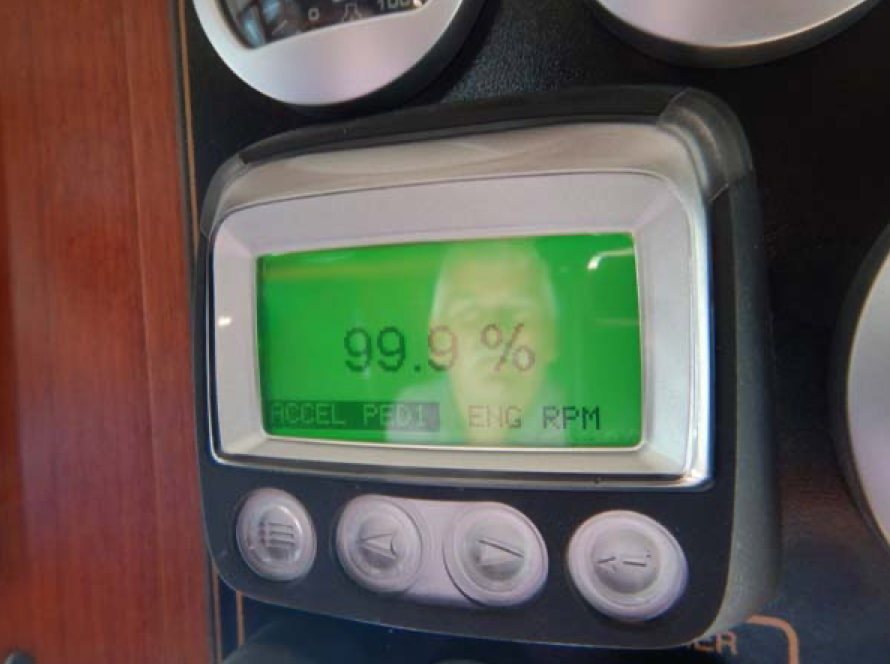
The clearest symptom is also the one most guys miss: your engine won't reach its rated wide-open-throttle RPM. Every outboard has a spec range—say, 5000–6000 RPM at WOT for a Yamaha F150. If you're pinning the throttle and only seeing 4200 RPM with a clean lower unit and a known-good prop, that engine is working against a load it can't move.
Tony Athens at Seaboard Marine puts it plainly: "The easiest test to determine if your engines are being over-loaded is to take the boat out and run the boat at 100% throttle to see if the engines can achieve the 'Governor break point RPM.'" If it can't hit that number, you've got a problem—either the boat's too heavy, the prop's wrong, or both.
I've seen this dozens of times in the shop. A guy brings in a 19-foot center console, complains the motor feels "tired." We run a WOT test on the hose with a tach, and the engine screams right to 5800 RPM. Put it back on the boat with his usual load—four coolers, six rods, two batteries, three guys, and a full fuel tank—and it tops out at 4400. The engine's fine. The load isn't.
Other Dead Giveaways Your Engine's Straining
You don't need a tachometer to know something's wrong. Here's what overload strain sounds and feels like on the water:
Slow acceleration and won't plane. Getting on plane should take a few seconds. If you're sitting there at half-throttle with the bow in the air, engine screaming, and the boat just wallowing in its own wake, you're overloaded. The hull can't break free from the water's suction because the engine doesn't have enough power left to push the extra weight up and over the hump.
Engine bogs under throttle. You crack the throttle and instead of a clean, rising note, the engine groans, drops RPM, and sounds like it's dragging an anchor. That's mechanical strain. The combustion chambers are getting more fuel than they can burn efficiently because the load on the crankshaft is too high.
Black smoke at cruise or under acceleration. If you're trailing a cloud of black exhaust every time you throttle up, the engine's overfueling. Marine diesel and outboard experts describe this as a classic overload symptom—more fuel in than the engine can process because it's laboring against excessive drag.
Fuel burn goes through the roof. You're burning 50% more gas than usual to go 20% slower. Physics doesn't lie. More weight means more drag, and the engine has to burn more fuel to overcome it. If your normal half-day trip suddenly requires a fuel stop, check your load. Diagnosing poor fuel efficiency can also point to other engine or fuel system issues as discussed in Diagnosing Poor Fuel Economy in Your Outboard Engine.
Engine temps climb or you get an overheat alarm. Overload generates heat. All that extra work inside the cylinders raises combustion temps and exhaust gas temps. If your cooling system is even slightly marginal—impeller starting to crack, thermostat sticking, intake screen half-clogged—the added heat from overload will push you into the red. Nigel Calder warns, "If I try to run at wide open throttle I'm overloading the engine and I'm going to eventually damage the engine… it's going to run too hot."
I had a guy last month with a Suzuki DF140 that kept hitting the overheat buzzer at 4000 RPM. Impeller was new, thermostat opened fine on the bench, water pressure at the telltale was strong. Turned out he'd added a hardtop, a new 30-gallon livewell full of water, and an extra battery since last season. Dropped 100 pounds of gear, moved his fuel cans forward, and the problem vanished. The engine was fine—it was just being asked to do too much. For those needing impeller replacement to keep cooling systems healthy under strain, see our Suzuki Water Pump Impeller collection.
What Overload Actually Does to Your Engine
Letting an engine run overloaded isn't just annoying. It's destructive. Marine diesel guidance is blunt: "long-term overloading raises exhaust temperatures, increases wear, and can damage components such as valves, pistons, rings, liners, turbochargers, and manifolds. Running persistently overloaded effectively shortens engine service life."
I've torn down two-strokes that were run hard and overloaded for a season. The piston skirts showed scuffing, the rings were carboned up, and the exhaust ports were caked with unburned fuel residue. All that extra heat and insufficient RPM means the engine never gets into its efficient powerband. It's like trying to tow a trailer in second gear on the highway—you'll grenade the transmission eventually.
Four-strokes aren't immune either. Overload keeps the valves hotter, stresses the rod bearings, and if you're running a fuel-injected outboard, the ECU will dump extra fuel to try to meet the demand, which fouls plugs and washes oil off the cylinder walls. For help fixing issues caused by fouled spark plugs, check out our Inboard & Outboard Motor Parts for quality replacement components.
The Safety Side: Overload Kills People
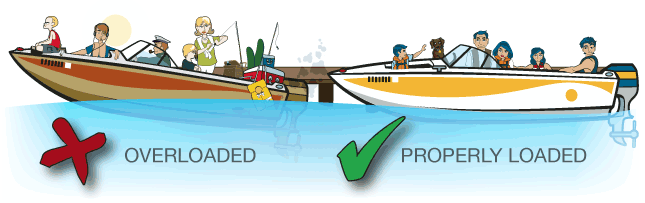
The Coast Guard defines overloading as excessive loading that causes instability, limited maneuverability, and dangerously reduced freeboard—all of which increase the chance of swamping or capsizing. You can have the healthiest outboard in the world, but if the boat's riding six inches lower than it should and a wake comes over the gunwale, you're swimming.
I've seen it: a boat that normally handles chop fine suddenly feels unstable and takes water over the bow because someone added three extra guys and didn't adjust the load. The engine can't get the boat on plane fast enough to lift the bow, so you're plowing through waves instead of riding over them. One good wave at the wrong angle and you're done.
How Your Boat Tells You It's Overloaded (Before You Even Look at the Engine)

The hull will warn you before the tach does. Here's what to watch for:
Waterline's riding high. Most boats have a molded waterline stripe or a boot stripe. If that line is half-submerged or closer to the water than usual, you're carrying too much weight. The boat's sitting lower, which means more hull in the water, more drag, and more work for the engine.
Feels unstable or "tippy." An overloaded boat rocks easier in wakes, leans more in turns, and generally feels less planted. If you're nervous about someone moving from one side to the other, that's a red flag.
Steering is sluggish or mushy. You turn the wheel and the boat responds a half-second late, or it takes constant correction to hold a straight line. That's the hull dragging and the engine unable to provide enough speed to give the rudder or lower unit clean water flow.
Bow-up attitude that won't break. You're on plane, sort of, but the bow is still high and the stern is squatting. You can hear the engine screaming, see a huge rooster tail, and you're barely making 18 knots. That's classic overload—too much weight aft, engine working overtime, and the hull never getting into its efficient running angle.
A properly loaded boat should settle into a level or slightly bow-high planing attitude within a few seconds of throttle-up, then level out as speed builds. If that's not happening, weight distribution or total load is wrong. For guidance on proper boat weight distribution and load management, see boating safety info at Boater Exam's boat capacity resources.
How to Stop Overloading and Killing Your Engine
Most of this is common sense, but I've watched enough guys ignore it to know it's worth repeating.
Obey the Capacity Plate—It's Not a Suggestion
Every recreational boat sold in the US has a capacity plate riveted near the helm. It lists maximum persons, maximum weight capacity, and maximum horsepower. Follow it. The Coast Guard didn't pull those numbers out of thin air—they're based on the hull's stability and buoyancy.
Don't do the mental math of "Well, it says seven people, but we're all small, so eight is fine." It says seven. Period. And "maximum weight" includes people, gear, fuel, ice, and that cooler full of beer. Everything.
Distribute Weight Properly
Total weight matters, but so does where you put it. I see guys load four people in the stern, stack all the tackle in the back, and wonder why the boat won't plane. You've got 800 pounds behind the center of gravity and nothing up front. The engine's trying to lift the bow with physics working against it.
Keep weight low and centered. Heavy items—batteries, full fuel tanks, big coolers—go on the deck or in below-deck storage, not up on the leaning post or T-top. Boating safety guidance consistently advises distributing load evenly side-to-side and fore-and-aft, and keeping the center of gravity low to maintain stability.
If you've got a deep-V hull and you're running solo or with one other person, shift some weight forward. The bow needs enough weight to stay down in chop, but not so much that you're plowing. For a pontoon or flatbottom, keep weight more centered to avoid the bow digging or the stern dragging.
Use the Rule of Thirds for Fuel
Running out of gas isn't just embarrassing—it's dangerous and it can wreck your fuel pump. We tell guys to plan fuel in thirds: one-third to get there, one-third to get back, one-third reserve. Weather changes, you take a longer route, or the engine works harder than expected (because you're overloaded, say), and suddenly that "plenty of fuel" isn't.
Starting a trip with a half-tank because "we're only going five miles" is how you end up drifting in a shipping channel at dusk calling TowBoatUS. Fill the tank, know your burn rate, and leave a cushion.
Check Your Prop If Symptoms Persist
If you've lightened the load, redistributed weight, and you're still seeing low WOT RPM and poor acceleration, the problem might be the propeller, not the boat. An "over-propped" engine—one with too much pitch or diameter—creates the exact same mechanical strain as an overloaded boat.
Tony Athens notes that all the classic overload symptoms (low RPM, black smoke, slow speed, high fuel burn) "go back to the prop as they all make the engine work harder… and slow the vessel down overloading the engine."
We stock a full range of propellers—stainless, aluminum, different pitches and diameters—to match your engine and hull. Dropping from a 19-pitch to a 17-pitch prop can bring your WOT RPM back into spec and make the boat feel 20% faster, because the engine's finally working in its powerband instead of lugging. If you're not sure what you need, call us—we can walk you through prop selection based on your actual running conditions, not just what the dealer stuck on there at delivery. Browse our quality Boat Accessories collection including propellers designed for performance.
Pre-Trip Load Check
Before you leave the dock, take thirty seconds and honestly assess what you're carrying. Count people. Estimate gear weight. Look at the waterline. Does the boat sit lower than usual? Does it feel different when you step aboard? If yes, pull something off or move it.
I've seen too many guys load up, back off the trailer, and realize halfway across the bay that the boat's handling like a barge. By then it's too late—you're stuck with the load until you get back. Do the check at the ramp, not three miles offshore.
When to Bring It to a Mechanic
Some engine issues look like overload but aren't. If you've stripped the boat down to bare minimums, checked the prop, and you're still getting overheating, low RPM, or rough running, it's time to dig deeper.
Problems like a failing fuel pump, clogged injectors, a bad stator or rectifier (on older engines), or a slipping clutch (on outboards with forward/neutral/reverse gearboxes) can mimic overload symptoms. A compression test, exhaust backpressure check, or fuel pressure test will tell you if the engine itself has issues.
We've also seen EFI systems throw the timing or fuel curve off after a software glitch, and that'll make the engine feel weak under load even when everything mechanical is fine. Diagnostics aren't guesswork anymore—we plug in a scan tool, pull the engine data, and see exactly what's happening inside.
At JLM Marine, we carry OEM-quality parts direct from the factory—impellers, thermostats, fuel pumps, ignition components, props—without the dealership markup. We work with the same manufacturers who supply the OEM brands, so you're getting the same spec and quality for less money. If you need a part or you're not sure what's wrong, reach out. We ship worldwide, and we've helped sort out everything from a stuck thermostat in Australia to a bad rectifier in Florida. Find your needed parts easily in our Cooling System collection or Fuel Pump collection.
One Daily Habit That Prevents Most of This
After every trip, flush your engine with fresh water for at least ten minutes and visually check the cooling telltale stream. If the stream's weak or intermittent, your impeller or intake is on its way out, and that's your first warning before the engine overheats under load next time. Catching a worn impeller early means you replace a $30 part instead of a $1,200 powerhead. For detailed instructions, check out our guide on Signs Your Outboard Impeller Needs Replacement.
For more expert advice and premium-quality marine parts to keep your boat running strong and safe, visit JLM Marine: Direct from Factory Boat Parts | Free Worldwide Shipping.