


Fire Safety on Boats: Preventing & Handling Engine Fires

Look, we've been tearing into outboards and inboards for two decades, and engine fires are something you don't mess around with. In 2019, the Coast Guard logged 239 recreational boating accidents involving fire, hitting 277 vessels—5 deaths, 138 injuries, and over $107.5 million in damages. At least half of those fires started around the engine. Most weren't fuel fires (those only make up 4%); they were DC electrical problems—arcing, chafed wires, corroded terminals. On inboard boats, 19% of all fires involved engines or batteries.
The good news? Most of this is preventable if you stay on top of your systems and know how to react when something goes wrong.
What Starts Engine Fires
Three main culprits: electrical shorts, fuel leaks, and overheating.
Electrical issues are the top killer. Vibration loosens battery terminals and starter cable connections. Salt air corrodes everything. A loose positive cable can arc against the block and you've got a fire in seconds. We've seen melted battery cables, fried starter solenoids, and alternator wiring that looked like it went through a toaster.
Fuel leaks happen when hose clamps back off, fuel lines crack from age and ethanol, or fittings weren't swaged right during install. The President Eisenhower containership had an engine room fire in 2021 because someone botched a compression fitting on the fuel return line—diesel sprayed onto an uninsulated exhaust flange for 30 minutes before ignition. $8.22 million in damage. All because of one bad fitting.
Overheating causes 56% of non-electrical engine fires. Impellers fail, thermostats seize, intake screens clog with seaweed or plastic bags. The engine runs hot, ignites oil residue or nearby flammables, and you're done. Regular maintenance on your cooling system, including timely replacement of your water pump impeller, helps prevent overheating issues.
Preventing Engine Fires

You stop fires before they start. Here's the drill.
Electrical System Checks
Inspect battery terminals every month. Tighten them down, wire-brush any corrosion, and coat with dielectric grease. Check your starter cables for chafe where they pass through bulkheads or rub against the block. Look for melted insulation, exposed copper, or discoloration on terminals—that's heat damage.
Run your bilge blower for 4 minutes before starting the engine, every single time. It clears fumes. If you smell gas, don't hit the key—find the leak first.
Use marine-grade wiring and terminals. Automotive stuff corrodes in months. Tinned copper wire and heat-shrink connections with adhesive liners last years.
Fuel System Maintenance
Check fuel lines under pressure—run the engine and look for weeps or sprays at hose clamps and fittings. Replace fuel hoses every 5-7 years, sooner if they're hard or cracked. Ethanol eats standard rubber; use ethanol-resistant hose (USCG Type A1-15 or better).
Tighten hose clamps twice a year. We like all-stainless clamps; the cheap plated ones rust through and let hoses slip off. Double-clamp every connection—primary clamp plus a safety clamp ½ inch away.
Clean up any fuel or oil spills in the bilge immediately. A puddle of gas plus a stray spark equals fireball. Replacing your fuel filter regularly helps keep your fuel system clean and leak-free.
Cooling System Upkeep
Replace your impeller every 1-2 years. Don't wait for it to shred. A $30 impeller is cheaper than a melted powerhead. Check your thermostat annually—pull it, drop it in a pot of water with a thermometer, and heat it on the stove. It should open at the rated temp (usually 140-160°F depending on the motor). If it sticks closed, toss it. Our guide on thermostat maintenance offers step-by-step tips.
Flush your engine with fresh water after every saltwater trip. We use a flushing muffs setup on the lower unit; run it for 10 minutes at idle. This keeps salt from building up in the cooling passages and clogging the system.
Keep the Engine Compartment Clean
Grease, oil drips, fuel residue—it all burns. Wipe down the engine with degreaser and rags every few months. Pull out the fuel filter and check for water or debris. Clean your flame arrestor (the screen on top of the carburetor) so it actually does its job.
Don't store rags, life jackets, or fuel cans in the engine compartment. We've seen fires start because someone left an oily rag on top of the exhaust manifold.
Install Detection and Suppression Gear
If you've got an enclosed engine compartment (inboard or sterndrive), you need either a fixed fire suppression system or fire ports.
Fixed systems use FM-200 or FE-241 (halon got banned). They trigger automatically at around 175°F, flood the compartment, and kill the fire without you opening the hatch. The BoatUS Foundation says these systems often let you restart the engine after the fire's out and the problem's fixed, because the extinguishing agent doesn't wreck internal parts like water or foam would.
Fire ports are cheaper—small hatches that let you stick a portable extinguisher nozzle into the engine room without opening the main hatch. The ABYC recommends them for any inboard without a fixed system. They prevent the oxygen rush that turns a smoldering wire into an inferno.
Add smoke detectors and carbon monoxide alarms. Mount them high (smoke rises) and test them monthly.
Coast Guard Fire Extinguisher Requirements
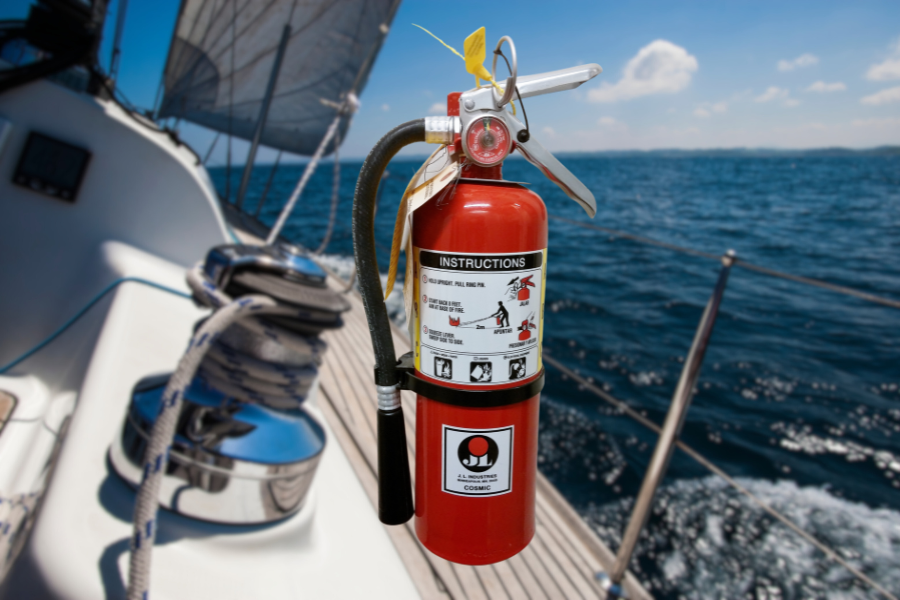
You're legally required to carry extinguishers if you've got an enclosed engine compartment, fuel tanks, or enclosed living spaces. Here's what the Coast Guard mandates:
- Under 26 feet: one B-I (or 5-B rated) extinguisher
- 26 to 40 feet: two B-I extinguishers, or one B-II (20-B rated)
- Over 65 feet and 300+ gross tons: 160-B semi-portable or fixed system in machinery spaces
If your boat's model year 2018 or newer, extinguishers must be 5-B or 20-B rated and date-stamped. Older extinguishers without stamps won't pass inspection.
Mount them where you can grab them fast—one near the helm, one near the engine compartment, one in the cabin if you've got one. Check the pressure gauge monthly. If the needle's in the red, recharge or replace it.
We see guys with extinguishers zip-tied under seats or buried in lockers. That's useless. You've got seconds to react; mount them in plain sight with quick-release brackets.
How to Handle an Engine Fire

If the engine catches fire, here's the order of operations. Don't skip steps.
1. Yell "Fire" and Get Everyone in Life Jackets
Shout it loud. Make sure every person on board grabs a Coast Guard-approved life jacket (Type I, II, or III) and puts it on. Direct passengers to the bow, upwind of the smoke.
2. Cut the Fuel and Power
Shut down the engine immediately—key off, kill switch pulled. Close the manual fuel shut-off valve if you've got one (you should). Flip the battery switch to OFF. This kills ignition sources and stops fuel from feeding the fire.
Do not do this if flames are blocking access to the switches. Your life is worth more than the boat.
3. Call for Help
Key your VHF to channel 16 and transmit: "MAYDAY, MAYDAY, MAYDAY—this is [boat name], [your GPS position or landmark], fire aboard, [number] people on board." Repeat twice. If you've got a 406 MHz EPIRB, activate it. Deploy flares or orange smoke if you're within sight of other boats.
4. Do Not Open the Engine Hatch
This is the mistake that sinks boats. BoatUS warns: "The most natural reaction to an engine compartment fire is also the worst—opening up the hatch to see what's going on. Doing so provides a rush of oxygen that could easily turn a smoldering fire into an abandon-ship conflagration."
Leave the hatch closed. If you've got a fire port, stick the extinguisher nozzle through it and discharge. If you've got a fixed system, let it do its job. If you have neither and the fire's small, you can try discharging a portable extinguisher through any small gap or vent—but don't crack the main hatch.
5. Use a Fire Extinguisher (If Safe)
Grab your Type B extinguisher (rated for liquid fires). Use the PASS method: Pull the pin, Aim at the base of the flames (not the smoke), Squeeze the handle, Sweep side to side.
Only fight the fire if:
- It's small and contained
- You have a clear escape route behind you
- You're not breathing heavy smoke
If the fire's bigger than a trash can or spreading fast, skip to step 7.
6. Close Hatches and Ventilation
Shut doors, hatches, and turn off the bilge blower to starve the fire of oxygen. Don't do this if it's an electrical fire and you haven't killed the battery yet—live wires can keep arcing.
Position the boat so the wind blows flames and smoke away from people. If you're drifting, that's fine; don't try to maneuver if it puts anyone in danger.
7. Abandon Ship
If the fire's out of control, flames are blocking your escape, or the extinguisher runs out, it's time to go.
Launch the life raft if you've got one. If not, get everyone over the side upwind of the flames, away from burning fuel on the water. Stay together—link arms or grab the raft's tether line. Keep life jackets on and wait for the Coast Guard.
The Ocean Intervention crew in 2020 did this perfectly: they shut down fuel, lube oil, and ventilation when their generator threw a rod and ignited atomized oil. Fire self-extinguished in minutes, zero injuries. Training saved them.
What Not to Do
- Don't use water on fuel or electrical fires. Water spreads burning fuel and conducts electricity. Class B extinguishers only.
- Don't fight a fire that's between you and the exit. Back away and abandon.
- Don't spray the extinguisher randomly. Aim at the base of the flames where the fuel is.
- Don't ignore small issues. That loose battery terminal or weeping fuel line will bite you eventually.
OEM vs Aftermarket Fire Suppression Parts
When you're replacing extinguishers, fire ports, or fixed system components, you'll see OEM (Yamaha, Mercury, etc.) and aftermarket options.
OEM stuff works, sure, but you're paying a premium for the logo. A Yamaha-branded fire extinguisher is the same Kidde or Buckeye unit sold at West Marine for half the price, just with a decal.
Skip the ultra-cheap no-name extinguishers from random online sellers—those fail pressure tests and corrode internally. Stick with known brands like Kidde, Buckeye, or Amerex. Fixed systems from Sea-Fire or Fireboy are solid and USCG/ABYC approved.
JLM Marine carries quality aftermarket fire safety gear that meets or exceeds OEM specs without the dealership markup. You get the same reliability, same certifications, and you save money for other upgrades like better bilge pumps or upgraded impellers. Browse our boat accessories collection for these and other essential marine parts. We ship worldwide, so whether you're in Florida or halfway across the Pacific, we'll get you sorted.
Simple Daily Check

Before you start the engine, pop the engine cover and sniff. Smell gas? Find the leak. See a loose wire? Tighten the terminal. Spot an oil drip? Wipe it up and trace the source. Takes 30 seconds and it'll save you from a $100,000 insurance claim—or worse.
For more tips on maintaining your engine, check out our cooling system parts collection and guides like Signs Your Outboard Impeller Needs Replacement. Staying proactive keeps your boat safe and reliable.
Explore everything you need for your boat at our marine parts hub.