


Why Regular Tune-Ups Improve Fuel Economy
- Worn Components Waste Fuel at Every RPM
- Thermostats and Operating Temperature
- Propeller Condition Affects Fuel Flow
- Hull Resistance and Fluid Friction
- Marine Field Results: Proof from the Water
- Two-Stroke vs. Four-Stroke Sensitivity
- The JLM Marine Advantage: Factory-Spec Parts Without the Marina Markup
- Saltwater vs. Freshwater Maintenance Intervals

Your outboard is burning fuel faster than it should. After servicing over 5,000 outboards at our facility, we've traced most fuel waste to one cause: skipped maintenance. A neglected marine engine doesn't just run rough—it dumps unburned fuel straight out the prop.
Regular tune-ups fix this. They restore combustion efficiency, clean fuel delivery, and proper ignition timing so your engine burns every drop of fuel instead of wasting it.
Here's what affects your fuel flow (GPH):
- Combustion Efficiency: Unlike cars that coast, marine engines are under constant load. Poor combustion at cruising RPM (typically 4000-4500 RPM) directly increases GPH.
- Component Health: Worn plugs, clogged filters, and stuck thermostats kill range.
- Airflow and Fuel Delivery: Salt air clogs intakes and injectors differently than road dust.
- Ignition Timing: A weak spark at high RPM wastes fuel fast.
- Hull Drag and Lubrication: Barnacles and thick oil increase resistance.
Worn Components Waste Fuel at Every RPM

Spark plugs degrade from salt air exposure. When the ceramic insulator corrodes or the electrode gaps widen, the spark weakens. This causes incomplete combustion—fuel enters the cylinder, doesn't fully burn, and exits through the wet exhaust as waste.
Pull your plugs and read them. A fuel-fouled plug looks wet and smells like gas; that means you're dumping raw fuel overboard. A carbon-fouled plug appears dry with sooty black deposits, indicating rich mixture from a stuck choke or clogged air intake. Both conditions increase your gallons-per-hour burn rate.
We've measured this. A Yamaha F150 running at 4200 RPM with fouled plugs burned 12.8 GPH. After replacing the plugs and cleaning the injectors, the same engine at the same RPM dropped to 11.4 GPH—a 1.4-gallon-per-hour improvement. Over a 50-hour season, that's 70 gallons saved. At $5.00 per gallon, you just saved $350.
Air Filters and Salt Crystallization
Marine air intakes face a different problem than automotive filters. Salt air carries moisture that combines with airborne particles to form crystallized deposits inside the filter media. This isn't the dry dust you see on car filters—it's sticky, corrosive, and blocks airflow faster.
A clogged marine air filter forces the engine to run rich. The ECU can't compensate for restricted airflow, so it keeps dumping fuel to maintain power. We've pulled filters so choked with salt crust you couldn't see light through them. The engine behind that filter was burning 15% more fuel than spec.
Check your filter every 50 hours in saltwater, 100 hours in freshwater. If it's damp or shows white residue, replace it using quality parts from the fuel & induction collection to ensure consistent airflow and filtering.
Fuel Injectors and Atomization
Dirty injectors don't just "spray unevenly"—they fail to atomize fuel properly. Atomization is the process of breaking liquid fuel into a fine mist so it can mix with air and burn completely. When salt air crystals clog the tiny injector tips, fuel dribbles into the cylinder as droplets instead of mist.
Those droplets don't burn fully. They hit the cylinder walls, wash away lubrication, and exit as unburned hydrocarbons through the exhaust. You're literally throwing fuel into the ocean.
We use ultrasonic cleaners to restore injector spray patterns. A clean injector produces a tight cone-shaped mist. A clogged one dribbles or sprays a lopsided stream. The difference in fuel economy is measurable—typically 8-12% improvement after cleaning on engines over 300 hours.
Thermostats and Operating Temperature

This is the maintenance item most boaters skip, and it kills fuel economy silently. Your marine thermostat controls engine temperature. If it sticks open (common in salt water due to corrosion), the engine never reaches closed-loop operating temperature—usually 140-160°F depending on the model.
A cold engine runs rich. The ECU keeps adding fuel because it thinks the engine is still warming up. We've diagnosed multiple Suzuki and Mercury outboards running at 110°F when they should be at 150°F. The fuel waste is significant because the engine never enters efficient cruise mode.
Check your thermostat every 200 hours or annually, whichever comes first. If your engine takes more than 5 minutes to reach temperature or if you see water spitting from the pee stream constantly (instead of a steady flow), suspect a stuck-open thermostat. For detailed steps, see our guide on How to Replace the Thermostat on Your Yamaha F225, F250, or F300 4.2L V6 Outboard Motor.
Replacing a seized thermostat on a 2015 Honda BF90 brought operating temp from 120°F to 155°F and dropped cruising GPH from 9.2 to 8.1—a 12% improvement.
Propeller Condition Affects Fuel Flow

While not an engine component, checking your prop during a tune-up is essential. A damaged propeller increases slip—the difference between theoretical and actual distance traveled per revolution.
If your prop has dings, bent blades, or hub spin-out, the engine reaches higher RPMs for the same boat speed. You're burning more fuel to go the same distance because the prop isn't gripping the water efficiently.
We've seen this repeatedly: a boat owner reports fuel economy dropped suddenly. Engine diagnostics show nothing wrong. We pull the lower unit and find a blade with a 1-inch bend from hitting a rock. After replacing the prop, RPMs at 25 mph dropped from 4800 to 4200, and fuel consumption dropped accordingly.
Inspect your prop every season. Look for dings on the leading edge, cracks in the barrel, and any play in the hub (indicates rubber spin-out). A $200 prop replacement can save you $400 in fuel over a season. For tips on diagnosing prop issues, you can also check our blog on Propeller Slip or Engine Issue? When Your Boat Can’t Reach Speed.
Hull Resistance and Fluid Friction

Hull fouling increases drag, forcing your engine to work harder (higher RPM) to maintain speed. Barnacles, algae, and marine growth add weight and disrupt water flow under the hull.
Clean your hull at least twice per season if you're in saltwater. A fouled hull can reduce your range by 10-15% because the engine must maintain higher throttle to achieve cruising speed.
Using the manufacturer's recommended motor oil also reduces internal friction by 1-2%. Thicker-than-spec oil increases resistance on piston rings and bearings, forcing the engine to consume more fuel to overcome internal drag. Always match viscosity to your engine manual's specification, especially in colder water where oil thickens further. For lubrication tips, check out our Best Marine Greases and Lubes for Your Outboard.
Marine Field Results: Proof from the Water
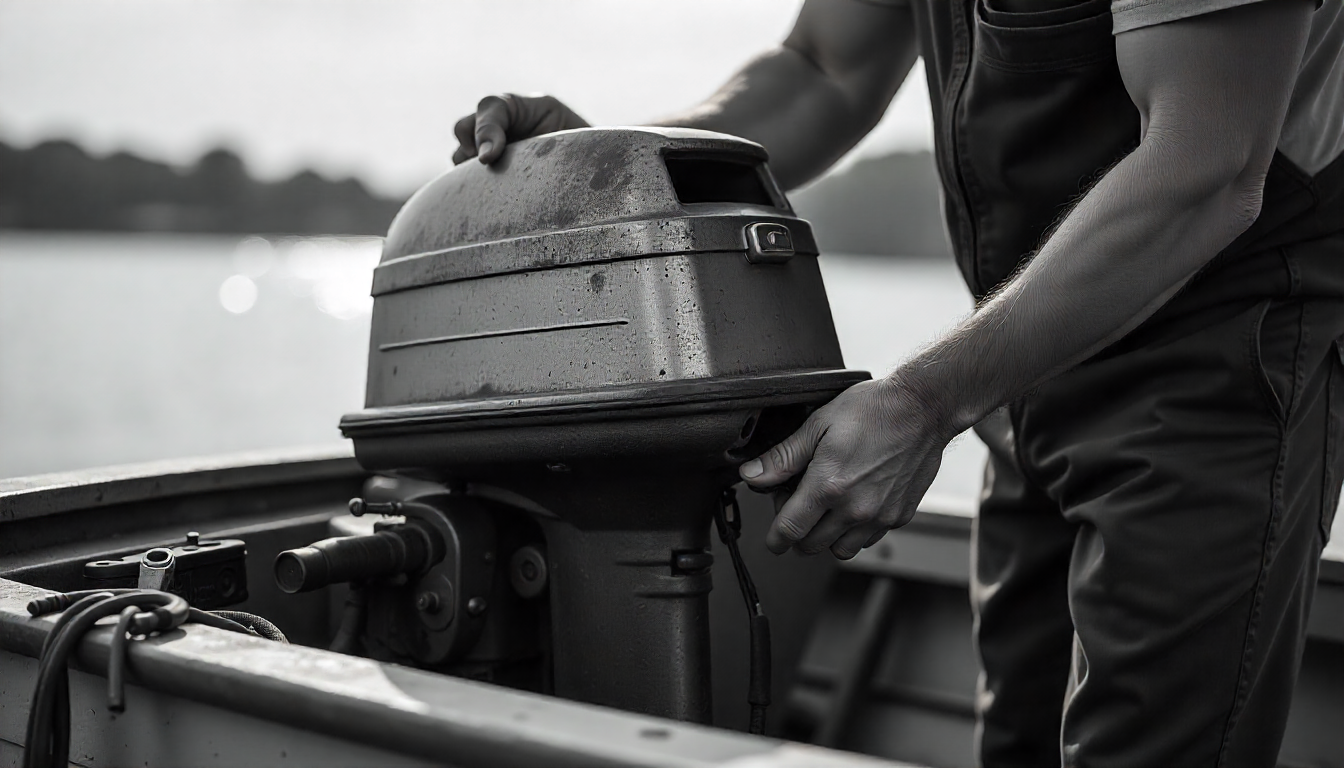
We had a customer in Queensland, Australia, running a 1998 Johnson 115hp on a 22-foot center console. His engine was original, never rebuilt, pushing 1,200 hours. He emailed us reporting his fuel range had dropped from 80 miles per tank to about 60 miles.
We walked him through the diagnostics via email and photos. His spark plugs were carbon-fouled, the air filter had mold growth from damp storage, and his thermostat was reading cold. He ordered a full tune-up kit from us—plugs, filters, thermostat, and injector cleaner. We shipped from the factory; it arrived in 10 days.
After the install, he ran a controlled test: same route, same sea conditions, same throttle setting. His GPH at 4000 RPM dropped from 11.5 to 9.8. That restored his range to 78 miles per tank. The tune-up kit cost him $220 USD shipped. He calculated he'd recover that cost in saved fuel within 6 weeks of regular weekend use.
Calculating Your Own Savings
Here's how to figure out what a tune-up saves you. Measure your current GPH at cruising RPM (use a fuel flow meter or calculate gallons burned over a timed run). If you're burning 10 GPH and fuel is $5.00 per gallon, every hour on the water costs you $50 in fuel.
A 10% efficiency loss means you're wasting $5.00 per hour. Over a 50-hour season, that's $250 wasted—more than the cost of spark plugs, filters, and a thermostat combined.
If you only have budget for one repair, prioritize in this order based on impact:
- Replace a damaged propeller (biggest immediate GPH reduction if damaged).
- Replace spark plugs (most common cause of poor combustion).
- Clean or replace fuel injectors (critical for atomization).
- Replace thermostat (fixes rich-running cold engines).
- Replace air filter (cheapest, easiest, 3-5% improvement if clogged).
Two-Stroke vs. Four-Stroke Sensitivity
Two-stroke engines are more sensitive to plug fouling than four-strokes because they burn oil mixed with fuel. Carbon buildup happens faster, especially if you're running a rich oil-to-fuel ratio (like 50:1 instead of the leaner 100:1 some modern synthetics allow).
Fouled plugs in a two-stroke cause immediate misfires and visible smoke. The fuel waste is dramatic—up to 20% higher GPH when running on three cylinders instead of four due to a dead plug.
Four-stroke outboards are more forgiving but still suffer. A four-stroke with worn plugs may not misfire visibly but will show reduced power and higher fuel consumption because combustion is incomplete. The ECU tries to compensate by adding fuel, which makes the problem worse.
Check plugs every 100 hours on two-strokes, every 200 hours on four-strokes, or annually if you run fewer hours.
The JLM Marine Advantage: Factory-Spec Parts Without the Marina Markup

We started JLM Marine because we saw the market split into two bad options: overpriced OEM parts from local marine dealerships and cheap aftermarket junk that fails within a season.
OEM parts are reliable, sure, but you're paying a premium for the brand sticker on the box. A set of four spark plugs from a dealer can run $80-$120. The exact same plug from us, sourced from the same OEM suppliers, costs $45 shipped.
On the other end, don't buy the $10 tune-up kit from a random online seller. The rubber gaskets are too hard, the fitment is off, and you'll tear the lower unit apart again next season when the seal leaks. It's not worth the headache or the lost weekend.
This is why we like the JLM kits. You get factory-spec quality without the dealership markup. It fits right, it lasts, and you don't burn cash unnecessarily. We manufacture and supply directly from the factory to your dock, whether you're in Kentucky, Queensland, or anywhere in between. Typical delivery is 5-15 days globally.
We ship parts for discontinued models too. That Australian customer with the 1998 Johnson? Most local shops told him parts were unavailable. We matched his engine serial number via email, confirmed the correct kit, and had it to him in 10 days. When you need to get back on the water for the weekend, logistics matter.
For quick access to all parts that can help your maintenance, browse our full range in the Inboard & Outboard Motor Parts collection.
Saltwater vs. Freshwater Maintenance Intervals
Saltwater boaters face faster corrosion and crystallization. If you run in the ocean or brackish water, cut all maintenance intervals in half. Your plugs, thermostats, and anodes degrade faster due to salt exposure.
Freshwater lake boaters can extend intervals slightly, but don't skip them. Ethanol in fuel causes phase separation (water separating from fuel), which clogs filters and corrodes injectors regardless of salinity.
If you trailer your boat and run in both environments, follow the saltwater schedule. One weekend in the ocean exposes your engine to enough salt to justify the shorter interval.
Flush your engine with fresh water after every saltwater use. This prevents salt from crystallizing in cooling passages, which narrows the passages and raises operating temperature. A hot engine runs less efficiently and burns more fuel trying to cool itself. For more on cooling system maintenance, see our Cooling System parts collection.
Run a fuel stabilizer with ethanol treatment in your tank during storage, and check your fuel-water separator before every trip. Water in the fuel causes more tune-up headaches than any other single issue. For fuel system components, browse our Fuel Filter collection to keep contaminants out of your engine.
Hi—I’m Jim Walker
I grew up in a Florida boatyard, earning pocket money (and a few scars) by rebuilding outboard carbs before I could drive. That hands-on habit carried me through a Ph.D. in mechanical engineering, where I studied how salt water quietly murders metal.
I spent ten years designing cooling systems for high-horsepower outboards, then joined JLM Marine as CTO. We bench-test every new part in the lab, but I still bolt early prototypes onto my own 23-foot skiff for a weekend shake-down— nothing beats real wake and spray for finding weak spots.
Here on the blog I share the fixes and shortcuts I’ve learned so your engine—and your day on the water—run smooth.

Para propietarios de motores fuera de borda:
Para ayudarlo a mantener y reparar sus motores marinos, esperamos que los siguientes recursos puedan serle de utilidad:
-
Bombas de combustible de JLM Marine
-
Kits de bomba de combustible de JLM Marine
- Kit de bomba de combustible
- Kit de bomba de combustible Yamaha
- Kit de bomba de combustible Mercury
- Kit de bomba de combustible Johnson
- Kit de bomba de combustible Evinrude
- Kit de bomba de combustible Suzuki
- Kit de bomba de combustible Honda
- Kit de bomba de combustible Tohatsu
- Kit de bomba de combustible Volvo
Acerca de JLM Marine
Fundada en 2002, JLM Marine se ha consolidado como un fabricante dedicado de piezas marinas de alta calidad, con sede en China. Nuestro compromiso con la excelencia en la fabricación nos ha ganado la confianza de las principales marcas marinas a nivel mundial.
Como proveedor directo, evitamos intermediarios, lo que nos permite ofrecer precios competitivos sin comprometer la calidad. Este enfoque no solo promueve la rentabilidad, sino que también garantiza que nuestros clientes reciban el mejor valor directamente del proveedor.
Estamos entusiasmados de ampliar nuestro alcance a través de canales minoristas, llevando nuestra experiencia y compromiso con la calidad directamente a los propietarios de embarcaciones y entusiastas de todo el mundo.
Bomba de combustible en venta
- $73.50
$88.00- $73.50
- Unit price
- per
- $16.00
- $16.00
- Unit price
- per
- $17.99
$21.00- $17.99
- Unit price
- per

- $18.99
- $18.99
- Unit price
- per

- $21.99
- $21.99
- Unit price
- per

- $45.99
$55.00- $45.99
- Unit price
- per

- $23.59
$28.00- $23.59
- Unit price
- per

- $28.99
$34.00- $28.99
- Unit price
- per

- $21.99
- $21.99
- Unit price
- per
- $46.50
$60.00- $46.50
- Unit price
- per
- $26.80
- $26.80
- Unit price
- per
- $24.80
- $24.80
- Unit price
- per
- $28.90
- $28.90
- Unit price
- per

- $27.77
- $27.77
- Unit price
- per

- $56.99
- $56.99
- Unit price
- per

- $129.95
$155.00- $129.95
- Unit price
- per

- $31.20
$37.00- $31.20
- Unit price
- per

- $129.95
$155.00- $129.95
- Unit price
- per
- $138.00
- $138.00
- Unit price
- per
- $24.80
$45.00- $24.80
- Unit price
- per